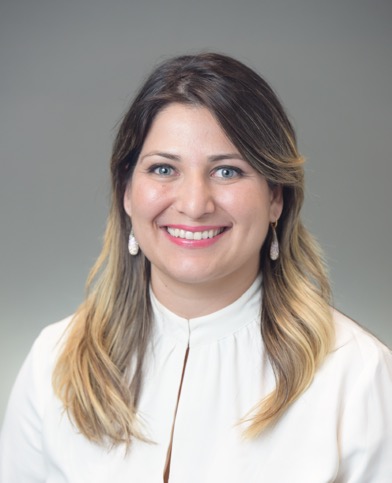
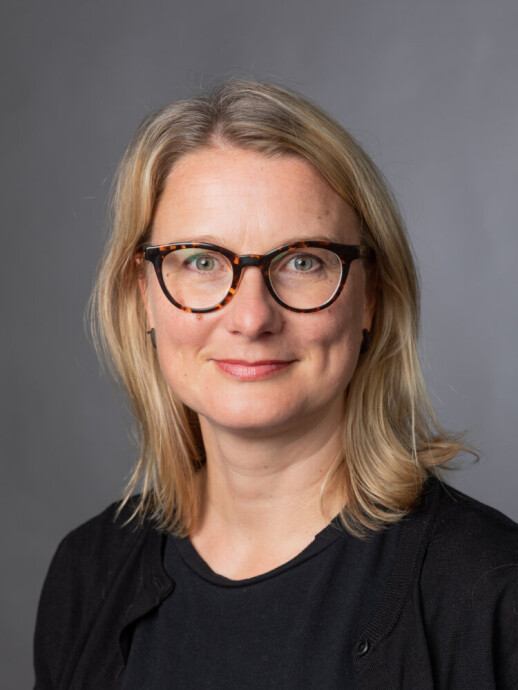
Deborah Dean is a Professor of English and Director of the Central Utah Writing Project, focusing on enhancing secondary English Language Arts (ELA) instruction through innovative methods. Her work emphasizes genre theory, writing pedagogy, and professional development for educators. Key Affiliation: Central Utah Writing Project (Director) Academic Rank: Professor Research Focus: Dean’s research explores grammar instruction, writing strategies, and the use of picture books to differentiate writing instruction for struggling writers. She advocates for authenticity in genre application and transformative professional development. Public Engagement: She has contributed to the Thinking Aloud radio program and co-authored resources like Handout-Sentence Combining . Her work bridges academic research with practical classroom applications.
Silke von Lewinski serves as a Scientific Advisor at the Max Planck Institute for Innovation and Competition and holds the position of Extraordinary Professor at the Faculty of Law, University of Zagreb since 2020. With a distinguished career spanning over three decades, she has established herself as a leading authority in intellectual property law, particularly in copyright and related rights. Her work bridges academic scholarship with practical policy development at national, European, and international levels. Dr. von Lewinski earned her Doctor of Law (Dr. jur.) from the Free University of Berlin. She completed her legal clerkship (Assessorin) in Munich before joining the Max Planck Institute for Innovation and Competition as a scientific staff member. Since 1995, she has served as Head of Department for International Law and Special Problems of Developing Countries at the Institute. Her academic credentials were further recognized in 2020 when she was appointed as an Extraordinary Professor at the University of Zagreb's Faculty of Law. Her research interests focus on intellectual property law with particular expertise in copyright law, international copyright treaties, European copyright harmonization, digital copyright challenges, and the protection of traditional knowledge. She has extensively examined the intersection of copyright law with emerging technologies, including artificial intelligence and digital platforms. Her scholarly work addresses critical issues such as cross-border licensing, collective rights management, exceptions and limitations in the digital environment, and the implementation of the Digital Single Market Directive in Germany. Dr. von Lewinski's publication record demonstrates consistent engagement with evolving copyright challenges. Her recent work shows increasing focus on platform liability (particularly Article 17 implementation), artificial intelligence and copyright, performers' remuneration in digital environments, and the practical implications of CJEU case law. She has maintained a strong scholarly output through her editorial work on the comprehensive 'Copyright Throughout the World' series while producing timely analyses of specific copyright developments in Germany and Europe. The Hosier Distinguished Visiting IP-Scholar, DePaul University, Chicago (2005) First Distinguished Visitor to the Intellectual Property Research Institute of Australia (IPRIA) (2002) First Walter Minton Visiting Scholar, Center for Law and the Arts, Columbia University School of Law, New York (1998) Heinrich-Hubmann-Preis für die beste Monographie im Urheberrecht (1991) Dr. von Lewinski has advised numerous governments and international organizations on copyright matters. She has served as legal advisor to the European Commission, participated in WIPO diplomatic conferences that led to the Marrakesh and Beijing Treaties, and provided expertise to countries in Central and Eastern Europe, the former Soviet Union, and Asia through PHARE, TACIS, and other programs. Her extensive conference presentations across Europe, North America, Asia, and Australia demonstrate her global influence in copyright scholarship and policy development. At the Max Planck Institute, Dr. von Lewinski contributes to one of the world's leading research centers in intellectual property and competition law. She collaborates with an international team of scholars and participates in major research projects examining the future of copyright in the digital age. Her work with organizations like ALAI (where she serves as Vice President) and ATRIP connects her research to broader international intellectual property discourse.
Noreen Robertson, DMD, is an Assistant Professor in the Department of Biochemistry & Molecular Biology at Drexel University College of Medicine and serves as the Associate Vice Dean for Research. Her roles include fostering interdisciplinary research collaborations and overseeing research infrastructure to enhance translational science and medical education. Education: DMD from Temple University School of Dentistry (1990), BA from West Chester University (1980), and a Postdoctoral Fellowship at the Kimmel Cancer Center, Thomas Jefferson University (1995). Research Interests: Cancer biology, inflammatory diseases, apoptosis regulation, and molecular mechanisms of hormone receptors. Her work focuses on glucocorticoid/mineralocorticoid signaling, airway inflammation, and embryo implantation biomechanics. Her publications span over three decades, emphasizing apoptosis modulation, cytokine interactions, and translational research in oncology and immunology. Notable contributions include studies on TRAIL signaling in cancer cells and L-selectin-mediated embryo implantation mechanics. Awards: Lifetime Achievement Award (2024) from the Sidney Kimmel Cancer Center Research Consortium for her leadership in collaborative research. She oversees research initiatives that bridge clinical practice and basic science, including core facilities and grant development. Her administrative leadership supports Drexel’s bid for National Cancer Institute comprehensive cancer center designation. Labs/Teams: Integral to the Sidney Kimmel Cancer Center Research Consortium, collaborating across institutions and disciplines to reduce cancer burden in Philadelphia and surrounding regions.
Marjorie Horne is a researcher with extensive contributions to mathematics education, cognitive development, and educational policy. Her work spans topics such as fraction understanding, teacher training, and school climate assessment. She has collaborated internationally, contributing to studies on pharmacological adherence in osteoporosis treatment and neuroscience investigations into Parkinson’s disease. Her research emphasizes practical applications of educational theory in classroom settings and addresses challenges in low-socioeconomic regions like Kenya. Her publications highlight expertise in child cognitive development, gender studies, and innovative teaching methodologies. Education & Academic Background: No formal educational qualifications are explicitly stated in the provided text, but her sustained research output since the early 2000s suggests a doctoral-level qualification in mathematics education or a related field. Research Interests: Early mathematical concept development (fractions, place value, spatial reasoning) Teacher professional development and career transitions School-family partnerships in faith-based education systems Gender dynamics in mathematics education Neuroscience collaborations exploring dopamine pathways in Parkinsonian dyskinesia Publications Trends: Her articles primarily focus on mathematics pedagogy, cognitive development, and educational equity. Notable themes include fraction comprehension challenges, assessment of school environments in disadvantaged regions, and the application of research findings to classroom practice. The 2008 neuroscience paper represents a cross-disciplinary collaboration outside her core educational research. Grants & Awards: None explicitly cited in the text. Advising & Leadership: No student advisees listed, but her collaborative publications suggest involvement in research teams. She has contributed to international organizations like the Mathematics Education Research Group of Australasia (MERGA) and the International Group for the Psychology of Mathematics Education (PME). Labs & Teams: While no specific lab affiliations are noted, her work indicates participation in multidisciplinary research networks focusing on mathematics education and neuroscience.
Beth M. Lalande, MD is an Associate Professor of Medicine at the Medical College of Wisconsin (MCW), actively contributing to the Division of Endocrinology and Molecular Medicine within the Department of Medicine. She joined MCW in 2006 as an Assistant Clinical Professor and has advanced to her current rank. Prior to MCW, she served as a Clinical Assistant Professor at the University of Wisconsin Medical School from 2004 to 2007, establishing a career dedicated to clinical endocrinology and medical education. Dr. Lalande's academic foundation was built at MCW: she earned her MD in 1993, completed her Internal Medicine Residency in 1996, and finished her Endocrinology and Metabolism Fellowship in 1998, all through MCW Affiliated Hospitals. This comprehensive training anchors her clinical and research expertise in endocrine disorders. Her research interests encompass a broad spectrum of endocrinology including reproductive endocrinology (particularly PCOS and amenorrhea), bone metabolism disorders, adrenal pathologies such as pheochromocytoma, and the intersection of celiac disease with endocrine dysfunction. She investigates diagnostic dilemmas and therapeutic approaches in complex endocrine cases, often through detailed case reports that inform clinical practice. Analysis of her publication history from 1997 to 2025 reveals a sustained focus on challenging clinical scenarios in endocrinology. Her work bridges molecular mechanisms with patient care, emphasizing conditions like hyperandrogenism, bone density artifacts, and electrolyte imbalances. Recent publications continue to address evolving diagnostic criteria and management strategies in women's health endocrinology. Among her accolades are the prestigious 2020 Clinical Excellence in Specialty Care Community Physicians Award (Froedtert/MCW) and repeated recognition as a "Best Doctor" by Milwaukee Magazine over multiple years, reflecting her clinical excellence and patient-centered care. While specific details on her mentorship of students and secured research grants are not documented in the provided materials, her academic role suggests involvement in medical education. Similarly, information about dedicated research laboratories or collaborative teams was not referenced in the source text.
Ivone Moreira is an Assistant Professor at the Institute for Political Studies (IEP) of Universidade Católica Portuguesa, where she coordinates the Master’s program in Political Science and International Relations. She holds a PhD in Modern Philosophy from the same institution and specializes in Political Philosophy, Modern Philosophy, and Portuguese Philosophy, with a focus on the Tradition of the Great Books. Her research emphasizes Edmund Burke’s political thought, comparative analysis of Enlightenment thinkers like Rousseau and Paine, and the interplay between natural law and conservative principles. Dr. Moreira’s academic affiliations include membership in the Research Centre of the Institute for Political Studies and the Centre for Philosophy Studies. She teaches modules such as History of Political Thought II and Tradition of the Great Books VI. Her publications span over two decades, with key works including A Filosofia Política de Edmund Burke (2019) and articles analyzing Burke’s critiques of utopia, elitist political representation, and the legacy of the French Revolution. Her scholarly contributions bridge European intellectual history, political theory, and textual analysis of foundational texts. Recent work explores Burke’s engagement with David Hume, the rights discourse in Magna Carta contexts, and Luso-Brazilian philosophical traditions. She actively participates in international scholarly networks and contributes to Portuguese academic debates on classical political thought.
Nicholas (Nick) de Leeuw is a Senior Lecturer in Psychological Science at Vassar College. He holds an AB from Vassar College and is completing his Ph.D. at the University of Pittsburgh, where he was a graduate fellow at the Learning Research and Development Center. Research examines how students integrate scientific text with prior knowledge, investigating reading comprehension processes, scientific reasoning, and mental model formation. Additional expertise includes methodological approaches for verbal data analysis (protocol analysis) and human development with emphasis on infancy and adolescence. Courses taught include Introduction to Psychological Science (PSYC 105) and Humor and Children (PSYC 385).
Jenni Marjokorpi is a University Lecturer in Finnish Language and Literature Didactics at the Department of Education, University of Helsinki. She holds a PhD in Educational Sciences from the University of Helsinki (2023) and a Master of Arts (2015). Her work focuses on disciplinary literacy, multilingual education, and the role of grammar in language learning. Key research themes include assessment tools for newly arrived students, dialogic pedagogy, and ethical approaches to teaching controversial topics. Recent projects include leading the 'Valu' project developing disciplinary literacy assessment tools for immigrant pupils, and the 'Difficult Topics and Dialogue in Education' initiative exploring classroom discourse dynamics. She has been a visiting scholar at Stockholm University (2024) and actively collaborates with European educational researchers. Her awards include the 2023 Kotikielen Seuran article prize and 2024 Työyhteisöteko award for team research excellence. Marjokorpi has held adjunct roles at Tampere University (2023) and Aalto University (2022-2023). Her research bridges theory and practice, often involving teacher communities in co-creating pedagogical solutions. Current interests include sociolinguistic aspects of education and the impact of pandemic-era teaching innovations.
Natalia De Campos Kajimoto is an Assistant Professor in the Department of Periodontics at the School of Dentistry, UT Health San Antonio. Her academic journey includes DDS, MS, PhD, and Specialty degrees in Periodontology and Dental Implants from São Paulo State University in Brazil. She furthered her expertise through postdoctoral training at São Paulo State University and New York University. Role: Assistant Professor, Department of Periodontics Education: DDS, MS, PhD, Specialty in Periodontology and Dental Implants (São Paulo State University) Dr. Kajimoto's research focuses on developing comprehensive health promotion programs to improve oral health outcomes and encourage healthier behaviors in underdeveloped countries. Her work spans global oral health, bone and periodontal healing mechanisms, biomaterials, and periodontal disease management. With over 30 publications in periodontal research, her contributions emphasize translational applications for underserved populations. While specific scientific awards or grants are not detailed in the provided text, her professional background highlights active involvement in research and academic leadership in periodontics.
Johanna Kaakinen is Professor of Psychology at the University of Turku's Department of Psychology and Speech-Language Pathology. She leads the Fostering Finnish Science Capital (FINSCI) consortium and serves as thematic area leader for 'Skills and learning' in the INVEST Research flagship. As coordinator of Turku EyeLabs and Editor-in-Chief of Discourse Processes , she maintains significant academic influence. Her research focuses on cognitive processes in reading comprehension, science capital development, and emotional influences on information processing. Key areas include: Eye movement patterns during text comprehension Science engagement and capital formation Emotional responses to conflicting scientific information Literary immersion using neurocognitive methods Decision-making in science contexts Recent publications (2023-2025) demonstrate strong focus on science communication, educational psychology, and cognitive aspects of health behavior. Research consistently employs eye-tracking methodologies while expanding into public science engagement and emotion studies. Major scientific recognitions include: Tapio Nummenmaa dissertation award (2006) Turku University Foundation dissertation award (2005) Outstanding student paper award, Society for Text and Discourse (2000) As primary supervisor, she has guided 34 Master's theses and 6 PhD students including Henri Olkoniemi and Suvi Holm. Currently leads two major grants: FINSCI consortium (€4.3M, 2020-2026) IMMERSED neurocognitive project (€480k, 2021-2024) She coordinates Turku EyeLabs research ecosystem and collaborates internationally through visiting positions at INSEAD (France) and Freie Universität Berlin (Germany).
Thelma Gunn is a Professor of Educational Psychology in the Faculty of Education at the University of Lethbridge. She holds a Ph.D. from the University of Saskatchewan (2000), an M.Ed. from the University of Sydney (1993), a B.Ed. from the University of Saskatchewan (1987), and a B.A. (Hons) in History from the same institution (1986). Prior to her academic career, she taught Jr./Sr. High School History, Social Studies, and English for six years, and ESL in Chiba, Japan for 1.5 years. Her research focuses on educational psychology, including assessment methods, high school completion strategies for at-risk populations, expository text comprehension, critical thinking development, and career education integration in K-12 curricula. She actively contributes to both undergraduate teacher education and counseling psychology graduate programs. Notable areas of interest include Indigenous education initiatives, particularly the Alberta Initiative for School Improvement (AISI), and the evaluation of mentorship programs for marginalized students. Her work bridges theory and practice, addressing challenges in teacher retention, mental health literacy among students, and 21st-century learning frameworks. She has collaborated on district-level educational reforms and contributed to policy recommendations for sustainable career pathways and student well-being.
Prof. Dr. Astrid Müller is a professor at the University of Hamburg's Faculty of Education, specializing in German language didactics with a focus on literacy development and orthography. She holds a professorship in Educational Science, emphasizing didactics of German language and literature. Her work centers on reading promotion in secondary education and structural approaches to orthographic learning. She has led multiple DFG-funded projects, including studies on morphological awareness and interventions to improve reading skills in elementary students. Müller has supervised numerous PhD students and co-authored influential publications in journals like Praxis Deutsch and Unterrichtswissenschaft . She received the 2024 Friedrich Prize for German Didactics and serves on editorial boards such as Praxis Deutsch . Her research explores language structure's role in literacy, teacher training, and inclusive education strategies. Her career includes teaching German and Russian, postdoctoral research at Hamburg University, and leadership roles in educational institutions. She has developed curricula and materials for literacy programs, including Rechtschreiben lernen . Key projects include the Hamburger Leseförderprojekt and studies on adult literacy for migrants. Müller's work bridges empirical research with practical classroom applications, emphasizing structured approaches to word recognition and spelling. Education: Promotion (PhD) in German Didactics from University of Greifswald (1992), postdoctoral research at Hamburg University (1994–1996). Research: Focuses on orthography, reading acquisition, and morphological awareness. Leads projects funded by German Research Foundation (DFG). Grants: Over €432k from DFG for studies on orthographic learning and migrant literacy. Collaborations include University of Bielefeld's 'Astro' project on literacy interventions. Professional Roles: Editor of Praxis Deutsch , member of academic committees, and jury chair for Friedrich Prize. Her publications span textbooks, peer-reviewed articles, and edited volumes addressing grammar, spelling, and inclusive teaching methods. Ongoing supervision includes studies on grammatical uncertainties and case marking in German.
Paola Bonifacci is an Associate Professor at the Department of Psychology 'Renzo Canestrari' of the Università di Bologna. Her academic discipline is General Psychology (PSIC-01/A), with a focus on bilingualism, learning disorders, and cognitive processes. Teaching: Courses include Cognitive Assessment in Multicultural Contexts, Learning Disorder Assessment, and Practicum Training Research Interests: Bilingualism, literacy/numeracy development, socioeconomic status effects, mind wandering, and heritage language maintenance Dissertations: Topics involve bilingualism and learning, mind wandering, dyslexia, and language disorders Her recent publications (2025-2023) emphasize bilingual educational outcomes, cross-linguistic comparisons, and the impact of digital vs. printed media on comprehension. Studies also investigate home/school environmental factors, cognitive predictors of literacy/numeracy, and mind wandering in dyslexia.
Nicole Louise Busby is an Associate Professor in English linguistics and language acquisition at NTNU's Department of Language and Literature (Faculty of Humanities). Her research focuses on second language acquisition, particularly vocabulary development and reading comprehension in academic contexts. She investigates how informal extramural activities like gaming and media consumption influence Norwegian students' English proficiency. She is affiliated with research groups including VOCLEX, LPE, L-LATER, ForMAAL, Flere Språk til Flere, and Bilingualism Matters. Busby teaches courses such as ENG1101 (English Linguistics) and supervises master's theses on topics like AI in language learning, language policy, and extramural language exposure. She has conducted studies on language practices among international staff at NTNU and the effectiveness of digital assessments for language teachers. Her work bridges academic research and practical teaching strategies, emphasizing the role of informal learning in academic success. Key projects include the AELPP initiative exploring language policies at NTNU and investigations into the impact of early extramural English exposure on university readiness. She regularly presents at international conferences and contributes to policy discussions on multilingualism in higher education. Her research highlights the importance of integrating informal language practices into formal education frameworks.
Shichao Zhang is a Professor at Qingdao University's College of Computer Science and Technology, Remote Sensing Information and Digital Earth Center. His research spans Graph Neural Networks, Recommendation Systems, Image Processing, and Quantum Machine Learning. Research Trends & Fields: His recent work focuses on Contrastive Learning and Fair Graph Representations Quantum Algorithms for Noisy Data Classification Advanced Hashing Techniques for Cross-Modal Retrieval Multi-Causal Analysis in Recommender Systems Transformer-Based Models for Vision Tasks Long-Tailed Data Handling in Image Classification