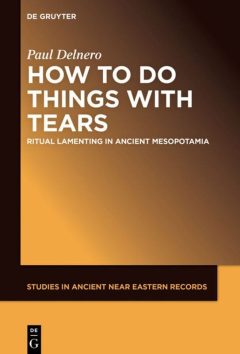
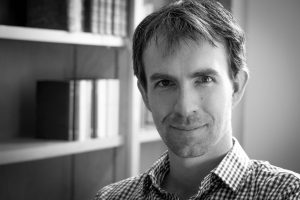
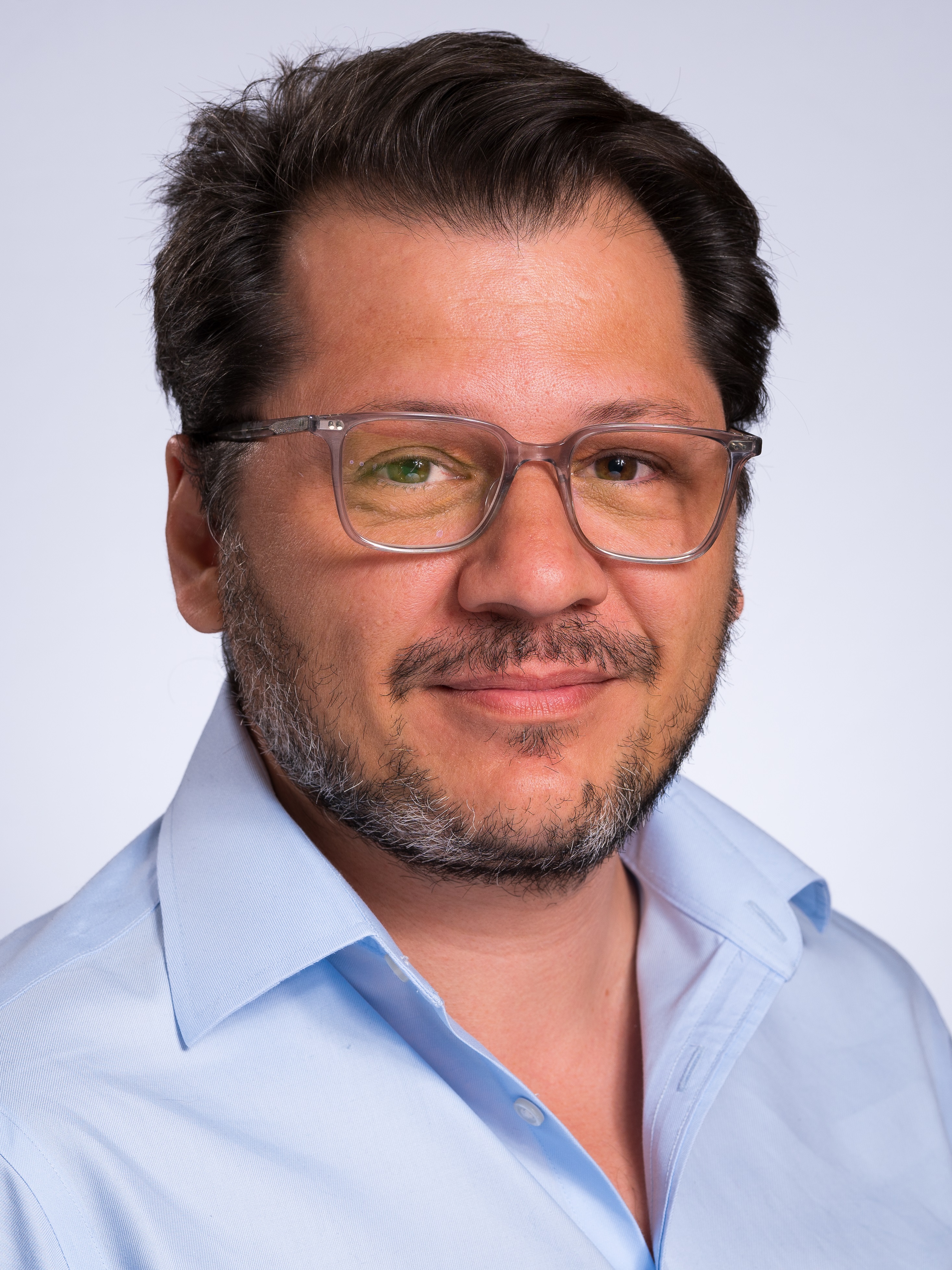
Paul A. Delnero is a Professor of Assyriology in the Department of Near Eastern Studies at Johns Hopkins University (JHU), affiliated with the Krieger School of Arts & Sciences. He joined JHU in 2008 after earning his PhD in Assyriology from the University of Pennsylvania in 2006. His research focuses on Mesopotamian religion, ritual practices, scribal education, and the material and social dimensions of cuneiform texts. His major works include The Textual Criticism of Sumerian Literature (2012), analyzing cultural transmission through textual variants, and How to Do Things with Tears (2020), examining ritual lamenting as a disaster-averting practice. He co-edited Texts and Contexts (2015), exploring the social role of ancient Near Eastern texts. Current projects include a book on Mesopotamian handwriting pedagogy. His research spans Sumerian mythology, ritual language, scribal education, and the materiality of textual archives. He frequently presents at academic conferences and contributes to archaeological initiatives like the Kurdistan Excavations and Umm el-Marra projects.
Ezekiel Choffel is an Instructor in the Department of Writing, Rhetoric, and Cultures at Michigan State University (MSU), affiliated with the College of Arts and Letters. His role focuses on First Year Writing programs, emphasizing foundational academic writing skills and rhetorical theory. While specific research interests are not elaborated in the provided text, his departmental affiliation suggests engagement with composition studies, pedagogical approaches to writing, and curriculum development in higher education. No scientific awards, grants, or published articles are listed in the available information. He may contribute to teaching initiatives or program administration within the department.
Al Duncan is an Associate Professor in the Department of Classics at the University of North Carolina at Chapel Hill (UNC-CH). He holds a PhD in Classics and Humanities from Stanford University (2012) and a BA from the University of Michigan (2006). His research focuses on ancient Greek and Roman theater, emphasizing aesthetics, materiality, and performance. He is the author of the forthcoming book Ugly Productions: An Aesthetics of Greek Drama , which explores the role of ugliness in defining theatrical genres. His research interests include cognitive approaches to drama, reception studies (especially in South Africa), and connections between performance and pedagogy. He has directed performances of classical plays and serves as Director of Undergraduate Studies for UNC’s Classics Department. Notable awards include the Schwab Academic Excellence Award (2017) and the Junior Faculty Research Grant (2016). Teaching spans classical Greek literature and courses on ancient Mediterranean culture, such as The Age of Pericles and Athletics in the Greek and Roman World . He has advised graduate students on topics like tragic trauma, tyranny in drama, and Apollonius’ Argonautica . His work bridges academic scholarship with public engagement, including lectures on Euripides and Socrates.
Dr. Giouli Korobili is a former academic staff member at the Humboldt-Universität zu Berlin, affiliated with the Faculty of Language, Literature and Humanities and the Department of Classics . Her research focuses on ancient philosophy, particularly Aristotle's works on natural philosophy, medicine, and biological theories. She has contributed significantly to the analysis of classical texts such as De Juventute et Senectute and their relationship with Hippocratic medical writings. Research Interests: Aristotle's methodology, ancient medical theories, philosophical analysis of vitality, and interdisciplinary approaches to classical texts. Publications: Authored/co-edited volumes on Aristotle's biological and medical thought, including a monograph on Youth and Old Age and co-edited The Nutritive Soul in Ancient and Medieval Philosophy and Medicine . Dr. Korobili’s work bridges ancient philosophy, medicine, and natural science, with notable contributions to understanding Aristotle's engagement with empirical evidence and his integration of philosophical inquiry with physiological observation. She has also collaborated on exhibitions like The Soul is an Octopus , exploring ancient concepts of life and the body. Contact: gkorobili@hotmail.com
Robert J. Moon is an Adjunct Professor at the Georgia Institute of Technology (GT) and Purdue University, holding positions in their respective Schools of Materials Science and Engineering and Materials Engineering. Stationed at GT’s Renewable Bioproducts Institute, his research focuses on cellulose nanomaterials (CN), emphasizing processing-structure-property relationships, nanocomposites, hybrid composites, recyclable solar cells, and multi-scale modeling. Collaborations include joint efforts with Purdue and GT researchers. His work addresses environmental sustainability challenges through advanced materials engineering. No specific grants, advising records, or awards are detailed in the provided text. Current affiliation: Renewable Bioproducts Institute (GT) Adjunct roles: GT’s School of Materials Science and Engineering, Purdue’s School of Materials Engineering Dr. Moon’s research integrates interdisciplinary approaches to advance CN applications, with an emphasis on material characterization and scalable technologies.
Dr. Stellios Arseniyadis is a Professor of Organic Chemistry at Queen Mary University of London (QMUL), affiliated with the School of Physical and Chemical Sciences and the Centre for Chemical Research. He holds a PhD and is a Fellow of the Royal Society of Chemistry (FRSC). His research focuses on developing novel synthetic methodologies, including asymmetric catalysis, photoredox catalysis, and biohybrid systems, with applications in natural product synthesis and sustainability. Education: PhD in Chemistry, trained at leading institutions (specific details not explicitly stated in provided texts). Research interests span asymmetric catalysis (e.g., palladium-catalyzed allylic alkylation, copper catalysis with nitro compounds), biohybrid systems (DNA/RNA hybrid catalysis), and sustainable synthesis. His lab has pioneered methods for functionalized allyl boranes, difluoromethylated heterocycles, and scalable photochemical processes. Key collaborations include industry partnerships with AstraZeneca, ORIL Industrie, and Sanofi Chimie. Grants include funding for projects like radiopaque polymer development (£75k) and ADC linker design (£60k). Notable awards include the FRSC distinction. Supervised PhD students focus on topics like chiral heterocycles and sustainable chemistry. The Arseniyadis Lab hosts a dynamic team with active engagement in cutting-edge organic synthesis and catalytic innovation. Lab facilities include advanced flow chemistry setups and 3D-printed reactors. Ongoing work emphasizes green methodologies and biomedical applications, such as targeted drug delivery via ultrasound-triggered composite droplets.
Brooke Mulhollem serves as Senior Lecturer in the Department of English at North Carolina State University. Her primary affiliation is with the Department of English where she contributes to undergraduate and graduate teaching programs. While specific research interests are not detailed in the provided text, her role in the Department of English suggests expertise in areas such as composition studies, rhetoric, and writing pedagogy. No publications or awards are listed in the current profile information. She can be reached at rbcalton@ncsu.edu and holds office hours on Wednesdays from 1:30 p.m. to 3:30 p.m. in Tompkins Hall G116A.
Rongmon Bordoloi is an Assistant Professor of Physics at North Carolina State University's College of Sciences, specializing in galactic and extragalactic astrophysics. His research focuses on the origins and evolution of galaxies, particularly leveraging the James Webb Space Telescope (JWST) for post-launch observational programs. He investigates circumgalactic and intergalactic medium dynamics, galaxy outflows, and cosmic reionization processes. Key research areas include: (1) gas flows around galaxies, (2) ultraviolet properties of multiphase gas, (3) circumgalactic medium (CGM) structure in systems like Andromeda, and (4) high-redshift galaxy-quasar interactions. Recent work explores the interplay between galactic evolution and cosmic-scale phenomena using state-of-the-art observational techniques. His recent publications (2024–2025) highlight studies on galactic outflows, reionization epoch dynamics, and quasar-galaxy correlations. Despite his prolific research output, no formal awards, grants, or advising records are explicitly mentioned in the provided texts. No lab affiliations or team collaborations are detailed in the available data.
Billy Badger is a Senior Lecturer in German at the University of Tasmania’s School of Humanities, part of the College of Arts, Law and Education. He specializes in German literature and modern poetry analysis, with a focus on authors such as Bas Böttcher and Erich Fried. His research explores themes like poetic form, metaphorical language, and cultural studies. He has held administrative roles including Head of Global Cultures and Languages and Associate Head of Learning and Teaching in the Humanities. Education: PhD (2002): University of Tasmania, ‘Zwischen dem Meer und dem Nichtmehr: Anxiety, Repression and Hope in the Works of Erich Fried’ BA(Hons) (1998): University of Tasmania BEd (1983): Tasmanian College of Advanced Education GradDip (1996): Modern Languages, University of Tasmania Research Interests: Badger’s work centers on modern German poetry, particularly Bas Böttcher’s stylistic innovations, Erich Fried’s existential themes, and pedagogical approaches to language learning. He investigates interdisciplinary intersections between literature, music, and visual arts, emphasizing form’s role in conveying meaning. Publications Trends: His recent articles (2020–2025) focus on contemporary German poetry’s formal experimentation, political art symbolism, and language acquisition challenges. Earlier works (2009–2010) analyzed metaphorical structures in Böttcher and Fried’s works, highlighting themes of hope, identity, and cultural critique. Affiliations: Member of the German Studies Association of Australia and LAAG (Linguistic Networks). He co-edits the ‘Bausteine eins’ series on German language learning.
Harald Hau is a Professor of Economics & Finance at the University of Geneva's Geneva School of Economics and Management (GSEM) and holds the SFI Senior Chair. He previously taught Finance at INSEAD for a decade, contributing to MBA and executive programs. His affiliations include research fellowships at the Center for Economic Policy Research (CEPR), the Center for Economic Studies (CES), and the Hong Kong Institute for Monetary Research (HKIMR), alongside visiting roles at the IMF and European Central Bank. Education: Not explicitly mentioned in the text. Research Interests: Harald Hau specializes in international finance, financial stability, and macroeconomics. His work explores corporate governance, financial regulation, and the impact of global economic policies on markets and institutions. Recent studies focus on IPO approvals, patent holdups, and real estate booms' effects on corporate investment. Scientific Trends: His research spans empirical finance, macroeconomic policy, and international economics. Keywords include Corporate Governance , Financial Regulation , and Global Investment , with sub-fields addressing Board Competence , Shareholder Overlap , and Administrative Discretion . Scientific Awards: Joseph de la Vega Prize, Federation of European Stock Exchanges Standard Life Prize, European Corporate Governance Institute Best Paper Prize, Foundation Europlace Paris Grants & Collaborations: His work is supported by institutions like the Swiss Finance Institute and involves collaborations with global scholars and policy organizations such as the IMF and ECB.
Dr. Sein Leung Soo is a Professor in the Department of Mechanical Engineering at the University of Birmingham, specializing in machining advanced alloys and composites, and modeling cutting processes. He holds a PhD and BEng in Mechanical Engineering and has authored over 40 publications in journals and conferences. His research focuses on advanced materials machining, hybrid processes, EDM, and surface integrity evaluation. Education: BEng in Mechanical Engineering (1999) PhD in Manufacturing & Mechanical Engineering (2003) Research Interests: Dr. Soo’s work centers on machining of advanced materials (e.g., aerospace alloys, composites), process modeling, non-conventional cutting techniques, and hybrid manufacturing. His research addresses challenges in achieving high precision and minimizing material damage during machining operations. Advising & Grants: He currently supervises 9 doctoral researchers on topics like micro-machining, workpiece integrity modeling, and advanced alloy processing. His research has been supported by grants from industry and academic partnerships, though specific grant details are not detailed in the text. Labs & Collaborations: Associated with the Advanced Manufacturing Technology Centre, he collaborates on projects involving laser micro-processing and hybrid manufacturing technologies. His work bridges theoretical modeling and industrial applications, contributing to advancements in manufacturing efficiency and material utilization.
Paul Mayer is a Full Professor in the Department of Chemistry and Biomolecular Sciences at the University of Ottawa, Faculty of Science. His research focuses on gas-phase ion chemistry, with expertise in mass spectrometry, chemical kinetics, and atmospheric chemistry. He collaborates internationally, including with groups in Argentina and France, studying reactive organic carbon and polycyclic aromatic hydrocarbons. He leads the John L. Holmes Mass Spectrometry Facility, where he explores hydrosol composition and plant extract analysis. His work combines experimental techniques like synchrotron radiation and computational chemistry to understand ion dynamics in environmental and interstellar contexts. Education details are not explicitly provided in the text, but his academic position suggests a PhD in Chemistry. He actively mentors undergraduate and Honours students in projects involving microwave distillation, hydrosol analysis, and PAH reactivity. Ongoing research includes atmospheric chemistry collaborations and studies on plant-derived compounds using GC-MS and LC-MS. Research interests emphasize ion dissociation mechanisms, atmospheric aerosol interactions, and the application of mass spectrometry to biological systems. His facility supports interdisciplinary projects, such as analyzing hydrosols from various plant species for therapeutic and cosmetic applications.
Claudia Molitor is a composer, artist, and performer at City St George's, University of London, where she is affiliated with the Department of Music and Sound Arts within the College of Arts and Sciences. Her work bridges music, sound art, video, and fine art, with a strong focus on interdisciplinary and collaborative practices. University: City St George's, University of London School: College of Arts and Sciences Department: Department of Music and Sound Arts Email: claudia.molitor@citystgeorges.ac.uk Her research explores composition as a cultural and technological practice, particularly through the lens of expanded notation, the phenomenology of listening, and collaborative creation. Her artistic inquiry often engages with philosophical concepts such as Timothy Morton’s 'hyperobject,' challenging traditional notions of authorship and the musical work. The breadth of her recent publications and compositions reveals a sustained engagement with themes of perception, environment, embodiment, and materiality. Projects like Sonorama , The Singing Bridge , and MELT demonstrate her interest in site-specific sound installations, acoustic ecology, and the interplay between sound and space. Her work frequently integrates technology, historical reconstruction (e.g., Walking with Partch ), and sensory experience. Notable scientific contributions include peer-reviewed articles such as 'Composition as Hyperobject' and 'Curating experience: Composition as cultural technology – a conversation,' reflecting her theoretical depth and engagement with contemporary art discourse. She has been actively involved in mentoring and collaborative research, though specific student names are not listed. Her artistic projects often involve partnerships with institutions like Tate Britain, NMC Recordings, and the British Library, indicating significant grant and project funding, though specific grants are not detailed. Her creative output is exhibited and performed internationally, including at festivals such as Wien Modern, hcmf//, Spor, BBC Proms, and Sonica, as well as venues like Somerset House and the Onassis Cultural Centre. These engagements suggest leadership in collaborative artistic teams and labs focused on experimental sound and interdisciplinary research.
Erik Nystrom is a composer and academic at City, University of London, specifically affiliated with City St George's, where he conducts research and artistic work in electroacoustic and computer music. His practice centers on multichannel sound, spatial texture, and live interactive performance using algorithmic systems. He previously held a Leverhulme Early Career Fellowship at the University of Birmingham’s BEAST studio, contributing significantly to spatial synthesis and performance aesthetics. Education: PhD in Electroacoustic Music, City University, London (supervised by Denis Smalley) MA in Electroacoustic Music, City University, London (supervised by Denis Smalley) Erik’s research explores the intersection of human and machine agency in improvisation, focusing on post-human cognition, nonconscious processes, and the concept of intra-action. His work integrates machine learning, agent-based systems, and real-time synthesis, particularly through the SuperCollider environment. He investigates how algorithmic systems can co-create with human performers, generating emergent sonic textures through feedback and listening behaviors. Key themes include spatial sound, acousmatic improvisation, and the philosophical underpinnings of technological creativity. His 15 most recent works and publications reveal a strong trend toward algorithmic improvisation, cognitive assemblages, and spatial synthesis. The articles and compositions emphasize machine learning, real-time interaction, and the blurring of composition and performance. Subfields such as post-human attractors, topographic synthesis, and listening agents dominate his recent output, reflecting a deep engagement with both technical innovation and philosophical inquiry in music. Scientific Awards: Leverhulme Early Career Fellowship (2015–2018) The Merciful Company Cordwainer's Prize for Outstanding Achievement on the MA Programme Mercer's Music Prize for Most Outstanding Achievement on the PhD Programme Audience Prize at Metamorphoses International Electroacoustic Composition Competition, Brussels (2010) Erik has advised no formal students listed in the text, but his research has been supported through competitive grants such as the Leverhulme Fellowship. He has presented his work globally at major conferences including ICMC, SMC, NIME, and Beyond Humanism. His compositions have been released by empreintes DIGITALes and performed at institutions like the University of Oxford and De Montfort University. He is actively involved in creative labs and research teams, notably through his work with BEAST (Birmingham Electroacoustic Sound Theatre) and participation in symposia such as the IKO/OSIL Symposium in Graz, Austria. His current practice involves developing interactive systems for live spatial performance, often involving collaborative electroacoustic composition with intelligent agents.
Alex Jordan is an Associate Professor and Program Director in the Plastics Engineering program at the University of Wisconsin-Stout, affiliated with the Robert F. Cervenka School of Engineering within the College of Science, Technology, Engineering, Mathematics & Management. He contributes to undergraduate and graduate education in engineering with a focus on advanced polymer technologies. Education: Ph.D. in Macromolecular Science & Engineering, Case Western Reserve University B.S.E. in Chemical Engineering, Case Western Reserve University His research centers on polymer processing, rheology, and the relationship between manufacturing processes and material properties. He has developed techniques for fiber-reinforced hydrogels and studied crystalline structure evolution in composites, contributing to innovations in mechanically tunable biomaterials and polymer blends. His expertise extends to interfacial crystallization in polyolefin systems, with implications for industrial processing and material performance. Alex Jordan has no listed scientific awards or publications in the provided text. However, his academic and research trajectory suggests active engagement in materials engineering and plastics technology development. He completed a two-year postdoctoral fellowship at the University of Minnesota, where he investigated interfacial crystallization during the processing of polyolefin blends, further strengthening his expertise in polymer science. There is no mention of student advising, grants, or laboratory leadership in the available information.