Michael McAlpine is a Professor in the Mechanical Engineering department at the University of Minnesota . He also holds affiliations with the Biomedical Engineering and Electrical and Computer Engineering departments. His research focuses on 3D printing functional materials & devices , Nanoscale inks , Biomedical devices , Bioelectronics , and Flexible Microsystems . Research Interests : 3D Printing, Biomedical Engineering, Nanotechnology, Flexible Electronics, Microfluidics Labs : ME 361/363 Contact : mcalpine@umn.edu , (612) 626-3303, ME 117 Recent Research Trends include 3D Printed Biomedical Devices , Flexible Electronics , and Bioprinting Applications . His work spans from Spinal Organoid Formation to Programmable Drug Release Capsules . Scientific Award : Circulation Research 2020 Best Manuscript Award
Antony Franklin is an Associate Professor and Head of the Department of Computer Science and Engineering at the Indian Institute of Technology Hyderabad (IITH), India. He leads the Networked Wireless Systems (NeWS) Lab and is actively involved in 5G research, wireless networks, and cybersecurity. He earned his Ph.D. from IIT Madras in 2010. Education: Ph.D. in Computer Science and Engineering, IIT Madras, 2010 Research Interests: His research spans wireless networks , 5G systems , mobile edge computing , low-latency transport protocols , and cybersecurity . He focuses on next-generation mobile systems, especially 5G, aiming to meet the demands of ultra-low latency, high data rates, and quality of experience for services like IoT, autonomous driving, and VR. He has been involved in developing testbeds and prototypes to validate real-world performance of 5G technologies, including network slicing, LTE-WiFi integration, and edge computing. Scientific Awards: Best Academic Demo Award, IEEE COMSNETS 2018 Second Best Paper Award, IEEE ANTS 2017 Grants & Projects: Network Slice Life-cycle Management for 5G Mobile Networks – SPARC, MHRD (2019–2021) DNS/IPv6 for IoT Security – NASSCOM (2018–2019) CCRAN: Energy Efficiency in Cloud RAN – Intel India (2018–2021) End-to-End 5G Test-Bed – DoT, GoI (2018–2021) M2SMART Smart Cities – SATREPS (2018–2023) Ultra-Reliable Low Latency Protocols – STINT, Sweden (2017–2018) Low Latency 5G Protocols – SERB ECR (2016–2019) Lab & Team: He leads the NeWS Lab (Networked Wireless Systems) at IITH, which focuses on 5G, wireless networks, and IoT systems. The lab is actively involved in developing real-world testbeds and publishing in top-tier conferences and journals.
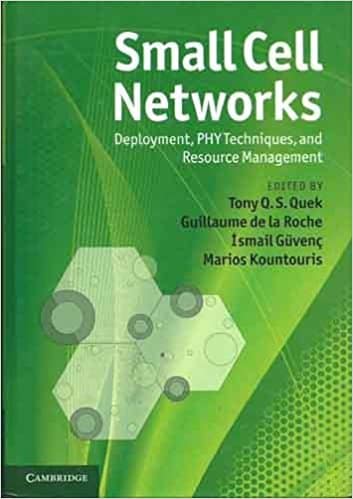
Dr. Ismail Guvenc is a Full Professor in the Department of Electrical and Computer Engineering at North Carolina State University. He holds an IEEE Fellowship and is a Senior Member of the U.S. National Academy of Inventors. His research focuses on 5G/6G wireless systems, UAV communications, heterogeneous networks, and spectrum management. He leads the NSF AERPAW project and serves as the NC State Site Director for the NSF BWAC I/UCRC center. Dr. Guvenc has authored/co-edited four books and holds over 30 U.S. patents. Education: Ph.D. in Electrical Engineering, University of South Florida (2006) Master's in Electrical and Computer Engineering, University of New Mexico (2003) Bachelor's in Electrical Engineering, Bilkent University, Turkey (2001) Research Interests: Dr. Guvenc’s work spans UAV communication systems, 5G/6G networks, spectrum sensing, and machine learning for network optimization. He emphasizes experimental validation through platforms like AERPAW, focusing on drone-based networks, radio dynamic zones, and testbed-driven innovation. His contributions address challenges in UAV localization, interference management, and energy-efficient networks. Grants & Leadership: PI and Director of NSF AERPAW (2019–Present) NC State Site Director for NSF BWAC I/UCRC (2019–Present) Recipient of NSF CAREER Award (2015) and NC State Faculty Scholar Award (2021) Publications & Awards: He has authored over 130 peer-reviewed papers and contributed to standardization efforts. His awards include the R. Ray Bennett Faculty Fellow Award (2019) and the USF Outstanding Dissertation Award (2006). Labs & Teams: Dr. Guvenc directs research in the ECE’s wireless communications group, leveraging AERPAW’s experimental capabilities to advance UAV networks and 6G technologies. His team collaborates with industry and government on spectrum policy and autonomous systems.
Haryadi S. Gunawi is a Professor in the Department of Computer Science at the University of Chicago where he leads the UCARE research group (UChicago systems research on Availability, Reliability, and Efficiency). His work focuses on improving the dependability of storage and cloud computing systems, with a particular emphasis on addressing performance stability, reliability, and scalability challenges in modern computing environments. Dr. Gunawi received his Ph.D. in Computer Science from the University of Wisconsin, Madison in 2009. Following his doctoral studies, he was a postdoctoral fellow at the University of California, Berkeley from 2010 to 2012 before joining the University of Chicago faculty. His research focuses on three main areas: (1) performance stability, where he builds storage and distributed systems robust to latency tails and "limping" hardware; (2) reliability and scalability, where he addresses concurrency and scalability bugs in cloud-scale distributed systems; and (3) the intersection of machine learning and systems, exploring how machine learning techniques can solve operating and storage system problems. His work often combines theoretical insights with practical system implementations that address real-world challenges in cloud and storage infrastructure. Dr. Gunawi's publication record shows a consistent focus on storage and cloud system reliability, with recent work increasingly incorporating machine learning techniques to address traditional systems challenges. His research spans the full stack from hardware interfaces to distributed system design, with a strong emphasis on practical solutions that can be deployed in production environments. His work often involves close collaboration with industry partners to ensure real-world relevance and impact. Dr. Gunawi has received numerous prestigious awards including the NSF CAREER award, NSF Computing Innovation Fellowship, Google Faculty Research Award, multiple NetApp Faculty Fellowships, and an Honorable Mention for the 2009 ACM Doctoral Dissertation Award. He has also received the Provost's Global Faculty Award and Facebook Faculty Research Award, highlighting the broad recognition of his contributions to the field. As an advisor, Dr. Gunawi has mentored several PhD students including Ruidan Li, Ray Andrew, Rani Ayu Putri, and William Nixon. His research has been supported by major grants from NSF, Google, Facebook, and NetApp, enabling his team to pursue ambitious research projects at the intersection of systems, storage, and machine learning. Dr. Gunawi leads the UCARE research group at UChicago, which focuses on improving the dependability of storage and cloud-scale distributed systems. He is also involved with the Chameleon cloud research infrastructure project and the broader Systems Group at UChicago, contributing to a vibrant research community focused on systems, programming languages, and software engineering.
Dr Brandon M Grainger is an Eaton Faculty Fellow and Associate Professor of Electrical and Computer Engineering at the University of Pittsburgh’s Swanson School of Engineering, where he also directs the Electric Power Technologies Laboratory, serves as Associate Director of the Energy GRID Institute, and co-directs Pitt AMPED. A key architect of Pitt’s electric power program since 2008, he focuses on advanced power conversion, high-voltage electronics, wide-band-gap semiconductors, and aerospace power systems. Education PhD, Electrical Engineering (Power Conversion), University of Pittsburgh, 2014 MS, Electrical Engineering, University of Pittsburgh, 2011 BS, Mechanical Engineering & Minor in Electrical Engineering, University of Pittsburgh, 2007 Executive Education Certificate, Tepper School of Business, Carnegie Mellon University, 2019 Research Focus Dr Grainger’s work lies at the intersection of power electronics, high-voltage engineering, and sustainable energy systems. He specializes in medium- and high-voltage power electronics (HVDC, STATCOM), resonant converters, and ultra-high-power-density designs leveraging SiC and GaN semiconductors. His investigations extend to electric-vehicle traction drives, solid-state transformers, optimized magnetics for aerospace applications, and resilient microgrids. He and his students routinely collaborate with NASA JPL, Johns Hopkins APL, Honeywell Aerospace, and the Naval Research Laboratory, leveraging Pitt’s NSF SHREC center to push the boundaries of power conversion in space and defense systems. Selected Research Themes High-frequency, high-density DC/DC converters for satellite power systems Radiation-tolerant GaN converters and point-of-load power stages Medium-voltage testbed development (13.8 kV, 5 MVA) Rare-earth-free permanent-magnet machine topologies Model-predictive control of multi-phase drives and microgrids Honors & Awards 2024 IEEE Region 2 Outstanding Educator Award 2024 Pitt STRIVE Outstanding DEI Service Award 2019 ESWP Engineer of the Year 2019 ASEE 2nd Place Best Paper Award 2019 SRI Undergraduate Best Mentor Award Richard K. Mellon Endowed Graduate Fellowship National Academies of Science & Engineering Ambassador Senior Member, IEEE Grants & Industry Partnerships Dr Grainger’s research has been continuously funded by federal agencies and industry partners including NASA JPL, Johns Hopkins APL, Honeywell Aerospace, the Naval Research Laboratory, Eaton, and the National Science Foundation through the SHREC Center. These awards support graduate students and post-docs working on next-generation power systems for aerospace, naval, and terrestrial applications. Laboratories & Teams Director, Electric Power Technologies Laboratory (EPTL) Associate Director, Energy GRID Institute Co-Director, Pitt AMPED (Advanced Multimodal Power and Energy Development) Faculty Affiliate, NSF SHREC Center
Jeffrey Krolik is a Professor of Electrical and Computer Engineering at Duke University's Pratt School of Engineering. He holds a Ph.D. in Electrical Engineering from the University of Toronto (1987) and previously served as an Assistant Professor at Concordia University and Assistant Research Scientist at Scripps Institution of Oceanography. Ph.D. University of Toronto (1987) M.A. University of Toronto (1983) B.A. University of Toronto (1980) His research focuses on physics-based and statistical signal processing with applications in radar, sonar, microwave remote sensing, and medical imaging. Key projects include adaptive beamforming for ocean acoustic waveguides, aircraft height finding via HF radar, and motion-robust fMRI algorithms. Recent publications cover multipath mitigation in sonar arrays, vibrational radar backscatter communication, and CNN implementations for radar signal processing. His work spans underwater acoustics, urban radar tracking, and distributed sensor networks. He teaches advanced courses in sensor array signal processing, digital audio systems, and radar applications. His research has been supported through collaborations with institutions like Scripps and consulting roles with ONR, DARPA, and Air Force Rome Laboratories. Key contributions include waveguide invariant processing, matched-field beamforming, and novel approaches to radar clutter suppression in urban and maritime environments. His work integrates statistical signal processing with physical propagation models across diverse domains.
Itsuro Morita is Professor in the School of Fundamental Science and Engineering, Faculty of Science and Engineering, Waseda University, Tokyo. Before joining Waseda in 2022 he spent 23 years at KDDI R&D Laboratories, advancing from researcher to executive research fellow, and has been a visiting researcher at Stanford University. He is an IEEE Fellow and IEICE Fellow recognized for pioneering large-capacity, long-haul optical transmission systems. Education: 2004 – 2005 Tokyo Institute of Technology, Graduate School of Science & Engineering, Department of Electrical and Electronic Engineering (Doctoral coursework) 1990 – 1992 Tokyo Institute of Technology, Graduate School of Science & Engineering, Department of Physical Electronics (M.E.) 1986 – 1990 Tokyo Institute of Technology, School of Engineering (B.E.) Research Interests: Morita’s work sits at the intersection of optical fiber communication and software-defined networking. He explores ultra-high-capacity transmission via space-division multiplexing (multi-core/few-mode fibers), real-time MIMO digital signal processing for modal crosstalk mitigation, and SDN/NFV orchestration of disaggregated optical networks. Additional interests include quality-of-transmission estimation using machine learning, telemetry-enabled control planes (gRPC/gNMI), and metro-embedded edge/cloud architectures for IoT services. Publication Trends: Recent articles emphasize two converging themes: (i) petabit-per-second SDM/WDM experiments using novel fiber geometries and real-time DSP, and (ii) cloud-native SDN control frameworks that integrate machine-learning-based QoT prediction, YANG/NETCONF modeling, and open APIs (TAPI/OpenConfig) for multi-domain, partially disaggregated networks. These works collectively push both the physical capacity frontier and the agility of next-generation optical infrastructure. Scientific Awards: C&C Prize 2024 (NEC C&C Foundation) – contributions to WDM optical submarine cable systems IEICE Achievement Award 2021 – pioneering research on 10-Pbit/s ultra-large-capacity SDM transmission Telecom System Technology Award 2021 – 10.16-Pbit/s dense SDM/WDM transmission record IEEE Fellow (2021) – contributions to large-capacity high-speed transmission systems IEICE Fellow (2020) – research on trans-oceanic high-speed optical signal transmission Ichimura Industrial Award – Contribution Prize 2018 – development of terabit-class submarine cable systems Maejima Hisoka Award 2012 – proposal and demonstration of distributed-control soliton communication Minister of Economy, Trade and Industry Award for Advanced Technology 2006 – 160 Gbit/s ultra-high-speed optical transmission technology Advising & Grants: At Waseda University Morita advises graduate students on experimental photonic networking and leads externally funded projects on petabit SDM transmission and SDN orchestration. While specific grant numbers are not disclosed, his continuous industry-university collaborative testbeds (with KDDI, CTTC, and others) indicate substantial competitive funding. Labs & Teams: He heads the Optical Space-Division-Multiplexing Laboratory at Waseda, maintaining joint experimental facilities with KDDI Research and international partners (e.g., CTTC, Spain). The group operates real-time coherent MIMO testbeds, multi-domain SDN controllers, and fiber-level SDM prototypes capable of petabit-per-second demonstrations.
Vijay K. Shah is an Assistant Professor in the Electrical and Computer Engineering Department at North Carolina State University, leading the NextG Wireless Lab. His research focuses on advancing wireless communication and network technologies for beyond 5G/6G systems, including O-RAN architecture, spectrum management, and AI-driven network optimization. Education: Ph.D. in Computer Science, University of Kentucky (2019) Bachelor's in Computer Science and Engineering, National Institute of Technology, Durgapur (2013) Research emphasizes open radio access networks (O-RAN), mmWave testbeds, and cross-layer optimization. Recent work highlights include ORAN-Bench-13K (LLM benchmarking), ZT-RIC (zero-trust security frameworks), and Milli-O-RAN (reconfigurable mmWave networks). His contributions span O-RAN applications (xApps/rApps), satellite-terrestrial coexistence, and AI-driven positioning systems. Experimental validations include 3GPP-compliant 5G positioning and adversarial attack defenses. Publications reflect expertise in O-RAN architecture evolution, spectrum policy tools (ASCENT), and UAV-based network coordination (GLIDE). Current projects explore LEO satellite constellations and resilient disaster response networks. Labs/Teams: Head of the NextG Wireless Lab at NC State, focusing on prototype development in O-RAN, 6G, and secure AI-driven networks.
Flavio Esposito is an Associate Professor in the Computer Science Department at Saint Louis University's School of Engineering. He also serves as a Research Institute Fellow and CS Graduate Coordinator. His office is located in ISE 234D at 3450 Lindell Blvd, St. Louis, MO. Dr. Esposito's research focuses on cyber-physical systems and networked systems, including network virtualization, network management, Software-Defined Networks (SDN), network architectures, and wireless networks. He has a strong interest in interdisciplinary applications of these technologies to medicine and agriculture. His work bridges theoretical networking concepts with practical implementations. His publications span key areas in networking research, with recent work focusing on congestion control algorithms, virtual network embedding, recursive network architectures, and edge computing applications. The research trends show a progression from foundational networking protocols toward more sophisticated applications integrating machine learning, edge computing, and cyber-physical systems, with increasing emphasis on real-world applications in diverse domains. Outstanding Graduate Mentoring Faculty Award from the School of Engineering (2021) Finalist for the Undergraduate Mentoring Award in the College of Arts and Sciences Multiple NSF research awards including US Ignite, ICE-T, CNS Core, CC* Integration, CPS:TTP, and ModernCARE projects COMCAST Innovation Fund Award (January 2020) International Center for Responsible Gaming (ICRG) Award ($150K) Dr. Esposito actively mentors PhD and MS students, with numerous current and past students who have gone on to positions at major tech companies, universities, and research institutions. He has been a Principal Investigator on multiple significant research grants totaling millions of dollars. He co-founded Spaghetti Code Labs with former PhD student Alessandro Sangiorgi, whose cybersecurity educational app WeeNet has achieved 5.7M+ downloads. He leads several research labs and teams focused on cyber-physical systems, with current openings for PhD students, visiting researchers, and postdocs working on networks, learning, edge computing, and applications to medicine and agriculture. His teams have developed numerous software systems including Software Mutant, Neighborhood Method Prototype, VINEA, ProtoRINA, and BUtorrent.
Kevin Schneider is a Laboratory Fellow at Pacific Northwest National Laboratory (PNNL), a Research Professor at Washington State University (WSU), and an Affiliate Associate Professor at the University of Washington. As manager of PNNL's Office of Electricity Subsector, he leads business development, client relations, and strategic investments in R&D for the grid sector, overseeing portfolios in component design, system modeling, hierarchical controls, secure communications, and energy storage. Dr. Schneider is internationally recognized for his expertise in power system analysis, planning, and operations. His research focuses on improving grid reliability and system flexibility by harnessing advanced grid concepts at the edge of power systems, including microgrids, energy storage, electric vehicles, distributed energy resources, and smart home appliances. At WSU, he is a researcher for the WSU and PNNL Advanced Grid Institute (AGI), implementing layered control architectures to enhance operational flexibility of critical power systems. His work spans multiple disciplines within electrical engineering and power systems, with strong emphasis on practical applications for grid modernization, particularly in grid resilience, microgrid operations, and integration of distributed energy resources. Dr. Schneider is a Fellow of the Institute of Electrical and Electronics Engineers (IEEE), where he has served in multiple technical leadership roles. His scientific contributions have been recognized with significant awards: Presidential Early Career Award for Scientists and Engineers (PCASE), 2019 Fellow of the Institute of Electrical and Electronics Engineers (IEEE) Dr. Schneider earned his B.S. in Physics and M.S. and Ph.D. in Electrical Engineering from the University of Washington. He is a licensed Professional Engineer in Washington State. His research has resulted in numerous patents related to power grid technologies, including several focused on voltage and frequency stability of distribution systems. His work has substantial implications for grid modernization efforts and the development of more resilient power systems in the face of climate change and other challenges.
Sean Wilson is a Researcher at the Georgia Institute of Technology , affiliated with the College of Engineering and the School of Electrical and Computer Engineering . He serves as the Collaborative Autonomy Branch Chief at the Georgia Tech Research Institute (GTRI) and Director of the Robotarium Lab (https://www.robotarium.gatech.edu/), which provides free remote access to robotic hardware for algorithm testing. Educational Background: B.A. in Physics and Mathematics from State University of New York at Geneseo (2012) M.S. and Ph.D. in Mechanical Engineering from Arizona State University (2017) Dr. Wilson's research focuses on remotely-accessible robotic hardware , collaborative autonomy , and control of multi-agent and swarm robotic systems . His recent publications emphasize distributed control, swarm robotics, and bio-inspired robotic behaviors. The Robotarium Lab he directs enables global access to robotics testbeds for control research. Research Themes (2014-2023): Remote-access robotics (5), swarm coordination (7), bio-inspired algorithms (3), barrier functions (2), multi-robot systems (9), and control theory (4). Sean operates from the Robotarium Lab (Office Location: CCRF B11-3133D) as part of Georgia Tech's Institute for Robotics and Intelligent Machines (IRI) core faculty. His work bridges robotics infrastructure development with theoretical control research.
Dr.-Ing. Ullrich Mönich is a Senior Researcher and Lecturer at the Technical University of Munich (TUM) , affiliated with the Chair of Theoretical Information Technology and leading research activities at the Advanced Communication Systems and Embedded Security Lab (ACES Lab) . Since 2019, he has been instrumental in shaping experimental and theoretical research in 6G communications, physical layer security, and signal processing. Education: Dr.-Ing. in Electrical Engineering, Technische Universität München (2011) – supervised by Prof. Holger Boche Previous affiliations include MIT (2012–2015) and TU Berlin Research Focus: His research spans signal processing, wireless communications, machine learning, and sampling theory , with a strong emphasis on physical layer security , computability in signal processing , and 6G communications . He explores theoretical foundations and practical implementations, including neuromorphic computing, digital twinning, and secure modular coding schemes. Publications & Trends: His recent publications (2023–2025) are heavily concentrated in 6G communications , integrated sensing and communications (ISAC) , semantic physical layer security , and digital twinning . These works often combine theoretical analysis with experimental validation using 5G/6G testbeds and neuromorphic hardware. Teaching & Supervision: Regularly teaches "Foundations of Analog, Digital, and Quantum Computers" (tutorials since 2018) Previously taught "Applied Functional Analysis" and "Advanced Signal Theory" Involved in practical courses like "Software Defined Radio Laboratory" Labs & Teams: He leads the ACES Lab at TUM, which focuses on experimental validation of advanced communication systems, including physical layer security, neuromorphic computing, and 6G testbeds. The lab collaborates with national and international partners, including MIT, and is supported by major funding bodies such as the German Federal Ministry of Education and Research (BMBF) and the German Research Foundation (DFG).
Jia Di serves as Professor and Department Head of the Department of Electrical Engineering and Computer Science at the University of Arkansas, holding the Rodger S. Kline Endowed Leadership Chair. He has been with the institution since 2004, progressing from Assistant Professor to his current leadership position within the College of Engineering. Education: B.S. in Automatic Control, Tsinghua University (1997) M.S. in Automatic Control, Tsinghua University (2000) Ph.D. in Electrical and Computer Engineering, University of Central Florida (2004) Research Focus: Dr. Di's work centers on asynchronous integrated circuit design and hardware security , with emphasis on Multi-threshold Null Convention Logic (MTNCL) for ultra-low-power secure systems. His research spans hardware Trojan detection, polymorphic logic gates, extreme environment electronics, and security solutions for IoT infrastructure. His Trustable Logic Circuit Design Lab has pioneered techniques for side-channel attack mitigation and cold boot attack prevention through self-destructive memory mechanisms. Publication Trends: Recent publications reveal a strategic shift toward hardware security applications for renewable energy systems and IoT edge devices, while maintaining core expertise in asynchronous circuit design. His work increasingly integrates machine learning (e.g., graph neural networks for hardware Trojan detection) and cross-platform verification frameworks, demonstrating evolution from pure circuit design to holistic cybersecurity solutions for critical infrastructure. Scientific Recognition: Senior Member of IEEE Eminent Member of Tau Beta Pi Elected Member of the National Academy of Inventors Research Leadership: Dr. Di has secured over $23 million in research funding for his Trustable Logic Circuit Design Lab, supporting development of 6 U.S. patents and two authoritative books. His lab collaborates with federal agencies and industry partners on hardware security challenges, with recent grants focusing on photovoltaic system protection and extreme-environment electronics. While specific student names aren't documented here, his extensive publication record indicates significant graduate mentorship in hardware security and asynchronous design. Lab Infrastructure: The Trustable Logic Circuit Design Lab maintains specialized capabilities for testing circuits in extreme environments (high temperature/radiation) and developing polymorphic security mechanisms. Current projects include RF aperture security, hardware-based IoT verification systems, and digital twin implementations for power electronics with integrated trust verification.
Dr. Crystal Fausett is an Assistant Professor in the School of Information at San José State University. Her academic work bridges human factors, cybersecurity, and human-computer interaction, with a strong focus on how individuals and teams interact with technology in high-stakes environments such as healthcare, emergency services, and cyber operations. She teaches courses including ISDA 121 – Human Centered Cybersecurity and ISDA 130 – User Centered Interface Architecture and Prototyping, reflecting her interdisciplinary expertise. Ph.D. in Human Factors, Embry-Riddle Aeronautical University (2024) M.S. in Human Factors, Embry-Riddle Aeronautical University (2022) B.A. in Psychology, San José State University (2020) A.A. in Social and Behavioral Sciences, Santa Barbara City College (2018) Her research interests include human-centered cybersecurity, human-computer interaction, usability and UX design, teamwork and transactive memory systems, training methodologies (particularly simulation-based), and information behavior across diverse user groups such as healthcare providers, cyber defenders, and naval personnel. She applies both qualitative and quantitative methods, including expert interviews, board game simulations, and meta-analytic techniques. The recent publications highlight a strong trend in applying human factors principles to cybersecurity team performance, adaptive training, and healthcare safety. Her work increasingly explores innovative methods such as gamified simulations to study team dynamics and cognitive load in complex operational environments. There is a consistent emphasis on improving system efficiency, safety, and collaboration through human-centered design. Dr. Fausett has no listed scientific awards in the provided text. She has served as an Instructor of Record in Human Factors and Behavioral Neurobiology at Embry-Riddle Aeronautical University (2023–2024) prior to her current role. There is no mention of current grant funding or student advising in the provided materials. Her research often involves collaboration with experts in human factors and healthcare, particularly Dr. Joseph R. Keebler and Dr. E. Salas, suggesting active participation in research teams focused on team performance and safety-critical systems. She is involved in research labs or teams centered on human factors in cybersecurity and healthcare, particularly through collaborative projects involving simulation-based training and team cognition studies. Her use of board games like [d0x3d!] as experimental testbeds indicates innovative lab-based methodologies for studying real-world team interactions in controlled environments.
Scott Ruoti is an Associate Professor in the Min H. Kao Department of Electrical Engineering and Computer Science at the University of Tennessee, Knoxville (UTK), affiliated with the Tickle College of Engineering. He directs the USER Lab, focusing on bridging theoretical and practical gaps in cybersecurity through interdisciplinary research. His work emphasizes empirical studies of security systems, design innovations, and rigorous evaluations. Education: PhD (2016), MS (2015), BS (2011) in Computer Science from Brigham Young University, and a BA in Chinese (2011). Prior to UTK, he was a technical staff member at MIT Lincoln Laboratory, leading projects like the Cyber.gov cybersecurity architecture and blockchain research. Research interests include authentication, usable encryption, IoT security, and smart agriculture. He has secured over $4 million in funding, including NSF CAREER and USDA grants. Awards include the John Karat Award and UTK's Professional Promise in Research Award. Teaching: Courses on cybersecurity fundamentals, applied cryptography, software security, and human factors in cybersecurity. Advisor for HackUTK student club and involved in curriculum development for UTK's online MS program. Labs/Teams: USER Lab explores usable security principles through prototyping and user studies. Collaborations span academia, industry, and government (e.g., USDA, DoE).