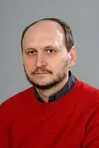
Dr.-Ing. Frank-Josef Heßeler is a Senior Research Engineer (Geschäftsführender Oberingenieur) and Deputy Institute Director at the Institute of Control Engineering (IRT), RWTH Aachen University . His work focuses on control systems for automotive and urban mobility applications, including model predictive control, vehicle localization, and intelligent infrastructure. He actively contributes to research in autonomous driving, hybrid drivetrains, and thermal systems optimization. Control Engineering Automotive Systems Model Predictive Control Thermal Diagnostics Urban Traffic Simulation His publications highlight advancements in connected vehicle localization, scenario-specific motion modeling, and hybrid drivetrain control. He collaborates extensively with Dirk Abel and other researchers. No scientific awards or student advisement details are explicitly mentioned in the provided texts. He is affiliated with the Institute of Control Engineering, engaging in projects like CERMcity (autonomous urban driving testbed) and Galileo-based navigation systems. His work integrates simulation platforms, Neuro-Fuzzy models, and hardware-in-the-loop testing for automotive control solutions.
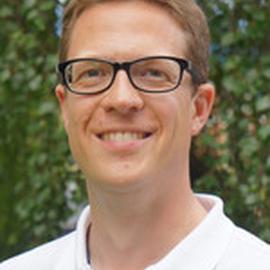
Vlad-Costin Andrei is a Researcher at the Chair of Theoretical Information Technology , Technical University of Munich (TUM), specializing in wireless communication systems and digital twinning. He joined the ACES Lab (TUM's Chair of Theoretical Information Technology) in late 2021 after 3.5 years in the aerospace and defense industry. Research Focus: Joint Communications and Sensing (6G), Neuromorphic PHY Layer, Digital Twins, MIMO-OFDM Resilience Projects: 6G-life, 6G Future Lab Affiliation: ACES Lab, TUM His work bridges theoretical foundations with practical implementations, including demonstrations of digital twinning platforms and sensing-assisted receivers. Recent publications emphasize anti-jamming frameworks, federated learning over wireless networks, and trajectory optimization for UAV-enabled ISAC systems. Scientific Awards: Best Paper Award, IEEE Symposium on Joint Communications and Sensing (2023) His research is supported by third-party grants such as BMBF's 6G-life, DFG's Gottfried Wilhelm Leibniz Prize, and multiple collaborative projects.
Nicolai Kröger is a researcher at the Chair of Communication Networks (Prof. Kellerer) at the Technical University of Munich (TUM). He holds an M.Sc. in Electrical and Computer Engineering from TUM, where his thesis focused on P4 switch performance modeling using queuing theory. His current research centers on 6G networks for critical telemedicine applications, particularly within the 6G-Life project, emphasizing end-to-end communication for medical robotics and surgical systems. He contributes to projects like the 6G Future Lab Bavaria and collaborates with the MITI group at Rechts der Isar Hospital to develop medical testbeds requiring high availability and low latency. Kröger also supervises student theses on 5G/6G security, network optimization, and in-network computing. His technical expertise spans programmable networks (P4), SDN, and performance analysis of network devices. He serves as a supervisor for student projects and internships, including implementations of medical testbeds and security analyses of cellular broadcast messages. His work bridges academic research with practical applications, aiming to advance communication networks for healthcare and future 6G systems.
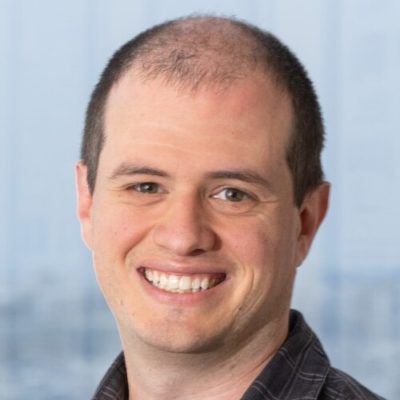
Charles L. A. Clarke is a Professor at the University of Waterloo, Canada, with a focus on Information Retrieval and Large Language Model evaluation . He actively contributes to research in search algorithms, human-computer interaction, and computational linguistics. Recent Research Trends : His work examines LLM limitations in relevance assessment, adversarial robustness in legal domains, and hybrid human-AI evaluation frameworks. Workshop Leadership : Co-organizer of the Search Futures Workshop (ECIR 2024/2025) and LLM4Eval@SIGIR. Collaborations : Works with researchers from NII, Microsoft, and ACM SIGIR on testbed development and evaluation methodologies. Key Article Trends : His 2024-2025 publications analyze LLM vulnerabilities, develop evidence retrieval systems, and create metrics for human-AI alignment in generative applications. Subfields include adversarial attacks, prompt sensitivity, and semantic graph frameworks. Scientific Contributions : Focuses on bridging algorithmic performance with human judgment validity, emphasizing ethical AI deployment and robust information access systems.
Jun-ichi Takada is a prominent researcher in wireless communications with extensive contributions to radio channel modeling, millimeter wave propagation, and wireless body area networks. His work spans over 15 years with consistent high-impact publications in IEEE journals and conferences. Dr. Takada's research focuses on several key areas in wireless communications: Advanced radio channel modeling for 5G/6G systems Millimeter wave propagation characteristics in various environments Wireless body area network (WBAN) channel characterization Channel sounding and measurement techniques Indoor and outdoor propagation modeling Antenna design and performance evaluation Wireless localization and spectrum sharing techniques Analysis of Dr. Takada's recent publications (2022-2025) reveals a strong focus on next-generation wireless systems, with particular emphasis on site-specific channel modeling for 5G/6G, millimeter wave applications, and innovative measurement techniques. His work increasingly integrates machine learning approaches with traditional signal processing methods for wireless channel analysis and human detection applications. Dr. Takada has collaborated extensively with researchers across Japan and internationally, demonstrating leadership in several major research projects related to wireless communications standardization and development.
Olaf Landsiedel is a Full Professor and head of the Distributed Systems Group at Kiel University, where he leads research in distributed computing, wireless sensor networks, and peer-to-peer systems. He has been a key contributor to the field since joining COMSYS in 2006 and earning his PhD in 2010. His research interests center on enabling accurate, scalable, and energy-efficient network simulations and protocols. He focuses on bridging the gap between simulation and real-world deployment, improving timing accuracy, modeling power consumption, and designing robust communication for unstable wireless environments. His work emphasizes modularity, flexibility, and reliability in distributed systems. The 15 most recent publications reflect a strong trend toward enhancing simulation fidelity, addressing bursty wireless links, enabling dynamic software updates in sensor networks, and developing tools for realistic experimentation. His work spans both theoretical models and practical implementations, often validated through simulation frameworks and testbeds. Olaf Landsiedel has advised numerous students on topics ranging from routing protocols to modular communication frameworks and ontology design, primarily during his time at RWTH Aachen University. While no specific grants are mentioned, his sustained publication record suggests consistent research funding and collaborative projects. He leads the Distributed Systems Group, which conducts cutting-edge research in network simulation, protocol development, and sensor network reliability. The group's work includes tools like KleeNet for bug detection and Horizon for parallel simulation, indicating a strong focus on practical system building and validation.
Dr. Ralf Gebel is a researcher at the Institute of Nuclear Physics (IKP) at Forschungszentrum Jülich. His work focuses on accelerator physics, storage ring technology, and neutron source development. He is actively involved in the High Brilliance Neutron Source (HBS) project and operates within the Cooler Synchrotron COSY facility. Key research areas include beam dynamics optimization, spin physics, and precision experiments for electric dipole moment (EDM) measurements. Dr. Gebel contributes to advancements in ion source design, proton beam polarization techniques, and machine learning-driven accelerator optimization. His technical expertise spans beamline design for neutron production, development of RF spin rotators, and feedback systems for maintaining resonance conditions in storage rings. Recent efforts include the implementation of reinforcement learning for injection optimization and the first tests of polarized ion sources for future storage ring experiments. Dr. Gebel's work bridges fundamental physics research with applied accelerator technology, supporting both academic investigations and industrial applications in neutron science. He collaborates on projects such as the HBS neutron facility and ELENA ion source development, contributing to next-generation particle physics infrastructure. His research frequently intersects with medical radionuclide production and radiation effects testing using GeV proton beams.
Prof. Dr. Henner Gärtner is a full Professor for Industrial Logistics in the Department of Mechanical Engineering and Production at Hamburg University of Applied Sciences (HAW Hamburg). He is also Program Coordinator of the cooperative Mechanical Engineering program with the University of Shanghai for Science and Technology, Chairman of the Study Reform Committee, and deputy member of the Department Council. Education & Academic Focus Doctorate (Dissertation on stock-out cost quantification, PZH-Verlag, 2011) Research stays and teaching activities in Germany and China Research Interests Prof. Gärtner’s work spans decentralized production control , Industry 4.0 testbeds , autonomous transport systems (AGVs) , and real-time ergonomic monitoring . A flagship project is the Shared Guide Dog 4.0 , an AI-equipped autonomous rollator that supports blind and visually impaired pedestrians through advanced navigation and puddle-detection algorithms. Scientific Awards Hamburger Lehrpreis 2022 – Excellence in Teaching Projects & Funding SafeWalker – safe navigation assistance for elderly pedestrians Shared Guide Dog 4.0 – AI-driven mobility aid (with DAAD & BMAS support) GehwegNavi – sidewalk navigation for the visually impaired Decentralized Manufacturing Control testbed – “swimming-pool” model for resource negotiation Collaborative projects with Lufthansa Technik Logistik Services, VTG AG, DESY, and Krüss GmbH Teaching & Supervision He teaches bachelor and master modules such as Industrial Logistics , Production Planning & Control , Operations Management , and Project Management & Communication . Prof. Gärtner has supervised more than 30 bachelor and master theses on topics ranging from decentralized AGV control to AI-based computer-vision apps for barrier-free mobility. Labs & Teams Prof. Gärtner leads activities within the Institute for Product and Production Management (IPP) at HAW Hamburg and coordinates interdisciplinary student teams working on robotics, lean production, and service engineering.
Prof. Dr. Barbara Verfürth is a Professor at the Institute for Numerical Simulation (INS) at the University of Bonn since October 2022. Previously, she served as a Junior Research Group Leader and Tenure-Track Professor at Karlsruhe Institute of Technology (KIT) from 2020-2022, was a PostDoc at the University of Augsburg (2018-2020), and completed her PhD at the University of Münster (2015-2018). Her academic journey demonstrates a strong focus on numerical analysis and computational mathematics. Prof. Verfürth's research interests span several interconnected areas in computational mathematics: Numerical methods for partial differential equations Multiscale (finite element) methods (Numerical) homogenization (Time-harmonic) wave propagation: Helmholtz and Maxwell equations Nonlinear PDEs (nonlinear diffusion, nonlinear Helmholtz) Her recent publications demonstrate a consistent focus on multiscale methods for wave propagation problems, particularly in high-contrast and time-varying media. The research shows strong connections between theoretical numerical analysis and practical applications in metamaterials and wave physics. Her work bridges pure mathematical analysis with computational implementation, often developing novel algorithms for challenging multiscale problems. Prof. Verfürth leads several significant research projects: Homogenization of time-varying metamaterials (Project B4, DFG CRC 1173) Numerical methods for nonlinear, random and dynamical multiscale problems (Project 496556642, DFG Emmy Noether) Previously completed TEEMLEAP - a testbed for exploring machine learning in atmospheric prediction (KIT Future Fields) She is actively involved in academic mentoring, currently advertising for a PhD position focusing on numerical multiscale methods for linear elasticity with high-contrast coefficients. Her teaching includes courses such as "Scientific Computing I" and "Introduction to Numerical Mathematics" at the University of Bonn.
Dr. Erik Kline is a Computer Scientist and Research Lead at the Information Sciences Institute (ISI) of the University of Southern California (USC), leading critical research in network and cyber-security through projects including SABRES (DARPA OPS-5G), APROPOS (DARPA SearchLight), and DREAMS (NSF). His educational background includes: B.S. in Computer Science from Georgia Institute of Technology M.S. in Computer Science from University of California, Los Angeles Ph.D. in Computer Science from University of California, Los Angeles Dr. Kline's research centers on network security with emphases on anomaly detection, line-rate traffic analysis, DDoS defense mechanisms, anonymity systems, and security-aware routing protocols. His innovative work in large-scale network modeling enables scientifically rigorous experimentation and validation of complex network systems, directly addressing evolving cybersecurity threats through both theoretical frameworks and practical implementations. His publication record demonstrates consistent advancement in network security testbeds, traffic analysis, and defensive architectures. Key themes include machine learning applications for encrypted traffic classification, novel approaches to DDoS mitigation through traffic deflecting and authentication, and foundational work on security-aware routing systems. These contributions collectively strengthen network infrastructure resilience against sophisticated attacks while maintaining operational efficiency. No scientific awards were mentioned in the provided text. Dr. Kline directs substantial research funding as Principal Investigator on multiple high-impact projects including SABRES (DARPA OPS-5G), APROPOS (DARPA SearchLight), and EXCEED (DARPA XD3), alongside leadership in DREAMS (NSF) and EdgeLab (DARPA EdgeCT). His grant portfolio consistently bridges theoretical innovation with real-world deployment, evidenced by successful technology transitions to commercial applications. Based at USC/ISI's Network and Cyber-security Division, Dr. Kline actively develops and enhances DETERLab for cybersecurity experimentation. His team creates advanced network emulators capable of processing millions of packets per second while implementing realistic network impairments, supporting complex experiments in edge computing, 5G security, and cyber-physical systems through multi-institutional collaborations.
Thierry Turletti is a Professor at INRIA with extensive research in computer networking, wireless communications, and network virtualization. His work focuses on network emulation, software-defined networking, 5G networks, and content-centric networking with numerous publications spanning over two decades. His primary research interests include developing advanced network emulation frameworks that maintain high fidelity in distributed environments, optimizing wireless network performance through innovative ray tracing techniques, and creating robust programmable networks with optimal failure recovery. His work bridges theoretical networking concepts with practical implementations, particularly in the areas of mobile edge computing and 5G network optimization. Recent publications demonstrate a clear trend toward solving practical networking challenges in large-scale distributed environments, with emphasis on network emulation fidelity, wireless signal propagation modeling, and network function placement. His research spans broad disciplines including computer networking, telecommunications engineering, and distributed systems, with specific focus on radio frequency mapping, network monitoring, and mobile network optimization. Dr. Turletti has been instrumental in developing network experimentation frameworks and tools that enable researchers to conduct realistic network testing in controlled environments. His work on Distrinet and Sophia-node represents significant contributions to the field of network testbeds and emulation platforms.
Michael Muehlebach is a Research Group Leader at the Max Planck Institute for Intelligent Systems in Tuebingen, Germany, leading the Learning and Dynamical Systems group. He holds a B.Sc. and M.Sc. in Mechanical Engineering from ETH Zurich (2010, 2013) and a Ph.D. from the Institute for Dynamic Systems and Control (2018), advised by Prof. R. D'Andrea. He later pursued postdoctoral research under Prof. Michael I. Jordan at UC Berkeley. Research Interests: Machine Learning, Dynamical Systems, Control Theory, Optimization, Physics-Informed Learning for Cyber-Physical Systems. Scientific Awards: Outstanding D-MAVT Bachelor Award, Willi-Studer Prize, ETH Medal, HILTI Prize, Branco Weiss Fellowship (2018), Emmy Noether Fellowship (2020), Amazon Fellowship (2024). Students: Supervised Julien Kohler (Master's thesis on Quadrotor Control). Projects: Developed Floaty (wind-energy robot), Flying Platform (ducted fan actuation testbed), One-Wheel Cubli (3D inverted pendulum), and electromagnetic navigation systems.
Martin Fischbach serves as an Akademischer Rat (Senior Lecturer) at the Department of Human-Computer Interaction, University of Würzburg, a position he has held since October 2019. His expertise spans virtual reality, multimodal interaction, and real-time interactive systems development. His academic credentials include: Master's in Applied Computer Sciences (Bioinformatics), University of Bayreuth (2011) PhD, Julius-Maximilians-Universität Würzburg (2017) Dr. Fischbach's research focuses on Human-Computer Interaction with emphasis on Virtual and Mixed Reality, Multimodal Interaction, and Real-time Interactive Systems. He investigates psychophysiological effects in VR through projects like Interactive OPERA and develops novel software architectures for intelligent multimodal systems. His work on XRoads explores multimodal tabletop gaming interfaces using touch, speech, and gestures. He leads multiple research initiatives including Simulator X (a testbed for real-time interactive systems) and GIB MIR (multimodal interfaces), demonstrating sustained funding and project leadership since 2009. These efforts have advanced VR/MR applications in human-robot interaction and computer gaming. As a core member of the HCI chair, he collaborates with research teams to pioneer interactive surface technologies and semantic reflection frameworks for intelligent real-time systems, maintaining active contributions to the field's methodological foundations.
Thomas Tie Luo is a tenured Associate Professor in the Department of Electrical and Computer Engineering and a courtesy joint appointee in the Department of Computer Science at the University of Kentucky, within the Stanley and Karen Pigman College of Engineering. Previously, he served as an Associate Professor at Missouri University of Science and Technology. He holds a Ph.D. in Electrical and Computer Engineering from the National University of Singapore. Ph.D., Electrical and Computer Engineering, National University of Singapore His research focuses on Trustworthy Artificial Intelligence, particularly in healthcare, medicine, and the Internet of Things (IoT). Key areas include explainable AI (XAI), adversarial and robust machine learning, security and privacy in federated learning, and time series analysis. He develops both theoretical models and real-world systems, such as federated satellite learning frameworks and anomaly detection platforms for edge computing. His work bridges deep learning with practical applications in medical imaging, dementia detection, and secure IoT environments. The recent publications (2023–2025) demonstrate a strong trend in advancing federated learning for satellite and edge networks, enhancing model interpretability in healthcare, and improving adversarial robustness in deep learning. These works appear in top-tier venues like AAAI, PAKDD, IEEE JSAC, and PerCom, often receiving recognition through best paper awards. His research integrates computer vision, signal processing, and secure distributed learning, reflecting a multidisciplinary approach to trustworthy AI. His scientific achievements have been recognized with multiple awards, including: Best Paper Award at PAKDD'25 workshop Best Paper Runner-Up at PAKDD'24 Best Paper Runner-Up at PerCom'24 Best Student Paper Award at AAIM'18 Best Paper Award at ICTC'12 Best Paper Finalist at INFOCOM'15 Dr. Luo advises PhD students in computer science, electrical engineering, and computer engineering. He has successfully mentored several doctoral graduates now in academic and industry roles, including Assistant Professors and Research Scientists at institutions like Washington State University and ByteDance. He has served as a grant panelist for the NSF, U.S. Department of Energy, and Euregio Science Fund, and as an external evaluator for faculty promotion at the University of Washington. His editorial roles include Area Editor for Pervasive and Mobile Computing and Ad Hoc Networks , and Associate Editor for several journals. He leads research efforts involving real testbeds and system implementations, such as federated learning frameworks for LEO satellite networks and lightweight object detection systems like YOGA. His lab emphasizes not only algorithmic innovation but also practical validation through deployed systems in edge computing, IoT, and mobile crowdsensing.
Lei Bu is a Professor and Vice Dean of the Software Institute at Nanjing University, China. He has been with Nanjing University since 2010, progressing from Assistant Professor to his current position. His academic career includes a visiting position at Microsoft Research Asia through their StarTrack Program from 2014-2015. Professor Bu received his B.Sc. and Ph.D. degrees in Computer Science from Nanjing University, with additional research experience at Carnegie Mellon University and University of Texas at Dallas during his doctoral studies. His academic journey shows steady progression through the ranks at his alma mater. Lei Bu's research primarily focuses on software verification, testing, and analysis, with particular expertise in model checking, bounded model checking, formal methods, and cyber-physical systems. His work spans theoretical foundations to practical applications in safety-critical systems. Recent publications demonstrate growing interest in integrating machine learning techniques with traditional formal methods, as seen in works like SpecGen that leverage large language models for program specification generation. His research outputs show a consistent focus on verification techniques for complex systems, particularly addressing challenges in hybrid systems, cyber-physical systems, and IoT applications. Professor Bu has developed several verification tools including BACH (Bounded Reachability Checker for Linear Hybrid Automata) and BRICK (Bounded Reachability Checker of Numerically-Intensive C Code), which have been used in international verification competitions. 2023: Zhongchuang Software Talent Award 2022: CCF-IEEE CS Young Computer Scientist Award 2020: The Outstanding Teachers of Computing in Higher Education Award Program 2019: NASAC Young Software Innovation Award 2016: Young Talent Development Program 2014: StarTrack Program Visiting Young Faculty 2007: Full Scholarship under the State Scholarship Fund Professor Bu serves as a Principal Investigator on multiple significant research projects funded by the Natural Science Foundation of China, including a Key Program grant (2023-2027) on dynamic adjustment-control-fault tolerance theory. He has also advised numerous students and taught courses including Formal Languages and Automata, Theoretical Foundation of Software Engineering, and Preliminary Introduction to the Theory of Computation. His laboratory work focuses on developing practical verification tools for industrial applications in cyber-physical and IoT systems.