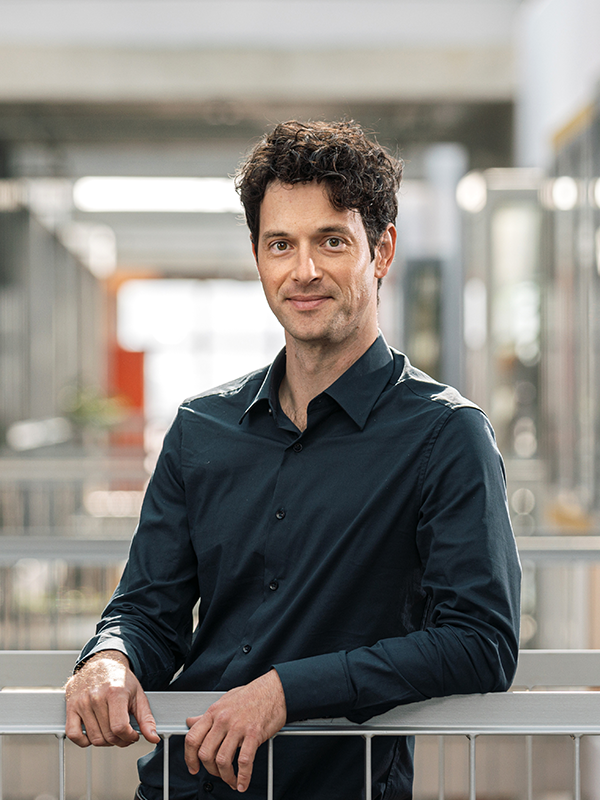
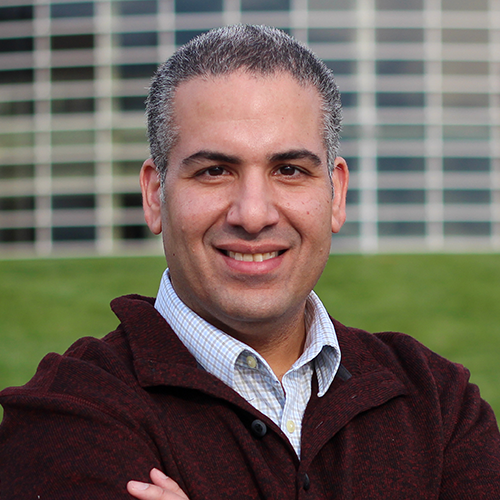
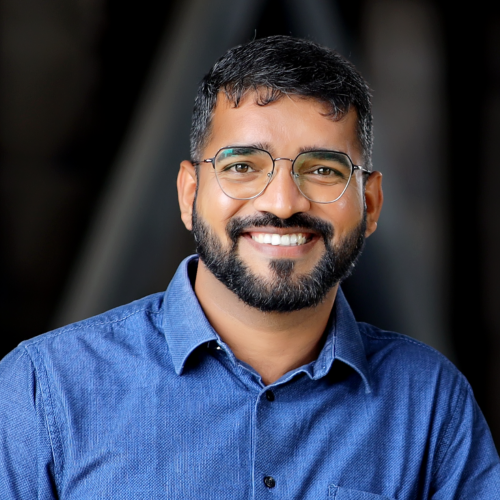
Ronan Farrell is a Professor in the Department of Electronic Engineering at Maynooth University’s Faculty of Science & Engineering and currently serves as Vice President Academic and Registrar. He earned a BE and PhD from University College Dublin (1993, 1998) and previously worked at ICI/Zeneca Chemicals (1993–1995) and Parthus Technologies (1998–2001) as a mixed-signal ASIC designer. His academic career at Maynooth spans from Lecturer to Professor (2016), with leadership roles as Head of Department (2012–2019) and Director of the Callan Institute (2008–2015). He leads SFI research initiatives in radio frequency electronics and sensor networks. Education: BE (1993), PhD (1998) – University College Dublin Leadership: Head of Electronic Engineering (2012–2019), Director of Callan Institute (2008–2015) Research Focus: Wireless system design, RF/mixed-signal electronics, technology transfer, and innovation. His work bridges theoretical advancements (e.g., MIMO capacity optimization) with practical applications (e.g., 5G transmitters, digital predistortion techniques). Publication Trends: Recent articles emphasize 5G wireless systems, power amplifier linearization, OFDM signal processing, and behavioral modeling. Collaborations span institutions in Ireland, Europe, and Asia, with a focus on hardware implementation and system optimization. Students & Collaborations: Mentions co-authors in publications but no explicit student list provided. Collaborates with researchers in Ireland, Germany, and China.
David Jelenc is a Senior Lecturer at the Faculty of Computer and Information Science, University of Ljubljana, affiliated with the Laboratory for e-media. His research focuses on computational trust and reputation models, agent-based simulations, and information security. Electronic Business Information Security and Privacy Web Technologies Data Security Scientific Contributions: His work addresses trust management in distributed systems, security protocols, and resilience in communication infrastructures through projects like SALUS and RECODIS. Outstanding research award among PhD students at Faculty of Computer and Information Science (2013) Research Trends: Publications reveal a consistent focus on trust model evaluation, ordinal data aggregation, and simulation frameworks for security applications. Laboratory Affiliation: Active member of the Laboratory of e-media, contributing to projects in ubiquitous computing and cybersecurity.
Prof. Jürgen Jasperneite is the director of Fraunhofer IOSB-INA in Lemgo and a board member of the Institute for Industrial Information Technology (inIT) at Ostwestfalen-Lippe University of Applied Sciences (TH OWL). He holds the Professorship for Computer Networks and focuses on industrial communication systems for cyber-physical systems and IoT. Current affiliations: Fraunhofer IOSB-INA (Director), inIT (Board Member), TH OWL (Professor) International collaborations: Guest Professor at Midsweden University (2021–present), Research Fellow at Stanford University (2017–present) Research Interests include: Distributed real-time communication and processing 5G/6G integration into industrial networks Time-Sensitive Networking (TSN) and Ethernet migration Semantic interoperability and IT security SmartFactoryOWL and Industry 4.0 testbeds Zero-touch management and network digital twins His work spans manufacturing, process automation, logistics, and urban mobility , with a focus on bridging information technology (IT) and operational technology (OT) through standards like OPC UA and PROFINET. Scientific Recognition : IEEE Senior Member (since 2006) Over 250 publications and conference leadership roles Best Paper Awards at IEEE ISPCS (2007), IEEE ETFA (2012), GI Echtzeit (2014) Founding director of Germany's first Fraunhofer application center for industrial automation Contact: computernetworks@init-owl.de
Dr.-Ing. M.Sc. Markus Hofbauer is a Lecturer at the Department of Media Technology, Technical University of Munich. He is affiliated with the Munich Institute of Robotics and Machine Intelligence (MIRMI) and works within the Chair of Media Technology under Prof. Eckehard Steinbach. Research Focus: Haptic Communication, Video Communication, and Human Activity Understanding Key Projects: Centre for Tactile Internet (CeTI), 5G Testbed Bayern, IEEE P1918.1.1 Haptic Codecs His recent publications (2020) focus on tactile internet frameworks, real-time telepresence systems, and vibrotactile actuator optimization. Research integrates machine learning with haptic feedback design for immersive technologies.
Markus Hidell is an Associate Professor at the Royal Institute of Technology (KTH) , specializing in computer networks, IoT systems, and network security. His teaching includes courses like Advanced Internet Technology and Security and Data Privacy on the Internet , where he serves as examiner or teacher. Research Focus : IoT architectures, energy-efficient networking, and security in distributed systems. Recent Publications : Investigate IoT scalability, buffer management algorithms, SDN security, and LTE vulnerabilities. Key Technical Areas : Network virtualization, delay-tolerant systems, and smart city infrastructure.
Omkar Salunkhe is a Postdoc researcher at Chalmers University of Technology, working within the Department of Industrial and Materials Science, specifically in the Production Systems division. His research focuses on advanced manufacturing systems, human-robot collaboration, and Industry 4.0 technologies, with particular emphasis on practical applications in wire harness assembly and final assembly processes. Salunkhe's research interests span multiple areas of modern manufacturing and automation. He specializes in collaborative robotics applications, particularly in wire harness assembly processes. His work explores task allocation between humans and robots, cost-benefit analysis of collaborative workstations, and the integration of computer vision systems in manufacturing environments. He also investigates operational flexibility in final assembly using Industry 4.0 enabling technologies, with applications in automotive and other manufacturing sectors. His research bridges theoretical concepts with practical industrial implementation, focusing on human-centered approaches to automation that maintain economic viability. Analysis of Salunkhe's publication record reveals a strong trajectory from foundational work on operational flexibility (2018-2020) to increasingly specialized research on collaborative robotics in wire harness assembly (2022-2024). His work demonstrates a clear evolution from general Industry 4.0 applications to targeted solutions for specific manufacturing challenges, with a consistent focus on the human element in automated systems. The 2025 MAXLabs project represents a significant expansion of his research into integrated cyber-physical testbeds for broader manufacturing research. Salunkhe has been actively involved in multiple research projects funded by VINNOVA, the European Commission, and other organizations. These include MAXLabs, EWASS (Empowering Human Workers for Assembly of Wire Harnesses), PLENUM, and Digital work Instructions for cognitive work. His collaborative network includes prominent researchers such as Johan Stahre, Anna Syberfeldt, and David Romero, reflecting strong interdisciplinary and industry-connected research activities.
Dr. Aijun Song is an Associate Professor in the Department of Electrical and Computer Engineering at the University of Alabama College of Engineering. He is affiliated with the Center for Water Quality Research and the Alabama Water Institute. His work bridges engineering, environmental science, and technology, with a focus on developing innovative underwater communication systems and autonomous vehicle technologies for water monitoring applications. Dr. Song's educational background includes: Ph.D. in Electrical and Computer Engineering from University of Delaware M.S. in Electrical and Computer Engineering from Xidian University, Xi'an, China B.S. in Electrical and Computer Engineering from Xidian University, Xi'an, China Dr. Song's research primarily focuses on underwater acoustic communications, signal processing, and autonomous vehicle technologies. His work addresses challenges in underwater wireless communications including channel modeling, equalization techniques, and full-duplex communication systems. He has made significant contributions to the development of underwater sensor networks, acoustic transceivers, and communication protocols for autonomous underwater vehicles. His research has important applications in environmental monitoring, ocean exploration, and water quality assessment. Dr. Song's recent publications demonstrate a strong trend toward practical implementations of underwater communication technologies, with increasing emphasis on reconfigurable intelligent surfaces, energy-efficient systems, and real-world testbed validation. His work spans theoretical development, simulation, and extensive field testing in lake and river environments. The research addresses critical challenges in underwater communication including channel variability, interference cancellation, and long-range transmission. Dr. Song has received notable recognition for his work: NSF CAREER Award from the National Science Foundation (2021) Outstanding Faculty/Staff-Initiated Engagement Effort by the Council on Community-Based Partnerships at the University of Alabama (2019) Outstanding Service Award from the 8th ACM International Conference on Underwater Networks & Systems (2013) Dr. Song actively mentors students and collaborates on interdisciplinary research projects. He serves as co-principal investigator for the USGS FLOW Academy, working with Dr. Lisa Davis and Dr. Steven Burian to provide hands-on water science education. His leadership in the Tuscaloosa MATHCOUNTS program has significantly impacted local STEM education, particularly for underserved populations and female students. Dr. Song's research has been supported by significant funding including an NSF CAREER award and collaborations with the US Geological Survey. Dr. Song leads a research team focused on underwater robotics and wireless communication technologies. His lab develops and tests autonomous underwater vehicles including JaiaBots and EcoMapper systems. The team is advancing underwater swarming technologies to enhance water monitoring capabilities, with an emphasis on creating open-source, low-cost solutions for automated water data collection and rapid flood disaster response. Recent field demonstrations at the Black Warrior River and Lake Tuscaloosa showcase the practical applications of his research.
Ernst Gunnar Gran is Associate Professor at the Department of Information Security and Communication Technology at the Norwegian University of Science and Technology (NTNU), where he heads the communication technology discipline. He also holds an adjunct research scientist position at Simula Research Laboratory, where he headed the Cloud department until December 2016. His research spans high performance computing (HPC), HPC interconnection networks, enterprise data centre networks, cloud computing, and data-intensive processing in multi-clouds. He serves as the Scientific Leader of Communication Technologies in the RCN-funded infrastructure project eX3 (Experimental Infrastructure for Exploration of Exascale Computing) and has significant experience with both RCN-funded and EU-funded research projects, including the H2020 project Melodic (Multi-cloud Execution-ware for Large-scale Optimised Data-Intensive Computing). Gran received his M.Sc. and Ph.D. degrees in computer science from the Department of Informatics, University of Oslo, in 2007 and 2014, respectively. Both theses focused on different aspects of resource management in high performance interconnection networks. He previously headed the RCN-funded project ERAC (Efficient and Robust Architecture for Big Data Clouds) and led the design, implementation, and deployment of the multi-homed IP-based research testbed NorNet Core. Gran also has several years of experience as a system administrator and scientific programmer. His research interests center on the intersection of high performance computing and networking, with particular focus on anomaly detection in time series data, HPC interconnection networks, network virtualization, and cloud computing infrastructure. His work demonstrates a consistent evolution from fundamental networking research to applied solutions for modern computing challenges, particularly in IoT security and smart home applications. His recent publications show a strong emphasis on developing lightweight, real-time anomaly detection systems using deep learning techniques. Analysis of his publication trends reveals a clear progression from traditional HPC networking research toward time series anomaly detection applications, particularly for IoT systems. His 15 most recent publications show dual focus areas: approximately 60% concentrate on anomaly detection methods for time series data (particularly for IoT applications), while the remaining 40% maintain his foundational work in HPC networking, virtualization, and cloud infrastructure. This evolution demonstrates his ability to adapt core networking expertise to emerging application domains while maintaining technical depth. While no specific scientific awards are mentioned in the provided text, Gran's leadership roles in significant research projects (eX3, Melodic, ERAC) indicate recognition of his research capabilities within the academic and research funding communities. His position as Scientific Leader of Communication Technologies in the RCN-funded eX3 project further demonstrates his standing in the Norwegian research community. Gran's teaching responsibilities include serving as course coordinator for DCSG1006 Data Communication and Networks, DCSG2001 Interconnected Networks and Network Security, and Networks: Administration, Programming and Security. His research leadership extends to significant grant-funded projects, including the RCN-funded eX3 infrastructure project and the EU H2020 Melodic project. His previous leadership of the ERAC project and the NorNet Core research testbed demonstrates sustained ability to secure and manage substantial research funding. His laboratory and team affiliations include the Department of Information Security and Communication Technology at NTNU, where he heads the communication technology discipline, and Simula Research Laboratory, where he maintains an adjunct position. The NorNet Core research testbed, which he led the development of, represents a significant infrastructure contribution to the networking research community. His current work with the eX3 project suggests ongoing involvement in experimental infrastructure for exascale computing exploration.
Jonas Anund Vogel serves as Director of Dig-IT Lab and co-director of KTH Live-In Lab at KTH Royal Institute of Technology, working within the Unit of Applied Thermodynamics and Refrigeration. With dual expertise in technical engineering and social sciences, he bridges industry practice and academic research, earning Sweden's Project Manager of the Year award in 2018 for developing KTH Live-In Lab's complex infrastructure. His research centers on digitalisation in construction , living lab methodologies , and sustainable building systems , examining how contractual frameworks, digital tools, and user-centered design can reduce environmental impact. Current work addresses innovation barriers in energy efficiency, post-pandemic building design, and governance models for housing cooperatives through interdisciplinary collaboration. Analysis of his 12 publications (2015-2024) reveals consistent focus on innovation bottlenecks in construction, with recent work emphasizing digital transformation (2024) and living lab applications (2023). His scholarship uniquely integrates technical building systems with social governance aspects, particularly in Swedish multifamily contexts. Scientific Awards: Project Manager of the Year in Sweden (2018) Vogel manages externally funded initiatives including Dig-IT Lab (Vinnova/KTH/industry partnership), KTH Live-In Lab's full-scale testbeds, and the multi-university Buildings Post Corona project. These involve significant grant acquisition and industry collaboration to prototype sustainable building solutions. He oversees Dig-IT Lab's digitalisation competence center and KTH Live-In Lab's unique infrastructure, which provides changeable test environments from apartment-scale to building systems. These facilities enable real-world validation of innovations through user databases and cross-sector collaboration platforms.
Tom Barbette is an Assistant Professor in the Computer Engineering Center (INGI) department at the Louvain Polytechnic School (EPL) of Université catholique de Louvain (UCLouvain), Belgium. He leads the Efficiency of Networked Systems Group , focusing on programmable networks, SmartNICs, NFV, data-centers, and high-speed packet processing. PhD (2018) from Université de Liège (advisor: Laurent Mathy) Post-doctoral research at KTH, Sweden (2018-2021) and UCLouvain (2021-2022) His research explores redefining internet communication paradigms through programmable infrastructure like SmartNICs and P4. Key themes include: High-speed networking and load-balancing Sub-atomic communication models for disaggregated systems KERNEL bypass techniques for performance optimization He has contributed to major conferences like SIGCOMM, NSDI, and CoNEXT, with patents on network interface optimization. His group collaborates on projects such as: ASNI (SmartNICs programming interface) HIRT (High-speed Forward Erasure Correction) Reframer (Network stream optimization)
Dimitrios Dechouniotis is an Assistant Professor at the Department of Electrical and Computer Engineering within the School of Electrical and Computer Engineering at the University of Patras . His career spans roles in academia, research institutions, and public administration. 2004: Diploma in Electrical Engineering (University of Patras) 2006: MSc in Automation Systems (NTUA) 2014: PhD in Electrical and Computer Engineering (University of Patras) His research focuses on Systems & Control Theory , Cyber-Physical Systems , Robotics , Cloud Computing , and 5G Communications . Recent publications highlight work in edge computing , network slicing , and resource orchestration for IoT and robotics applications. He has participated in over 10 national and European research projects related to telecommunications and Industry 4.0. His technical contributions include frameworks for edge-cloud continuum orchestration , blockchain-based slice orchestration , and energy-aware resource allocation , with a strong emphasis on system modeling and control-theoretic approaches. Contact: dechouniotis@uop.gr | Office: Building Z, 2nd Floor
Professor Joan Condell is a leading academic at Ulster University , holding the title of Professor of Intelligent Technologies in the School of Computing, Engineering and Intelligent Systems . Her work spans imaging, digital technologies, and wearable systems with applications in security, energy, and healthcare. Education : BSc in Mathematics, Statistics and Computing (Ulster), MSc in Industrial Mathematics (University of Strathclyde), PhD in Mathematics and Theoretical Computing (Ulster). Leadership : Senior Fellow of the Centre for Higher Education Research and Practice, Fellow of the Higher Education Academy, and Core Member of the Computer Science Research Institute. Research Focus : Digital intelligent technologies, imaging, wearables, and commercialisation of academic innovation. She has founded spinout companies and secured over £56M in grants, including EU FP7 funding and current European projects totaling €22.5M. Recognition : Distinguished Teaching and Learning Fellowship (2011), Innovation and Enterprise Awards, and active roles on funding panels for UK Research Councils, Irish Research Council, and Innovate UK.
Veljko Pejović is an Associate Professor at the Faculty of Computer and Information Science (FRI), University of Ljubljana, Slovenia, where he also serves as Head of the Computer Communications Laboratory. His research focuses on mobile computing with special emphasis on resource efficiency in mobile and IoT environments. His educational background includes a PhD in Computer Science from the University of California, Santa Barbara (2012) and a dipl. ing (BS) from the University of Belgrade, Serbia (2006). Pejović's research interests center around mobile deep learning, approximate computing, and resource-efficient computing. His work explores how computation accuracy can be dynamically adapted based on contextual factors to optimize resource usage without significantly compromising user experience. He has made significant contributions to mobile sensing, machine learning on resource-constrained devices, and security in IoT environments. His recent publications reveal a strong trend toward making AI more efficient and accessible on mobile and edge devices, with particular focus on approximate computing techniques, federated learning frameworks, and context-aware adaptation of computational resources. His research spans applications from precision agriculture using UAVs to behavioral authentication in IoT environments and mental health inference from mobile sensor data. Scientific Awards: 10-Year Impact Runner Up Award at ACM UbiComp for InterruptMe work Outstanding research achievement award for 2024 by the Faculty of Computer and Information Science Best Paper Nominee (top 4%) at UbiComp'14 for InterruptMe Pejović actively mentors PhD and master's students, with numerous theses resulting in workshop, conference, and journal publications. He serves as Associate Editor for ACM IMWUT and ACM JCSS, and has held organizational roles in major conferences including ACM UbiComp 2025. His research is supported by multiple significant projects including approXimation for adaptable diStributed artificial intelligence (ARIS), CODA, AgriAdapt, and CARMA. His laboratory, the Computer Communications Laboratory at FRI, focuses on developing practical systems and frameworks for resource-efficient mobile computing, with several open-source tools and datasets publicly available for the research community.
Samy El-Tawab is a Professor and the Information Technology Program Director at James Madison University (JMU) within the College of Integrated Science and Engineering 's Department of Computer Science . He has been at JMU since 2012, progressing from Assistant to Associate to Full Professor in 2024. Education: Ph.D. in Computer Science (2012), Old Dominion University M.Sc. in Computer Science (2006), Alexandria University B.Sc. in Computer Science (2002), Alexandria University Research Interests span Intelligent Transportation, Vehicular Ad-Hoc Networks (VANET), Wireless Sensor Networks (WSN), Network Security, Internet of Things (IoT), Cloud Computing, and Autonomous Vehicles. His work focuses on creating passenger-aware autonomous systems and improving transportation efficiency through low-cost IoT solutions. Selected Projects include: Independent Mobility for the Elderly (2019): $120,000 Jeffress Trust Award 4-VA Transit Bus Optimization (2015): $37,700 Madison Trust Smart Parking (2016): Cloud-based parking app STEM Outreach (2015): Mobile tech integration for K-12 education Scientific Awards : 2020 Madison Scholar 2018 Virginia Governor's Technology Award 2017 Outstanding Junior Faculty 2017 CFI Engaged Teacher Scholar 2014 IEEE MASS Travel Award Teaching includes courses like Autonomous Vehicles, Wireless Networking, Security & Forensics, and TCP/IP Networks. He emphasizes project-based learning, with students working on real-world problems like parking solutions and transit monitoring systems.
Digvijay Sampatrao Pawar is an Associate Professor in the Department of Civil Engineering at Indian Institute of Technology Hyderabad, specializing in Transportation Systems Engineering. He leads the Transportation Systems Engineering Lab and contributes to academic governance as a DUGC/DUGC member. Ph.D. in Transportation Systems Engineering, IIT Bombay (2015) Masters in Transportation Systems Engineering, IIT Bombay (2015) Bachelors in Civil Engineering, Walchand College of Engineering (2009) Research Focus: Traffic operations and safety, human factors in transportation, ITS technologies for pedestrian/driver safety at uncontrolled intersections, geometric design optimization, and naturalistic driving studies. His work includes establishing India's first autonomous vehicle testbed (TiHAN) and accident data analysis frameworks. Scientific Recognition: Research Excellence Award-2025 from IIT Hyderabad CODATU-2017 Best Ph.D Thesis on Urban Mobility Excellence in Thesis Work Award from IIT Bombay (2014-2016) Young Conference Chair, WCTR 2019