Sebastian Will is a Full Professor of Bioinformatics at École Polytechnique IP Paris since 2020. Previously held positions include: Researcher with Ivo Hofacker at TBI, University of Vienna Researcher with Peter Stadler at Bioinformatics group, University of Leipzig Akademischer Rat at Bioinformatics group, University of Freiburg (2005-2012) Postdoc with Bonnie Berger at MIT's CSAIL (2010-2011) His research focuses on: RNA structure prediction algorithms Pseudoknot modeling RNA-RNA interaction analysis Structure design with Infrared framework Multi-target RNA design Integration of experimental data Ensemble-based sparsification Publication trends show concentrated research in: RNA structure prediction techniques Algorithm development Dynamic programming optimization Tree decomposition applications Stochastic sampling methods Multi-objective design Contributed extensively to software development including: LocARNA 2.0 Infrared framework SparseMFEFold BiAlign RNAPOND Pankov LocARNA-P
Pascale Legault is a Full Professor in the Department of Biochemistry and Molecular Medicine at Université de Montréal, serving as Department Director. Her research focuses on RNA structure and function, particularly non-coding RNAs like ribozymes and microRNAs. She combines structural biology techniques (NMR, X-ray crystallography) with biochemical and bioinformatics approaches to study RNA-protein interactions and their roles in gene regulation and disease. Education: B.Sc. and Ph.D. in Biochemistry from Université de Montréal and University of Colorado Boulder. Postdoctoral work with Nobel laureate Thomas Cech (University of Colorado) and later at the University of Georgia. Joined Université de Montréal in 2003. Research Interests: Structure/function of ribozymes, microRNA biogenesis, RNA engineering, and applications in nanomedicine. Active in structural biology infrastructure development, including leading the Université de Montréal Structural Biology Platform funded by the Canadian Foundation for Innovation (CFI). Awards: Canada Research Chair in RNA Structural Biology, CIHR and FRQS scholarships, and Parkinson Canada funding for miRNA studies in neurodegenerative diseases. Over 70 peer-reviewed publications and several patented methods like ARiBo RNA purification technology. Grants: Multiple CFI, CIHR, and NSERC grants totaling millions, including infrastructure funding for advanced imaging tools. Collaborations with groups like the SNC (Signal Transduction) and GRUM (Drug Research) networks. Labs/Teams: Directs the Pascale Legault Lab, focusing on RNA structural biology and translational applications. Mentored over 20 graduate students/postdocs, including recent PhDs Alix Salvail-Lacoste (2023) and Gunjan Dadhwal (2023).
Ayça Sayı Yazgan is a Professor in the Department of Molecular Biology and Genetics at Istanbul Technical University. With an active research career spanning from 2002 to present, she has established herself as a leading researcher in immunology with particular expertise in B cell and T cell immunoregulation. Her research interests focus on the complex interactions between immune cells and pathogens, especially Helicobacter pylori. Her work explores how regulatory B cells (Bregs) produce immunomodulatory cytokines like IL-10 and IL-27, and how these cells influence autoimmune diseases, cancer progression, and responses to infections. She has made significant contributions to understanding the role of dendritic cells in tertiary lymphoid structures and their implications in both cancer and autoimmune conditions. Analysis of her recent publications reveals a strong trend toward translational immunology research, particularly in developing novel immunotherapeutic approaches targeting regulatory B cells for pancreatic cancer and multiple sclerosis. Her work bridges basic immunological mechanisms with clinical applications, showing particular interest in how Helicobacter infections modulate immune responses and contribute to disease progression. Poster Presentation Award (2010) Oral Presentation Award (2009) Honorable Mention for Second Place in Medical Biological Sciences Department (1999) Professor Yazgan has secured substantial research funding, currently serving as Principal Investigator on multiple projects including studies on IL-27-producing Breg cells for treating experimental autoimmune encephalomyelitis (a multiple sclerosis model), investigation of Helicobacter pylori virulence genes and T-cell responses in pediatric gastritis, and research on immune regulation in pediatric patients with eosinophilic esophagitis. Her laboratory focuses on cellular immunology techniques, particularly examining B cell and T cell interactions in various disease contexts.
Robert M. Briber is a Professor of Materials Science and Engineering and the Associate Dean for Research at the A. James Clark School of Engineering, University of Maryland. He holds fellowships from the American Physical Society (1995) and the Neutron Scattering Society of America (2014). His research focuses on polymer physics, biopolymers, X-ray/neutron scattering, and sustainable materials. He teaches courses ranging from introductory materials science to graduate-level polymer physics and kinetics. Education: Ph.D. in Polymer Science from the University of Massachusetts, B.S. in Materials Science from Cornell University. Notable awards include the University of Maryland Distinguished Scholar-Teacher (2012) and two Neutron Scattering Society Exceptional Service Awards (2006, 2018). Research emphasizes biopolymer applications (e.g., cellulose-based composites), RNA folding dynamics, and ion-conducting materials for energy storage. His labs include the Functional Macromolecular Laboratory and Polymer Characterization Laboratory. Recent work includes sustainable cellulose derivatives and high-performance hydroxide exchange membranes. He has served in leadership roles at national neutron scattering facilities and professional societies. Teaching contributions span undergraduate courses like ENMA 150 (Materials of Civilization) and graduate core courses such as ENMA 620 (Polymer Physics). His research has led to innovations in food preservation, fire-resistant polymers, and biomedical materials. Over 150 peer-reviewed publications and active grants highlight his interdisciplinary impact in materials science and engineering.
Dr. Benjamin Philipp Fingerhut is a researcher at the Max Born Institute for Nonlinear Optics and Short Pulse Spectroscopy , affiliated with the T4: Biomolecular Dynamics department. His work focuses on the intersection of nonlinear optics, solvation dynamics, and biomolecular interactions. Field Keywords: Nonlinear Optics, Solvation Dynamics, Biomolecular Physics, Ultrafast Spectroscopy, Electrostatic Interactions His recent research explores electron solvation in water and alcohols, polaron dynamics, and electrostatic interactions in RNA systems. Key publications reveal a focus on hydration shells, ion pair effects, and biomolecular stabilization mechanisms through advanced spectroscopic methods. Collaborative work with Prof. T. Elsaesser and colleagues demonstrates expertise in both experimental and theoretical approaches to molecular dynamics in polar liquids and biomolecular systems.
Neena Grover is a Professor of RNA Biochemistry in the Chemistry & Biochemistry Department at Colorado College. She leads The Grover Lab, where she conducts research on RNA thermodynamics with undergraduate students. Her work focuses on understanding small RNA structural motifs and the role of magnesium ions in stabilizing RNA structures. As an educator, she teaches a range of courses from introductory organic chemistry to specialized topics in RNA and nucleic acid biochemistry, including courses on coronaviruses and HIV-1. Professor Grover's research interests span RNA biochemistry, nucleic acid thermodynamics, and science education. Her laboratory investigates the sequence requirements and stability of small RNA loop regions, particularly examining how metal ions contribute to RNA structure formation and function. She also explores pedagogical approaches including student-centered teaching, problem-based service learning, and anti-racist teaching methodologies. Her work bridges fundamental RNA research with practical applications, including potential contributions to understanding viral RNA structures like those in coronaviruses. Dr. Grover's scholarly output demonstrates a dual focus on RNA biochemistry and science education. Her recent publications cover thermodynamic studies of various RNA structures while also addressing cultural structures in biology education and inclusive teaching practices. This combination reflects her commitment to both advancing scientific knowledge and improving how science is taught and experienced by diverse student populations. Among her professional recognitions, Dr. Grover serves as Editor of CourseSource, an evidence-based undergraduate teaching resource for the American Society for Biochemistry and Molecular Biology (2016-present), and as an Editorial Board Member for Biochemistry and Molecular Biology Education. Her 2011 work was highlighted in the CUR Undergraduate Research Highlights. Professor Grover actively mentors undergraduate researchers, with recent students including Piper Catlin, Quinn Eaheart, Abbott Gifford, Adrian Larkspur, and Abe Rosenthal. Many of her publications feature undergraduate co-authors, demonstrating her commitment to involving students in meaningful research. She founded and advises the Student Club for Science Outreach (CC Science Outreach), extending her educational impact beyond the classroom through community engagement and science communication initiatives. The Grover Lab utilizes multiple biophysical techniques including thermal denaturation, isothermal calorimetry, fluorescence spectroscopy, and native PAGE to characterize RNA structures. The lab is expanding its capabilities with circular dichroism and Raman spectroscopy. Current research includes projects related to coronavirus RNA structures and potential RNA-based inhibitors, connecting fundamental research to contemporary health challenges while training the next generation of scientists.
Joseph Craft is the Paul B. Beeson Professor of Medicine in Rheumatology and Professor of Immunobiology at Yale School of Medicine. He directs the Colton Center for Autoimmunity at Yale and has served as Director of the Investigative Medicine MD to PhD program for over 20 years. His research focuses on understanding host responses to pathogen challenge and autoimmunity, with particular expertise in T follicular helper cells and lupus pathogenesis. Dr. Craft received his MD from the University of North Carolina School of Medicine in 1977. He completed his internship and residency at Yale-New Haven Hospital in 1978 and 1980 respectively, followed by fellowship training at Yale School of Medicine in 1985. He is board certified in Internal Medicine (1980) and Rheumatology (1988). His research program has made seminal contributions to understanding T cell biology in autoimmunity, particularly in lupus. His laboratory was among the first to dissect the transcriptional regulation of T follicular helper cells, a discovery recognized as a milestone in T cell development by Nature. Current research focuses on identifying developmental pathways of CD4 T cells that provide B cell help and promote inflammation, as well as determining tissue environmental factors that regulate T cell metabolism at inflammatory sites. Analysis of Dr. Craft's recent publications reveals a strong focus on T cell and B cell interactions in autoimmune diseases, particularly lupus. His work spans multiple disciplines including immunology, molecular biology, genomics, and translational medicine. Key themes include T follicular helper cell biology, mechanisms of autoimmune tissue damage, and the role of specific signaling pathways in immune dysregulation. His research increasingly incorporates advanced technologies like spatial transcriptomics and single-cell analysis to understand cellular heterogeneity in disease contexts. Two-time NIH MERIT Awardee (10-year NIH grants) Yale Bohmfalk Basic Science Teaching Prize Elected Fellow of American Association for the Advancement of Science Pew Scholar in the Biomedical Sciences Distinguished Innovator Award (2022) from Lupus Research Alliance Kirkland Scholar (2002, 2005) Charles W. Bohmfalk Teaching Prize in Basic Sciences (2004) Dr. Craft has trained over 40 postdoctoral fellows and 26 PhD and MD/PhD graduate students throughout his career. He has directed the Investigative Medicine Program at Yale for more than two decades, training 70 MD/PhD students. His laboratory research is supported by multiple NIH grants, reflecting the significance of his work in understanding autoimmune mechanisms. The Colton Center for Autoimmunity, which he directs, serves as a hub for interdisciplinary research on autoimmune diseases at Yale. Dr. Craft leads the Craft Lab at Yale, which focuses on host responses to pathogen challenge and autoimmunity. His research team includes postdoctoral fellows, graduate students, and research staff working collaboratively on projects related to T cell biology, lupus pathogenesis, and immune regulation. The lab maintains strong collaborations with other research groups at Yale, particularly within the Cancer Immunology Program and the Yale Center for Immuno-Oncology.
Dr. Michael F. Summers is the Robert E. Meyerhoff Chair for Excellence in Research and Mentoring and Distinguished University Professor at the University of Maryland, Baltimore County (UMBC), while also serving as a Howard Hughes Medical Institute (HHMI) Investigator. His research focuses on unraveling the structural biology of retroviruses, particularly HIV-1 assembly and RNA packaging mechanisms, using advanced NMR methodologies. Ph.D. in Biochemistry, Emory University (1984) B.S. in Chemistry, University of West Florida (1980) Summers' laboratory revolutionized understanding of HIV-1 genome packaging through dimerization-dependent RNA structural switches, where critical residues shift from sequestered to exposed states. They developed groundbreaking NMR techniques to study full-length HIV-1 RNA leaders (>700 nucleotides) and identified key protein-RNA complexes driving virus assembly. Current work explores therapeutic interventions targeting these structural transitions. Research trends show strong emphasis on RNA structural biology, with 62% of recent publications focused on NMR methodology development, 28% on HIV-1 assembly mechanisms, and 10% on mentorship-driven educational innovations. The lab consistently publishes in top journals like Science, PNAS, and Nature Reviews Microbiology. National Academy of Sciences Member (2016) White House Presidential Award for Science Mentoring (2000) NIH Merit Awards (1997-2015) AAAS Mentor of the Year (2003) Don Creighton Memorial Faculty Award (2006) Dr. Summers' mentorship program has produced 18 Ph.D.s and 7 HHMI Scholars, with trainees securing positions at Harvard, Washington University, and Weill Cornell Medicine. His lab receives continuous funding from NIH/NIGMS, NIH/NIAID, and HHMI, while his educational initiatives focus on improving minority retention in STEM through the Meyerhoff Scholars Program.
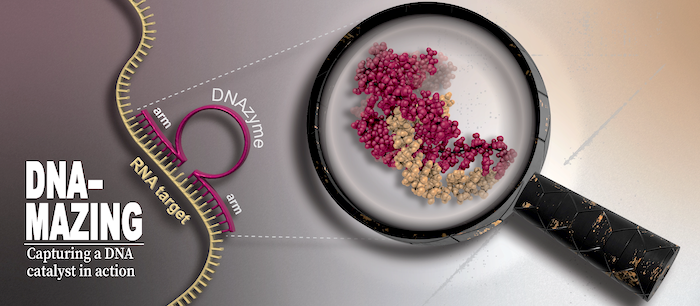
Dr. Manuel Etzkorn leads the Heisenberg Research Group at the Institute of Physical Biology, Heinrich Heine University Düsseldorf. His work bridges structural biology, biophysics, and biocatalysis, with a focus on membrane proteins and DNAzymes in native environments. The team develops advanced NMR methodologies and nanodisc systems to study molecular dynamics. Faculty of Mathematics and Natural Sciences Institute of Physical Biology Research emphasizes overcoming structural biology limitations through tailored methods. Key areas include membrane protein stabilization (e.g., aescin-lipid nanoparticles), DNAzyme structural analysis (8-17 and 10-23 DNAzymes), and NMR spectroscopy innovations (local deuteration, solid-state NMR). Recent publications (2022-2025) reveal trends in RUNX1-ETO inhibition , electroneutral nanodiscs , and DNA catalyst therapeutic applications . Notable scientific recognitions include Inside cover article (2016) PNAS highlight commentary (2014) "Article of the month" award (2008) The group actively mentors PhD students (Justin Boecker, Ci Chu, Lora Denson, Christopher Ruth, Jessica Schmuck) and collaborates on projects involving ubiquitin dynamics , α-synuclein aggregation , and PAS domain signal transduction .
Dr. Ning Liu is a Postdoctoral Research Fellow at the South Australian Immunogenomics Cancer Institute (SAiGENCI) within the Faculty of Health and Medical Sciences at the University of Adelaide. As a bioinformatician and computational biologist, Dr. Liu specializes in developing computational tools for epigenetics and transcriptomics research, with particular expertise in next-generation sequencing data analysis including ChIP-seq, ATAC-seq, Hi-C, RNA-seq, single cell RNA-seq, and spatial transcriptomics. Dr. Liu's research focuses on developing novel computational methods to study the human genome in the context of transcriptomics and epigenomics. Currently, Dr. Liu maintains three Bioconductor software packages: standR for spatial transcriptomics analysis of GeoMx DSP data, hoodscanR for cellular neighborhood detection in spatial transcriptomics, and scider for modeling global cell density in spatial transcriptomics data. With strong emphasis on translating biological insights to medical applications, Dr. Liu's work bridges computational methodology with clinical relevance in cancer research and immunology. Dr. Liu is eligible to supervise Masters and PhD students as a Co-Supervisor, reflecting their established expertise in bioinformatics and computational biology. Their research has resulted in numerous publications focusing on spatial transcriptomics, cancer immunology, and computational tool development, with applications in understanding tumor microenvironments and immunotherapy response. Dr. Liu's scholarly contributions demonstrate a consistent focus on spatial biology methodologies applied to cancer research, particularly head and neck cancer. Their publications reveal expertise in developing computational frameworks that address technical challenges in spatial transcriptomics while providing biological insights with potential clinical applications in immunotherapy. As a research supervisor, Dr. Liu contributes to the academic community by mentoring graduate students in computational biology techniques and applications. Their work environment at the Adelaide Health and Medical Sciences building on the West End Health Precinct provides access to state-of-the-art facilities supporting their computational research in cancer immunogenomics.
Nikhil Joshi, PhD is an Associate Professor with Tenure in the Department of Immunobiology at Yale School of Medicine. He serves as Co-leader of the Cancer Immunology Program at Yale Cancer Center and maintains affiliations with multiple Yale research initiatives including the Yale Center for Immuno-Oncology, Human and Translational Immunology Program, and Immunology Liver Center. His research focuses on understanding immune cell interactions with developing tumors, particularly investigating how T cell subtypes function in the tumor microenvironment using complex mouse models. The Joshi Lab combines advanced genetic modeling with immunologic techniques to address fundamental questions in tumor immunology. Analysis of recent publications (2022-2025) reveals a strong focus on T cell biology in cancer, with particular emphasis on T cell exhaustion mechanisms, immunoediting processes, tertiary lymphoid structures, and metabolic influences on tumor immunity. His work spans both basic immunological mechanisms and translational applications for cancer immunotherapy. Class of 1961 Cancer Research Award, Yale Cancer Center (2023) Basic Science Research Prize, Yale Cancer Center (2023) Young Investigators in Cancer Research, Pershing Square Sohn Prize (2022) Emerging Leader Award, Mark Foundation (2022) James B. Dougherty MD Award, Lung Cancer Research Foundation (2021) Professor Joshi maintains active research funding as evidenced by his substantial publication record in high-impact journals. His lab trains numerous students and postdocs, with frequent collaborators including Kelli Connolly, Gena Gora Foster, and Eric Fagerberg. The lab participates in multiple interdisciplinary initiatives at Yale, providing students with opportunities to work at the intersection of immunology, cancer biology, and computational approaches. The Joshi Laboratory focuses on engineering models to decode T-cell immunity in cancer, with research spanning tumor differentiation, T cell fate in cancer and health, and mechanisms of action for immune cells in tumor development and suppression.
Anna Marie Pyle is a Sterling Professor in the Departments of Molecular, Cellular and Developmental Biology and Chemistry at Yale University School of Medicine. She has been a Howard Hughes Medical Institute Investigator since 1997 and was elected to the National Academy of Sciences in 2023. Dr. Pyle serves as President of the RNA Society and holds leadership positions at Brookhaven National Labs and the Telluride Science Research Center. Her research focuses on the structure and function of large RNA molecules, RNA remodeling enzymes, and cellular RNA sensors. The Pyle Lab uses a combination of structural biology, enzymology, and cell-based functional approaches to understand RNA architecture and its impact on cellular processes. Current research directions include studying group II introns and other large RNA tertiary structures, protein machines that interact with RNA genes, RNA-virus interactions, and developing RNA-targeting therapeutics. Dr. Pyle's recent publications (2024-2025) demonstrate continued productivity across multiple intersecting fields including RNA structure, viral genomics, immunology, and therapeutic development. Her work has resulted in the development of important research tools including MarathonRT (an ultraprocessive reverse transcriptase) and Stem Loop RNAs (SLRs) for immune activation. Notable Awards and Recognitions: Sterling Professor at Yale University Howard Hughes Medical Institute Investigator (since 1997) Elected to National Academy of Sciences (2023) President of the RNA Society Dr. Pyle mentors students through Yale's undergraduate Molecular Biology course and has trained more than 40 graduate students and postdocs throughout her career. Her lab maintains active collaborations with researchers across Yale and has developed multiple spin-off technologies including RNAConnect and RIGImmune. The lab has access to Yale's extensive research core facilities and maintains strong funding through multiple sources including HHMI and NIH grants. The Pyle Lab is located in Yale's award-winning Science Building on Science Hill and maintains an active research program that bridges fundamental RNA biology with therapeutic applications. Current projects focus on RNA structure, viral pathogenesis, and immune activation through RNA-based approaches.