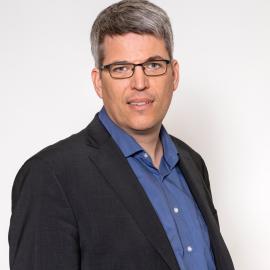
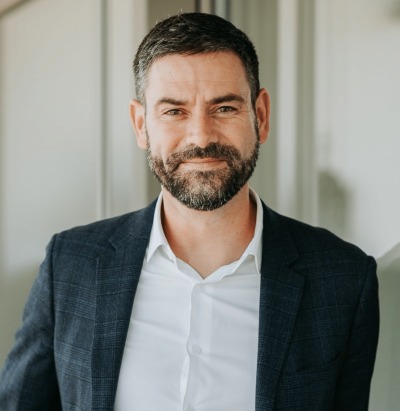
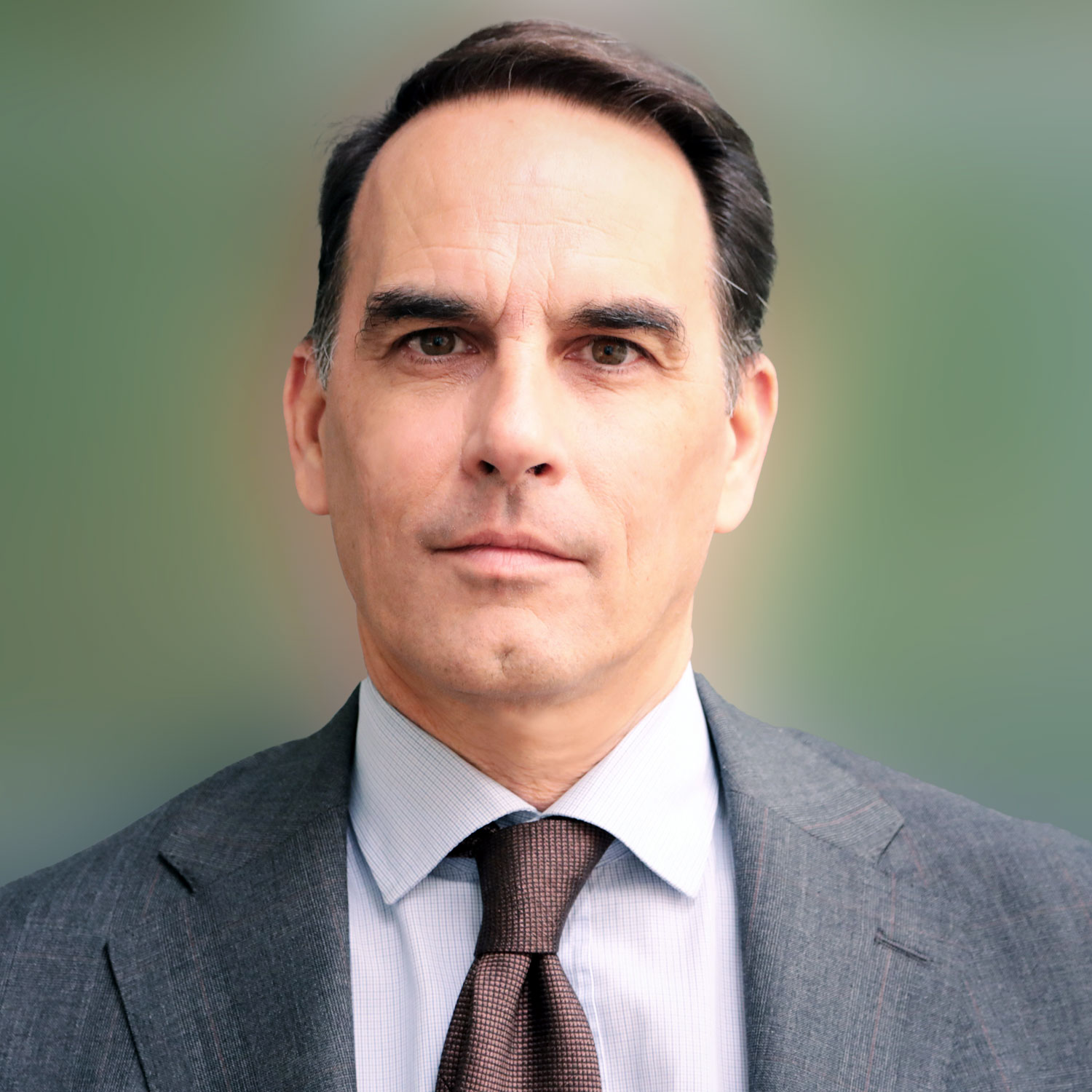
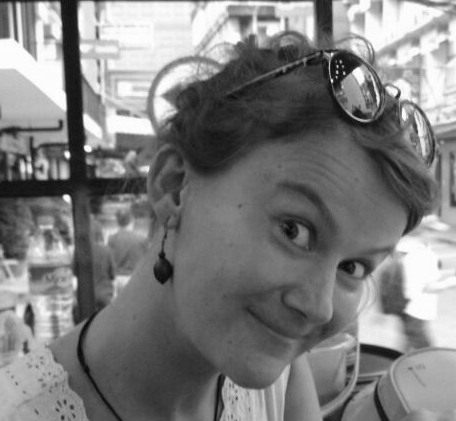
Dr. Michèle Tranda-Pittion is a lecturer at the University of Geneva (UNIGE) and an architect affiliated with École Polytechnique Fédérale de Lausanne (EPFL). She specializes in the design and management of territorial projects , actively participating in the Master in Territorial Development (MDT) program by leading student support during the first territorial project workshop. Additionally, she serves as the head of the TOPOS urban planning office in Geneva, focusing on practical applications of urban planning methodologies. Research Interests: Production processes of the ordinary city Complexity in urban and regional planning Context-specific methodological tools Cross-border territorial dynamics Evolving urban planning practices
Armelle Choplin is an Associate Professor at the University of Geneva's Department of Geography and Environment within the Geneva School of Social Sciences, and affiliated with the Global Studies Institute since 2019. She serves as Director of the Institute of Environmental Governance and Territorial Development (IGEDT), leading research on urban transformations in the Global South. Research Focus Her research examines urban policies, social transformations, and development challenges in African cities and the Global South. Core interests include: urban planning dynamics, governance frameworks, construction industry impacts, poverty alleviation, sustainable development pathways, globalization effects, digital innovation in urban contexts, and postcolonial urban studies. Her geographical specialization focuses on West Africa and MENA regions. Publication Analysis Recent publications (2017-2024) demonstrate consistent focus on material urbanism, governance innovations, and spatial justice in African cities. Key thematic clusters include: urban material flows (concrete, energy), participatory planning methods, transnational urban corridors, and postcolonial urban theory. Methodologically, her work combines spatial analysis with political economy and ethnographic approaches. Research Leadership She directs multiple international projects including: Global Urb: Global Urbanism from the South MatéRhône: Construction materials in Rhone Valley West African Coastal Corridor study (Accra-Lagos axis) URBACOT: West African Coastal Urban Dynamics Observatory Map&Jerry: Participatory mapping in Cotonou Student Advising Currently supervising eight doctoral candidates researching urban development topics across Africa. Her teaching portfolio includes courses on urban globalization, metropolitan governance, spatial justice, and regional project development at both bachelor's and master's levels.
Swiss Federal Institute of Technology in LausanneSwitzerland
Vincent Kaufmann is an Associate Professor at the Swiss Federal Institute of Technology in Lausanne (EPFL) , leading the Urban Sociology Laboratory (LaSUR) . Since 2010, he serves as Scientific Director of the Mobile Lives Forum in Paris. His career spans teaching at institutions like Lancaster University , Ecole des Ponts ParisTech , and Tongji University , with research focusing on mobility sociology , urban dynamics , and public policy evaluation . Master's in Sociology from University of Geneva PhD at EPFL on transport modal practices His work explores mobility-capital interactions , motility , and rhythmanalysis in contemporary societies. Key themes include urban lifestyle transformations , cross-border regions , and mobility-sustainability nexus , with recent emphasis on new proximities and slow cities . Teaching roles span EPFL departments like Teaching (EDAR) , Architecture and Urban Sciences (SGC) , and Human and Social Sciences (CDH) . He has directed numerous PhD and master's theses on urban mobility topics.
Freek Persyn is a Full Professor of Architecture and Urban Transformation at ETH Zurich, where he has held the NEWROPE Professorship since 2019. He leads the Design in Dialogue Lab within the Department of Architecture, focusing on spatial design and social innovation. Persyn co-founded the spatial planning firm 51N4E in 1998, which specializes in urban and social transformation across Europe. Persyn's research centers on the concept of 'Design in Dialogue,' which emphasizes transdisciplinary collaboration to address the complexity of contemporary urban challenges. His work explores innovative solutions for European urban spaces, aiming to rediscover Europe as a habitable terrain and shared living space. Key research areas include urban design, spatial planning, social transformation, and the intersection of architecture with social innovation. The NEWROPE initiative seeks to examine diverse urban practices that shape Europe, fostering radical openness and learning from various urban practitioners through transdisciplinary projects. His scholarly output demonstrates a strong focus on reimagining urban spaces through dialogue-based approaches. Persyn's work examines European urban transformation, rural-urban connections, industrial heritage sites, and innovative design methodologies. Key themes across his publications include sustainable approaches to building, the social dimensions of space, and transformative design processes that challenge conventional architectural practices. His research often bridges theoretical frameworks with practical design applications, emphasizing participatory methods and material investigations. Persyn delivered his inaugural lecture at ETH Zurich on October 20, 2021, titled 'Wouldn't it be nice if architects started dreaming about building less?' The lecture explored his professional background, inspiration, and future plans for the NEWROPE Chair. The event featured collective sensing exercises developed by students of Studio Seebach with theater and dance maker Manuela Runge, highlighting his commitment to experiential and collaborative approaches to architectural education and practice. The Design in Dialogue Lab serves as a hub for exploring innovative approaches to urban transformation through projects across European cities including Brussels, Piraeus, Basel, and Plovdiv. Current initiatives examine topics such as urban spaces for more than human communities, collaborative processes, design approaches, and hybrid applications for European urban environments. Persyn's work consistently emphasizes transdisciplinary collaboration, bringing together spatial and strategic knowledge with other disciplines and urban practitioners to address complex contemporary challenges.
Patrick Rérat is a Professor at the University of Lausanne, affiliated with the Institute of Geography and Sustainability within the Faculty of Geosciences and Environment. He is a prominent researcher at LIVES (Interdisciplinary Centre of Excellence for Research on Life Course Changes), where he focuses on urban mobility, transportation patterns, and sustainable mobility transitions. His research interests span transportation studies, urban mobility, sustainable transportation systems, cycling research, residential mobility, and the geography of daily mobility practices. Rérat employs interdisciplinary approaches to examine how individuals navigate urban spaces across different life stages, with particular attention to cycling infrastructure, e-mobility adoption, and the relationship between transportation modes and broader social patterns. Rérat's recent work demonstrates a strong focus on cycling practices, with numerous publications examining cargo bike adoption, e-bike usage patterns, and the effects of cycling infrastructure. His research employs various methodological approaches including user segmentation, longitudinal mobility studies, and spatial analysis of urban transportation patterns. He has made significant contributions to understanding how transportation choices evolve across the life course, particularly during youth transitions. His scholarly output includes numerous publications in leading transportation and geography journals, with recent work focusing on contemporary mobility challenges including pandemic-era transportation changes, telework impacts on mobility patterns, and the political dimensions of cycling infrastructure. As a professor at the University of Lausanne, Rérat contributes to advancing research on sustainable urban mobility while training the next generation of geographers and transportation specialists. His work bridges theoretical geographic concepts with practical urban planning applications, making significant contributions to both academic scholarship and urban policy development.
Philippe Christe is an Associate Professor in the Department of Ecology and Evolution at the University of Lausanne (UNIL), Faculty of Biology and Medicine. His research centers on host-parasite interactions, with a focus on bats, birds, and their ectoparasites, integrating behavioral, physiological, and genetic approaches. He leads the Christe Group, which investigates evolutionary and ecological dynamics in host-parasite systems, particularly avian malaria and bat-mite relationships. He is actively involved in conservation initiatives, including the Jorat Peri-Urban Nature Park, and collaborates with KORA on human-wildlife interactions. Bachelor's degree in biology, UNIL (1989) PhD in Zoology and Animal Ecology, UNIL (1994) Philippe Christe’s research interests lie at the intersection of parasitology, evolutionary ecology, and conservation biology. He investigates how host defenses evolve in response to parasitic pressures, examining trade-offs between immunity and life history traits such as reproduction and survival. His work often integrates field studies with experimental and molecular techniques. Key model systems include Parus major (great tit) and Culex pipiens in avian malaria, and bat species with their ectoparasitic mites. He also explores broader ecological interactions, including predator-prey dynamics and wildlife conservation in human-modified landscapes. His recent publications reflect a strong emphasis on disease ecology, wildlife conservation, and molecular methods. Articles span topics such as avian malaria transmission, lynx population dynamics, snow leopard behavior, and habitat fragmentation effects on insects. These works employ advanced techniques like DNA metabarcoding, spatial modeling, and long-term monitoring, demonstrating a trend toward interdisciplinary, data-driven ecological research with direct conservation applications. Dubois Foundation Prize for an educational CD-Rom on bats (2004) Communication Award from the Faculty of Biology and Medicine of UNIL (2017) Philippe Christe has supervised numerous PhD and Master’s students, contributing significantly to training the next generation of ecologists and evolutionary biologists. His group collaborates widely with institutions such as the Museum of Zoology in Lausanne and KORA, and participates in large-scale conservation projects involving snow leopards, lynx, and bats. He has been involved in research grants related to host-parasite coevolution, wildlife monitoring, and conservation strategies. His leadership in establishing the Jorat Peri-Urban Nature Park and involvement in the UNIL Interdisciplinary Center for Mountain Research highlight his commitment to applied science and environmental stewardship. He leads the Christe Group, which conducts research on host-parasite coevolution, with a focus on bats and their ectoparasites, and birds affected by avian malaria. The group combines fieldwork, laboratory experiments, and molecular analyses, and includes post-docs, PhD students, and technical staff. Collaborations extend to researchers in Bern, Paris, and Spain, fostering an international and interdisciplinary research environment.
Christian Bréthaut is an Associate Professor at the Department of Geography and Environment and the Institute for Environmental Sciences of the University of Geneva. He serves as Director of the Environmental Governance and Territorial Development Hub and co-leads the UNESCO Chair on Hydropolitics with Géraldine Pflieger. Research focuses: Transboundary water governance, water-food-energy nexus, commons governance, multi-level governance, critical discourse analysis. Teaching: Innovation for Sustainable Development (Master), Geographies of the Metropolis (Bachelor), MOOCs on water governance. Current projects: DemoTape (transboundary policy protocols), Water4All Science-Policy Incubator grant. His recent publications examine discursive hydropolitics, legal personhood in river governance, and climate change impacts on transboundary river basins. Supervision includes PhD and Master’s students like Laura Turley, Lorenz Henggeler, and Hannah Louise Hilbert-Wolf. Key collaborations involve the Rhône River governance analysis, Geneva Water Hub , and contributions to UNESCO/IWRM frameworks.
Daniele Caramani is a Full Professor of Comparative Politics at the University of Zurich's Faculty of Philosophy, Institute of Political Science, where he holds the Chair of Comparative Politics since 2014. He also serves as the Ernst B. Haas Chair at the European University Institute in Florence, directing the European Governance and Politics Programme at the Robert Schuman Centre for Advanced Studies (currently on leave from UZH). His teaching includes courses on Comparative Politics, Political Systems and Theories, Political Representation, and Reforming Representative Democracy. His educational background includes a baccalauréat from the Lycée International de Saint-Germain-en-Laye, followed by BA and MA degrees from the University of Geneva, and a Ph.D. from the European University Institute in Florence. He attended methods summer schools at Essex and Michigan. Caramani's research focuses on comparative and historical political science with emphasis on political cleavages, electoral geography, party systems, European integration, and globalization. His work often employs quantitative time series reaching back to the 19th century, examining mass democratization, state formation, nationalism, and industrialization. He is particularly known for analyzing the interplay between territorial and functional cleavages at national, European, and global levels. His recent publications reveal a clear trajectory from national party systems (The Nationalization of Politics, 2004) to European integration (The Europeanization of Politics, 2015) and now to global cleavages (with his ERC Advanced Grant project GLOBAL). His current work examines technocratic representation, populist challenges, and the evolution of global political alignments using automated text analysis of historical documents dating back to 1843. Stein Rokkan Prize for Comparative Social Science Research (2004) Lijphart-Przeworski-Verba Dataset Award from Comparative Politics section of the American Political Science Association (2012) Vincent Wright Memorial Prize for best article in West European Politics (2006) Caramani has directed major research projects including the ERC Advanced Grant project GLOBAL analyzing global cleavages. He has been instrumental in developing significant datasets like the Constituency-Level Elections Archive (CLEA), which received the APSA award in 2012 and now covers over 2,025 elections from 180 countries with GeoReferenced Electoral Districts. His academic leadership extends to editing the comprehensive textbook Comparative Politics (Oxford University Press, sixth edition, 2023). As Director of the European Governance and Politics Programme at the European University Institute, Caramani leads research on European integration and governance. He also co-directs the Constituency-Level Elections Archive (CLEA), a major resource for electoral studies that includes historical maps from 74 countries. His work continues Stein Rokkan's legacy in comparative social science, as evidenced by his 2023 Stein Rokkan Memorial Lecture.
Lars-Erik Cederman is a Full Professor in the Department of Humanities, Social and Political Sciences at ETH Zurich, Switzerland, where he conducts cutting-edge research at the intersection of political science, international relations, and computational social science. His work focuses on the structural and historical drivers of ethnic conflict, nationalism, and state formation across global contexts. His primary research interests include: Political Science International Relations Ethnic Conflict Nationalism Civil War State Formation Computational Social Science Cederman's scholarship demonstrates exceptional methodological innovation, combining large-scale historical datasets like CShapes and Ethnic Power Relations with computational modeling to analyze patterns of violence and state transformation. His recent publications reveal a sustained focus on how historical legacies—particularly colonialism, infrastructure development, and ethnic geography—shape contemporary conflicts, with significant contributions to understanding ethnic cleansing, separatist mobilization, and the geopolitical strategies of nationalist movements from post-Napoleonic Europe to modern Russia. His work bridges theoretical rigor with empirical depth, offering critical insights for conflict resolution and peacebuilding.
Prof. Dr. Kenny R. Cupers is Professor of Architectural History and Urban Studies at the University of Basel , affiliated with the Department of Social Sciences in the Faculty of Humanities and Social Sciences . He co-founded and leads the Urban Studies division, focusing on the intersections of architecture, urbanism, colonialism, and planetary design in African and European contexts. PhD, Harvard University (2010) M.Sc. and B.Sc. in Architecture, Catholic University of Leuven Studies in Visual Culture and Urban Theory, Goldsmiths College, London His research centers on architectural modernism, housing, infrastructure, and decolonization . Key themes include the planetary politics of design, coloniality of infrastructure, and the role of architecture in state transformation. He is currently working on two book projects in Kenya: one on unmaking the plantation system through arts and architecture, and another on post-independence Nairobi’s urban history. Recent publications include The Earth that Modernism Built: Empire and the Rise of Planetary Design (2024) and The Social Project: Housing Postwar France (2014). He leads the Sinergia project Governing through Design (2020–2025) and previously directed the SNF-funded How Infrastructure Shaped Territory in Africa (2018–2022). His work appears in journals such as e-flux Architecture , Antipode , and Architectural Theory Review . Scientific Awards: No specific awards listed in the provided text. As an educator, Cupers promotes engaged pedagogy and collaborative research, co-editing What is Critical Urbanism: Urban Research as Pedagogy (2022). His public research projects include Swiss Corporate Coloniality and Lamu Futures . He has advised multiple PhD and Master’s students, though specific names are not listed. He is part of a vibrant research team including Dr. Ernest Sewordor, Dr. Laura Nkula-Wenz, and Dr. Prita Meier. Laboratories and Research Teams: Urban Studies, University of Basel Critical Urbanisms Program Sinergia Project: Governing through Design How Infrastructure Shaped Territory in Africa (completed) Infrastructure Space and the Future of Migration Management (completed)
Dr. Paolo Bergamo is a Senior Researcher at the Swiss Seismological Service (SED), ETH Zurich, since April 2016. He specializes in engineering seismology, focusing on earthquake site response models, ground-motion modeling, and seismic risk assessment. His work includes projects such as the Earthquake Risk Model Switzerland (ERM-CH23) and the SERA Horizon2020 initiative. He holds a PhD in Earth Sciences from Politecnico di Torino (2012) and advanced degrees in Environmental Engineering. Key research areas include soil amplification analysis, geophysical surveys, and the integration of empirical and computational methods for seismic hazard mitigation. His contributions span microzonation studies, site characterization using borehole and ambient vibration data, and the development of design-compatible waveforms for Swiss building codes. Education: PhD in Water and Territory Management Engineering, Politecnico di Torino (2012) MSc and BSc in Environmental Engineering, Politecnico di Torino (2008, 2005) Research Interests: Dr. Bergamo’s work emphasizes the collation of empirical ground-motion data with building codes, spatial modeling of soil amplification, and geophysical site characterization. He employs advanced techniques like surface-wave analysis, machine learning, and canonical correlation for seismic hazard assessment. Projects & Grants: ERM-CH23: Site response implementation and national seismic risk modeling SERA Project (Horizon2020): Site characterization indicators Swiss Federal Office for Environment-funded studies on microzonation and geophysical monitoring Labs & Teams: Active contributor to the Engineering Seismology group at SED, leading efforts in alpine valley seismic modeling and offshore site characterization in Lake Lucerne.
Laurent Matthey is an Associate Professor at the University of Geneva's Department of Geography and Environment since 2014. He directs the Urban Planning orientation of the joint UNIGE-HES-SO Master's in Territorial Development and co-directs the UNIGE-EPFL MAS in Urban Planning. His work bridges ethnography and literary studies, examining political issues in urban narrative production through sensitive registers and attentional regimes. Current affiliations: CRESSON team (UMR AAU) since 2023 Active in EspaceSuisse committee and RAMAU network management Research focuses on epistemology of urban planning knowledge , organized into two streams: Planning discourses and narrative studies Ethnography of urban projects His research-creation explores intersections between: Communication and urban planning Fiction and urban planning Narrative and sensitive methods Urban social quality Current projects include "Participez! Neighborhood makers" (FNS Division 1 funding) and completed works like "The narrative making of the city" (FNS-COST 18126) and "Developing housing cooperatives in Greater Geneva" (Interreg V France-Switzerland). He has supervised doctoral students in Geneva, including Hugo Campi ("Flowers to Convince"), Nicole Peccoud ("Social emergency in Geneva"), and Morgane Rudaz ("Feminist collages"). Key scientific contributions appear in GeoHumanities , Planning Theory , and Social Inclusion , with recent emphasis on: AI's role in urban narrative (2024) Decolonial planning approaches (2023) Affective urbanism (2018) Teaching encompasses: Urban geography and ecology (T206059 BGEO) Research-creation seminar (T416007 MDT) Creative methods in metropolitan foresight Professional engagements include urban quality studies for Geneva's Urban Planning Office and Lausanne's Roads Department. He has co-authored foundational texts on Swiss urbanism with Christophe Mager and David Gaillard, exploring topics like "Urbanism fictionnel" (2011) and "Being an urban planner" (2016).
Dolorès Bertrais is a Post-Doctoral Fellow at the University of Geneva's Department of Geography and Environment (UNIGE, Switzerland). Her work focuses on the political ontology of the living in urban contexts, materiality of cities (especially sand and aggregates), and environmental/socio-spatial justice across Southeast Asia and East Africa (Rwanda). After defending her 2024 thesis on Green City models in Phnom Penh and Kigali, she continues researching urban dynamics and production of space. Teaching: Courses on urban history, territorial projects, and globalization in the Global South Key Conferences: Presented at Geneva, Montreal, Mexico City, and Málaga events on Green City discourse and urban materiality Publications: 15+ works on urban ecology, including 2024 article on Phnom Penh policy analysis and 2025 book chapter on graphical ethnography
Swiss Federal Institute of Technology in LausanneSwitzerland
Jacques Lévy is an Honorary Professor at the École Polytechnique Fédérale de Lausanne (EPFL), where he directs the Chôros Laboratory and the doctoral program in Architecture and Urban Sciences. He holds affiliations in the School of Architecture, Civil and Environmental Engineering (ENAC) under the PH-ENAC department. Previously, he served as a researcher at CNRS (1984–1993), professor at Sciences Po Paris (1989–2007), and the University of Reims (1993–2004). He is a visiting professor at institutions including NYU, UCLA, and Macquarie University, and a former fellow at the Wissenschaftskolleg zu Berlin (2003–2004). His research focuses on the theory of societal spaces, particularly political geography, urbanity, globalization, and cartography. He has pioneered the integration of non-verbal methods like audiovisual media in research, culminating in the 2013 film Urbanité/s . He co-directs the open-access journal EspacesTemps.net and the L'espace en société book series, while advising on Pouvoirs Locaux . Key themes in his work include spatial epistemology, territorial development, and the interplay between global and local dynamics. His publications (over 600 works) span geographies of politics, Europe's spatial identity, and globalization impacts. Recent works include Globalization of Urbanity (2013) and Réinventer la France (2013). Scientific Awards: Fellow at Wissenschaftskolleg zu Berlin (2003–2004). Grants/Advising: Supervisor of 15 EPFL doctoral theses in urban studies, geography, and related fields. Labs/Teams: Heads the Chôros Laboratory and contributes to interdisciplinary urban research initiatives.
Swiss Federal Institute of Technology in LausanneSwitzerland
Tiziano Schürch is a Lecturer affiliated with the School of Architecture, Civil and Environmental Engineering (ENAC) at École Polytechnique Fédérale de Lausanne (EPFL). He is associated with the SAR-GE and SAR-ENS units within the ENAC-SAR division. Key roles: Member of the Teaching Committee, Studio instructor for BA5, BA6, MA1, and MA2 programs. Research focus: Minimal architectural interventions that prioritize contextual sensitivity, community engagement, and territorial acupuncture.