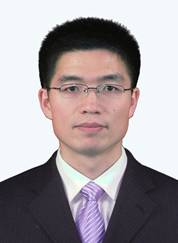
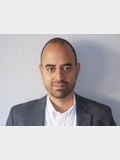
Prof Duncan Robertson is a Professorial Research Fellow at the School of Physics and Astronomy, University of St Andrews, Scotland. He holds a B.Sc. (Hons.) and Ph.D. in Physics from the same institution. His career has focused on millimeter-wave radar technologies with applications in environmental sensing, security systems, and battlefield systems. He leads the Millimetre Wave Group, specializing in radar imaging, radiometry, electron spin resonance instrumentation, and antenna design. Education: B.Sc. (Hons.) in Physics and Electronics, University of St Andrews (1991) Ph.D. in Millimetre Wave Physics, University of St Andrews (1991) Research Interests: Prof Robertson’s work spans millimeter-wave radar systems, including drone detection, glacier monitoring, sea clutter analysis, and holographic metasurfaces. His group develops technologies for security screening, environmental monitoring, and material characterization. Grants & Projects: Environmental Monitoring: Short Range Interferometric Synthetic Aperture Radar (InSAR) MuWMAS: Snowflake Scattering and Microstructure Analysis Drone Detection Radar Commercialization Labs/Teams: Leads the Millimetre Wave Group, collaborating on radar phenomenology and advanced sensor systems. Active in international radar conferences and experimental field trials.
Stavros Vougioukas is a Professor and Vice Chair in the Department of Biological and Agricultural Engineering at the University of California, Davis, within the College of Engineering. He is actively involved in research and graduate mentorship, focusing on agricultural robotics and automation for specialty crops. His work integrates engineering solutions to improve efficiency and sustainability in farming systems. His research interests include agricultural robotics , automation of harvesting processes , sensors and control systems , precision agriculture , and wireless sensor networks for orchard environments . He develops technologies for robotic and robot-aided harvesting, particularly in strawberries and orchard crops, emphasizing optimal management of inputs and yield monitoring. The recent publications reflect a strong trend in robotics integration , real-time sensing , and data-driven decision-making in agriculture. His work spans mechanical design, signal processing, path planning, and structural durability, indicating a multidisciplinary approach to solving agricultural challenges through engineering innovation. Scientific Awards and Recognition: $1.6M grant (2021) to develop innovative fruit-picking machines CITRIS Seed Award (2023) for engineering solutions in agriculture Professor Vougioukas mentors graduate students and leads funded research projects focused on automation and robotics in agriculture. He has secured significant grants, including a $1.6M award for fruit-picking robotics, demonstrating strong research leadership. His collaborations span institutions and disciplines, particularly in agricultural machinery design and sensor network deployment. He leads research efforts in agricultural automation, particularly through projects involving robot-aided harvesting , orchard navigation systems , and wearable worker tracking devices . His lab contributes to the development of intelligent systems for sustainable farming, integrating mechanical, electronic, and computational components.
Dr. Tyson Phillips serves as Senior Lecturer and Director of Teaching and Learning at The University of Queensland's School of Mechanical and Mining Engineering within the Faculty of Engineering, Architecture and Information Technology. He is an active Affiliate of the Future Autonomous Systems and Technologies research group, focusing on translating robotics innovations into practical mining applications. His academic leadership includes curriculum development for engineering programs and direct industry engagement with major mining equipment manufacturers. He earned his Doctor of Philosophy (PhD) from The University of Queensland in 2016, with thesis research centered on LiDAR-based perception systems for autonomous excavators. His doctoral work established foundational methods for object pose verification in mining contexts. Phillips' research specializes in robotics perception for extreme mining environments, developing LiDAR-centric solutions for autonomous equipment operation amid dust, fog, and unstructured terrain. Key contributions include evidential reasoning frameworks for uncertainty management, real-time pose estimation algorithms, and sensor fusion techniques for excavators and bulldozers. His work bridges theoretical computer vision with industrial deployment, targeting operational safety and efficiency in mineral extraction. Publication analysis reveals consistent focus on mining robotics since 2012, with recent works (2021-2024) emphasizing minimal-sensor configurations, probabilistic terrain mapping, and vibration-assisted gripper technology. His 14 scholarly outputs demonstrate evolution from sensor evaluation (2012-2015) toward integrated autonomy systems (2018-2024), predominantly in Journal of Field Robotics and Sensors . He actively supervises graduate researchers as Principal Advisor for a PhD on multimodal perception mapping and Associate Advisor for two PhD projects involving spreader systems and physics-informed neural networks. Completed supervision includes a 2024 PhD on bulldozer terrain mapping and a 2021 Master's on shovel/hopper interaction strategies. Research funding spans 14 projects from 2012-2026, including current Australian Coal Association Research Program support (2025-2026) and major Caterpillar Inc. collaborations for ERS self-protection and articulated truck automation. Phillips operates within The University of Queensland's Future Autonomous Systems and Technologies group, which develops field-deployable autonomy solutions for mining partners. This team conducts real-world testing of perception systems using Caterpillar and FMG operational sites as validation environments.
Introduction Dr. Shelley Xuelian Meng is an Associate Professor in the Department of Geography and Anthropology at Louisiana State University (LSU), part of the College of Humanities & Social Sciences. Her research focuses on leveraging remote sensing technologies (e.g., UAVs, LiDAR, multispectral imaging) to study coastal dynamics, wetland restoration, vegetation health, and precision agriculture. Education Ph.D. in Geography and GIScience, Texas State University (2010) M.S. in GIS and Cartography, Chinese Academy of Sciences (2003) B.E. in Information Engineering, Wuhan University (2000) Research Interests Meng’s work emphasizes the application of advanced geospatial technologies to address environmental challenges. Key areas include: Coastal wetland die-off and restoration using multi-scale remote sensing LIDAR and UAV-based terrain and vegetation mapping Object-oriented classification algorithms for environmental monitoring GIS integration for precision agriculture and disaster management Awards & Recognition 2023 Tipton Team Award (for Roseau cane die-off research) 2014 Best Paper Award in Remote Sensing CPGIS Young Scholar (2012) Grants & Projects Notable funded projects include: USDA-funded Roseau cane die-off studies ($1.6M+ across multiple years) Development of LiDAR and thermal sensing tools for coastal research Acquisition of terrestrial LiDAR equipment for multidisciplinary studies Labs & Affiliations Meng directs the Technology Intensive Geospatial and Remote Sensing (TIGeRS) Lab , which houses advanced equipment including drones, LiDAR scanners, and multispectral sensors. The lab collaborates with the LSU Coastal Studies Institute and other institutions.
Diego Patiño is an Assistant Professor in the Department of Computer Science and Engineering at the University of Texas at Arlington (UTA), a position he began in September 2024. He earned his Ph.D. in Computer Engineering from the National University of Colombia in 2020, following M.S. and B.S. degrees from the same institution. Prior to joining UTA, he served as a Postdoctoral Fellow at Drexel University and a Postdoctoral Researcher at the GRASP Laboratory, University of Pennsylvania. B.S. in Computer Engineering, National University of Colombia, 2010 M.S. in Computer Engineering, National University of Colombia, 2012 Ph.D. in Computer Engineering, National University of Colombia, 2020 Dr. Patiño's research centers on geometric computer vision and machine learning, with applications in robotics and 3D vision. His primary interests include 3D reconstruction, graph neural networks, symmetry detection, physics-informed machine learning, and reinforcement learning. He develops algorithms that integrate geometric priors and physical constraints into deep learning models to improve robustness and generalization in real-world robotic systems. His recent publications demonstrate a strong trend in leveraging implicit neural representations for 3D shape reconstruction, applying graph neural networks to swarm robotics, and enhancing computer vision tasks with self-supervised and physics-informed learning. Work spans high-impact venues such as IEEE RA-L, ICRA, ICPR, and MICCAI, showing a consistent focus on geometric reasoning, robotic perception, and medical imaging applications. His scientific contributions have been recognized with awards from the UTA Division of Student Affairs for exceptional dedication and positive impact (2024 and 2025). He is actively involved in securing research funding, with multiple grants under review from NSF, Air Force SBIR, and industry partners like Sony. Exceptional dedication and positive impact recognition, UTA Division of Student Affairs (December 9, 2024) Exceptional dedication and positive impact recognition, UTA Division of Student Affairs (April 30, 2025) Dr. Patiño advises and serves on committees for multiple graduate students in computer science and engineering, including doctoral and master’s candidates. He is also leading or co-leading several research grants under review, covering topics such as aerial swarm navigation, neuromorphic sensing, and industrial computer vision. He teaches graduate courses in computer vision and is involved in service roles including PhD admissions and faculty appointments committees. He is affiliated with research initiatives at UTA, including the UTARI Research Institute, where he has presented on geometric modeling and physics-informed learning. His lab focuses on developing next-generation computer vision algorithms for robotics, industrial inspection, and safety-critical systems.
Dr. Saidi Siuhi serves as an Associate Professor of Civil Engineering at South Carolina State University, where he teaches undergraduate and graduate courses while conducting research and providing institutional service across departmental and university levels. His academic credentials include: Ph.D. in Civil Engineering from the University of Nevada, Las Vegas (2009) M.Sc. in Civil Engineering from Florida State University (2006) B.Sc. in Civil Engineering from the University of Dar-es-Salaam (2003) Specializing in transportation engineering, Dr. Siuhi's research focuses on traffic safety, transportation planning, and microscopic traffic simulation. His work addresses critical transportation challenges including distracted driving/walking behaviors, traffic management during special events (notably the 2017 solar eclipse), and the application of advanced computational methods to transportation networks. He integrates emerging technologies like virtual reality, machine learning, and deep learning to develop innovative safety solutions for complex transportation systems. Analysis of his recent publications (2021-2025) reveals a strong trajectory toward computational transportation safety, with increasing emphasis on AI-driven solutions for pedestrian safety, driver behavior analysis, and infrastructure monitoring. His work consistently bridges theoretical transportation models with practical safety applications, particularly in distracted behavior analysis and event-based traffic management. Dr. Siuhi actively mentors students through senior design projects (CE 459/460) and graduate coursework, though specific advisee names aren't documented. His service contributions span departmental, college, and university committees, supporting academic operations and strategic initiatives within the engineering program.
Qi Chen is a Professor in the Department of Geography at the University of Hawaii at Mānoa, specializing in remote sensing and geospatial technologies. His office is located in Saunders Hall, and he teaches undergraduate and graduate courses including GEO 370 (UAV and Aerial Photography), GEO 388 (Introduction to GIS), GEO 470 (Remote Sensing), GEO 489 (Applied GIS), and GEO 762 (Research Seminar: Remote Sensing. His research focuses on transforming earth observation data into actionable knowledge for environmental monitoring. Primary interests include: LiDAR applications for vegetation analysis and biomass estimation Climate change impacts on land cover and coastal systems Machine learning integration with geospatial data High-resolution mapping of agricultural and forest ecosystems Drone and satellite-based environmental assessment Chen's recent publications (2020-2025) demonstrate a strong focus on advancing remote sensing methodologies, particularly through: AI-driven approaches (GANs for vegetation indices, deep learning for marine debris) Multi-sensor fusion (LiDAR with camera systems, hyperspectral-multispectral integration) Novel applications in precision agriculture and infrastructure monitoring Hawaii-specific environmental studies incorporating indigenous knowledge systems He leads the Smart Remote Sensing Lab (smartremotesensing.org) where he mentors graduate students in developing cutting-edge geospatial solutions for ecological and societal challenges.
Anthony Clark is an Assistant Professor of Computer Science at Pomona College, where he has been teaching since 2020. Previously, he served as an Assistant Professor at Missouri State University from 2016 to 2020. He directs the ARCS (Autonomous Robotics and Complex Systems) Lab, which focuses on improving the robustness and adaptability of autonomous robots, particularly small-scale systems that can navigate unpredictable terrain and adapt to potential damage. Clark earned his Ph.D. in Computer Science from Michigan State University in 2016, where he worked under Dr. Philip K. McKinley, and his B.S. in Computer Engineering from Kansas State University, graduating magna cum laude. His research centers on making autonomous robots more robust and adaptive through optimization algorithms and multimodal systems. He specializes in evolutionary robotics, computer vision, neural networks, and simulation methods for developing control systems that leverage multiple locomotion mechanisms. His recent work demonstrates strong trends across several domains: developing hybrid locomotion systems (wheel/leg transformations), applying deep learning to terrain classification and pathfinding, using simulation environments for training, and exploring pretraining techniques for evolutionary robotics. His research shows a consistent focus on bridging simulation and real-world applications while addressing challenges in robot adaptability and robustness. Faculty Excellence in Teaching, Missouri State University (2018) Best Paper Award, Workshop on Evolutionary and Reinforcement Learning (2013) Best Paper Award, ALIFE Conference, Behavior and Intelligence Track (2012) Outstanding Reviewer, Elsevier (2018) Master Advisor Certification, Missouri State University (2017) Clark has advised numerous undergraduate and graduate students through the ARCS Lab, with current research involving projects like the Adabot (a robot with multiple locomotion mechanisms) and thermal semantic segmentation for aerial field robots. His teaching portfolio includes courses on data structures, algorithms, neural networks, computer systems, and mobile robotics. He has also served as a Visiting Associate at Caltech's ARC Lab from 2023-2024, working with Dr. Soon-Jo Chung. The ARCS Lab develops simulation environments, optimizes control systems, and fabricates physical robots. Current projects include the Adabot with its geared coaxial shaft mechanism for hybrid locomotion, thermal semantic segmentation using satellite data, and creating dynamic simulation environments with Unreal Engine 5. The lab emphasizes practical applications of theoretical research while training students in both hardware and software aspects of robotics.
David P. Helmbold is a Professor in the Computer Science Department at the University of California, Santa Cruz. He received his PhD in Computer Science from Stanford University in 1987, where he specialized in parallel algorithms and debugging of parallel programs. He has been a faculty member at UC Santa Cruz for over 25 years. Research Focus Helmbold's research centers on theoretical machine learning and computational learning theory. His primary interests include: Boosting methods and ensemble learning Online learning algorithms and regret minimization Theoretical foundations of semi-supervised learning Applications in computer vision, game AI, and power optimization Analysis of irrelevant variables in learning systems Publication Trends Helmbold's recent work (2009-2012) focuses on advancing theoretical machine learning, particularly in semi-supervised learning, Monte Carlo methods for game AI, and feature relevance analysis. His publications demonstrate a consistent bridge between theoretical frameworks and practical applications, spanning computer vision, geospatial analysis, and algorithmic game theory. Professional Recognition Helmbold is a long-standing member of the computational learning theory community, having hosted the COLT conference and served on its steering committee. No specific awards are mentioned in the source material.
H.F. Machiel Van der Loos is an Associate Professor and Associate Head – External at the Department of Mechanical Engineering, University of British Columbia. He holds a PhD from Stanford University (1992) in human-robot interaction and a Diplôme d'Ingénieur from École Polytechnique Fédérale de Lausanne (EPFL). As Director of the CARIS Lab, his research focuses on rehabilitation robotics, roboethics, design methodology, and human-robot interaction in industrial contexts. He has authored over 50 peer-reviewed journal articles and 100 conference papers, and serves as Associate Editor for the Journal of Assistive Technology . His teaching includes core design courses such as the Capstone Design Project and cross-disciplinary 'Designing for People' courses spanning Computer Science, Applied Science, and Library Science. Van der Loos organized major conferences including IEEE ICORR 2013 and ICED17 at UBC. His work includes developing assistive technologies like power-assisted wheelchairs, AR interfaces for human-robot collaboration, and rehabilitation robots. The CARIS Lab emphasizes ethical considerations in corporeal robotics and user-centered design principles. Current research projects involve multimodal robot programming through AR, gesture-based interaction, and adaptive wheelchair control systems. His lab has collaborated with industry partners like JDQ Systems Inc. and Tableau to advance practical robotics solutions.
David Serfass is a Lecturer at the National Institute of Oriental Languages and Civilizations (INALCO) specializing in Chinese studies. He serves as Co-manager of international mobility, Tutoring Manager, and Referent to the Cross-functional Commission at the institution. His teaching portfolio includes courses on the History of East Asia (19th-20th centuries), Communication and Media in East Asia, Introduction to Ancient Chinese History, Sinological Culture and Practice, Republican China through Texts and Media, and History of Taiwan. Dr. Serfass's research focuses on the History of the Japanese Occupation of China (1931-1945), the History of the Modern Chinese State, Sino-Japanese Relations, and the History of the Sino-Japanese War. His work examines state-building processes during wartime, particularly through the lens of the Wang Jingwei regime and collaboration governments in occupied China. He approaches these topics through spatial history, bureaucratic documentation, and memory studies, revealing how territorial control, administrative practices, and historical narratives shaped wartime China. His scholarly contributions demonstrate a consistent focus on the complexities of political authority during periods of fragmentation and occupation. Rather than viewing the Wang Jingwei regime as merely a Japanese puppet government, Serfass's research reveals the regime's internal dynamics, state-building efforts, and complex negotiations of sovereignty. His work challenges teleological narratives of central state formation in Republican China, highlighting instead the fragmented and contested nature of political authority during this period. Member of editorial board, Études chinoises (2014-2024) Member of editorial board, Terrains de Taiwan Member, ERC project Elites, Networks and Power in Modern China Member, French Taiwan Studies Project Member, Occupation Studies Research Network Dr. Serfass is an active contributor to academic discourse through conference presentations, editorial work, and collaborative research projects. His approach combines traditional historical research with spatial analysis and attention to bureaucratic practices, drawing on Chinese, Japanese, and Western archival sources to provide multi-perspective understanding of wartime China. His work has established him as a significant voice in the field of modern Chinese history, particularly regarding the complex dynamics of occupation, collaboration, and state formation during the Sino-Japanese War period.
Dr. Kevin A. Adkins is a Professor in the College of Aviation at Embry-Riddle Aeronautical University , where he teaches aerodynamics, aircraft performance, and uncrewed aircraft systems (UAS) courses. He pioneered the first collegiate Advanced Air Mobility (AAM) course in the U.S. in 2023 and directs two labs: the Advanced Air Mobility Research and Innovation Lab (AAMRIL) and the Uncrewed Vehicle and Atmospheric Investigation Lab (UNVAIL) . Education : Ph.D. in Aerospace Engineering (Mississippi State University), M.Eng. and B.S. in Aerospace Engineering (University of Michigan-Ann Arbor) His research focuses on atmospheric boundary layer meteorology using UAS, AAM concepts of operation (ConOps), and flight test engineering. He collaborates extensively on sensor development for environmental monitoring, including low-cost particulate matter sensors and bioaerosol sampling mechanisms. Recent publications emphasize UAS applications in wildfire detection, urban microclimate analysis, and wind farm humidity studies. Dr. Adkins serves on advisory committees for the Florida Department of Transportation's AAM initiative and ASTM International's UAS standards. Awards : Fellow of the Royal Aeronautical Society, ERAU Researcher of the Year (2020), PIEoneer Real Life Learning Award (2019), AUVSI Best Paper Award (2019) He mentors numerous student projects on UAS sensor development and atmospheric research, with teams winning symposium awards. His labs integrate experiential learning with international fieldwork in Puerto Rico, Norway, and Lithuania.
Yiguo Xue is a Professor and PhD Tutor at the Geotechnical and Structural Engineering Center, School of Civil Engineering, Shandong University. He has contributed extensively to tunnel engineering, subsea infrastructure, and slope stability analysis through advanced prediction models and numerical simulations. Research Interests: New tunnel geological condition prediction technologies Subsea tunnel and underground energy storage systems High slope stability evaluation Engineering exploration methods His recent work focuses on tunnel safety, subsea structural mechanics, and AI-driven hazard prediction models. Publications highlight his expertise in rockburst analysis, water inrush risk, and excavation optimization using machine learning and numerical frameworks. Scientific Awards: Recipient of China's Top 100 Most Influential Domestic Academic Paper Award (2008 paper on tunnel geological hazard forecasting) He has secured multiple national invention patents for tunnel monitoring devices (e.g., vibration sensors, collapse prediction systems) and developed specialized software for displacement prediction and rock classification.
Joshua Marshall is an Associate Professor in the Department of Electrical and Computer Engineering at Queen's University, cross-appointed to Mechanical and Materials Engineering. He serves as Interim Director of Ingenuity Labs Research Institute and leads the Offroad Robotics research group (formerly Mining Systems Laboratory). Previously, he held positions at Carleton University and MDA, Inc. Education: PhD in Electrical and Computer Engineering, University of Toronto (specializing in systems control) Research Interests: Dr. Marshall specializes in field robotics for mining, space, and industrial applications. His work integrates control systems engineering , localization and mapping , and mechatronics to develop autonomous solutions for harsh environments. Key focus areas include mobile robot navigation, sensor fusion, and real-world deployment challenges in underground and extraterrestrial settings. Publication Trends: His 2022-2025 publications reveal dominant themes in autonomous industrial vehicle control (motor graders, excavators), marine robotics (uncrewed surface vessels), and terrain/material classification . Work consistently combines model predictive control with machine learning (Gaussian processes, reinforcement learning) for dynamic environment adaptation. Multi-robot systems and simulation-to-real transfer represent emerging research directions. Professional Recognition: Senior Member of IEEE Associate Editor, IEEE Control Systems Society Conference Editorial Board Senior Editor, IEEE/RSJ International Conference on Intelligent Robots and Systems (IROS) Research Impact: Dr. Marshall's Offroad Robotics group develops technologies featured in the Canada Science and Technology Museum's 'From Earth to Us' exhibit. His work bridges academic research with industry applications through collaborations with MDA and international institutions like Örebro University, though specific grant details are not provided in source materials. Leadership: He directs both the Offroad Robotics research group and Ingenuity Labs Research Institute, fostering interdisciplinary innovation in robotics, autonomous systems, and intelligent technologies for real-world implementation in mining, space exploration, and environmental monitoring.
Angel Santamaria-Navarro serves as Associate Professor at Polytechnic University of Catalonia (UPC) and Robotics Researcher at the Institute of Robotics and Industrial Informatics (IRI), a CSIC-UPC joint center in Barcelona. His work bridges academic research and real-world deployment in mobile robotics, with current leadership in European TRIFFID (autonomous first-responder systems) and national LENA (lifelong navigation learning) projects spanning urban logistics and emergency response applications. His research centers on Mobile Robotics and Autonomous Systems with emphasis on human-robot collaboration in unstructured environments . Key focus areas include robot navigation in crowded urban settings, manipulation of deformable objects, and deployment of delivery systems like the LogiSmile project piloted across European cities. His work uniquely integrates machine learning with field robotics to solve practical challenges in last-mile logistics and disaster response. Recent publications (2022-2025) reveal a concentrated shift toward real-world robotic deployment , particularly in emergency response (TRIFFID) and urban logistics. Dominant themes include communication-aware multi-robot coordination, probabilistic perception for dynamic environments, and human acceptance studies – reflecting his commitment to transitioning lab innovations to operational field systems through Horizon Europe and national projects. Key recognitions include: 1st place at DARPA Subterranean Challenge, urban circuit (2020) 2nd place at DARPA Subterranean Challenge, tunnel circuit (2019) Beatriu de Pinós research fellowship (2021) Georges Giralt PhD award finalist (2018) R3 accreditation as consolidated researcher (2023) He actively mentors next-generation researchers as supervisor of PhD candidate Hafsa Taher (deep learning for autonomous vehicles) and Master's student Joan Tur Ruiz (object pose tracking). His research portfolio includes €5M+ in competitive funding spanning Horizon Europe projects (TRIFFID, TORNADO), national initiatives (LENA, AUDEL), and industry partnerships like the Vaive Logistics spin-off co-founded in 2023. As core member of UPC's robotics team, he contributed to the NeBula framework that won DARPA's Subterranean Challenge and currently leads development of TRIFFID's autonomous first-responder systems. His work with the LogiSmile consortium demonstrates practical urban deployment of delivery robots across Barcelona, Lisbon, and Milan, while the SOCIAL PIA project pioneers cybernetic avatars for cooperative human-robot teams.