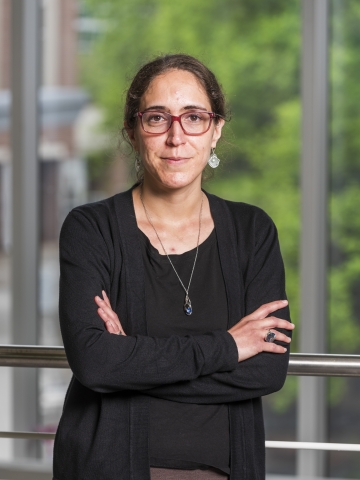
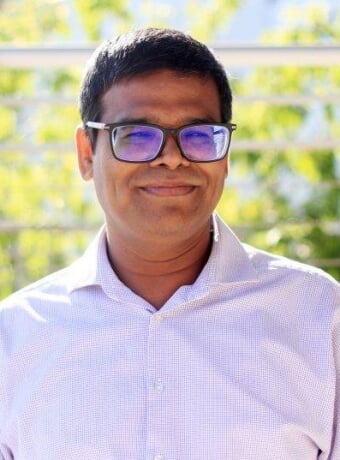
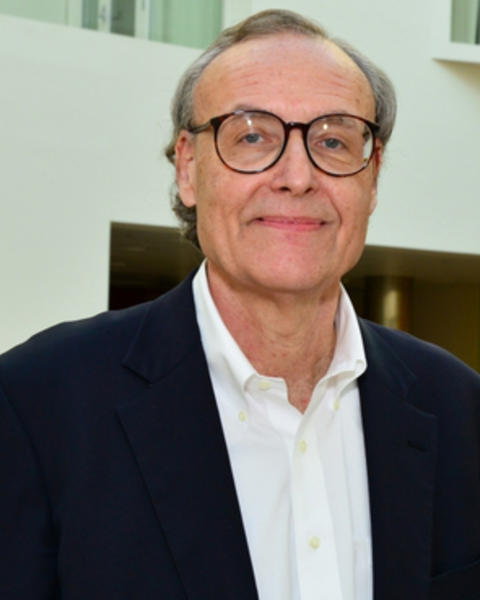
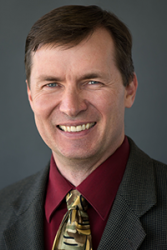
Andrew Kulmatiski , Associate Professor in the Wildland Resources department at Utah State University , specializes in plant-soil interactions and their ecological implications. His research focuses on soil ecology, plant physiology, and climate change adaptation in rangeland systems. PhD in Biology (Plant-soil interactions), Utah State University (2005) Forest Soils training, Yale School of Forestry and Environmental Studies (1999) BA in Biology (Environmental Science, Chemistry), Colby College (1994) Research highlights include: Plant-soil feedback mechanisms driving invasion and productivity Woody encroachment in grasslands linked to precipitation patterns Activated carbon applications for native plant restoration Depth-controlled tracer techniques for water/nutrient uptake Key awards: 2014 Oikos article ranked #16/769 via Altmetrics 2013 Nature Climate Change special feature Top 1% most cited in Ecology (2012) Invited expert in invasion ecology literature (2011) Academic mentorship includes guiding 11 graduate students (MS and PhD), and teaching courses on Wildland Soils , Rangeland Plant Taxonomy , and Plant Physiological Ecology . His lab investigates belowground processes for managing invasive species, enhancing productivity, and restoring native communities.
Ioannis Tzimas is a Professor at the Department of Electrical and Computer Engineering of the University of Peloponnese. He is a highly active researcher with numerous publications in areas of Service-Oriented Architectures, Web Engineering, Big Data, and Artificial Intelligence applications. University: University of Peloponnese Department: Department of Electrical and Computer Engineering Academic Rank: Professor Email: tzimas@uop.gr Ioannis Tzimas received his education from the Department of Computer Engineering and Informatics of the University of Patras, where he also completed his PhD in Web Engineering. His research spans multiple interdisciplinary domains at the intersection of computer science and practical applications. Service-Oriented Architectures and Information Systems Web Data Engineering and Web Modeling Big Data Management and Data Science Machine Learning and Artificial Intelligence Applications Digital Ecosystems and Digital Transformation for the Public Sector Bioinformatics Professor Tzimas' recent research output demonstrates a strategic focus on applying advanced computational techniques to address contemporary challenges. His work shows particular expertise in labor market analysis using large language models, electricity demand forecasting in Greece, and social protection systems. His publications reveal a pattern of bridging theoretical computer science with practical, real-world applications across multiple sectors. Since 2018, he has served as an international consultant to the World Bank in the field of information systems and digital transformation, working on projects across Europe, Africa, the Caribbean, the Pacific Islands, and China. His earlier career included significant technical leadership roles at the University of Patras and other Greek institutions. Technical Manager of the Graphics, Multimedia and Geographic Systems Laboratory (1996-2018) Technical Coordinator of the Internet and Multimedia Technologies Research Unit (1997-2011) Scientific Manager of the Network Management Center of the TEI of Messolonghi (2009-mid 2013)
Dr. Sarah K. Carmichael is a Professor in the Department of Geological and Environmental Sciences at Appalachian State University , where she also serves in the Appalachian Studies Faculty . Her interdisciplinary research focuses on fluid-rock reactions , manganese geomicrobiology , and paleoenvironmental reconstruction of mass extinction events through Devonian period studies . B.A. from Smith College M.A. and Ph.D. from Johns Hopkins University Her research combines geochemistry of mass extinctions , microbe-mineral interactions in caves , and Appalachian manganese ore formation through fieldwork from Mongolian mountains to Vietnamese basins . She leads the DAGGER (Devonian Anoxia, Geochemistry, Geochronology, and Extinction Research) Team and collaborates with Dr. Suzanna Bräuer on cave geomicrobiology projects. Recent publications focus on Devonian-Mississippian stratigraphy in Mongolia , mercury isotope evidence for Late Devonian ocean anoxia , and human impact assessment in Appalachian caves . Her work has been recognized with National Geographic Explorer status, inclusion in the Explorers Club 50 , and the UNC Board of Governors Teaching Award . Scientific awards include National Geographic Explorer (2018, 2022) Explorers Club 50 (2022) Board of Governors Teaching Award (2020) Academy of Outstanding Teachers induction (2022) KWI Distinguished Service Award (2020) William C. Strickland Outstanding Junior Faculty Award (2014) She mentors numerous student researchers and has secured over $1.2 million in external funding from organizations like the National Science Foundation and National Geographic Society . Her laboratory work utilizes advanced techniques such as electron microscopy and isotope analysis to decode micron-scale mineral textures that reveal Earth's ancient environmental changes.
Evangelos Ioannidis is an Associate Professor at the Department of Statistics, School of Informatics and Statistics, Athens University of Economics and Business. Born in 1962, he holds a Mathematics PhD from the University of Heidelberg (1993) and has served in his current department since 1999, progressing from Lecturer (1999) to Assistant Professor (2007) and Associate Professor (2023). His expertise spans spectral analysis of time series , cointegration methods , and bootstrap applications in economic data analysis, with additional focus on Official Statistics and sampling techniques . University of Heidelberg: MMath (1987), PhD (1993) Researcher, University of Heidelberg (1987-1991) Visiting Researcher, University of Orsay, Paris Sud (1992-1993) OECD, Paris (1994-1998) National Institute of Labour (1999) His scientific contributions focus on time series econometrics, VAR model spectra, and R&D expenditure analysis. Recent work includes non-parametric spectral estimation and risk-based sampling methodology. He has collaborated with Eurostat on statistical projects (2012-2014). Current affiliations include the Athens University of Economics and Business , where he teaches and conducts research on economic time series analysis and statistical methods.
Kazushige Terui is an Associate Professor at the Research Institute for Mathematical Sciences (RIMS), Kyoto University. His research focuses on mathematical logic and its applications to computer science, particularly proof theory, computational complexity, and nonclassical logics. He investigates proof normalization complexity, algebraic reformulations of proof-theoretic techniques, and logical foundations of computation. Terui maintains an active research group at RIMS and teaches courses including Mathematical Logic and Computer Science Fundamentals. Research Interests: Terui's work spans: Proof-theoretic aspects of nonclassical logics (linear logic, substructural logics) Computational complexity of proof normalization in lambda calculus Algebraic reformulation of logical techniques (cut-elimination, interpolation) Denotational semantics approaches to complexity characterization Effective proof discovery methods based on programming language theory Publications: His recent articles primarily explore proof theory, computational complexity, and logical foundations, with frequent focus on lambda calculus, linear logic, and type systems. Works frequently bridge theoretical computer science and mathematical logic. Education & Outreach: Authored the book Can Computers Become Mathematicians? (2015) for general audiences and maintains extensive lecture materials on mathematical logic and computer science foundations.
Paul McFlynn is a Senior Lecturer and Interim Associate Head of School of Education at Ulster University, specializing in teacher education with particular focus on Physical Education. He serves as Course Director for the PGCE in Physical Education and coordinates the post-primary PGCE course. His academic work spans the Faculty of Arts, Humanities & Social Sciences where he contributes significantly to educational research and teacher development programs. Dr. McFlynn's research interests primarily center on critical reflection in initial teacher education and mentoring practices for new educators. He has conducted significant work on Special Educational Needs (SEN) in Physical Education, investigating current practices in Northern Ireland post-primary schools. His professional activities include chairing AfPE NI (Association for Physical Education Northern Ireland), where he promotes the subject and develops improved Continuing Professional Development frameworks, and serving as an associate assessor with the Education and Training Inspectorate. His scholarly contributions demonstrate consistent productivity with research outputs spanning from 2013 to 2025, showing particular growth in publication and project activity since 2019. His work addresses critical issues in teacher education policy and practice, with strong connections to Northern Ireland's educational context and broader international perspectives. Distinguished Education Excellence Award (2021) As an academic leader, Dr. McFlynn supervises PhD and Master's students while coordinating key teacher education modules including The Reflective Professional Module on the MEd programme. His current research portfolio includes five major projects with external funding from organizations including the Baily Thomas Charitable Fund, Sport Northern Ireland, and the Department of Education and Learning (NI), demonstrating strong connections between his academic work and practical educational contexts.
Katharine Suding serves as a Professor in the Department of Ecology and Evolutionary Biology at the University of Colorado Boulder, leading the Suding Lab focused on plant community ecology at the intersection of ecosystem, landscape, and population biology. Her work integrates long-term monitoring, modeling, and experimental approaches across diverse ecosystems—from alpine tundra to grasslands—with conservation groups, government agencies, and land managers to develop evidence-based solutions for restoration, species invasion, and environmental change. Her educational background includes a PhD from the University of Michigan (1999) and a BS from Williams College (1994). Key research interests center on plant-soil feedbacks, functional traits, species effects on ecosystem processes, and non-linear/threshold dynamics in ecological systems. Her work emphasizes usable science that addresses biodiversity conservation, human well-being, and management opportunities through frameworks like cross-scale facilitation and adaptive capacity for restoration. Recent publications reveal strong trends in integrating remote sensing with causal inference for biodiversity monitoring, redefining restoration intervention continua beyond active-passive dichotomies, and exploring climate change impacts on alpine phenology and soil communities. Her research consistently bridges theoretical ecology with practical applications, particularly in grassland and tundra restoration under global change. Scientific recognition includes: Bower Award and Prize for Achievement in Science (Franklin Institute, 2025) Eminent Ecologist (Journal of Ecology, 2023) Highly Cited Researcher (Web of Science, 2016-2019) MacArthur Award (Ecological Society of America, 2018) Fellow of AAAS and ESA Dr. Suding actively mentors 26 degree-seeking students (current and alumni), including PhD candidates in grassland restoration and MS students in conservation biology. Her lab secures significant grants for projects like alpine climate resilience and invasive species management, emphasizing collaborative frameworks with stakeholders. The Suding Lab maintains a strong commitment to inclusive science through field safety protocols, peer mentorship, and equitable opportunity strategies, operating from CU Boulder's Sustainability, Energy and Environment Community building. The lab fosters interdisciplinary teams studying critical transitions in ecological systems, with current projects spanning from Colorado grasslands to tropical restoration. Future work focuses on scaling restoration science through remote sensing integration and developing adaptive capacity metrics for climate-vulnerable ecosystems.
Bradley J. Zebrack is a Professor at the University of Michigan School of Social Work with extensive involvement in the University of Michigan Rogel Cancer Center, Division of Cancer Control and Population Sciences. His academic career spans over 25 years of impactful research and teaching in psychosocial oncology and cancer survivorship. Dr. Zebrack earned his PhD in Social Work and Sociology from the University of Michigan (1999), following dual master's degrees in Social Work and Public Health from UC Berkeley (1992), and a BA in Sociology from UCLA (1982). His educational background has provided a strong foundation for his interdisciplinary approach to cancer care research. His research focuses on how social and psychological factors—including childhood trauma exposure, structural racism, and social isolation—influence gene regulation and health outcomes for cancer patients and survivors. He has extensive clinical experience in both pediatric and adult oncology and has pioneered the development of peer support programs for adolescent and young adult cancer survivors. His work on the psychosocial care of young adults with cancer has been cited in the New York Times, demonstrating its national impact. Dr. Zebrack's recent publications reveal a strong emphasis on adolescent and young adult cancer care, financial toxicity in oncology, and the essential role of social work in comprehensive cancer care delivery. His research on recreational travel among brain tumor patient-caregiver dyads and interventions for post-traumatic stress among cancer survivors demonstrates his commitment to improving quality of life across the cancer continuum. Fulbright Scholarship (2017) Ruth McCorkle Excellence in Research Mentorship Award from American Psychosocial Oncology Society Fellow, Society for Social Work and Research (SSWR) Fellow, American Psychosocial Oncology Society (APOS) Fellow, Association for Oncology Social Work (AOSW) Dr. Zebrack has secured substantial research funding from the National Cancer Institute (including K07, R03, and R01 mechanisms), the Patient-Centered Outcomes Research Institute (PCORI), and HopeLab Inc. His current NCI-funded research involves identifying functional genomic pathways through which social and psychological factors influence health outcomes. He recently received a $1.6 million grant from the National Cancer Institute and has led new programs for adolescent and young adult cancer patients. His work in Australia through the Fulbright Scholarship focused on developing supportive care services for adolescents and young adults affected by cancer. He has been instrumental in developing and evaluating peer support programs for adolescent and young adult cancer survivors, and his research continues to address critical gaps in understanding how social determinants of health impact cancer outcomes through biological mechanisms.
Lynn Kamerlin is a Professor at the Georgia Institute of Technology and co-leads the Kamerlin Laboratory, which operates across Georgia Tech and Lund University. Her work integrates computational chemistry and biophysics to address fundamental questions in enzyme evolution, catalysis, and protein design. Education MNatSc in Chemistry, University of Birmingham (UK) PhD in Chemistry, University of Birmingham (UK) Her research spans computational biophysics , focusing on mechanistic biochemistry , protein evolution , and enzyme engineering . Key methodologies include machine learning , molecular dynamics simulations , EVB/QM/MM modeling , and natural language models for protein structure prediction. Recent publications highlight trends in AI-driven enzyme design , conformational dynamics , and mechanistic studies of phosphoryl transfer reactions . Tools like WatCon and Q-RepEx demonstrate her commitment to method development in computational biology. Scientific Awards Georgia Research Alliance Eminent Scholar (2022-Present) Wallenberg Scholar (2020-2024) ERC Starting Grant (2012-2017) Wallenberg Academy Fellowship (2014-2019, prolonged 2019-2024) Young Academy of Europe Chair (2014-2015) Fellow of the Royal Society of Chemistry (2017) Her lab collaborates with experimental groups worldwide, leveraging enhanced sampling techniques and structural bioinformatics to engineer enzymes with tailored properties. Grants from the Swedish Research Council and European Research Council underpin her research on enzyme evolution and catalytic mechanisms. Current projects include computational design of thermostable enzymes , allosteric modulators for biomedical targets, and modular protein scaffolds . The lab also investigates non-canonical amino acid incorporation and FAIR data principles in biomolecular simulations.
Snehamoy Chatterjee serves as Associate Professor and Witte Family Endowed Faculty Fellow in the Department of Geological and Mining Engineering and Sciences at Michigan Technological University. His expertise spans ore reserve estimation, mine planning optimization, and AI-driven safety systems, with significant contributions to remote sensing applications in mining and geological hazard assessment. Chatterjee earned his PhD in Mining Engineering from the Indian Institute of Technology Kharagpur, followed by postdoctoral research at the University of Alaska Fairbanks and the COSMO Stochastic Mine Planning Laboratory at McGill University. His academic journey includes prior faculty positions at India's National Institute of Technology. His research program integrates cutting-edge artificial intelligence with geospatial technologies to solve critical challenges in mining safety and resource management. Key focus areas include: Generative AI frameworks for real-time mining hazard prediction Hyperspectral and InSAR remote sensing for mineral exploration Deep learning applications in geophysical inversion Stochastic optimization of mine planning under uncertainty Machine learning-driven landslide and earthquake hazard mapping Chatterjee's 15 most recent publications (2023-2024) reveal a pronounced shift toward AI-geospatial fusion , with 60% of works applying deep learning to satellite imagery for hazard monitoring. His team's research spans three critical domains: mining safety systems (33%), geological hazard prediction (47%), and resource optimization (20%), demonstrating strong interdisciplinary collaboration across environmental science and engineering disciplines. Professional recognition includes: Editor's Best Reviewer Award 2014 from Mathematical Geosciences Journal APCOM Young Professional Award 2015 at the 37th APCOM conference Chatterjee actively mentors graduate students and leads multiple federally funded research initiatives focused on mine safety innovation and critical mineral exploration. His professional service includes editorial responsibilities for Mining, Metallurgy & Exploration and committee roles in major international conferences through IAMG, SME, and AGU. Current projects emphasize generative AI applications for predictive safety analytics and hyperspectral remote sensing for critical mineral discovery. His research extends through collaborations with the COSMO Laboratory network and industry partners across North America, India, and Australia, with recent fieldwork focusing on Alaskan platinum deposits and Indian coal reserves.
John D. E. Gabrieli is a Professor at the Massachusetts Institute of Technology (MIT) in the Department of Brain and Cognitive Sciences, holding the Grover Hermann Professorship in Health Sciences and Technology and Cognitive Neuroscience. He serves as Director of the Athinoula A. Martinos Imaging Center at the McGovern Institute for Brain Research and leads the MIT Integrated Learning Initiative. His research spans cognitive neuroscience, focusing on memory, thought, and emotion, with clinical applications in dyslexia, autism, and psychiatric disorders. Director, Athinoula A. Martinos Imaging Center (2016–present) Grover Hermann Professor, MIT (2005–present) Faculty, Harvard Graduate School of Education (2006–present) Visiting Professor, Rush Medical College (1990–present) Gabrieli’s work combines brain imaging with behavioral studies to explore learning mechanisms in children, early intervention for reading difficulties, and neuroimaging applications in psychiatric diagnosis. Recent studies examine altered brain activity in dyslexia , neurodevelopmental patterns in autism , and predictive modeling for mental health . His 2024 dataset on adolescent anxiety/depression in the Human Connectome Project highlights longitudinal neuroimaging approaches. Scientific accolades include election to the American Academy of Arts & Sciences (2016), multiple teaching awards at MIT and Stanford, and the Alice H. Garside Lifetime Achievement Award (2017). He contributes to editorial boards of journals like Psychological Science and Biological Psychiatry . His lab emphasizes educational neuroscience , investigating how socioeconomic factors, white matter plasticity, and mindfulness interventions impact learning outcomes. Collaborations span Massachusetts General Hospital, McLean Hospital, and the Harvard Graduate School of Education, integrating clinical and educational applications of cognitive neuroscience.
Peter Ritchken is a Professor of Banking & Finance at the Weatherhead School of Management, Case Western Reserve University, where he holds the Mario J. Gabelli Distinguished Professorship in Finance. He joined the faculty in 1981 after completing his PhD at Case Western Reserve University and has established himself as a leading scholar in finance, particularly in derivatives, risk management, and fixed income markets. His research interests span several key areas in finance: Fixed Income and Term Structure Models Risk Management in Financial Markets Contingent Claims Valuation Real Options Risk Management in Supply Chains Credit Risk Management Capital Structure Ritchken's scholarly work focuses on understanding price determination in capital markets, risk management strategies for firms across various dimensions (market risk, interest rate risk, credit risk, and operational risk), and the rationale for derivative usage. His research employs sophisticated mathematical finance techniques to address practical financial problems, with applications in banking regulation and supply chain management. He has developed influential models for pricing interest rate claims, implementing stochastic volatility option models, and solving real option problems. His publications appear in top finance journals including the Review of Financial Studies, Management Science, Journal of Finance, and Mathematical Finance. His recent work has increasingly focused on the intersection of operations management and finance, particularly examining how supply chain dynamics interact with financial decision-making. Ritchken has received significant recognition for his contributions: 2014 University Research Award, Weatherhead School of Management Weatherhead Excellence in Teaching Award, 2011 As an educator, Ritchken has made substantial contributions to finance education. He is the founder and director of the Weatherhead School of Management Master of Science in Management-Finance (MSM-Finance) program. He teaches across multiple programs including the MBA, executive MBA, MSM-Finance, and PhD of Finance and Operations Research. His courses cover Risk Management, Derivatives, Fixed Income, Mortgage and Credit Markets, Mathematical Finance, Investment Management, Real Options, and Quantitative Finance. He has also conducted executive education programs worldwide, including in the United States, Europe, Asia, and Australia. Ritchken serves as a research scholar for the Research Department at the Federal Reserve Bank in Cleveland and acts as Faculty Advisor for GARP (Global Association of Risk Professionals). He has consulted with large investment banks and brokerage firms, bridging academic research with practical industry applications.
Professor Shunji Matsuoka is a distinguished academic at Waseda University's Faculty of International Research and Education (Graduate School of Asia Pacific Studies), where he serves as Director of both the Waseda Resilience Research Institute (WRRI) and the Fukushima Hirono Future Creation Research Center. With extensive expertise in environmental economics, disaster recovery, and international development, Professor Matsuoka has established himself as a leading scholar addressing some of the most pressing sustainability challenges of our time. Professor Matsuoka's academic journey began with his PhD from Hiroshima University after withdrawing from Kyoto University's Graduate School of Economics in 1988 with study certification. His career progressed from Hiroshima University, where he served as Lecturer at the Faculty of Integrated Arts and Sciences and later as Professor at the Graduate School of International Cooperation Studies, to his current position at Waseda University since April 2007. His research interests span Environmental Economics , Sustainable Development , Disaster Recovery , and International Development Assistance , with particular focus on the intersection of policy, society, and environmental challenges. Professor Matsuoka's work on nuclear policy and the Fukushima disaster has made significant contributions to risk governance frameworks. His innovative approach integrates social acceptance theory with environmental policy analysis, creating new methodologies for understanding community resilience against complex disasters. His research demonstrates exceptional interdisciplinary integration across economics, political science, and environmental studies. Professor Matsuoka's 15 most recent publications reveal an evolution from international development cooperation and environmental economics in Asia to contemporary focus areas including nuclear policy, social innovation, and Fukushima disaster lessons. His research consistently examines institutional mechanisms affecting environmental governance across multiple scales, from local communities to international agreements. The interdisciplinary nature of his work bridges theoretical frameworks with practical policy applications. His professional recognition includes the Asian Economic Research Association's Outstanding Paper Award (2000) , reflecting the quality and impact of his scholarly contributions. Professor Matsuoka has secured substantial research funding from prestigious sources including JSPS Grant-in-Aid for Scientific Research and Nippon Life Insurance Foundation Environmental Research Grant. His research projects span environmental impact assessment, nuclear waste disposal social acceptance, sustainable city development, and climate change adaptation. As Director of WRRI, he oversees interdisciplinary research initiatives focused on building societal resilience against complex disasters, fostering collaboration between academics, policymakers, and community stakeholders. Through his leadership of the Fukushima Hirono Future Creation Research Center, Professor Matsuoka transforms disaster lessons into practical frameworks for recovery and prevention. His 'dialogue spaces' research examines how science, politics, and society can collaboratively address 'difficult problems,' with particular focus on boundary knowledge workers who bridge different domains of expertise. His work on social acceptance models has significantly advanced understanding of how controversial environmental technologies can gain community support.
Chris Malley is a Senior Research Fellow at the Stockholm Environment Institute (SEI) at the University of York, affiliated with the Environment and Geography department. His work bridges atmospheric science, public health, and climate policy with a focus on real-world implementation in developing economies. His research centers on air pollution-climate interactions, specializing in short-lived climate pollutants (SLCPs) like black carbon and methane. He develops integrated assessment tools (notably LEAP-IBC) to quantify health and climate co-benefits of mitigation policies across Southeast Asia, Africa, and Latin America. Key areas include household energy transitions, agricultural emissions, urban air quality planning, and national policy development for countries including Thailand, Nigeria, Colombia, and Mongolia. His approach combines high-resolution emissions modeling, health impact assessment, and policy feasibility analysis to support evidence-based decision-making. Recent publications reveal a methodological trend toward integrated air pollution-climate modeling with increasing emphasis on subnational implementation barriers, demographic factors in health burden projections, and economic feasibility of clean energy transitions. His work consistently targets policy-relevant outputs for national governments and international bodies. Malley actively contributes to major research initiatives including ‘Supporting action and planning to reduce short-lived climate pollutants in Bogotá’ and the EU-funded ‘FOCI: non-CO₂ climate pollutants’ project. His grant portfolio demonstrates strong partnerships with international organizations like the European Commission and UN agencies, focusing on translating scientific analysis into actionable national planning documents. As a core member of SEI York, he collaborates within an interdisciplinary team specializing in energy systems analysis, atmospheric chemistry, and sustainable development policy. The institute provides the methodological framework for his integrated assessment work while connecting scientific outputs to global policy processes like the Climate and Clean Air Coalition.
Sean Palecek is the Milton J. and A. Maude Shoemaker Professor in the Department of Chemical and Biological Engineering at the University of Wisconsin–Madison. His research focuses on engineering platforms to regulate human pluripotent stem cell (hPSC) differentiation for cardiovascular and neurovascular applications. He is based in 3637 Engineering Hall and leads the Palecek Lab, which develops innovative methods for stem cell fate specification and tissue engineering. BChE, Chemical Engineering, University of Delaware MS, Chemical Engineering, University of Illinois at Urbana-Champaign PhD, Chemical Engineering, Massachusetts Institute of Technology Postdoc., Molecular Genetics and Cell Biology, University of Chicago His research integrates stem cell biology with biomaterials and engineering principles to generate functional cardiomyocytes, brain endothelial cells, and mural cells. His lab leverages Notch3 signaling, proteomics, and organoid systems to model diseases and develop regenerative therapies. Current projects emphasize hypoimmunogenic cardiac organoids, vascular grafts, and blood-brain barrier models for neurotherapeutic screening. The 15 most recent articles highlight his work in human pluripotent stem cell (hPSC) differentiation to cardiomyocytes, endothelial cells, and brain mural cells. Key trends include organoid manufacturing , neurovascular unit modeling , metabolic profiling , and biomaterials for cell transport . His team explores Notch3 activation, SNRK signaling, and transcriptional analysis to optimize cell therapy and disease models. Scientific contributions include the Milton J. and A. Maude Shoemaker Professorship, a named chair recognizing his leadership in chemical and biological engineering. For more details, visit his lab’s website: Palecek Lab .