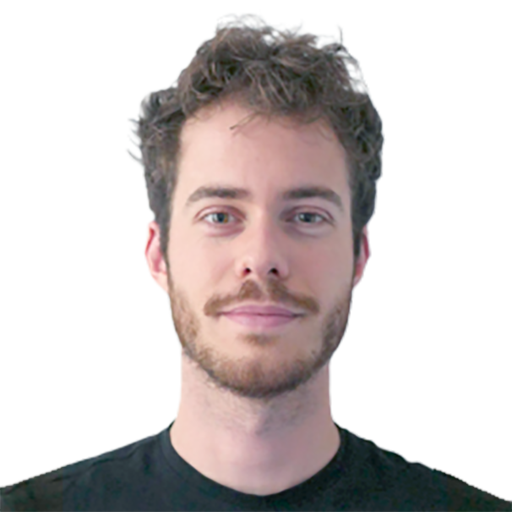
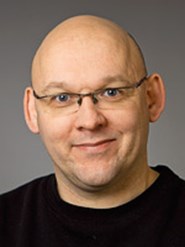
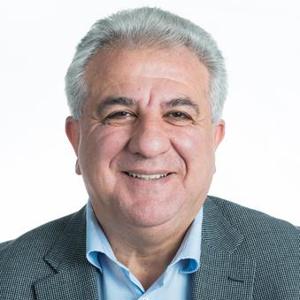
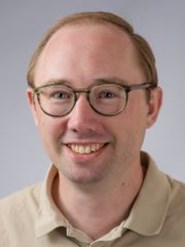
Guilherme Franzmann is an Assistant Professor at Nordita (Nordic Institute for Theoretical Physics), hosted by Stockholm University, Sweden. His research spans theoretical physics with a primary focus on cosmological models derived from fundamental theories. His research interests include: Cosmology String Theory Modified Gravity Theoretical Physics High-Energy Physics Astroparticle Physics Analysis of his 15 most recent publications (2019-2024) reveals a concentrated effort in string cosmology, particularly exploring higher-order α′ corrections in string theory for early universe solutions. His work bridges quantum gravity and observational cosmology through frameworks like double field theory and T-duality, while also addressing foundational issues like the cosmological constant problem and dark matter unification via superfluid models. A notable non-technical contribution critiques academic publishing practices. Guilherme operates within Nordita, a premier Nordic collaborative institute fostering advanced theoretical research across astrophysics, condensed matter, and high-energy physics through international workshops and long-term programs.
Per Åhag is an Associate Professor at the Department of Mathematics and Mathematical Statistics, Umeå University. His research spans several complex variables, pluripotential theory, and differential geometry, with applications in Kähler geometry, polyfold theory, and mathematical education. Current research projects include 'Mathematical Modeling for Sustainable Development and Societal Change' (2024-2029) and 'Tensors and Geometric Metrics on Manifold-like Polyfolds' (2022-2026). He explores mathematical education through studies like 'Students' Perspectives on Artificial Intelligence' (2022-2024) and 'Formative Assessment and Personalized Learning' (2022-2024). Recent publications address complex Hessian equations, geodesics in m-subharmonic functions, and educational strategies. His work intersects pure mathematics and applied educational psychology, demonstrating a commitment to both theoretical and pedagogical advancements.
Martin Karp is a Research Fellow and postdoctoral researcher at KTH Royal Institute of Technology's Department of Engineering Mechanics, working under Dan Henningson. His research focuses on high-fidelity numerical simulations of turbulence and transition, with a specialization in high-performance computing (HPC) and supercomputing architectures. He holds a PhD in computer science from KTH and an MSc in Engineering Physics from Lund University, complemented by studies at ETH Zürich's computer science department. His research interests explore computational limits in nonlinear chaotic systems and future computational advancements. He leads the development of the Neko framework, a scalable simulation tool for extreme-scale CFD with extensive accelerator support. Karp's work emphasizes GPU and FPGA acceleration, parallel computing, and optimizing algorithms for heterogeneous architectures. Key contributions include large-scale turbulence simulations using GPUs, reducing communication in conjugate gradient methods, and evaluating FPGA-based flow solvers. His publications span journals like Concurrency and Computation and Scientific Reports , with conference presentations at IEEE Cluster, PASC, and HPCAsia. Karp's research bridges theoretical computational limits and practical HPC implementation, addressing challenges in precision, scalability, and hardware utilization. His educational background combines engineering physics with computer science, enabling interdisciplinary approaches to fluid dynamics and high-performance simulation. Current projects aim to push the boundaries of computational fluid dynamics through novel algorithm design and leveraging emerging hardware capabilities.
Jian Qiu is an Associate Professor at the Department of Mathematics and affiliated with the Department of Physics and Astronomy at Uppsala University. His research focuses on the intersection of mathematical physics, theoretical physics, and geometry, with a particular emphasis on geometric quantization, topological field theories, and supersymmetric gauge theories. Qiu's work explores advanced topics such as Rozansky-Witten theory, brane quantization, and the application of algebraic and differential geometric techniques to quantum field theories. He is also associated with the Centre for Geometry and Physics, where he contributes to interdisciplinary research bridging geometry and physics. Key Research Areas: Mathematical Physics, Theoretical Physics, Geometry, Quantum Field Theory Recent Publications: Focus on localization techniques, supersymmetric gauge theories, and geometric structures in high-energy physics. Labs/Groups: Centre for Geometry and Physics, Theoretical Physics Group His recent articles highlight contributions to brane quantization, elliptic functions in geometric analysis, and advanced localization methods in supersymmetric field theories.
George Baravdish is a Senior Associate Professor and Head of Unit at the Department of Science and Technology (ITN), Linköping University. He leads the Physics, Electronics and Mathematics (FEM) unit and holds a PhD in Applied Mathematics from Linköping University (1995), focusing on Ill-posed and Inverse Problems under Prof. V. G. Maz'ya. His research spans Inverse Problems , Machine Learning , and Mathematical Oncology , with applications in medical imaging, signal processing, and telecommunications. Notable projects include Mathematics for Machine Learning (focusing on neural ODEs) and Mathematical Oncology (modeling brain tumor growth). Baravdish has supervised two doctoral students and co-supervised two more. He has secured funding as a main or co-applicant for 15 research projects. His work bridges theoretical mathematics and practical applications in healthcare and technology. Current research themes include: Image Processing : Generalizations of the p-Laplace operator for noise reduction Telecommunications : 3D object reconstruction using Wi-Fi signals Inverse Problems : Theoretical advancements and algorithm development He contributes to interdisciplinary collaborations, including AI-driven solutions for healthcare and signal analysis.
Lars Karlsson is an Associate Professor at the Department of Computing Science, Umeå University, where he serves as Assistant Head of Department with responsibilities for undergraduate education. His research focuses on developing efficient algorithms for matrix and tensor computations within high-performance computing environments. He is affiliated with the Parallel and Scientific Computing research group at Umeå. Karlsson's primary research areas include: Numerical Linear Algebra : Specializing in matrix factorizations and eigenvalue computations Parallel Algorithms : Designing scalable solutions for distributed and shared-memory systems Tensor Computations : Developing decomposition methods and completion algorithms Performance Optimization : Auto-tuning techniques for modern computing architectures His publications (2010-2025) demonstrate consistent focus on parallel algorithms for numerical problems, particularly matrix reductions, eigenvalue computations, and tensor decompositions. Recent work emphasizes auto-tuning, robustness in numerical methods, and efficient scheduling for high-performance systems. The majority of publications involve collaborative research within European computing consortia like NLAFET. Karlsson contributes to educational research, having explored mastery learning approaches in university settings. His administrative responsibilities include oversight of undergraduate programs at the Department of Computing Science.
Hadi Fanaee Tork is an Associate Professor (Docent) in Machine Learning and Program Director for the Applied AI bachelor program at Halmstad University's School of Information Technology, Sweden. He earned his PhD in Computer Science with distinction from the University of Porto, Portugal in 2015, followed by postdoctoral positions at the University of Oslo (2017-2020) and INESC TEC research institute in Portugal. His primary research interests include machine learning, tensor decompositions, anomaly detection, and time series analysis. His work spans theoretical foundations to practical applications in healthcare, transportation, environmental monitoring, and industrial systems. He has developed novel methods for tensor-based event detection, multi-aspect data analysis, and space-time clustering, with applications ranging from disease outbreak detection to energy efficiency in maritime transport. His recent publication trend shows a strong focus on tensor analysis applications across multiple domains, with increasing emphasis on practical implementations in transportation efficiency and healthcare analytics. His work bridges theoretical machine learning with real-world problem solving, particularly through tensor decomposition techniques applied to complex, high-dimensional data streams. ERCIM Cor Baayen Young Researcher Award Finalist (2017) Publons Top Reviewer Award (2017) PhD Scholarship, MAP-i doctoral program (2011) Best PHP Class Award (2012) Professor Fanaee Tork has advised numerous PhD and Master's students across multiple institutions including Halmstad University, University of Oslo, and international collaborations with institutions in Iran, Portugal, and Germany. His research has been supported through European FP7 Project "MAESTRA" and various academic collaborations. He maintains active research groups focused on tensor analysis and natural learning approaches, with strong industry connections particularly in maritime technology and healthcare analytics.
Göran Bergqvist is a Professor at Linköping University, affiliated with the Department of Mathematics and the division of Algebra, Geometry and Discrete Mathematics (ALGD). His work contributes to theoretical and applied aspects of algebra and discrete mathematics. His research interests include: Linear Algebra Tensor Analysis Matrix Theory Computational Mathematics Discrete Mathematics The recent publications indicate a strong focus on tensor decompositions, matrix spectra, and probabilistic aspects of tensor ranks. His work bridges pure mathematical theory with applications in signal processing and numerical analysis. There are no scientific awards listed in the provided information. He has advised no students listed in the available data and no information is available about grants or funding. No specific research team or laboratory is mentioned.
Paolo Bientinesi is a Professor at the Department of Computing Science, Umeå University, and Director of the High Performance Computing Center North (HPC2N). His research bridges theoretical and applied computer science, focusing on optimizing computational workflows through domain-specific innovations. Research Interests: Core Areas: Automatic generation of algorithms and code, numerical linear algebra, tensor operations, performance modeling, and computer music. Interdisciplinary Applications: Materials science, molecular dynamics, computational chemistry, computational biology, and computational physics. His work emphasizes leveraging architecture-specific and problem-specific knowledge to develop high-performance solutions. Publication Trends (2022-2026): Recent articles demonstrate a focus on mixed-precision computing, tensor decompositions, linear algebra algorithms (e.g., FLOPs optimization, matrix chains), and music information retrieval (e.g., automatic drum transcription, DJ cue points). Work frequently intersects with parallel computing, performance diagnostics, and machine learning. Leadership: Heads the research group High-Performance and Automatic Computing , driving projects in algorithm automation and computational efficiency.
Carolina Bergeling is a Senior Lecturer in control engineering at the Department of Mathematics and Natural Sciences at Blekinge Institute of Technology (BTH), a position she has held since January 2022. Her research spans the interdisciplinary fields of Brain-Computer Interfaces, control engineering, and marine engineering systems. Dr. Bergeling's research interests focus on: Brain-Computer Interfaces and neural signal processing Control of complex systems, particularly in marine environments H-infinity optimal control theory and applications Systems engineering approaches to multi-agent and distributed systems Her recent publications demonstrate a strong focus on applying advanced control theory to Brain-Computer Interface technologies, with particular emphasis on tensor decomposition methods, domain adaptation techniques, and multi-armed bandit approaches for improving EEG signal processing and neural decoding. She also maintains an active research program in H-infinity optimal control, with contributions to theoretical foundations and practical applications in marine engineering contexts. Dr. Bergeling's scientific contributions include: Advancements in tensor decomposition techniques for transfer learning applications in BCI Novel methods for improving EEG-based decoding of auditory attention through domain adaptation Applications of multi-armed bandit theory to brain-computer interface calibration Significant contributions to H-infinity optimal control theory for various system classes She teaches courses in control engineering and robotics, and serves as a supervisor for projects in the Marine Engineering program at BTH. Her ongoing research project focuses on "Swarming technology for cooperative surface and underwater vehicles (drones)," demonstrating her commitment to applying theoretical control concepts to practical marine engineering challenges.
Karl Larsson is an Associate Professor at the Department of Mathematics and Mathematical Statistics, Umeå University. His research focuses on computational mathematics, particularly finite element methods, isogeometric analysis, and numerical solutions for partial differential equations on complex geometries. Key Research Areas: Computational Methods for PDEs, Viscoelastic Dynamics, Surface Laplacians, Geometric Modeling Collaborators: Erik Burman, Mats G. Larson, Peter Hansbo, Daniel Elfverson, Tobias Jonsson His recent articles (2022–2025) emphasize robust numerical methods for domains with gaps, singular maps, and machine learning integration. Keywords span Computational Mechanics , Isogeometric Analysis , and Mathematical Physics . While no explicit students or awards are listed, his work involves interdisciplinary collaborations in solid mechanics, environmental modeling, and relativistic electrodynamics.
Yi Wang is a Professor of Embedded Systems at the Department of Information Technology, Uppsala University , Sweden. He leads research in real-time and embedded systems with a focus on modeling, analysis, and implementation of safety-critical applications. He is affiliated with the Embedded Systems Group and serves as a Principal Investigator (PI) in major research centers such as UPMARC and projects like CUSTOMER (ERC Advanced Grant), CoDeR-MP, and CERTAINTY. Research Interests: Yi Wang’s work centers on Embedded Systems Design, Real-Time Scheduling, Multicore Programming, and Model-Checking of Real-Time Systems . His research addresses fundamental challenges in timing predictability, schedulability analysis, and the verification of complex real-time systems. He has made significant contributions to the digraph real-time task model, mixed-criticality systems, and timing analysis of ROS 2 systems. His work bridges theory and practice, often resulting in deployable tools and formal methods for industrial applications. Recent Research Trends: His most recent publications (2023–2025) focus on optimizing real-time performance in ROS 2, managing parallel task graphs with resource contention, improving GPU-based inference on embedded platforms, and enhancing timing predictability in multithreaded executors. These works reflect a strong trend toward applying formal real-time theory to modern robotics, AI integration, and multicore embedded architectures. Scientific Tools and Leadership: He is a key contributor to foundational tools in real-time systems: UPPAAL – Model checking for timed automata TIMES – Schedulability analysis and code generation CATS – Compositional analysis of timed systems TIMES-Pro – Based on the digraph real-time task model Advising and Research Funding: Yi Wang has supervised numerous PhD students and postdocs. He has led or participated in multiple large-scale funded projects supported by the Swedish Research Council (VR), the Swedish Foundation for Strategic Research (SSF), and the European Commission (FP7, ERC). These include UPMARC (10-year Linnaeus center), CoDeR-MP (with ABB and SAAB), SAVE++ (with VOLVO), and CREDO. Laboratories and Research Groups: He is a core member of the Embedded Systems Group at Uppsala University and leads research within the UPMARC center, which focuses on programming models and analysis techniques for multicore architectures. His lab develops formal methods and tools to ensure correctness and timing guarantees in embedded and cyber-physical systems.
Anqi Dong is a Postdoctoral Fellow at KTH Royal Institute of Technology. They hold a BSc in Mechanical and Automation Engineering from Harbin Institute of Technology (2017) and a PhD in Mechanical and Aerospace Engineering from the University of California, Irvine (2023), supervised by Prof. Tryphon T. Georgiou. They were a visiting scholar with Prof. Li Qiu from 2023 to 2024 and are now co-supervised by Prof. Karl H. Johansson and Prof. Johan Karlsson at KTH. Education: BSc: Mechanical and Automation Engineering, Harbin Institute of Technology (2017) PhD: Mechanical and Aerospace Engineering, University of California, Irvine (2023) Research Interests: Anqi Dong's work focuses on control theory, optimal transport, and data-driven modeling of dynamical systems. Their research applies advanced mathematical frameworks to problems in multi-agent coordination, 3D scene understanding, and biomedical imaging. Key areas include tensor-based analysis, network learning, and computational methods for system identification. Recent Publications: Their 2025 studies explore dynamic optimal transport, neural network interpretability, and vessel segmentation, while 2024 contributions address temporal hypergraphs and toll station optimization. All work emphasizes interdisciplinary applications of mathematical and computational tools.