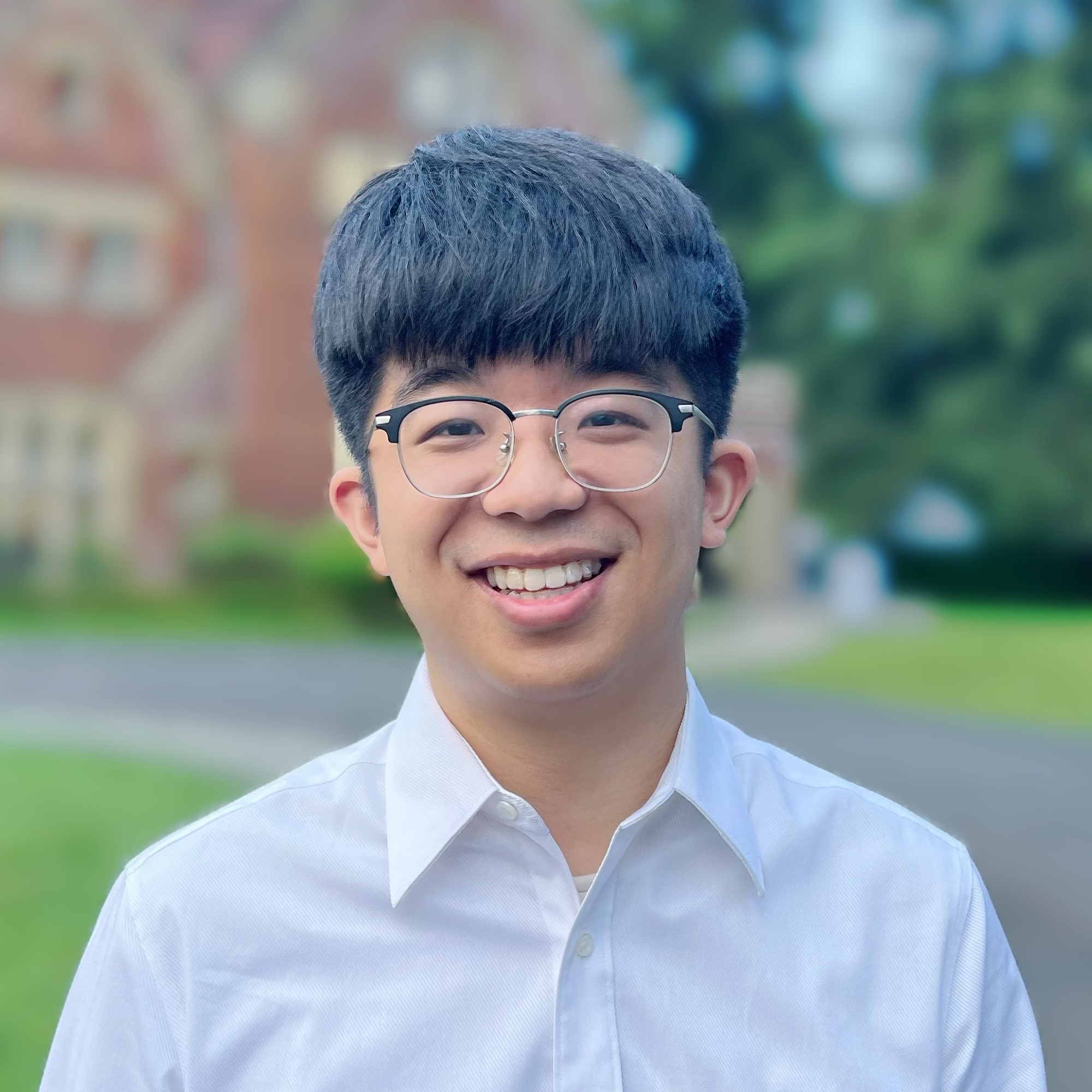
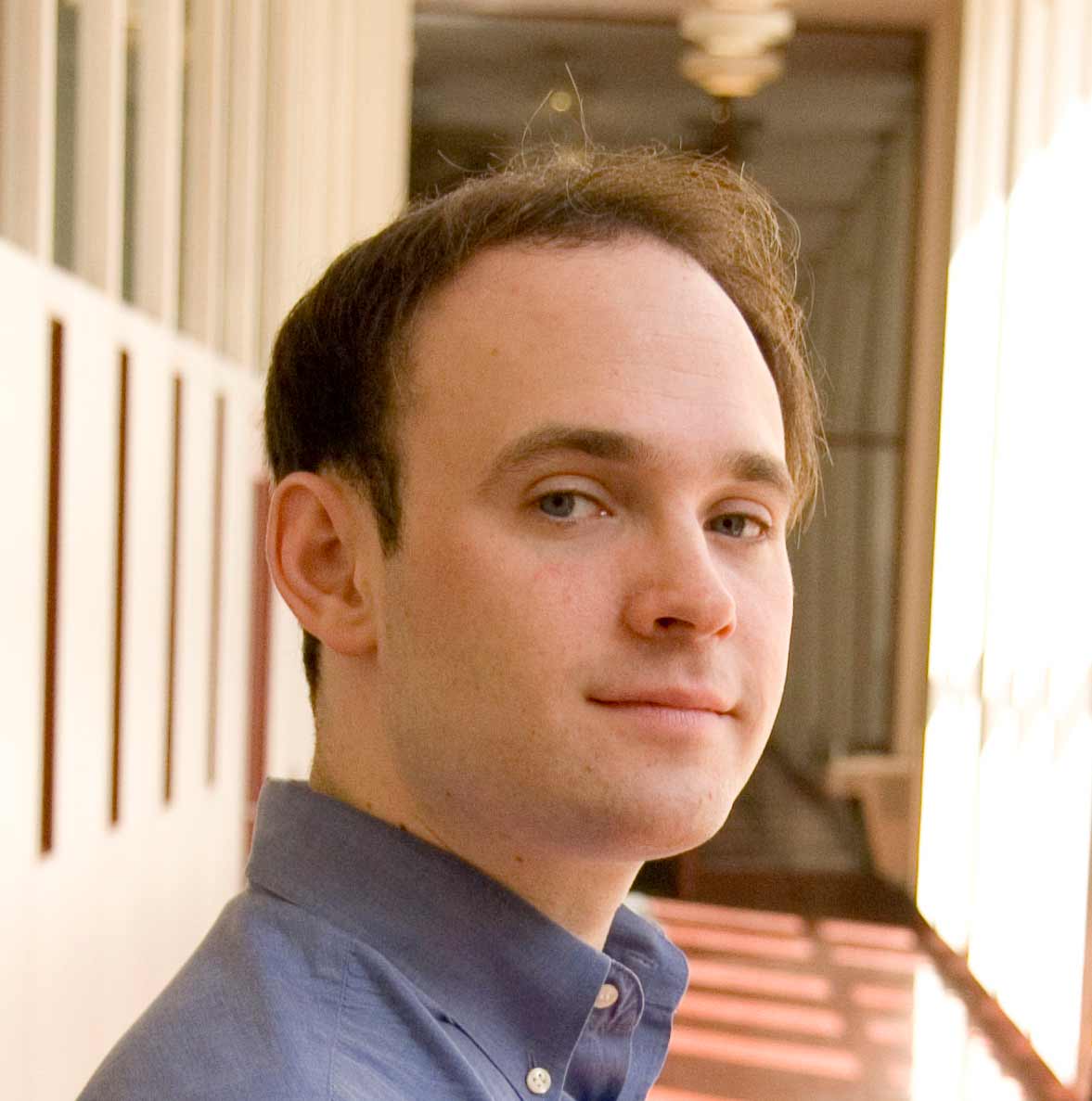
Zhijian Liu is a Research Scientist at NVIDIA with a PhD from MIT, advised by Song Han. His work focuses on efficient machine learning and systems through sparse computation and hardware-aware neural network design. Rising Star in Data Science (UChicago/UCSD) Rising Star in ML and Systems (MLCommons) Qualcomm Innovation Fellowship awardee Research highlights include: SPVCNN++ for LiDAR segmentation HAQ framework in Intel OpenVINO TorchSparse framework for 3D CNN efficiency His recent publications explore: Efficient visual language models (NVILA) Contextual sparsity in LLM fine-tuning (SparseLoRA) Training-free acceleration of diffusion LLMs Query-aware visual sparsity mechanisms Contact: zhijian@mit.edu
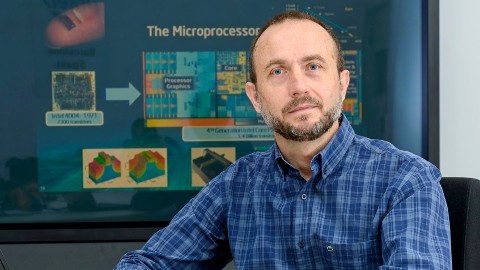
Antonio González is a full Professor at the Barcelona School of Informatics (FIB), Universitat Politècnica de Catalunya (UPC), where he is affiliated with the Department of Computer Architecture. He leads the Microarchitecture and Compilers (ARCO) research group, focusing on robust and energy-efficient computing systems, including general-purpose processors, GPUs, and cognitive computing architectures. His research spans computer architecture, microarchitecture, compilers, GPU design, and deep learning acceleration, with a strong emphasis on energy efficiency and memory optimization. His work integrates hardware and compiler techniques to enhance performance in modern computing systems. The recent publications highlight a strong trend in energy-efficient DNN acceleration, GPU microarchitecture, memory systems, and near-data processing. His team explores novel quantization methods, adaptive caching, and architectural extensions for vision and AI workloads, published in top-tier venues such as MICRO, ISCA, and IEEE/ACM journals. ACM Fellow (2020) ICREA Academia Award (2014, 2019, 2024) UPC Duran Farell Award (2008) HiPEAC 2024 Paper Award (twice) González has supervised several PhD students and leads competitive R&D+i projects, including those funded by ICREA and the European Research Council. His research group collaborates extensively within UPC and with international institutions. He is actively involved in advancing computer architecture through innovation in simulation, hardware design, and AI acceleration. He is a member of IEEE and ACM, and his work continues to influence both academic and industrial developments in high-performance and energy-efficient computing.
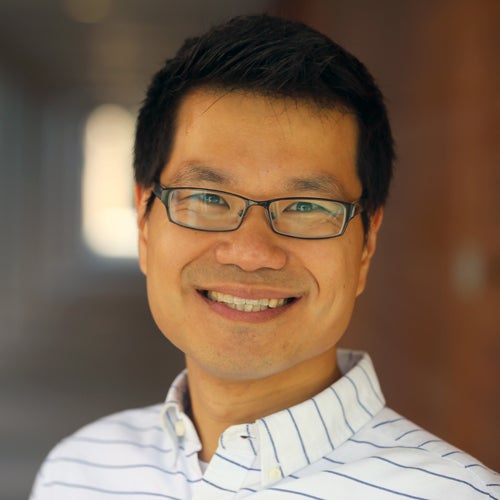
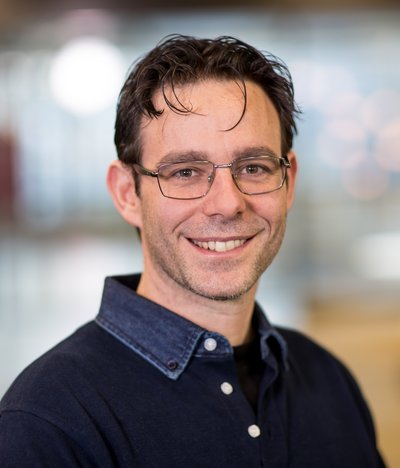
T. S. Eugene Ng is a Professor of Computer Science and Electrical & Computer Engineering at Rice University. He holds appointments in both departments and chairs the CS Grad Committee. His research focuses on network architectures, optical networking, and machine learning applications in distributed systems. Education: B.S. in Computer Engineering (with distinction and magna cum laude), University of Washington M.S. and Ph.D. in Computer Science, Carnegie Mellon University Research Interests: Developing robust network infrastructure, optical circuit-switched systems, congestion control, and efficient machine learning frameworks. Current projects include BOLD (Big data and Optical Lightpaths Driven) networking, telemetry systems like Söze, and gradient compression techniques for distributed training. Awards: IEEE Fellow (2023) Alfred P. Sloan Research Fellow (2009) National Science Foundation CAREER Award (2005) IBM Faculty Award (2009) Kavli Fellow Professional Activities: Chair of the 2018 ACM SIGCOMM Distinguished Dissertation Award Committee, Associate Editor for IEEE Transactions on Big Data, and organizer of multiple networking conferences/workshops. Active in program committees for SIGCOMM, NSDI, and CoNEXT. Teaching: Courses include Introduction to Computer Networks, Advanced Computer Networks, and seminars in distributed computing and network systems.
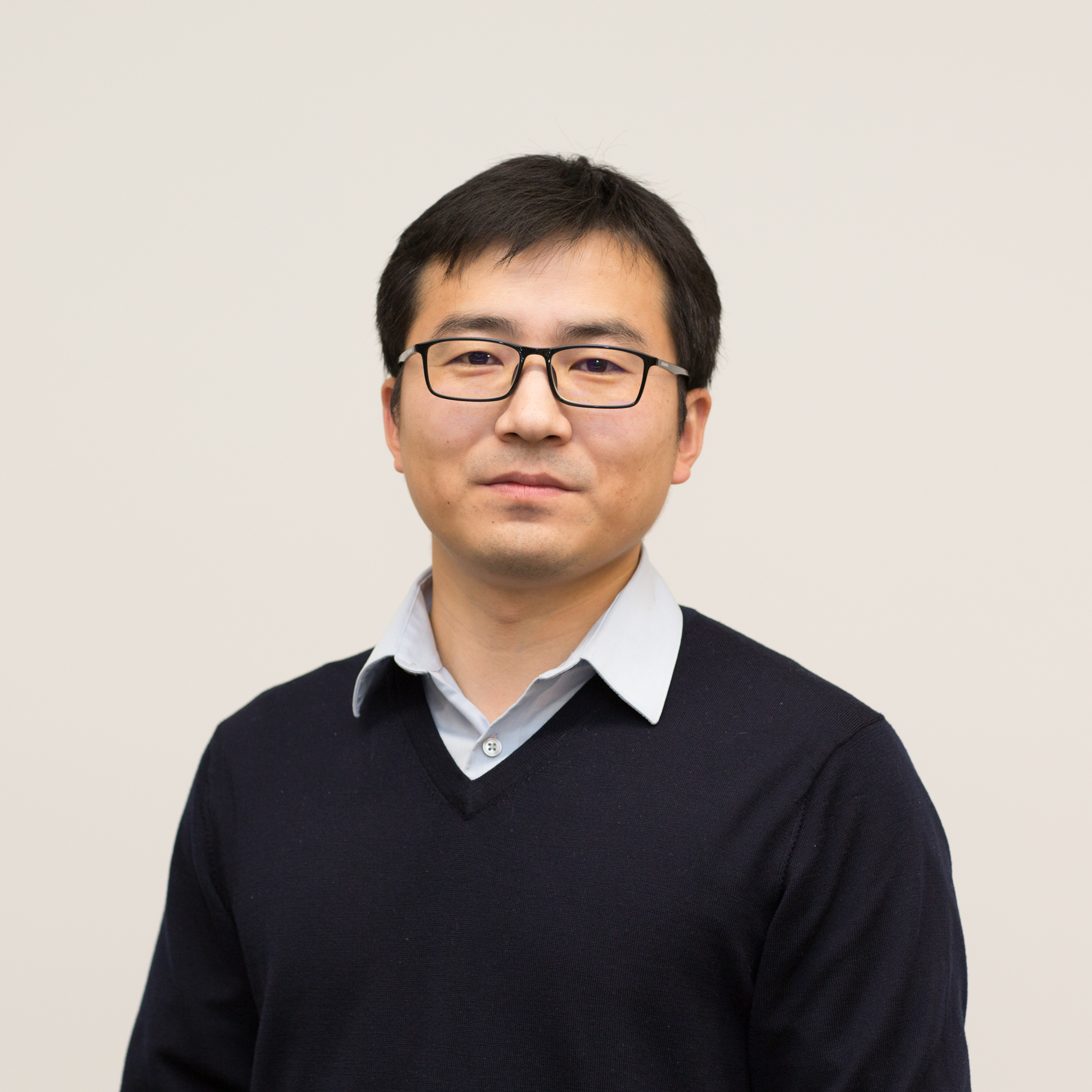
Di Shi is an Associate Professor at the Klipsch School of Electrical and Computer Engineering , New Mexico State University (NMSU), holding the Paul W. and Valerie Klipsch Distinguished Professorship. He previously founded the AI energy startup AInergy, LLC and held leadership roles at GEIRI North America, NEC Laboratories America, and Arizona State University. Education: PhD in Electrical Engineering, Arizona State University (2012) MS in Electrical Engineering, Arizona State University (2009) BS in Electrical Engineering, Xi'an Jiaotong University (2007) His research focuses on power system data analytics , energy storage , artificial intelligence , and IoT applications for grid stability and renewable integration. His work bridges theoretical innovation with real-world deployment, including software adopted by 15 utility companies. Recent publications highlight his leadership in deep reinforcement learning for grid control, blockchain frameworks for energy management, and tensor decomposition for efficient load modeling. He has secured a $6M NSF grant for AI-driven digital twinning to address climate-aware energy resilience. Awards & Recognition: 2025 Paul W. and Valerie Klipsch Distinguished Professorship 2024 University Research Council Mid-Career Award 2024 IET Fellow Multiple IEEE Best Paper Awards (2019–2022) 2019 L2RPN AI Competition Championship He serves as an editor for IEEE Transactions on Power Systems , IET Generation, Transmission & Distribution , and other journals, and leads the IEEE Task Force on IoT for Power Systems . His team’s patents cover AI-driven load modeling , energy storage scheduling , and state estimation , with 42 granted or pending.
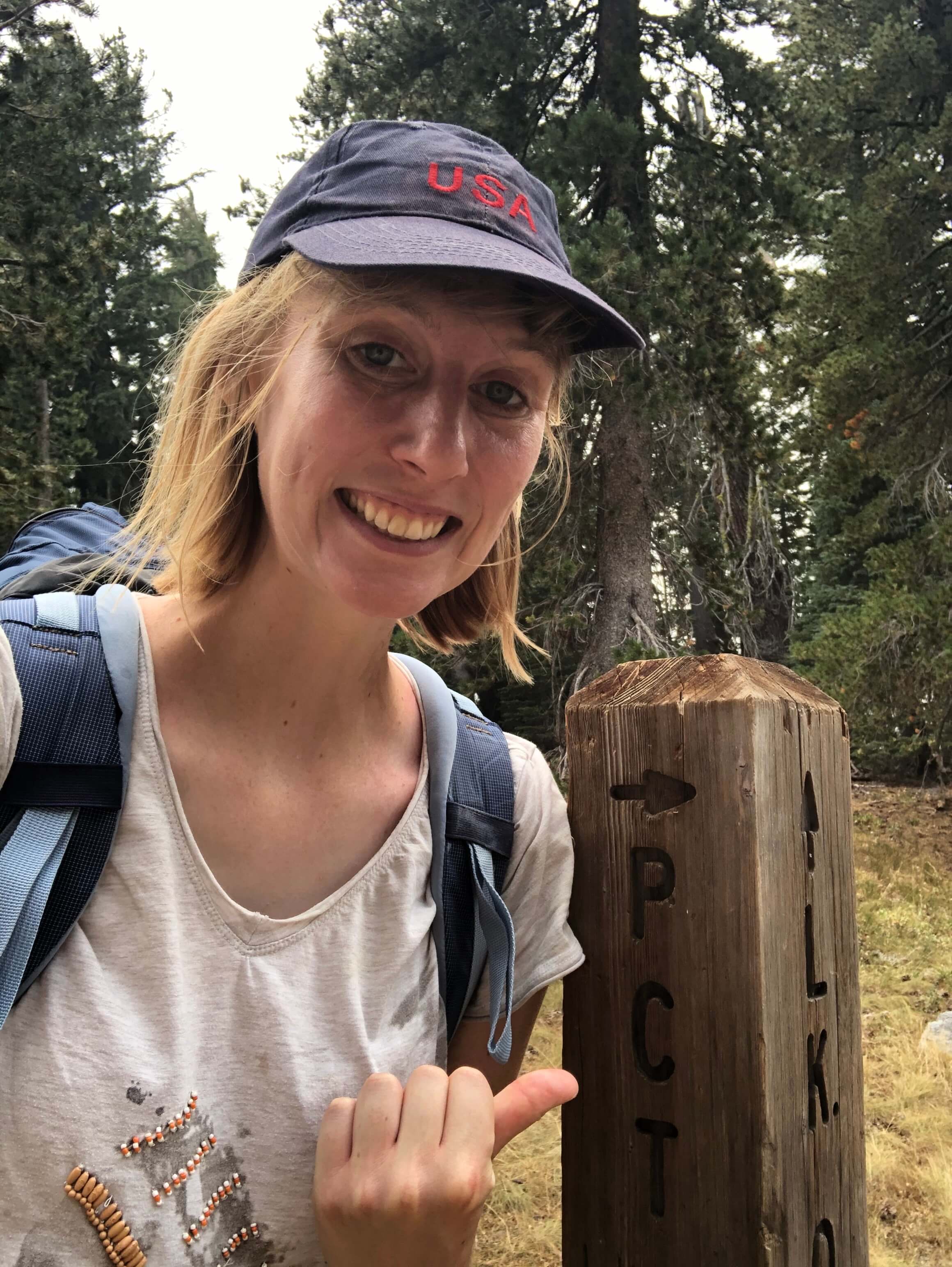
Song Mei is an Assistant Professor in the Department of Statistics and Department of Electrical Engineering and Computer Sciences at the University of California, Berkeley. She received her Ph.D. from Stanford University in 2020 under Andrea Montanari and maintains active research collaborations with institutions including Amazon (as a 2023 Amazon Research Award recipient) and OpenAI (where she is currently on leave). Her research spans the intersection of statistics, machine learning, information theory, and computer science, with particular emphasis on foundational theories for modern AI systems. Key interests include language models, diffusion models, quantum algorithms, and high-dimensional statistics, often leveraging insights from statistical physics literature. Analysis of her recent publications reveals a strong focus on theoretical underpinnings of generative AI, with significant contributions to understanding contrastive pre-training (CLIP), attention mechanisms in LLMs, and mathematical foundations of diffusion models. Her work demonstrates consistent interdisciplinary connections between statistical theory and practical AI development. Sloan Research Fellowship (2025) Noether Early Career Scholar Award (2025) Google Research Scholar Award (2024) Amazon Research Award (2024) She actively advises graduate students through MA programs and has secured significant research grants including Amazon Research Awards. Her work with AGI Labs at Amazon demonstrates applied impact of theoretical research. Current projects focus on mechanistic interpretability of large language models and mathematical frameworks for generative AI. Professor Mei leads research on the statistical principles behind frontier AI models, with particular focus on developing rigorous theoretical frameworks for understanding emergent behaviors in large-scale systems.
Peter Benner is a Professor and Director at the Max Planck Institute for Dynamics of Complex Technical Systems in Magdeburg, where he leads the Computational Methods in Systems and Control Theory group. He also holds an Honorarprofessor position for Mathematics at Otto-von-Guericke Universität Magdeburg since 2011. Benner has previously served as Managing Director of the Max Planck Institute during multiple periods (2013-2014, 2021-2022, and 2025-2026), demonstrating his leadership in the field. Benner's research focuses on Scientific Machine Learning, Numerical Linear and Multilinear Algebra, Model Order Reduction and Reduced-order Modeling, Numerical Methods in Systems and Control Theory, PDE Constrained Optimization, High-performance and Power-aware Computing, and Mathematical Software development. His work bridges theoretical mathematics with practical engineering applications, particularly addressing challenges in large-scale dynamical systems. Analysis of his recent publications reveals a strong emphasis on developing efficient computational methods for complex systems. Benner has pioneered approaches combining model order reduction with tensor methods to tackle high-dimensional problems in uncertainty quantification and PDE-constrained optimization. His work shows a consistent trend toward integrating data-driven techniques with traditional model-based approaches, particularly for nonlinear and parametric systems. Throughout his career, Benner has actively mentored students and collaborated with researchers worldwide, delivering numerous invited talks at prestigious institutions and conferences across Europe, North America, and Asia. His research has received significant funding, supporting the development of mathematical software and computational methods for industrial applications. Benner leads the Computational Methods in Systems and Control Theory department at the Max Planck Institute, which focuses on developing and implementing advanced numerical methods for large-scale dynamical systems. The group maintains strong connections with both theoretical mathematics and practical engineering applications, particularly in fluid dynamics, energy systems, and control theory.
Jonathan A. Kelner is a Professor of Applied Mathematics in the Department of Mathematics at the Massachusetts Institute of Technology (MIT) and a member of the MIT Computer Science and Artificial Intelligence Laboratory (CSAIL). His research focuses on applying techniques from pure mathematics to solve fundamental problems in algorithms and complexity theory, with the goal of developing practical algorithms for real-world questions. Dr. Kelner received his undergraduate degree from Harvard University and his Ph.D. in Computer Science from MIT in 2006. Before joining the MIT faculty, he spent a year as a member of the Institute for Advanced Study. His educational background has provided a strong foundation for his interdisciplinary research spanning mathematics and computer science. His research interests include combinatorial optimization, mathematical programming, spectral graph theory, distributed computing, machine learning, computational geometry and topology, computational biology, signal processing, and random matrix theory. Kelner's work demonstrates how deep theoretical insights can lead to practical algorithmic improvements, particularly in graph algorithms and optimization problems. His approach often involves connecting seemingly disparate areas of mathematics to create novel algorithmic techniques. Analysis of his recent publications reveals a strong focus on spectral graph theory, optimization algorithms, and the Sum-of-Squares method. His work frequently addresses fundamental questions in theoretical computer science with practical implications for algorithm design. A notable trend in his research is the development of nearly-linear-time algorithms for various graph problems, which represents significant improvements over previous approaches. NSF CAREER Award Alfred P. Sloan Research Fellowship NEC Award for Research in Computers and Communication Sprowls Doctoral Dissertation Award Best Student Paper Award at STOC 2004 Best Paper Award at STOC 2011 Kokusai Denshin Denwa Junior Faculty Chair 2008 Harold E. Edgerton Faculty Achievement Award 2011 School of Science Award for Excellence in Undergraduate Education 2012 Professor Kelner has been actively involved in mentoring students and has received recognition for his teaching excellence, including the School of Science Award for Excellence in Undergraduate Education in 2012. His research has been supported by prestigious grants including the NSF CAREER Award. He has collaborated extensively with researchers across multiple institutions, often working with other leading figures in theoretical computer science to produce groundbreaking results in algorithm design. At MIT, Kelner is part of both the Mathematics Department and CSAIL, positioning him at the intersection of theoretical mathematics and practical computer science. This dual affiliation reflects the interdisciplinary nature of his work, which bridges pure mathematical theory with concrete algorithmic applications.
Professor Guy Williams is a leading academic at the University of Cambridge with a focus on imaging science and clinical neurosciences, affiliated with Downing College and the Wolfson Brain Imaging Centre . Holding a PhD in Physics from his initial Natural Sciences degree, he specializes in nuclear magnetic resonance (NMR) and MRI techniques for brain imaging. Education: BA, PhD in Physics His research centers on non-invasive imaging of brain structure and function, particularly in traumatic brain injury (TBI) and dementia. His work involves developing novel MRI pulse sequences and advanced data analysis algorithms, including AI-based diagnostic tools. He leads studies on white matter integrity post-trauma, longitudinal dementia assessment, and applications of MRI in disorders of consciousness and addiction. Recent publications highlight collaborations in traumatic brain injury outcomes, AI-guided dementia prediction, and neuroimaging of post-COVID cognitive deficits. His team's work on ultra-high field laminar fMRI and distortion correction methods has advanced clinical neuroscience applications. Key techniques include diffusion tensor imaging (DTI), 7 Tesla MRI, and positron emission tomography (PET/MR). His research spans from basic NMR physics to clinical translation, with a strong emphasis on multi-site studies and real-world diagnostic implementation.
Claire Donnat is an Assistant Professor in the Department of Statistics at the University of Chicago, specializing in statistical and machine learning methods for graph-structured and high-dimensional data. Her work bridges theoretical innovation with applications in biomedical research, environmental science, and public health. Education: B.S. and M.S. in Applied Mathematics from Ecole Polytechnique; Ph.D. in Statistics from Stanford University (2020). Her research focuses on three methodological directions: (1) statistical foundations for graph neural networks (GNNs), (2) structured estimation with graph constraints, and (3) multimodal data integration with uncertainty quantification. Key applications include thermotolerance in photosynthetic microbes, family network analysis for child welfare, and spatial transcriptomics. The 15 most recent publications highlight her work in GNNs, CCA, tensor modeling, and epidemic analysis, with keywords spanning statistics, machine learning, and network science. Her methodological contributions address challenges in sparsity, graph topology, and heterogeneous data fusion. Scientific Awards: Facebook Research Award (2021), C3.AI COVID Grand Challenge winner (2020), Lumiata hackathon winner (2020), Stanford Centennial Award (2019), and others. Claire's research group actively recruits postdocs and students for projects involving graph-based modeling, data integration, and biomedical applications. She also provides research consulting in statistical methodology and graph modeling for life sciences.
Massimo Mischi is a Full Professor at the Faculty of Electrical Engineering of the Eindhoven University of Technology (TU/e) and chairs the Signal Processing Systems (SPS) Division , the largest division at TU/e with over 250 researchers. He founded the Biomedical Diagnostics (BM/d) Lab in 2012, which now includes 180 researchers and clinical/industrial advisors, focusing on biomedical signal processing for diagnostics and monitoring.
Dr. Baijian "Justin" Yang serves as the Associate Dean for Research at Purdue Polytechnic Institute and is a Professor in the Department of Computer and Information Technology at Purdue University. He earned his Ph.D. in Computer Science from Michigan State University, with Master's and Bachelor's degrees in Automation (EECS) from Tsinghua University. Dr. Yang has established himself as a leader in multiple interdisciplinary research domains. Dr. Yang's educational background includes: PhD in Computer Science, Michigan State University (2002) MS in Automation (EECS), Tsinghua University (1998) BS in Automation (EECS), Tsinghua University (1995) His research interests span multiple cutting-edge domains with practical applications: Cybersecurity : Developing novel approaches for threat intelligence, security education, and network defense Big Data : Creating innovative algorithms for dimension reduction, regression with categorical variables, and tensor decomposition Applied Machine Learning : Implementing AI solutions in healthcare, manufacturing, and forestry applications Digital Forestry : Using UAV imagery and remote sensing for forest management and tree species classification Dr. Yang's publication record demonstrates significant impact across multiple disciplines, with recent work focusing on spatial transcriptomics analysis (SiGra), delirium detection using limited-lead EEG, and visual localization technologies. His research bridges theoretical advances with practical applications in healthcare, manufacturing quality control, and environmental monitoring. The interdisciplinary nature of his work is evident in collaborations spanning computer science, healthcare, forestry, and manufacturing domains. His scientific achievements have been recognized with numerous awards: 2023 HRSA Building Bridges to Better Health Competition Winner (Phase 1) and 2nd place ($100,000 prize) in Phase 3 2023 Outstanding Faculty Award in Engagement, Department of Computer and Information Technology, Purdue University 2021 Leadership in Manufacturing Award, Manufacturing Times Digital (MxD) 2021 Good to Great Award, Purdue Polytechnic 2020 Outstanding Faculty Award in Discovery, Department of Computer and Information Technology 2019 University Faculty Scholars, Purdue University As an educator and mentor, Dr. Yang has advised numerous graduate students through their PhD and Master's research. His leadership extends to significant service roles including serving as Faculty Champion for the Holistic Safety and Security research impact area at Purdue Polytechnic from 2018 to 2021, board membership with ATMAE (2014-2016), and participation in the IEEE Cybersecurity Initiative Steering Committee (2015-2017). He holds valuable industry certifications including CISSP, MCSE, and Six Sigma Black Belt, demonstrating his commitment to bridging academic research with industry practice. Dr. Yang leads multiple research projects including "Digital Forestry" for developing tools to quantify forest function, "CHEESE" (Cyber Human Ecosystem of Engaged Security Education), and "CICI" (Supporting Controlled Unclassified Information with a Campus Awareness and Risk Management Framework). His work on "Applied Machine Learning" focuses on solving real-world problems, while his "Dimension Reduction and Memory Amnestic Big Data Regression" project innovates computational algorithms for large-scale data analysis.
Yasushi Sakurai is a Professor in the Department of Translational Datability at Osaka University's Institute of Scientific and Industrial Research, co-leading the Sakurai and Matsubara Laboratory within the Center for Industrial Science and AI. His research mission focuses on transforming society through real-time prediction of natural and social phenomena using large-scale data analytics, with emphasis on practical technological implementation. His research spans time-series big data analysis, dynamic learning systems, and real-time information provision. Key areas include tensor stream mining, EEG-based healthcare applications, cybersecurity anomaly detection, and multi-omics cancer subtyping. The lab specializes in developing deployable technologies that optimize social activities through predictive modeling of evolving data streams. Recent publications (2023-2025) reveal concentrated innovation in time-series data stream processing, with dominant themes in tensor analytics, frequency-domain forecasting, and causal modeling. His team produces high-impact work accepted at premier AI venues (ICLR, AAAI, KDD, WWW), consistently featuring oral presentations that highlight technical novelty and societal relevance. Scientific Awards: FY2024 Minister of Education, Culture, Sports, Science and Technology Award for Science and Technology (Research Category) for dynamic learning and real-time data stream analysis Professor Sakurai mentors graduate students including Naoki Chihara (DEIM2024 Outstanding Paper Award winner), Yuka Tamura (DEIM2024 Student Presentation Award winner), and Ren Fujiwara. His lab maintains active industry-academia partnerships focused on practical technology deployment, with research directly addressing real-world challenges in healthcare monitoring and cybersecurity. The Sakurai and Matsubara Laboratory operates as a dynamic research unit within Osaka University's Center for Industrial Science and AI, structured around specialized teams for tensor stream analysis, medical data mining, and network dynamics. Current projects emphasize real-time prediction systems with immediate societal applications, supported by strong industry collaboration frameworks.
Daan Christiaens is a tenure track lecturer at KU Leuven's Faculty of Medicine and Faculty of Engineering Sciences. He is affiliated with the Department of Electrical Engineering (ESAT) and Department of Imaging & Pathology, serving as a member of the Medical Imaging Division and the KU Leuven Brain Institute (LBI). His academic responsibilities include membership in the Faculty Councils of Engineering Sciences and Medicine. His research focuses on: Inverse problems in medical imaging reconstruction Neuroimaging techniques for brain analysis Advanced quantitative MRI methodologies Diffusion-weighted imaging for microstructural assessment Dr. Christiaens' recent publications (2023-2025) demonstrate a consistent focus on diffusion MRI innovations, including novel reconstruction algorithms, neonatal brain development mapping, and clinical applications for neurodegenerative disorders. Key technical themes include motion correction, multi-shell modeling, and AI-enhanced image processing, while clinical applications span Alzheimer's disease, cerebral palsy, and autism research. He leads significant research projects including: MRI reconstruction with dynamic field monitoring (2024-2028) Compressed sensing for microstructure imaging (2022-2026) Neonatal diffusion MRI network connectivity analysis (2024-2028) As a core developer of the MRtrix3 software framework for medical image processing, he contributes to essential tools in neuroimaging research.
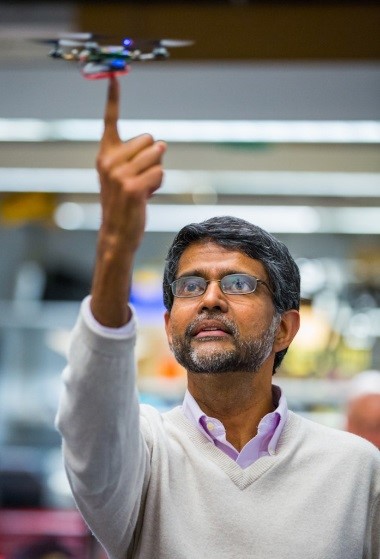
Vijay Kumar is the Nemirovsky Family Dean of Penn Engineering at the University of Pennsylvania, with faculty appointments in the Departments of Mechanical Engineering, Computer and Information Science, and Electrical and Systems Engineering. He is a leading figure in robotics and computer architecture research. Research Interests include robotics, particularly multi-robot systems and micro aerial vehicles (MAVs), as well as computer architecture innovations for machine learning, GPU acceleration, and datacenter efficiency. His work spans theoretical foundations and practical applications in autonomous systems and hardware optimization. Scientific Awards include: 1991 NSF Presidential Young Investigator Award 1996 Lindback Award for Distinguished Teaching 2012 ASME Mechanisms and Robotics Award 2014 Engelberger Robotics Award 2017 IEEE George Saridis Leadership Award Multiple best paper awards at DARS, ICRA, and RSS conferences Editorial Leadership includes serving as Editor of the ASME Journal of Mechanisms and Robotics and Advisory Board Member of AAAS Science Robotics Journal . His GRASP Lab team developed foundational frameworks for micro UAV testbeds and swarm robotics.
Sergei Gukov is the John D. MacArthur Professor of Theoretical Physics and Mathematics at the California Institute of Technology (Caltech), where he has been a faculty member since 2005. He serves in the Division of Physics, Mathematics and Astronomy, with primary affiliation in the Department of Mathematics. His research bridges the fields of mathematics and theoretical physics, focusing on deep connections between geometry, topology, and quantum field theory. Gukov received his B.S. from Moscow Institute of Physics and Technology in 1997, followed by an M.S. and Ph.D. from Princeton University in 2001. He joined Caltech as an Associate Professor in 2005, was promoted to Professor in 2007, and was named the John D. MacArthur Professor in 2021. His research spans several interconnected areas at the frontier of mathematics and physics. A central theme is the exploration of quantum topology and its connections to mathematical physics. He has made significant contributions to the geometric Langlands program, gauge theory, and the categorification of knot and 3-manifold invariants. His recent work increasingly incorporates machine learning approaches to mathematical problems, reflecting his interest in the intersection of traditional mathematical research and modern computational techniques. Gukov's work often reveals deep connections between seemingly disparate areas of mathematics and physics, such as the relationship between Rozansky-Witten geometry and Coulomb branches in supersymmetric gauge theories. Gukov's publications demonstrate a consistent focus on the mathematical structures underlying quantum field theories and their topological implications. His recent work shows an increasing emphasis on computational approaches to mathematical problems, particularly through his interest in mathematics and machine learning. The recurring themes across his research include the application of physical insights to solve mathematical problems and the discovery of new mathematical structures through physical reasoning. He serves on the editorial boards of several prestigious journals including the Journal of Knot Theory and Its Ramifications, Communications in Mathematical Physics, and Letters in Mathematical Physics. Gukov is also active in the academic community, having delivered plenary talks at major conferences such as the First International Congress of Basic Science and presenting at String Math 2023 on the potential impact of AI on mathematical research. Gukov teaches Ma 146 ab, Introduction to Knot Theory and Quantum Topology, a course that reflects his research interests. He also runs a seminar on Mathematics and Machine Learning, held Tuesdays from 2-3pm in East Bridge Conference room 114, demonstrating his commitment to fostering interdisciplinary research at the intersection of mathematics and computational methods.