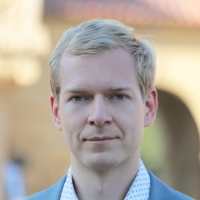
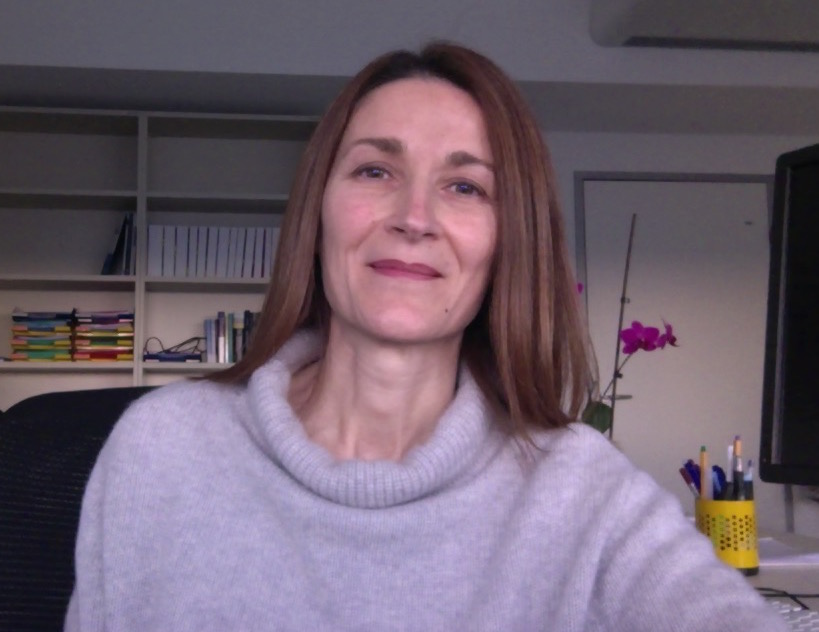
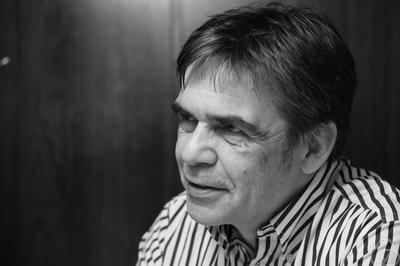
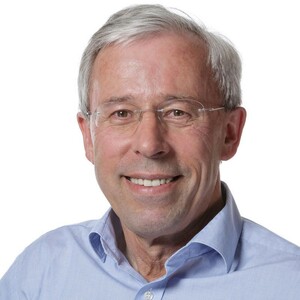
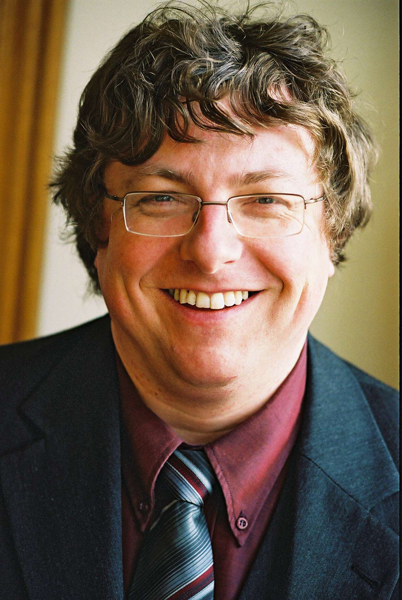
Vladimir Kazeev is an Assistant Professor at the Faculty of Mathematics, University of Vienna , where he has held a faculty position since 2019. He also held previous academic appointments as a Szegő Assistant Professor at Stanford University (2017–2019), a postdoctoral researcher at the University of Geneva (2015–2017), and research positions at ETH Zurich (2011–2015), Russian Academy of Sciences (2008–2011), and Moscow Institute of Physics and Technology (2009). His research focuses on adaptive, data-driven numerical methods for differential equations, nonlinear low-parametric approximation, and numerical linear algebra. His work intersects computational mathematics, tensor methods, and high-dimensional problem-solving, particularly in the context of partial differential equations (PDEs) and stochastic modeling. The 15 most recent publications reveal a strong emphasis on quantized tensor-structured methods for PDEs, low-rank approximations, and high-dimensional numerical analysis. His research spans theoretical advancements in tensor decomposition, practical applications in chemical reaction networks, and novel discretization techniques for multiscale and degenerate diffusion problems. Scientific awards include the prestigious ETH Medal for outstanding doctoral theses (2016) Russian Academy of Sciences Medal for outstanding student works in mathematics (2011) Advising and teaching activities include supervising Jason Zhu (Stanford, 2019) and Simon Etter (ETH Zurich, 2014), as well as teaching advanced courses in tensor methods, numerical analysis, and PDEs at the University of Vienna, Stanford University, and the University of Geneva. His service to the community includes peer review for 15+ journals and co-organizing minisymposia at SIAM meetings.
Dirk Praetorius is a Professor of Numerics of Partial Differential Equations (PDEs) at the Technische Universität Wien (TU Wien) , affiliated with the Institute for Analysis and Scientific Computing (ASC) within the Faculty of Mathematics and Geoinformation . He leads the research group on Numerics of PDEs and has held various leadership roles, including Institute Director (since 2020) and head of the Numerics research area. His work focuses on numerical methods for PDEs, including Finite Element Methods (FEM), Boundary Element Methods (BEM), adaptive algorithms, and computational micromagnetics. Education and Career: Praetorius earned his Diplom in Mathematics (2000) and PhD in Applied Mathematics (2003) from TU Wien, followed by a Habilitation in Numerical Analysis (2005). He has been a faculty member at TU Wien since 2005, progressing from Assistant Professor to full Professor in 2017. He has also held visiting positions at institutions such as the University of Jyväskylä and RICAM (Linz). Research Interests: His research spans numerical analysis, adaptive FEM/BEM, a-posteriori error estimation, matrix compression, and computational micromagnetics. He has contributed to modeling spin dynamics, magnetic skyrmions, and multiscale systems. His work emphasizes efficient algorithms for large-scale problems and optimal computational complexity. Awards and Editorial Roles: Praetorius received the TU Best Teacher Award (2021) and TU Best Lecture Award (2019). He serves as Senior Editor for Computational Methods in Applied Mathematics (CMAM) and on the editorial board of Applied Numerical Mathematics (APNUM) . He co-founded the outreach initiative TUForMath to promote mathematics education. Grants and Projects: He leads or co-leads several research projects funded by the Austrian Science Fund (FWF), including the collaborative SFB "Taming Complexity in Partial Differential Systems" (2017–2025) and international collaborations with Germany. His work addresses topics like functional error estimates, nonlinear PDEs, and computational design of magnetic devices. Labs and Teams: He contributes to the ASC Institute and coordinates interdisciplinary projects involving computational physics and engineering. His team develops software tools like MooAFEM and Commics for micromagnetic simulations.
Ilaria Perugia is a University Professor (Univ.-Prof.) and Chair of Numerics of PDEs at the Department of Mathematics, Faculty of Mathematics, University of Vienna. She also serves as Deputy Head of the Research Platform Erwin Schrödinger International Institute for Mathematics and Physics. Her research focuses on numerical methods for partial differential equations with applications in computational physics and engineering. Professor Perugia's primary research interests include: Numerical methods for PDEs Finite element methods Discontinuous Galerkin methods Trefftz methods Virtual element methods Space-time methods Computational electromagnetics Wave propagation problems Nonlinear reaction-diffusion problems Her work spans theoretical analysis, algorithm development, and practical implementation of numerical methods for solving complex physical phenomena. Her recent publications demonstrate a strong focus on space-time methods, virtual element methods, and structure-preserving discretizations for wave equations, heat equations, and other PDEs. She has made significant contributions to the development of stable and efficient numerical schemes that preserve important physical properties of the underlying continuous problems, particularly in the context of wave propagation and computational electromagnetics. Professor Perugia leads a research group comprising several researchers and students including Mattia Corti, Matteo Ferrari, Monica Nonino, Andrea Scaglioni, Paul Stocker, Enrico Zampa, and Marco Zank. Her group actively collaborates on projects related to numerical analysis and scientific computing, with particular emphasis on developing novel discretization techniques for challenging PDE problems.
Endre Süli is a Professor of Numerical Analysis at the University of Oxford, affiliated with Worcester College and Linacre College. He has held various academic roles since 1985, including Fellowships and Tutorships in Mathematics. University Education: B.Sc. in Mathematics, University of Belgrade (1974-1978) M.Sc. in Mathematics, University of Belgrade (1978-1980) Ph.D. in Mathematics, University of Belgrade (1985) M.A., University of Oxford (1985) British Council Visiting Student, Reading University and University of Oxford (1983/84) Süli's research focuses on numerical methods for partial differential equations (PDEs), with expertise in finite element methods, adaptive algorithms, error control, and computational modeling of fractures and non-Newtonian fluids. His work bridges mathematical theory and practical applications in fluid dynamics and material science. His recent publications emphasize finite element approximations, nonlinear PDEs, and stochastic models for polymer dynamics. Themes include multiscale methods, tensor-sparsity for high-dimensional problems, and compressible flow simulations. Scientific Awards: Fellow of the Royal Society (2021) London Mathematical Society Naylor Prize and Lectureship (2021) Pro Urbe Prize, City of Subotica (2021) SIAM Fellow (2016) Member, Academia Europaea (2020) Foreign Member, Serbian National Academy of Sciences and Arts (2009) IMA Service Award (2011) Fellow, European Academy of Sciences (EurASc) (2010) Fellow, Institute of Mathematics and its Applications (2007) London Mathematical Society/New Zealand Mathematical Society Forder Lecturer (2015) Professor Hospitus, Charles University, Prague (2012) Distinguished Visiting Chair Professor, Shanghai Jiao Tong University (2013) Invited Speaker, International Congress of Mathematicians, Madrid (2006) Süli has supervised numerous research projects and held visiting appointments globally. His contributions to numerical analysis span foundational work on error estimation, nonlinear stability, and advanced computational frameworks for complex physical systems.
Peter Zoller is a Professor of theoretical physics at the University of Innsbruck and Scientific Director at IQOQI Innsbruck (Austrian Academy of Sciences). His research focuses on quantum optics, many-body quantum physics, and quantum information science, with a strong emphasis on quantum simulation of gauge theories and atomic systems. He has trained 34 PhD students and hosted 57 postdoctoral researchers, fostering collaborations between theory and experiment. His group, the Zoller Group, explores quantum phenomena such as lattice gauge theories, entanglement dynamics, and topological order using advanced quantum simulation techniques. Key research interests include atomic physics, quantum gases, and applications of quantum technologies to high-energy physics problems. Recent work addresses string breaking in quantum simulators, entanglement Hamiltonians, and scalable architectures for fermionic quantum processors. Collaborations span institutions like Harvard, MIT, and the University of Innsbruck’s experimental teams. His contributions bridge foundational physics with cutting-edge quantum technologies, aiming to solve problems inaccessible to classical methods.
Jean Salençon is a prominent academic and researcher in mechanics and civil engineering. He currently holds the position of Senior Fellow at the Institute for Advanced Study, City University of Hong Kong since 2016. Previously, he served as Visiting Distinguished Professor (2014–2016), Chair Professor-at-large (2011–2014), and President of the Académie des sciences (2009–2010). His academic career includes roles as a Professor of Mechanics at the École polytechnique (1982–2005) and Head of the Department of Mechanical and Material Sciences at the École nationale des ponts et chaussées (1980–1985). Salençon’s research focuses on continuum mechanics , soil mechanics , yield design theory , and composite materials . His work bridges theoretical advancements with practical applications in geotechnical engineering and structural analysis. Notable contributions include probabilistic approaches to yield design, stability analysis of earthworks, and macroelement modeling of foundations under seismic loads. Key Awards: Trevithick Prize (1990), Montyon Prize (1978), Member of the Académie des sciences (1988), and multiple honorary memberships in international academies. Leadership Roles: Rector of the CISM (2004–2012), Member of the Bureau IUTAM (2000–2004), and President of the Académie des sciences (2009–2010). Salençon has authored seminal textbooks such as Handbook of Continuum Mechanics (2001) and Yield Design (2013), contributing significantly to global engineering education and research.
Professor Chuanzeng Zhang is a renowned academic currently serving as Professor (C4) and Chair of Structural Mechanics at the Department of Civil Engineering, University of Siegen, Germany. He has held leadership roles including Head of the Department of Civil Engineering (2015–present) and Director of the Institute of Structural Engineering (2007–2010). With a habilitation from Technical University Darmstadt and a PhD from Northwestern University, his research spans acoustic wave propagation, computational mechanics, and multifunctional materials. Education : PhD (Dr.-Ing.) from Northwestern University (USA), Habilitation from Technical University Darmstadt (Germany), Diploma (Dipl.-Ing.) from Technical University Darmstadt. Key Roles : Guest Professor at multiple Chinese institutions (Harbin Institute of Technology, Tongji University), Vice-President of the International Chinese Association for Computational Mechanics. Research interests include: Mechanics of smart materials and structures Wave propagation in phononic crystals Fracture mechanics in composite materials Computational methods for anisotropic solids Surface and interface effects in nanomaterials Multifunctional and functionally graded materials Recent Publications : His work focuses on advanced computational methods for wave propagation, fracture analysis, and smart materials, with applications in phononic crystals, piezoelectric composites, and functionally graded structures. Honors & Awards : 2015: Du Qinghua Medal for Computational Methods 2015: Member of European Academy of Sciences and Arts 2015: Honorary Doctorate from Slovak University of Technology 2014: Member of European Academy of Sciences Leadership & Collaborations : Led Senate Commissions, Research Advisory Committees, and DVM Working Groups. Maintains strong academic ties with institutions in China and Germany.
Prof. Joachim Schöberl is a faculty member at TU Wien's Faculty of Mathematics and Geoinformation, leading the Scientific Computing and Modelling research group. His academic career includes roles as a university professor (Univ.Prof.) with engineering and technical doctorates (Dipl.-Ing., Dr.techn.). Research focuses on advanced numerical methods, including finite element methods, computational fluid dynamics, and partial differential equations. He has pioneered high-order schemes for fluid-structure interaction, shell mechanics, and electromagnetic simulations. Notable contributions include the NGSolve finite element library and innovative approaches to curvature approximation in discrete geometry. Recent work emphasizes nonlinear elasticity modeling, fractional diffusion problems, and shape optimization for biomembranes. His team collaborates on projects like metascreen upscaling, micromorphic continuum models, and eddy current simulations in laminated materials. Prof. Schöberl advises PhD students researching mixed finite element methods, fractional operators, and computational mechanics. His lab develops open-source tools for high-performance scientific computing.
Martin Ostoja-Starzewski , Ph.D. (McGill), is a Professor of Mechanical Science & Engineering at the University of Illinois at Urbana-Champaign , with affiliate appointments at the Beckman Institute and National Center for Supercomputing Applications . His research spans continuum mechanics , stochastic wave propagation , and fractal media , focusing on scaling laws and the statistical-to-representative volume element transition. 2006–Present: Professor, UIUC 2001–2005: Canada Research Chair, McGill University 2023: Rothschild Distinguished Visiting Fellow, University of Cambridge 2022: Member, European Academy of Sciences and Arts 2024: Academia Europaea Foreign Member His work pioneered continuum mechanics with spontaneous second law violations and tensor random fields for stochastic PDEs. He authored four foundational books, including Tensor-Valued Random Fields for Continuum Physics (2019), and edited 16 special issues. Recent 2025–2023 articles explore odd elasticity , fractal thermodynamics , and stochastic wavefronts , bridging non-equilibrium thermodynamics to granular Couette systems . Scientific accolades include the Worcester Reed Warner Medal (2018) and ASME , AAM , SES fellowships. As part-time faculty at Beckman Institute (2008–Present), he integrates bioimaging with mechanics across electrosurgery and traumatic brain injury modeling.
Andreas Fink serves as a University Professor at the Institute of Psychology within the Faculty of Natural Sciences at Karl-Franzens-University Graz, Austria. His research bridges cognitive neuroscience, psychology, and sports science with a particular emphasis on understanding the neurobiological foundations of creative thinking and emotional processing. As a leading figure in creativity neuroscience, Professor Fink employs advanced methodologies including EEG, fMRI, and ambulatory monitoring to investigate how physical activity influences brain function and cognitive performance. His work has significant implications for mental health interventions and cognitive enhancement strategies across various populations. Professor Fink's research interests center on three interconnected domains: biological mechanisms of cognitive and affective functions, creativity neuroscience, and the relationship between physical activity and brain health. His laboratory investigates how physical exercise influences neural processes related to creativity, emotion regulation, and cognitive performance through both basic neuroscience research and applied interventions. A hallmark of his approach is examining EEG alpha power during creative ideation tasks while simultaneously exploring how running, dance, and other physical activities can improve mental health outcomes and cognitive functioning. His work spans from laboratory-based experimental designs to real-world interventions with ecological validity. Analysis of Professor Fink's recent publication trajectory reveals a sophisticated evolution in his research focus, with increasing emphasis on the intersection of physical movement, brain function, and creative cognition. His work has progressively incorporated more ecologically valid approaches using ambulatory monitoring to study creativity in natural contexts, while maintaining rigorous neuroscience methodology. A consistent theme across his publications is neuroplasticity, particularly how physical exercise interventions induce structural and functional brain changes, with special attention to hippocampal volume and white matter integrity. His research has expanded to explore specialized forms of creativity including malevolent creativity and the nuanced relationship between everyday movement patterns and creative cognition. 2009 Psychology Prize for innovative scientific or practical work for his habilitation thesis 'The neuroscientific study of creative thinking' from the Professional Association of Austrian Psychologists (BÖP) and the Austrian Psychological Society (ÖGP) Professor Fink currently leads multiple significant research initiatives funded by the Austrian Science Fund (FWF), including 'Neuronal mechanisms underlying the generation of creative solutions in complex environments' (2016-2018), 'Running Away From Depression with Your Brain and Your Heart' (2022-2025), and 'Dance and Brain' (2024-2026). These projects demonstrate his commitment to translating basic neuroscience findings into practical interventions for mental health. While specific doctoral students aren't listed in the provided materials, his position as a full professor and principal investigator on multiple grants indicates active mentorship of junior researchers and graduate students. His collaborative approach is evident through interdisciplinary partnerships spanning psychology, neuroscience, sports science, and clinical practice. Professor Fink is an active member of the 'Complexity of Life' profile area at the University of Graz and participates in the 'Brain and Behavior' research network. His laboratory environment fosters interdisciplinary collaboration, bringing together researchers from diverse backgrounds to tackle complex questions about the brain-mind-body connection. Current projects suggest his team employs a multimodal approach combining neuroimaging, physiological monitoring, behavioral assessments, and intervention studies to comprehensively investigate how physical activity influences brain function and creative cognition. His 'Running Away From Depression' project exemplifies his translational research focus, directly connecting basic neuroscience findings to clinical applications for mental health improvement.
Robert Peharz is an Assistant Professor at Graz University of Technology, where he leads research at the Institute of Machine Learning and Neural Computation. His work focuses on probabilistic machine learning, with particular emphasis on tractable probabilistic models, causality, and neurosymbolic AI. Education and Career PhD from TU Graz (Austria) in 2015 Postdoc at Medical University of Graz Postdoc and Marie-Curie Individual Fellow at University of Cambridge (2017-2019) Assistant Professor at Eindhoven University of Technology (2019-2021) Current: Assistant Professor at Graz University of Technology Research Interests Peharz's research spans multiple areas of artificial intelligence with a focus on making probabilistic reasoning both theoretically sound and practically efficient. His work addresses fundamental challenges in tractable probabilistic inference and learning, probabilistic circuits as a unified framework for deep generative models, Bayesian causal inference, and neurosymbolic AI combining sub-symbolic and symbolic approaches. His research has applications in cybersecurity, healthcare, and energy systems. Research Projects VENTUS (2024-present): Physics-informed, probabilistic and causal machine learning for wind energy systems NEO DNA (2023-present): DNA-based data storage systems using computer vision and probabilistic ML VanillaFlow (2023-present): AI-guided development of novel vanillin-based molecules for redox flow batteries Bilateral AI : Cluster of Excellence focused on Broad AI combining sub-symbolic and symbolic AI approaches Awards and Recognition Finalist for TUG's Excellent Teaching Award (2023) for all 3 of his courses Marie-Curie Individual Fellow at University of Cambridge Academic Service Peharz is actively involved in the academic community through conference organization and reviewing: Area Chair: UAI (2022), ECML/PKDD (2022) Senior Committee Member: UAI (2021), IJCAI (2019, 2020) Reviewer for major conferences including ICML, NeurIPS, AAAI, IJCAI-ECAI Teaching and Mentorship Peharz supervises multiple PhD students working on diverse projects at the intersection of machine learning, causality, and neurosymbolic AI. His current advisees include Sepideh Adamiat, Irina Dobrianski, Johannes Exenberger, Giacomo Di Gobbi, Tim d'Hondt, Christian Toth, and Thomas Wedenig. Previous students include Alvaro Correia, Martin Trapp, and David Montalvan.
Torsten Hoefler is a Full Professor of Computer Science at ETH Zurich, Switzerland, with an adjunct appointment in Electrical Engineering. He previously held roles at the National Center for Supercomputing Applications (University of Illinois at Urbana-Champaign) and Indiana University. Full Professor of Computer Science, ETH Zurich (2020–present) Adjunct Professor of Electrical Engineering, ETH Zurich (2020–present) Member at Large, ACM SIGHPC Executive Committee (2013–present) Leadership roles in the MPI Forum and Blue Waters project His research focuses on performance-centric system design , with emphasis on scalable networking, parallel programming models, and performance modeling. Key contributions include the Slim Fly network topology, Data-Centric Python framework, and innovations in parallel graph computations and RDMA-based systems. Recent publications span topics like LLM training networks , quantization geometry , chiplet interconnects , and AI-driven climate modeling , reflecting his interdisciplinary approach combining HPC, AI, and hardware-software co-design. ACM Gordon Bell Prize (2019) ERC Consolidator Grant (2020) IEEE TCSC Award for Excellence (2019) SIAM SIAG/SC Junior Scientist Prize (2012) Latsis Prize of ETH Zurich (2015) He has received multiple best paper awards at top conferences (SC10, SC13, SC14, SC19, IPDPS'15, HPDC'15, OOPSLA'16) and contributed to MPI-3 standardization.
Bart De Moor is a Full Professor at the Department of Electrical Engineering, KU Leuven, Belgium, and a guest professor at the University of Siena. He leads the STADIUS research group and has supervised 85 PhD students. His roles include chairman of Health House (2016–present), member of the Board of VIB (Biotech Institute), and former Vice-Rector for International Policy (2009–2013). Education: Master Degree in Electrical Engineering (1983), KU Leuven PhD in Engineering (1988), KU Leuven Research Interests: His work spans numerical linear algebra, optimization, algebraic geometry, systems and control theory, data-driven AI, machine learning, and applications in process industry and biomedical big data. He has contributed to subspace identification, tensor decomposition, bioinformatics, and quantum computing. Publications Trends: His publications highlight subspace identification methods, tensor decomposition, bioinformatics, and biomedical data analysis. These reflect interdisciplinary advancements in control theory, quantum physics, and mathematical engineering, with applications in industrial and healthcare domains. Scientific Awards and Honors: Leslie Fox Prize (1989) Laureate of the Belgian Royal Academy of Sciences (1992) Bi-annual Siemens Award (1994) Fellow of IEEE (since 2004) Member of the Royal Academy of Belgium for Science and Arts (since 2000) Fellow of IFAC (since 2022) Commander in the Order of King Leopold I (2020) Fellow of SIAM (since 2017) FWO Excellence Award (2010) Advising and Grants: He has led a research group of 20 PhD students and postdocs, co-founded 8 spinoff companies, and secured the ERC Advanced Grant ‘Back to the roots’ (2020–2025). He also co-holds the KU Leuven Chair on healthcare systems (2018–present). Labs and Organizations: Active in the STADIUS research group (KU Leuven), he has served on boards of the Flemish Interuniversity Institute for Biotechnology (VIB), the Alamire Foundation, and the Health Tech Experience Center Health House. His spinoffs include Trendminer, Cartagenia, and Ugentec.
Francesco Becattini is a Professor at the University of Florence since 1999. He leads major research initiatives, including the INFN project FI31 (2002-2005) and RM31 (2008-present), coordinating over 35 physicists nationally. His work focuses on relativistic statistical mechanics, hydrodynamics, and heavy ion collisions, with contributions to understanding particle production and quantum features of relativistic systems. Education includes a Ph.D. studentship at CERN (1993-1995) and postdoctoral research at INFN (1996-1999). He held visiting roles at institutions like FIAS (2013), MIT (2008-2009), and Bielefeld University (1997). His research bridges high-energy physics and cosmology, notably in spin-polarization studies and quantum hydrodynamics. Awards include leading a nationally recognized research project that supported an ERC Starting Grant for collaborator Vincenzo Greco. He is actively involved in EU networks and has authored highly cited works, including a review in Landolt-Boernstein. His contributions include over 300 publications with an h-index of 44.
Prof. Lukas Einkemmer is a faculty member at the University of Innsbruck, holding a position in the Institute of Mathematics. He specializes in numerical analysis, plasma physics, and high-performance computing. His work focuses on developing advanced numerical methods for solving complex kinetic equations and PDEs, with applications in plasma simulation and computational fluid dynamics. Education: He earned a PhD in applied mathematics (2014) and MSc in physics (2013) from the University of Innsbruck, alongside BSc in applied mathematics (2010). He completed research stays at UC Merced and holds notable academic awards, including the SciCADE New Talent Award (2015) and participation in the Heidelberg Laureate Forum (2013). Research & Teaching: His research includes exponential integrators, dynamical low-rank methods, and semi-Lagrangian discontinuous Galerkin schemes. He teaches numerical methods, PDEs, and computational courses at both undergraduate and graduate levels. He also leads training programs in parallel computing (OpenMP/MPI) at the University’s Research Center for High-Performance Computing. Publications & Grants: Over 70 peer-reviewed articles in journals like J. Comput. Phys. and SIAM J. Sci. Comput. , focusing on numerical algorithms and their applications. He has secured grants from FWF and other agencies, advancing methods for plasma physics and kinetic theory. Awards & Recognition: Multiple honors, including the Oberwolfach Leibniz Graduate Student award (2014) and sustained scholarship support for academic excellence.