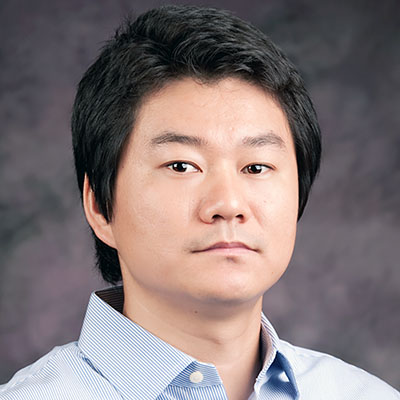
Manohar N. Murthi serves as an Associate Professor in the Department of Electrical & Computer Engineering at the University of Miami's College of Engineering. His academic profile shows active engagement across both technical engineering domains and social science research, with recent publications spanning quantum computing applications, neural network models for biomedical signal processing, and political conspiracy theories. Dr. Murthi's research interests bridge multiple disciplines, with primary focus areas including machine learning, quantum computing, signal processing, belief theory, and conspiracy theory research. His work demonstrates a unique interdisciplinary approach that connects electrical engineering methodologies with social science applications, particularly in analyzing belief systems and misinformation patterns. The breadth of his research is evident in publications ranging from technical algorithms for Dempster-Shafer belief theory to sociological studies on White Replacement theory and QAnon conspiracy beliefs. Analysis of his recent publications (2020-2024) reveals two distinct but complementary research trajectories: technical work in quantum tensor networks, graph neural networks, and belief theory frameworks; and social science applications examining conspiracy theories, political extremism, and misinformation. His technical papers often develop novel computational frameworks for uncertainty quantification and data analysis, while his social science work applies these methodologies to understand belief formation and political behavior. This dual focus creates a distinctive research profile that connects engineering rigor with social science insights. Dr. Murthi maintains active research collaborations, particularly with Kamal Premaratne, across multiple publications in both engineering and political science journals. His work has been published in venues including IEEE transactions, The Journal of Politics, and Politics, Groups and Identities, demonstrating successful cross-disciplinary scholarship. His research appears to be supported by collaborative grants, though specific funding sources aren't detailed in the available information. While specific laboratory information isn't provided in the source material, Dr. Murthi's research suggests involvement in computational laboratories focused on machine learning, signal processing, and data analysis. His work with sEMG signals for gesture recognition indicates potential connections to biomedical engineering labs, while his belief theory research suggests computational theory groups. His interdisciplinary approach likely involves collaboration across multiple research teams within and beyond the College of Engineering.