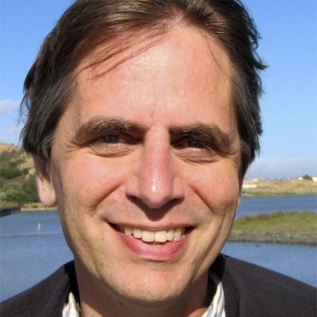
Mark Wu is the Henry L. Stimson Professor at Harvard Law School, specializing in international trade and international economic law. He serves as Faculty Director of the Fairbank Center for Chinese Studies and Co-Director of the Berkman Klein Center for Internet and Society. His research focuses on global governance, digital technologies, trade remedies, environment, and foreign investment. Wu holds a J.D. from Yale Law School, an M.Sc. in Development Economics from Oxford (Rhodes Scholar), and an A.B. from Harvard University. He has held roles at the World Bank, USTR, and McKinsey & Company. His awards include the Sacks-Freund Award and HLS Teaching Award. Wu’s recent roles include Senior Advisor to USTR (2021) and Biden-Harris Transition Team member. He has advised international organizations like the G20, OECD, and WTO. His scholarship addresses challenges in global trade governance and emerging economies. Key affiliations: Asia Center, Center for the Environment, Center for International Development, East Asian Legal Studies, Harvard Environmental Economics Program. Courses taught include International Trade Law and U.S. Economic Statecraft.
Adèle Garnier is an Associate Professor at the Department of Geography, Université Laval's Faculty of Forestry, Geography and Geomatics. She serves as Director of undergraduate geography programs and the certificate in sustainable tourism. Her research focuses on political geography, migration dynamics, and humanitarian governance, particularly examining refugee labor market participation, temporary migration policies, and technological impacts on immigration systems. Education : PhD in Political Science (Macquarie University/Universität Leipzig, 2012), MA in Political Science (Universität Leipzig, 2006), Diploma in Political Science (Paris, 2002) Her research integrates political geography , migration studies , and geographies of inequality , analyzing power structures in migration governance. Recent work explores Canada's digitalization of immigration, multiscalar impacts of refugee policies, and settler-colonial migration frameworks. Current research trends focus on technological governance of migration , refugee resettlement , and marketization of humanitarian services , with interdisciplinary approaches bridging political science and geography. Research Units : Graduate School of International Studies (ESEI), Immigration Research Team (ERIQA), Cultures-Arts-Societies Center (CELAT) Collaborations : Study Group on Ethnic Relations (Flers), Center for Refugee Studies (York University), Peace Research Institute Oslo She supervises graduate students in geography and co-leads multiple funded projects, including Liberating Migrant Labour (2023-2030) and digital migration governance research (2023-2028).
Dr. Young Yun Kim is a Professor in the Department of Communication at the University of Oklahoma's Dodge Family College of Arts and Sciences, where she has developed nationally recognized Intercultural Communication graduate programs since joining in 1988. Her academic journey spans continents, beginning in Seoul, Korea, and continuing through significant scholarly institutions in the United States. B.A.: Seoul National University, Seoul, Korea M.A.: University of Hawaii (East-West Center Communication Institute) Ph.D.: Northwestern University, Evanston, Illinois Dr. Kim's research pioneers the theoretical foundations of cross-cultural adaptation and interethnic communication. Her Integrative Communication Theory of Cross-Cultural Adaptation positions communication as the central mechanism for achieving internal equilibrium in new cultural environments, while her Contextual Theory of Interethnic Communication examines associative and dissociative behaviors across ethnic boundaries. Her work uniquely bridges personal transformation with systemic cultural dynamics, emphasizing how intercultural experiences foster expanded human understanding. Analysis of her recent publications reveals consistent theoretical refinement with increasing focus on identity transformation, synchrony in communication, and the emergence of intercultural personhood beyond traditional cultural boundaries. Her scholarship demonstrates remarkable continuity in core themes while progressively incorporating globalization's impact on individual and collective identity formation. Scientific Awards Fellow of the International Communication Association (2002) Top Scholar Award for Lifetime Achievement, Intercultural Communication Division, International Communication Association (2006) Dr. Kim has directed numerous doctoral theses and collaborated on significant cross-cultural research projects examining adaptation patterns among diverse populations including Korean and Indonesian expatriates, Hispanic youth, international students, and refugees. Her research funding includes a two-year study of Indochinese refugees (1978-1980) sponsored by the U.S. Department of Health and Human Services, reflecting sustained external validation of her methodological rigor and theoretical significance. As a foundational leader in intercultural scholarship, Dr. Kim serves on 11 editorial boards including Journal of Communication and Human Communication Research, and has held executive positions in the International Communication Association and International Academy for Intercultural Research, culminating in her presidency (2013-2015) of the latter organization.
Mark de Rond is Professor of Organisational Ethnography at Cambridge Judge Business School and Fellow of Darwin College, University of Cambridge. His work focuses on immersive ethnographic studies of human behavior in extreme contexts including war zones, high-stakes sports, and controversial social movements, revealing how individuals navigate challenging circumstances through compromise and sensemaking. His educational background includes a DPhil from the University of Oxford alongside advanced degrees in management and economics, photojournalism, documentary photography, biography, creative nonfiction, and prose fiction. This multidisciplinary training informs his unconventional methodological approach. De Rond's research centers on extreme context ethnography, examining how pressure-cooker environments expose fundamental organizational dynamics. His work spans military medicine (Camp Bastion fieldwork), elite sports (Cambridge Boat Race), Amazon river expeditions, and controversial practices like paedophile hunting. Key contributions explore negotiation, conflict resolution, serendipity, institutional persistence, and the emotional toll of fieldwork, often employing innovative methods like enactive ethnography and linguistic analysis of digital communities. His recent publications reveal a growing focus on digital vigilantism and the societal implications of extreme practices, with increasing interdisciplinary reach across organizational studies, criminology, medical anthropology, and sociology. The work demonstrates methodological creativity through linguistic analysis of Facebook groups, embodiment studies in extreme environments, and dream-based reflexive techniques. Scientific recognition includes: BEST ARTICLE AWARD FOR 2016 Favorite MBA Professor honors from Poets & Quants (2021, 2022) Guinness World Record for first unsupported Amazon row De Rond advises MBA students and delivers executive education to top law firms (Slaughter and May, Allen & Overy), professional services (McKinsey, KPMG), corporations (Sky, BT, Diageo), and NGOs (UNICEF, NHS). His negotiation training from Harvard Law School informs both academic work and university mediation practice. Current research involves collaborative teams studying paedophile hunting (featured in Sundance-nominated documentary Predators ) and high-performance sports organizations, with fieldwork requiring deep immersion in challenging environments. His research methodology involves embedded collaboration with diverse teams including medical personnel in conflict zones, elite rowers, and controversial activist groups, often pushing methodological boundaries through photojournalism and creative nonfiction approaches.
Patrick Rérat is a Professor at the University of Lausanne, affiliated with the Institute of Geography and Sustainability within the Faculty of Geosciences and Environment. He is a prominent researcher at LIVES (Interdisciplinary Centre of Excellence for Research on Life Course Changes), where he focuses on urban mobility, transportation patterns, and sustainable mobility transitions. His research interests span transportation studies, urban mobility, sustainable transportation systems, cycling research, residential mobility, and the geography of daily mobility practices. Rérat employs interdisciplinary approaches to examine how individuals navigate urban spaces across different life stages, with particular attention to cycling infrastructure, e-mobility adoption, and the relationship between transportation modes and broader social patterns. Rérat's recent work demonstrates a strong focus on cycling practices, with numerous publications examining cargo bike adoption, e-bike usage patterns, and the effects of cycling infrastructure. His research employs various methodological approaches including user segmentation, longitudinal mobility studies, and spatial analysis of urban transportation patterns. He has made significant contributions to understanding how transportation choices evolve across the life course, particularly during youth transitions. His scholarly output includes numerous publications in leading transportation and geography journals, with recent work focusing on contemporary mobility challenges including pandemic-era transportation changes, telework impacts on mobility patterns, and the political dimensions of cycling infrastructure. As a professor at the University of Lausanne, Rérat contributes to advancing research on sustainable urban mobility while training the next generation of geographers and transportation specialists. His work bridges theoretical geographic concepts with practical urban planning applications, making significant contributions to both academic scholarship and urban policy development.
Federica De Stefano is an Associate Professor of Organisation Studies at Saïd Business School, University of Oxford, and a Research Fellow of Green Templeton College. She serves on editorial boards for Organization Science , Human Resource Management , and Human Resource Management Review , while holding roles in the Strategic Management Society (SMS). Previously, she was an Assistant Professor at HEC Paris and a Post-Doctoral Fellow at Wharton People Analytics. She earned a PhD from Bocconi University, with additional degrees from Fudan University and Bocconi. Her research focuses on people management's impact on organizational and individual outcomes, including employee mobility, workplace safety, and social sustainability. Using quantitative methods and large datasets, her work has been published in top journals like Academy of Management Journal and Strategic Management Journal . She has received the Marie Curie Individual Fellowship and recognition as a top 40-under-40 MBA professor. Teaching focuses on people analytics and management, with a 2023 completion of the International Teachers Program (ITP). Her research grants and collaborative work at Wharton People Analytics underscore her commitment to advancing strategic human capital practices. Federica's work bridges academic rigor with real-world organizational challenges, emphasizing ethical and sustainable workforce strategies.
Heitor Pellegrina is an Assistant Professor of Economics at the University of Notre Dame, specializing in trade and development economics with a particular focus on agriculture and environmental resources. He is affiliated with the Building Inclusive Growth (BIG) Lab and became a Kellogg faculty fellow in 2023. Prior to joining Notre Dame, Pellegrina spent six years as an assistant professor at New York University Abu Dhabi, where he coordinated DevLab seminars from 2021-2023 and co-organized the conference "The End of Globalization" in 2022. His research spans multiple countries including Brazil, India, Colombia, and parts of Africa, examining the intersection of trade policies, economic development, and environmental sustainability. Pellegrina holds a PhD in economics from Brown University (2017) and both bachelor's and master's degrees in economics from the University of São Paulo, Brazil (2009 and 2011 respectively). His research program addresses critical questions at the intersection of international trade, agricultural productivity, and environmental sustainability. Recent work examines how weather shocks affect farm size distribution, the relationship between economic development and greenhouse gas emissions from agriculture, and the global impacts of trade policies on deforestation patterns. His publications appear in top journals including the Journal of Political Economy, Journal of Development Economics, and Journal of International Economics. PhD, Brown University, 2017 M.Sc., University of São Paulo, Brazil, 2011 B.Sc., University of São Paulo, Brazil, 2009 Pellegrina teaches undergraduate courses in Economic Growth and graduate courses in Quantitative International Trade and Development Economics. His research methodology combines empirical analysis of large datasets with theoretical modeling to address questions of economic development and trade policy. He has organized academic events including the Development Economics Working Group at Notre Dame and previously coordinated DevLab seminars at NYU Abu Dhabi.
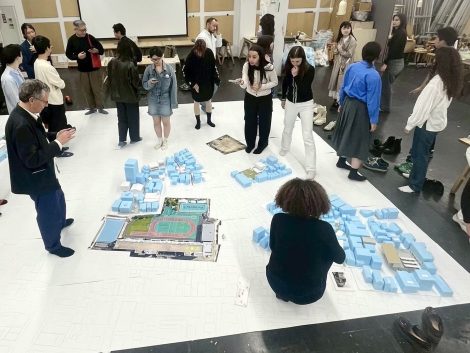
Keigo Kobayashi is an Associate Professor at Waseda University's Faculty of Science and Engineering, School of Creative Science and Engineering, Department of Architecture. He has served in this position since 2016, previously holding the rank of Assistant Professor from 2012 to 2016. His professional journey includes significant experience at the Office for Metropolitan Architecture (OMA) in Rotterdam, where he worked as a Senior Architect and Project Architect from 2007 to 2012. His educational background includes a Master of Architecture II from Harvard University's Graduate School of Design (2005), a Master of Architecture from Waseda University's Graduate School of Science and Engineering (2003), and a Bachelor's degree in Architecture from Waseda University's School of Science and Engineering (2002). Kobayashi's research focuses on architectural planning and city planning, with particular interests in food-related architecture, spatial behavior, and sustainable design. His work explores the intersection of architecture with everyday life, examining how spatial configurations influence human behavior and community formation. Recent research has investigated food systems in urban contexts, playful approaches to spatial design, and the relationship between architectural form and environmental performance. His publications demonstrate a strong focus on practical applications of architectural theory, with projects spanning from food truck design in Shodoshima to zero-energy housing solutions and innovative approaches to architectural education. His work shows a consistent interest in how architecture can respond to contemporary social challenges while maintaining theoretical rigor. Excellence in Concrete Construction Award 2019, American Concrete Institute (ACI), Qatar National Library / OMA Kobayashi actively contributes to architectural education through various committee memberships, including serving as Chief of the Subcommittee on Strategies for International Compatibility in Architectural Education at the Architectural Institute of Japan and leading the Caberra Accord Correspondence Subcommittee at the Japan Accreditation Board for Engineering Education. His teaching portfolio at Waseda University is extensive, covering architectural design studios from undergraduate to doctoral levels. He leads several research initiatives, including the Wakusei Project in Tosa, Kochi, NPO PLAT (Platform for Architectural Thinking), and the European Thinkbelt/McDonald's Radio University project which represents an innovative approach to architectural education and community engagement, particularly in contexts of migration and cultural exchange.
Majken Schultz is a Professor of Management and Organization Studies at Copenhagen Business School (CBS) since 1996, affiliated with the Center for Organization and Time (COT). She serves as Chair of the Carlsberg Foundation (since 2022) and Deputy Chair of the Carlsberg Group (since 2022), with prior board roles at Realdania (until April 2023) and Danish Crown (2018–2021). Her research explores the temporal dimensions of organizational phenomena, focusing on how distant futures and pasts influence strategy, identity, and temporary organizations, particularly in the context of climate change. Research Trends : Recent work examines organizational resilience through temporal trajectory models, path enactment for distant-future goals, and corporate sustainability initiatives. Publications highlight challenges in translating long-term climate targets into actionable strategies and reconfiguring organizational-nature relationships via pilot projects. Scientific Awards : Member of the Royal Danish Academy of Sciences and Letters Grants & Leadership : Principal Investigator for the Making Distant Futures Actionable: Innovating for Zero-Carbon Future project (Novo Nordisk Foundation, 2021–2025). Active in Danish business networks with board roles in multiple organizations (2013–2025).
Jan van den Ende is a Full Professor of Management of Technology and Innovation at the Rotterdam School of Management (RSM), Erasmus University. He is also Professor of Horticulture Innovation and a Visiting Professor at LUISS Università Guido Carli in Rome, Italy, reflecting his broad academic engagement across disciplines and institutions. His research centers on the development of new products and services, with a focus on idea management , control of NPD projects , design management , and sustainable innovation . His work is deeply interdisciplinary, spanning innovation management, organizational studies, and strategic management, as reflected in his publications in top journals such as Research Policy , Harvard Business Review , and IEEE Transactions on Engineering Management . The trends in his recent publications highlight a sustained focus on innovation processes in complex environments, including project-based organizations, multinational enterprises, and high-tech industries like video games. His research increasingly explores socio-organizational dynamics such as status, resource scarcity, and entrepreneurial incubation. He has held long-standing editorial roles in leading journals including: Research Policy (Editor since 2003) IEEE Transactions on Engineering Management (Editor since 2007) Journal of Management Studies (Editor since 2009) Service Business (Editor since 2012) He teaches in MBA and Executive Education programs for global firms such as ASML, FrieslandCampina, IFF, and MAN, bridging academic research with industry practice. He has supervised 25 academic works, indicating a strong commitment to mentoring the next generation of scholars. His work contributes to UN Sustainable Development Goals, particularly those related to sustainable economic growth and innovation. He earned his PhD from Delft University of Technology.
Jose Antonio Hinojos Morales is a contemporary artist and researcher affiliated with Miguel Hernández University of Elche, where he completed his PhD in 2020. His academic work focuses on contemporary painting practices within the broader context of visual arts research. His research interests center around pictorial languages and procedures in contemporary contexts , with particular emphasis on the relationship between landscape, nature, and culture. He investigates how landscapes function as cultural constructs and explores innovative methodologies in the representation of the human face through art. His work also engages with decolonial thought and aesthetics, media archaeology, and expanded painting techniques. Hinojos Morales' artistic output demonstrates significant trends in contemporary Spanish art, particularly in the exploration of spiritual, philosophical, and scientific concepts through visual media. His work often challenges conventional perceptions and hegemonic epistemological positions, creating dialogues between traditional and contemporary artistic approaches. Second place, VIII International Painting Competition 'Miradas 2018', Chicago (USA), 2018 Second Prize, XIX Pastor Calpena Painting Prize, Aspe (Alicante), 2015 First Prize, XLVI National Painting Contest Vila de Sant Joan d'Alacant, 2013 First Prize, III National Painting Competition No to Fear, La Nucía (Alicante), 2013 Third Prize, XVII National Painting Competition City of Antequera, Antequera (Málaga), 2013 As an educator and researcher, Hinojos Morales has coordinated the Altea Artistic Residency program, directing multiple landscape-focused scholarship-residencies that support emerging artists. His work bridges academic research with professional artistic practice, contributing to both scholarly discourse and the contemporary art scene in Spain.
Tor Hernes is a Professor at the Department of Organization, Copenhagen Business School, and directs the Centre for Organization and Time (COT). His research focuses on organizational continuity, temporal dynamics in organizing processes, and narrative theory. He holds adjunct professorships at the University of South-Eastern Norway and has been a visiting professor at Université Paris-Dauphine. His research explores how organizations navigate time through event-based perspectives, distant future goal setting, and temporal trajectories in resilience. Key themes include the interplay between organizational processes and natural environments, particularly in sustainability contexts. Hernes has authored influential works such as Organization and Time (2022) and A Process Theory of Organization (2014). His recent articles analyze temporary organizing structures, environmental framing, and resilience frameworks. He actively supervises master’s theses and PhD students in organizational studies. Hernes also contributes through academic leadership roles, including editing research agendas on organizational continuity. His work bridges theoretical insights with practical challenges like climate change adaptation and strategic innovation.
Dr. Navid Izady is a Reader in Operations & Supply Chain at Bayes Business School, part of City St George's, University of London. His academic career includes a PhD from Lancaster University Management School (2010), and prior roles at the University of Southampton. He specializes in stochastic modelling for healthcare and manufacturing operations, collaborating with hospitals and healthcare organizations on sponsored research and consultancy projects. Dr. Izady holds qualifications in Industrial Engineering from Sharif University of Technology (BSc and MSc) and a PhD in Management Science. He teaches operations management, stochastic modelling, healthcare modelling, and decision analysis across BSc, MSc, and MBA programs. His research focuses on optimizing healthcare logistics, patient flow management, and resource allocation in hospitals. He has developed frameworks for managing pandemic and non-pandemic demand, reconfiguring inpatient services, and optimizing staffing and patient admission/discharge processes. His work bridges theoretical stochastic models with practical healthcare challenges, emphasizing operational efficiency and resilience. Notable contributions include studies on inpatient bed pressure reduction, sample pooling techniques for pandemic testing, and queueing theory applications in emergency departments and specialty clinics. His publications highlight innovations in healthcare operations management and simulation methods. Dr. Izady's expertise includes operations research, simulation, statistics, and stochastic processes. He supports industry partnerships and has supervised numerous research students, contributing to both academic and applied knowledge in healthcare and manufacturing systems.
Peter Redfield serves as Professor of Anthropology at the University of Southern California's Dornsife College of Letters, Arts and Sciences, where he bridges anthropology with science and technology studies, postcolonial theory, and humanitarian practice. He previously held the presidency of the Society for Cultural Anthropology (2017-2019) and maintains active affiliations with the LOST Research Network (Law, Organization, Science and Technology), though this network is transitioning to an archive in 2024. His research critically examines transnational expertise and the ethics of humanitarian interventions in contexts of unreliable infrastructure, with current projects including "Beyond Reliable Infrastructure"—which analyzes minimalist life technologies for water, sanitation, and health—and collaborative work with Stellenbosch University on sanitation politics in South Africa. Redfield's scholarship consistently interrogates how humanitarian design navigates utopian ideals of social justice while confronting material constraints and political complexities in global health. His publication trends reveal sustained focus on medical anthropology and humanitarian ethics, particularly through case studies of epidemic response (Ebola), technological fixes (LifeStraw®), and organizational practices (Doctors Without Borders). This work demonstrates evolving attention to material politics and infrastructure, moving from colonial histories (e.g., French Guiana rocketry) toward contemporary crises in global health governance. Redfield's research is supported by institutional affiliations including the Institute for Advanced Study (Princeton, 2016-17) and collaborative partnerships across Africa. He leads interdisciplinary teams examining humanitarian innovation, with recent work emphasizing the material dimensions of aid delivery and the political economies of "dignified living" in marginalized communities.
Andy Stevens is a Senior Lecturer in Sport Management at the University of Winchester. His career includes roles as a consultant to the Football Association (FA), focusing on five-a-side football and futsal development, including strategies for the FA Futsal League and facility strategies. He has authored numerous reports for the SportBusiness Group and contributed to Sport Business magazine, specializing in venue and event management. His research explores sport industry strategy, management, and performance, with notable work on sport governance and facility development. His publications span academic journals, industry reports, and conference presentations, addressing topics like sport venue optimization, sustainability, and global sport events as soft power tools. He has advised organizations such as the Anschutz Entertainment Group and Disability Sport England (now Activity Alliance), contributing to event calendars including the London Wheelchair Marathon. His work bridges academic research and practical industry challenges, emphasizing adaptability and innovation in sport management.