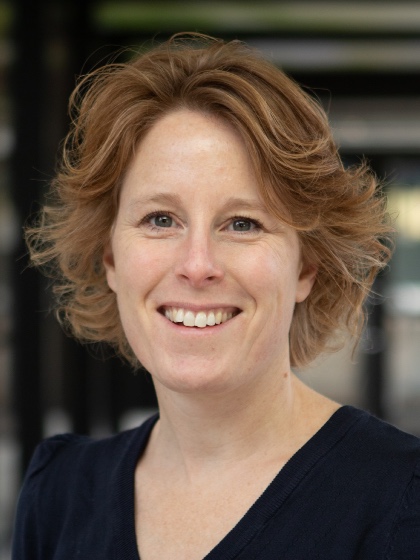
Ray Briggs is a Professor of Philosophy at Stanford University, affiliated with the Symbolic Systems Program and Philosophy and Literature program. He teaches advanced undergraduate and graduate courses in mathematical logic, decision theory, and metaphysics. His research focuses on formal epistemology, temporal ontology, and the foundations of probability theory. Briggs has published influential work in journals such as Philosophical Studies and the Journal of Philosophical Logic. His teaching portfolio includes courses like 'Topics in Mathematical Logic: Non-Classical Logic' and 'Mind, Matter, and Meaning.' Recent publications explore the Growing-Block theory of time and critiques of decision-theoretic principles. Briggs advises doctoral candidates Robert Bassett and David Gottlieb. His work bridges analytic philosophy with formal methods, addressing core questions in metaphysics and rationality.
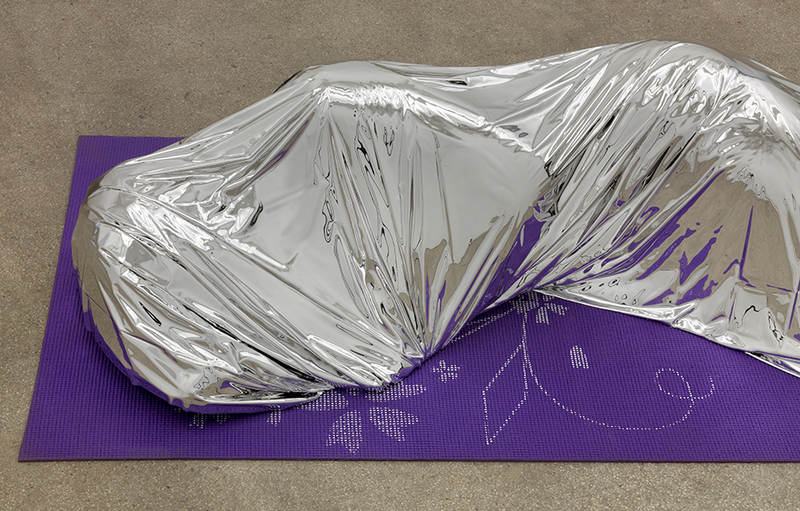
Prof. Klaus Weber is a conceptual sculptor and Professor of Sculpture at the Kunstakademie Münster since 2017. Born in 1967, he studied at the UdK Berlin and is represented by Herald St Gallery (London). His work explores functionalist rationality through interventions in everyday structures and technologies, often employing humor and anarchic approaches to nature-inspired themes. Affiliations: Kunstakademie Münster (Leonardo-Campus 2, Room 051) Major exhibitions: Hayward Gallery (London), Secession Wien, Nottingham Contemporary Key works: Thinking Fountains , Organ in the Pipe , Veggie Anatomy Research focuses on interdisciplinary art forms, sound installations, and public sculptures that challenge functional norms. His work is collected by institutions like TBA-21 and the Federal Republic of Germany's contemporary art collection. Awards include the HAP Grieshaber Prize and multiple residencies. Recent exhibitions (2022–2024) include site-specific installations and sound-based projects emphasizing material experimentation and spatial interaction.
Marinella Cappelletti is a Senior Lecturer in Psychology at Goldsmiths, University of London, specializing in cognitive neuroscience and the study of brain function across the lifespan. Her research focuses on numerical cognition, memory, executive functions, and aging, employing techniques like EEG and non-invasive brain stimulation. She has secured significant grants from organizations including the Wellcome Trust and Royal Society. Key contributions include exploring cognitive reserve's role in mental health, alpha and gamma oscillations in working memory, and the neurophysiology of middle-age cognition. Education & Research: PhD supported by Wellcome Trust Postdoctoral training via Royal Society Fellowships Research Interests: Her work spans numerical cognition, aging brain dynamics, and the interplay between brain stimulation and cognitive enhancement. She emphasizes translational science while promoting gender equality in academia through initiatives like Athena Swan. Publications: Recent articles highlight innovations in understanding working memory mechanisms via oscillatory patterns (alpha/gamma bands), cognitive reserve’s mental health benefits, and middle-age neurophysiological markers. These contributions underscore her expertise in bridging basic neuroscience with applied cognitive interventions.
Isabelle Peretz is a Full Professor in the Department of Psychology at the University of Montreal and a leading researcher in the neurocognition of music. She co-directs the BRAMS laboratory (International Laboratory for Brain, Music, and Sound Research), a world-renowned center studying the biological foundations of music processing. Her work focuses on understanding how the brain processes music, including studies on congenital amusia (tone deafness), emotional responses to music, and the neural mechanisms underlying musical perception and production. Education: Ph.D. in Experimental Psychology, Université Libre de Bruxelles (1984) Research Interests: Her research spans cognitive neuropsychology, musical cognition, and neuroimaging. Key areas include: Neural correlates of musical disorders (e.g., amusia) Emotional processing through music and voice Music's role in memory, language, and rehabilitation Genetic and developmental factors in musical ability Recent Article Trends: Recent work emphasizes interdisciplinary approaches, combining behavioral experiments with neuroimaging (fMRI, EEG), and explores music's impact on health (e.g., pain reduction, aphasia rehabilitation) and social integration (e.g., immigrant choir studies). Awards: 2022: Lifetime Achievement Award, Society for Music Perception and Cognition 2020: Prix du Québec and Woman of Distinction Award 2018: Officer of the National Order of Quebec 2011: Neuronal Plasticity Prize (IPSEN Foundation) Advising & Grants: Peretz has supervised over 100 students and secured funding from major agencies (NSERC, CIHR, FRQNT). Her projects include studies on beat deafness, genetic influences on musicality, and music's role in aging populations. Labs & Teams: Co-founder of BRAMS and affiliated with CRBLM (Centre for Research on Brain, Language, and Music). Her work bridges psychology, neuroscience, and clinical practice.
Christoph Kampmann is a Professor of Early Modern History at Philipps-Universität Marburg since 2003. He serves as Vice Dean of the Department of History and Cultural Studies (since 2024) and has held leadership roles such as Deputy Spokesperson of the Transregio Collaborative Research Center 138 'Dynamics of Security' (since 2018) and its founding spokesperson (2014-2017). His expertise lies in political history of Early Modern Europe, focusing on international relations, conflict resolution, and security concepts. Education includes a Dr. phil. from University of Bonn (1991) and habilitation in Modern/Contemporary History (1999). He previously held professorships at Karl-Franzens University of Graz and Rheinische Friedrich-Wilhelms-Universität Bonn. He is a member of prestigious academies including the European Academy of Sciences and Arts. Research emphasizes key concepts in political action, comparative political orders, and the interplay between security, reputation, and intervention. His recent work explores dynamics of peace treaties like Westphalia and analyzes security strategies in 16th-17th century Europe. Publications span over 20 books and articles on topics like Thirty Years' War, Hessian state governance, and European security systems. His work bridges legal history with political theory, offering innovative frameworks for understanding early modern statecraft. Awards include longstanding memberships in leading historical commissions and advisory roles for the Hessian Ministry of Science and Art. His interdisciplinary approach integrates military history, diplomatic practices, and constitutional developments across Europe.
Tanvi Pate is a Lecturer in Security Studies at the Centre for Security and Intelligence Studies (BUCSIS) within the School of Humanities and Social Sciences at the University of Buckingham. She is also affiliated with the Institute of Continuing Education (ICE) at the University of Cambridge as a Panel Tutor in International Relations. Her research focuses on critical geopolitics, particularly India's global order dynamics, bilateral relations, and the politics of state identity. She holds a PhD in Politics and International Studies from the University of Warwick, alongside MA and BA degrees in International Relations from Warwick and Leicester respectively. Her research explores how temporal and spatial management of state identity shapes foreign and security policy, with a focus on India's evolving role in the Indo-Pacific region. She employs innovative pedagogical methods including visual aids, case studies, and role-play to enhance student engagement in Security Studies. Her recent publications (2024-2010) critically examine topics such as India's nuclear identity, India-Israel relations, Afghanistan-India strategic narratives, and regional conflicts in South and Southeast Asia. She contributes to academic discourse through journal articles in Contemporary South Asia , Journal of Asian Security and International Affairs , and book reviews in International Affairs . Awarded the Fellow of Advance HE (FHEA), Dr Pate emphasizes pedagogical innovation and critical thinking in teaching. Her work bridges theoretical frameworks with real-world geopolitical challenges, making complex policy issues accessible to students through interactive classroom strategies.
Professor Nicholas Temple is a Senior Professor of Architectural History at the School of Art, Architecture and Design, London Metropolitan University, and Director of the Centre for Urban and Built Ecologies (CUBE). He holds MA (Cantab), DipArch(Dist), and PhD qualifications, and is a Fellow of the Royal Institute of British Architects (RIBA), Royal Society for the Encouragement of Arts (RSA), Royal Historical Society (RS), and Higher Education Academy (HEA). Previously, he served as Professor of Architecture at the University of Huddersfield and held academic roles at the University of Lincoln and University of Pennsylvania. Educated at Cambridge University (Magdalene College), Temple’s research focuses on architectural history and urban theory, particularly in Europe and China, with emphases on cultural rituals, Renaissance studies, and climate-related urbanism. His work bridges historical analysis and contemporary challenges, exploring architecture’s role in shaping human perception and spatial order. Temple has been shortlisted for prestigious awards like the CICA Bruno Zevi Book Award (2014) and nominated for the Alice Davis Hitchcock Medallion (2020) and Colvin Prize (2020). He has secured grants from the British Academy, Paul Mellon, and Bogliasco Foundations, supporting projects such as Lorenzo Ghiberti’s 3rd Commentary translation. His editorial roles include co-editing the Journal of Architecture and the Routledge Research in Architectural History series. Temple supervises PhD students and teaches architectural history and theory. His research outputs include monographs on Renaissance Rome, early modern language debates in architecture, and edited volumes on classical architecture’s reception. He frequently lectures globally on topics like urban sustainability, cultural heritage, and architectural theory. As CUBE Director, Temple leads interdisciplinary urban studies, emphasizing climate resilience and historical continuity. His collaborations extend to China and Europe, addressing global urban challenges through historical and contemporary lenses.
Xiaohua Zhuang, PhD, FAAO is an Associate Professor of Psychology at the Illinois College of Optometry (ICO). She holds expertise in early visual processing, visual psychophysics, and color vision. Her work bridges fundamental research with clinical optometry, focusing on contrast sensitivity, disease/drug effects on vision, and perceptual mechanisms. Dr. Zhuang completed her BS in Psychology at Peking University (2003), MS in Statistics at Rutgers University (2009), and PhD in Psychology at Rutgers University (2010). She conducted postdoctoral training at the University of Chicago (2013–2015) and University of Illinois at Chicago (2011–2013). Her research interests include psychophysics, color vision mechanisms, and the effects of alcohol on visual pathways. Notable studies investigate flicker adaptation's impact on retinal pathways and alcohol's influence on temporal processing. Recent work explores age-related changes in contrast sensitivity and corneal tomography in ethnically diverse pediatric populations. Dr. Zhuang has received grants including the American Academy of Optometry BSK Research Fellowship (2018) and Illinois Society for the Prevention of Blindness Seed Grants (2018, 2012). She is a Fellow of the American Academy of Optometry and active in professional organizations like ARVO and VSS. Her publications span top journals such as Investigative Ophthalmology & Visual Science and Journal of Vision , covering topics from binocular rivalry under alcohol to perceptual illusions. Her work integrates neuroscientific and statistical methods to advance understanding of visual processing mechanisms.
Sangeetha Metlapally is an Associate Professor of Vision Sciences at the New England College of Optometry (NECO), specializing in optics and binocular vision research. Her work focuses on understanding visual perception mechanisms, particularly related to keratoconus, refractive errors, and cataract pathology. Dr. Metlapally has established herself as a significant contributor to vision science through her extensive publication record and research funding. PhD in Vision Science, University of Melbourne, Australia BS in Optometry, Birla Institute of Technology and Science, Pilani, India Elite School of Optometry, Chennai, India Dr. Metlapally's research centers on two primary areas: the optical and visual consequences of keratoconus, and the structural and optical properties of age-related cataracts. Her work on keratoconus investigates how higher-order aberrations affect stereoacuity and visual performance, while her cataract research examines the ultrastructural changes in lens fiber cells that lead to light scattering. She employs advanced techniques including computational modeling, electron tomography, and detailed optical measurements to understand these visual disorders at both clinical and fundamental levels. Her publication record shows a clear progression from early work on cataract pathology with geographic focus on Indian populations, to more recent sophisticated analyses of visual processing in keratoconus. The research demonstrates strong methodological diversity, incorporating animal models (tree shrews, chicks), computational approaches, and detailed clinical measurements. Her 2020-2019 publications represent cutting-edge work using binocular cross-correlation analyses to understand how optical imperfections affect 3D vision. 2021 Hot Topic Award from ARVO for innovative research ideas 2019 Nominee for AEVR's National Emerging Vision Scientists Day 2016 Alcon Associate Award for Best Presentation 2011-2018 NEI K23 and K12 Awards through the Berkeley Clinician Scientist Development Program 2013-Present Fellow of the American Academy of Optometry Dr. Metlapally actively mentors graduate students, with records showing she advised Jingyi (Alice) Tang (Class of 2022) and Anastasia Logotheti (Class of 2024). Her significant NEI K23 and K12 awards demonstrate her ability to secure competitive research funding. She maintains active membership in key professional organizations including the American Academy of Optometry and Association for Research in Vision and Ophthalmology. Her research bridges basic science and clinical applications, with potential implications for improving vision correction strategies for individuals with keratoconus and understanding cataract formation mechanisms.
Susanna Siegel is the Edgar Pierce Professor of Philosophy at Harvard University's Faculty of Arts and Sciences. She holds a PhD from Cornell University and specializes in the philosophy of mind, epistemology, and political philosophy, with emerging work in the philosophy of journalism. Her research explores perception's role in cognition, culture, and politics, including how perception interacts with attention, inquiry, and democratic processes. Key research themes include the rationality of perception, cognitive penetration, vigilantism as political action, and the epistemic dynamics of spontaneous inquiry. She co-directs the philosophy of journalism initiative at Harvard and teaches groundbreaking courses on the subject. Recent projects investigate norms of attention in news media and the ethics of public perception in mass societies. Educations: PhD in Philosophy, Cornell University Books: The Rationality of Perception (2017), The Contents of Visual Experience (2010) Awards: 2023 Guggenheim Fellowship, 2023 Lebowitz Prize (shared), American Academy of Arts & Sciences membership Her work bridges analytic philosophy with interdisciplinary collaborations, notably co-curating art exhibitions on perception with artist Becky Moon. Current projects include a book on vigilantism and a study of inquiry in journalism funded by her Guggenheim grant.
Dr. Ndaona Chokani is a Lecturer at the Department of Mechanical and Process Engineering at ETH Zürich. Their research focuses on aerothermodynamics, mechanical engineering, and process engineering, with a recent emphasis on interdisciplinary applications in computer vision and image processing. Affiliated with the Professur f. Aerothermodynamik, their work spans theoretical and applied domains. While explicit educational background details are not provided, their academic career includes contributions to fields such as fluid dynamics and process systems engineering. Research interests are inferred from departmental affiliation and recent publications, emphasizing computational methods in mechanical systems and image quality assessment. Recent publications highlight work in perceptual quality metrics for images and videos, immersive systems (VR/360 content), and machine learning applications in 3D pose estimation and generative models. Key areas include diffusion models for low-light imaging, spatial-temporal geometric networks, and benchmarking frameworks for image harmonization. No awards or grants are explicitly listed in the provided text. Their research often involves collaborations on datasets like Salient360! and tools for gaze data analysis in 3D environments. Future work appears to focus on improving perceptual metrics and expanding applications in healthcare and immersive technologies.
Prof. Dr. Thomas Sattig holds the Chair of Theoretical Philosophy at the University of Tübingen since 2012 and serves as a visiting professor at the Università della Svizzera italiana (USI) since 2019. His research focuses on metaphysics, philosophy of mind, and temporal/spatial perception. He has been funded by prestigious grants such as the Volkswagen Foundation’s Opus Magnum (2022–23) and the Humboldt Research Fellowship (2010). Educations: 1991–1997: Studies in Philosophy and Germanistics at Universities of Tübingen and Stanford 2001: D.Phil. in Philosophy, Oxford University 1999: B.Phil. in Philosophy, Oxford University Research Interests: Prof. Sattig explores temporal perception , mereological structure , personal identity , and metametaphysical issues . He critically engages with theories of time, spatial objects, and the nature of vagueness. Recent work addresses the paradox of fission and higher-order accounts of temporal flow. Grants & Awards: Volkswagen Foundation Opus Magnum Grant (2022–23) for 'The Passage of Time' Humboldt Research Fellowship (2010) British Academy Postdoctoral Fellowship (2002–2005) Advising & Labs: While no specific advisees are listed, his research lab focuses on theoretical philosophy with collaborations at USI. He actively contributes to interdisciplinary dialogues on time and perception.
Kathryn Marie Fisher is an Associate Professor of International Security Studies at National Defense University, with prior teaching appointments at Ohio University and London School of Economics and Political Science. She holds a PhD in International Relations from LSE, MA in International Affairs from American University, and BA in Geography and French from University of Colorado. PhD in International Relations, London School of Economics and Political Science Postgraduate Certificate in Higher Education, London School of Economics MA in International Affairs, American University BA in Geography and French, University of Colorado Her research focuses on intersections of security, identity, and temporality, particularly examining how spatial and temporal identity configurations influence security practices. Current projects include analyzing food politics in security contexts and temporal dimensions of professional military education. She employs relational/interpretive methodologies and discourse analysis. Academic publications span critical security studies, counterterrorism analysis, and temporal theory applications. Key teaching areas include terrorism studies, strategic thought, and critical approaches to security. She serves on the Executive Board of the International Sociological Association's Research Committee on Armed Forces and Conflict Resolution.
Hong Lei is a Research Professor at the School of Life Sciences, Arizona State University (ASU), where he is part of the Social Insect Research Group. Previously, he held roles including Associate Research Professor at ASU (2016–present), Associate Research Scientist (2012–2016), and Staff Scientist (2004–2012) at the University of Arizona's Department of Neuroscience. He has also been an adjunct faculty member at Pima Community College, teaching courses like Introductory Human Anatomy and Physiology and General Biology. Education includes a Ph.D. in Biology from Beijing Normal University (1994), followed by postdoctoral research with Prof. John G. Hildebrand at the University of Arizona (2004) and Prof. Bill Hansson at Lund University (1999). Lei's research focuses on understanding how animal nervous systems process sensory information, particularly olfactory signals in insects like the hawkmoth and honeybee. His work investigates neural circuits from peripheral to higher-order processing, emphasizing the transformation of sensory inputs into behaviors. He employs multidisciplinary approaches, collaborating with mathematicians, engineers, and chemists. His research has been supported by grants such as NSF funding for olfactory dynamics studies (2012–2016) and a collaborative project on locust aggregation behaviors (2013–2016). Notable awards include the University of Arizona Service Award (2014) and the AAFSAA Outstanding Community Service Award (2013). In addition to his research, Lei has mentored over 30 students and scholars. He serves on the editorial boards of Frontiers in Chemical Ecology and Frontiers in Invertebrate Physiology , and is active in professional associations like the Society for Neuroscience. Lei is involved in outreach activities, including demonstrations at science festivals and educational programs targeting K-12 students, such as the Arizona Insect Festival and Brain Awareness Week.
Prof. dr. Carla Hoetink is the Head of the Documentation Centre for Dutch Political Parties at the University of Groningen Library. She is an expert in modern representative democracy and political institutions, focusing on the Netherlands in the 20th and 21st centuries with comparative international perspectives. Ancillary roles: Program director at the national Research School for Political History (RSPH), responsible for PhD/RMA training. Member of the Supervisory Board at the Montesquieu Institute. Lecturer at the Montesquieu Learning Academy for the Rule of Law. Board member of the Anne Vondeling Prijs and jury member for the Prinsjesprijs. Her research examines parliamentary culture, political protest, electoral systems, and the interplay between institutions and concepts of 'good politics'. She has published extensively on Dutch legislative history, including parliamentary procedures, gender dynamics, and the material culture of politics. Hoetink's recent publications analyze temporal aspects of political decision-making, modernization challenges in parliaments, and historical negotiations on protests. Her work bridges academic analysis with professional contributions to media and policy discussions. Contact: c.hoetink@rug.nl