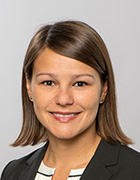
Anna Levina is an Assistant Professor for Computational Neuroscience at the University of Tübingen , affiliated with the Department of Computer Science under the Faculty of Science. Her research focuses on the self-organization of neuronal activity, critical dynamics in neural networks, and the excitation/inhibition balance in cortical circuits. Current positions: Assistant Professor (since 2018), Group Leader (2017-2018), Equality Officer (Computer Science) Previous roles: IST Fellow (2015-2017), Associated Researcher (2011-2015), Postdoc/PI (2011-2015), Postdoc (2008-2011) Her research integrates mathematical modeling , statistical physics , and computational neuroscience to study criticality phenomena, neural avalanches, and adaptive network dynamics. Key interests include: Self-organized criticality in neural systems Excitation/Inhibition balance mechanisms Network topology and dynamics Timescale analysis in neural processing Stochastic modeling of neural activity Recent publications reveal trends in understanding critical dynamics across biological and artificial networks, with applications to memory systems, sensorimotor integration, and disease modeling. She has received recognition as an IST Fellow .
Prof. Julijana Gjorgjieva is a tenured W3 Professor of Computational Neuroscience at the School of Life Sciences Weihenstephan, Technical University of Munich (TUM). She leads an independent research group at the Max Planck Institute for Brain Research and is affiliated with the Bernstein Center for Computational Neuroscience. Her research focuses on the principles governing neural circuit development, balancing learning plasticity with functional stability through computational and theoretical approaches. Key interests include synaptic organization, energy-efficient neural computation, and evolutionary optimality principles. Education & Career: B.Sc. Mathematics, Harvey Mudd College (2006) M.A.St. in Applied Mathematics, University of Cambridge (2007) Ph.D. Applied Mathematics, University of Cambridge (2011) Postdoctoral Fellowships: Harvard University (2011-2014), Brandeis University (2014-2016) Max Planck Research Group Leader (2016-2022) W2/W3 Professor at TUM since 2016 Research Interests: Computational neuroscience, theoretical modeling of neural circuits, synaptic plasticity mechanisms, homeostatic regulation, and the interplay of development and evolution in shaping brain architecture. She employs mathematical frameworks to study how circuits achieve robustness while enabling adaptive learning. Awards: Heinz Maier-Leibnitz Prize (2022) Eric Kandel Young Neuroscientist Prize (2021) ERC Starting Grant (2018) Multiple postdoctoral and early-career fellowships Grants & Funding: Includes DFG Collaborative Research Center on Neural Homeostasis, HFSP grants, and EU Horizon 2020 initiatives. Active in mentoring and promoting computational neuroscience through programs like Neuromatch Academy. Labs & Collaborations: Leads a multidisciplinary lab integrating experimental and theoretical approaches. Collaborates with institutions such as the Max Planck Society and international computational neuroscience networks.
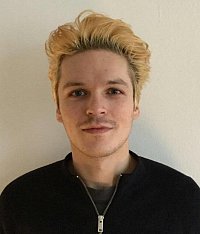
Dr. Leif Langsdorf is a Researcher at the Department of Psychology within the Faculty of Philosophy I at Martin Luther University Halle-Wittenberg. His work focuses on cognitive processes related to multitasking, motivation, and cognitive control, utilizing both behavioral methods and electrophysiological techniques including EEG. Langsdorf's research interests center on understanding how motivation affects multitasking abilities, particularly examining how reward processing influences cognitive control in dual-task situations. His work investigates whether motivated individuals show faster reaction times in simple response tasks and explores the underlying cognitive processes that enable this enhanced performance. His research employs a range of methodologies from cognitive psychology and EEG to examine the physiological processes during multitasking. His publication record shows a consistent focus on reward effects in dual-task paradigms, with recent work examining the neural correlates of task switching, temporal dynamics of reward utilization, and the application of neuromodulation techniques like tDCS to influence task coordination. His research has appeared in journals including Journal of Cognitive Neuroscience, Attention Perception & Psychophysics, and Acta Psychologica. Langsdorf actively supervises thesis work on multitasking and motivation, guiding students through research on how motivation impacts multitasking capabilities. His work has been presented at multiple conferences including TeaP (Experimental Psychology conference) and HexKop. He collaborates extensively with Prof. Torsten Schubert and other researchers at the university, including Sebastian Kübler, Daniel Darnstaedt, and Maryam Talarposhti, forming part of a research group focused on cognitive control and task switching phenomena.
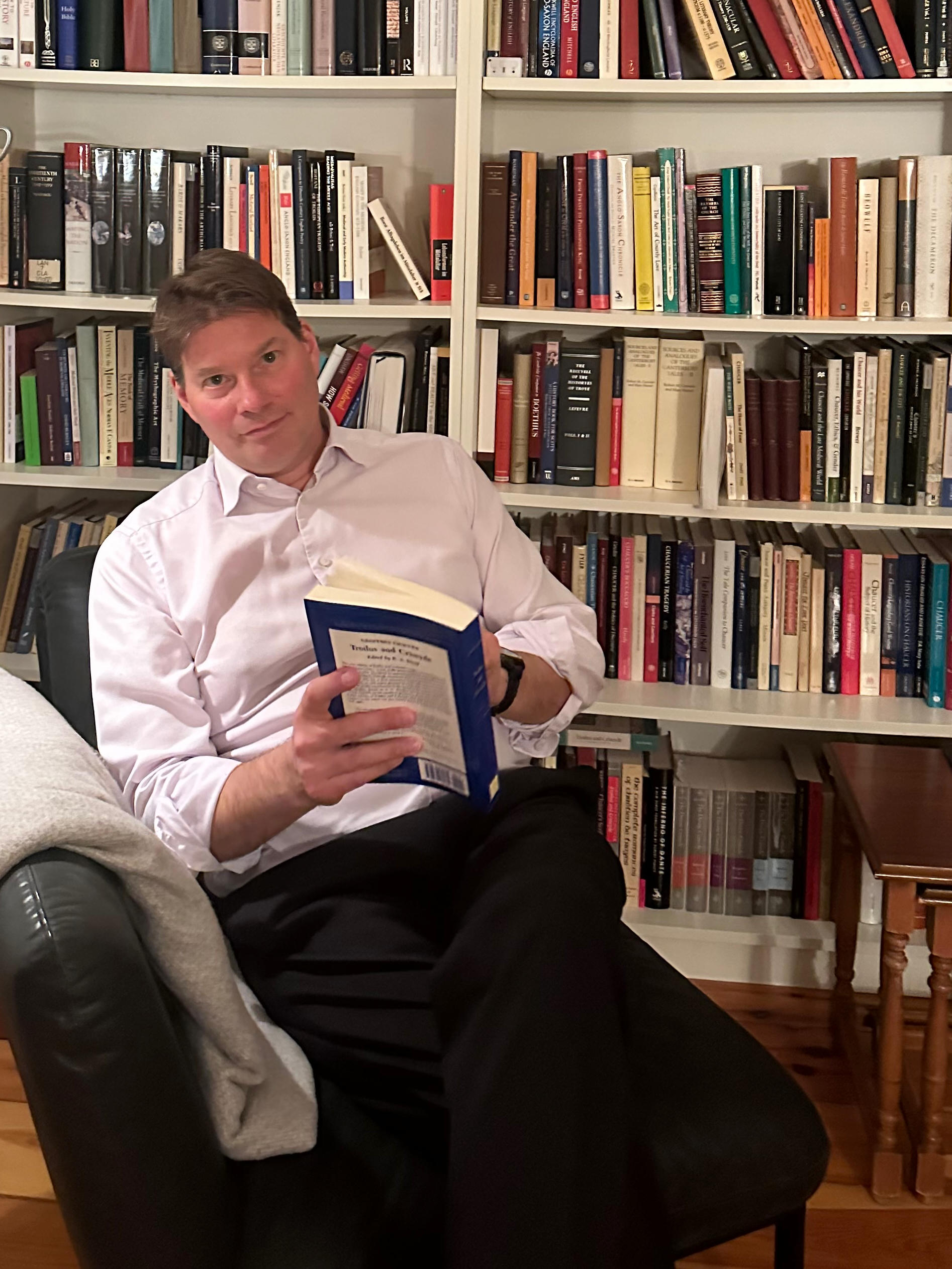
Prof. Dr. Wolfram R. Keller is a Professor at the Department of English Philology, Faculty of Philosophy and Humanities, Freie Universität Berlin. His research focuses on medieval and early modern English/Scottish literature, classical reception, and theories of authorship, with special emphasis on temporal structures in literary works. His research explores the transformation of classical traditions in medieval and Renaissance texts, particularly through the lens of hybridity and temporality. Key areas include Chaucer's dream visions, Shakespearean chronologies, Trojan narratives, and intersections of literature with economics and music. Recent work examines how texts strategically reinvent antiquity to address contemporary concerns. Keller leads multiple collaborative research initiatives, including as Principal Investigator for DFG Research Group FOR 2305 Diskursive Representations (2016-2023) examining discursive innovations, and the Excellence Cluster Temporal Communities (2020-present) studying time as a literary construct. His publications demonstrate consistent engagement with how medieval/early modern authors reframe classical tropes to negotiate cultural identity. He directs projects on 'Troynovant Revisited' (DFG 2023–present) analyzing hybridization of classical antiquity in English literature, and 'Shakespearean Chronologies' (Einstein Circle 2016-2019) investigating asynchronous temporalities. His interdisciplinary approach connects literary studies with philosophy, musicology, and economic history.
Prof. Dr. Frank Becker is a faculty member at the University of Duisburg-Essen's Faculty of Humanities , where he has taught modern and contemporary history since 2011. He studied history, German studies, philosophy, and education at the University of Münster, earning his doctorate in 1992 and habilitation in 1998. Research Focus: Political culture, war and society, theoretical and methodological questions, nationalism, religion, cultural ambiguity, physical culture, and industrial work. Academic Roles: Member of the Faculty Council and Senate Commission QVK; editor of the series Kontingenzgeschichten (with Stefan Brakensiek and Benjamin Scheller). His work explores ambiguity and contingency in historical contexts, spanning from 19th-century German-French conflicts to 20th-century labor policies. Recent articles and books analyze gender norms, media representations, and cultural symbols across periods like the Weimar Republic and post-war Germany. Publications reveal a thematic emphasis on war's societal impact , industrial labor , and sport as political symbolism . He investigates how historical actors navigated uncertainty and constructed national identities. Scientific Awards: Werner Hahlweg Prize (Second Prize) University of Münster's Young Researcher Award Prof. Becker contributes to DFG Research Training Group 1919 ( Precaution, Foresight, Prediction ) and Research Group 2600 ( Ambiguity and Distinction ). His courses include seminars on modern history, social and economic history, and theoretical modules on space-time dynamics.
Jan Pfister is a researcher at the Chair of Data Science (Informatik X) , affiliated with the Faculty of Mathematics and Computer Science at the University of Würzburg . Holding an M.Sc. in Computer Science from 2021, he contributes to the DMIR group while maintaining the BibSonomy platform. His work bridges Natural Language Processing and Deep Learning , with a focus on structured sentiment analysis and German language modeling. His research explores the integration of Large Language Models with Pointer Networks to extract fine-grained sentiment information. He has developed ModernGBERT , a German-only encoder model, and LLäMmlein , advancing NLP capabilities for the language. Pfister's recent publications highlight trends in encoder-decoder architectures, model-agnostic hallucination detection, and multi-label classification frameworks that refine LLM outputs. He has taught courses including Information Retrieval (SS '22), Text Mining (WS '23), and Selected Topics in Machine Learning (SS'21, WS '21, WS'24). His collaborative projects span medical informatics, human-AI interaction, and social media analysis, often involving interdisciplinary teams and real-world data.
Dr Guy Kahane is an Associate Professor at the Faculty of Philosophy , University of Oxford, and a faculty member at the Oxford Uehiro Centre for Practical Ethics . His research bridges philosophy of neuroscience , moral psychology , metaethics , and applied ethics . Research Interests Kahane explores how neuroscience informs moral judgment, challenges utilitarianism through multidimensional models, and critiques speciesism in moral prioritization. He investigates axiological debates around theism and evolutionary suffering, arguing against simplistic views of cosmic indifference and species-based moral hierarchies. His work includes empirical studies on public perceptions of harm to animals versus humans, co-developing the Oxford Utilitarianism Scale to dissociate moral dimensions. Recent publications focus on individuality, cosmic importance, and historical significance. Notable Contributions Argued that sacrificial dilemmas fail to capture the altruistic core of utilitarianism. Challenged speciesism in moral psychology through cross-species prioritization studies. Developed a framework for understanding the axiological implications of evolution and theism.
Holmer Steinfath is a full Professor of Practical Philosophy at Georg-August-Universität Göttingen since 2006. His academic journey includes professorships at RWTH Aachen (2002-2006) and Universität Regensburg (2002-2006), with earlier roles as a lecturer and assistant at Universität Konstanz (1994-2002). He holds a PhD (1988) and Habilitation (2000) in philosophy, focusing on Aristotle and Plato. Steinfath serves as a co-editor for two book series and advises on journal boards. Education Philosophy studies at Universität Hamburg and Freie Universität Berlin PhD (1988): Aristotle's Substance Theory Habilitation (2000): Practical Reasoning and Personhood Research interests span practical philosophy, ethics, and philosophical anthropology, with specializations in the good life , moral justification, metaethics, and normative ethics. He explores temporal dimensions in ethics (e.g., time sovereignty, existential coherence) and connects ancient philosophy (Plato, Aristotle) to modern moral frameworks. Recent publications focus on temporal ethics, medical philosophy, and moral theory. His 15 most recent works (2025-1996) analyze topics like time perception, autonomy in medicine, and ethical systems, blending classical and modern philosophical approaches. Notable collaborations include co-edited handbooks on medicine and temporality. Scientific roles include Member of the Lower Saxon Academy of Sciences (2010-present) Trust Professor of Studienstiftung (2021-present) Co-editor of Neue Studien zur Philosophie and Philosophische Abhandlungen book series Advisory board member for Jahrbuch für Wissenschaft und Ethik and Zeitschrift für Ethik und Moralphilosophie Grants & Projects Co-editor of key anthologies including Autonomie und Vertrauen (2016) Principal investigator for DFG-FOR 5022 project on medicine and the time structure of the good life (since 2021)
Nicole Antes is a Researcher and PhD student at the Leibniz Institute for Knowledge Media (IWM) in Tübingen, Germany, working in the Perception and Action lab and the Realistic Depictions lab since December 2021. She is affiliated with the University of Tübingen and has established herself as a promising researcher in cognitive psychology with focus on misinformation processing and memory mechanisms. Education: M.Sc. in Cognitive Science, University of Tübingen (2021) B.A. in Media and Business Psychology, HMKW Berlin Antes' research centers on how people process and remember true versus false information, with particular emphasis on the cognitive mechanisms behind misinformation effects. Her work investigates how veracity cues (information about whether statements are true or false) affect memory accuracy and confidence judgments, how false information persists in memory even after correction (the Continued Influence Effect), and how social media platforms influence the spread and correction of misinformation. She examines how factors like information presentation order, modality differences, and content type impact the discrimination between true and false information in memory. Her publication record reveals a sophisticated research program exploring the intersection of cognitive psychology and real-world misinformation challenges. The research demonstrates how temporal sequencing of information, cross-modal presentation formats, and content specificity all influence memory for veracity. Her work bridges foundational cognitive science with practical applications for developing effective misinformation correction strategies in digital environments. Antes has taught an experimental psychology practical course at the University of Tübingen during the summer semester of 2024 and served as the PhD Representative at IWM from January to December 2024. She co-organized the 2025 workshop 'Combating Misinformation in the Digital Age: Cognitive Biases, Societal Challenges and Ethical Considerations' at the Leibniz Institute for Knowledge Media, bringing together researchers from psychology, political science, and ethics to address misinformation from interdisciplinary perspectives. As a core member of both the Perception and Action lab and Realistic Depictions lab at IWM, Antes conducts controlled experimental research while maintaining relevance to real-world misinformation challenges. Her current project 'Mental representation of scenes: Discriminability of true and false information' (2021-2024) directly addresses how people mentally represent and distinguish between accurate and inaccurate information about events.
Eugénia da Conceição-Heldt is Professor and Chair of European and Global Governance at the Technical University of Munich's School of Social Sciences and Technology, a position she has held since July 2016. She previously served as reform rector of the Hochschule für Politik München and founding dean of the TUM School of Governance from 2016 to 2021, and held the chair of International Politics at TU Dresden from 2012 to 2016. Her academic career includes appointments as assistant professor at Humboldt-Universität zu Berlin and guest professor at Freie Universität Berlin, along with prestigious fellowships at Harvard University, the European University Institute, the Social Science Research Center Berlin, and Princeton University. Her educational background includes: PhD in Political Science from Freie Universität Berlin Habilitation at Humboldt-Universität zu Berlin Professor da Conceição-Heldt's research focuses on the delegation of power to international organizations, European integration processes, global economic governance structures, two-level games in international negotiations, accountability mechanisms in the digital age, and the impact of technological disruptions on political systems. Her work bridges theoretical frameworks with empirical analysis of contemporary governance challenges, particularly examining how institutions adapt to crises and technological change while maintaining democratic legitimacy. Her recent publications demonstrate a consistent focus on institutional adaptation in global governance, with particular attention to the European Union's institutional dynamics, international financial architecture, and the temporal dimensions of political decision-making. Her scholarship reveals how international and European institutions navigate tensions between independence and accountability, effectiveness and legitimacy, particularly during periods of disruption. Her distinguished career has been recognized with numerous prestigious awards: TUM IAS Carl von Linde Fellowship (2022) Visiting Research Scholar at Princeton University (2022) Medal for Outstanding Contributions to the Free State of Bavaria (2019) Fulbright Fellowship at Harvard University (2015) European Research Council Consolidator Grant (2012) Heisenberg Fellowship from the German Science Foundation (2010) As an active researcher and academic leader, Professor da Conceição-Heldt has secured significant research funding including a €1.3 million ERC Consolidator Grant. Her scholarly contributions include over 40 peer-reviewed journal articles published in leading outlets such as the Journal of Common Market Studies, Journal of European Public Policy, and Review of International Political Economy, along with four monographs and multiple edited volumes. Her work bridges theoretical innovation with practical policy relevance in the fields of European and global governance.
Prof. Dr. Thomas Stodulka is Junior Professor for Social and Cultural Anthropology and Psychological Anthropology at the Institute of Social and Cultural Anthropology, Department of Political and Social Sciences, Freie Universität Berlin. He serves as Head of the department and maintains an active research program focusing on affect and emotion, psychological anthropology, childhood and youth studies, ethnographic methods, and marginalization. His work spans Southeast Asia (particularly Indonesia and Timor-Leste) and European contexts. Stodulka's research interests center on the intersection of emotion, marginality, and social organization. His work examines practices of care and social mobility among marginalized communities, particularly through long-term ethnographic fieldwork in Indonesia. He has developed innovative approaches to studying affective dimensions of fieldwork and has made significant contributions to psychological anthropology methodology. His current research explores permaculture, school gardens, and how they shape futures in Southeast Asian contexts. His recent publications demonstrate a strong focus on affective scholarship during pandemic times, orders of feeling, and economies of solidarity during the Covid-19 pandemic across European countries. His work bridges psychological anthropology with public health, education, and environmental studies, particularly through examining school gardens as sites of knowledge circulation and future-making. Among his notable awards are the Isaac Manasseh Meyer Visiting Fellowship, Humboldt Research Award, and Marie-Skłodowska-Curie-Fellowship. He serves as Associate Editor of Ethos–Journal of the Society for Psychological Anthropology and co-edits the Social Sciences in Asia book series. Stodulka has supervised numerous doctoral students on topics ranging from emotional dimensions of schizophrenia in Indonesia to women's organizations navigating gender-based violence in Java. He is particularly known for his innovative teaching approaches that include group walking sessions, writing assignments, and world café discussions that emphasize intersectional teaching principles.
Dr. Yulia Sandamirskaya is the Head of Research Center "Cognitive Computing in Life Sciences" at Zurich University of Applied Sciences (ZHAW), focusing on neuromorphic computing applications for embodied artificial intelligence. Her work bridges computational neuroscience and robotics, emphasizing neural-dynamic architectures for real-time decision-making, learning, and sensorimotor integration in autonomous agents. Key Research Areas: Neuromorphic hardware, dynamic neural fields, spiking neural networks, spatial language modeling, and autonomous sequence generation. Projects: Developed controllers for UAVs and robotic arms using event-based vision sensors, explored on-chip unsupervised learning, and designed models for spatial language interpretation in robots. Scientific Contributions: Her publications span robotics conferences and journals like Science Robotics and Frontiers in Neurorobotics , addressing topics such as path integration, obstacle avoidance, and cognitive architectures. Recent work (2024) includes visual odometry with resonator networks and hyperdimensional scene factorization on neuromorphic chips. Advising: Supervised multiple MSc theses at ETH Zurich and NSC/INI programs, mentoring students on neuromorphic navigation, spiking networks, and tactile learning. Collaborated with institutions like ETH Zurich, University of Queensland, and INI Bochum. Labs & Collaborations: Leads the "Neuromorphic Computing Applications: Embodied AI" group at ZHAW, partnering with INIvation (Zurich) and Jörg Conradt (KTH) on neuromorphic hardware implementations. Projects integrate cognitive models with robotic platforms, emphasizing energy efficiency and low-latency interaction.
Prof. Xiangbin Teng is an Assistant Professor in the Department of Psychology at the Chinese University of Hong Kong. Previously, he was a postdoctoral researcher at the Neurocognitive and Experimental Psychology lab in Frankfurt/Berlin (2021–2022), following his PhD in Cognition and Perception from New York University and M.Sc./B.Sc. degrees from Peking University and Shanghai Jiao Tong University. His research focuses on neurocognitive mechanisms underlying auditory perception, particularly speech and music processing. Key areas include neural oscillations, temporal dynamics, and multiscale auditory encoding. He investigates how rhythmic patterns in language (e.g., ancient Chinese poetry) and music influence perceptual and neural processes. Publications highlight contributions to understanding theta/gamma band neural coding, EEG modulation spectra, and phase precession mechanisms. His work bridges computational models (e.g., recurrent neural networks) with empirical neuroscience findings. ERC Consolidator Grant (2025): Leading the "TRANSFORM" project exploring visual system development from infancy to adulthood. Grants & Collaborations: Extensive research on auditory cortex fMRI methods and cochlear implant simulations. Labs/Teams: Active in CUHK's cognitive neuroscience group and previously at the Max Planck Institutes. His current lab investigates sensory-motor interactions and predictive coding in perceptual systems.
Professor Antje Flüchter is a distinguished historian at Bielefeld University, where she has served as Professor of General History with special focus on Early Modern Period since 2014. She currently holds multiple significant academic leadership roles, including Speaker of the Collaborative Research Center 1288 "Practices of Comparison: Ordering and Changing the World" since May 2021, and previously served as Dean of the Faculty of History, Philosophy and Theology from 2018-2021. Her institutional affiliations include membership in the Center for InterAmerican Studies, the Institute for World Society, and the Center for Uncertainty Studies (CeUS). Professor Flüchter's educational background demonstrates a strong foundation in historical studies. She earned her Magistra Artium from the University of Cologne in 1997 with a thesis on "Estates and State Formation in Bohemia in the Confessional Age." She completed her doctorate at the University of Münster in 2002 with research on "Celibacy between Norm and Deviance. Church Politics and Everyday Community Life in Jülich and Berg in the 16th and 17th Centuries," and successfully habilitated at the University of Heidelberg in 2012 with her work "The Diversity of Images and the One Truth. The Statehood of India in the German-speaking Perception (1500-1700)." Professor Flüchter's research interests center on the history of global entanglement, particularly the relationships between Asia (with special focus on India) and Europe during the early modern period. Her work explores transculturality, gender history, theory of history, and the history of religiosity. She has made significant contributions to understanding how comparative practices were used to order human diversity from the 15th to 19th centuries, examining the shift from religious and birth status classifications to increasingly racialized categorizations. Her scholarship investigates the cultural dynamics of translation, the history of knowledge, and the political dimensions of historical periodization. A consistent theme across Professor Flüchter's recent publications is the examination of comparative practices and their role in ordering the world. Her work demonstrates how bodies were compared and used to classify humans across different historical contexts, from the Ottoman Empire to Jewish communities and the Indian subcontinent. She explores the intersection of corporeality, religion, and social differentiation, revealing how comparative frameworks shaped Western modernity and contributed to mechanisms of exclusion. Her research on transcultural encounters, particularly between Europe and Asia, illuminates the multidirectional nature of translation and knowledge production. Professor Flüchter has held significant leadership positions that reflect her standing in the academic community. Since November 2023, she has served as Chair of the Advisory Board of the Käte Hamburger Research Centre Dis:connectivity in Processes of Globalisation (global dis:connect), having been elected to the Advisory Board in June 2023. Since September 2021, she has been a committee member of the Association of Historians in Germany. Additional memberships include the Advisory Board of the Institute of World History, the Historical Commission for Westphalia, and the Tenure Board of Bielefeld University. She also coordinates the Working Group on Gender History of the Early Modern Period. As a principal investigator and project leader, Professor Flüchter has secured substantial research funding, particularly through the German Research Foundation (DFG). She has led multiple projects within the Collaborative Research Center 1288, including "The Compared Body: Order in Human Diversity (16th-19th Centuries)" and "Practices of Comparison: Ordering and Changing the World." Her work on translation cultures has been supported through the Priority Programme "Translation Cultures of the Early Modern Period," where she led the project "Cultural Translation as a Multidirectional Process - Roberto Nobili as a Missionary Translator between Cultures, Religions, and Institutions." Previously, she served as Principal Investigator of the Cluster of Excellence "Asia and Europe in a Global Context" at Heidelberg University. Professor Flüchter is deeply integrated into several research communities and teams. She serves as Speaker of the Profile Area "Global and Entangled History" within the Department of Historical Sciences at Bielefeld University. Her work with the Collaborative Research Center 1288 has created an extensive network of scholars examining comparative practices across historical periods and geographical contexts. She is also affiliated with the Bielefeld Graduate School in History and Sociology and contributes to the Center for InterAmerican Studies. Through her editorial work, she co-edits several academic series including "Peripheries. Contributions to European History," "Studies on Everyday Life and Cultural History," and the international series "Traces," further extending her scholarly influence.
Prof. Dr. Rolf Grossmann is a Professor at Leuphana Universität Lüneburg, affiliated with the Institute of Culture and Aesthetics of Digital Media (ICAM). His research focuses on Sound Studies, Digital Cultures, and Cultural Informatics, exploring themes like media theory, music technology, and audio culture. He has organized conferences such as 'The Sound of Sound Studies' (2021) and contributed to projects like 'Instrumentality meets Materiality' (2019). Grossmann's publications span peer-reviewed journals like Paragrana and Positionen , as well as edited volumes on topics like sound art and media anthropology. He has been featured in media discussions about AI in music production, digital copyright, and the cultural implications of sampling. His work bridges musicology, media studies, and philosophy, addressing contemporary issues in digital sound culture. Research Interests: Sound Studies investigates how sound shapes cultural practices and technologies. His work on digital cultures examines transformations in music production and consumption, while cultural informatics explores computational methods in media analysis. Key projects include analyzing the PRC's Social Credit System through media theory and critiquing sonic media's role in societal norms. Media Contributions: Grossmann has participated in radio discussions (NDR, Deutschlandfunk) about AI's impact on music (2023), sampling ethics (2015), and digital music's future (2012). His work emphasizes interdisciplinary approaches to understanding sound's societal role.