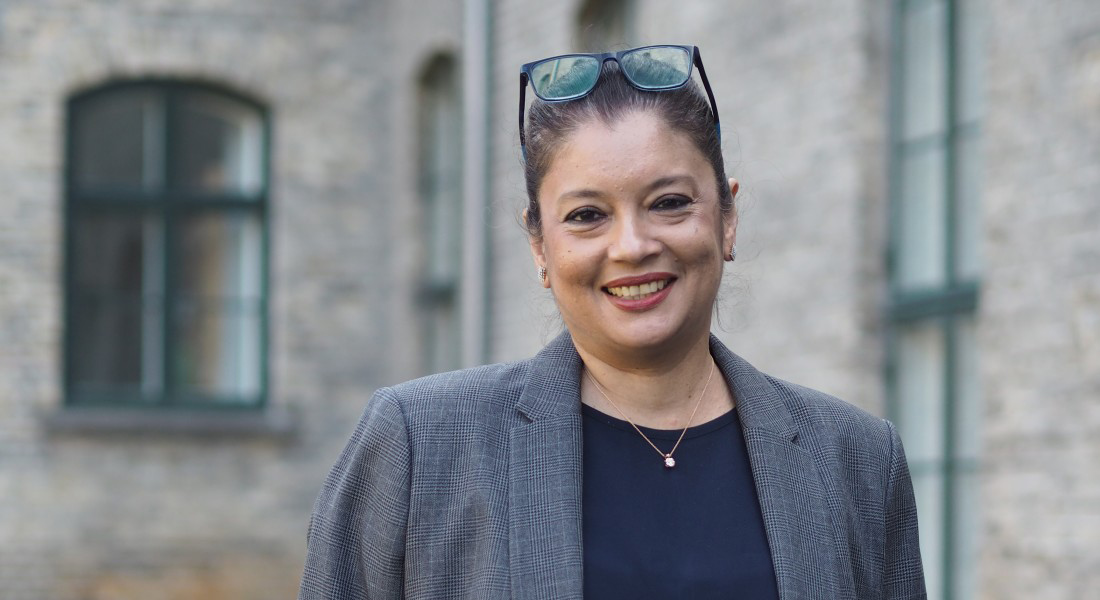
Roberta Sinatra is a Professor in Social Data Science at the University of Copenhagen, with part-time affiliations at ITU Copenhagen, ISI Foundation (Italy), and CSH (Austria). She co-founded the NERDS Research Group at ITU and co-leads the Pioneer Centre for AI in Copenhagen. Research Interests: Her work spans computational social science, network science, and data science, focusing on fairness in AI, scientific careers, and human mobility. Recent projects include analyzing child protection algorithms and modeling urban bicycle networks. Scientific Awards: ERC Consolidator Grant Villum Young Investigator Grant Complex Systems Society Junior Prize DPG Young Scientist Award for Socio- and Econophysics Sapere Aude: Starting Grant Publications: Her research, often in top-tier venues like Nature and Science , explores interdisciplinary themes, including AI ethics, gender disparities in science, and social network dynamics. Labs & Teams: She leads research initiatives at the Center for Social Data Science (KU) and co-founded the NERDS Research Group at ITU, fostering international collaboration in network science and AI ethics.
Frede Blaabjerg is a Professor at Aalborg University (AAU Energy) , affiliated with the Faculty of Engineering and Science . Since 1998, he has pioneered power electronics research in applications such as wind turbines , photovoltaic (PV) systems , reliability engineering , and Power-2-X technologies. Education : PhD in Electrical Engineering (1995, Aalborg University) Honorary Degrees : Honoris Causa at University Politehnica Timisoara (2017) and Tallinn Technical University (2018) His research focuses on power electronics control , system optimization , and reliability for renewable energy and electric mobility . Recent work includes grid-forming converters , virtual synchronous generators , and smart EV charging systems. Key publication trends span 15+ years , with over 3,733 peer-reviewed articles and 900+ journal papers in power electronics , renewables , and energy storage . Notable book series: Control of Power Electronic Converters and Systems (4 volumes, Elsevier). Scientific Awards : 46 IEEE Prize Paper Awards 2020 IEEE Edison Medal 2019 Global Energy Prize 2014 IEEE William E. Newell Power Electronics Award Leadership Roles : Editor-in-Chief, IEEE Transactions on Power Electronics (2006–2012) Chairman, Danish Council for Research and Innovation Policy (2020–) President, IEEE Power Electronics Society (2019–2020)
Klaus Mølmer is a Professor at the Niels Bohr Institute, University of Copenhagen, specializing in Quantum Optics and Photonics. His research spans quantum information, entanglement, and cavity QED, leveraging machine learning and Grover's algorithm for quantum state engineering. His recent work focuses on spin squeezing, Rydberg atom interactions, and mechanical resonator cooling. A leader in quantum simulation and superradiance, he collaborates on cavity-mediated emission and quantum network design. The 15 most recent articles highlight advancements in quantum state manipulation, entanglement protocols, and robust differential phase sensing. These studies bridge theoretical frameworks with experimental applications in cavity QED, Rydberg arrays, and zero-photon detection.
Sascha Struwe serves as a Postdoctoral Researcher at Aalborg University Business School within the Faculty of Social Sciences and Humanities, actively contributing to the International Business Research Group. Based at Fibigerstræde 11 in Aalborg Øst, Denmark, Struwe operates at the intersection of service innovation theory and business practice with international focus. Research expertise centers on service innovation , value co-creation , and digital servitization , particularly examining B2B contexts and open banking ecosystems. Work consistently explores institutional influences through German-Chinese case studies, addressing how cultural and regulatory frameworks shape service design. Recent trajectories reveal evolution from foundational service design challenges (2019-2021) toward digital transformation implications (2022-2023), with emphasis on value co-destruction mechanisms in financial ecosystems. Struwe led the PhD project Innovating the Invisible and Intangible: Value Creation in B2B service (2018-2021) investigating co-creation capabilities across industrial sectors. Academic engagement includes conference participation at EIBA and CICALICS events, plus a visiting researcher appointment at Fudan University's Nordic Centre (2019-2020). Current work continues through the International Business Research Group, focusing on digital literacies and service ecosystem resilience.
Majken Schultz is a Professor of Management and Organization Studies at Copenhagen Business School (CBS) since 1996, affiliated with the Center for Organization and Time (COT). She serves as Chair of the Carlsberg Foundation (since 2022) and Deputy Chair of the Carlsberg Group (since 2022), with prior board roles at Realdania (until April 2023) and Danish Crown (2018–2021). Her research explores the temporal dimensions of organizational phenomena, focusing on how distant futures and pasts influence strategy, identity, and temporary organizations, particularly in the context of climate change. Research Trends : Recent work examines organizational resilience through temporal trajectory models, path enactment for distant-future goals, and corporate sustainability initiatives. Publications highlight challenges in translating long-term climate targets into actionable strategies and reconfiguring organizational-nature relationships via pilot projects. Scientific Awards : Member of the Royal Danish Academy of Sciences and Letters Grants & Leadership : Principal Investigator for the Making Distant Futures Actionable: Innovating for Zero-Carbon Future project (Novo Nordisk Foundation, 2021–2025). Active in Danish business networks with board roles in multiple organizations (2013–2025).
Jesper Rindom Jensen is an Associate Professor in the Department of Electronic Systems at Aalborg University, Denmark, under the Technical Faculty of IT and Design. He is the Head of the Audio Analysis Lab, a leading research group in audio signal processing, since 2023. His work bridges theoretical signal processing and practical applications in artificial intelligence and audio systems. Full Name: Jesper Rindom Jensen Institution: Aalborg University School: The Technical Faculty of IT and Design Department: Department of Electronic Systems Research Lab: Audio Analysis Lab Email: jrj@es.aau.dk Office: Fredrik Bajers Vej 7B, B5-206, 9220 Aalborg Øst, Denmark Education: M.Sc. in Electronic Systems, Aalborg University (cum laude, 2009) Ph.D. in Signal Processing, Aalborg University (2012) Research Interests: Jesper Rindom Jensen's research centers on audio signal processing, with a strong emphasis on artificial intelligence, speech enhancement, noise reduction, beamforming, and multichannel systems. His work applies to diverse domains including robot and drone audition, spatial audio, and active noise control. He develops novel filtering techniques, including variable span linear filters and harmonic beamformers, to improve speech quality and intelligibility in noisy and reverberant environments. Publication Trends: His recent publications (2023–2025) show a strong trend toward integrating deep learning with classical signal processing, particularly in direction-of-arrival estimation, underwater acoustics, and robust multichannel systems. There is a clear focus on real-world applications, including sound zone control, active noise control, and limited-data scenarios using knowledge distillation. His work consistently emphasizes robustness, efficiency, and practical deployment. Scientific Awards and Recognition: AAU Talent for emerging research leaders Recipient of a competitive postdoc grant from the Danish Independent Research Council Advising and Grants: Jesper has supervised multiple PhD and master’s students, including Nørholm, Karimian-Azari, Zhang, and Wang. He has led significant research projects such as 'Sound Processing for Robots and Drones' (2018–2020) and participated in others related to joint audio-visual tracking and speech enhancement. His research has been supported by national funding bodies, reflecting its innovation and impact. Labs and Teams: He is a founding and core member of the Audio Analysis Lab at Aalborg University, which focuses on cutting-edge audio signal processing and AI-driven solutions. The lab fosters interdisciplinary collaboration and has produced numerous publications, datasets, and real-world applications. Jensen’s leadership since 2023 underscores his pivotal role in shaping the lab’s research direction.
Kunihiko Kaneko is a Professor at the Niels Bohr Institute, University of Copenhagen, with a distinguished career in theoretical biophysics and complex systems. He received his PhD and MSc in Physics from the University of Tokyo, and has held leadership roles at the Universal Biology Institute and Center for Complex Systems Biology. PhD Physics, 1984 - University of Tokyo MSc Physics, 1981 - University of Tokyo His research spans five primary areas: Universal Biology, Evolutionary Constraints, Ecosystem Dynamics, Neural Cognition, and Universal Anthropology. He has published extensively on multi-level consistency principles, dimensional reduction in biological systems, and reciprocity between robustness and plasticity across scales. Recent publications show strong focus on microbial ecosystems (2025), evolutionary game theory (2025), neural modular architectures (2024), and dimensional reduction in cellular systems (2024). His work bridges physics and biology through dynamical systems theory applied to diverse phenomena from protocells to human societies.
Stine Krøijer is an Associate Professor in the Department of Anthropology at the University of Copenhagen, Faculty of Social Sciences. Her research focuses on political anthropology, nature-culture relations, cosmology, time, multispecies ethnography, anarchism, autonomy, and indigenous peoples, with regional expertise in the Amazon and Scandinavia. She is actively involved in major research projects such as 'Lokale Landvindinger' (2021–2025) and 'Fire and Political Alterity in Amazonia' (2023–), funded by the Velux Foundation and the Danish Research Council, respectively. Her educational background includes a PhD in Anthropology from the University of Copenhagen, awarded in 2011. Prior to her academic career, she worked with Oxfam_IBIS on forest, climate, and indigenous rights issues in the Amazon basin from 2002 to 2007 and again from 2010 to 2014. Stine Krøijer’s research explores the political agency of non-human entities like trees, the performative aspects of climate activism, and the temporalities of radical politics. Her work bridges anthropology with environmental studies, political theory, and indigenous epistemologies. She investigates how radical environmental change—such as deforestation, peatland restoration, and forest fires—reshapes political subjectivities and social futures. Her recent publications reflect a strong trend in climate politics, environmental activism, and the ontological status of nature. Themes include the agency of trees, dystopian imaginaries in environmental movements, and the co-creation of landscapes in Denmark. Her research combines ethnographic depth with theoretical innovation, particularly in understanding how ecological crises generate new forms of political alterity. Member, Expert Council on Nature National Parks, Ministry of Environment, Denmark Coordinator, Green Solution Centre, University of Copenhagen Editor, Tidsskriftet Antropologi She teaches courses on climate, nature, environment, global flows, project design, and fieldwork methods. Her advisory and grant activities are centered on externally funded research projects focusing on climate change, indigenous rights, and environmental transformation. She is also involved in public engagement through lectures and exhibitions such as 'Amazon Trails' and 'Climate/Kettle: Aesthetics of Resistance'. Stine Krøijer leads and participates in research groups focused on nature, environment, and climate. She collaborates with interdisciplinary teams across Denmark and Latin America, particularly in the Amazon region. Her work is embedded in both academic and policy-oriented networks, contributing to the Green Solution Centre and national environmental councils.
Trine Mygind Korsby is an Assistant Professor at the Department of Anthropology, University of Copenhagen, Faculty of Social Sciences. Her research is centered on the anthropology of transnational crime, with a focus on human trafficking, sex work, pimping, and criminal livelihoods. She conducts long-term ethnographic fieldwork in Romania, Italy, Portugal, and Denmark. Her primary research interests include: Anthropology of the body, desire, and labor Morality, perpetration, and ethnographic unease Skills and social relationships in criminal economies Collaborative concept-work and experimental research methods Her recent publications (2023–2025) reflect a deep engagement with the lived realities of traffickers and victims, the ambiguities of fieldwork in criminal settings, and the moral complexities of perpetration. Themes such as agency, visibility, time, and freedom recur across her work, particularly in urban and transnational contexts. She has received significant recognition, including: Marie Skłodowska-Curie Global Fellowship (2022) Elite Research Travel Grant from the Danish Ministry of Higher Education and Science (2013) Individual Postdoc Grant from the Independent Research Fund Denmark (2015) Korsby is affiliated with the Centre for Global Criminology and was a visiting scholar at UC Berkeley (2013) and a postdoc at Stanford University (2016–2018). In 2023–2024, she was selected for the UCPH Forward program for research leadership. Her current project, TRAFFICKER, explores the social relationships of convicted human traffickers and their integration of legal and illegal work, with a research stay at CUNY Graduate Center (2024–2025). She has co-edited a special issue on transnational street economies in Migration & Society (2023) and has contributed to public discourse through media appearances and articles challenging simplistic narratives about traffickers and victims.
Sara Green is an Associate Professor at the Department of Science Education, University of Copenhagen, specializing in the Section for History and Philosophy of Science . Her work bridges philosophy, biology, and biomedical ethics, focusing on the epistemic and social implications of datafication in healthcare and the ethical challenges of precision medicine and consumer health technologies. Green holds a PhD in Science Studies from Aarhus University and was a postdoctoral fellow at the University of Pittsburgh’s Center for Philosophy of Science. She leads the PROMISE and COPE projects and contributes to EU-funded initiatives like DataSpace , TRANSCEND , and REDESIGN . Research Themes: Philosophy of precision medicine and data-driven healthcare Ethics of patient-derived organoids and organ-on-chip technologies Epistemic standards in consumer medicine Interdisciplinary integration in systems biology Article Trends: Recent publications explore organoid ethics , datafication in medicine , and philosophical frameworks for emerging health technologies . Key sub-fields include biobanking, cross-border data governance, and temporal dimensions of personalized medicine. Scientific Recognition: DFF Research Project 1 (2020) Semper Ardens Accellerate Grant (2023) Silver Medal, Royal Danish Society of Science and Letters (2024) Werner Callebaut Prize (2015) EU SwafS-Horizon stipend (2020) Teaching & Supervision: She teaches philosophy of science to students in biology, chemistry, and sports science, supervising projects on philosophy of biology and medicine and co-supervising science communication research. Collaborative Networks: Green collaborates across Denmark, the EU, and the U.S., particularly on cross-border health data infrastructure and reduction of animal models through organoid technologies.
Christian Igel is a Professor at the Department of Computer Science, University of Copenhagen, and serves as director of the SCIENCE AI Centre . He is also a co-lead of the Pioneer Centre for Artificial Intelligence in Denmark. His academic journey includes a Doctoral degree from Bielefeld University (2002) and a Habilitation degree from Ruhr-University Bochum (2010). Igel is a Juniorprofessor (2002–2010) and has held editorial roles at journals like KI - Künstliche Intelligenz and Artificial Intelligence Journal . Doctoral degree: Faculty of Technology, Bielefeld University, Germany (2002) Habilitation degree: Department of Electrical Engineering and Information Sciences, Ruhr-University Bochum, Germany (2010) His research spans Machine Learning , focusing on Support Vector Machines , Evolution Strategies , Reinforcement Learning , Deep Neural Networks , and PAC-Bayesian Analysis . He applies these methods to Environmental Monitoring , Medical Diagnostics , and Climate Research . Recent publications highlight work on adversarial machine learning , environmentally sustainable AI , and tree resource mapping using deep learning. His scientific awards include being a ELLIS Fellow . Igel’s software tools like Shark , woody , and Multi-Planar UNet are widely used in research and industry. Notable grants and collaborations involve projects with European Lab for Learning and Intelligent Systems (ELLIS) , SCIENCE AI Centre , and international teams in Denmark , Germany , and France . His lab leadership emphasizes open-source frameworks and reproducible research. Editorial Roles: German Journal on Artificial Intelligence , Evolutionary Computation Journal , Artificial Intelligence Journal Software Projects: Shark , woody , Multi-Planar UNet , U-Time Collaborations: SCIENCE AI Centre , Pioneer Centre for Artificial Intelligence , European Lab for Learning and Intelligent Systems
Daniel Hershcovich is a Tenure Track Assistant Professor at the Department of Computer Science (Faculty of Science, University of Copenhagen) specializing in Natural Language Processing and Machine Learning . His research focuses on cross-cultural adaptation of language models, integrating human values into AI, and analyzing food-related cultural narratives for sustainable diets. Education: Ph.D. in Computational Neuroscience from Hebrew University of Jerusalem B.Sc. in Mathematics and Computer Science from Open University of Israel Recent publications highlight his work on multimodal models (haptic captioning, visual assistants for the blind), historical text analysis (Danish/Norwegian literature, euphemism detection), and cross-cultural NLP (recipe adaptation, cultural value alignment, climate awareness). His projects frequently combine AI ethics with domain-specific applications like food studies, historical linguistics, and accessibility research. Key collaborative networks include institutions in Denmark, Israel, and international partnerships through conferences like ACL, EMNLP, and workshops on cross-cultural NLP. The NLP section at DIKU serves as his primary affiliation for these efforts.
Atreyee Sen is Professor in the Department of Anthropology at the University of Copenhagen , Faculty of Social Sciences, a position she assumed on 1 February 2025 after serving as Associate Professor since 2015. She holds a PhD in Social Anthropology from SOAS, University of London (2003), and previously held academic roles at the University of Sussex and the University of Manchester. BA in Sociology, University of Calcutta (1994) MA in Sociology, Jawaharlal Nehru University (1996) PhD in Social Anthropology, SOAS, University of London (2003) Her research centers on urban South Asia , particularly India, with a focus on gender, violence, political mobilization, and subaltern communities . She investigates how marginalized groups—such as women in Mumbai slums, Muslim youth in Hyderabad, and former Maoist guerrillas in Calcutta—navigate and resist structural violence through political activism and cultural production. Her ethnographic work explores themes of prisons, moral policing, custodial disappearances, and urban poverty , challenging reductive narratives about the 'poor' and 'violent' in non-Western contexts. The recent articles in her publication record reveal a sustained engagement with political violence, urban precarity, and resistance . Her work spans ethnographic studies of child vigilantes, anti-Romeo squads, and informal economies in Indian cities, often highlighting the intersection of gender, state power, and everyday survival . She employs comparative frameworks, such as between Chicago and Mumbai, to broaden anthropological theory. Her research is deeply interdisciplinary, drawing from political science, sociology, and gender studies. Sutasoma Award for Outstanding Research Towards a PhD (2002) NirmalChunder Basu Ray Memorial Award, University of Calcutta (1994) Atreyee Sen has been actively involved in public scholarship through media engagements, including interviews and documentaries with BBC Radio 4 on topics such as the Delhi rape case, women vigilantes, and Indian elections. She has also led major research projects, including an ERC Advanced Grant on global political anger and a project on cashless economies and urban debt. She is currently writing a monograph titled ‘Morgue tags and body bags’ -- Ethno-histories, custodial death/disappearances and state torture in urban India . She has served in leadership roles in international academic bodies, including the Association of Social Anthropologists (ASA) and the World Council of Anthropological Associations (WCAA). While no formal lab or team is specified, her collaborative research outputs and network suggest active engagement with global academic communities. She has not indicated any future work beyond her current monograph and ongoing projects.
Alex Arenas is a Full Professor in the Department of Computer Engineering and Mathematics at Universitat Rovira i Virgili (URV), Tarragona, Spain. He is also an External Faculty member at the Complexity Science Hub in Vienna and Chief of Complex Systems Science at the Pacific Northwest National Laboratory, USA. His research spans complex systems, network science, computational epidemiology, and multilayer dynamics, with applications in public health, neuroscience, and social systems. Research Interests: His work focuses on the physics of multilayer networked systems, particularly the interplay between structure and function in complex networks. Key areas include synchronization, epidemic modeling, network medicine, the physics of the microbiome, and higher-order interactions in spreading processes. He investigates dynamic transitions using functional multilayer frameworks and develops models for real-world systems like urban mobility and misinformation diffusion. The recent articles highlight a strong trend in computational epidemiology, especially post-COVID modeling of vaccination strategies, rebound dynamics, and wastewater surveillance. There is also significant work on synchronization in oscillator networks, chimera states, and higher-order network effects, reflecting a deep engagement with nonlinear dynamics and theoretical network science. Applications span medicine, urban planning, and social systems. Scientific Awards: Fellow, American Physical Society (2018) Fellow, Network Science Society (2020) ICREA Academia (2011, 2017, 2022) Narcís Monturiol Medal (2022) Web Science Trust Test of Time Award (2024) Complex Systems Society Senior Award (2024) Advising and Grants: Arenas has supervised numerous PhD students and postdoctoral researchers, though specific names are not listed. He has been Principal Investigator on 47 research projects, including EU FP7 projects, a James S. McDonnell Foundation grant, and Horizon Europe's CREXDATA project. He has served as an editor for Physical Review E , Journal of Complex Networks , and Network Neuroscience , and has reviewed for major funding agencies including ERC, MINECO, and international bodies. Labs and Teams: He leads the Alephsys Lab at URV, which develops tools like Radatools for network analysis and community detection. His team focuses on interdisciplinary modeling of real-world complex systems using data-driven and theoretical approaches.
Niels Richard Hansen is a Professor at the Department of Mathematical Sciences , University of Copenhagen, leading research at the intersection of Artificial Intelligence and Statistics . He co-founded the Copenhagen Causality Lab and focuses on automating causal explanation discovery from data using Bayesian networks, stochastic processes, predictive models, and machine learning. His work emphasizes creating interpretable and robust AI systems capable of generalizing across domains. His research has produced over 56 publications spanning causal inference , graphical modeling , stochastic processes , and machine learning . Recent work includes: Predictive and causal learning (2018 keynote) High-dimensional regression solutions (2016 lecture) Interdisciplinary applications in actuarial science , environmental statistics , and neuroscience He actively contributes to scientific communication through media appearances and public explanations of statistical concepts, including analyses of: Gaussian correlation inequality proofs Daylight saving time and blood clots Mathematical approaches to lotteries Climate change vs lunar effects