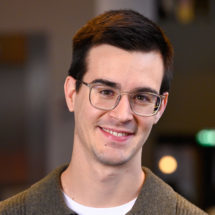
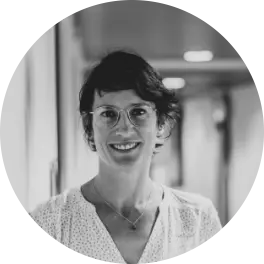
Mustafa Aksu is a Professor at Istanbul University's Faculty of Law, Department of Civil Law. His research spans Civil Law , Intellectual Property Law , Information Law , and EU Legal Harmonization . He has advised 26 theses and published extensively on digital rights, family law, and obligations law. Research Interests: Focus on AI and law, copyright exhaustion in digital markets, EU-Turkey legal alignment, domain name regulation, and protection of computer programs. Publications: Recent works include AI's legal frameworks (2023), medical informatics law (2021), and digital exhaustion doctrine (2016). His research emphasizes cross-border IP enforcement and EU court precedents. Contact: Email aksum@istanbul.edu.tr | Office: Hukuk Fakültesi Binası, İkinci Kat, Oda No: 38, Beyazıt, Istanbul, Turkey.
Prof. Dr. Wolfgang Lutz is a Full Professor and Head of the Department of Clinical Psychology and Psychotherapy at the Faculty of Psychology, University of Trier, Germany. He also serves as Director of the Outpatient Clinic and Postgraduate Clinical Training. Additionally, he holds an Adjunct Professor position at the University of Western Australia and is a Fellow of the Association for Psychological Science (APS). Dr. Lutz's research focuses on advancing clinical psychology and psychotherapy through precision mental health care, treatment personalization, and feedback-informed psychological therapy. His work emphasizes using data-driven approaches to optimize treatment outcomes, with particular attention to depression, anxiety disorders, and PTSD. He has pioneered the development of the Trier Treatment Navigator (TTN), a system for feedback-informed treatment that helps match patients to the most effective therapeutic approaches. His recent publications reveal a strong emphasis on integrating technology and artificial intelligence into psychotherapy research and practice. This includes developing algorithms for personalized therapy, using large language models to analyze therapy sessions, and implementing routine outcome monitoring systems. His research shows how temporal dynamics in therapy processes affect outcomes and how clinical microskills can predict therapeutic alliance and success. Fellow of the Association for Psychological Science (APS) Editor of Psychotherapy Research He leads initiatives to develop a European Psychotherapy Consortium (EPoC) to standardize outcome measurement across countries and promote cooperation in psychotherapy research. His laboratory focuses on precision mental health care, developing tools for treatment personalization, and investigating the mechanisms of change in psychotherapy.
Prof. Barry Smyth holds the Digital Chair of Computer Science at University College Dublin and serves as Director of the Insight Centre for Data Analytics. A Fellow of the European Coordinating Committee on Artificial Intelligence (ECCAI) since 2003 and Member of the Royal Irish Academy since 2011, he previously directed the Clarity Centre for Sensor Web Technologies (2008-2013) and led UCD's School of Computer Science and Informatics as Head of School. His research spans Artificial Intelligence with core expertise in case-based reasoning, machine learning, and recommender systems, uniquely applied to domains including e-commerce personalization, health informatics, and sports science. Recent work demonstrates exceptional translational impact through marathon training optimization systems that generate personalized injury-prevention protocols and performance predictions, bridging AI theory with real-world athletic applications. Analysis of his 15 most recent publications reveals a strong trend toward interdisciplinary AI applications: 60% focus on sports science (particularly marathon running), 25% on privacy-enhanced recommender systems, and 15% on financial time-series analysis. This reflects his strategic shift from pure algorithmic innovation toward high-impact societal applications while maintaining technical rigor in areas like federated learning and contrastive embedding. Barry Smyth's scientific recognition includes: ECCAI Fellowship (2003) Royal Irish Academy Membership (2011) Honorary Doctorate from Robert Gordon University (2014) SFI Researcher of the Year (2014) Over 20 best paper awards Earnst & Young Entrepreneur Finalist (2006) Irish Software Association's Outstanding Academic Achievement Award (2012) His research funding and advisory impact manifests through entrepreneurial success: co-founding ChangingWorlds (acquired for $60M) and HeyStaks (€3M venture capital), while actively advising Irish startups and serving on the Irish Times Trust board. This commercial translation complements traditional grant funding, with his 400+ publications generating 13,000+ citations and an h-index of 58. Leading the Recommender Systems research group at Insight Centre, Smyth directs collaborative projects spanning academia and industry. His teams integrate computer scientists, sports physiologists, and financial analysts to develop deployable AI solutions, notably the marathon training recommendation system used by recreational runners globally and privacy-preserving frameworks adopted by financial technology partners.
Jennifer Neville is a Senior Principal Researcher at Microsoft Research Redmond and holds the Samuel Conte Chair Professor of Computer Science and Statistics at Purdue University. With over 100 publications and 10K citations, her research spans data mining, machine learning, and AI algorithms for relational and networked domains including social networks, epidemiology, and web analytics. Education: BS in Computer Science, University of Massachusetts Amherst (2000) MS in Computer Science, University of Massachusetts Amherst (2004) PhD in Computer Science, University of Massachusetts Amherst (2006) Her work focuses on relational learning techniques that exploit connections between entities to enhance pattern discovery. Recent research explores large language models (LLMs), emphasizing alignment with user intent through interaction at scale, while addressing statistical biases from graph structures. Selected scientific awards include the NSF Career Award (2012), ICDM Best Paper (2009), and IEEE’s 10 to Watch in AI (2008). She served on the AAAI Executive Council (2015-2018) and chaired multiple conferences including SIAM Data Mining (2019) and ACM Web Search (2016). Contact: neville@cs.purdue.edu jenneville@microsoft.com
Prof. Ryan Keith Shosted is a full-time tenured Professor at the University of Illinois at Urbana-Champaign , affiliated with the Department of Linguistics , Spanish and Portuguese , American Indian Studies Program , Beckman Institute , Lemann Center for Brazilian Studies , Center for Latin American and Caribbean Studies , and Center for African Studies . He serves as Director of the Program in Translation and Interpreting Studies and leads the Chin-Woo Kim Phonetics Laboratory . Education: Ph.D. , Linguistics, University of California, Berkeley (2006) M.A. , Linguistics, University of California, Berkeley (2003) B.A. , Linguistics, Brigham Young University (2000) Shosted's research focuses on the intersection of phonetics , phonology , and historical linguistics . He pioneered the application of ultrafast dynamic MRI to study the vocal tract's physiological-acoustic mapping in diverse languages, including Hittite cuneiform , Deseret Alphabet , and endangered languages like Q'anjob'al. His work spans speech production modeling , nasalization mechanisms , and cross-linguistic articulatory analysis . The 15 most recent publications demonstrate his leadership in dynamic speech imaging , phonetic-aerodynamic modeling , and historical sound change analysis . Key trends include advanced MRI techniques for speech study, phonetic universals , and historical writing systems as tools for linguistic reconstruction. Scientific Awards: Campus Award for Excellence in Undergraduate Teaching (2021) Dean's Award for Excellence in Undergraduate Teaching (2021) Arnold O. Beckman Award (2009, 2010) Jacob K. Javits Fellowship (2001-2005) Shosted's grant portfolio includes NSF funding for nasalization research (BCS-1651197, BCS-1121780) and NIH collaboration (1R01DE027989-01A1) on cleft palate speech. He has directed 12 graduate students and taught courses ranging from Hittite language to quantitative phonetic methods . The Chin-Woo Kim Phonetics Laboratory , under his directorship since 2007, expanded in 2010 to include articulatory phonetics facilities with EPG, ultrasound, and MRI analysis capabilities. He continues to lead Beckman Institute collaborations in speech imaging technology.
Vidar Hepsø is a Professor at the Department of Computer Technology and Informatics, Faculty of Information Technology and Electrical Engineering, Norwegian University of Science and Technology (NTNU). His work bridges anthropology of science and technology with practical challenges in digitalization, energy transition, and remote operations. Research focuses on digital infrastructures, socio-technical systems, and human factors in oil and gas industries Active in NTNU Applied Information Technology and NTNU Energy Transition Initiative Publications emphasize open-source ecosystems, autonomous systems, and environmental monitoring His scholarly output spans computer-supported collaborative work, IT infrastructure governance, and risk-informed anomaly detection in subsea systems. He leads projects connecting digital innovation with offshore wind and petroleum geoscience.
Søren Lundbye-Christensen is an Associate Professor and Biostatistician affiliated with the Clinical Institute at the Faculty of Health Sciences, Aalborg University, and Aalborg University Hospital in Denmark. He specializes in biostatistical support for medical research, with a strong emphasis on cardiovascular and epidemiological studies. His research interests include biostatistics, survival analysis, cohort studies, clinical epidemiology, and statistical modeling in public health. He has contributed to a wide array of healthcare research, particularly in cardiovascular diseases, cancer, maternal health, and infectious diseases. His methodological expertise spans time-to-event analysis, registry-based research, and interval-censored data modeling. The recent publications highlight a strong trend in applying advanced statistical methods to large-scale clinical and population-based datasets. His work often involves collaboration with medical researchers to derive prognostic models, validate clinical databases, and assess public health outcomes. Key themes include cardiovascular risk, fertility, cancer biomarkers, and implementation of medical training programs. Scientific Contributions and Recognition: Published over 320 research articles and datasets. Active contributor to methodological advancements in biostatistics. Regular peer reviewer, including for journals like the R Journal. Public engagement through media appearances on statistics and health. Academic Advising and Grants: Søren has supervised 31 student theses, formally serving as PhD supervisor for 14 theses and as a biostatistical advisor for 19 others, primarily in mathematics and statistics. He has participated in numerous research projects funded through institutional and national grants, including studies on seasonal disease trends, postoperative complications, and metabolic disease prediction. His work often involves interdisciplinary collaboration across medicine, public health, and data science. Labs and Research Teams: He is embedded in collaborative research networks at Aalborg University Hospital and Aalborg University, contributing statistical expertise to clinical research groups. He is involved in projects utilizing Danish national health registries and has contributed to the development and validation of clinical databases. His work supports both hypothesis-driven medical research and methodological innovation in biostatistics.
Paolo Rota is a tenure-track Assistant Professor at the University of Trento, affiliated with the Department of Information Engineering and Computer Science (DISI) and the Center for Mind/Brain Sciences (CIMeC). His research lies at the intersection of computer vision, machine learning, and multimodal AI, with a strong emphasis on vision-language models and activity recognition. His research interests include zero-shot action recognition, temporal action localization, open-world recognition, and person image synthesis. He explores how large multimodal models can be leveraged for practical applications in video analytics and industrial AI, often developing training-free or source-free adaptation methods that improve model generalization. Recent publications show a consistent trend in utilizing large vision-language models (e.g., CLIP, LMMs) for tasks such as image classification, domain adaptation, and action recognition, emphasizing simplicity, zero-shot capabilities, and real-world applicability. His work frequently appears in top venues including CVPR, NeurIPS, ICCV, and ICIAP. He actively mentors PhD students including Benedetta Liberatori, Jiaqi Liu, Yan Shu, Shiyao Xu, and Alessandro Conti, often co-advising with faculty such as Elisa Ricci and Nicu Sebe. He also contributes to teaching, including delivering lectures on machine learning for the MSc in Data Science program. He co-founded Mountain Maps, a startup using AI to enhance outdoor navigation and mountain exploration. His work bridges academic research and practical innovation, aiming to increase the real-world impact of AI systems.
Lukas Engelmann is a Senior Lecturer at the University of Edinburgh , specifically within the Science, Technology and Innovation Studies department under the School of Social and Political Science . His research focuses on the history and sociology of biomedicine , with particular interest in epidemiological reasoning , visual cultures of disease , digital epidemiology , and decolonial approaches to medical history . The Epidemy Lab , which he founded, explores the historical development of epidemiology and its contemporary influence on data-driven public health and pandemic policy-making . Engelmann's work has been funded by prestigious grants including an ERC Starting Grant (2021-2025) for his research on the history of epidemiological reasoning, and support from the Wellcome Trust for projects examining the social dimensions of digital health . His book 'Mapping AIDS' (2018) established him as a leading scholar in medical visualization , while 'Sulphuric Utopias' (2020) with Christos Lynteris explores the technological history of maritime sanitation and its political implications. Recent publications emphasize the visual and data practices that have shaped epidemiology, including works on epidemic modeling during the COVID-19 pandemic , the history of plague mapping , and the ethical implications of digital phenotyping . He has also contributed to interdisciplinary discussions on syndemics , co-infection epistemology , and the commercialization of bacteriology in the early 20th century. His scientific contributions have earned recognition through editorial roles in journals like Big Data and Society , and collaborative projects such as 'Working with Diagrams' (2022) which investigates the epistemological role of visual tools in medical knowledge production. Scientific Awards and Funding: ERC Starting Grant (2021-2025) Wellcome Trust Institutional Support Fund British Academy/Leverhulme Small Research Grant Chancellor's Fellowship (University of Edinburgh) 'Sulphuric Utopias' listed in The Guardian's 30 Books to Understand the World (2020)
Pascal Vincent is an Associate Professor at the Department of Computer Science and Operational Research , University of Montreal, and a key member of the Montreal Institute for Learning Algorithms (MILA) . He holds a PhD in Computer Science from the University of Montreal and has been pivotal in advancing machine learning and artificial perception. Education: PhD in Computer Science (University of Montreal, 2003) His research spans machine learning , deep learning , representation learning , and neural networks , focusing on unsupervised methods and geometrically inspired algorithms. He explores how intelligent systems can autonomously build meaningful representations from raw data, driven by principles like the manifold hypothesis . Key projects include generative stochastic networks , contractive autoencoders , and high-dimensional sequence transduction . His work has resulted in 15+ recent publications in top venues like NIPS, ICML, and CVPR. Scientific Awards : Best student-paper award at ICML 2012 Honorable mention at NIPS 2011 Funded by FCI, FRQNT, CRSNG, CIFAR, and IBM Pascal has supervised 15+ doctoral and Master’s students , including Florian Bordes, Tom Bosc, and Nicolas Boulanger-Lewandowski, across topics like representation learning and generative models . He is also a co-founder of the UNIQUE (Union Neurosciences & Intelligence Artificielle Québec) research consortium.
Dr. Asier Moneva is a Postdoctoral Researcher at the Netherlands Institute for the Study of Crime and Law Enforcement (NSCR) and The Hague University of Applied Sciences , specializing in cybercrime , environmental criminology , and situational crime prevention . His work focuses on offender decision-making in cyberspace, cybercrime victimization patterns, and the application of data science to crime analysis. Education : PhD in Criminology (2020), Master in Crime Analysis and Prevention (cum laude, 2017) from Miguel Hernández University. Current Role : Analyzing cybercrime patterns through environmental criminology frameworks and data science methodologies. Moneva's research examines longitudinal offending patterns in cybercrime, particularly through analyses of web defacement archives ( Zone-H data) and hacker behavior. His studies reveal extreme concentration of cybercrime among chronic offenders, with 2.9% of hackers responsible for 68.5% of defacements. He also investigates repeat victimization dynamics in digital environments and the effectiveness of warning banners as deterrents. Recent publications focus on ransomware payment decisions by SMEs, stolen data markets on Telegram, and the intersection of familial relationships with cybercrime involvement. His work combines quasi-experimental designs , crime scripting , and conjunctive analysis to develop prevention strategies.
Murali Mani is a Professor in the Department of Computer Science, Engineering, and Physics at the College of Innovation and Technology, University of Michigan-Flint. He is actively involved in teaching courses such as Database Design (CSC 384, CSC 584) and Independent Graduate Study in Computer Science (CSC 591), and serves as Principal Investigator on multiple research grants focused on computing education and data science. His research interests span database systems, data provenance, generative AI for data augmentation, computing education, and the societal impact of technology . He has developed educational tools including epidemiology calculators and market basket analysis modules to support interdisciplinary learning. His work emphasizes integrating computing skills across disciplines such as health sciences and management. The 15 most recent scholarly contributions reflect a strong focus on data management, AI-augmented data curation, educational technology, and the cognitive aspects of learning programming. These publications appear in venues such as VLDB, IEEE FIE, and ACM conferences, with several under review or in preparation for top-tier journals like Communications of the ACM and the VLDB Journal. Scientific Awards: No awards explicitly mentioned in the provided text. Advising and Grants: Murali Mani actively mentors students through independent graduate studies and collaborative research projects. He has secured funding from the National Science Foundation (SGER grant on provenance metadata) and internal university sources, including the CIT/CHS Joint Grant and the Office of Research at UM-Flint, supporting projects on civic literacy, computational skills integration, and AI for social science data archiving. Labs and Teams: While no formal lab name is mentioned, Murali Mani leads a research group focused on data systems and computing education, collaborating with colleagues across departments and institutions. He contributes to initiatives such as the Michigan Institute for Data & AI in Society (MIDAS) and the Academic Data Science Alliance (ADSA), and has presented at conferences including IASSIST, FIE, and ICCTAC.
Elise Lavoué is a full Professor in Computer Science at iaelyon School of Management, Jean Moulin Lyon 3 University, and a key researcher at the LIRIS laboratory (CNRS). She leads the SICAL research team and holds leadership roles including Editor-in-Chief of the STICEF journal, member of Labex ASLAN’s management committee, and member of the University of Lyon’s Research Ethics Evaluation Committee (CER-UdL). She is also affiliated with the ATIEF association. Her research focuses on enhancing motivation and engagement in digital learning environments through adaptive gamification, learning analytics, and human-computer interaction. She explores how tailored game elements, emotional awareness tools, and immersive technologies like virtual reality can support self-regulated learning, critical thinking, and skill development in complex digital contexts. Her recent publications span top journals such as IEEE Transactions on Learning Technologies, International Journal of Human-Computer Studies, Computers & Education, and CHI PLAY. These works reflect a strong trend in adaptive and personalized learning technologies, emotion-aware systems, and immersive training environments, particularly in educational and professional settings. Honorable Mention Award at ACM CHI PLAY 2019 (top 4%) Best Industrial Paper award at CSEDU 2020 Elise Lavoué actively supervises PhD students and post-doctoral researchers and leads multiple funded projects including LudiMoodle+, RENFORCE, Lex.gaMe, BODEGA, and Emoviz. These projects involve collaborations with institutions across France and focus on gamification, VR training, emotional dashboards, and vocabulary acquisition. She has secured funding from ANR, Labex ASLAN, CNRS, and other national bodies. Her work emphasizes interdisciplinary collaboration between computer science, education, and social sciences. She is involved in several research teams and labs, primarily the SICAL team within the LIRIS laboratory, a major interdisciplinary research unit in computer science, images, and information systems. Her projects often involve industry partners such as SpeakPlus and Woonoz, and she contributes to both scientific advancement and practical educational innovation.
Thomas Schlag is Professor of Practical Theology at the University of Zurich , with research foci in religious education, church theory, and pastoral theology . He directs the university-wide research focus "Digital Religion(s): Communication, Interaction and Transformation in the Digital Society" , exploring the intersection of theology and digital culture. His career includes roles as Chairman of the Center for Church Development (ZKE) and Dean of the Faculty of Theology (2014–2016). Key Research Areas : Digital religion, public theology, interreligious education, confirmation work, church development, and socio-political theology. Academic Leadership : Directed international studies on confirmation work, co-edited interdisciplinary theological compendiums, and contributed to debates on state religious education and digital ethics. Recent Publications (2024–2025) examine digital media in religious education, Swiss church reform, theological responses to polarization, and interfaith educational models. His "Digital Religion(s)" program analyzes church-state-civil society dynamics in digital societies. He teaches courses on existential religious education , digital transformation , and ecclesiological-practical semesters . Collaborations include the European Network for Confirmation Work , International Academy of Practical Theology , and projects with Swiss and international theological institutions. His work bridges digital innovation , democratic education , and pastoral care in virtual environments .
Dr. Chiara Bertelli is a Lecturer in Biosciences at Swansea University within the Faculty of Science and Engineering, School of Biosciences, Geography and Physics. With over 15 years of experience in coastal and marine ecological surveys, she specializes in seagrass ecology and restoration, marine conservation, and habitat suitability modeling. Dr. Bertelli has extensive field experience including boat-based surveys, SCUBA diving, and snorkeling in both temperate and tropical environments. She is currently completing her PhD part-time focusing on environmental drivers of change in seagrass meadows in the UK and Brazil. Her educational background includes advanced training in marine biology with specialization in ecological survey techniques and data analysis using R and Primer. Her primary research focuses on seagrass ecology as nature-based solutions for climate change. She develops habitat suitability models to inform optimal locations for seagrass restoration, with applications in carbon sequestration (blue carbon) and marine biodiversity enhancement. Her work aligns with UN Sustainable Development Goals 13 (Climate Action) and 14 (Life Below Water). Analysis of Dr. Bertelli's recent publications (2020-2025) reveals a strong emphasis on practical applications of seagrass research to inform restoration efforts. Her work spans habitat suitability modeling, environmental stress responses, nutrient dynamics, and decision-support tool development. A significant portion addresses seed-based restoration techniques, ecosystem services, and the socio-ecological dimensions of marine conservation. Dr. Bertelli actively collaborates with external organizations including Project Seagrass, Sky Ocean Rescue, WWF, Natural England, and the National Oceanographic Centre. Her current ReSOW project aims to develop the CEEDS (Coastal Ecosystem Enhancement Decision Support) tool, an open-source platform to guide seagrass restoration practitioners. As an educator, Dr. Bertelli teaches several field-based marine biology courses including BIO260 Marine Biology Field Course, BIO327 Tropical Marine Ecology Field Course, and BIO346 Professional Skills in Marine Biology. Her teaching emphasizes practical, field-based learning and professional skill development for marine biologists, with a focus on survey techniques, data analysis, and environmental impact assessment. Dr. Bertelli is actively involved in research teams focused on marine ecosystem restoration and coastal management. Her work bridges academic research with practical conservation applications, working closely with government agencies, NGOs, and international research partners to translate scientific findings into actionable conservation strategies.