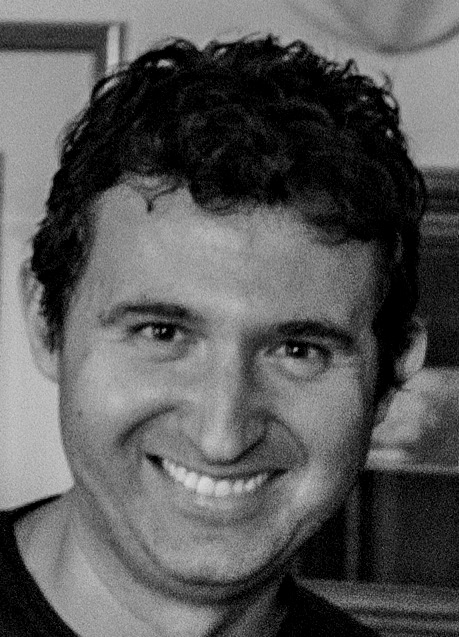
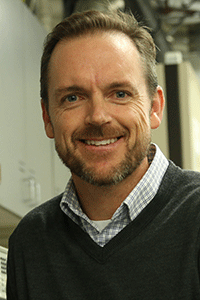
Mark Hebblewhite is a Professor in Ungulate Ecology at the Wildlife Biology Program, University of Montana. His research integrates ecological theory with applied wildlife management, focusing on species like elk, wolves, and grizzly bears. Institution: University of Montana Academic Rank: Professor Research Interests span: Wildlife-habitat interactions Predator-prey dynamics Conservation of endangered species Remote sensing for forest and wildlife monitoring Climate change impacts on ecosystems Recent Publications emphasize: Multi-scale movement ecology Remote sensing integration for forest inventory Anthropogenic effects on wildlife behavior Fire ecology and post-disturbance recovery LiDAR and satellite-based vegetation mapping Collaborations include researchers from the University of Alberta, University of British Columbia, Colorado State University, and the Wildlife Conservation Society.
Martin Mayer serves as Associate Professor at the University of Inland Norway within the Faculty of Applied Ecology, Agricultural Sciences and Biotechnology and the Department of Forestry and Outback Studies. Based at the Evenstad study location, his research focuses on large mammal ecology in human-dominated landscapes across Scandinavia and Europe. His primary research interests center on Wildlife Ecology and Large Mammal Conservation , with particular emphasis on human-wildlife conflict resolution, road ecology, and carnivore management. Mayer investigates how species like moose, deer, and beavers adapt to anthropogenic landscapes through habitat selection, movement patterns, and population dynamics. His work integrates cutting-edge methodologies including GPS telemetry, drone surveillance, and citizen science data to address conservation challenges in agricultural and urban settings. Analysis of Mayer's recent publications reveals strong trends in using roadkill data for population monitoring, examining spatial constraints on wildlife movement, and developing mitigation strategies for human-wildlife conflicts. His research increasingly incorporates cross-border European perspectives on wildlife management while maintaining a strong foundation in Scandinavian field ecology. Mayer actively contributes to the LARGE research group (ecology of large animals), which conducts field studies on ungulate behavior, predator-prey dynamics, and landscape-scale conservation planning in Norway's boreal ecosystems.
Thad Starner is a Professor in the College of Computing at Georgia Institute of Technology and Technical Lead/Manager on Google's Glass. He directs the Contextual Computing Group (CCG), co-founded the Animal Computer Interaction Lab, and contributes to Georgia Tech's Ubicomp Group and Brainlab. A wearable computing pioneer since 1993, he has over 500 publications and 80 issued U.S. patents. Coined 'augmented reality' in 1990 Developed CopyCat for ASL learning in deaf children Invented Passive Haptic Learning for skill acquisition His research spans wearable interfaces for Deaf-hearing communication, dolphin interaction systems (CHAT), dog-handler communication (FIDO), and brain-computer interfaces for ALS patients. Current projects focus on optical aging simulation, XR input methods, and animal behavior telemetry. Recent publications (2023-2025) explore AR display ergonomics, AI-augmented reasoning, sign language recognition, and animal-computer interaction. His work has been featured in 60 Minutes, BBC, National Geographic, and Time Magazine. CHI Academy (2017) Lemelson-MIT Prize finalist White House Champions of Change finalist He advises graduate students in wearable systems and teaches AI and prototyping courses. His lab developed the Perceptive Workbench for gesture tracking and created early Eigenfaces research for face recognition.
Gurjot Singh is a Research Fellow at the Department of Computer and Information Science (IDA) at Linköping University, Sweden. His research focuses on cybersecurity in aviation systems, next-generation communication networks, and industrial IoT security. He collaborates with prominent researchers like Andrei Gurtov and Suleman Khan, contributing to projects such as SEC-AIRSPACE and Post Quantum Secure Handover Mechanisms. His work spans vulnerability assessments, secure protocol design, and post-quantum cryptography applications. Education details are not explicitly stated, but his research aligns with advanced cybersecurity and network engineering domains. Key research interests include aviation cyber risk assessment, secure data link communications, and privacy-preserving authentication mechanisms for IoT and industrial environments. Publications emphasize cybersecurity challenges in aviation, industrial networks, and IoT, with recent work addressing quantum-resistant protocols and drone remote identification security. Collaborations include contributions to conferences like NordSec and AIAA DATC. He is affiliated with the cybersecurity lab at LiU, supporting educational programs like Digital4Business, which integrates AI and cybersecurity expertise. His role in the Database and Information Techniques (ADIT) division highlights involvement in interdisciplinary research groups.
Angelo Cervone is a Professor at Delft University of Technology's Department of Astrodynamics & Space Missions within the Faculty of Aerospace Engineering. His research focuses on advanced propulsion systems, CubeSat technology, additive manufacturing for space applications, and space systems design. He leads projects like LUMIO, a CubeSat mission to monitor lunar meteoroid impacts, and has contributed to the development of green propellants and smart composite structures with embedded sensors. His work integrates cutting-edge manufacturing techniques like laser powder directed energy deposition with propulsion system optimization, emphasizing sustainable and robust space technologies. Cervone has authored over 130 publications and edited the book Adaptive On- and Off-Earth Environments , reflecting his expertise in off-world infrastructure and robotic production systems. He received the Rhizome Award (2021) for advancing autarkic systems in off-Earth habitat development. Key Projects: LUMIO CubeSat mission, Rhizome habitat system development, smart propellant tank design Research Themes: CubeSat propulsion, lunar exploration, additive manufacturing for space, in-situ resource utilization His articles highlight advancements in micro-thrusters, structural health monitoring via fiber optics, and autonomous navigation systems for deep-space CubeSats. Cervone collaborates globally on missions requiring innovative propulsion architectures and materials science breakthroughs.
Anja Skrivervik is a Full Professor at École Polytechnique Fédérale de Lausanne (EPFL), holding multiple key academic positions across the institution. She serves as a Full Professor in the School of Engineering (STI) within the Electromagnetics and Antennas group, as Director of the Electrical Engineering Doctoral Program, and as a Full Professor in multiple teaching units including EDEE, SEL, and EDMI. Her extensive institutional affiliations demonstrate her significant leadership role within EPFL's engineering and educational frameworks. Professor Skrivervik's research spans multiple cutting-edge domains in electromagnetic engineering with a particular focus on antenna design for specialized applications. Her work prominently features implantable medical devices, where she develops antennas and wireless power transfer systems for deep-body bioelectronics. She has made significant contributions to mm-Wave technology, particularly in multibeam systems for 5G applications and wireless power transfer. Her research also encompasses tissue phantom development for electromagnetic characterization, with recent work on biodegradable alternatives to traditional materials. The interdisciplinary nature of her work bridges electrical engineering, biomedical applications, and materials science. An analysis of her recent publications (2023-2025) reveals a consistent research trajectory focused on solving practical challenges in antenna design for constrained environments. Her work shows particular strength in optimizing antenna performance for implantable medical devices, where size, efficiency, and biocompatibility present unique challenges. She has developed novel approaches to beamsteering, mutual coupling reduction, and RF radiation modeling specifically tailored for medical applications. Her contributions to tissue phantom development represent an important methodological advancement for testing and validating implantable devices. As Director of the Electrical Engineering Doctoral Program and through her multiple professorial appointments, Professor Skrivervik plays a central role in shaping graduate education at EPFL. Her leadership extends to serving on the Doctoral Commission, where she helps set standards and policies for doctoral education across the institution. While specific grant information isn't detailed in the available materials, her extensive publication record across top journals and conferences suggests successful funding of her research activities. Her work appears to be conducted within EPFL's Electromagnetics and Antennas group (SCI STI AS), which likely houses specialized laboratories for antenna measurement, electromagnetic simulation, and biomedical device testing. The focus on tissue phantoms and implantable devices suggests dedicated facilities for biomedical electromagnetic testing, while her mm-Wave and 5G research indicates capabilities in high-frequency measurement and characterization.
Jiafeng (Harvest) Xie is an Assistant Professor in the Department of Electrical and Computer Engineering at Villanova University, where he directs the Security and Cryptography (SAC) Lab. He holds a Ph.D. in Electrical Engineering from the University of Pittsburgh and has prior faculty experience at Wright State University. His research focuses on cryptographic engineering, post-quantum cryptography, hardware security, and digital design for telemetry systems. Education includes a Ph.D. from University of Pittsburgh (2013-2014), M.E. from Central South University (2007-2010), and B.E. from Yanshan University (2002-2006). He has received prestigious awards like the 2024 IEEE Philadelphia Engineer of the Year Award and the 2023 Art Ryan Award. His work spans over 66 peer-reviewed publications, with a focus on hardware acceleration for post-quantum cryptographic systems. Research interests include post-quantum cryptographic engineering, fully homomorphic encryption, fault detection methodologies, and digitalization of aeronautical telemetry systems. His grants include NSF SaTC and NIST-funded projects. Teaching includes courses like Embedded Systems and Post-Quantum Computing . Current advisees include Ph.D. students Pengzhou He, Tianyou Bao, and Yazheng Tu, along with several M.S. and undergraduate researchers. The SAC Lab collaborates with AFRL and explores novel cryptographic hardware designs, with recent breakthroughs in compact accelerators for lattice-based cryptography and approximate homomorphic encryption. His work emphasizes algorithm-architecture co-design for security and efficiency in emerging computing systems.
Brennan Phillips is an Associate Professor in the Department of Ocean Engineering at the University of Rhode Island . His work focuses on robotics , oceanographic instrumentation , and deep-sea biological exploration , with particular emphasis on bioluminescence , chemosynthetic environments , and soft robotics for marine research. Education : PhD in Oceanography (University of Rhode Island, 2016), MS in Oceanography (University of Connecticut, 2007), BS in Ocean Engineering (University of Rhode Island, 2004) Phillips leads the Undersea Robotics & Imaging Laboratory , which develops hardware-centric solutions for deep-sea exploration. The lab specializes in soft robotics , additive manufacturing , and imaging systems for studying delicate marine organisms. His recent publications span deep-sea coral propagation , 3D printing of pressure vessels , and soft robotic sampling tools , reflecting his focus on innovative marine technology and ecosystem observation . Collaborative work explores hydrothermal vent genomics and twilight zone shark ecology .
Professor Francois Ladouceur is a distinguished academic at the University of New South Wales (UNSW), where he serves in the Faculty of Engineering, specifically within the School of Electrical Engineering and Telecommunications. With a career spanning over three decades, Professor Ladouceur has established himself as a leading expert in photonics, optical engineering, and neural interfaces. His educational background includes: Ph.D. in Optical Communication from The Australian National University (1992) Masters in Solid State Physics from École Polytechnique, Montréal, Canada (1987) B. Eng. in Engineering Physics from École Polytechnique, Montréal, Canada (1985) Professor Ladouceur's research spans several cutting-edge areas in photonics and optical engineering. His work focuses on integrated optics, silica and diamond-based photonics, optical sensing networks, and photonics-based brain/machine interfaces. He has made significant contributions to both fundamental waveguide theory and applied integrated optics, introducing innovative approaches to waveguide path design that have improved the size and ease of design of integrated optics devices. His recent work has particularly emphasized the development of liquid crystal-based optical electrodes for neural interfacing and brain/machine interfaces. Analysis of his recent publications reveals a strong trend toward biomedical applications of photonics, particularly in neural interfaces and optrode technology. His research has evolved from fundamental optical engineering to practical applications in healthcare, with a focus on developing novel optical sensing technologies for electrophysiological measurements. The interdisciplinary nature of his work combines optical engineering, materials science, and biomedical engineering to create innovative solutions for neural interfacing. Professor Ladouceur has secured significant research funding through multiple prestigious grants: ARC Discovery (DP200102825): "A Multi-Optrode Array for Closed-Loop Bionics" ($495k) NHMRC Ideas Grant (APP2002282): "Re-engineering the Future of Electrophysiological Measurements" ($732k) ARC Discovery 2016 (DP160104625): "Design of an optrode for next generation brain-machine interfaces" ($457.6k) CRC Project 2016: "High performance optical telemetry system for ocean monitoring" ($1,014,320) US Office of Naval Research: "Multi-Optrode Array for Neural Interfacing" (US$360,000) Professor Ladouceur has extensive experience in translating research into practical applications, having founded Bandwidth Foundry Pty Ltd after raising approximately $20 million from private and public sources. His work bridges the gap between academic research and commercial applications, with a particular focus on developing novel hybrid opto-electronics devices from initial design through to commercial realization. He collaborates extensively with researchers across disciplines, particularly with Professor Nigel Lovell and other colleagues in biomedical engineering. His laboratory focuses on developing optical technologies for neural interfaces, with current projects including multi-optrode arrays for brain-machine interfaces, optical telemetry systems for various sensing applications, and diamond-based photonic structures. The research group maintains strong connections with industry partners and defense organizations, applying photonics solutions to real-world problems in healthcare, mining safety, and ocean monitoring.
Wout Joseph is a Professor in the domain of Experimental Characterization of wireless communication systems at Ghent University (Belgium), where he has been working since October 2009. He is also an IMEC Principal Investigator since 2017. His research is conducted within the wireless, acoustics, environment & expert systems (WAVES) research unit at the Department of Information Technology (INTEC). Dr. Joseph was born in Ostend, Belgium on October 21, 1977. He received his M.Sc. degree in electrical engineering from Ghent University in July 2000. From September 2000 to March 2005 he was a research assistant at the Department of Information Technology (INTEC), where his scientific work focused on electromagnetic exposure assessment around base stations for mobile communications related to health effects. This work led to his Ph.D. degree in March 2005. Professor Joseph's research expertise spans multiple domains within wireless communications and bioelectromagnetics. His primary research interests include electromagnetic field exposure assessment, in-body electromagnetic field modeling, electromagnetic medical applications, propagation for wireless communication systems, IoT, antennas and calibration. He also specializes in wireless performance analysis, industry 4.0 applications, wireless localization, and Quality of Experience metrics. His work is particularly notable for its focus on dosimetric studies in the radiofrequency range, where his research is ranked first in number of peer-reviewed studies. His research has practical applications in wireless network planning, occupational safety, and public health policy related to electromagnetic fields. His extensive publication record (over 886 publications with an h-index of 45 in ISI Web of Science and 66 in Google Scholar) demonstrates a clear trajectory from fundamental electromagnetic field measurements to applied research in industrial wireless networks and bioelectromagnetic applications. Recent work shows a strong emphasis on 5G exposure assessment across multiple European countries, millimeter-wave channel modeling, and the application of machine learning techniques to exposure assessment and wireless localization. EBEA council board member (2015-2018) EBEA board member at large (2019) Bioelectromagnetics Society board member (2022) Bioelectromagnetics Society board member (2024) 24 research awards Professor Joseph leads significant research efforts in electromagnetic field exposure assessment, with particular emphasis on developing measurement methodologies and computational models for real-world exposure scenarios. His work bridges theoretical electromagnetic modeling with practical applications in wireless communications and bioelectromagnetics. His research group within the WAVES unit is highly active in both theoretical and experimental aspects of wireless communications and bioelectromagnetics, with current projects focusing on 5G exposure assessment across Europe, millimeter-wave channel modeling for data centers and industrial environments, and the development of novel exposure assessment methodologies using advanced signal processing and machine learning techniques.
Nathan Sturtevant is a Professor at the University of Alberta's Department of Computing Science, an Amii Fellow, and Canada CIFAR Chair. His research spans heuristic and combinatorial search problems, with applications in game AI and pathfinding algorithms. He collaborates with the games industry to implement his research in commercial products. Dr. Sturtevant's research explores search algorithms for single and multiple agents, covering areas such as bidirectional search, meta-learning for game theory, procedural content generation, and multi-agent pathfinding. His work integrates machine learning techniques with classical search algorithms to solve complex problems in game environments. Recent publications demonstrate innovations in search optimization, including novel frameworks for suboptimal bidirectional search, new puzzle difficulty metrics, and applications of transformer models to card game planning. His FarmQuest player telemetry dataset provides resources for studying player behavior in farming simulations.
Luca Sterpone is a Full Professor at the Department of Control and Computer Science (DAUIN), Politecnico di Torino. He serves as Head of the Control and Computer Engineering Department (2023-2027), coordinates the Aerospace and Safety Computing Lab, and is a member of the Academic Senate and Power Electronics Innovation Center (PEIC). His research spans reconfigurable computing, fault tolerance, and radiation effects analysis in electronic systems. Professor since 2021 Department Head (DAUIN) since 2023 Coordinates international collaborations with ESA, AMD Xilinx, NVIDIA, and Thales Alenia Space Develops radiation-hardened FPGA tools (SETA, VERI-Place, PyXEL) 2007 EDAA Outstanding Dissertation Award and 2005 IEEE Best Paper Award Research Focus : Designing radiation-tolerant systems for aerospace, including fault-tolerant AI accelerators, FPGA reliability, and software-based error mitigation. He investigates soft error propagation in nanoscale circuits and develops tools for radiation sensitivity analysis in VLSI. His work integrates hardware-software co-design for mission-critical applications. Awards : EDAA Outstanding Dissertation Award (2007) IEEE European Test Symposium Best Paper (2005) SMACD Best EDA Tool Award (2018) ARC Best Paper candidate (2018) Teaching : He leads courses in Reconfigurable Computing (PhD level), GPU Programming , and Operating Systems . He has formal responsibility for teaching roles across 9 bachelor's and 7 master's years, and mentors multiple PhD students. Collaborations : Coordinates with the European Space Agency (ESA), University of Bielefeld, Universidad de Sevilla, and industrial partners like AMD Xilinx, NVIDIA, and General Motors. He leads projects such as RESCHIP4EU, VEGAS, and TERRAC for radiation-hardened computing solutions.
Maurizio Ramanzin is a Full Professor at the University of Padova , affiliated with the School of Animal Science and Department of Agronomy, Animals, Food and Natural Resources (DAFNAE) . His research focuses on Agricultural Sustainability , Environmental Impact Assessment , and Precision Livestock Farming . Academic Field : AGR/19 Email : maurizio.ramanzin@unipd.it Address : Agripolis - Viale dell'università, 16 - Legnaro (Padova) – ITALY His work explores the interactions between livestock systems and ecosystem services in mountainous regions, with emphasis on: Grazing Management and biodiversity conservation Life Cycle Assessment (LCA) of dairy and beef systems Climate Change Adaptation in Alpine ungulates Animal Welfare in small-scale farms Technological Tools (GPS, NIRS) for monitoring grazing behavior Key trends in his recent publications include: Quantifying environmental drivers of wolf predation on livestock Developing low-cost biologging systems for dairy cows Analyzing social-ecological trade-offs in mountain agriculture Assessing microbial dynamics in alpine soils
Shad Roundy is an Associate Professor at the University of Utah , holding dual appointments in the Department of Mechanical Engineering and Department of Electrical and Computer Engineering within the College of Engineering . He directs the Integrated Self-Powered Sensing Lab , focusing on energy harvesting, wireless power transfer, and ubiquitous sensing systems. PhD in Mechanical Engineering, University of California, Berkeley (2003) Senior Lecturer, Australian National University (postdoctoral) His research bridges mechanical design , smart materials , and sensor networks , with significant contributions to: Self-powered biomedical implants Wearable health-monitoring devices Underground agricultural sensor networks MEMS sensor development His 15 most recent publications demonstrate interdisciplinary work spanning wireless power transfer for soil sensors, flexoelectric materials, and disease severity assessment via wearables. Articles emphasize energy efficiency , novel transducer designs , and environmental sensor applications . Scientific recognition includes: NSF CAREER Award for magnetoelectric implant powering Associate Editor, Smart Materials and Structures and International Journal of Precision Engineering and Manufacturing-Green Technology Research funded by National Science Foundation , NASA , and industry partners through the ASSIST Engineering Research Center . Publications highlight collaborations across biomedical, agricultural, and wearable technology domains.
Nelson Sepulveda Alancastro is a Professor and Interim Chairperson of Electrical and Computer Engineering (ECE) at Michigan State University's College of Engineering, with a joint appointment in Mechanical Engineering (ME). He holds a Ph.D. (2005) and M.S. (2002) from Michigan State University, and a B.S. (2001) from the University of Puerto Rico-Mayaguez. His research integrates micro/nano sensors, smart materials, and energy harvesting, with applications in biomedical devices, environmental monitoring, and MEMS. Research Focus: Dr. Sepulveda's work centers on ferroelectret nanogenerators, vanadium dioxide-based reconfigurable devices, flexible sensors, and machine learning for sensor data analysis. His lab develops self-powered systems for biomechanical monitoring, invasive species detection, and concussion prediction. Awards and Honors: MSU Withrow Teaching Excellence Award (2018) MSU Withrow Diversity Excellence Award (2018) Michigan State University Teacher-Scholar Award (2015) NSF Career Award (2010-2015) IEEE Senior Member (2011) Students and Team: He advises Ph.D. candidates including Ian González-Afanador, Gerardo Morales-Torres, and Henry Dsouza. His Advanced Microsystems Group (AMG) focuses on interdisciplinary projects spanning materials science, MEMS, and embedded systems.