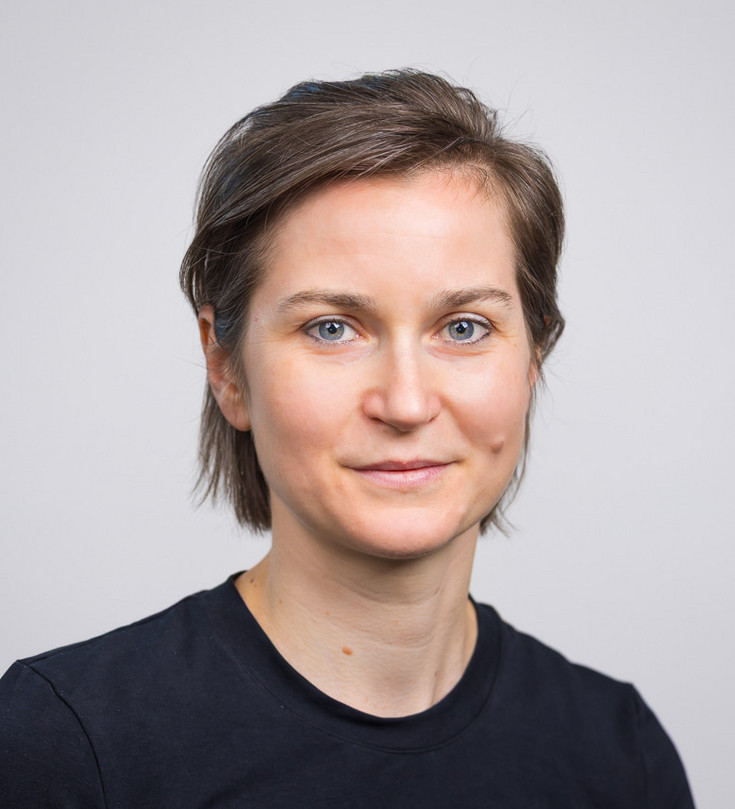
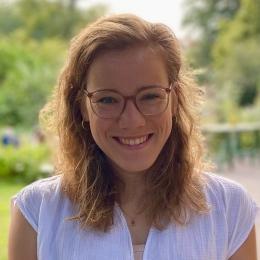
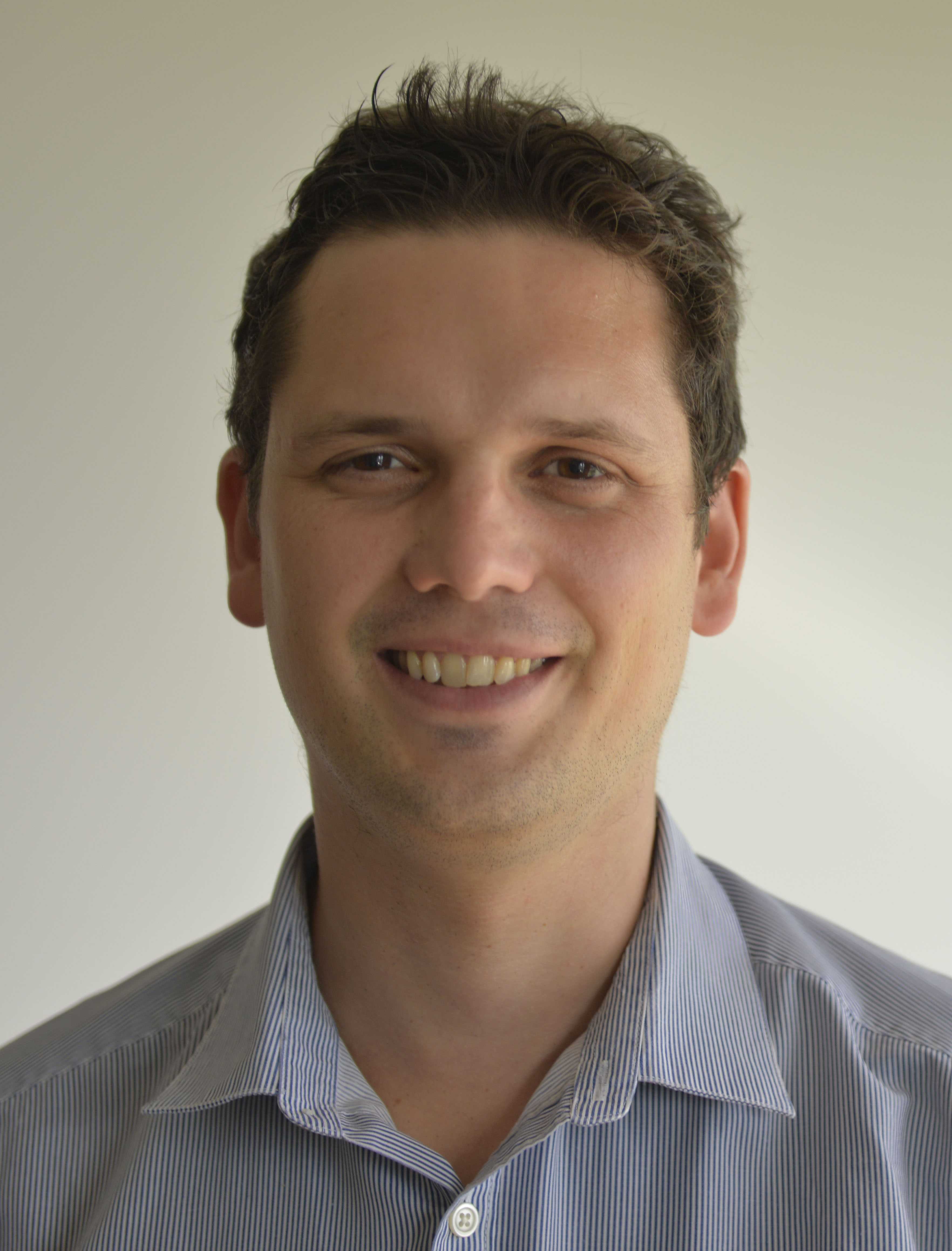
Lisa Kaufmann is a researcher at the Institute for Social Ecology (BOKU University, Vienna), with expertise in socioeconomic metabolism , sustainable food systems , and circular economy . She focuses on climate change impacts, land use patterns, and international trade-consumption linkages. Education : M.Sc. in Human and Social Ecology (Alpen-Adria University Klagenfurt, 2016); Dr. rer. soc.oec. (BOKU University, 2025) Her research explores urban sustainability through material stocks as carbon pools, biodiversity footprints, and time-use analysis for climate policy. She led projects analyzing Vienna's biomass metabolism, CO2 footprints, and sustainable land-use strategies. Recent publication trends address: EU trade-biodiversity integration, global land-use data cubes, biomass sourcing governance, and food system transformations. She uses interdisciplinary methods combining biophysical modeling with political ecology theories. She collaborates on European Union-funded initiatives and contributes to policy-relevant research through transdisciplinary frameworks. Her work emphasizes spatially explicit assessments and systemic solutions for urban sustainability challenges.
Johanna Coenen is a postdoctoral researcher at the Department of Political Science, Stockholm University, where she works on a research project examining corporate accountability in global supply chains. Her work focuses on the effectiveness of human rights and environmental due diligence regulations, analyzing the interplay between public and private sustainability governance. Johanna holds a doctoral degree in Political Science from Leuphana University (2023), with a focus on the environmental governance of long-distance interactions (telecoupled systems). She earned her MSc in Political Science with a specialization in Global Environmental Governance from Vrije Universiteit Amsterdam (2018) and a BA in Liberal Arts and Sciences from Maastricht University (2017). Prior to joining Stockholm University in 2024, she worked as a guest researcher at Chalmers University of Technology. Her research interests span environmental governance, telecoupled systems, sustainability governance of global supply chains, and the effectiveness of regulatory frameworks. She examines how public policies and private initiatives interact to address human rights and environmental challenges in global value chains, with particular attention to EU regulations and their implementation. Johanna is actively involved in several research networks. She is a member of the Global Land Programme (GLP) and serves as co-coordinator of its Working Group on "Telecoupling Research Towards Sustainable Transformation of Land Systems." Additionally, she is a research fellow of the Earth System Governance Project and a member of the Swedish Forest, Climate, and Livelihood Research Network (FOCALI). Her current research project investigates the conditions under which EU laws on corporate accountability in global supply chains contribute to improving human rights and environmental situations on the ground. This work is particularly relevant as the EU and its member states have taken a pioneering role in extending binding environmental and social standards to companies' global operations.
Keith W. Hipel is University Professor of Systems Design Engineering at the University of Waterloo, where he serves as Coordinator of the Conflict Analysis Group. He is also Former President of the Academy of Science within the Royal Society of Canada, Senior Fellow of the Centre for International Governance Innovation, and Fellow of the Balsillie School of International Affairs. Hipel's academic journey includes: Doctorate in Civil Engineering (1975), University of Waterloo Master's in Systems Design Engineering (1972), University of Waterloo Bachelor's in Civil Engineering (1970), University of Waterloo Professor Hipel's research centers on developing sophisticated decision-making methodologies for addressing complex interdisciplinary problems at the interface of society, technology, and the environment. His work has pioneered the Graph Model for Conflict Resolution (GMCR), multiple criteria decision analysis, and time series analysis frameworks. These methodologies are systematically applied to critical areas including water resources management, environmental engineering, energy systems, and sustainable development. His recent work has expanded into inverse engineering of decision systems, creating novel connections between conflict resolution and artificial intelligence. Hipel's approach consistently integrates systems thinking with practical applications to solve real-world challenges. An analysis of Hipel's recent publications reveals a strong trajectory toward addressing planetary health challenges through advanced conflict resolution methodologies. His work increasingly focuses on climate change impacts, water resource conflicts, and sustainable development using sophisticated graph model techniques. There is a clear evolution from theoretical foundations to practical applications, with growing emphasis on AI integration through inverse engineering. His publications consistently bridge engineering, environmental science, and social sciences to develop implementable solutions for complex system-of-systems problems. Hipel has received exceptional recognition for his scholarly contributions: Officer of the Order of Canada (highest civilian honor) Foreign Member of the U.S. National Academy of Engineering Japan Society for Promotion of Science Eminent Scientist Award (previously awarded to six Nobel laureates) IEEE SMC Norbert Wiener Award (highest honor in systems engineering) Miroslaw Romanowski Medal and Sir John William Dawson Medal from the Royal Society of Canada Three Honorary Doctorates (France, Hungary, Canada) Professor Hipel has mentored 86 graduate students to completion (37 PhD, 49 Master's), with each graduate securing successful careers in industry, government, or academia. His research has been supported by numerous grants from NSERC, SSHRC, and international funding agencies, enabling the development of influential decision support systems including GMCR II (used by 95 groups in 28 countries) and the McLeod-Hipel Time Series Package. He founded and chairs the International Conferences on Water Resources and Environment Research (ICWRER) and co-chaired the Expert Panel on Energy Use and Climate Change for the Council of Canadian Academies. As Coordinator of Waterloo's Conflict Analysis Group, Hipel leads a dynamic research team that bridges theoretical advances with practical applications across multiple domains. The group has produced seminal textbooks including 'Time Series Modelling of Water Resources and Environmental Systems' and 'Conflict Resolution Using the Graph Model: Strategic Interactions in Competition and Cooperation.' Their decision support systems have been implemented worldwide for addressing environmental conflicts, water resource management challenges, and complex decision-making scenarios requiring interdisciplinary approaches.
Lisa Jordan Powell is an Associate Professor of Environmental Science and Agriculture at Sweet Briar College, serving as STEM Division Head and Director of the Center for Human and Environmental Sustainability. She holds a B.A. in Mathematics (Harvard), M.S. in Mathematics (Vanderbilt), and M.A./Ph.D. in American Studies and Sustainability (University of Texas at Austin). Her research focuses on human-environment relationships, food systems, policy, and education, with emphasis on sustainability initiatives, agricultural diversification, and community engagement. She leads programs in Sweet Briar’s vineyards, apiary, greenhouse, and forests, and supervises student research teams through summer fellowships. Her interdisciplinary work bridges natural and social sciences, informed by her family’s grain farm in Kentucky and prior research in British Columbia on regional food systems and agri-food technology adoption. Key projects include phenology data collection in vineyards and food literacy education partnerships. She advises students on topics like environmental policy, crop technology, and food tourism, and has contributed to national and international studies on climate vulnerability and cellular agriculture. Dr. Powell’s leadership extends to managing Sweet Briar College Farm, LLC, and advancing the college’s wine and produce businesses. Her teaching spans courses on environmental policy, sustainable agriculture, and natural resource management. She actively collaborates with local communities and institutions to strengthen food systems resilience and environmental stewardship.
Brooke Anne Williams is an Honorary Fellow at the School of the Environment, The University of Queensland. Her research focuses on conservation biology, climate change impacts, and ecosystem management. She holds a PhD in Earth and Environmental Sciences from The University of Queensland (2022). Her work emphasizes biodiversity conservation, particularly in tropical and savannah ecosystems. Key research themes include natural forest regeneration, climate adaptation strategies, and the integration of ecological and socio-economic factors in conservation planning. She has contributed to global initiatives on carbon markets, ecosystem connectivity, and policy frameworks for 'nature-positive' outcomes. Recent studies highlight her expertise in prioritizing restoration efforts in regions like the Atlantic Forest and Colombia, as well as analyzing the structural integrity of tropical forests and coastal ecosystems. Her interdisciplinary approach bridges ecology, policy, and economics to address complex environmental challenges. Education: PhD in Earth and Environmental Sciences (2022), The University of Queensland Labs/Teams: Collaborates with global research networks on biodiversity conservation, including the Tropical Ecosystems and Conservation Group.
Florence Metz is an Associate Professor at RPTU University Kaiserslautern, specializing in comparative public policy, environmental governance, and political networks. Her research focuses on policy design, interdependencies between policy sectors, and sustainable development goals. She holds a PhD from the University of Bern and has conducted post-doctoral research at ETH Zürich and the University of Bern, examining policy transitions in water protection, land-use, and energy sectors. Her academic career includes roles as Assistant Professor at the University of Twente (2020-2022) and post-doctoral researcher positions at ETH Zürich and Swiss institutions. She combines qualitative and quantitative methods, including social network analysis and policy process theories, to address complex environmental challenges. Metz is actively engaged in science communication, winning the 2015 Dance Your PhD Contest with a viral video explaining her research. She collaborates with international organizations like the OECD and contributes to global initiatives such as the Global Land Programme and the European Water Governance Group. Her institutional roles include membership in the German Political Science Association and the ECPR Standing Groups on Environmental Politics and Policy Studies. Her awards include the 2022 Professor De Winter Award for outstanding female scientific talent. Research interests span climate policy, telecoupling in land systems, and sustainability transitions. She teaches courses on environmental policy and network analysis at multiple universities, emphasizing interdisciplinary approaches.
Yue Dou is a Postdoctoral Researcher at the Center for Systems Integration and Sustainability (CSIS) within Michigan State University. Her work focuses on the complex dynamics of telecoupled human and natural systems, with a particular emphasis on sustainability and agent-based modeling. Her educational background includes: Bachelor's degree from Wuhan University (2004-2008) Master's degree from the Chinese Academy of Sciences (2008-2011) Ph.D. from the University of Waterloo (2011-2016) Dr. Dou's research interests center on coupled human-natural systems, leveraging Geographic Information Systems (GIS) and Remote Sensing (RS) for land use modeling. She specializes in agent-based models (ABM) and the CLUE-S model to study sustainability challenges. Her work often addresses telecoupling phenomena, such as the soybean trade between Brazil and China, and the resilience of vulnerable communities like the Caboclo in the Brazilian Amazon delta. Her recent publications reveal a strong trend in applying systems science to global sustainability issues, particularly in forest conservation, biodiversity, and smallholder agriculture. She integrates telecoupling and metacoupling frameworks to analyze complex interactions across distant systems, with a focus on environmental and agricultural outcomes. Dr. Dou has been involved in an NSF-funded project exploring telecoupled human and natural systems. Additionally, she has lectured on Principles of GIS Science at the University of Waterloo, contributing to undergraduate education in geospatial sciences. She is currently constructing an agent-based model to represent the soybean trade between Brazil and China, which serves as a tool for understanding telecoupling interactions and their sustainability impacts. Her work is conducted within the collaborative environment of the Center for Systems Integration and Sustainability.
Dr. Markus Giger is an Associated Senior Research Scientist at the Centre for Development and Environment (CDE) of the University of Bern. His work focuses on global change impacts, sustainable land management, climate adaptation, and land investments. He leads major initiatives like the Land Matrix and contributes to international frameworks such as the UNCCD. Research Interests : - Global environmental and socio-economic changes - Sustainable land use and desertification prevention - Climate change adaptation strategies - Large-scale land acquisitions and agricultural investments - Food security and rural development Key Projects : - Land Matrix Initiative: Global database on land deals - AFGROLAND: Agro-food-energy dynamics in Africa - WOCAT: Knowledge platform on sustainable land management Publications Trends : Recent work analyzes socio-economic, environmental, and pandemic risks linked to land acquisitions. Emphasizes participatory approaches and policy coherence for sustainability. Affiliations : - UNCCD Science-Policy Interface - SDC Agriculture & Food Security Network - Swiss Society for Agricultural Economics
Dr. Sébastien Boillat is a postdoctoral researcher at the Institute of Geography, University of Bern, affiliated with the Labour and Social-Ecological Transitions (LASET) Research Group. His work focuses on agroecology, environmental justice, and telecoupled resource systems, with a regional emphasis on Sub-Saharan Africa and Latin America. He teaches courses on Regional Geography (South America), Challenges in Geography (focusing on telecoupled resource systems), and Sustainable Land Management. His research explores the intersection of global environmental changes, social justice, and local knowledge systems, particularly in contexts of climate adaptation, land governance, and indigenous rights. Notable projects include Governing Telecoupled Natural Resource Systems for Environmental Justice and the Agricultural Climate Resilience to El Niño in sub-Saharan Africa (ACRES). His publications span topics such as land system dynamics, smallholder resilience, and the geopolitics of protected areas. Boillat’s work emphasizes transdisciplinary approaches, integrating traditional ecological knowledge with modern sustainability frameworks. His contributions have been recognized in high-impact journals like Ecology and Society , Landscape Ecology , and Frontiers in Sustainable Food Systems .
Esteve Corbera Elizalde is an ICREA Research Professor at the Institute of Environmental Science and Technology (ICTA-UAB) at Universitat Autònoma de Barcelona, where he conducts research on human-nature relationships and resource governance. His work examines how international policies for biodiversity conservation and climate change mitigation affect land-use systems, institutions, and livelihoods in the global South, with particular focus on Mexico and Latin America. His educational background includes a Ph.D. in Development Studies and a Master's in Renewable Natural Resources and Development from the University of East Anglia, a Postgraduate degree in Environmental Management from Universitat de Barcelona, and a degree in Environmental Sciences from Universitat Autònoma de Barcelona. Corbera Elizalde's research spans environmental governance, ecosystem services, payments for ecosystem services, REDD+, and the political ecology of conservation. His work critically examines the social and ecological outcomes of conservation and climate change policies, with growing attention to decolonial approaches in biodiversity conservation. He has published over 110 peer-reviewed articles and served as associate editor for Ecology and Society . His recent publications reveal a strong focus on evaluating the effectiveness of conservation interventions, particularly payments for ecosystem services programs, with increasing attention to decolonial perspectives in conservation and the politics of biodiversity offsetting. His work bridges empirical field research with theoretical contributions to environmental social science. World's most cited multidisciplinary scientist (Clarivate analytics, 2019-2022) Contributing author to IPCC 5th Assessment Report (2014) Guest editor for 11 special journal issues Corbera Elizalde has supervised 55 research projects and students, and currently leads or participates in multiple research projects including PROPS (focusing on plant disease resilience), SUSTAIN (rural sustainability transitions), and Maria de Maeztu (environmental science institute development). He is affiliated with the Laboratori d'Anàlisi de Sistemes Socio-Ecològics en la Globalització (LASEG), which focuses on ecosystem services, indigenous peoples, and local communities.
Andrés Viña is an Associate Professor at Michigan State University (MSU), affiliated with the Department of Fisheries and Wildlife and the Center for Systems Integration and Sustainability. His work focuses on spatio-temporal vegetation dynamics and their impacts on human and natural systems, leveraging remote sensing technologies. Viña’s research bridges ecological processes with policy interventions, addressing global challenges like biodiversity conservation, climate change adaptation, and sustainable land use. His research interests include landscape dynamics, habitat modeling, and environmental policy, with a focus on tropical regions such as Brazil and China. He explores telecoupled systems—how distant human and environmental actions interconnect—through projects like analyzing soybean trade impacts on Amazon deforestation and climate-driven shifts in the Bering Sea. Viña’s publications often synthesize interdisciplinary approaches, combining field data with satellite imagery to inform conservation strategies. He emphasizes the need for integrated frameworks to tackle tri-sector challenges (biodiversity, climate, food security) and advocates for policies that balance economic demands with ecological preservation. Despite extensive research output, no specific scientific awards are listed, though his contributions to global environmental policy are widely recognized. His advising and grants focus on projects at the nexus of ecology, technology, and governance, though detailed grant information is not provided here. Viña is based at MSU’s Manly Miles Building and maintains an active research group within the College of Agriculture & Natural Resources.
Bill McConnell is an Adjunct Associate Professor in the Department of Geography, Environment, and Spatial Sciences at Michigan State University (MSU). He is affiliated with the Center for Systems Integration and Sustainability (CSIS), focusing on interdisciplinary research at the human-environment interface. McConnell holds a Ph.D. (2000) and M.A. (1993) from Clark University’s Graduate School of Geography and Program in International Development, respectively, along with a B.Sc. (1983) in Natural Resources from UC Berkeley. His research emphasizes sustainability challenges in tropical regions, particularly Madagascar, Africa, China, and Nepal. Key themes include land-use dynamics, environmental governance, telecoupled systems, and agricultural expansion impacts. Recent work examines lemur conservation in Madagascar and global change influences on tropical farming systems. His publications since 2004 reflect sustained engagement with land-change modeling, policy analysis, and complex socioecological systems. Notable contributions include frameworks for integrating human agency in environmental models and evaluating telecoupling impacts. McConnell collaborates with international networks like the International Network of Research on Coupled Human and Natural Systems, emphasizing global-scale environmental problem-solving. His work bridges geospatial analysis with institutional theory to address real-world sustainability challenges.
Dr. Timothy Adams is a PostDoc researcher and academic at the University of Bern's Geographical Institute, part of the Faculty of Spatial Development and Planning. His work focuses on interdisciplinary human geography and gender studies, addressing global resource economies and their local impacts. He specializes in resource governance, environmental justice, and market-based approaches to sustainable land management, with a focus on Africa. Adams' research explores collective tenure arrangements, blockchain in land governance, and the intersection of gender, inequality, and development. Education: PhD in Geography, University of Bern (2020) Studies at University of Maastricht (2010), University of Twente (2012), University of St. Gallen (2014), and University of Konstanz (2016). Research Interests: Critical development studies, agrarian transformation, environmental knowledge governance, formalized collective tenure (FACT), and blockchain applications in land governance. He examines how global capitalist forces reshape rural landscapes, labor relations, and environmental sustainability. Key Projects: Postdoc research on FACT institutions in Sub-Saharan Africa's agriculture and conservation sectors. Investigating blockchain's role in enhancing tenure security and gender equality. Awards: Barbara Lischetti Prize (2020) for gender research excellence. Grants & Advising: Active in international consultancies on resource governance. Has advised on large-scale land investments across Ghana, Tanzania, Malawi, and Burkina Faso. His work emphasizes participatory methodologies and feminist post-colonial approaches. Labs/Teams: Collaborates with the Geographical Institute's research groups on land governance and environmental justice. Engages in interdisciplinary teams addressing Africa's socio-ecological challenges.
Patrick Meyfroidt is a Professor at Université catholique de Louvain (UCLouvain), Belgium, and a Research Associate at F.R.S-FNRS (Belgian National Fund for Scientific Research). He held a visiting professorship at the University of British Columbia (UBC) from August 2022 to July 2023, affiliated with the Liu Institute/SPPGA and the Institute for Resources, Environment and Sustainability (IRES). Education: PhD in Geography (2009), UCLouvain Master's in Sociology, UCLouvain Research Focus: Meyfroidt investigates land system sustainability through themes such as forest transitions, agricultural/forestry frontiers, globalization's impact on land use, and telecoupling theory. He emphasizes supply chain interventions to combat deforestation, particularly in cocoa production in West Africa and emerging land uses in Mozambique/Southern Africa. Key Projects: MIDLAND (ERC Starting Grant): Examines land use frontiers in Southern Africa SUSTAIN-COCOA: Analyzes cocoa supply chains and sustainability in West Africa COUPLED ITN: Investigates telecouplings and sustainability TRASE Initiative: Tracks commodity supply chains for transparency Advising & Grants: Leads major EU/ERC-funded projects, collaborates internationally on sustainability initiatives, and advises on global land use policies. No specific student advisees listed in available texts. Labs/Teams: Affiliated with IRES at UBC during his visit, and coordinates multidisciplinary teams through his ERC and TRASE collaborations.
Dr. Nicolas Roux is a Researcher at the Institute of Social Ecology, Department for Economics and Social Sciences, University of Natural Resources and Life Sciences, Vienna (BOKU). His work focuses on the intersection of environmental economics, sustainable agriculture, and climate change policy. Roux is actively involved in multiple significant research projects including the 2nd Austrian Assessment Report on Climate Change (AAR2), where he serves as Chapter Scientist, and several EU-funded initiatives examining land use, trade, and sustainability metrics. Education Master in Environmental Sciences (M.S.), University of Tokyo (2015-2018), specializing in Agricultural and Environmental Economics, Microeconomics, and Econometrics Double Bachelor in Natural Sciences (B.S.) and Economics (B.S.), University of Paris 6 UPMC & Paris 2 Panthéon-Assas (2011-2014) Roux's research examines the complex relationships between international trade, land use, and environmental sustainability. His work frequently applies biophysical accounting methods like Human Appropriation of Net Primary Production (HANPP) to trace environmental pressures through global supply chains. He investigates how agricultural trade affects ecosystem integrity, how sufficiency approaches could transform EU trade policy, and the carbon implications of wood use systems in Austria. His interdisciplinary approach combines ecological economics with social theory, particularly evident in his work applying Polanyian theory to agricultural system transformation. Analysis of his publication record reveals a consistent focus on developing and applying innovative metrics for sustainability assessment, particularly concerning the environmental impacts of international trade. His work bridges theoretical frameworks with empirical analysis of global supply chains, with increasing attention to policy implications for the European Union. Recent publications emphasize the need for systemic transformation of agricultural and trade systems to address biodiversity loss and climate change. Scientific Awards Best student paper award of the European Society of Ecological Economics (ESEE) - 2022 BOKU Sustainability award nomination (research category) - 2020 High memorial prize from the Graduate School of Arts and Sciences at the University of Tokyo for his Master's Thesis on environmental effort and agricultural trade - 2018 Roux actively contributes to the scientific community through project leadership and collaboration. He serves as a reviewer for prestigious journals including Nature Geoscience, Regional Environmental Change, and Environmental Research Letters. Since 2023, he has been a board member and working group coordinator for Scientists for Future Austria, demonstrating his commitment to science activism and policy engagement. His involvement in numerous international conferences and workshops reflects his growing influence in sustainability science. Roux's research is embedded within several collaborative frameworks, including the Centre for Global Change and Sustainability at BOKU. His work on the COUPLED project and the AAR2 demonstrates his integration into national and international research networks focused on sustainability transformations. His recent presentations at major conferences like the International Degrowth Conference and the European Geosciences Union Assembly highlight his active participation in interdisciplinary scientific discourse.