Dr Paola Moffa Sanchez is an Assistant Professor in the Department of Geography at Durham University , specializing in paleoclimatology and oceanography. She investigates decadal-to-millennial-scale ocean variability and its climate connections through the last millennia, interglacial periods, and deglaciation events. Research Focus : Ocean-climate interactions, proxy reconstructions, high-resolution marine sediment cores Key Regions : North Atlantic, Western Tropical Pacific, Labrador Sea Methodologies : Faunal and geochemical analysis in foraminifera, grain size measurements, chemical sediment composition Her publications reveal expertise in ocean circulation dynamics , climate modeling , and proxy data synthesis , with notable work on the Indo-Pacific Warm Pool and Little Ice Age mechanisms. She supervises PhD student Alena Sakovich and collaborates on global paleotemperature databases. Email : paola.l.moffa-sanchez@durham.ac.uk Contact : +44 (0) 191 33 43504
Atsushi Hamada is an Associate Professor at the Faculty of Sustainable Design, University of Toyama, where he is affiliated with the Department of Earth System Science. He concurrently serves as a Visiting Associate Professor at the Center for Environmental Remote Sensing (CEReS) at Chiba University. His academic career spans multiple institutions and research collaborations focused on atmospheric science and remote sensing. Dr. Hamada's research focuses on several interconnected areas within atmospheric science: Precipitation systems and cloud physics analysis Satellite meteorology and remote sensing techniques Tropical meteorology and extreme rainfall events Global precipitation measurement using spaceborne instruments Climate change impacts on precipitation patterns His publication record demonstrates extensive work with satellite missions including the Global Precipitation Measurement (GPM) and Tropical Rainfall Measuring Mission (TRMM). Recent research emphasizes spectral latent heating retrieval algorithms, drop size distribution analysis, and precipitation mechanisms across diverse geographical regions. His work consistently involves international collaborations with researchers from multiple institutions across Japan and globally. Dr. Hamada has developed significant tools for the meteorological community, including the Equidistant color scale generator (with Inatsu, 2016) and the CTOP (Cloud-Top Height Product) estimated by geostationary satellites. His research bridges theoretical meteorology with practical applications for weather prediction, climate monitoring, and environmental studies. His work on precipitation systems has particular relevance for understanding regional weather patterns around Japan and in tropical regions.
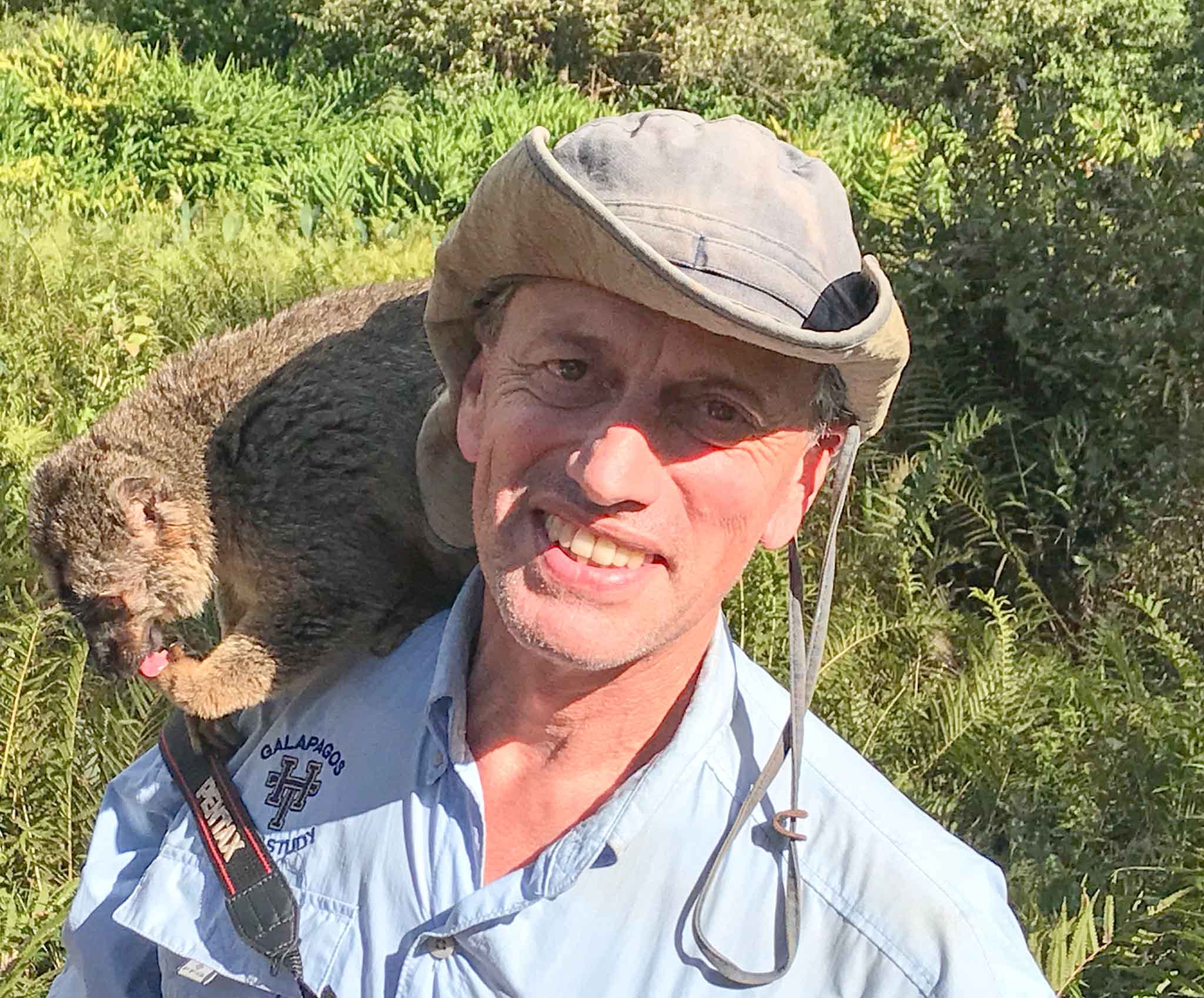
Mark B. Bush is a Professor at Florida Institute of Technology's College of Engineering and Science, Department of Ocean Engineering and Marine Sciences, with over 30 years of experience in tropical biogeography and paleoecology. His research focuses on climate change impacts on Amazonian and Andean ecosystems, analyzing ancient lake sediments to reconstruct past environments and human-nature interactions. University: Florida Institute of Technology School: College of Engineering and Science Department: Ocean Engineering and Marine Sciences Email: mbush@fit.edu Dr. Bush's research integrates fossil pollen, diatoms, and charcoal analysis to study: Pre-Columbian human impacts on Amazonian forests Megafaunal extinction causes and consequences El Niño event history Andean interglacial climate patterns Conservation strategies through paleoecology His recent publications examine Amazonian ecological legacies , Andean climate variations , and pre-Columbian land use , with keywords spanning paleoclimatology, fire ecology, and biomarker analysis. The lab has secured grants from NSF, NOAA, and National Geographic Society. Scientific achievements include: Over 200 peer-reviewed publications Two influential books on tropical paleoecology National Geographic Waitt Grant awardee NSF and NOAA funded research Dr. Bush's mentorship program pairs undergraduates with graduate students, resulting in numerous student publications and co-authorships. The Neotropical Paleoecology Research Group maintains the Paleolab , offering opportunities in drone ecology, AI applications, and sediment analysis. Current team members include postdoctoral researchers Ansis Blaus and Majoi Nascimento, and graduate students Bianca Gomes, Lina Cabrera, Julian Beltran, and Jessica Watson.
Prof. Dr. Stefan Brönnimann serves as a Professor and Unit Leader of Climatology at the Institute of Geography, University of Bern. His extensive research portfolio spans historical climatology, climate dynamics, and atmospheric circulation reconstruction, with particular focus on the past 400 years. He plays a leadership role in major international climate initiatives including the IPCC assessment reports and various climate reanalysis projects. Brönnimann's research centers on reconstructing historical weather and climate patterns through the innovative combination of early instrumental data, proxy records, and climate models. His work examines large-scale climate variability, interannual-to-decadal atmospheric circulation patterns, volcanic eruption effects on climate, and climate-society interactions. His methodologies often involve transforming historical documents into usable climate datasets and applying advanced machine learning techniques to weather reconstruction challenges. Recent publications reveal a strong emphasis on European climate patterns, hydroclimate extremes, and the development of novel datasets and tools for climate research across high-impact journals in climate science, paleoclimatology, and climate informatics. Notable scientific achievements include: Lead author for Chapter 2 of the IPCC Working Group I 5th Assessment Report President of the Commission 'Atmospheric Chemistry and Physics' (ACP) of sc.nat Editorial leadership for multiple prestigious journals including Meteorologische Zeitschrift, Climate of the Past, and Geographica Bernensia Leadership roles at the Oeschger Centre for Climate Change Research Active participation in international initiatives like the Twentieth Century Reanalysis Project and Atmospheric Circulation Reconstructions over the Earth (ACRE) Brönnimann has secured substantial funding through numerous national and international projects including SNF, NCCR Climate, EU FP-7, HORIZON2020, COST, and ERAnet.RUS. He has organized multiple international workshops on weather and climate extremes, atmospheric circulation variability, and historical climate events like the Tambora eruption. His work connects closely with the Oeschger Centre for Climate Change Research at the University of Bern, where he leads Work Package 2 and serves on the Steering Group, demonstrating his significant institutional leadership within Bern's climate research community.
Øyvind Geelmuyden Grøn is a Professor at the University of Oslo , affiliated with the Department of Physics. His research spans General Relativity , Gravitation , and Cosmology , with notable work on the ΛCDM model, cosmic inflation, and the cosmological constant. Education: Dr. Philos in Physics (1990) and Cand. Real in Meteorology (1973) from the University of Oslo His recent publications focus on cosmological tensions, gravitational theory, and interdisciplinary climate-ocean dynamics. Collaborative works with Knut Lehre Seip and Hui Wang explore teleconnections, climate cycles, and CO2-temperature relationships in paleoclimatology. Scientific Honors HM the King's Gold Medal (1988) Illustrated Science Research Award (1988) Oslo University College's Research Prize (2004) Oslo University College's Communication Award (2009) Honorary Member of the Norwegian Astronomical Society (2010) Member of the Royal Norwegian Society of Science (2005–)
Professor Daniel J. Vimont is a leading climate scientist at the University of Wisconsin-Madison, holding the Ned P. Smith Distinguished Chair of Climatology. He is affiliated with the Atmospheric and Oceanic Sciences Department and co-chairs the Environmental Sciences degree program. His research focuses on understanding mechanisms of climate variability and change, interactions between weather and climate, and regional impacts of climate change. He employs observational analyses, climate models, and statistical techniques to study topics like ENSO, tropical Pacific/Atlantic variability, and statistical downscaling for regional climate. Education: PhD from the University of Washington. Research interests include coupled ocean-atmosphere interactions, subseasonal-to-seasonal (S2S) predictability, and the development of statistical models for climate variability. His work emphasizes interdisciplinary approaches in climate impacts, such as co-evolutionary models of group interactions. He has advised numerous graduate students and postdocs, many of whom now hold prominent roles in academia and environmental sectors. Recent publications highlight studies on ENSO dynamics, tropical climate variability, and climate model biases. His group’s work has been featured in Science , Journal of Climate , and Nature Geoscience . He leads the Vimont Climate Research Group, which explores mechanisms of climate variability, weather-climate interactions, and global/regional climate impacts. Scientific awards include the distinguished chair position, recognizing his contributions to climatology. His advising and grants focus on advancing climate science through interdisciplinary collaboration and innovative methodologies.
Craig Ramseyer is an Associate Professor in the Department of Geography at Virginia Tech, within the College of Natural Resources and Environment. He holds a Ph.D. from the University of Georgia (2016) and previously taught at Salisbury University (2016–2019). His research focuses on tropical rainfall dynamics, climate change impacts on drought and flooding, and AI/ML applications in atmospheric sciences. He leads the Ramseyer Climate Lab, emphasizing student-driven research in hydroclimatology and environmental resilience. Education: Ph.D. in Geography, University of Georgia (2016) M.S. in Geography, University of Georgia (2011) B.S. in Geographic Science, James Madison University (2009) Research Interests: Climate modeling, tropical climatology, and hydroclimatic extremes. His work investigates atmospheric rivers, Caribbean drought mechanisms, and climate change effects on ecosystems and agriculture. Recent projects include NOAA-funded studies on Caribbean drought early warning systems and NSF-funded analyses of Puerto Rico’s precipitation variability. Grants and Funding: $1.79M NSF grant (2024–2029): Examines socio-environmental resilience of Caribbean fisheries. $507K NOAA grant (2020–2023): Focuses on Caribbean drought early warning systems. $5,000 NSF Luquillo LTER grant (2017–2018): Studied El Yunque National Forest precipitation variability. Advising: Supervised M.S. students including Julia Finkhauser (2024), Tyler Gingrich (2022), Parker Henry (2022), and Tyler Stanfield (2022). Current students include Sophie Luraschi (Meteorology) and lab members focused on mountain wave dynamics and tropical climate analysis. Labs/Teams: Directs the Ramseyer Climate Lab, a student-centered group funded by NOAA, NSF, and UCAR. Research spans drought mechanisms, atmospheric river dynamics, and climate adaptation strategies in the tropics and mid-latitudes.
Gan Zhang is an Assistant Professor in the Department of Climate, Meteorology & Atmospheric Sciences at the University of Illinois at Urbana-Champaign, affiliated with the School of Earth, Society & Environment. His research focuses on climate modeling, prediction, and applications, particularly addressing climate risks involving physical phenomena (e.g., cyclones) and socioeconomic factors (e.g., energy transition). He emphasizes integrating geophysical fluid dynamics with machine learning and real-world applications. Education: PhD (2018), M.S. (2012) in Atmospheric Sciences from University of Illinois at Urbana-Champaign; B.S. (2011) in Marine Meteorology from Ocean University of China. Research interests include climate variability, extratropical cyclones, tropical meteorology, and weather/climate risk. Recent work explores wind energy risks in midlatitudes, Rossby wave impacts on cyclones, and historical records of tropical cyclones using Chinese documents. His group fosters interdisciplinary approaches, encouraging exploration in data science, exo-climate, and economics. Notable achievements include an Editor’s Award from the American Meteorological Society (2025) and collaborations with institutions like Princeton University and NCAR. He advises graduate students Mingfei Ren, Yudi Mao, and Megha Rao. His work bridges climate science with societal impacts, such as hurricane labor market effects and energy systems. Key research tools include climate models, satellite data, and machine learning. Recent presentations include sessions at the American Meteorological Society annual meeting (2025) and workshops on extreme heat and cloud feedbacks.
Alexey Fedorov is a Professor of Ocean and Atmospheric Sciences at Yale University and a Senior Visiting Scientist at LOCEAN/IPSL, Sorbonne University. He leads the Ocean, Atmosphere and Climate Modeling group within Yale’s Department of Earth and Planetary Sciences. His research focuses on climate dynamics, ocean-atmosphere interactions, and paleoclimatology. Fedorov earned his Ph.D. in Physical Oceanography at Scripps Institution of Oceanography, followed by postdoctoral work at Princeton University and GFDL. Key research areas include El Niño dynamics, Atlantic Meridional Overturning Circulation (AMOC) variability, Arctic climate change, and the role of ocean circulation in warm climates like the Pliocene. He employs advanced modeling techniques, including GCMs and AI methods, alongside observational and theoretical analyses. Fedorov has received prestigious awards such as the Packard Fellowship and Guggenheim Fellowship. His work addresses critical climate questions, including future climate sensitivity and impacts of global warming on tropical systems. Notable grants include NSF-funded studies on AMOC impacts, NOAA-supported ENSO research, and DOE projects on abrupt climate changes. He advises a dynamic research group with active graduate students and postdocs exploring topics from tropical cyclones to PMOC dynamics. Fedorov’s contributions bridge interdisciplinary climate science, emphasizing predictive modeling and paleoclimate insights for modern challenges.
Henning Franke is a Researcher (Postdoc) at the Max Planck Institute for Meteorology's Department of Climate Physics, focusing on the Climate Surface Interaction group. His research leverages km-scale general circulation models to explore atmospheric circulation systems, from thunderstorms to global wind patterns. He investigates processes like gravity waves and their role in phenomena like the Quasi-Biennial Oscillation (QBO), while advancing model development to address climate change impacts. Education PhD in Earth System Sciences (2020–2024): Max Planck Institute for Meteorology M.Sc. Meteorology (2017–2020): University of Hamburg B.Sc. Meteorology (2014–2018): University of Hamburg Research Focus His work emphasizes understanding climate dynamics through high-resolution modeling, particularly the QBO's behavior under global warming and interactions between ocean mesoscale structures and tropical convection. He explores model dependencies and aerosol effects on atmospheric circulation. Publications Recent studies highlight advancements in QBO simulation accuracy, effects of global warming on gravity waves, and stratospheric aerosol modeling during volcanic eruptions. His work bridges theoretical insights with computational innovations, such as GPU-based climate modeling frameworks. Labs/Teams He contributes to the Climate Surface Interaction group and collaborates on projects like the ICON model development and RV SONNE ocean-atmosphere measurement campaigns.
Michael N. Evans is a Professor in the Department of Geology and Earth System Science Interdisciplinary Center (ESSIC) at the University of Maryland, College Park. He holds affiliate professorships in Atmospheric & Oceanic Science (AOSC) and Applied Mathematics & Statistics and Scientific Computation (AMSC). His research focuses on paleoclimatology, global environmental change, and the use of tree rings and isotopic analysis as climate proxies. Evans has held visiting professorships at institutions like the University of Edinburgh and University of Bristol. He is an Editor of the Journal of Climate and has led initiatives like the Ocean2k Working Group under PAGES (Past Global Changes). His work emphasizes interdisciplinary collaboration, data reproducibility, and climate modeling improvements. Education : A.B. magna cum laude in Environmental Science & Policy (Harvard College, 1992) Ph.D. in Earth and Environmental Sciences (Columbia University, 1999) Research Interests : Evans explores tropical climate dynamics, ENSO variability, and the interplay between physiological processes in trees and environmental conditions. His lab develops mechanistic models to interpret proxy data, such as stable isotopes in tree rings and corals. Recent work addresses biogeochemical cycling, pollution dispersion modeling, and coral reef stress diagnostics. Key Contributions : Founder of the Ocean2k Working Group Developer of PRYSM (Proxy System Modeling software) Co-chair of PAGES Scientific Steering Committee (2018-2020) Grants & Awards : Over 20 years, Evans secured NSF, NASA, and NOAA grants, including a prestigious NSF CAREER award. His honors include the American Meteorological Society Editor’s Award (2018) and multiple visiting professorships globally. Labs/Teams : He directs the Stable Isotope Laboratory at UMD and collaborates with international networks like the Oeschger Centre and Future Earth’s Risk & Resilience programs.
Associate Professor Mitchell Harley is a leading expert in coastal erosion and hazards at the University of New South Wales (UNSW) , specifically within the Faculty of Engineering and School of Civil and Environmental Engineering . His work combines innovative technologies like CoastSnap (a global citizen science initiative) and CoastSat (satellite imagery analysis) to advance coastal monitoring and forecasting. Education: BEng (Environmental) and BSc (Oceanography/Meteorology) from UNSW (2004), PhD in Civil Engineering (2009) Supervision: Currently mentoring 7 PhD/MPhil students in areas like AI for rip current detection and satellite shoreline modeling Research Focus: Coastal erosion mechanisms, real-time hazard forecasting, and climate change impacts on shorelines. Key technologies include smartphone-based monitoring , satellite remote sensing , and machine learning . Recent Publications (2022-2025) demonstrate expertise in: Multi-decadal shoreline prediction Wave climate downscaling Citizen science applications AI for coastal safety ENSO-driven erosion patterns High-resolution satellite monitoring Scientific Recognition: CoastSnap: UN Ocean Decade Action Scientia Associate Professorship Collaborations: Leads initiatives like the Narrabeen-Collaroy Beach Survey Program (50-year dataset) and Coastal Imaging Research Network . Advises on national Coastal Storm Hazard Warning Systems .
Feifei Pan is a Professor and Director of Graduate Studies in the Department of Geography at the University of North Texas. His research focuses on hydrological processes across multiple scales, integrating numerical models, remote sensing, and GIS techniques. Key areas include soil moisture dynamics, surface-groundwater interactions, water quality modeling, and vegetation-snow process visualization. Dr. Pan teaches courses such as Earth Science, Fluvial Geomorphology, Groundwater Hydrology, and Environmental Modeling. His work emphasizes solving complex environmental challenges through interdisciplinary approaches, including climate change adaptation and sustainable land-water management strategies. His research has addressed topics like the impact of land-atmosphere feedback on extreme weather events, optimization of rainwater harvesting systems, and the effects of climate warming on polar regions. He has published extensively in high-impact journals, focusing on hydrology, climate science, and geospatial technologies. Dr. Pan advises graduate and undergraduate students on research aligned with his expertise, fostering the next generation of environmental scientists through mentorship in fieldwork and computational modeling.
Dr Kelvin Ng is a Postdoctoral Research Fellow at the University of Birmingham's School of Geography, Earth and Environmental Sciences. His research focuses on meteorological and climatological extremes, particularly tropical cyclones and their impacts. He holds an MSci in Physics from Imperial College London and a PhD in Atmospheric Sciences from the University of Hong Kong. Key roles include contributions to projects such as INPAIS (NERC-funded collaborative research with Swiss Re and Beijing Normal University), PRE-CAX (Newton Fund-supported projects with the University of Reading), Ex-Storms (NERC-funded European windstorm predictability study), and HURACAN (UK-US consortium exploring cyclone risks). He is also involved in initiatives like the Met Office Summer Testbed 2023 and SR-Hazards (Swiss Re-funded). Ng's research interests span tropical cyclone intensity dynamics, extreme rainfall prediction, and climate model assessment (e.g., CMIP6). He is a member of the Royal Meteorological Society (RMetS) and European Geosciences Union (EGU). Recent publications highlight advancements in Mei-yu front analysis, storm surge impact modeling, and causal-guided statistical approaches for extreme weather prediction. His work bridges academic research with industry collaboration, aiming to improve parametric insurance thresholds for typhoons and enhance climate change adaptation strategies for regions like China and Europe.
Volkmar Wirth is a full Professor of Theoretical Meteorology and Atmospheric Physics at the Institute for Atmospheric Physics, Johannes Gutenberg-University Mainz. His research focuses on Rossby wave packets, forecast error dynamics, tropopause behavior, mountain meteorology, and tropical cyclone processes. Full Professor since 2000 Specialist in midlatitude waveguidability and extreme weather predictability Active in mountain meteorology (banner clouds) and hurricane dynamics Teaching includes graduate courses on atmospheric hydrodynamics, predictability, and potential vorticity applications. He supervises project assignments involving numerical modeling in FORTRAN-90 and leads meteorology practicals with time series analysis experiments. Recent publications analyze Rossby wave propagation in changing climates, temperature extremes, and waveguide limitations. His group collaborates extensively on "Waves to Weather" predictability research. Current affiliations: Johannes Gutenberg-University Mainz , Institute for Atmospheric Physics.