Assoc Prof Wu Hongjun is an Associate Professor at the Division of Mathematical Sciences, School of Physical & Mathematical Sciences, Nanyang Technological University (NTU). His research focuses on cryptography and information security, with notable contributions to lightweight authenticated encryption algorithms like TinyJAMBU and ACORN, as well as cryptanalysis of stream ciphers (e.g., ZUC, HC-128) and hash functions (e.g., JH, SHA-3 candidates). His academic career includes over 15 years of contributions to cryptographic standards, IoT security frameworks, and secure cloud data management. Key areas of expertise encompass symmetric-key cryptography, algorithm design for resource-constrained devices, and vulnerability analysis of cryptographic primitives. Prof Wu has authored influential papers on authenticated encryption modes (AEGIS, MORUS), lightweight cipher optimizations (ACORN), and cryptanalysis techniques applied to Feistel networks and stream ciphers. His work bridges theoretical cryptography with practical implementations across telecommunications, IoT, and cloud computing domains.
Riccardo Raheli is a Full Professor at the University of Parma , Department of Engineering and Architecture, with a career spanning over three decades in Information and Communication Technologies (ICT). He has served as Chair of the Councils for Telecommunications and Communication Engineering programs, and as representative of the University of Parma in CNIT and its Members' Assembly. Education: Laurea in Electronic Engineering (University of Pisa, 1983), M.Sc. in Electrical and Computer Engineering (University of Massachusetts, 1986), Postgraduate Diploma (Scuola Superiore Sant'Anna, 1987) Key Roles: President of Degree Councils (2002-2018), CNIT Committee Member (2000-2005), Editorial Board member for IEEE Transactions, Springer and MDPI journals His research bridges telecommunications , digital signal processing , and healthcare applications , producing extensive international publications and industrial patents. He has co-authored monographs including Detection Algorithms for Wireless Communications (Wiley, 2004) and LDPC Coded Modulations (Springer, 2009). Recent article trends show interdisciplinary work in automotive stress monitoring (IoT/Matlab-based systems), video processing for healthcare (neonatal seizures, respiratory monitoring), and acoustic field control (microphone virtualization, personal sound zones). His work spans machine learning applications in automotive systems, stochastic acoustic modeling , and power-line communications . Scientific Leadership : Co-Chair for IEEE conferences (ICC 2010, GLOBECOM 2011, ISPLC 2020) Editorial roles in 7+ international journals Grants & Collaborations : Led industrial patents in communications systems Coordinated CNIT Technical Reports series (2025) He teaches Wireless Communications and Digital Signals Laboratory , emphasizing Matlab/Simulink proficiency. His laboratory sessions focus on practical implementation of signal processing algorithms, requiring full software installation on personal devices.
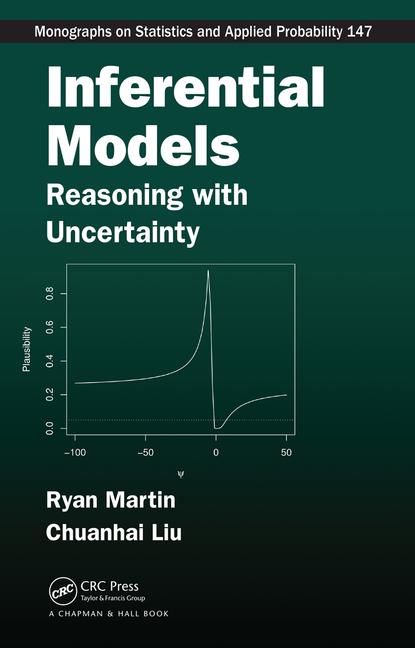
Chuanhai Liu is an Associate Head and Professor of Statistics at Purdue University’s Department of Statistics. He specializes in computational methods for statistical inference, Bayesian analysis, and big data computing systems. His research emphasizes robust algorithms, inferential models, and probabilistic methods. Education: M.S., Wuhan University, Probability and Statistics (1987) M.A., Harvard University, Statistics (1990) Ph.D., Harvard University, Statistics (1994) Research Interests: Computational methods (EM algorithms, MCMC), statistical software systems for big data, theoretical foundations of inference, and prior-free probabilistic modeling. His work bridges computational efficiency and statistical validity, with applications in network analysis, environmental data, and machine learning. Awards: Fellow of the American Statistical Association (2007) Elected Member of the International Statistical Institute (2006) Frank Wilcoxon Prize (2000) Advising & Grants: Supervised 9 Ph.D. students, including interdisciplinary collaborations. His grants focus on distributed statistical computing and inferential frameworks. Active in software development for large-scale data analysis. Labs/Teams: Leads statistical computing initiatives at Purdue, contributing to scalable algorithms and probabilistic inference systems.
Jean Walrand is a Professor in the Department of Electrical Engineering and Computer Sciences (EECS) at the University of California, Berkeley. His research focuses on communication networks, performance evaluation, game theory, and stochastic networks. He has authored several influential books, including Communication Networks: A Concise Introduction and Probability in Electrical Engineering and Computer Science , and holds numerous patents in network resource management. Ph.D. in EECS from UC Berkeley IEEE Fellow and recipient of the Stephen O. Rice Prize INFORMS Lanchester Prize for operations research contributions His research interests span communication networks, queueing theory, congestion control, wireless network scheduling, and economic models for network resource allocation. Walrand's work has significantly impacted network design and optimization, particularly in distributed algorithms and game-theoretic approaches. His recent publications emphasize network architecture, delay variability reduction, and distributed optimization algorithms. Walrand has mentored over 20 Ph.D. students, including notable contributors to wireless networks and network economics. IEEE Koji Kobayashi Award (2012) ACM Sigmetrics Achievement Award (2013) INFORMS Lanchester Prize for Communication Networks book As advisor to students like Libin Jiang and Hoi-Sheung Wilson So, Walrand has shaped research in wireless MAC protocols, bandwidth trading, and network security. His technical reports and patents address practical challenges in switch fabric design, bandwidth allocation, and power management.
Victor Liu is a Research Professor and Lecturer in the Department of Computer Science and Engineering at the University of Michigan, affiliated with the College of Engineering. His work bridges complex systems analysis, software-defined networking (SDN), and telecommunications. Ph.D. in Computer Science from the University of Pittsburgh M.E. in Computer Science from Tsinghua University B.E. in Computer Science from Xi'an Jiaotong University Dr. Liu specializes in network survivability and optimization , with a focus on: Intent-Based Networking Self-Operating Networks Packet-Optical Integration Cross-Layer Network Resilience His publications from the last decade reveal a consistent focus on network reliability , spare capacity allocation , and SDN applications . Key themes include: Protection algorithms for dual-failure scenarios Optimization of packet-optical integrated networks Routing strategies for fiber-cut recovery SDN-driven network automation Telecom infrastructure resilience Failure recovery in multi-layer systems
Blayne Haggart is a Professor in Political Science at Brock University, Canada. His research focuses on the international political economy of knowledge, particularly intellectual property rights, data governance, and internet governance. He previously worked as a professional journalist and economist with the Parliamentary Information and Research Service before transitioning to academia. BA (Carleton University) MA (University of Toronto) MA (Carleton-NPSIA) PhD (Carleton University) Dr. Haggart's current research explores: International Political Economy frameworks Digital policy and governance Intellectual property rights in the digital age North American political economy dynamics Intersections between sports and politics His scholarly work has been published in leading journals including: Canadian Public Administration Telecommunications Policy Journal of Digital Media & Policy Journal of Information Policy Dr. Haggart serves as: Senior Fellow with the Centre for International Governance Innovation Associate Senior Fellow with the Käte Hamburger Kolleg/Centre for Global Cooperation Research
Professor David Taubman is a distinguished academic serving as Professor and Deputy Head of School (Research) at the School of Electrical Engineering and Telecommunications (EE&T) at the University of New South Wales (UNSW) in Sydney, Australia. He is also co-director of Kakadu Software Pty. Ltd. and its affiliates Kakadu R&D and Kakadu GPU. With a career spanning over three decades, Professor Taubman has made significant contributions to the field of image and video compression, most notably as the author of the EBCOT coding algorithm adopted in the JPEG2000 international standard. Professor Taubman earned his B.Sc. in Mathematics and Computer Science (1986) and B.E. (Medal) in Electrical Engineering (1988) from the University of Sydney, followed by an M.Sc. (1992) and Ph.D. (1994) in Electrical Engineering from the University of California at Berkeley. His professional journey includes engineering work at the Electricity Commission of N.S.W. (1988-1990), research positions at Hewlett-Packard Laboratories in Palo Alto (1994-1998), and an academic career at UNSW where he progressed from Senior Lecturer (1998-2003) to Associate Professor (2004-2009) and finally to Professor (2009-present). He has held various leadership roles including Head of the EE&T Telecommunications Research Group (2003-2014), Head of the EE&T Signal Processing Research Group (2014-present), Director of Research for the School of EE&T (2011-2016), and Deputy Head of School (Research) since 2017. Professor Taubman's research interests center on image and video compression, with particular expertise in JPEG2000 standards and implementations. His work spans signal processing, wavelet transforms, scalable video coding, motion modeling, and multimedia systems. He has pioneered numerous compression algorithms and frameworks, including the EBCOT coding algorithm that became central to the JPEG2000 standard. His recent research focuses on efficient motion modeling with cuboidal partitioning, learned lifting-based transform structures, and high-throughput implementations of JPEG2000 for video applications. His work bridges theoretical foundations with practical implementations, as evidenced by the commercially successful Kakadu Software tools that have garnered around 500 commercial licensees. Analysis of Professor Taubman's recent publications reveals a consistent focus on advancing compression technologies with particular emphasis on scalability, efficiency, and adaptability. His work spans traditional image compression (JPEG2000 extensions), video coding (cuboid-based partitioning for UHD/360-degree video), and emerging applications (nanopore sequencing data compression). A notable trend is the integration of machine learning techniques with traditional compression frameworks, as seen in his work on learned lifting-based transform structures. His research maintains strong connections to real-world applications across diverse domains including medical imaging, astronomical data processing, and genomic sequencing. IEEE Fellow Engineers Australia Fellow (by invitation) Professor Taubman has served as Associate Editor for the IEEE Transactions on Image Processing for two four-year appointments (2003-2005 and 2010-2013). He has been actively involved in numerous research grants focused on image and video compression technologies, particularly those related to the JPEG2000 standard and its extensions. His work has received significant industry support, reflected in his consultancy with various U.S., Japanese, and Australian corporations. He has also contributed to international standards development as a member of Standards Australia Technical Committee MS-065 (mirroring ISO TC42 on Digital Photography) and as a constitutional member of Standards Australia Technical Committee IT-029 (Coded Representation of Picture, Audio and Multimedia/Hypermedia Information). Professor Taubman co-directs Kakadu Software Pty. Ltd. and its research affiliates Kakadu R&D and Kakadu GPU, which have developed the commercially successful Kakadu Software tools for JPEG2000. His research group at UNSW focuses on advanced image and video compression techniques, with particular expertise in wavelet-based methods, scalable coding, and motion modeling. The group maintains strong industry connections and has contributed significantly to the development and standardization of image compression technologies worldwide.
Rui Pedro Figueiredo Marques is a Professor at the Higher Institute of Accounting and Administration, University of Aveiro, where he teaches Information Systems across technical, bachelor's, master's, and doctoral programs. He serves as course director for the Professional Higher Technical Course in Organizational Informatics and Communication and holds a board position at the Institute of Accounting and Administration, University of Aveiro. As a Full Researcher at GOVCOPP's Competitiveness, Innovation and Sustainability (CIS) group, his work focuses on Information Systems for Business, with recent emphasis on AI, Blockchain, and Business Intelligence applications in auditing and accounting contexts. Marques' academic credentials include a Ph.D. in Computer Science (2014, Universities of Minho/Aveiro/Porto), a Master's degree (2008), and a Bachelor's in Electronics and Telecommunications Engineering (2005, University of Aveiro). He has authored/co-authored over 50 publications, including journal articles, conference papers, and book chapters on topics ranging from ERP systems in auditing to digital transformation in low-density territories. He is editor-in-chief of the International Journal of Business Innovation and actively participates in funded research projects addressing governance, competitiveness, and public policies. His research explores intersections between technology and business practices, with notable contributions to AI in auditing, blockchain's role in financial transparency, and sustainable development frameworks for social economy entities. Notable projects include evaluations of ERP systems' impact on internal audit maturity and frameworks promoting accountability in private social solidarity institutions. Marques' work frequently emphasizes practical applications of technology in audit processes, education, and public sector modernization. He collaborates with institutions like the Portuguese Social Solidarity Sector and has advised on digital transformation strategies for tourism and hospitality industries.
Massimo Canale is a Tenured Associate Professor at the Department of Electronics and Telecommunications (DET) of Politecnico di Torino , and a member of the CARS@PoliTO Interdepartmental Center for Automotive Research and Sustainable Mobility. His academic career spans over two decades, focusing on control systems engineering with applications in automotive technology. Scientific Branch: Systems and Control Engineering (IINF-04/A) ERC Sectors: Automotive Engineering, Control Engineering, Control Theory Dr. Canale's research bridges theoretical advancements in Model Predictive Control (MPC) with practical applications in autonomous vehicles , hybrid/electric propulsion , and active suspension systems . His work integrates reinforcement learning and dynamic programming for optimizing vehicle performance and energy efficiency. Recent publications demonstrate trends in autonomous driving architectures (2024), sliding mode control for highway scenarios (2024), and energy management for sustainable mobility (2023-2024). He has developed patented solutions for semi-active suspension control and autonomous vehicle guidance. Award: IEEE Transactions on Control Systems Technology Outstanding Paper Award (2011) Editorial Roles: Associate Editor, IEEE Open Journal of Control Systems (2022–present) Dr. Canale supervises PhD students like Francesco Cerrito and teaches courses on digital control technologies , automatic control , and reinforcement learning at Politecnico di Torino. His research is funded through competitive grants (e.g., MPC4AVP 2021-2022) and commercial contracts (AD Shuttle 2024).
Alan Briones Delgado is a researcher at the La Salle School of Engineering , Universitat Ramon Llull , with a focus on Internet of Things , Cybersecurity , and Transport Protocols . His work spans projects funded by the European Commission and national grants, including EXCEL4HOUSING4.0 , WeB-Nimbus , and NG-SOC , addressing challenges in cloud computing education, ecological monitoring, and security operations. His research integrates Artificial Intelligence and Wireless Sensor Networks for sustainable solutions. Key research areas include Quality of Service in heterogeneous networks, Environmental Conservation via IoT, and Teaching and Learning strategies for Big Data. Projects like EcoSentinel and BTL-COP highlight his commitment to Environmental Monitoring and Community Policing applications. His collaborations extend to institutions in the UK , Albania , and Western Balkans . Contact: alan.briones@salle.url.edu
Luciano Lavagno is a Full Professor at the Department of Electronics and Telecommunications, Polytechnic University of Turin, with over two decades of academic and research contributions. His work bridges hardware acceleration, low-power electronics, and intelligent system design. Research Focus: Hardware-accelerated machine learning, high-level synthesis (HLS) for FPGA/ASIC, heterogeneous CPU/GPU/FPGA platforms Key Projects: SPACE (predictable acceleration), REBECCA (secure AI acceleration), HPC-National Center (quantum computing), and oral history preservation via "Ti racconto una storia" initiative His recent publications analyze CNN inference optimization, subgraph isomorphism, and superword-level parallelism exploitation. Lavagno supervises multiple PhD students working on FPGA acceleration, neural network hardware, and embedded systems. As Principal Investigator for national and EU-funded projects (PRIN, JTI-ECSEL, PNRR), he drives advancements in sustainable computing infrastructure. His patented technologies include MIx&Latch timing methodology, capacitive sensing innovations, and 5G acceleration frameworks.
Reda Mastouri is an Adjunct Professor in the Department of Data Sciences within the College of Computer and Information Sciences at Saint Peter’s University. He combines academic roles with 12 years of industry experience as a Lead Cyber Security Engineer and Product Consultant, collaborating with Fortune 200 and 500 companies. His teaching includes courses such as DS-520 Data Analysis, DS-530 Big Data, and CS-332 Advanced Computing. Ph.D., AI & Data Sciences, Saint Peter’s University M.Eng., Telecommunication and Network Engineering, ENSA-M Cadi Ayyad University M.S., Data Sciences, Saint Peter’s University B.S., Computer Sciences, New Jersey Institute of Technology B.A., Applied Mathematics, Rutgers University His scholarly work focuses on AI-driven algorithms for truth demystification and cluster computing applications in high-fidelity image/video forgery detection within cybersecurity. Additional expertise spans DevSecOps, enterprise architecture, and software economics, with a dedication to innovation in business strategy and technology integration. Dr. Mastouri’s research trends emphasize heterogeneous ad hoc networks, collaborative honeypot architectures, and blockchain-based security models for IoT. His work addresses distributed attack detection, false positive/negative reduction, and protocol optimization, aligning with his specialization in cybersecurity and artificial intelligence. Certified Splunk Super User Palo Alto Networks Certified Cybersecurity Associate (PCCSA) CyberArk Certified Trustee Certified Scrum Professional SFPC Certified 10-Hr OSHA Training for the Construction Industry Certified Project Management Essentials Certified (PMEC)™ Lean Six Sigma Yellow Belt (ICYB) CPR & AED Certified AWS Certified Developer Associate Scrum Foundation Professional Certificate NSE 1 Network Security Associate NSE2 Fortinet's Network Security Expert
Amalia Miliou is a Professor in the Department of Informatics at Aristotle University of Thessaloniki, where she has served since 1993, progressing through the academic ranks from Lecturer to her current position as Professor since 2022. She holds a PhD in Electrical and Computer Engineering from the University of Florida (1991) with specialization in Optoelectronics, following an MSc in the same field (1988) and a Physics degree from Aristotle University (1985). Her research focuses on optical communications systems, with specific expertise in optoelectronic circuits simulation, optical switching, optical RAM development, converged fiber-wireless technology, 5G networks, and secure optical communications using chaos theory. Over her career, she has supervised numerous graduate students across these research areas, with thesis topics spanning optical memory systems, fiber-wireless integration, chaos-based secure communications, and advanced optical network architectures. Her recent publications (2021-2024) demonstrate a strong focus on next-generation optical networking solutions for 5G/6G applications, including fiber-wireless convergence, optical memory systems for high-speed networks, and innovative approaches to optical signal processing. Her work bridges fundamental photonics research with practical telecommunications applications, particularly in addressing the bandwidth and latency challenges of modern mobile networks. Professor Miliou has served as the Coordinator of the LLP-ERASMUS student exchange program at the Department of Informatics since 1997 and has held various administrative positions including membership in the University Senate and General Assembly. She has led and participated in numerous research projects, most recently focusing on technological improvements for 5G systems through optical-wireless network development (2019-2021), next-generation healthcare applications leveraging 6G networks (2023-2027), and photonic integrated circuits for random access memory (2012-2015).
Andrea Fumagalli is a Professor in the Department of Electrical Engineering at the Erik Jonsson School of Engineering and Computer Science , The University of Texas at Dallas. He earned his Ph.D. (1992) and Laurea (1987) in Electrical Engineering from Politecnico di Torino, Italy. Research Interests: All-Optical Network Architectures, Photonic Slot Routing, Wavelength Routing and Protection, Sensor Networks, Cooperative Wireless Networks, Network Optimization, Next Generation Internet (NGI), and Multi-hop Optical Networks. Education: Ph.D., Electrical Engineering, Politecnico di Torino (1992) Laurea, Electrical Engineering, Politecnico di Torino (1987) Key Research Trends: His recent publications focus on 5G networking, optical network automation, elastic optical networks, network reliability, and cross-layer optimization. He explores FPGA acceleration in 5G Low-PHY functions, live migration of containerized network components, and spectral fragmentation mitigation in EONs. Scientific Awards: Best Teaching Award, Electrical Engineering, UTD (2002) Best Thesis Award for Ph.D. Advisee Isabella Cerutti (2002) IEEE ComSoc Distinguished Lecturer Tour (2000) Best Paper Award (1999): 'An Optimal Design Algorithm for Photonic Slot Routing Networks Migrating to Optical Packet Switching' Advising and Grants: He advised Ph.D. student Isabella Cerutti. In 2001, he secured a $300,000 grant from FUNDACAO CPqD for optical network reliability research. He leads the Optical Networking Advanced Research (OpNeAR) Lab at UTD, collaborating on international projects like the Italian government-funded grid computing initiative (2002) and the OMEGA Test-bed for differentiated reliability. Laboratories and Teams: He directs the OpNeAR Lab , which develops tools for optical network emulation and reliability testing. His projects involve partnerships with institutions in Brazil (Unicamp), Sweden (KTH), Italy (Politecnico di Torino, Scuola Superiore Sant'Anna), and CNR/CNIT.
Dmitri Perkins is a Professor at the Department of Computer Science and Electrical Engineering within the College of Engineering and Information Technology at the University of Maryland, Baltimore County (UMBC). He has held leadership roles including Senior Program Director at the National Science Foundation (2021-2024) and Lead Program Director for the NSF's Industry-University Cooperative Research Centers (2015-2019). His research spans wireless and mobile networking paradigms, including cognitive radio, sensor networks, and large-scale heterogeneous systems. Ph.D., Computer Engineering, Michigan State University (2002) M.S., Computer Engineering, Michigan State University (1997) B.S., Computer Science, Tuskegee University (1995) His research focuses on adaptive protocol design , spectrum management , and network security . Key areas include dynamic spectrum access , cross-layer optimization , and formal performance evaluation in wireless systems. Publications highlight innovations in cognitive radio networks , IoT protocols , and secure wireless communication . Recent publications emphasize machine learning for spectrum efficiency , edge computing in heterogeneous networks , and security frameworks for wireless systems. The 15 most recent works (2002-2018) demonstrate expertise in protocol design , network scalability , and spectrum optimization . NSF CAREER Award (2005) NSF Director's Award for Superior Accomplishment (2024) ONR Research Fellow, U.S. Naval Research Lab (2013-2014) He leads a research lab at UMBC offering RA positions in spectrum research , IoT/CPS systems , and wireless cybersecurity . Prior to UMBC, he served as Hardy Edmiston Endowed Professor at the University of Louisiana at Lafayette and held roles at the U.S. Naval Research Laboratory.