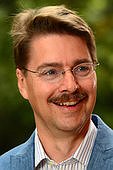
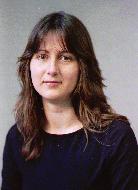
Duong Hieu Phan is a Professor at Telecom Paris, part of the Institut Polytechnique de Paris, and Head of the Cybersecurity-Cryptography team. He holds a Ph.D. in Computer Science from Ecole Normale Supérieure and has extensive postdoctoral experience at University College London and research roles at France Telecom R&D. His academic career includes roles as an assistant/associate professor at LAGA, University of Paris 8 (2007–2015), and later as a professor and director of the Master 2 Maths CRYPTIS program at XLIM, University of Limoges (2015–2020). His research focuses on cryptography, with emphasis on provable security, functional encryption, privacy-preserving systems, and anamorphic cryptography. Key areas include secure communication mechanisms against oppressive surveillance, decentralized systems, and post-quantum security. He has contributed to foundational work on CCA security for FHE, quantum-resistant protocols, and verifiable functional encryption. Prof. Phan is actively involved in professional committees, including IACR ASIACRYPT and PKC steering committees, and editorial boards such as the IACR CIC Journal. He promotes Franco-Vietnamese scientific collaboration through roles in the CNRS IRL partnership. His teaching spans cryptography, algorithms, and mathematics at undergraduate and master’s levels, including program coordination and research supervision.
Petr Kuznetsov is a Professor at Telecom Paris (Institut Polytechnique de Paris), affiliated with the Department of Computer Science and Networks (INFRES). He leads the Autonomous Critical Embedded Systems (ACES) research team at the Information Processing and Communication Laboratory (LTCI). His work bridges theoretical foundations and practical applications in distributed systems. Research Focus: Kuznetsov specializes in distributed algorithms, synchronization protocols, failure detection mechanisms, and the application of algebraic topology to distributed computing. His recent work explores Byzantine fault tolerance, blockchain consensus, and concurrency in networking infrastructures. Recent Publication Trends (2015-2025): His articles predominantly focus on scalability and resilience in distributed systems, with emerging themes in blockchain technologies, Byzantine fault tolerance, and concurrency optimization. Theoretical contributions include computability theorems and complexity bounds, while applied work targets payment systems and distributed ledgers. Awards & Honors: Best Paper Award at DISC 2019 for Scalable Byzantine Reliable Broadcast Best Student Paper Award at PODC 2018 for An Asynchronous Computability Theorem for Fair Adversaries Projects & Advising: He directs the TrustShare Innovation Chair (large-scale data synchronization) and DISCMAT (mathematical foundations of distributed computing). Actively seeks PhD candidates for projects on distributed algorithms and concurrency. Laboratory & Teams: Heads the ACES team at LTCI, focusing on critical embedded systems and fault-tolerant distributed architectures. Collaborates internationally through workshops like SPTDC.
Jun Yan is an Associate Professor and Concordia University Research Chair in Artificial Intelligence in Cyber Security and Resilience at the Concordia Institute for Information Systems Engineering (Concordia University). His research focuses on cybersecurity, smart grid systems, and AI-driven solutions for energy and communication networks. He supervises graduate students in programs such as Information Systems Security (MASc), Computer Science (MCompSc), and Information and Systems Engineering (PhD). Research Highlights : Cybersecurity of distributed energy systems, AI penetration testing frameworks, and resilient transactive energy markets. Awards : Holds a prestigious university research chair in AI-driven cybersecurity. His work integrates machine learning with domain-specific challenges in smart grids, IoT security, and multi-agent systems. Notable contributions include frameworks for detecting adversarial attacks on power systems, optimizing renewable energy integration, and developing AI tools for penetration testing. His articles reflect a strong emphasis on interdisciplinary solutions blending cybersecurity, energy systems, and advanced computing. Yan’s research also addresses policy and infrastructure challenges in sustainable energy systems, including waste management policy analysis and optimal configuration of hybrid renewable systems. He has pioneered open-source co-simulation platforms like PEMT-CoSim and Quantum-Sim for secure energy trading and quantum communication in grids. He actively engages in grant-funded projects and advises on both academic and applied aspects of cybersecurity and intelligent systems.
Laurie Ciaramella is an Assistant Professor in Economics at Institut Polytechnique de Paris (Télécom Paris) and an Affiliated Research Fellow at the Max Planck Institute for Innovation and Competition. She also serves as an adjunct Associate Professor at the Norwegian School of Economics (NHH) and holds the ANR JCJC TaxIP grant as principal investigator. Her educational background includes a BSc in Economics from Université Paris Dauphine, an MSc in Economics of Markets and Organizations from Toulouse School of Economics, and a PhD in Economics from MINES ParisTech. Her doctoral thesis, 'Trade and Relocation of Intellectual Property: Essays on the Markets for Patents,' was supervised by Yann Ménière and Catalina Martinez and earned recognition as a Best Dissertation Award Finalist at the Academy of Management. Ciaramella's research centers on the economics of innovation, with specific expertise in intellectual property systems, tax policy implications for innovation, markets for technology, and innovation financing. She employs advanced econometric methods to investigate how firms manage intellectual property assets, how taxation affects patent relocation decisions, and how geographical constraints impact technology markets. Her work demonstrates how patent boxes influence corporate tax strategies and how intellectual property can serve as loan collateral, particularly benefiting small and financially constrained firms. Her publications reveal consistent focus on European patent systems, international knowledge flows, and the intersection of tax policy with innovation strategies. Key trends show increasing empirical sophistication in analyzing firm-level patent data, with growing attention to policy implications for international tax coordination and innovation financing mechanisms. Best Dissertation Award Finalist, Technology and Innovation Management Division, Academy of Management (2018) Best PhD Paper (Bent Dalum) Award, DRUID 17 Academy (2017) Presentation at Rising Star Session, EARIE (2017) As principal investigator of the ANR JCJC TaxIP grant, Ciaramella leads significant research on taxation and intellectual property. Her research visits to Northwestern University's Searle Center and EPFL's College of Management demonstrate international scholarly engagement. Her work bridges theoretical economics with practical policy considerations, particularly regarding how tax regimes affect corporate innovation strategies and intellectual property management. Current projects include 'Intellectual Property as Loan Collateral,' investigating how firms use IP assets to secure financing. Ciaramella maintains active research collaborations with institutions including Max Planck Institute for Innovation and Competition, CREST research center, and various European patent offices. Her methodological approach combines microeconomic analysis with legal and tax system insights to examine real-world innovation dynamics.
Jens Palsberg is a Professor and former Department Chair of Computer Science at the University of California, Los Angeles (UCLA), where he currently serves as Director of the UCLA-Amazon Science Hub for Humanity and Artificial Intelligence and co-director of UCLA's quantum research center. He chairs ACM SIGPLAN and is a member of the ACM Council. His research spans programming languages, software engineering, quantum computing, compilers, embedded systems, and information security. Palsberg has authored over 80 technical papers, co-authored the book Object-Oriented Type Systems , and revised Appel's textbook on Modern Compiler Implementation in Java . His recent work shows a significant shift toward quantum computing, including compiler techniques and program analysis for quantum systems. Analysis of his recent publications reveals a clear transition from traditional programming language research to quantum computing, with nearly half of his 2022-2024 publications focusing on quantum topics while maintaining strong work in software engineering and programming languages. His quantum research particularly emphasizes compiler optimization, abstract interpretation, and circuit analysis. ACM SIGPLAN Distinguished Service Award (2012) UCLA teaching award for quantum computing courses (2023) National Science Foundation CAREER and ITR awards Purdue University Faculty Scholar award IBM Faculty Award Okawa Foundation research award Palsberg has served in numerous leadership roles including general chair of POPL, conference chair of LICS, and vice chair of ACM SIGBED. His research has been supported by DARPA, Intel, British Telecom, and the National Science Foundation. He was instrumental in establishing UCLA's Masters degree in quantum science and has mentored numerous students through his legendary proof sessions. He leads a research group of over 30 professors in UCLA's quantum research center and maintains active collaborations across academia and industry, particularly with Amazon through the UCLA-Amazon Science Hub.
Tuomas Aura is a Professor at the Department of Computer Science , Aalto University , and a member of the Helsinki Institute for Information Technology (HIIT) and the Helsinki-Aalto Institute for Cybersecurity (HAIC) . His expertise spans information security , privacy , pervasive computing , and communications . Research Trends: His recent work focuses on securing Kubernetes clusters , TLS identity binding , SIM provisioning protocols , and IoT authentication , with a strong emphasis on network security and cryptographic protocols . Key sub-fields include microservice connectivity , threat modeling , and EAP-based authentication . Publications: His 2025 work on Kubernetes misconfigurations and TLS identity binding addresses critical cloud and protocol vulnerabilities. Earlier studies (2024-2020) explore SIM transparency, HTTP/2 security, and formal verification of device-pairing flaws, reflecting a consistent focus on IoT security and network protocols .
Kalina Bontcheva is a Senior Researcher in the Natural Language Processing Group within the Department of Computer Science at the University of Sheffield. She holds an EPSRC Career Acceleration Fellowship (working part-time since October 2015) focused on personalized summarization of social media content. Her research spans multiple EU-funded projects including PHEME (computing veracity of social media), TrendMiner, DecarboNet, and uComp, with significant contributions to the GATE (General Architecture for Text Engineering) open-source NLP infrastructure since 1999. Dr. Bontcheva's research interests focus on the intersection of natural language processing and social media analysis. Her work encompasses NLP for social media, semantic search, information extraction from social platforms, crowdsourcing of NLP corpora, collaborative text annotation, semantic technologies, and text mining and analytics. She has particular expertise in developing methods for personalized, abstractive multi-document summarization across different social media platforms, addressing the challenges of noisy, jargon-filled and dynamic content. Her interdisciplinary approach combines machine learning, semantic technologies, and social dimension analysis to create systems that adapt to individual users' information seeking goals. Analysis of her recent publications reveals a strong focus on social media processing challenges, with emphasis on Twitter analysis, temporal expression recognition, and handling noisy text. Her work consistently addresses the unique characteristics of social media content and develops specialized techniques for information extraction, sentiment analysis, and user geolocation within these platforms. The GATE framework serves as the foundation for much of her tool development, demonstrating her commitment to creating reusable, open-source NLP infrastructure. Her most significant award is the EPSRC Career Acceleration Fellowship, which supports her work on personalized social media summarization. This prestigious fellowship includes a substantial budget of £560k and involves collaborations with industry partners including The Press Association, British Telecom, and Fizzback. Dr. Bontcheva has led numerous major research projects throughout her career. She was Principal Investigator on three EU-funded projects (MUSING, TAO, and ServiceFinder) between 2006-2009, coordinating the TAO consortium with seven partner institutions. She currently leads the PHEME EU project and serves as PI for TrendMiner and DecarboNet European projects, while also contributing as Co-I on the uComp project. Her project portfolio demonstrates consistent success in securing competitive research funding across multiple domains within NLP and semantic technologies. She works within the Natural Language Processing Group at the University of Sheffield, which has been central to the development of the GATE infrastructure. Her work connects with various initiatives including the GATE Cloud platform and the TextVRE project for e-humanities textual studies. She has established collaborations with organizations including the Press Association, British Telecom, Oxford Internet Institute, and Sheffield's Department of Journalism to ensure her research addresses real-world needs across different user communities.
Dr. Jaswinder Lota is a Reader in Engineering at the University of East London , School of Architecture, Computing and Engineering, Department of Engineering & Construction. He is also a Visiting Academic at University College London’s Department of Electronic and Electrical Engineering, and a Chartered Engineer with extensive industry and academic experience. Education: BSc BEng MEng PGCert HE PhD Research Interests: Dr. Lota specializes in signal processing, circuits and systems, wireless communication, and their applications in radar systems (weather/military), low-power sustainable networks beyond 5G/6G (robotics, automation, healthcare), and electronic technologies for hydrogen propulsion. His work integrates AI-driven channel modeling and impulsive noise analysis. Scientific Awards: IEEE CAS Society Certificate of Appreciation (2019) Grants and Collaborations: He has secured significant funding, including a £2.5K International Research Collaboration Award (2016), £2.5K Research Internship Award (2015), £76K Impact Grant (2014), and a £7M MoD-funded project (1999-2004). Collaborators include UCL and NYU. Leadership: Dr. Lota leads the Smart Cities Research group at UEL and contributed to the REF 2021 submission. He has served as Associate Editor for IEEE TCAS I and Guest Editor for multiple IEEE journals.
Sofia Kalakou is an Assistant Professor in the Department of Marketing, Operations and General Management at ISCTE Business School, where she teaches operations management across undergraduate, graduate, and postgraduate programs. She also serves as Director of the Industrial Management and Logistics degree program. Her research focuses on urban and air transport planning, technology integration in operations, sustainable practices, and performance evaluation. She coordinates four EU-funded projects on operations management and new technologies. Dr. Kalakou holds a doctorate and master’s in Transport Systems from ISCTE, a civil engineering diploma, and prior experience as a transport and mobility consultant. Her work bridges academic research with practical applications, addressing challenges like airport terminal optimization, drone delivery systems, and gender-sensitive mobility policies. She has published extensively on topics ranging from lean six sigma applications in telecom repair to SWOT analysis of Greek seaplane operations. Her funded projects emphasize sustainable transport solutions and capacity-building for local authorities implementing MaaS and smart mobility initiatives. Key contributions include frameworks for setting transport sustainability targets and analyzing passenger behavior in airports through activity-based modeling.
Grazia Cecere is a full Professor in Economics at the Institut Mines-Télécom Business School (IMT-BS) , where she currently serves as Director of Research and Associate Dean for Research and Doctoral Programs . Her academic career spans multiple institutions including University of Paris Saclay, University of Turin, College of Europe, ZEW Mannheim, and SPRU at the University of Sussex. PhD in Economics (University of Paris Saclay and University of Turin) Master's Degree (College of Europe, Natolin, Poland) Visiting Researcher experience in Germany and UK Her research focuses on digital economics , particularly privacy economics , algorithmic bias , machine learning applications , and mobile app monetization strategies . Recent work examines social network algorithmic discrimination, personal data economics, and pandemic-era digital transformation impacts. Notable awards include the 2021 Social Science Foundation Research Prize and the 2019 Marie-Dominique Hagelsteen Award for responsible advertising. She serves as scientific expert for Arcom (French audiovisual regulator) and evaluator for INRAE (2020-2024). Active in research funding, she coordinates projects like YPOG and ID2 Drive funded by DataIA Institute, and has secured grants from ANR, DAWEX, and INRAE. She co-organizes the Paris Digital Economics seminar series since 2017.
Philippe Ciblat is a Professor at TELECOM Paris Tech, affiliated with the Department of Signal Processing and Communications. His research spans signal processing, wireless communications, and machine learning applications in networking. He has collaborated extensively with institutions like the University of Paris-Saclay and international researchers in areas such as cooperative communication protocols, resource allocation, and coding theory. Research Interests: Machine learning for signal processing, wireless channel modeling (Rician fading), lattice decoding, caching strategies, and distributed optimization. Notable Work: Pioneered transformer-based packet scheduling, neural network approaches to lattice decoding, and effective capacity analysis in fading channels. His contributions include over 170 publications in top venues (IEEE Trans. Signal Process., IEEE Trans. Wireless Commun.) and collaborations with industry partners on practical implementations like cache-aided polar coding. He has advised multiple researchers in distributed systems and wireless resource management.
Mathieu BACOU is a Lecturer at Telecom SudParis, affiliated with the SAMOVAR research laboratory. His work focuses on cloud computing, distributed systems, and performance optimization, with particular emphasis on virtualization, data center management, and computer architecture challenges. He holds a PhD from the National Polytechnic Institute of Toulouse, where his thesis addressed resource management in multi-virtualized cloud environments. Education: PhD in Networks and Telecommunications, National Polytechnic Institute of Toulouse (2020) Research Interests: BACOU explores scalable systems, including function-as-a-service (FaaS), nested virtualization, and energy-efficient data center designs. Recent work addresses memory architecture limitations (e.g., 128-bit addressing) and containerization transparency. His projects often involve collaboration with industry partners to bridge academic research and practical deployment. Key Contributions: His work on Drowsy-DC introduced smartphone-inspired power management for data centers, while OFC caching systems improved FaaS efficiency. Recent papers like FaaSLoad and 128-bit address extensions highlight his focus on future computing challenges. Labs & Affiliations: Active member of SAMOVAR lab, Telecom SudParis, and collaborator with RISC-V Summit and EUROSYS conferences. Engaged in experimental practices bridging systems research and real-world infrastructure.
Per Lynggaard is a Professor of Electronics at the Technical University of Denmark (DTU) , leading the B.Eng. program in Electronics. Previously, he held an Associate Professor role at Aalborg University, combining academic excellence with a robust industrial career in technical-scientific research and development. Education: M.Sc. in Electrical Engineering and Information Technology (EE and IT) Ph.D. in Electronics from Aalborg University Research Interests: Focus on Integrated Circuit Design, Wireless Sensor Networks (WSN), Machine Learning, IoT, and Smart City Technologies . His work emphasizes energy-efficient systems, cybersecurity in IoT, AI-driven interference mitigation, and sustainable energy harvesting solutions. He has contributed to UN Sustainable Development Goals through projects addressing smart infrastructure and environmental monitoring. Projects & Collaborations: Leads and participates in EU-funded initiatives such as InnoTech (2023–2025) for green transition solutions and TransportTech (2023–2026) for Industry 4.0 logistics. Active in cybersecurity research via projects like Jamming Against Critical Wireless Communication , aiming to protect critical infrastructure. Awards: Recognized with multiple honors and rewards during his industrial career, though specific names are not listed. His work has been cited widely, with notable impact in IoT security and energy-efficient systems. Advising & Grants: Supervises Turnip T.N. in a PhD project on 6G security protocols. Engaged in securing funding for projects like F2D2: The Community for Dynamic Data (2021–2030), focusing on dynamic data systems and cybersecurity. Labs & Teams: Collaborates in interdisciplinary teams such as the InnoTech TaskForce and F2D2 Community , advancing IoT and AI integration. His research bridges academia and industry, with outputs spanning smart cities, healthcare IoT, and sustainable energy systems.
Dr. Nir Rotenberg is an Associate Professor in the Department of Physics, Engineering Physics, and Astronomy at Queen's University. He is affiliated with the Faculty of Arts and Science, the Condensed Matter Physics & Optics group, and the Centre for Nanophotonics. He holds a PhD from the University of Toronto and focuses on quantum photonics and nanophotonics, particularly exploring nonlinear phenomena in solid-state quantum systems. His lab develops novel quantum devices and circuits using nanophotonic platforms, emphasizing single quantum emitter interactions with few photons. Research Interests: Quantum photonics, nanophotonics, quantum optics, nonlinear optics, quantum devices, and solid-state quantum emitters. His work bridges fundamental physics with applications in quantum information processing and photonic technologies. Recent publications highlight advancements in quantum dot positioning, waveguide-QED systems, and reconfigurable photonic circuits. He collaborates internationally and is a member of the Quantum Nanophotonics Lab (QNL), based in Stirling 308H. Dr. Rotenberg's research has implications for quantum computing, secure communication, and advanced optoelectronic systems.
Benoit Champagne is a Full Professor in the Department of Electrical and Computer Engineering at McGill University, Montreal. His research focuses on statistical signal processing, with applications in wireless communications, multi-antenna systems, and adaptive filtering. He has held academic positions since 1990, including roles at INRS-Telecom before joining McGill in 1999. He teaches graduate and undergraduate courses such as ECSE 305 (Probability and Random Signals), ECSE 512 (Digital Signal Processing), and ECSE 617 (Array Signal Processing). Education: B.Eng. (Electrical Engineering) and M.Sc. (Physics) from Université de Montréal (1983, 1985), Ph.D. in Electrical Engineering from University of Toronto (1990). His research spans signal detection/estimation, speech enhancement, MIMO systems, and physical layer security, with over 150+ publications in top journals and conferences. He has supervised numerous graduate students and holds grants from NSERC, CFI, and industry partners like Nortel and Bell Canada. His work emphasizes practical implementations, including hybrid analog/digital beamforming for mmWave systems and energy-efficient resource allocation in D2D communications. He has contributed to IEEE standards through editorial roles (e.g., IEEE Transactions on Signal Processing) and conference organization (e.g., IEEE VTC 2016). Current research explores machine learning integration with signal processing for next-generation wireless systems. Notable contributions include advancements in subspace tracking, cognitive radar systems, and distributed adaptive filtering. His lab collaborates internationally, addressing challenges in 5G/6G networks, massive MIMO, and secure communications.