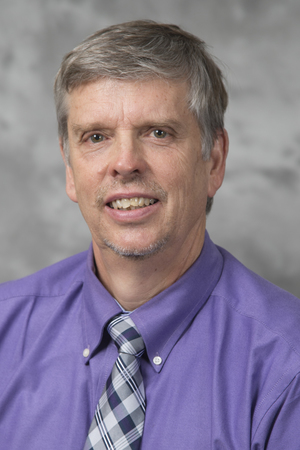
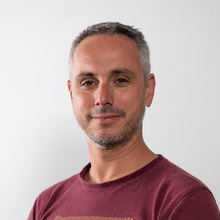
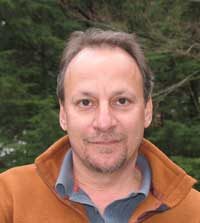
William Ouimet is an Associate Professor in the Department of Geography, Sustainability, Community, and Urban Studies Education at the University of Connecticut. He holds a Ph.D. from the Massachusetts Institute of Technology (2007). Fields of Interest: Earth System Science, Erosion Processes, Landform & Landscape Evolution, Anthropocene Studies, GIS and Remote Sensing. His research focuses on understanding landscape evolution through geomorphic and stratigraphic analyses, particularly in human-impacted environments. Recent work spans the Colorado Front Range, northeastern USA, and Taiwan, integrating field studies with geospatial technologies. Contact: william.ouimet@uconn.edu | Phone: 860-486-3322 | Office: Charles Lewis Beach Hall, Room 242.
Hiroki Sone is an Associate Professor in Civil and Environmental Engineering and Geological Engineering at the University of Wisconsin-Madison. His work focuses on rock mechanics and geomechanics, integrating laboratory experiments with field data to address subsurface engineering challenges. Key areas include fault zone dynamics, shale reservoir characterization, and geothermal energy systems. Research emphasizes experimental deformation studies using high-pressure apparatuses, coupled with numerical modeling. Notable projects include the WHOLESCALE geothermal field initiative at San Emidio, Nevada, and investigations into stress relaxation in fault damage zones. Sone’s contributions span tectonophysics, resource recovery optimization, and hazard mitigation strategies. Education: Details not explicitly provided in text. Labs/Teams: Rock Mechanics Laboratory at UW-Madison, EGS Collab, and WHOLESCALE collaborative projects. Teaching: GEOSCI 474: Rock Mechanics Structural Geology (Spring 2022). Grants/Awards: CAREER grant (2021), EGS Collab SIGMA-V Project leadership. Recent publications analyze fault zone creep, thermal pressurization effects, and mechanical properties of organic-rich shales. His work bridges micro-scale material behavior with large-scale geomechanical systems, informing energy resource development and seismic safety practices.
Gen Li is an Assistant Professor in the Department of Earth Science at the University of California, Santa Barbara (UCSB), leading the Earth Surface and Carbon Dynamics (ESCAD) Laboratory. He holds a B.S. in Geology from Nanjing University (China) and a Ph.D. in Earth Sciences from the University of Southern California. His postdoctoral research was conducted at UCLA and Caltech. His research focuses on Earth system processes, including the carbon cycle, sediment dynamics, and mountain erosion, employing fieldwork, laboratory experiments, numerical modeling, and remote sensing. Key themes include tectonic controls on the carbon cycle, landslide sediment dynamics, and organic carbon transport in river systems. The ESCAD Lab emphasizes interdisciplinary approaches to study Earth’s habitability through material and element cycling. Li’s research interests span geomorphology, geochemistry, and climate science, with recent projects exploring permafrost thaw impacts, river-floodplain interactions, and earthquake-driven landscape evolution. His work bridges field observations with theoretical models, addressing global environmental challenges such as carbon sequestration and climate change. The ESCAD Lab actively collaborates with international teams and welcomes researchers from diverse backgrounds to join its efforts in advancing Earth surface dynamics. His academic contributions include over 40 peer-reviewed articles, with recent publications focusing on Pleistocene climate dynamics, uranium isotope applications, and permafrost degradation effects. Li’s research has been featured in journals such as Science Advances , Nature Geoscience , and Earth and Planetary Science Letters .
Nadine McQuarrie is a Professor in the Department of Geology and Environmental Science at the University of Pittsburgh's Kenneth P. Dietrich School of Arts and Sciences. Her research focuses on mountain belt evolution, particularly in the Himalaya, Andes, and Appalachians. She holds a Ph.D. from the University of Arizona (2001) and completed postdoctoral work at Caltech (2001-2004) and Princeton University. McQuarrie has conducted fieldwork across multiple continents, including a Humboldt Research Fellowship in Germany (2011-2012). Her research integrates structural geology, thermochronology, and numerical modeling to study tectonic-erosional interactions. Key projects include quantifying deformation rates in the Himalayas, Andes, and Taiwan, and developing frameworks linking fault kinematics with landscape evolution. Her work emphasizes high-resolution geological mapping, balanced cross-section restoration, and thermokinematic modeling. Recent publications highlight advancements in Himalayan thrust system geometry, Andean plateau uplift mechanisms, and Taiwan's tectonic-geomorphic responses. McQuarrie collaborates internationally, with field sites in Bhutan, Nepal, Peru, and Timor-Leste. She serves as a principal investigator on NSF-funded projects and contributes to geodynamic modeling initiatives. Labs/Teams: McQuarrie leads a research group focused on orogenic systems, integrating field data with numerical simulations. The group maintains active field programs in high-relief mountain belts and collaborates with geochronology laboratories worldwide.
Prof. Dr. Andrea Hampel is a Professor and Head of the Department of Geology at the Institute of Earth System Sciences, Leibniz University Hannover. She holds leadership roles including Faculty Information Officer (FIO) and Representative of the Faculty of Natural Sciences. Her research focuses on numerical modeling of tectonic and Earth surface processes, earthquake mechanics, and the tectonic geomorphology of active continental margins. She leads projects like the 'Tectono-topographic response of convergent plate margins' funded from 2023–2026. Key achievements include membership in the German Academy of Science and Engineering (acatech) since 2019, serving as GSA Science Editor for Geosphere, and Vice President of the DGGV (2021–2024). Her work integrates field studies, numerical simulations, and cosmogenic dating to understand tectonic processes influenced by glacial cycles and seismic events. Teaching includes courses on structural geology, tectonics, and numerical modeling methods. Her research group explores topics such as forearc deformation, fault slip history, and glacial-tectonic interactions.
Neil Davies is a Researcher in the Department of Earth Sciences at the University of Cambridge, specializing in sedimentary geology and paleoenvironments. His work explores the deep-time co-evolution of life and Earth surface processes, utilizing original fieldwork across six continents to analyze strata from the Precambrian to Pliocene. Department: Earth Sciences Email: nsd27@cam.ac.uk His research focuses on how organisms interacted with physical sedimentary processes over millions of years, with implications for evolutionary feedbacks and modern eco-geomorphic phenomena. Techniques include sedimentary logging, facies analysis, and advanced SEM work, complemented by meta-analysis of literature to understand ancient environmental changes. Recent publications highlight his interest in ichnology, sedimentology, and planetary geology, with projects spanning the Silurian-Devonian terrestrialization process, Permian-Triassic extinction, and human impacts on geological systems. Collaborative and fieldwork-driven, his work bridges evolutionary biology and Earth science. Neil mentors students in deep-time sedimentary-stratigraphic studies, emphasizing fieldwork and interdisciplinary approaches. His team trains in robust outcrop interpretation and sedimentary analysis to address gaps in knowledge about early land colonization and biogeomorphic feedbacks.
Dr. Benjamin Campforts is a leading researcher at the Deutsches GeoForschungsZentrum (GFZ Potsdam) within the 4.7 Earth Surface Process Modelling and 4.0 Geosystems departments. His work focuses on advancing numerical models for landscape evolution, particularly through hybrid approaches that integrate landslide dynamics with fluvial processes. Key methodological contributions include the TTLEM 1.0 and Be2D models Central research themes: cosmogenic nuclide analysis , soil weathering dynamics , and human-landscape interactions Research Highlights : Discovered slope gradient's dominant control on soil thickness in subtropical Brazil Developed finite volume methods preserving knickpoint integrity in incision models Quantified deforestation's role in accelerating shallow landslide erosion in East African Rift Publication Trends show expertise across: Earth Surface Dynamics (volcanic erosion, Andean uplift) Journal of Geophysical Research (10Be tracing, numerical methods) Geomorphology (tropical erosion, sediment flux)
Dr. Fiona Clubb is an Associate Professor in the Department of Geography at Durham University , specializing in geomorphology and Earth surface processes. Her research focuses on the interplay between topography, climate, and tectonics through computational methods. Academic Rank: Associate Professor (Durham University, 2024-present) Previous Positions: Assistant Professor (Durham, 2019-2024), GeoX Fellow (University of Potsdam, 2018-2019), Pre-doctoral Research Associate (University of Minnesota, 2017), NERC Knowledge Exchange Fellow (University of Edinburgh, 2016-2017) Education: PhD (University of Edinburgh, 2013-2017): Controls on fluvial networks in upland landscapes BSc Geology & Physical Geography (University of Edinburgh, 2009-2013): First Class Honours Research Interests: Dr. Clubb develops open-source software LSDTopoTools to analyze high-resolution topographic data (LIDAR, spectral data) for geomorphic metrics. Key areas include: Quantifying landscape evolution through computational techniques (channel networks, floodplains, hilltop metrics) Investigating tectonic and climatic controls on Earth surface processes in regions like Nepal Himalaya, Oregon Coast Range, Andes, and New Zealand Southern Alps Publication Trends: Her recent work emphasizes denudation rates, alluvial dynamics, and tectonic/geomorphic coupling using advanced topographic analysis. She has contributed to Nature , Nature Geoscience , and Earth Surface Dynamics . Scientific Awards: 2024 European Geosciences Union Outstanding Early Career Scientist Award (Geomorphology Division) Advising: Mentoring Eliot Weir (PhD) and Mel Oliveira Guirro (PhD). She collaborates extensively through the LSDTopoTools project, a C++/Python framework for reproducible landscape analysis.
Dr. Lauren Miller is an Assistant Professor in the Department of Environmental Sciences at the University of Virginia, leading the Ice & Ocean Group. Her research integrates sedimentology and geomorphology to study past changes in coastal, marine, and glacial environments, with a focus on reconstructing ice sheet behavior and subglacial processes using geological archives. University of Virginia, Department of Environmental Sciences Ice & Ocean Group leader NSF Office of Polar Programs-funded research Specializes in glacial geomorphology and paleoenvironmental reconstruction Dr. Miller’s work examines glacial retreat mechanisms, subglacial meltwater dynamics, and coastal evolution through sediment core analysis and marine geophysical datasets. Her research spans Antarctica, Greenland, and temperate glaciated regions like the Puget Lowland. Current projects include sedimentological studies of Antarctic continental shelf cores to understand ancient glacial processes and modern ice sheet instability. Recent publications highlight her expertise in subglacial hydrology, ice shelf stability, and topographic controls on glacier retreat. She actively mentors graduate students and collaborates on interdisciplinary projects related to polar science and sustainability. Dr. Miller’s research is supported by grants from the NSF Office of Polar Programs, International Union for Quaternary Research, UVA H.G. Goodell Endowment, UVA Committee on Sustainability, and UVA Environmental Institute. She provides technical guidance for fieldwork and laboratory analyses, including sediment core sampling, grain micromorphology, and statistical modeling of glacial datasets. Her group emphasizes ethical research practices and community engagement in polar science through initiatives like CryoCommunity.
Marc William Caffee is a Professor in the Department of Physics and Astronomy at Purdue University , where he has worked since 2001. He also serves as Associate Department Head since 2007. Previously, he worked at Lawrence Livermore National Laboratory from 1986 to 2001. Education B.S. in Mathematics (1976), California State College B.S. in Physics (1979), California State College M.S. in Physics (1981), Washington University Ph.D. in Physics (1986), Washington University His research focuses on the application of stable- and radio-nuclides to problems in geosciences, including Quaternary landform evolution, cosmochronology, hydrology, and atmospheric processes. He specializes in developing novel measurement techniques for cosmogenic nuclides like Be-10 and Al-26. Recent publications highlight his work in sediment budgeting, glacial dynamics in the Himalayas, and erosion rate analysis using cosmogenic isotopes. His professional affiliations include the American Geophysical Union, American Physical Society, Meteoritical Society, and Geological Society of America.
Dr Suryodoy Ghoshal is a Postdoctoral Research Fellow in Landscape Evolution Modelling at the University of Plymouth, affiliated with the School of Geography, Earth and Environmental Sciences under the Faculty of Science and Engineering. His current work focuses on the EXCESS project, investigating how earthquakes precondition landscapes for landslides through coupled numerical modelling techniques. He examines excess topography formation and its relationship to landsliding dynamics globally. His research interests center on geohazards, numerical modelling of Earth surface processes, and the interplay between tectonic events and geomorphic responses. Dr Ghoshal collaborates with Dr Sarah Boulton on this interdisciplinary project, integrating computational approaches to understand landscape evolution under seismic activity. No specific scientific awards or grants are highlighted in the provided information. His work contributes to advancing predictive models for landslides triggered by seismic events, with implications for hazard mitigation strategies.
Alessio Rovere is a Full Professor at Ca' Foscari University of Venice, specializing in Physical Geography and Geomorphology within the Department of Environmental Sciences, Computer Science and Statistics. He leads the Laboratory Supervisor role at the Research Institute for Complexity Safety. His research focuses on past sea level changes, coastal geomorphology, and the impacts of climate change on coastal environments. Rovere holds an ERC Starting Grant (2018) for his WARMCOASTS project investigating sea level and extreme waves during the Last Interglacial. Education includes a Ph.D. in Marine Science (2010) and earlier degrees from the University of Genoa. He has held academic and research roles globally, including at Columbia University and MARUM in Bremen. Teaching includes courses like Coastal Geological Processes and Risks (Master’s) and Physical Geography modules (Bachelor’s). Research interests span sea-level reconstruction using geophysical models, coral reef dynamics, and storm surge analysis in warming climates. He supervises students across Ph.D., Master’s, and postdoc levels. Key achievements include developing the World Atlas of Last Interglacial Shorelines (WALIS) and advancing methodologies in drone photogrammetry for coastal topography. His work bridges geology, climatology, and environmental policy, with a focus on interdisciplinary solutions for coastal resilience.
Mong-Han Huang is an Associate Professor in the Department of Geology at the University of Maryland, College Park. He leads the Active Tectonics Laboratory, focusing on geodesy and seismology to study crustal deformation, earthquakes, and volcanic activities. His research integrates advanced techniques like InSAR and GPS to monitor Earth's surface dynamics, with applications to natural hazards and landscape evolution. Education: Ph.D. in Geology from the University of California, Berkeley (2014). Research Interests: Earthquake cycle mechanics and modeling Volcanic deformation and magma dynamics Landslide hazards and geomorphic processes Ice shelf seismology and tidal effects Near-surface geophysics and critical zone science Key Scientific Contributions: Developed methods to monitor ice shelf rifts in Antarctica using GPS and seismic data Pioneered landslide detection via satellite SAR and Google Earth Engine Investigated volcano-tectonic interactions in the East African Rift Explored bedrock weathering controls on landscape evolution Scientific Awards: NSF Graduate Research Fellowship Program (Recipient: Kathrine Udell Lopez) Dr. Richard Payne Graduate Fellowship Award Marc Lipella Memorial Scholarship Advising & Fieldwork: Supervised students including Kathrine Udell Lopez (NSF GRFP awardee) and Zoe Schlossnagle. Conducted fieldwork in Antarctica (Ross Ice Shelf) and California (Eel River landslides). Collaborates on projects blending field observations with numerical modeling. Labs/Teams: Active Tectonics Laboratory focuses on interdisciplinary approaches combining geodetic, seismic, and geophysical methods to address Earth system processes. Hosts international collaborations and student training programs.
Andrew P. de Wet is a Professor in the Department of Geosciences at Franklin and Marshall College, with extensive research experience in planetary geology and terrestrial environmental processes. He earned his Ph.D. in Geology from the University of Cambridge (1989) and holds B.S. and B.S. (Hons) degrees in Geology from the University of Natal, Durban (1981/2). Research Focus: Comparative studies of channel features on Earth and Mars through fieldwork in Hawaii, New Mexico, Iceland, and remote Martian analysis. Collaborations: Active partnerships with NASA, University of Arizona, and institutions in Chile. His recent publications span Martian lava flow inflation, Atacama Desert tufa preservation, and watershed dynamics in Pennsylvania and Maine. He has supervised over 20 independent studies and honors theses since 2010, covering topics from Martian geomorphology to local stream dynamics.
James Jordan, PhD, is a Core Faculty member in the Environmental Studies & Sustainability program at Antioch University New England. His research focuses on understanding environmental change through the lens of human-environment interactions, particularly in Arctic and sub-Arctic coastal regions. He combines geomorphological, climatological, and archaeological approaches to analyze long-term landscape evolution and community resilience to environmental shifts. PhD in Geography from University of Wisconsin-Madison MA in Quaternary Studies from University of Alaska-Fairbanks BA in Anthropology/Archaeology from University of Missouri-Columbia His work emphasizes interdisciplinary collaboration across geology, ecology, and anthropology to address climate change impacts, coastal erosion, and sustainable resource management. Recent projects involved partnerships with National Park Service, University of Alaska-Fairbanks, and National Science Foundation-funded initiatives. Key publication themes include Holocene environmental changes, Arctic coastal dynamics, and biocomplexity studies. He teaches courses in Earth Systems Science, Geomorphology, and Coastal Environments while leading field studies programs that bridge theoretical frameworks with practical learning experiences.