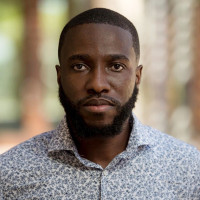
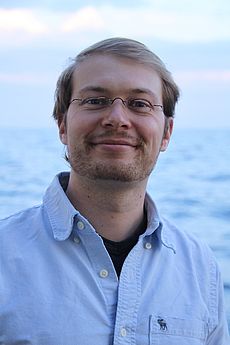
Vashan Wright is an Assistant Professor at the Institute of Geophysics and Planetary Physics (IGPP) within the Scripps Institution of Oceanography at the University of California San Diego. Their primary affiliations include IGPP and the broader Scripps Institution, focusing on interdisciplinary geophysical research. Education: PhD in Geophysics, Southern Methodist University BSc in Geology and Business, Calvin College Research interests span tectonics , planetary geophysics , and rock physics , with applications to coastal processes, seismic activity, and numerical modeling. Wright's work integrates field observations with computational methods to study lithospheric deformation, granular dynamics, and planetary-scale geological phenomena. No scientific awards or recent publications are explicitly listed in the provided text. Their research also touches on remote sensing, sedimentary processes, and geomorphology, reflecting a broad engagement with Earth and planetary sciences.
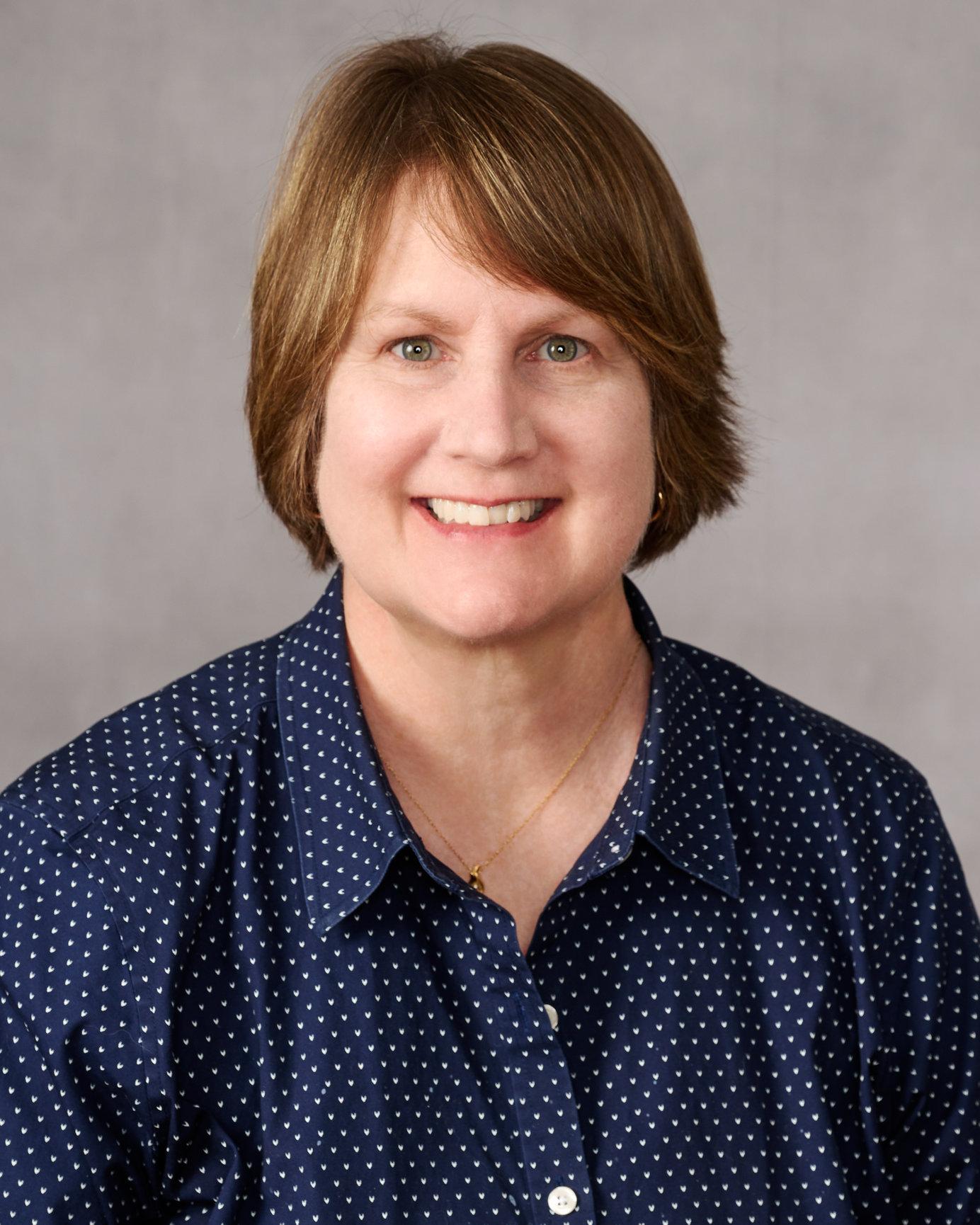
Karen M. Fischer is the Louis and Elizabeth Scherck Distinguished Professor of Geological Sciences at Brown University. Her research focuses on seismology, particularly the structure and dynamics of Earth's lithosphere and asthenosphere. She holds a B.S. from Yale University (1983) and a Ph.D. from MIT (1989), with postdoctoral work at Columbia University’s Lamont-Doherty Earth Observatory. Fischer’s work combines field seismology, data analysis, and modeling to study mantle processes, plate tectonics, and seismic signatures of ancient and modern plate boundaries. Her research has been recognized through prestigious awards, including the Inge Lehmann Medal (AGU), Harry Fielding Reid Medal (SSA), and the W. S. Jardetzky Medal. At Brown, she has received teaching and mentoring awards, reflecting her commitment to education. Fischer’s affiliations include the American Geophysical Union and the Seismological Society of America. Key research themes include mantle melting, lithosphere-asthenosphere boundary dynamics, and seismic anisotropy. Her recent work explores hotspot tracks, subduction zone processes, and global lithospheric structure. Collaborations with institutions worldwide and mentorship of students underscore her active role in advancing geophysical sciences.
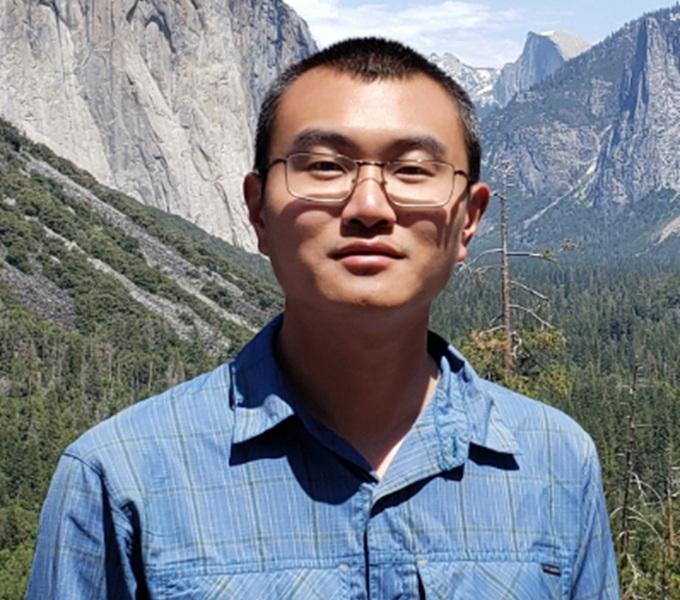
Research Assistant Professor Suoya Fan investigates tectonic processes at the University of Pittsburgh's Department of Geology and Environmental Science. Her interdisciplinary research integrates structural geology, thermochronology, and geomorphology to understand mountain building and landscape evolution. Research focuses on: 3D structural modeling of convergent margins Tectonic-climate interactions Active fault systems in Alaska and Himalayas Thermochronologic constraints on exhumation Field-based studies in Alaska, Himalayas, and Tibet examine crustal deformation patterns using structural mapping, geochronology, and numerical modeling approaches. Current NSF-funded projects analyze subduction zone splay faulting and drainage evolution in orogenic systems.
Dr. David Peacock is a researcher affiliated with the Department of Structural Geology and Geothermics at the University of Göttingen, Germany. He is a member of the MEET group and focuses on structural geology, geothermics, and fracture analysis. His work integrates field observations, geophysical data, and theoretical models to study fault systems, geothermal reservoirs, and fluid flow dynamics. Research interests include fracture mechanics, fault network evolution, and the application of structural analysis to geothermal exploration. He has contributed to studies in the Harz Mountains and other regions, emphasizing the interplay between tectonics, fluid dynamics, and subsurface processes. Dr. Peacock’s methodologies involve high-resolution seismic analysis, Mohr diagram stress modeling, and virtual outcrop databases. His publications span structural terminology, fracture sequencing, and geothermal reservoir characterization. Collaborations with the MEET group highlight interdisciplinary approaches to energy and subsurface challenges.
Carles Roque Pau is an Associate Professor in the Department of Environmental Sciences at the University of Girona, Spain, where he specializes in geomorphology and environmental geology. His research focuses on karst systems, sinkholes, groundwater dynamics, and geophysical methods for hazard assessment. He is a key member of the Research Group on Environmental Geology and Cartography. Institution: University of Girona Department: Department of Environmental Sciences Research Group: Research Group on Environmental Geology and Cartography Email: carles.roque@udg.edu His educational background, though not explicitly detailed, is inferred from his long-standing research and publication record in geomorphology and Quaternary geology. He has contributed extensively to geological mapping in Catalonia and has collaborated on interdisciplinary projects involving archaeology and paleoenvironmental reconstruction. Roque’s research interests span geomorphology, hydrogeology, karst systems, and geological hazards. He employs geophysical techniques such as Electrical Resistivity Tomography (ERT), Ground Penetrating Radar (GPR), and trenching to study sinkhole formation, tufa mounds, and evaporite dissolution. His work integrates field observations with stratigraphic and paleoclimatic analysis, particularly in the Pyrenees and Ebro Basin. He also investigates the impact of climate change on geomorphological processes, including drought effects on sinkhole development and natural acid rock drainage. The recent publications reflect a strong trend in applying integrated geophysical and stratigraphic methods to understand subsurface processes in karst and evaporite terrains. The research spans from pure geomorphology to applied environmental geology, with increasing emphasis on hazard assessment, urban risk, and climate change impacts. Topics include hypogenic karst, salt diapirism, radon in groundwater, and prehistoric flint exploitation, demonstrating both depth and breadth in geological inquiry. While no formal scientific awards are listed in the provided text, his sustained publication record in high-impact journals and leadership in multiple research projects indicate significant recognition within the academic community. Roque has supervised or co-supervised several research projects, particularly in the areas of Neanderthal resource use and sinkhole characterization. He has collaborated extensively with researchers such as Francisco Gutiérrez and Anna Menció on hydrogeological and geomorphological projects. His involvement in EU and national grants highlights his role in advancing environmental research in Spain. He is actively involved in geological mapping through the Institut Cartogràfic i Geològic de Catalunya, contributing to official 1:25,000 scale maps. He also participates in interdisciplinary teams focused on prehistoric archaeology, particularly in the study of Neanderthal behavior and lithic resource exploitation in northeastern Iberia.
Mads Brath Jensen is an Assistant Professor at the Department of Architecture, Design and Media Technology within the Technical Faculty of IT and Design at Aalborg University, Denmark. His academic and research work is centered on the integration of robotics, computational design, and material behavior in architectural processes. His research interests focus on computational architecture , robotic fabrication , and interactive human-robot co-creation . He investigates how real-time feedback between humans, materials, and robots influences cognitive design decisions. His work spans parametric design , clay 3D printing , acoustic tectonics , and sustainable material systems , often manifesting in physical research pavilions and robotic installations. The trends in his recent publications highlight a consistent trajectory toward interactive design frameworks , material-aware robotic processes , and acoustic-architectural integration . His work bridges theoretical design exploration with practical, buildable outcomes, emphasizing real-time human intervention in digital fabrication. Scientific Awards: No formal scientific awards listed in the provided text. Advising and Grants: Mads Brath Jensen has supervised and co-supervised multiple research projects, often as Principal Investigator (PI), including Whispering Wall , Acoustic Tectonics Studio , and Utzon(x) Research Pavilion . These projects were research-based and involved collaboration with external partners such as Boligfonden Kuben. While specific grant amounts are not listed, the sustained project activity indicates successful funding acquisition. He has also advised on educational frameworks and design studios, contributing to research-based teaching at BSc and MSc levels. Labs and Teams: He is affiliated with the Create Integrated Architecture group and the Centre for Sustainable and Digital Transformation at Aalborg University. He has collaborated extensively with Professor Iben Worre Foged and others in the Utzon(x) research and teaching initiatives, organizing summer schools and workshops. His work involves interdisciplinary teams integrating architecture, robotics, and computer vision.
Clara Sena is a Researcher in Hydrogeology at the University of Oslo (UiO) since 2019, affiliated with the Section for Environmental Geosciences. Previously, she held post-doctoral positions at UiO (2016-2019) and the University of Aveiro (2013-2016). Her work spans hydrogeology, environmental geology, and numerical modelling of contaminant transport, with a focus on groundwater-surface water interactions and geochemical redox processes. Sena has participated in major initiatives like IODP Expedition 351 (2014) and coordinated the Norway-Brazil GeoSource network addressing geological resource sustainability. Education : PhD in Geosciences (2009) from University of Aveiro & AMPHOS 21, MSc in Geochemistry (2007), and degrees in Applied Geology and Hydrology. Key Projects : COLOSSAL (Flow across Scales), GeoSource (Norway-Brazil collaboration), and the LOT A2 experiment on radioactive waste repository modelling. Her research integrates numerical tools to study water-rock interactions, contaminant fate, and landslide dynamics. She actively engages in science outreach and policy support, including roles in the EUROFLEETS infrastructure project (2012-2013) and the UNOC-III conference (2025).
Timothy Dixon is a Professor at the School of Geosciences, University of South Florida. Specializing in geodesy, volcanology, and remote sensing, his research integrates GPS, InSAR, and seismic techniques to study tectonic, volcanic, and environmental processes. He has led major projects in Greenland, Costa Rica, Louisiana, and CO2 sequestration monitoring. Education: Ph.D. from the University of California (1979), B.Sc. from the University of Western Ontario (1974). Dixon's research spans geodynamic modeling, earthquake mechanics, and climate-related geodetic monitoring. His recent work includes analyzing lava flow erosion, postseismic deformation, and CO2 storage using geodetic tools. His publications highlight geodetic techniques, GPS-InSAR integration, and environmental geoscience applications. Notable projects include the Plate Boundary Observatory in Costa Rica and CO2 monitoring collaborations. Scientific Awards: Fellow of AAAS (2015), Fellow of the Geological Society of America (2011), and multiple NSF/NASA grants. Dixon has served on advisory panels including NSF/I&F and the USArray Steering Committee. He teaches courses in geodesy, tectonics, and remote sensing.
Adina Pusok is a Royal Society University Research Fellow at the Department of Earth Sciences, University of Oxford, affiliated with Wolfson College. Her research focuses on computational geodynamics, particularly the interaction between magma dynamics and tectonic processes at plate boundaries. She develops numerical models to study melt generation, lithosphere deformation, and mantle flow. Pusok holds a DPhil in Geophysics from Johannes Gutenberg University (Mainz) and a MEarthSci from the University of Oxford. Education DPhil. Natural Sciences - Geophysics, Johannes Gutenberg University, Mainz (2012–2016) MEarthSci. Earth Sciences, University of Oxford (2008–2012) Research Interests Her work combines theoretical and computational approaches to model magma-lithosphere interactions, including processes like small-scale convection, dyke/sill emplacement, and thermochemical evolution of magma. She leads the OceanMelt project (Royal Society URF) and contributed to the ERC-funded RIFT-O-MAT project on magma-assisted tectonics. Pusok's models explore how magmatism shapes oceanic and continental rifts through advanced numerical frameworks. Software Contributions She co-developed the FD-PDE framework (PETSc-based) for magma dynamics simulations and contributed to the LaMEM code for thermo-mechanical geodynamics. These tools are used to model processes like melt extraction, lithosphere extension, and mid-ocean ridge dynamics. Awards Royal Society University Research Fellowship (2024–present) Advising & Grants Pusok's research is supported by the Royal Society and ERC. Her team's work on RIFT-O-MAT advanced numerical tools for understanding magma-tectonic interactions. Current projects focus on inefficient melt transport mechanisms and their implications for lithosphere architecture. Labs/Teams Part of the FoaLab research group, which conducts interdisciplinary studies on lithosphere dynamics and magma processes.
Mats Olvmo is a Lecturer at the Department of Geosciences, University of Gothenburg. His academic career spans over three decades, with a focus on geomorphology, glacial geology, and planetary landform studies. He holds a bachelor's degree (1983) and a doctoral degree (1989) from the University of Gothenburg, mentored by Professor Sten Rudberg. His teaching primarily revolves around geomorphology within the Geography program, integrating physical and human geography perspectives. Research interests include glaciofluvial canyons, preglacial weathered soils, and structural morphology. Since 2016, he has investigated palsa mires in northern Sweden and their response to climate change. Collaborations with institutions like Stockholm University and international planetary scientists highlight his work on Martian landform analogs and Svalbard’s periglacial environments. Key contributions span geomorphic mapping, glacial erosion quantification, and interdisciplinary studies linking geology with climate and human systems. His fieldwork emphasizes detailed terrestrial and extraterrestrial landscape analysis, with over 40 peer-reviewed publications since 1989. Education: Bachelor in Physical Geography, University of Gothenburg (1983) Doctoral Thesis: Glaciofluvial Canyons in Sweden (1989) Key Research Themes: Palsa mire degradation and climate change Martian landform analogs (Nereidum Montes) Structural morphology of Swedish bedrock Long-term landscape evolution models Collaborations: Stockholm University (Karna Lidmar-Bergström) German Aerospace Center (Mars landform studies) Swedish Permafrost Research Network Fieldwork and remote sensing techniques form the core of his methodology, with recent work emphasizing UAV lidar and multispectral imaging for palsa monitoring. His research bridges terrestrial and planetary sciences, contributing to both Earth system and Mars exploration studies.
Professor Damon Teagle is a Professor of Geochemistry at the School of Ocean and Earth Science, National Oceanography Centre Southampton. He serves as Director of the Southampton Marine and Maritime Institute (SMMI) since 2018 and Co-Chief Scientist for the Integrated Ocean Discovery Program (IODP) Expedition 390/393 South Atlantic Transect. His research focuses on ocean crust evolution, fluid-rock interactions, and carbon sequestration. He is actively involved in decarbonizing maritime operations through wind-assisted propulsion, alternative fuels, and carbon capture technologies. Teagle leads numerous projects funded by NERC, EPSRC, and international collaborations. Teaching includes the SOES1001 Earth Materials course, emphasizing mineralogy and petrology. He supervises PhD students in geochemistry, marine geology, and environmental engineering. His work spans ocean drilling expeditions, ophiolite studies, and policy analysis for net-zero ports. Recent projects include the 'Greenhouse Gas Removal via Enhanced Rock Weathering' initiative and the 'CO2 from Port to Pipeline' transport network study. He collaborates with institutions like the Cyprus Marine and Maritime Institute and the International Continental Scientific Drilling Program (ICDP).
Joaquin Garcia San Segundo is a Professor in the Department of Geology at Universidad de Oviedo. His research focuses on structural geology and tectonic processes, particularly in the Pyrenees, Variscan Orogen, and Andes, with applications to mineral exploration and large infrastructure projects. Research interests include: Geodynamic evolution of orogenic belts Alpine structural analysis of Cantabrian Mountains Karst geology and structural controls Applied geology expertise spans exploration of precious metal deposits (Au/Ag), industrial minerals, hydrogeological studies, and engineering geology for infrastructure projects.
Dr. Sarah Dean serves as Assistant Professor in the Geological and Environmental Sciences Department at Hope College, where she has taught since 2020 following six years as a production and exploration geologist in the Permian Basin and Gulf of Mexico oil and gas industry. She holds a Ph.D. in Earth Science from Rice University (2014) and a B.S. in Geology from Hope College (2009). Her research centers on salt and shale tectonics in the Gulf of Mexico using physical clay modeling to simulate geological processes, with implications for petroleum systems and geologic hazards. Previous work includes numerical modeling of fold-thrust belts and seismic studies of Atlantic rifting margins. Publications consistently address structural deformation mechanisms through computational and physical modeling approaches across diverse tectonic settings. Scientific recognition includes: Julia Van Raalte Reimold Faculty Study Award (Nyenhuis program), Hope College, 2022 Wichers Fund for Faculty Development grant (Nyenhuis program), Hope College, 2021 She actively mentors undergraduate researchers in laboratory experiments and field studies, with grant funding supporting student participation in physical modeling and geological fieldwork. Her research program integrates hands-on clay modeling experiments with regional field investigations, including annual trips to Utah and local Michigan dune systems.
Richard Viso serves as Associate Dean and Professor in the Department of Marine Science at Coastal Carolina University. His research integrates geophysical imaging techniques with coastal and marine environmental studies, focusing on practical applications for understanding complex geological processes in dynamic shoreline systems. His educational background includes: Ph.D. in Oceanography (Marine Geology and Geophysics), University of Rhode Island M.S. in Geology, West Virginia University B.S. in Geology, Virginia Tech Viso's research program centers on advanced geophysical methodologies for coastal zone analysis. Key specializations include: Electrical resistivity tomography applications for submarine groundwater discharge mapping Multibeam and backscatter imaging systems for shallow-water bathymetric reconstruction Seafloor/subbottom profiling for tectonic analysis and geological process visualization His scholarly work demonstrates consistent focus on tracer-based hydrological studies, particularly utilizing natural radionuclides to investigate groundwater-seawater interactions and their ecological consequences in sensitive coastal ecosystems. No scientific awards are documented in the available records. Professional activities include academic administration as Associate Dean, though specific details regarding student mentorship or grant-funded research projects are not provided in current documentation.
Tom Kwasnitschka is a permanent scientist in the DeepSea Monitoring group at GEOMAR Helmholtz Centre for Ocean Research Kiel since 2025, with prior roles at GEOMAR's Technology and Logistics Center (2016-2024) and the ROBEX Helmholtz Alliance (2013-2016). He leads projects like LIGHTHOUSE , MOMO , and MUSE , focusing on deep-sea robotics , 3D photogrammetry , and immersive data visualization . He also serves as a lecturer at Kiel University of Applied Sciences since 2010. Education: PhD in Marine Geology (2012, GEOMAR) on submarine volcanism in Cape Verde; Diploma in Geology/Paleontology (2009, Christian-Albrechts University Kiel). His research spans physical volcanology of submarine systems, tephrostratigraphy , and deep-sea technology . His work integrates 3D modeling , optical and acoustic mapping , and virtual environments for marine exploration. Key projects include digital seafloor reconstruction and deep-sea camera systems . Recent publications focus on hydrothermal vent mapping , volcanic hazard analysis , and immersive fieldwork simulations , reflecting trends in multi-disciplinary marine research and underwater robotics . Awards: AGU Outstanding Student Paper Award (2011) Grants include MUSE (0.15M€) , SPP2100 ASDDSA (0.29M€) , and Helmholtz Validation Fund LIGHTHOUSE (2.37M€) . He has led 13 oceanographic cruises using vessels like RV Alkor and RV Poseidon . As co-founder of allsky.de (2003-2023), he advanced immersive media for science communication . His patents include deep-sea camera stabilization and submersible LED systems .