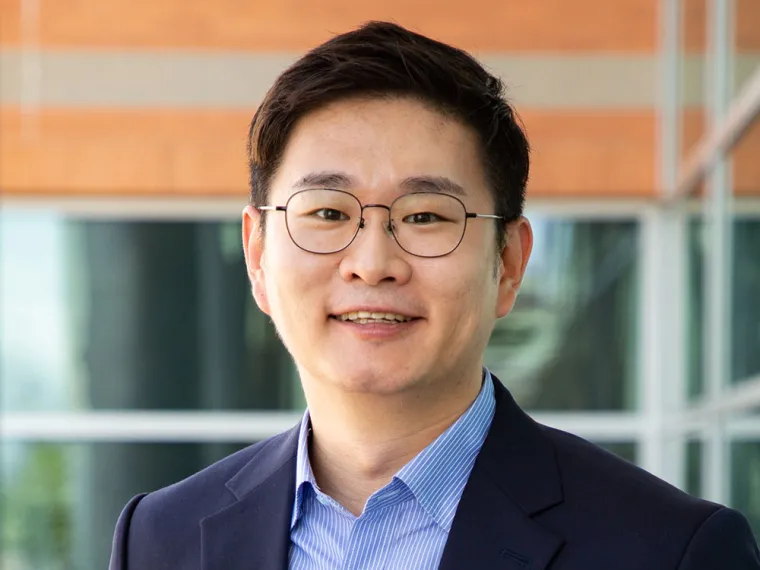
Seokjun Youn is an Assistant Professor in the Department of Management Information Systems at the Eller College of Management, University of Arizona . His research focuses on improving healthcare delivery systems through technological innovations and operational strategies, with additional expertise in supply chain logistics and platform business models. Education: PhD in Operations and Supply Chain Management from Texas A&M University; MS and BS in Industrial Engineering from Texas A&M University and Seoul National University, respectively. Research Areas: Healthcare operational efficiency, patient flow, health IT, human-AI collaboration, and supply chain management. Scientific Awards: DSI Best Theory-Driven Empirical Research Paper Award (2024) CMIH Grant (2020, 2021, 2023, 2024, 2025) POMS Emerging Scholars Program (2021, 2023) Professional Service: Editorial board member for Production and Operations Management and Decision Sciences journals; track chair for conferences like CHITA and DSI. His work combines econometric methods and optimization techniques to address challenges in healthcare systems, with findings published in top journals including Manufacturing & Service Operations Management and Journal of Operations Management .
Barak Ariel is a Professor of Experimental Criminology at the Institute of Criminology, University of Cambridge. He holds a PhD in Criminology from Hebrew University of Jerusalem, an LLM (Hebrew University), LLB (Academic Centre of Law & Business), MA in Criminology (Hebrew University), and BA in Psychology (University of New York). Since 2008, he has been affiliated with the Jerry Lee Centre of Experimental Criminology and teaches on the MSt in Applied Criminology and Police Management. Academic Rank: Professor of Experimental Criminology Key Affiliations: University of Cambridge, Jerry Lee Centre of Experimental Criminology Education: PhD, LLM, MA, LLB, BA Dr. Ariel specializes in experimental criminology, evidence-based policing, and the role of technology in crime prevention. His research focuses on evaluating policing strategies through randomized controlled trials (RCTs), particularly in areas such as body-worn cameras, domestic abuse hotspots, and interventions to reduce violence against women. He has advised police departments and governments across the UK, USA, Latin America, and Europe. His recent publications highlight trends in global crime dynamics, the impact of police interventions on offender behavior, and the use of machine learning for crime forecasting. These works span subfields including hot spots policing, procedural justice, victim-offender overlaps, and network analysis of organized crime. Scientific Awards : Academy of Experimental Criminology Young Experimental Scholar Award European Society of Criminology Young Criminologist Award Fellow of the Division of Experimental Criminology As Chair of the Division of Experimental Criminology (2019–2021), Dr. Ariel has contributed to advancing methodological rigor in criminological research. He has conducted extensive evaluations of police-led interventions, including trials on body-worn cameras, victim communication strategies, and data-driven approaches to domestic homicide prevention. His work bridges academic research with practical policing reforms, emphasizing the importance of empirical evidence in criminal justice policy.
Jackson G. Lu is the General Motors Associate Professor of Management and an Associate Professor of Work and Organization Studies at the MIT Sloan School of Management. His scholarly work bridges cultural psychology with organizational behavior, examining how cultural differences manifest in AI adoption, creativity, and leadership dynamics. He serves as senior editor for Organization Science and Management and Organization Review , and associate editor for Journal of Personality and Social Psychology . Dr. Lu earned his PhD from Columbia Business School in 2018 and received tenure at MIT in 2023. His research has been published in top-tier journals across psychology, management, and general science domains, including Nature Human Behaviour , Psychological Bulletin , and Annual Review of Psychology . His work has garnered over 300 media mentions globally. Cross-Cultural Psychology AI Ethics and Creativity Leadership Emergence Stereotype Research Technological Adoption Workplace Diversity Recent research focuses on cultural tendencies in generative AI , AI's impact on creativity , and structural barriers faced by Asian professionals . He has received numerous accolades from professional societies including the Wegner Theoretical Innovation Prize and multiple Best Senior Editor Awards. 40 Best Business School Professors Under 40 Thinkers50 Radar Class of 2021 Academy of Management Award Outstanding Dissertation Award (2019) SAGE Early Career Award Dr. Lu teaches through MIT Sloan Executive Education's 5-day program Leading the AI-Driven Organization , and his findings have been featured in The New York Times , BBC , and The Economist . His editorial leadership spans multiple journals, reflecting his influence across academic networks.
Herman Bruyninckx is a Part-Time Full Professor at Eindhoven University of Technology (TU/e) in the Mechanical Engineering department, specifically within the Control Systems Technology group and EAISI High Tech Systems initiative. He also serves as a professor (Hoogleraar) at KU Leuven in Belgium. Academic focus on robotics, control systems, and multi-agent coordination Active research in model predictive control , semantic mapping , and dynamic constraint algorithms Recent publications address industrial automation , agro-food robotics , and haptic technology Research Highlights : Developed hybrid decision-making frameworks for multi-agent navigation Innovated swing-free control methods for robotic pick-and-place operations Formulated constrained dynamics algorithms with LQR-Gauss principle integration Created ExoTen-Glove for haptic feedback in virtual environments Collaborative Projects : Coordinated with researchers like René van de Molengraft , Elena Torta , and Koen de Vos Contributed to NWO/TTW FlexCRAFT project for cognitive robotics in agro-food technology
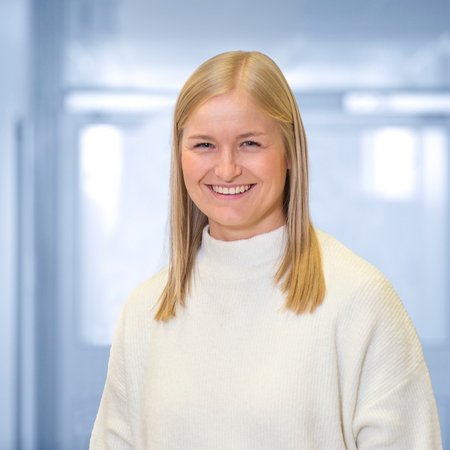
Dr. Carolin Vollenberg serves as a Post-Doctoral Researcher at the Chair of Information Systems & Transformation Management within the Faculty of Computer Science at the University of Duisburg-Essen (UDE). Her academic journey includes a PhD from the University of Muenster (2021-2025), an M.Sc. in Technical Consulting and Management from Hochschule Hamm-Lippstadt (2018-2020), and a B.Eng. in Biomedical Technology from the same institution (2014-2018). Prior to her current position, she worked as a Research Assistant at South Westphalia University of Applied Sciences and gained industry experience at Zapp Systems GmbH. PhD in Business Informatics (2021-2025), University of Muenster M.Sc. Technical Consulting and Management (2018-2020), Hochschule Hamm-Lippstadt B.Eng. Biomedical Technology (2014-2018), Hochschule Hamm-Lippstadt Research Focus: Vollenberg specializes in the governance of lightweight IT systems, digital transformation in public and healthcare sectors, and process mining applications. Her work bridges technical implementation with organizational behavior, particularly examining resistance to automation in sensitive domains like healthcare. She investigates how organizations navigate unintended consequences of technology adoption, with emphasis on RPA (Robotic Process Automation), omnichannel transformation, and data-driven process optimization. Her research methodology combines ethnographic field studies with quantitative process analysis. Publication Trends: Analysis of her 16 publications (2020-2025) reveals strong focus on healthcare IT (45% of works), public sector digitalization (30%), and foundational process management (25%). Recent output shows increasing emphasis on ethical dimensions of process mining and sustainability applications. Her collaborative work spans multiple European institutions with consistent publication in top IS conferences (ICIS, ECIS, HICSS). Best Paper nomination at HICSS-55 (2022) Associate Editor for General Track at Internationale Tagung Wirtschaftsinformatik (WI) 2025 Professional Engagement: Vollenberg actively contributes to academic discourse through editorial roles and peer review. Her industry collaborations with healthcare providers and public sector entities demonstrate applied research impact. Current projects examine virtual nursing transformations and crisis-responsive RPA implementations, reflecting her commitment to solving real-world operational challenges through information systems innovation.
Lars Bo Jeppesen serves as Professor of Innovation Management at Copenhagen Business School's Department of Strategy and Innovation, focusing on digital economy innovation through crowd-based mechanisms, crowdfunding, user communities, and platform ecosystems. His work bridges academic research with practical applications for industry and policy. Education: Master's degree from University of Copenhagen PhD from Copenhagen Business School Professor Jeppesen's research examines how digital platforms transform innovation processes, emphasizing user-driven ecosystems and strategic implications for firms. He investigates crowdfunding dynamics, entrepreneurial financing mechanisms, and the interplay between intrinsic motivation and monetary incentives in crowd innovation, with findings applicable to both startups and established corporations. His recent publications (2020-2025) reveal consistent exploration of platform economics, digital business models, and innovation policy. Key trends include strategic responses to piracy, AI platform competition, freemium model optimization, and the role of social movements in non-commercial innovation, primarily published in top-tier journals like Research Policy and Strategic Management Journal. Scientific Awards: No awards documented in source material Professor Jeppesen advises European and Asian governments on innovation policy while collaborating with leading corporations through projects like the Danish User-Centered Innovation Lab (co-founded with MIT's Eric von Hippel). His current research initiatives include 'Crowdfunding for Youth Entrepreneurship in Tanzania' and 'The Co-Existence of Prosocial Intrinsic Motivation and Monetary Incentives,' supported by field experiments and ecosystem analyses. He directs the Danish User-Centered Innovation Lab, which integrates academic researchers and industry partners to develop practical innovation tools for capturing distributed knowledge, with applications in technology strategy and open innovation frameworks.
Geir Selbæk is a Professor II at the University of Oslo in the Department of Geriatric Medicine . His research focuses on dementia , neurodegenerative diseases , and aging-related mental health , with extensive work on the HUNT study —a large Norwegian population-based cohort. He investigates risk factors like depression , loneliness , metabolic health , and social determinants to understand dementia progression. Key research areas: Dementia epidemiology, geriatric mental health, neurodegenerative disease, aging, cognitive impairment Recent publications analyze AI in diagnostics, genetic risk scores, social media's role in pandemic isolation, and metabolic markers Collaborations Selbæk collaborates with international teams across Alzheimer's & Dementia , Nature Genetics , PLOS ONE , and other high-impact journals. His work integrates epidemiological data , neuropsychological testing , and molecular biology to address dementia prevention and care.
Anton Rozhkov is an Industry Assistant Professor and Director of the M.S. in Applied Urban Science and Informatics Program at the Center for Urban Science and Progress (CUSP) at New York University (NYU) Tandon School of Engineering. His work focuses on applying geospatial tools, modeling techniques, and data science to address complex challenges in urban environments, with particular emphasis on infrastructure planning and city design. Dr. Rozhkov earned his Ph.D. in Urban Planning and Policy from the University of Illinois Chicago, where his research centered on decentralized and renewable energy systems in urban contexts through a complex systems approach. Prior to his doctoral studies, he received an M.S./B.S. in Engineering in Land Cadaster from the State University of Land Use Planning in Moscow, Russia, and worked as a senior specialist in the Russian power grid sector with "Rosseti" Group of Companies. His research interests span the application of complex systems, data science, and spatial analytics to solve urban challenges, particularly focusing on how data-driven policies and new technologies can transform infrastructure planning and city design. Dr. Rozhkov employs methods including causal loop diagrams, system dynamics, and agent-based modeling to understand how decentralized energy systems interact with existing power grids and contribute to sustainable urban development. He has published extensively on urban transportation, energy systems, and census data analysis, with a notable focus on Chicago's urban landscape and Illinois state initiatives. Dr. Rozhkov has been actively involved in several significant research projects including an empirical investigation into affordable transit-oriented development in California sponsored by the California State University Transportation Consortium, the Sustainable Urban-Regional Modeling Network project funded by the Illinois Innovation Network, and the Census 2020 Map-The-Count project with the Illinois Department of Human Services which developed predictive models for census response rates and a GIS platform for reporting outreach activities. Ph.D. in Urban Planning and Policy, University of Illinois Chicago M.S./B.S. in Engineering in Land Cadaster, State University of Land Use Planning (Moscow, Russia) His teaching portfolio includes courses on geographic information systems (GIS), advanced spatial analysis, decision modeling, and machine learning for cities. Dr. Rozhkov emphasizes not just understanding urban trends but exploring the "why" behind these trends to develop sustainable solutions. His recent publications (2020-2025) demonstrate a consistent research trajectory examining the complex interrelationships between urban infrastructure systems, particularly focusing on energy, transportation, and spatial patterns through sophisticated analytical methods. Outside of his academic work, Dr. Rozhkov is passionate about urban and landscape photography, traveling, running, snowboarding, and playing guitar. He was born and raised in Balashikha, a city in the Moscow suburbs in Russia, and maintains a gallery of his photographic work from various global locations.
Ullrich Ecker is a Professor in the School of Psychological Science at The University of Western Australia (UWA). He holds roles such as Associate Editor for the Journal of Applied Research in Memory and Cognition and Experimental Psychology , and serves on the ARC College of Experts (2023-2025). His academic background includes a PhD from Saarland University (Germany) and a Dipl.Psych. from the same institution. Ecker’s research focuses on misinformation, memory, and decision-making, with a particular emphasis on designing interventions to counter false information. Education: PhD, Saarland University, Germany (2007) Dipl.Psych., Saarland University, Germany (2003) Research Interests: Ecker’s work addresses the psychological mechanisms underlying misinformation, memory updating, and belief change. He explores how people process and retain false information, particularly in the context of social media and public health. Key areas include the effectiveness of debunking strategies, the cognitive underpinnings of belief persistence, and the design of interventions to enhance truth discernment. His research also intersects with societal challenges like climate change communication and public health misinformation. Awards and Recognition: Best Publication Award from the Institute for Information Literacy at Purdue University (2023) Australian Research Awards – Research Field Leader in Cognitive Science (2023) UWA Vice-Chancellor's Award for HDR Supervision (Special Commendation, 2023) School of Psychological Science Award for Research Impact and Innovation (2022) School of Psychological Science Mid-Career Research Award (2022) Grants and Projects: Ecker leads and collaborates on numerous grants, including an ARC Discovery Project (2024–2027) addressing emerging misinformation threats, and the NHMRC Special Initiative HEAL Grant (2022–2027) focusing on health and environmental change. He has also secured funding from the WA Defence Science Centre, DSTG, and the Worldwide Universities Network. Notable projects include developing AI-driven tools to combat disinformation and studying misinformation’s behavioral consequences. He actively supervises PhD students in misinformation research and is open to new candidates. Teaching and Engagement: Ecker teaches Cognitive Psychology and Psychological Research Communication Skills at UWA. He is involved in community engagement, including chairing events on memory and fact-finding. His industrial collaborations focus on designing communication strategies to counter misinformation in public health and defense sectors.
Guo Ping is an Associate Professor of Mechanical Engineering at Northwestern University, leading the Advanced Intelligent Manufacturing Laboratory (AIM). His research focuses on precision manufacturing, intelligent metrology via deep learning, and advanced manufacturing applications. He holds a Ph.D. from Northwestern University and a B.S. in Automotive Engineering from Tsinghua University. Education: Ph.D. in Mechanical Engineering, Northwestern University, Evanston, IL B.S. in Automotive Engineering, Tsinghua University, Beijing, China Research Interests: Dr. Guo’s work emphasizes innovations in precision engineering, including ductile-regime machining, smart metrology systems, and robotics-driven manufacturing. Key areas include structural coloration, additive manufacturing, and human-robot collaboration in industrial settings. His lab explores cutting-edge techniques like ultrasonic vibration machining and machine learning for defect detection and process optimization. Publications Trends: Recent work spans AI-driven quality control (e.g., photometric stereo networks), robotic swarm patterning, and wearable fatigue monitoring systems. His research bridges machine learning, robotics, and traditional manufacturing to address scalability and precision challenges. Awards: F.W. Taylor Medal (CIRP, 2023) ASME Kornel F. Ehman Manufacturing Medal (2021) SME Outstanding Young Manufacturing Engineer Award (2020) Professional Service: Associate Editor of the Journal of Manufacturing Processes (2017–present). Active in organizing conferences and reviewing for top journals. Labs & Teams: Directs the AIM Lab, which integrates robotics, AI, and advanced materials to solve problems in precision fabrication and smart manufacturing. Current projects include structural coloration for anti-counterfeiting and fatigue prediction in industrial workers.
Dr. Jingyun Wang is an Assistant Professor in the Department of Computer Science at Durham University. Previously, she held an Assistant Professor position at Kyushu University, Japan. Her primary affiliations include the Centre for Neurodiversity & Development and the Artificial Intelligence and Human Systems Group (AIHS), as well as the Pedagogical Innovation in Computer Science Group (PICS). She is a Fellow of the Higher Education Academy and has led or contributed to research projects funded by JSPS, JST, NICT, Innovate UK, and industry partners. Her research focuses on AI-driven educational technologies, including AI-based feedback systems, computational thinking education, game-based learning, and ontology techniques. She actively contributes to editorial boards (e.g., Computers & Education: Artificial Intelligence ) and serves as a conference chair for AIED, ICCE, and LTLE. Current research includes adaptive learning systems for mathematics education, serious games for cybersecurity training, and visualization tools for e-learning. Her scientific contributions span over 50 peer-reviewed publications, with recent work emphasizing learning analytics, multimodal systems, and digital health interventions. She advises multiple PhD students and mentors in professional recognition pathways. Key projects include developing the BETTER speech training system, the MEMORABLE cybersecurity game framework, and ontology-based language learning platforms.
Elias G. Carayannis is a Full Professor of Science, Technology, Innovation, and Entrepreneurship at the George Washington University School of Business (GWSB), Washington, D.C. He serves as Director of Research on Science, Technology, Innovation, and Entrepreneurship at the European Union Research Center (EURC) and co-founder/co-director of the Global and Entrepreneurial Finance Research Institute (GEFRI). His academic journey includes a B.S.C.E.E. from the National Technical University of Athens (1985), M.B.A. and Ph.D. in Management of Technology from Rensselaer Polytechnic Institute (1990, 1994). His research focuses on strategic Government-University-Industry partnerships, technology transfer/commercialization, international science policy, and regional economic development. He pioneered the Quintuple Innovation Helix framework, integrating Government, University, Industry, Civil Society, and Environment into innovation ecosystems. Carayannis has authored over 100 academic papers and 16 books with Springer, Edward Elgar, and others, and serves as editor-in-chief for multiple journals and book series. Professionally, he advises global entities like the World Bank, European Commission, and U.S. agencies on innovation and technology strategies. He is fluent in English, French, German, and Greek, with Spanish proficiency. His work emphasizes AI-driven innovation, Industry 5.0/Society 5.0 transitions, and fusion energy policy. He delivers keynote speeches globally on innovation frameworks and sustainable development. Key institutions affiliated include GWSB, EURC, GEFRI, and visiting roles at Jönköping School of Entrepreneurship (Sweden) and Grenoble Ecole de Management (France). His contributions span policy design, entrepreneurship ecosystems, and interdisciplinary approaches to global challenges like climate change and digital transformation.
Professor Lynette Cheah is a leading academic in sustainable transport, holding the position of Professor and Chair of Sustainable Transport at the University of the Sunshine Coast (UniSC), Queensland, Australia. She directs the Sustainable Mobility Research Laboratory, focusing on data-driven models and digital tools to reduce transport environmental impacts. Her expertise spans smart cities, urban freight, transport modeling, and policy assessment. Educations: PhD in Engineering Systems (MIT) MSc in Management Science and Engineering (Stanford University) BSc in Civil and Environmental Engineering (Northwestern University) Research Interests: Lynette’s work integrates interdisciplinary approaches to address sustainable mobility challenges. Key areas include electric mobility, low-carbon transport infrastructure, transport equity, urban freight optimization, and climate policy. She collaborates with urban planners, computer scientists, and policymakers to translate research into real-world impact, such as leading UN climate reports and advising Singapore’s Public Transport Council (2019–2024). Publications & Awards: Lynette has authored over 70 peer-reviewed articles, including high-impact journals like Transportation Research and Nature Energy . Notable awards include the 2023 TRB Best Applied Research Paper Award and the 2020 Graedel Prize. Her work has been featured in CNN, Nature, and ChannelNewsAsia. Grants & Collaborations: Current projects include electric mobility lifecycle assessments, universal basic mobility trials, and low-carbon transport infrastructure studies. Past collaborations include foresight studies for Singapore’s 2040 urban mobility vision and material flow analyses for vehicle lightweighting. Labs & Teams: She leads the Sustainable Mobility Research Laboratory at UniSC, fostering innovation in smart city technologies and sustainable transport systems.
Yolanda Vidal Segui is an Associate Professor in the Department of Mathematics at the Universitat Politècnica de Catalunya (UPC), affiliated with the Escola d'Enginyeria de Barcelona Est (EEBE). Her research focuses on wind energy systems, predictive maintenance, and structural health monitoring of wind turbines. She leads projects in the CoDAlab and WinTurCoM research groups, specializing in data-driven models, condition monitoring, and failure prognosis. Her work integrates machine learning, mathematical modeling, and sensor technology to enhance turbine reliability and energy efficiency. Dr. Vidal holds a PhD in Applied Mathematics and has authored over 350 publications. Her contributions include advancements in SCADA data analysis, vibration-based diagnostics, and AI-driven condition monitoring systems. She has received several accolades, including the WindEurope Technology Workshop recognition and the IFIT Distinction in Mechanism and Machine Science. Her research bridges academia and industry, addressing challenges in offshore wind turbine integrity and maintenance strategies. Active in professional service, she serves on conference committees and editorial boards (e.g., Mechanical Systems and Signal Processing, Wind Energy). Her work emphasizes sustainable energy solutions and has been applied in real-world scenarios like the Alpha Ventus wind farm. She also contributes to educational initiatives, developing innovative teaching materials for engineering students.
Aakash Sahai is an Assistant Research Professor in the CEDC-Electrical Engineering department at the University of Colorado Denver - Denver Campus. His research focuses on advancing plasma physics, laser-plasma interactions, and nanoplasmonic technologies for high-energy particle acceleration. He is actively involved in designing novel accelerator concepts, such as nanostructure-based plasmonic accelerators capable of achieving extreme electric fields (PetaVolts/meter). His work bridges theoretical, computational, and experimental approaches to address challenges in high-gradient acceleration, plasma wakefields, and extreme nanoscience. Key research interests include laser-driven plasma acceleration, plasmonic field enhancement in nanostructures, and applications of particle beams in medical and high-energy physics. He collaborates on projects like the EuPRAXIA design study, aiming to develop compact, cost-efficient particle sources. His contributions span experimental setups, computational modeling, and innovative methodologies for radio transmission through plasmas and particle beam processing. Notable achievements include pioneering studies on relativistic surface plasmons, PetaVolt plasmonics, and optimizing laser-plasma interactions for proton/ion acceleration. His research has implications for next-generation accelerators, compact X-ray sources, and advanced plasma diagnostics. Sahai’s interdisciplinary approach integrates electrical engineering, material science, and high-energy physics to push the boundaries of accelerator technology. Advising and grants: No formal advisees or grant details listed. His work is supported by collaborations and institutional resources, including participation in national and international initiatives like Snowmass workshops. Labs/Teams: Active contributor to the EuPRAXIA consortium and affiliated with plasma physics and accelerator research groups at University of Colorado Denver.