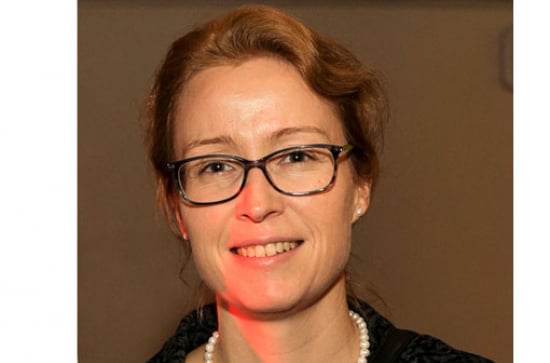
Catherine Tucker is the Sloan Distinguished Professor of Management and Professor of Marketing at the MIT Sloan School of Management. She serves as the faculty director of the EMBA program and has chaired the MIT Sloan PhD Program. Her research focuses on the intersection of technology, marketing, and public policy, with expertise in digital privacy, online advertising, and blockchain applications. She co-founded the MIT Cryptoeconomics Lab and has testified before Congress on digital privacy issues. Tucker holds a PhD in Economics from Stanford University and a BA from the University of Oxford. Education: PhD in Economics, Stanford University Bachelor of Arts, University of Oxford Research Interests: Algorithmic bias and fairness Privacy regulation and consumer data Blockchain technology applications Healthcare technology and digital health Marketing strategy in digital ecosystems Awards: NSF CAREER Award (2010s) William F. O’Dell Award (Long-term Impact in Marketing) Garfield Economic Impact Award (2020) Editorial Roles: Senior editor at Marketing Science , former co-editor at Quantitative Marketing and Economics , and associate editor roles at Management Science and Journal of Marketing Research . Labs & Initiatives: Co-director of the NBER Digital Economics and AI program, and co-founder of the MIT Cryptoeconomics Lab studying blockchain applications.
Rui Li is an Associate Professor in the Ph.D. program at Rochester Institute of Technology's Golisano College of Computing and Information Sciences. She directs the Lab for Use-inspired Computational Intelligence (LUCI), focusing on AI applications in computational biology and medical imaging. Education includes: B.Sc. in Computer Science, Harbin Institute of Technology M.Sc. in Computer Science, Tianjin University of Technology Ph.D. in Computing and Information Sciences, RIT Research integrates statistical machine learning with computational biology, medical image analysis, and human visual attention modeling. Current projects include deep learning for histopathology, multimodal medical image registration, and gene network inference. Publications demonstrate consistent focus on medical AI applications, with recent advances in unsupervised image registration, interactive segmentation, and multimodal fusion techniques. Key trends include self-supervised learning, uncertainty-aware models, and human-AI collaboration frameworks. Awards include the NSF CAREER Award for developing adaptive machine intelligence systems. Advises multiple PhD students on projects spanning deep learning architectures, biomedical image analysis, and biological network modeling. Leads several NSF-funded projects including human-centered image understanding systems and gene-protein network inference tools. Directs LUCI lab investigating machine learning for healthcare applications and teaches graduate courses in Statistical Machine Learning and Deep Learning.
Valeria Caiati is an Assistant Professor at the Urban Planning Group within the Built Environment School at Eindhoven University of Technology. Her research focuses on sustainable urban mobility, smart cities, and the role of ICTs in fostering sustainable development. She leads the SCRIPTS project exploring demand-driven mobility services and platform technologies. She holds a PhD from TU/e, preceded by professional experience in international consultancy and research institutes in Italy. Valeria teaches courses like 'Built Environment and Smart Mobility' and contributes to 8 active/funded projects, including LEVERAGE and NEDAM initiatives. Her research interests revolve around Mobility as a Service (MaaS), sustainable transportation policies, and behavioral modeling of transport adoption. She employs mixed-methods approaches, including stated choice experiments and portfolio analysis to assess user preferences and system impacts. Recent work examines parking guidance systems, electric vehicle adoption drivers, and corporate sustainability interventions. Valeria has supervised 9 academic works and actively participates in peer-review for journals like Transportation and European Transport Research Review . She engages in professional activities such as invited talks on MaaS bundling strategies and workshop participations on transformative urban mobility. Her teaching portfolio includes courses integrating theory with practical studio projects in urban development.
Pauline Jones is a Professor of Political Science at the University of Michigan (UM) and the Edie N. Goldenberg Endowed Director for the Michigan in Washington Program. She also founded and directs the Digital Islamic Studies Curriculum (DISC). Her research focuses on institutional change in Central Asia, state regulation of religion, and pandemic policy responses. She holds a Ph.D. (with distinction) from Harvard University. Education: Ph.D. (Government), Harvard University, with distinction M.S. (Government), Harvard University B.A. (Political Science and History), UC Berkeley, with honors Her research explores how state religious policies affect political attitudes, pandemic compliance behaviors, and historical memory's role in foreign aid support. She has authored five books, including Institutional Change and Political Continuity in Post-Soviet Central Asia and The Oxford Handbook on Politics in Muslim Societies . Current projects analyze protest impact on authoritarian policies and historical narratives' influence on foreign policy. She has held leadership roles at UM’s Islamic Studies Program (2011-14), International Institute (2014-20), and currently directs the Michigan in Washington Program. Affiliated with the Global Islamic Studies Center, Center for Political Studies, and Weiser Center for Emerging Democracies. Teaches courses on radical Islam, Central Asian politics, qualitative methods, and pandemic governance. Her work appears in American Political Science Review , Annual Review of Political Science , and Foreign Affairs .
Professor Judy Kay is a leading academic in Computer Science at the University of Sydney, holding a Chair in Human-Centred Technology Research within the Faculty of Engineering and IT. Her work focuses on designing personalized systems that empower users to control their data, particularly in lifelong learning and health contexts. She leads the Human Centred Technology Research Cluster and is Editor-in-Chief of the International Journal of Artificial Intelligence in Education (IJAIED). Education: Studied at the University of Sydney, inspired to pursue academia due to its multidisciplinary environment and student collaboration opportunities. Research interests include user modeling, scrutable AI systems, and interfaces for personal informatics. Current projects span virtual reality learning environments, health data dashboards, and ethical AI transparency. Her work has led to commercialized technologies like the Personis system. Publications include over 200 peer-reviewed works in top venues like CHI, UbiComp, and AIED conferences. Awards highlight her contributions to computing education and AIED, including the 2023 Lifetime Achievement Award. Advises 4 current PhD/Master’s students focusing on topics like Open Learner Models in VR and health decision-making tools. Collaborates with multidisciplinary teams across computer science, health sciences, and education. Labs/Teams: Leads research groups in the School of Computer Science and collaborates with the Charles Perkins Centre on health-related projects.
Ares J. Rosakis is the Theodore von Kármán Professor of Aeronautics and Mechanical Engineering at the California Institute of Technology (Caltech), where he served as Chair of the Division of Engineering and Applied Science from 2009-2015 and previously as Director of the Graduate Aerospace Laboratories (GALCIT). He has held numerous prestigious visiting professorships including at Nanyang Technological University, Northwestern University, Columbia University, Oxford University, and École Normale Supérieure in Paris. Rosakis earned his B.A. and M.A. in Engineering Science from Oxford University in 1978, followed by his Sc.M. (1980) and Ph.D. (1982) in Engineering (Solid Mechanics) from Brown University. He joined Caltech as an Assistant Professor in 1982, was promoted to Associate Professor in 1988, and to full Professor in 1993. In 2004, he was named the Theodore von Kármán Professor, one of Caltech's most distinguished named chairs. Rosakis is globally recognized as the foremost expert in dynamic failure mechanics of solid materials. His pioneering contributions span the dynamic failure of metals, composites, and interfaces. He invented Coherent Gradient Sensing (CGS) interferometry, a novel optical method sensitive to gradients of optical path differences that has been widely adopted in fracture mechanics and thin film stress measurements. His research encompasses dynamic shear-dominated rupture of heterogeneous materials, rupture mechanics of crustal earthquakes (where he experimentally discovered 'intersonic' or 'supershear' ruptures), and reliability of thin films and in-situ wafer level metrology. His work bridges engineering science, materials mechanics, and geophysics with remarkable interdisciplinary impact. His recent publications demonstrate a strong focus on earthquake mechanics and laboratory simulations of seismic events, particularly supershear earthquake ruptures. The research connects fundamental fracture mechanics with real-world geophysical phenomena, revealing how laboratory-scale experiments can illuminate the physics of large-scale earthquakes. His work has established critical links between theoretical models, experimental observations, and geological field evidence. Rosakis has received numerous prestigious awards including: 2024 Foreign Member of the Royal Society, UK 2023 Honorary PhD from National Technical University of Athens 2023 Honorary Degree of Doctor of Engineering from University of Illinois 2021 Zdeněk P. Bažant Medal for Failure and Damage Prevention 2018 Timoshenko Medal from ASME 2016 Elected to the National Academy of Sciences 2011 Elected to the National Academy of Engineering Throughout his distinguished career at Caltech, Rosakis has mentored numerous graduate students and postdoctoral researchers, many of whom have become leaders in their fields. His research has been continuously supported by major grants from the National Science Foundation, Department of Energy, and other federal agencies, focusing on dynamic fracture, earthquake mechanics, and advanced optical measurement techniques. He has served on numerous editorial boards and advisory committees for major scientific organizations. At Caltech, Rosakis leads research in the Graduate Aerospace Laboratories (GALCIT), where he has established world-class experimental facilities for studying dynamic fracture and earthquake mechanics. His laboratory features high-speed imaging systems capable of millions of frames per second, infrared diagnostics for temperature field measurements, and specialized equipment for simulating earthquake ruptures at laboratory scale. His research group combines experimental, theoretical, and computational approaches to address fundamental questions in solid mechanics and their applications to geophysics and materials engineering.
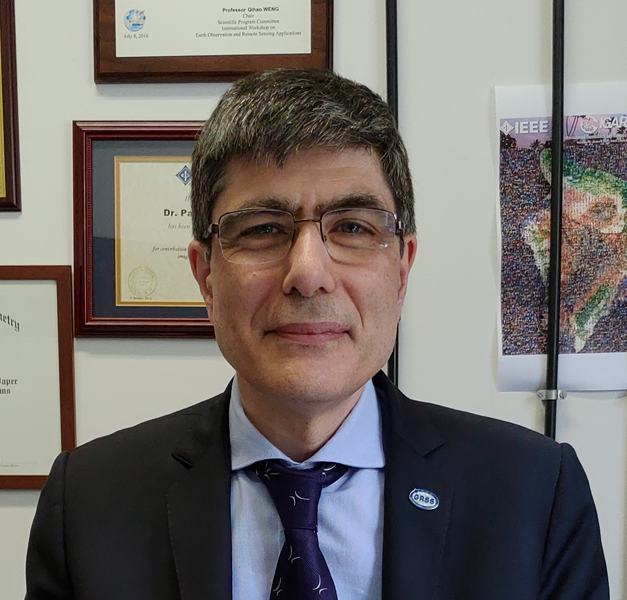
Paolo Gamba is Full Professor in Telecommunications and Remote Sensing at the University of Pavia, Italy, where he previously led the Telecommunications and Remote Sensing Laboratory until 2021. He currently serves as Delegate of the Rector for international relations with USA and the Americas. Gamba is Principal Investigator for projects funded by the Italian Space Agency (ASI), Italian Ministry for External Affairs, and European Space Agency (ESA), and coordinates the School of Science and Technology for the Consortium of Italian Universities for Argentina (CUIA). His research focuses on urban remote sensing , image processing , data fusion , and Earth observation applications for physical exposure and risk management. He has pioneered work in remote sensing data analysis and telecommunications, with particular emphasis on developing methods for urban environment monitoring. Gamba holds significant leadership positions in scientific organizations: Current Editor-in-Chief of IEEE Geoscience and Remote Sensing Magazine Former President of IEEE Geoscience and Remote Sensing Society (2019-2020) Technical Chair for multiple IGARSS conferences Founding organizer of GRSS/ISPRS Joint Workshops on Remote Sensing over Urban Areas Awards & Honors: IEEE Fellow (2013) IAPR Fellow (2020) AAIA Fellow (2022) Outstanding Service Award from IEEE GRSS (2021) Multiple excellence in reviewing awards He maintains active involvement in space mission planning through membership in advisory groups for COSMO/SkyMed Constellation (ASI) and Sentinel-2 Next Generation mission (ESA). Gamba has published extensively with over 150 peer-reviewed journal articles and 300+ conference presentations.
Amalia Foka is an Assistant Professor in Computer Science Applications for the Arts at the Department of Fine Arts & Art Sciences , School of Fine Arts , University of Ioannina , Greece. She has held academic positions at the University of Patras (2005-2013), University of Ioannina (2005-2008), and Computer Technology Institute & Press "Diophantus" (2014-2015). Her research bridges Artificial Intelligence with Digital Art , focusing on Generative AI , Social Media Mining , and Human-Computer Interaction within artistic contexts. Education: BEng in Computer Systems Engineering (1998) from the University of Manchester Institute of Science & Technology (UMIST) , UK MSc in Advanced Control (1999) from UMIST PhD in Robotics (2005) from the Department of Computer Science , University of Crete Her artistic research includes projects like Bushwalking (StyleGAN2 landscape generation), Breaking the Silence (NLP analysis of taboo topics), and The Invisible Structures of the Artworld (social media-driven network visualization). She leads the Multimedia Lab at the University of Ioannina, focusing on AI in Creative Processes and Digital Interaction methodologies.
Rozenn Dahyot is a Professor of Computer Science at Maynooth University within the Faculty of Science & Engineering. She previously held roles as Assistant and Associate Professor in Statistics at Trinity College Dublin (2008-2021) and Lecturer in Computer Science (2005-2008). Her research interests bridge Digital Signal Processing, Computer Vision, Machine Learning, and Statistical Analysis. She organized the European Signal Processing Conference (EUSIPCO2021) in Dublin and served as President of the Irish Pattern Recognition and Classification Society (IPRCS) from 2014-2020. Her work spans topics like semantic scene understanding, CNN compression, and medical image segmentation. Key contributions include advancements in graph-based image analysis, reinforcement learning optimization, and AI-driven systems for disaster management. Dahyot is a member of IEEE, ACM, and EURASIP, contributing to both academic and industrial collaborations.
Dr James Lamb is a Lecturer in Digital Education at the Moray House School of Education and Sport, University of Edinburgh, where he is affiliated with the Institute for Education, Community and Society (IECS) and Edinburgh Futures Institute. He teaches on the MSc in Digital Education and MSc in Education Futures programs, and serves as course organiser for several key courses including 'Learning Spaces and Digital Technologies', 'The Future of Learning Organisations', and 'Education and Digital Cultures'. As an active researcher, he contributes to the Centre for Research in Digital Education and leads the Hybrid Pioneers research group. Dr Lamb's educational background includes a PhD from the University of Edinburgh (funded by ESRC), an MSc with distinction from the University of Edinburgh, and a BA degree with distinction from Edinburgh Napier University. His doctoral research focused on 'Space, Sociomateriality, Sound: the Learning Spaces of Higher Education,' reflecting his longstanding interest in the relationship between physical environments and educational experiences. Dr Lamb's research primarily investigates the relationship between learning spaces and digital technologies, with particular attention to how sound features within educational contexts and how multimodal approaches can enhance teaching and assessment. His work bridges theoretical frameworks from postdigital studies, sociomaterial theory, and spatial analysis to examine how digital technologies transform physical and conceptual learning environments. He has developed innovative methodologies for studying learning spaces, including the use of 'digital multimodal postcards' that capture both visual and auditory dimensions of educational experiences. His research is characterized by a strong commitment to practical applications that can inform educational design and improve student learning experiences in both physical and digital settings. Dr Lamb's extensive publication record demonstrates a clear evolution toward increasingly sophisticated explorations of postdigital learning spaces. His recent work integrates concepts from architecture, music, and mobility studies to create a more holistic understanding of how learners inhabit and transform educational environments. A notable trend is his growing focus on sustainability, equity, and well-being within learning space design, reflecting broader shifts in educational priorities toward more humane and socially responsible approaches to technology integration. Dr Lamb actively supervises PhD students Edward Martin and Nick Hood, and is open to supervising projects related to learning spaces, sound in education, and multimodal teaching and assessment in higher education. His supervision approach emphasizes connecting theoretical frameworks with practical educational applications, encouraging students to develop innovative methodologies for investigating complex educational phenomena. Dr Lamb leads the Elektronisches Lernen Muzik project, which explores the relationship between music and learning, and is a co-author of the influential Manifesto for Teaching Online. He is also a key member of the Hybrid Pioneers research group, which investigates the challenges and opportunities of hybrid teaching and learning environments. These initiatives reflect his commitment to exploring the intersections between traditional educational practices and emerging digital possibilities.
Ezequiel Reficco is an Associate Professor at ESCP Business School's Madrid campus, specializing in Management. Previously, he served as Associate Professor at EGADE Business School (Tecnológico de Monterrey) and Chair of the Strategy Department at Universidad de Los Andes School of Management (Bogotá, Colombia). His academic journey includes a post-doctoral fellowship and Senior Researcher role at Harvard Business School (2001–2008). He co-authored books with Harvard University Press and published extensively in journals like the Journal of Business Ethics and Harvard Business Review . He is recognized globally for his research output, ranking among the top 10% of SSRN authors and #108 in Colombia's most cited researchers (2015). His research focuses on responsible management education, corporate social responsibility (CSR), inclusive business models, and strategic cross-sector partnerships. Key areas include leveraging business strategies to address poverty (BoP markets), fostering sustainability through innovation, and redesigning educational curricula for ethical leadership. His work bridges theory and practice, with consulting engagements for multilateral organizations and corporations like Inditex (owner of Zara). Notable achievements include awards from Universidad de Los Andes and Tecnológico de Monterrey for research excellence. He actively contributes to policy debates on social entrepreneurship and global development, emphasizing Latin American contexts. His recent articles highlight trends toward integrating CSR into core business operations and rethinking educational frameworks to address global challenges. Professional roles beyond academia include membership in Inditex's Social Council, advising on ethical practices and sustainability initiatives. His career reflects a commitment to aligning business strategies with societal impact, particularly in underserved markets and developing regions.
Assoc. Prof. Dr. Sema Alaçam Doğan has been affiliated with Istanbul Technical University since 2014, serving as an Associate Professor in the Department of Architecture . She has held administrative roles including Deputy Head of Department and Erasmus Coordinator. Education : PhD in Informatics in Architectural Design (2008-2014), MS in Informatics in Architectural Design (2005-2008), and BS in Architecture (1999-2005) from Istanbul Technical University. Her research explores Computational Design , Artificial Intelligence in Architecture , and Sustainable Material Innovation . She investigates digital tools for heritage preservation, daylight optimization in BIM, and cognitive development in architecture students. Recent publications analyze AI-assisted design literacy , machine learning for Sinan mosques , and environmental comfort in Harran houses . Her work integrates algorithmic frameworks with sustainable practices. Scientific awards include multiple ITU Publication and Performance Awards (2021-2024), FABFEST Prizes , and the 2024 Artemis Educator Award from NASA. Active projects like "Physical Computation in Architectural Drawing" and "Robotic Fabrication with Recycled Wind Turbine Blades" demonstrate her leadership in computational and sustainable research.
Alis Oancea is Professor of Philosophy of Education and Research Policy at the University of Oxford's Department of Education, part of the Social Sciences Division. She holds additional roles including ESRC Centre for Global Higher Education Deputy Director and Social Sciences Division Advocate for Responsible Engagement. With dual doctoral degrees (DPhil from Oxford and PhD from Bucharest), she also received a Doctor Honoris Causa from University of the West Timisoara. Her research focuses on meta-research, research policy, and higher education governance. Key areas include research assessment frameworks, impact measurement, ethics, open knowledge practices, and teacher education. She co-edited the 2024 Handbook of Meta-Research and leads international studies on research cultures and policies. Education: DPhil (Oxford), PhD (Buc), DipLATHE (Oxford), Dhc (UWT) Roles: Director of Research (2016-20), REF2021 Coordinator, ESRC CGHE Deputy Director Leadership: Over 30 funded projects including the RKEEI initiative and BERA Observatory Her 150+ publications span research policy, impact evaluation, and education systems. Awards include FAcSS Fellowship and numerous international advisory roles across Europe and Norway. Advises on global education reforms and chairs panels for EU, UK, and Nordic research councils. Current doctoral supervision focuses on research policy, higher education systems, and teacher education innovations. Active in editorial roles for Oxford Review of Education and Review of Education .
Masood Masoodian is an Associate Professor in the Department of Art and Media at Aalto University, Finland. He leads the Visual Communication Design research group, focusing on interactive visualization for health, energy, and sustainability contexts. Previously, he held roles at the University of Waikato (2000-2016), University of Southern Denmark, and Massey University. Education: Doctoral degree in Other disciplines from the University of Waikato (1999) Research interests include design thinking, visualization of complex data, and creative aging interventions. Notable projects include the EU-funded INT-ACT initiative (2024-2026) addressing intangible cultural heritage. He has received an award for collaborative work on video game ludonarrative analysis (2019). Recent activities include organizing workshops on map-based interfaces, co-creating cultural heritage methods, and delivering public talks on digital design. Supervised two theses and contributed to 131 peer-reviewed outputs, emphasizing human-centered design and sustainability. Grants: Principal investigator for multiple EU projects totaling over 3 years of active funding. Awards: Prize for 'Comedy in the Ludonarrative of Video Games' (2019). Labs/Teams: Visual Communication Design group, collaborating internationally on projects like INT-ACT's cultural heritage mapping.
Sascha Struwe serves as a Postdoctoral Researcher at Aalborg University Business School within the Faculty of Social Sciences and Humanities, actively contributing to the International Business Research Group. Based at Fibigerstræde 11 in Aalborg Øst, Denmark, Struwe operates at the intersection of service innovation theory and business practice with international focus. Research expertise centers on service innovation , value co-creation , and digital servitization , particularly examining B2B contexts and open banking ecosystems. Work consistently explores institutional influences through German-Chinese case studies, addressing how cultural and regulatory frameworks shape service design. Recent trajectories reveal evolution from foundational service design challenges (2019-2021) toward digital transformation implications (2022-2023), with emphasis on value co-destruction mechanisms in financial ecosystems. Struwe led the PhD project Innovating the Invisible and Intangible: Value Creation in B2B service (2018-2021) investigating co-creation capabilities across industrial sectors. Academic engagement includes conference participation at EIBA and CICALICS events, plus a visiting researcher appointment at Fudan University's Nordic Centre (2019-2020). Current work continues through the International Business Research Group, focusing on digital literacies and service ecosystem resilience.