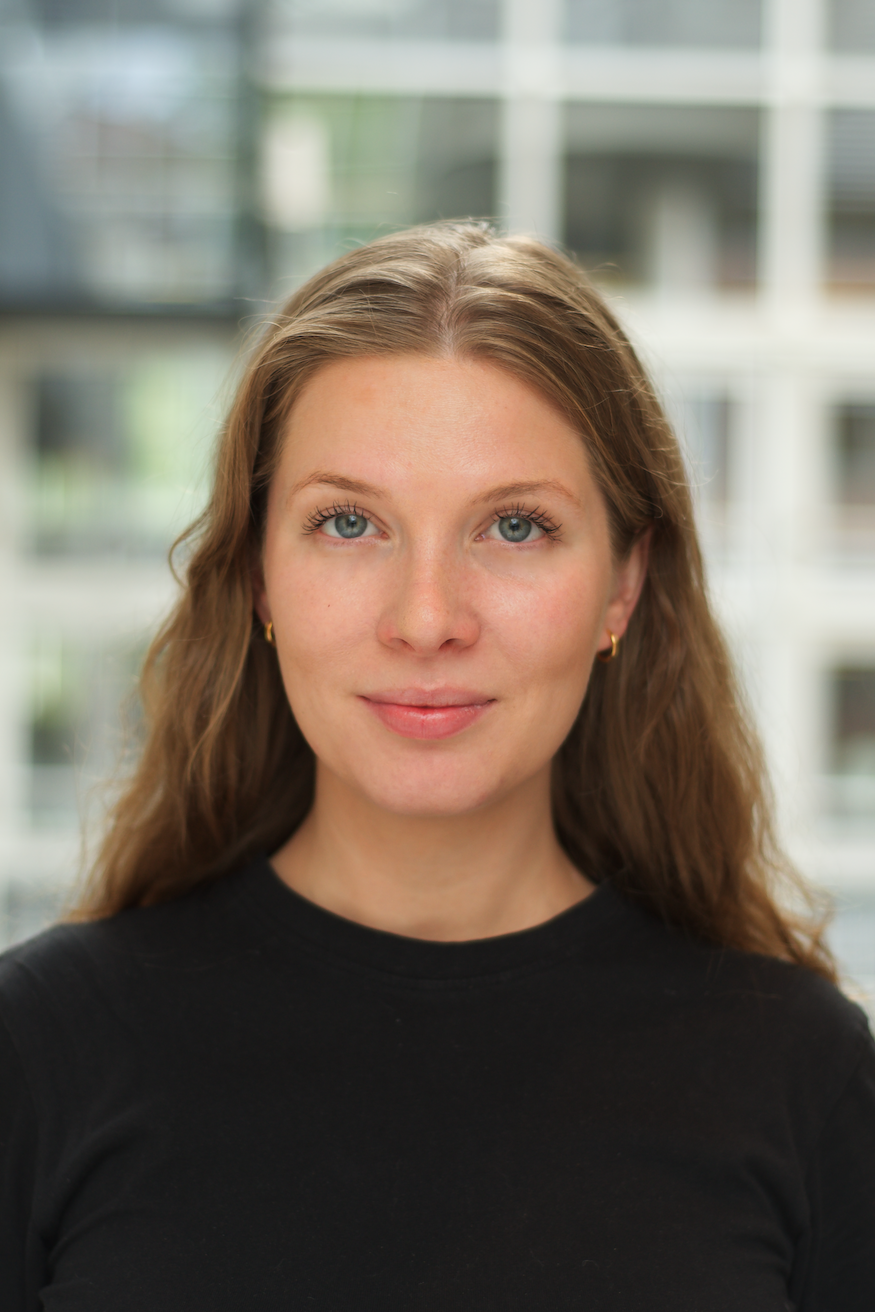
Terje Andreas Eikemo is a Professor at the Department of Sociology and Political Science , Norwegian University of Science and Technology (NTNU) , and Head of the CHAIN research center . His work focuses on the intersection of social inequality , public health , and global policy , emphasizing how socioeconomic factors like education , income , and welfare systems influence mortality , chronic diseases , and mental health . He combines theories from sociology , epidemiology , and medicine to address health disparities across diverse contexts, including pandemics , climate change , and migration . 2009: Prize for Young Researchers in the Humanities 2010: SINTEF Prize for Outstanding Research 2014: NTNU Star Program Eikemo has published extensively in top journals like The Lancet and BMJ Open , with research themes spanning social determinants of health , policy interventions , and global health equity . His work includes GBD studies , European Social Survey analyses , and refugee health assessments. He serves as Editor-in-Chief of the Scandinavian Journal of Public Health and collaborates with international bodies like WHO and UNESCO .
Filippo Maria Bianchi is an Associate Professor in the Department of Mathematics and Statistics at UiT The Arctic University of Norway, where he conducts research at the intersection of machine learning, dynamical systems, and complex networks. He is also a Senior Researcher at NORCE Norwegian Research Centre and actively contributes to the IEEE Task Force on Learning for Structured Data and the ELLIS Society. Department: Department of Mathematics and Statistics School: Faculty of Science and Technology University: UiT The Arctic University of Norway Adjunct Position: Senior Researcher, NORCE Education: Bachelor’s in Computer Engineering, Sapienza University of Rome Master’s in Artificial Intelligence & Robotics, Sapienza University of Rome (cum laude, 2012) PhD in Machine Learning, Sapienza University of Rome His research focuses on graph machine learning, time series analysis, reservoir computing, and probabilistic forecasting , with applications in energy analytics and remote sensing. He has led and contributed to numerous projects involving Arctic power grids, satellite-based environmental monitoring, and deep learning for sustainability. The recent publications reflect a strong trend in graph neural networks —particularly pooling mechanisms, spatiotemporal modeling, and explainability—alongside applications in energy forecasting, avalanche detection, and remote sensing . His work combines theoretical innovation with real-world impact, especially in Arctic and remote environments. Scientific Affiliations and Leadership: Vice-Chair, IEEE Task Force on Learning for Structured Data Member, ELLIS Society Co-founder, Northernmost Graph Machine Learning group Member, IEEE Task Force on Reservoir Computing Visiting Professor, Politecnico di Milano (2024–2025) He actively mentors students and collaborates on interdisciplinary research. He has led projects in power grid reliability, solar fault detection, and unsupervised change detection in satellite imagery . His work is supported by open-source implementations and reproducible research practices. Laboratories and Research Groups: Northernmost Graph Machine Learning group (co-founder) ARC Research Group, UiT Graph Machine Learning Group, Lugano
Francesco Antonio Perotti is a PhD Alumni in Business and Management from the University of Agder, Norway, and the University of Turin, Italy. He holds a Lecturer position at the School of Management and Economics, University of Turin. His primary research focuses on Circular Economy, Knowledge Management, Innovation, and Digital Transformation. He contributes to high-impact journals and serves on editorial boards. His work bridges theoretical insights with practical applications, emphasizing sustainable business practices and organizational leadership. Perotti is also a member of national and international research groups and engages in academic dissemination through conferences and teaching. His research explores topics like open innovation in sustainability, digital transformation leadership, and mitigating knowledge sabotage in organizations. He has published in journals such as Innovation: Organization and Management , Creativity and Innovation Management , and Journal of Business Research . His recent studies analyze SMEs' adaptation to circular economy models and AI-driven leadership strategies. Perotti’s work addresses strategic drivers for business survival in sustainability transitions and the implementation of digital tools in circular enterprises.
Deodat Edward Mwesiumo is a Professor of Supply Chain Management at Molde University College (HiMolde), part of the Faculty of Logistics. He holds a PhD in logistics from the same institution and has extensive teaching and research experience since 2012. His roles include Head of the Supply Chain Management Research Group and member of the PhD committee. Previously, he directed the Bachelor program in Supply Chain Management and Logistics. His research focuses on supply chain resilience, digital business transformation, and tourism management. Key areas include procurement strategies, sustainability, circular economy models, and interorganizational relationships in tourism. He has published in high-impact journals like Production Planning and Control , Journal of Purchasing and Supply Management , and Annals of Tourism Research . Dr. Mwesiumo has led externally funded projects and contributed to over 50 peer-reviewed publications. He is affiliated with research groups such as MIIBS (Marketing, Innovation, International Business & Strategy) and the Transport Research Group (TRG). His teaching spans BSc and MSc levels, including courses on value chain analysis, digital business, and supply chain theory. Recent work emphasizes airport digital maturity, supply chain risk mitigation, and the impact of data-driven decision-making in public procurement. He has authored books like Making Value Chains Work and Fundamentals of Digital Business Management , underscoring his commitment to both academic and applied knowledge dissemination.
Zeinab Karami Hassan Abadi is a PhD candidate at the Department of Engineering Cybernetics, Norwegian University of Science and Technology (NTNU), under Professors Jon Are Wold Suul and Marta Molinas. Her research focuses on Control of Wireless Power Transfer Systems for Public Transport Applications, supported by SINTEF Energi's collaboration with Dr. Giuseppe Guidi. Academic Background: 2015-2021: Research Associate at University of Kurdistan, Sanandaj, Iran. 2015-2017: M.Sc. in Power Systems Engineering (University of Kurdistan). 2011-2015: B.Sc. in Electrical Engineering (University of Kurdistan). Research Interests span Optimal Control of Power Converters, Model Predictive and Robust Control, Wireless Power Transfer Systems, and Microgrid Dynamics. She specializes in advanced control strategies for power electronics in renewable energy and EV charging applications. Her work emphasizes stability and efficiency in power systems, with contributions to Model Predictive Control (MPC) for DC microgrids and inductive power transfer. Notable collaborations include projects with SINTEF Energi, focusing on practical implementations of control algorithms in real-world systems. Labs/Teams: Active in NTNU’s Power Electronics and Drives group, collaborating with SINTEF on applied power systems research.
Terese Johannessen serves as an Associate Professor in the Department of Health and Nursing Sciences at the University of Agder (UiA), Norway. Her academic work focuses on quality improvement, leadership development, and implementation science within healthcare settings, particularly in nursing homes and home care services. Dr. Johannessen's research primarily centers on understanding quality and safety in long-term care environments. Her work investigates contextual factors influencing healthcare quality, leadership interventions for improvement, and the conceptualization of 'quality' among healthcare providers. She employs qualitative methodologies to explore managers' experiences, implementation challenges, and the development of practical tools for frontline staff. Her research has significant implications for improving care delivery in nursing homes and home care services through evidence-based leadership approaches. Analysis of Dr. Johannessen's publication record reveals a strong thematic focus on the SAFE-LEAD project, a comprehensive research initiative examining leadership interventions for quality and safety in nursing homes and home care. Her work spans multiple dimensions including intervention design, implementation challenges, contextual mapping, and evaluation of leadership approaches across different healthcare settings. The research demonstrates a methodological preference for qualitative and mixed-methods approaches to capture the complex realities of healthcare improvement work. Dr. Johannessen collaborates extensively with researchers including Siri Wiig, Eline Ree, and Ingunn Aase, primarily through the SHARE Centre for Resilience in Healthcare at the University of Stavanger. Her work bridges academic research and practical application in healthcare settings, with significant contributions to understanding how quality improvement efforts can be effectively implemented in real-world contexts. Her research portfolio demonstrates consistent productivity with multiple publications annually, showing progression from foundational studies on contextual factors to the development and testing of specific leadership interventions. The SAFE-LEAD project represents a cohesive research program addressing critical challenges in long-term care quality and safety through systematic investigation and practical tool development.
Johanne Thunes is a Research Fellow at the Department of Informatics (IFI), University of Oslo, specializing in Information Systems. She holds a Master’s degree in Informatics and a Bachelor’s degree in both Informatics and Political Science from UiO. Her research focuses on digitalization in the public sector, IT strategy, low-code development, and IT outsourcing/insourcing dynamics. She has contributed to prominent conferences like HICSS and ECIS, addressing topics such as digital government transformation and low-code-driven backsourcing. Thunes teaches courses on platform ecosystems, software engineering, and systems design. She is affiliated with the Information Systems research group and serves on the Department Board at IFI. Education: Master’s in Informatics: Design, Use & Interaction, UiO (2020–2022) Bachelor’s in Informatics: Design, Use & Interaction, UiO (2018–2020) Bachelor’s in Political Science, UiO (2015–2018) Teaching Highlights: IN5320 – Development in Platform Ecosystems (2022) IN1050 – Introduction to Design, Use, Interaction (2019–2021) IN2000 – Software Engineering with Project Work (2021–2022) Research Trends: Her work bridges IT strategy and public sector challenges, emphasizing resilience, governance, and low-code solutions for organizational agility. Recent publications explore targeted insourcing models and backsourcing phenomena in digital transformation contexts.
Tatiana Aleksandrovna Iakovleva is a Professor of Entrepreneurship Studies at the University of Stavanger (UiS), affiliated with the UiS School of Business and the Department of Innovation, Management and Marketing. She is actively engaged in research on responsible innovation, digital health, user involvement, and entrepreneurship. Her research interests include responsible innovation, digital health, user engagement in innovation, living labs, open innovation, stakeholder involvement, healthcare innovation, social innovation, and regional development. She explores how innovation can be conducted ethically and inclusively, particularly in public and healthcare sectors. Her recent publications (2020–2025) reveal a strong focus on responsible innovation in digital health, user empowerment, and collaborative innovation spaces such as living labs. Themes include stakeholder inclusion, boundary innovation spaces, patient engagement, and the role of universities in regional development. Her work spans interdisciplinary fields, combining insights from management, public health, innovation studies, and social sciences. She has collaborated extensively with researchers such as Elin Merethe Oftedal, John Bessant, Raj Kumar Thapa, and others, contributing to high-impact journals and international conferences like ISPIM and Routledge handbooks. She advises students and researchers in entrepreneurship and innovation, though specific names are not listed in the provided text. She is involved in projects related to digital health innovation, responsible research, and university-industry collaboration. She is associated with the Norwegian Smart Care Lab and participates in participatory research involving service users and professionals in mental health care. Her work emphasizes inclusive and responsible approaches to innovation, particularly in public service contexts.
Zhiyuan Wu is a Doctoral Research Fellow at the University of Oslo , affiliated with the Digital Signal Processing and Image Analysis research group under the Faculty of Mathematics and Natural Sciences . Education: Bachelor’s degree in Communication Systems and Information Technology from Lanzhou University, China Master’s degree from the Technical University of Munich, School of CIT Research Focus: Zhiyuan Wu specializes in machine learning, with particular emphasis on probabilistic graphical models, information theory, and tackling real-world challenges such as distributional shifts and privacy concerns. His work explores entropy regularization techniques to address label shift in distributed learning systems, aiming to improve model robustness and data privacy across diverse domains like medical applications. Publications & Research Trends: His recent publication at the International Conference on Learning Representations highlights a novel approach to mitigating label shift through entropy regularization. This aligns with his broader research goals of enhancing the adaptability and interpretability of machine learning models in dynamic, privacy-sensitive environments. Labs & Teams: He is actively involved with the Digital Signal Processing and Image Analysis (DSB) research group, contributing to collaborative projects that bridge theoretical advancements with practical implementations in machine learning.
Sehrish Akhtar serves as a Postdoctoral Fellow and Part-time Lecturer at the Faculty of Social Sciences, Oslo Metropolitan University. Her academic work centers on technology-driven solutions for social challenges in elderly care and inequality. She is embedded within the 'Living conditions, health, work and social inequality' research group, collaborating with institutional partners including the City of Oslo Nursing Home Agency (SYE) and No Isolation. Her research spans Gerontechnology, Social Connectedness in Elderly Care, and Welfare Technology implementation, with emphasis on participatory design alongside older adults. Key projects include adapting KOMP telepresence technology for nursing homes to combat loneliness ('Safe and Simple Point of Contact with Relatives') and cultural analysis of telepresence as loneliness solutions ('Virtual Presence'). She prioritizes user-centered approaches that bridge technological capabilities with social needs in vulnerable populations. Publication trends reveal a methodological shift from qualitative cultural analysis (2023) toward mixed-methods evaluation of technology efficacy in care settings (2024-2025). Her work consistently addresses social isolation through digital inclusion frameworks, examining how tools like KOMP mediate family connections while navigating institutional constraints in elderly care. Emerging research extends into interprofessional collaboration dynamics within educational systems.
Tine Kristin Jensen is a Professor of Clinical Psychology at the University of Oslo's Department of Psychology, with a part-time affiliation at the Norwegian Centre for Violence and Traumatic Stress Studies. She specializes in child trauma, PTSD treatment, and developmental psychology, focusing on interventions for youth exposed to violence, disasters, and terrorism. Dr. Jensen co-leads major trauma-focused cognitive behavioral therapy (TF-CBT) implementation projects across Europe and conducts research on unaccompanied refugee minors and digital mental health interventions for war-affected children. Education: Cand. psychol. (University of Oslo, 1986) Approved specialist in clinical psychology (Norwegian Psychological Association, 1996) Dr. Psychol. (PhD, University of Oslo, 2005; thesis: Suspicions of Child Sexual Abuse) Her research interests span trauma treatment efficacy, post-traumatic stress symptom dynamics, and cultural influences on psychological recovery. She has pioneered studies on parental experiences of terrorism (e.g., Utøya attack survivors) and developed digital tools like apps to complement TF-CBT for adolescents. Dr. Jensen also addresses systemic challenges in child mental health services, including therapist burnout and resource allocation. Recent work explores social media literacy's role in youth mental health and evaluates stepped-care models for trauma survivors. She collaborates internationally with institutions like Drexel University and Denver University, contributing to global PTSD treatment guidelines. Key projects include: Implementation of TF-CBT in Norwegian child mental health clinics Treatment outcomes for unaccompanied asylum-seeking minors Longitudinal studies on terror survivors' mental health Development of trauma-focused interventions for online abuse victims Dr. Jensen actively contributes to Nordic psychology policy as a journal editor and sits on scientific committees for organizations like ECOTS. Her work bridges clinical practice, research, and public health policy to improve care for traumatized children and families.
Lokukaluge Prasad Perera is a Professor in Maritime Technology at UiT The Arctic University of Norway and a Senior Research Scientist in Smart Data at SINTEF Digital . He holds a BSc in Mechanical Engineering from Oklahoma State University (1999), MSc in Systems & Controls from the same institution (2001), and a PhD in Naval Architecture and Marine Engineering from Technical University of Lisbon (2012). His research focuses on Maritime and Offshore Systems , Advanced Data Analytics , Autonomous Navigation , Energy Efficiency , and Digital Twin Applications . He has published over 100 peer-reviewed papers and was recognized in the World's Top 2% Scientists (2021-2022) by Stanford University. Key professional experiences include roles at SINTEF Ocean (2014–2017), Center for Marine Technology and Engineering in Portugal (2008–2012), and Wärtsilä Finland (2012–2014). He has also held academic positions at Naval & Maritime Academy and Ocean University of Sri Lanka . His work addresses challenges in emission reduction , renewable energy integration , and safety-critical systems for maritime operations. Current projects emphasize trustworthiness of autonomous ships and data-driven decision frameworks for energy efficiency.
Tae Eun Kim is an Associate Professor in Maritime Safety Management at UiT The Arctic University of Norway, working within the Department of Technology and Security. Her research, teaching, and industrial collaboration focus on maritime safety and human factors, with particular expertise in maritime safety management, accident analysis, Maritime Autonomous Surface Ships (MASS), and human factors in maritime operations. Dr. Kim's research spans four interconnected domains: maritime safety management and leadership, maritime accident and casualty analysis, Maritime Autonomous Surface Ships (MASS), and human factors in maritime operations. She has developed assessment instruments like the Safety Leadership Self-Efficacy Scale (SLSES) and conducted STAMP-based causal analyses of maritime accidents. Her work on MASS addresses safety challenges in mixed navigational environments and examines leadership competencies for autonomous shipping operations. Her human factors research explores how technological advancements impact navigators' performance, crew dynamics, and safety outcomes, including gender parity issues in the maritime industry. Dr. Kim's publication record reveals a strong focus on the intersection of maritime safety, technology, and human performance. Her recent work increasingly addresses autonomous shipping technologies, with numerous publications on AI decision transparency, learning analytics in maritime simulator training, and multi-modal data analysis for nautical skill development. She has conducted systematic reviews on simulator training approaches and scenario design, contributing significantly to methodology development in maritime education and training. Her research demonstrates a clear trajectory toward integrating emerging technologies with traditional maritime safety practices as the industry transitions toward greater automation. Dr. Kim is actively involved in several significant research projects, including the i-MASTER EU Horizon Europe Research and Innovation Project, the REFRAME project, and the SPRICE project (Multidisciplinary approach for spray icing modelling). She is a member of both the Advanced Maritime Ship Operations research group and the Maritime Safety Science (MARSCI) Research Group, demonstrating her commitment to collaborative research in maritime safety science. Dr. Kim teaches several specialized courses at UiT, including SVF-3206 Safety Management and Accident Investigation, TEK-3014 Navigation Technology, MFA-2100 Maritime Digitalization, MFA-8010 Maritime HTO (Human-Technology-Organisation) and Innovation, and MFA-2018 Maritime Administration and Leadership. Her teaching portfolio reflects the interdisciplinary nature of her expertise, bridging engineering, safety science, and organizational behavior in maritime contexts.
Torgeir Welo is a Professor at the Department of Mechanical and Industrial Engineering , Norwegian University of Science and Technology (NTNU) . He specializes in metal forming , particularly aluminum alloy structures , with a focus on plastic bending behavior , dimensional stability , and 3D forming technologies . His research also encompasses Lean Product Development , emphasizing knowledge reuse and maximizing customer value in automotive and aerospace applications. Key Research Areas : Metal Forming, Aluminum Processing, Springback Control, Lean Development, Additive Manufacturing, Material Substitution Teaching : Courses on Aluminum Technology , Metal Forming Analysis , and Machine Element Design Publications (15 most recent): Focus on springback monitoring , charge weld evolution , flexible forming , machine learning applications , and circular economy frameworks in metal manufacturing.
Oscar Amundsen is a Professor of Organization Studies at the Department of Education and Lifelong Learning within the Faculty of Social and Educational Sciences at NTNU. His research focuses on organizational change, employee-driven innovation (EDI), leadership, and organizational culture. He teaches in Master’s programs in 'Learning in Work Life and Society' and 'Management and Organisation', as well as the PhD program in Educational Science. His research emphasizes practical application of academic knowledge to improve organizations across public, private, and voluntary sectors. Key themes include fostering innovation through cultural transformation, leadership practices, and employee engagement. His recent book How to Become a Dream Organization (2025) outlines strategies for leaders to cultivate innovative and attractive workplaces. Amundsen has led research groups such as COOL (Conditions for Learning and Innovation in Higher Education and Work), COIN (Collaboration and Innovation), and LAS (Learning in Work Life and Society). His work bridges theory and practice, with publications in journals like International Journal of Learning and Change and Journal of Knowledge Management . He has authored multiple books on organizational change, innovation management, and leadership, many translated into Danish and Swedish. His outreach activities include media contributions (articles in Aftenposten , Adresseavisen , etc.), podcasts, and collaborative projects with organizations. He emphasizes translating academic insights into actionable strategies for real-world organizational challenges.