

Olga Sorkine-Hornung is a Professor of Computer Science at ETH Zurich and head of the Institute of Visual Computing. She leads the Interactive Geometry Lab, focusing on theoretical and practical advancements in digital content creation, geometry processing, and shape modeling. Current position: ETH Zurich, Department of Computer Science Previous roles: Courant Institute (NYU), Technical University of Berlin Education: BSc and PhD from Tel Aviv University, postdoc at TU Berlin Her research spans shape representation, digital fabrication, computer animation, and fundamental geometry processing. Key contributions include Laplacian surface editing, as-rigid-as-possible deformation, and generalized winding numbers. She works on applications in VR, AR, and autonomous systems. Awards include Test of Time Awards (2024), ACM Fellow (2020), ERC Consolidator Grant (2020), and EUROGRAPHICS Young Researcher Award (2008). She has supervised numerous students and co-developed software libraries like libigl and Instant Meshes . Co-chair roles for SIGGRAPH, Eurographics, and Pacific Graphics Editorial board member for ACM Transactions on Graphics and other journals Keynote speaker at VMV, CVPR, and SIAM conferences Her work bridges mathematical rigor with practical implementation, advancing computer graphics and geometry processing through intuitive algorithms that maintain surface detail while enabling efficient computation.
جستجوی استاد راهنمای دانشگاهی
برای مسیر پژوهشیتان، استاد راهنما، استاد دانشگاه و پژوهشگر مناسب را پیدا کنید و با آنها ارتباط بگیرید.
نمایش ۱-۱۵ از ۱۴۹ استاد راهنما
اطلاعات پروفایلها از صفحات عمومی دانشگاهها گرفته شده و ممکن است بهروز نباشد.
Lior Wolf is a Professor at the School of Computer Science, Tel Aviv University. Previously, he was a postdoctoral researcher at MIT's Center for Biological and Computational Learning (CBCL) under Prof. Tomaso Poggio and earned his PhD from Hebrew University of Jerusalem with Prof. Amnon Shashua. His educational background includes: PhD in Computer Science, Hebrew University of Jerusalem Postdoctoral Research, MIT CBCL Prof. Wolf's research centers on artificial intelligence with seminal contributions to deep learning, computer vision, and natural language processing. His work bridges theoretical foundations (e.g., attention mechanisms, transformer analysis) with practical applications in medical imaging, speech processing, and sign language technology. He pioneered methods for neural network interpretability, efficient sequence modeling, and multimodal fusion. Analysis of his 2023-2025 publications reveals dominant trends in large language model optimization (neuron pruning, attention analysis), efficient video generation, and cross-modal learning. His work increasingly integrates medical applications (fMRI/EEG analysis) while maintaining theoretical rigor in model architecture design. His scientific achievements include: Best paper award at EMNLP 2024 for 'Backward Lens: Projecting Language Model Gradients into the Vocabulary Space' Best paper award at SCIA 2023 for 'Gradient Adjusting Networks for Domain Inversion' Best paper award at FG 2021 for 'Generating Master Faces for Dictionary Attacks' Prof. Wolf mentors graduate students in the School of Computer Science and leads research at the ICRC building laboratory. His team collaborates with 'the friends of TAU' on projects spanning biometric security, medical imaging, and generative AI. Current work focuses on efficient transformers, neural network interpretability, and multimodal medical diagnostics.
Rana Hanockaمشاهده پروفایل
استادیار
Rana Hanocka is an Assistant Professor of Computer Science at the University of Chicago, leading the 3DL research group focused on AI-driven 3D geometry processing. She earned her Ph.D. in 2021 from Tel Aviv University under Professors Daniel Cohen-Or and Raja Giryes. Her work explores neural networks for unstructured 3D data, including mesh convolutional networks and self-priors for shape reconstruction. Key research areas include geometric deep learning, human-AI collaboration in 3D modeling, and interpretable neural networks. Notable contributions include MeshCNN (SIGGRAPH 2019) and Point2Mesh (NeurIPS 2020), advancing mesh analysis and point cloud processing. Awards include the 2023 Pazy Research Award and 2020 Rising Star in EECS. Education : Ph.D. Computer Science, Tel Aviv University (2021) Labs/Groups : 3DL Group at UChicago Grants : NSF Grant for AI-driven 3D modeling tools (2023) Research directions emphasize creative human-AI partnerships, unsupervised learning from shape collections, and explainable 3D neural networks. Ongoing projects include style-aware 3D synthesis, interactive segmentation, and multimodal shape interfaces.
- Computer Graphics
- Machine Learning
- Computer Vision
- +۳ مورد دیگر

Marcia C. Linn is the Evelyn Lois Corey Professor of Instructional Science in the Berkeley School of Education at the University of California, Berkeley. She serves as Chair of the Graduate Group in Science and Mathematics Education (SESAME) and has made significant contributions to the field of science education for over five decades. Dr. Linn is a member of the National Academy of Education and a Fellow of multiple prestigious organizations including the American Association for the Advancement of Science (AAAS), the American Psychological Association (APA), the Association for Psychological Science (APS), the American Educational Research Association (AERA), and the International Society of the Learning Sciences (ISLS). Dr. Linn earned her B.A. in Psychology and Statistics (1965), M.A. in Educational Psychology (1967), and Ph.D. in Educational Psychology (1970) from Stanford University, where she worked under Lee Cronbach. Her early career included working with Jean Piaget at the Institute Jean Jacques Rousseau in Geneva, Switzerland (1967-68), serving as a Fulbright Professor at the Weizmann Institute of Science in Israel (1983), and conducting research at University College in London. She has been a fellow at the Center for Advanced Study in Behavioral Sciences three times and a Writing Resident at the Rockefeller Foundation Bellagio Center twice. Dr. Linn's research focuses on how students learn science and how technology can be used to improve science education. She developed the Knowledge Integration framework, which has become widely used in science education. Her work explores the intersection of cognitive science and educational practice, with particular attention to how students develop understanding of complex scientific concepts. She has pioneered the use of technology in science education, developing the Web-based Inquiry Science Environment (WISE) and directing the NSF-funded Technology-Enhanced Learning in Science (TELS) center. Dr. Linn's recent publications demonstrate a clear trajectory toward integrating artificial intelligence with science education. Her work increasingly focuses on how AI can support knowledge integration, facilitate science learning opportunities, and promote equitable educational experiences. She examines how technology can help students develop deeper understandings of scientific concepts through inquiry-based learning while addressing issues of social justice in science education. Scientific Awards and Honors National Association for Research in Science Teaching Award for Lifelong Distinguished Contributions to Science Education American Educational Research Association Willystine Goodsell Award Council of Scientific Society Presidents first award for Excellence in Educational Research Fulbright Professor (1983) Apple Wheels for the Mind grant (1985) National Institute of Education grant (1983) Throughout her career, Dr. Linn has secured significant funding for educational research, including multiple National Science Foundation grants. She directed the NSF-funded Technology-Enhanced Learning in Science (TELS) center and has led numerous projects investigating the cognitive consequences of computer environments for learning. She has advised countless students and researchers in the field of science education, shaping the next generation of educational researchers and practitioners. Dr. Linn directs the Web-based Inquiry Science Environment (WISE) project and has been instrumental in developing technology-enhanced learning environments for science education. Her laboratory has been at the forefront of creating and testing innovative learning technologies that support students in developing deep understanding of scientific concepts through inquiry-based approaches.

Dr. Reece Sophocleous is an Education-Focused Lecturer in the School of Life and Environmental Sciences at the University of Sydney. His office is located in the Carslaw Building (F07) on the University campus. With a background in molecular biology, biochemistry and pharmacology, he brings significant subject matter expertise to his teaching role. Reece is passionate about education innovation, particularly in the areas of: Technology-enhanced learning (TEL) and educational technology Generative AI in higher education Biochemistry and molecular biology His student-focused approach drives him to push beyond traditional delivery models of higher education. As an educator, he is committed to nurturing a future where education is backed by innovation, and where digital technologies and artificial intelligence are embraced as tools to prepare students for a world in which they can thrive. Currently, he is leading the project "Investigating the Impact of AI-Generated Quizzes in Large Units of Study" funded by an EF SoTL Grant for 2025-26. This research aligns with his broader interest in how technology can enhance the educational experience for students in large university settings. Reece specializes in first-year biology teaching and coordination, focusing on making complex concepts in cell and molecular biosciences accessible and engaging for new university students. His work spans across themes of Microbiology, Molecular biology and biotechnology, and Biochemistry and metabolism.
Libby Gerardمشاهده پروفایل
دانشیار مدعو
Libby Gerard is an Associate Adjunct Research Professor at the University of California, Berkeley School of Education and a Research Director for the Technology-Enhanced Learning in Science (TELS) Center. Her work focuses on leveraging innovative technologies to enhance science education through student idea capture, automated assessment, and teacher professional development. Doctorate in Educational Leadership (EdD), Mills College (2008) Bachelor’s in English Literature and Philosophy, Emory University (2000) Her research emphasizes: Automated scoring of student essays using NLP to improve science explanations Real-time instructional customization using embedded assessment data Technology-driven professional development for teachers and principals Social justice integration in science pedagogy Collaborative revision frameworks for inquiry-based learning K-12 education adaptation during the pandemic Recent publications highlight trends in educational technology for science learning, with a focus on NLP applications, interactive inquiry modules, and equitable teaching practices. She has authored studies in journals like Science , Review of Educational Research , and Computers & Education , often exploring how automated systems can enhance teacher-student dynamics. Scientific Awards : Best Paper Award at the AI4EDU Workshop (AAAI Conference, 2020) Libby leads funded projects such as: TIPS (NSF, 2021-2025): NLP for science education ARISE (Hewlett Foundation, 2020-2023): Anti-racism in science education STRIDES (NSF, 2018-2022): Responsive instruction for science teachers PLANS (NSF, 2015-2020): Automated learning support systems She contributes to teacher training through courses like Research Methods for Science Teachers and Apprentice Teaching in Science , emphasizing data-driven pedagogy and inquiry-based instruction.
Rosella Gennari is an Associate Professor in Computer Science at the Faculty of Engineering, Free University of Bozen-Bolzano, where she conducts research and teaches in Human-Computer Interaction (HCI). Her work is centered on designing interactive technologies for children, focusing on physical-digital (phygital) artefacts, Technology-Enhanced Learning (TEL), and inclusive design. She leads the Research Unit Human-Centred Intelligent Systems and is actively involved in institutional leadership, including serving on the Third-Mission Board. Ph.D. : Computer Science, Amsterdam University (2002) Postdoctoral Experience : CWI, Amsterdam (ERCIM Alain Bensoussan Fellow); FBK-irst, Trento Leadership : Scientific & Technological Coordinator of the FP7-EU TERENCE project Her research explores how children interact with and design smart technologies, including IoT and AI, through playful and tangible interfaces. She investigates socio-emotional learning, digital well-being, and responsible design, often employing participatory and action research methods. Her work bridges computer science, education, and social impact, aiming to empower young learners as co-creators of technology. The analysis of her recent publications reveals a strong trend in developing and evaluating toolkits and frameworks for children and pre-teens to engage in designing smart things, IoT systems, and sustainable cities. Her work consistently emphasizes inclusivity, reflection, and responsible design, often in collaboration with teachers and learners. The publications span top HCI venues and journals, demonstrating a focus on practical applications in educational settings and the impact of technology on young users. Scientific Awards and Recognition ERCIM Alain Bensoussan Fellowship for talented young researchers Editorial Board Member, Journal of Child Computer Interaction (Elsevier, Q1) Regular reviewer for top HCI conferences and journals Advising and Grants : While specific advisees are not listed, her leadership role in the FP7-EU TERENCE project and numerous other research initiatives indicates extensive experience in securing and managing competitive grants. She mentors students through her research group and teaching, fostering the next generation of HCI researchers. Her collaborative network is extensive, with frequent co-authorship with researchers such as Alessandra Melonio, Maristella Matera, and Mehdi Rizvi. Labs and Teams : She leads the Human-Centred Intelligent Systems research unit, which serves as her primary lab and team. This group focuses on placing humans at the center of computer science and information engineering research. She is also a core member of the organizing committee for the MIS4TEL international conference series, highlighting her role in building and sustaining a global research community in Technology-Enhanced Learning.

Ioana Jivetمشاهده پروفایل
استاد پژوهش
Ioana Jivet is a Research Professor and Head of the Learning Analytics Research Professorship at FernUniversität in Hagen, Germany. She leads interdisciplinary research focused on leveraging learning analytics to enhance educational practices through data-driven insights. Her role in the CATALPA Graduate School involves collaboration across disciplines to translate research into actionable educational strategies. Educational Background: PhD in Learning Analytics from Open Universiteit Nederland (2021) Postdoc at TU Delft (2019–2021) Research roles at DIPF (2021–2024) and studiumdigitale (2021–2024) Research Interests: Self-regulated learning mechanisms and feedback systems Cultural and ethical dimensions of learning analytics adoption Design of human-centered learning dashboards Privacy concerns in educational technology AI-driven educational decision support systems Her work emphasizes practical applications, such as developing adaptive feedback tools and investigating cross-cultural usage patterns of learning analytics platforms. Professional Contributions: Secretary of the Society for Learning Analytics Research (SoLAR) General Chair for the 2024 European Conference on Technology Enhanced Learning (EC-TEL) Co-editor of Springer volumes on technology-enhanced learning Lab & Teams: Active in the Learning Analytics research group at FernUniversität, focusing on translational research between academic theory and classroom practice.
TAN Wee Kekمشاهده پروفایل
دانشیار
Dr. TAN Wee Kek is an Associate Professor (Educator Track) in the Department of Information Systems and Analytics at the National University of Singapore's School of Computing. He served as Assistant Dean in the School's Office of Student Life from 2019 to 2024 and has been a Fellow of the NUS Teaching Academy since 2017. He holds a Doctor of Philosophy in Information Systems and Bachelor of Computing in Information Systems (First Class Honours) from NUS, and previously earned a Diploma in Computer Information Systems from Singapore Polytechnic. His research focuses on Technology-Enhanced Learning (TEL), particularly artificial intelligence applications in education, and consumer-based information technology including online decision aids, social computing, virtual worlds, and consumer cloud services. His methodological approach primarily employs design science paradigms. Publication analysis reveals his scholarly work spans educational technology, e-commerce systems, human-computer interaction, and information systems pedagogy, with recent emphasis on learning analytics and AI-enhanced educational frameworks. Major Honors: Commendation Medal from Singapore's President (2017) Multiple Annual Teaching Excellence Awards (2009-2024) Crystal Service Award, WorldSkills Singapore Council (2018) Lee Kuan Yew Award for Mathematics and Science (2001)
Mar Pérez-Sanagustín is an Associate Professor at the Institute de Recherche en Informatique (IRIT) , Université Toulouse III Paul Sabatier. She actively participates in international conferences such as EIAH, ATICA, and EDEN, focusing on Technology Enhanced Learning (TEL), Smart Cities, and MOOCs. Award-winning researcher with the 1rst ITWorldEdu Award and Best Demo Award at ECTEL 2013 Specializes in datafication in education, collaborative learning, and social media integration Research interests include: Technology Enhanced Learning (TEL) and its intersection with computer science Smart Cities Learning ecosystems and context-aware services Massive Open Online Courses (MOOCs) and educational analytics Space-aware design for mobile learning Personal Learning Environments and collaborative tools Her recent publications analyze trends in TEL methodology, the PROF-XXI Framework, and global blended learning initiatives. She actively collaborates with institutions like Universidad Carlos III, UNED, and BUAP de México, and has been invited to keynotes and workshops across Europe and Latin America. Scientific awards: 1rst ITWorldEdu Award (2014) for educational technology solutions Best Demo Award at ECTEL 2013
Amir Giladمشاهده پروفایل
استادیار
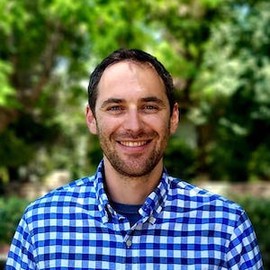
Amir Gilad is a Scharf-Ullman endowed Assistant Professor (Senior Lecturer) at the Hebrew University of Jerusalem’s School of Computer Science and Engineering. His research focuses on responsible data science, including causal inference, differential privacy, fairness in data, and tools for data analysis. He holds a Ph.D. in Computer Science from Tel Aviv University, where he was advised by Prof. Daniel Deutch. Prior to this, he was a postdoctoral researcher at Duke University, mentored by Prof. Sudeepa Roy, Prof. Ashwin Machanavajjhala, and Prof. Jun Yang. Education: Ph.D. in Computer Science, Tel Aviv University (Advisor: Daniel Deutch) MSc in Computer Science, Tel Aviv University BSc in Mathematics and Computer Science, Tel Aviv University His research interests span data quality assessment, private and fair data generation, and causal inference applications . He has received notable awards, including the 2024 Alon Scholarship and the 2019 Google Ph.D. Fellowship. Recent Projects: Developing algorithms for data quality repair and assessing bias in datasets Generating differentially private data that satisfies fairness constraints Applying causal inference to enhance data analysis tools Awards and Honors: 2024 Alon Scholarship for Outstanding Faculty Integration 2019 Google Ph.D. Fellowship in Structured Data 2018 SIGMOD Research Highlight Award 2017 VLDB Best Paper Award Teaching: Courses include “Topics in Responsible Data Science” and “Seminar on Causal Inference in Data Analysis” at Hebrew University, and “Extended Introduction to Computer Science” at Tel Aviv University. He has also led workshops on Google Technologies. Labs & Teams: His work is centered around the School of Computer Science and Engineering’s database group, focusing on foundational and applied aspects of privacy-aware data systems.
Eileen Scanlonمشاهده پروفایل
دانشگاهی
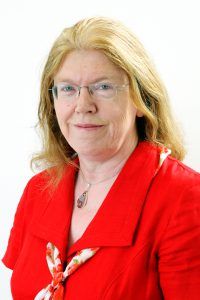
Eileen Scanlon is the Regius Professor of Open Education at the Open University, a title awarded for her groundbreaking contributions to educational technology and science communication. She holds a PhD in cognitive models of physics problem solving and has been affiliated with the University since 1975, working extensively in the Institute of Educational Technology (IET). As Associate Director of Research and Innovation in the IET, she leads strategic research initiatives in technology-enhanced learning (TEL), including directing the openTEL research theme. Her work focuses on bridging formal and informal learning contexts, advancing citizen science, and leveraging digital tools for inclusive education. She has pioneered platforms like nQuire for community-driven inquiry and contributed to influential reports like the Innovating Pedagogy series. Scanlon also holds visiting roles at the University of Edinburgh and previously served at Bletchley Park and the University of California, Berkeley. Her research interests span educational technology, science communication, and open educational resources (OERs), with an emphasis on democratizing access to science. Key achievements include developing frameworks for MOOCs, advancing virtual microscopy in distance learning, and promoting participatory citizen science initiatives. Education: PhD in physics education (1990), Open University Affiliations: Institute of Educational Technology (IET), Moray House School of Education (Edinburgh) Grants: Leadership in openTEL, EC-funded MAZI project, and MASELTOV incidental learning initiatives Labs: Computers and Learning Research Group (CALRG), Centre for Research in Education and Educational Technology (CREET)
Andrew O'Malleyمشاهده پروفایل
مدرس ارشد
Andrew O'Malley is a Senior Lecturer in the School of Medicine at the University of St Andrews, where he serves as Deputy Programme Director of the Scottish Graduate Entry Medical Programme (ScotGEM) and Deputy Director of Teaching. His work focuses on the intersection of medical education and technology, particularly in the areas of anatomical sciences, digital health, and artificial intelligence. Dr. O'Malley holds a Doctor of Philosophy in Anatomy & Human Identification and a Bachelor of Science in Forensic Anthropology, both from the University of Dundee. His educational background as an anatomist and forensic anthropologist informs his teaching across various subjects in the School of Medicine, including ScotGEM Case Based Learning, medical ethics, and generative artificial intelligence. His research interests center on the use of technology in health professions education, with specific focus on Technology-Enhanced Learning (TEL), telehealth, and generative artificial intelligence. Dr. O'Malley's work contributes to UN Sustainable Development Goals related to quality education and good health. Dr. O'Malley's publications demonstrate a strong trend toward exploring AI applications in medical education, with particular emphasis on diagnostic accuracy, question generation, bias mitigation, and simulation technologies. His recent work shows increasing sophistication in prompt engineering for medical AI applications and attention to equity issues in AI-generated medical content. #TopDownloadedArticle Prize (2024) Best Poster (2023) CELPiE Research Fund Award (2024) Dr. O'Malley actively supervises postgraduate research students and has been involved in multiple research projects including ComSIM: Community Orientated Simulation, and research on AI diagnostic accuracy. He has presented his work at international conferences including the 1st International Conference on Artificial Intelligence in Medical Education in Kuala Lumpur and contributed written evidence to the House of Lords UK Engagement with Space Committee. Dr. O'Malley is affiliated with the St Andrews SETI Post-Detection Hub, reflecting his interest in broader applications of technology and scientific methodology beyond traditional medical education.
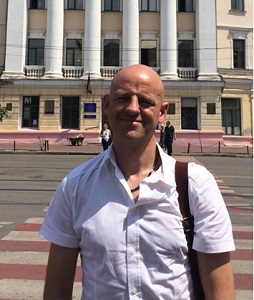
Neil Allison is a Lecturer in Modern Foreign Languages at the University of Glasgow, specializing in English for Academic Study (EAS) with a focus on Law. He has been active in EAP since 2010 and previously worked in legal practice and publishing. LLB (Hons), Strathclyde University DipLP (Legal Practice) MSc in Information Science DELTA (English Language Teaching) MEd in Academic Practice His research centers on English for Specific Academic Purposes (ESAP) , particularly Legal Text and Discourse Analysis , Legal Ontology , and Cognitive Linguistics . He explores schema theory, cognitive architecture, and legal conceptual frameworks to enhance academic skills for law students. Recent publications (2024–2011) span Legal Linguistics , EAP Pedagogy , and Educational Technology , with a focus on classroom attention metrics, legal ontology, and digital learning tools like Microsoft Teams. Key themes include legal discourse, cognitive learning strategies, and ethical pedagogy. Senior Fellow of the Higher Education Academy (RET) UCU Area Representative for SMLC Former IELTS Examiner Trainer Pro bono legal advisor via Citizens' Advice Bureau Neil integrates legal expertise with language pedagogy, emphasizing clarity in legal education and student-centered learning technologies. He collaborates on projects involving BALEAP TEL SIG and contributes to discussions on power dynamics in EAP.
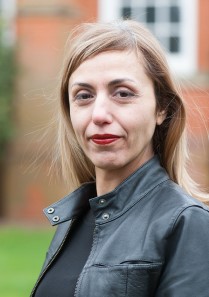
Yota Dimitriadi is a Professor at the University of Reading's Institute of Education, specializing in Technology-Enhanced Learning (TEL) and Inclusive Education. She holds multiple roles including Early Career Teaching Fellow (2010), PGCE Primary Module Leader, and PhD Supervisor. Her research focuses on digital literacy, special educational needs, gender studies, and participatory research with children. She has led projects such as the KTP collaboration with World Association of Girl Guides and Girl Scouts, and organized events like the ESRC Festival of Social Sciences. Education background includes extensive work in ICT integration in education, with a PhD in educational technology (not explicitly stated but inferred from career trajectory). Research interests span robotics in education, online learning, and disability studies. She supervises PhD students on topics like mobile learning in Oman and autism education in Saudi Arabia. Publications emphasize TEL applications in diverse contexts, including mobile learning challenges in Oman and social stories for autistic students. She is a Fellow of the Chartered Institute of Educational Assessors and serves on editorial boards of journals like the International Journal of University Teaching and Faculty Development. Advisory roles include External Examiner for PGCE courses at Swansea Metropolitan University and Southampton University. She leads initiatives like the Widening Participation Fund project addressing Computer Science teacher attrition rates. Her work with Equity, Inclusion and Improvement Research Group highlights commitment to inclusive education policies. Collaborations with institutions like the School of Systems Engineering reflect interdisciplinary research approaches.