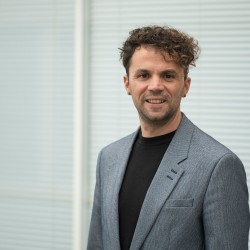
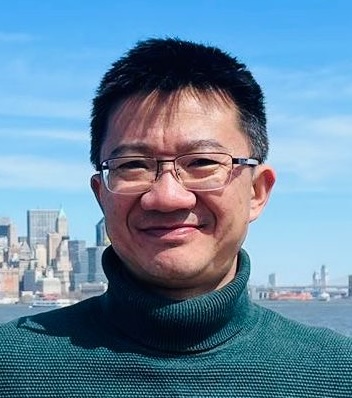
Matthew W. Easterday is an Assistant Professor at the School of Education and Social Policy, Northwestern University, focusing on technology-enabled civic education. His research develops educational technologies to cultivate informed citizens capable of addressing societal challenges like climate change and poverty through policy analysis and collective action.
Matteo Giusti is a Future Fellow in Sustainability Science at the University of Surrey's Centre for Environment and Sustainability (part of the Institute for Sustainability). His research focuses on fostering human-nature relationships through transdisciplinary approaches, blending sustainability science, systems thinking, and spatial analysis. He collaborates with artists, educational institutions, and urban planners to translate research into practical solutions. Education: PhD in Sustainability Science (not explicitly stated but inferred from role). Teaching: Contributed to the Master's program in Sustainability Science at the University of Gävle, designing courses like "Sustainability Science and Systems Theory" and "Natural Resource Management." Research interests include urban sustainability, children's nature connection, and the integration of green infrastructure. His work emphasizes experiential learning, spatial planning for carbon neutrality, and leveraging technology (e.g., smartphone apps) to track well-being and mobility. Key publications address urban green spaces' role in well-being during pandemics, children's environmental stewardship through hands-on projects (e.g., salamander conservation), and the transformative potential of pro-environmental habits. He advocates for policies enabling equitable access to nature to build urban resilience. Advising/Grants: No explicit student advisees listed, but involved in curriculum design and interdisciplinary collaborations. Labs/Teams: Collaborates with interdisciplinary groups, including the Stockholm Resilience Centre and the University of Gävle.
Sharon A.M. Dolmans is an Associate Professor at Eindhoven University of Technology (TU/e), affiliated with the Industrial Engineering and Innovation Sciences school and the Innovation Technology Entrepreneurship & Marketing department. She also contributes to the Center for Quantum Materials and Technology Eindhoven . Education : BSc in Business (Tilburg University), MSc in Finance (Tilburg University), Premaster in Econometrics (Erasmus University Rotterdam), PhD in Technology Commercialization (TU/e, 2013). Research Focus : Collaborative technology commercialization toward societal impact, emphasizing key enabling technologies like photonics, quantum, and AI. Her work bridges technology experts and societal stakeholders to enable responsible innovation in areas such as climate change, healthcare, and cybersecurity. Projects : Leads the NWA FIQCS project on quantum cryptography and contributes to the HORIZON EIC Pathfinder CIRCULIGHT project on photonic platforms. Article Trends : Recent publications analyze smart city governance, knowledge transfer, entrepreneurial decision-making, and empowerment initiatives, with methods centered on case studies and qualitative research. Scientific Awards : Best doctoral student paper award (Academy of Management, 2020). TU/e MSc thesis award (2019). Advising & Grants : Supervises 69 works and leads funded projects, integrating academic rigor with practical stakeholder collaboration.
Frank P.T. Willems is Full Professor of Systems and Control Technology and Chair of Integrated Powertrain Control at Eindhoven University of Technology (TU/e). His research focuses on control-oriented modeling of internal combustion engines and after-treatment systems, cylinder pressure-based combustion control, and integrated energy and emission management. He develops optimal and robust control methods for automotive powertrain systems to achieve ultra-efficient and clean combustion concepts. His work enables auto-calibration that optimizes total powertrain efficiency using smart sensors and self-learning control concepts. He is active in the IFAC Technical Committee Automotive Control and serves as Associate Editor for Control Engineering Practice. He has organized symposia on future heavy-duty powertrain control and contributes to the Topsector HTSM roadmap Automotive.
Jennifer S Thomas is an Associate Professor Emeritus in the School of Music at the University of Florida, specializing in Renaissance musicology. Her work focuses on the motet, repertory formation, and methodologies enabled by large musicological databases. She earned her Ph.D. at the University of Cincinnati’s College-Conservatory of Music, receiving prestigious awards including the Distinguished Dissertation Award and Corbett Ph.D. Award. Her research explores Renaissance polyphony, Josquin Des Prez, and the social/musical contexts of motets. She has presented at major conferences like the American Musicological Society Annual Meeting and contributed to international publications. Thomas teaches music history courses with an emphasis on early music and directs the University of Florida Motet Choir. Her service roles include positions in the American Musicological Society and community organizations focused on literacy and welfare initiatives. Thomas’s scholarly contributions include a comprehensive motet database and analyses of Renaissance music sources. Her articles bridge musicology with cultural history, emphasizing textual analysis, source criticism, and digital methodologies. Awards reflect her impactful contributions to music scholarship and pedagogy.
Kerry Johnson is a retired Associate Teaching Professor and Health Information Management (HIM) Instructional Co-ordinator at Ontario Tech University's Faculty of Health Sciences. Her work focuses on enhancing education for Canadian HIM professionals through technology-enabled and interprofessional approaches. She holds a Doctorate in Educational Leadership with a focus on Educational Technologies from the University of Phoenix, alongside a Master in Adult Education and Distance Learning and an undergraduate degree from the University of Toronto. Education: Undergraduate degree, University of Toronto Master in Adult Education and Distance Learning, University of Phoenix Doctorate in Educational Leadership - Educational Technologies Her research emphasizes improving education quality through technology integration, interprofessional collaboration, and healthcare-specific educational tools. She has contributed to foundational HIM textbooks addressing decision support systems, ethical practices, and interprofessional care dynamics. While her recent articles focus on data analytics and ethical frameworks in healthcare, she has no listed scientific awards but maintains an active role in curriculum development. Dr. Johnson has taught courses such as Health Data Analytics, HIM Capstone, and Interprofessional Care Strategies. Her work reflects a commitment to bridging educational theory with practical healthcare challenges, particularly in technology-driven learning environments.
Dr. Paul Judge is a Reader (Associate Professor) in Power-Electronics at the University of Edinburgh's School of Engineering, affiliated with the Institute for Energy Systems. His research focuses on advanced power converter technologies including Modular Multilevel Converters (MMCs), HVDC systems, and silicon carbide applications. He leads projects on GW-scale MVDC systems using superconducting cables and optimization of SiC-based power modules for offshore wind turbines. His work enables higher efficiency power conversion through innovations in semiconductor applications and converter design, particularly for renewable energy integration and grid stability. Dr. Judge has received the Eryl Cadawalar Davis Prize for excellence in electronics research. His current investigations include active gate-driving techniques for SiC MOSFETs and DC fault protection strategies for multilevel converters.
Dr. Tiansi Dong is a researcher in the Department of Computer Science and Technology at the University of Cambridge, leading innovative work on machine reasoning through geometric neural approaches. His research bridges symbolic AI and neural networks using sphere-based representations for explainable reasoning. Core Research: Develops Sphere Neural Networks (SphNNs) that transform logical reasoning into geometric configurations, enabling rigorous neural-symbolic integration. Current projects focus on syllogistic reasoning, spatial cognition, and humor understanding as high-level cognitive tasks. Published foundational works including Sphere Neural-Networks for Rational Reasoning (2024) and the monograph A Geometric Approach to the Unification of Symbolic Structures and Neural Networks (Springer, 2021). Organizes interdisciplinary workshops including NeurMAD@AAAI'25. Teaching: Lectures on Explainable AI and neural-symbolic unification at Cambridge, covering topics from syllogistic reasoning to spatial knowledge representation.
Jason Geck, Ph.D., is a Professor of Environmental Science in the Environmental Science Department at Alaska Pacific University (APU). He specializes in climate change impacts on glaciers and glacier hydrology, integrating Geographic Information Systems (GIS) and remote sensing technologies into research and teaching. His work emphasizes field-based learning, including glacier travel and data analysis, to foster a comprehensive scientific process for students. Education: Ph.D. Geology (University of Alaska Fairbanks), M.S. Environmental Science (APU), B.A. Economics and Environmental Studies (California State University, Sacramento). Research Focus: Climate change effects on Alaskan glaciers, GIS applications, sediment transport, and ecological adaptations in alpine regions. Geck teaches skills-based courses in GIS, enabling students to analyze environmental data through maps and graphics. He initiated biannual student poster sessions to enhance scientific communication skills, modeling professional conference standards. His research spans projects like the Eklutna Glacier mass balance studies and the Brooks Range glacier monitoring, highlighting interdisciplinary approaches. Collaborations include nonprofit conservation organizations, leveraging GIS expertise for environmental projects. Geck advocates for hands-on learning, believing it creates well-rounded scientists capable of addressing complex environmental challenges.
Senait Teklehaimanot is an Instructor at the Charles R. Drew University of Medicine and Science in the Department of Preventive and Social Medicine. Her career spans over two decades of research in public health, epidemiology, and health services, with a focus on marginalized populations and technology-enabled healthcare solutions. Institution: Charles R. Drew University of Medicine and Science Department: Preventive and Social Medicine Dr. Teklehaimanot's research bridges telemedicine , mental health , and health disparities , particularly in urban and minority communities. She has pioneered applications of machine learning to diabetic retinopathy screening and examined socioeconomic factors influencing infectious disease clustering and chronic disease outcomes . Key publication trends show sustained contributions to public health policy (1997–2024), with recent emphasis on digital health interventions , COVID-19 disparities , and mental health in aging populations . Her work frequently addresses health equity through community-based approaches. Advising and Grants: Collaborated on studies involving diabetic retinopathy , HIV care continuum , and hypertension treatment disparities , often funded through institutional grants. Key partnerships include researchers in medical informatics , geriatrics , and social epidemiology .
Brent Furneaux is an Associate Professor in the Management Science area at the Odette School of Business, University of Windsor, and serves as Academic Director for the Master of Management program. He holds a Ph.D. from York University’s Schulich School of Business, an MBA from the University of Toronto Rotman School of Management, and a B.Sc. in Chemistry from the University of Western Ontario. His research focuses on information system obsolescence, discontinuance, and sustainability of technological innovations. He also explores financial technologies in the financial services industry and business data analytics applications. His work has been published in journals like MIS Quarterly, Journal of Management Information Systems, and International Journal of Electronic Commerce. Furneaux has received grants including SSHRC funding for IS discontinuance research and Odette School of Business grants. He has held roles at institutions such as Maastricht University School of Business and Economics and Sheridan College. Professional memberships include the Institute of Electrical and Electronics Engineers (IEEE) and Association for Computing Machinery (ACM).
Dr. Shabnam Sodagari is an Associate Professor in the Department of Computer Engineering and Computer Science (CECS) at California State University Long Beach (CSULB). She holds a Ph.D. from Pennsylvania State University and is a Senior Member of IEEE. Her research focuses on quantum computing, data science, AI, machine learning, and their applications in health and education. She teaches courses on information security, quantum computing, and machine learning. She is actively involved in organizing workshops and conferences on information security and serves on the Editorial Board of the IEEE Vehicular Technology Society Open Journal. Her outreach efforts include mentoring high school students, collaborating with AWS on security/AI workshops, and moderating panels on FinTech and machine learning careers. She has also contributed to initiatives at the CSU Chancellor's Office. Her publications span journals like IEEE Access, IEEE Transactions on Technology and Society, and Springer Nature, with a focus on quantum computing, security, and network optimization. Recent work includes studies on vaccination-related neurodegenerative events and quantum education strategies at minority-serving institutions. Dr. Sodagari’s articles highlight advancements in quantum-satellite connectivity, covert communications, and machine learning-driven privacy solutions. Her work addresses challenges in 5G/6G systems, IoT security, and cognitive radio networks. She actively engages in interdisciplinary collaborations, including telemedicine and medical wireless body area networks.
Summer L. Gibbs is a Professor and the Douglas Strain Endowed Professor of Biomedical Engineering at Oregon Health and Science University (OHSU). She specializes in developing novel contrast agents and imaging technologies for clinical translation, with a focus on nerve-specific fluorescence imaging and theranostic applications. Education: B.S., 2003, Whitworth College Ph.D., 2008, Dartmouth College (Thayer School of Engineering) Postdoctoral Fellow at Harvard Medical School and Beth Israel Deaconess Medical Center Research Interests: Her lab develops nerve-specific fluorophores (e.g., near-infrared agents) to improve surgical precision and reduce nerve injury. She also pioneers cyclic immunostaining (cyCIF) for multiplex microscopy, enabling spatial analysis of cancer phenotypes and treatment efficacy. Recent work includes imaging tumor margins, drug distribution, and hybrid cancer-immune cells as metastasis biomarkers. Labs/Teams: Her interdisciplinary team collaborates across biomedical engineering, oncology, and surgery to advance translational imaging tools for clinical use.
Dr. David A. Dorr is a Clinical Professor at the Oregon Health & Science University (OHSU), School of Medicine , where he serves as the Chief Research Information Officer. His work bridges clinical practice, medical informatics, and artificial intelligence to enhance healthcare delivery for older adults and those with chronic conditions. Residency: Internal Medicine Fellowship: Medical Informatics Certifications: Internal Medicine, Clinical Informatics Dorr’s research focuses on collaborative care, chronic disease management, and clinical information systems , with a strong emphasis on patient safety and longitudinal care models. His projects include AI-driven diagnostics , multimorbidity analysis , and data-sharing frameworks to improve population health. Recent publications highlight his contributions to voice AI research, EHR optimization, and multimorbidity progression . Key themes include predictive analytics , telehealth stigma mitigation , and enterprise data warehouse maturity . His work often intersects with learning health systems and health equity . Scientific Awards: AMIA New Investigator Award (2007) Dorr leads the Care Management Plus research team and co-directs the Center for AI-Enabled Learning Health Science , advancing interdisciplinary initiatives in health informatics and patient-centered care . His grants focus on data-sharing infrastructure and Clinical Decision Support (CDS) development.
Jessica Olivares is an Assistant Professor of Supply Chain Management at the Shannon School of Business, Cape Breton University. Her expertise spans supply chain resilience, digital twins, and Industry 5.0, with a focus on mitigating disruptions in global networks. Dr. Olivares contributes to both academic research and practical solutions for sustainable supply chain management. Her academic credentials include: B.S. in Industrial Engineering, University of the Americas Puebla (UDLAP), Mexico M.S. in Industrial Engineering, University of the Americas Puebla (UDLAP), Mexico Ph.D. in Industrial and Manufacturing Systems Engineering, University of Windsor, Canada Dr. Olivares' research centers on supply chain management, with specific interests in disruption recovery, digital twin applications, and sustainable design. She explores how Industry 5.0 principles can humanize smart manufacturing while enhancing resilience. Her work addresses critical gaps in perishable food supply chains and resource distribution during crises, integrating risk assessment with technological innovation to build robust systems. Her recent publications (2021-2025) show a strong emphasis on digital twins for supply chain resilience, with increasing attention to sustainability and multi-objective optimization. She has pioneered frameworks for recovery from major disruptions, including pandemic impacts, and investigates energy-aware scheduling in manufacturing. Her scholarship bridges theoretical models with real-world applications in food systems and global networks. No scientific awards were documented in the available sources. Information on graduate student supervision and research funding was not provided, though her active publication record suggests engagement in scholarly mentorship and potential grant-supported projects. No details about laboratories or research teams were mentioned.