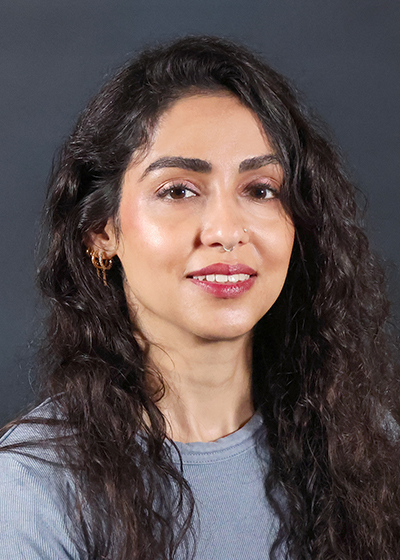
Mikael B. Skov is a Vice Dean and Professor at the Technical Faculty of IT and Design of Aalborg University , Denmark. His research spans human-AI interaction, robotics, and user experience, with a focus on trust signaling in clinical AI, swarm robotics, and sound zones for domestic environments. Role: Vice Dean for Research Department: Computer Science Research Interests: Skov investigates how humans interact with AI and robots in healthcare and domestic settings, emphasizing trust calibration, alert design, and acoustic comfort. His work includes developing frameworks for UX maturity in robotics organizations and studying long-term adoption of sound zone systems. Recent Projects: As principal/co-investigator, he leads the HERD project on human-AI collaboration in robot swarms (2021–2025) and supervises Data og Bæredygtig Mad (2020–2023), an HCI perspective on sustainable food systems. Publications: His 2024 work includes studies on AI explanations in clinical training, music applications with intermittent interactions, and multi-robot supervision. Earlier projects (2001–2020) focused on mobile device usability, UX practices, and context-aware computing.
Nazanin Tajik is an Assistant Professor in the Department of Industrial and Systems Engineering at Mississippi State University (MSU). She holds a Ph.D. from the University of Oklahoma, an M.S. from the University of Tehran, and a B.S. from Sharif University of Technology. Her research focuses on integrating artificial intelligence, machine learning, and social science concepts to develop cross-disciplinary frameworks for infrastructure resilience, smart transportation systems, and disaster management. Her academic journey includes a Ph.D. at the University of Oklahoma where she contributed to the Risk-Based Systems Analytics Laboratory. At MSU, she established a research center bridging AI/ML tools with socio-technical systems. Key research domains include cyber-physical-social infrastructure resilience, search-and-rescue planning, and game-theoretic robotic designs. Tajik's work emphasizes optimization algorithms for network vulnerability assessment, resource allocation in disaster scenarios, and adaptive recovery strategies. She is actively involved with professional organizations such as INFORMS, ISE, and POMS, reflecting her commitment to advancing operations research and systems engineering methodologies.
Dr. Florian Urmetzer serves as Associate Teaching Professor and founding Director of the Ecosystems, Platforms & Strategy (EPS) Research Group at the University of Cambridge's Institute for Manufacturing (IfM). His expertise centers on strategy formulation tools for business ecosystems and platforms within manufacturing and services sectors. He teaches the Business Ecosystem Strategy course and leads IfM Engage consultancy projects for clients including IBM, ATOS, ABN-AMRO, CEMEX, Pearson Education, Leonardo rescue helicopters, and the NHS. Urmetzer holds a distinction MSc in Network Centred Computing and PhD from the University of Reading's School of Systems Engineering. His doctoral research developed real-time usability evaluation methods for distributed collaborative environments. Academically, he has been a visiting researcher at Barcelona Supercomputing Center and Politecnico di Milano. His research investigates industrial ecosystems from strategic and managerial perspectives, encompassing supply chains, digital platforms, and business ecosystem dynamics. This work has been published in leading journals including Journal of Business Research, European Journal of Information Systems, and Journal of Service Research. Analysis of his recent publications reveals dominant trends in technological sovereignty, platform ecosystem governance, and manufacturing relocation strategies. Prior to Cambridge, Urmetzer gained extensive industry experience as a consultant at Accenture in Zürich, Senior Researcher at SAP labs, and roles at Volkswagen AG, Gartner Inc., and IBM. He currently leads the EPS Research Group, which develops frameworks for organizations navigating complex industrial ecosystem dynamics.
Xieyuanli Chen is an Associate Professor at the National University of Defense Technology (NUDT), China. He holds a Dr.-Ing. (summa cum laude) from the University of Bonn (2022), a Master's in Robotics from NUDT (2017), and a Bachelor's in Electrical Engineering from Hunan University (2015). His research focuses on robot learning, perception, and navigation, with an emphasis on LiDAR-based SLAM, autonomous systems, and semantic perception. Education: PhD: University of Bonn, 2018-2022 (supervised by Prof. Cyrill Stachniss) Master's: NUDT, 2015-2017 Bachelor's: Hunan University, 2011-2015 Research interests include robotics, autonomous systems, computer vision, and LiDAR perception. He has authored over 90 papers in top venues like TRO, RSS, ICRA, and CVPR. He serves as an Associate Editor for IEEE RA-L, ICRA, and IROS, and is a member of the RoboCup Rescue Robot League Technical Committee. Awards include the RSS Pioneer Award (2021), Best-in-Class RoboCup awards, and recognition as a World’s Top 2% Scientist (2024). His work spans LiDAR localization, moving object segmentation, and efficient semantic mapping. He advises students in robotics and autonomous systems. Labs/Teams: Active in the PRBonn group (University of Bonn) and leads research at NUDT on LiDAR-based perception systems.
Tae Eun Kim is an Associate Professor in Maritime Safety Management at UiT The Arctic University of Norway, working within the Department of Technology and Security. Her research, teaching, and industrial collaboration focus on maritime safety and human factors, with particular expertise in maritime safety management, accident analysis, Maritime Autonomous Surface Ships (MASS), and human factors in maritime operations. Dr. Kim's research spans four interconnected domains: maritime safety management and leadership, maritime accident and casualty analysis, Maritime Autonomous Surface Ships (MASS), and human factors in maritime operations. She has developed assessment instruments like the Safety Leadership Self-Efficacy Scale (SLSES) and conducted STAMP-based causal analyses of maritime accidents. Her work on MASS addresses safety challenges in mixed navigational environments and examines leadership competencies for autonomous shipping operations. Her human factors research explores how technological advancements impact navigators' performance, crew dynamics, and safety outcomes, including gender parity issues in the maritime industry. Dr. Kim's publication record reveals a strong focus on the intersection of maritime safety, technology, and human performance. Her recent work increasingly addresses autonomous shipping technologies, with numerous publications on AI decision transparency, learning analytics in maritime simulator training, and multi-modal data analysis for nautical skill development. She has conducted systematic reviews on simulator training approaches and scenario design, contributing significantly to methodology development in maritime education and training. Her research demonstrates a clear trajectory toward integrating emerging technologies with traditional maritime safety practices as the industry transitions toward greater automation. Dr. Kim is actively involved in several significant research projects, including the i-MASTER EU Horizon Europe Research and Innovation Project, the REFRAME project, and the SPRICE project (Multidisciplinary approach for spray icing modelling). She is a member of both the Advanced Maritime Ship Operations research group and the Maritime Safety Science (MARSCI) Research Group, demonstrating her commitment to collaborative research in maritime safety science. Dr. Kim teaches several specialized courses at UiT, including SVF-3206 Safety Management and Accident Investigation, TEK-3014 Navigation Technology, MFA-2100 Maritime Digitalization, MFA-8010 Maritime HTO (Human-Technology-Organisation) and Innovation, and MFA-2018 Maritime Administration and Leadership. Her teaching portfolio reflects the interdisciplinary nature of her expertise, bridging engineering, safety science, and organizational behavior in maritime contexts.
Arash Nemati is an Assistant Professor at the Department of Energy Conversion and Storage, Technical University of Denmark (DTU). His research focuses on sustainable energy technologies, particularly solid oxide fuel cells, ammonia-fueled systems, and multiphysics modeling of energy conversion processes. He leads and participates in EU-funded projects such as RESCUE and X-SEED, aiming to advance renewable energy storage and green hydrogen production. His work addresses challenges in electrochemical systems, including durability, efficiency, and integration of renewable energy sources. He has received notable recognition, including a Highly-cited Paper award (Web of Science, 2022) and the DAAD Green Hydrogen Research Tour Scholarship (2024). Nemati actively supervises PhD students in areas like co-electrolysis and solid oxide electrolysis cell modeling. His expertise spans thermochemical processes, numerical simulations, and techno-economic evaluations of energy systems. Key projects include developing ammonia-driven reversible solid oxide cells for grid storage and optimizing pyrolysis-electrolysis systems for methanol and char production. His research aligns with UN Sustainable Development Goals, emphasizing clean energy and climate action.
Anne Simone Dederichs is an Associate Professor in the Department of Civil and Mechanical Engineering at the Technical University of Denmark (DTU), specializing in Structures and Safety. She is actively engaged in research and teaching in fire safety engineering, combustion dynamics, and evacuation modeling. Her work spans academic, industrial, and policy-relevant domains, with strong collaborations across Scandinavia. Doctoral Degree, Dept. of Fire Safety Engineering, Lund University (1998–2004) Master of Science, Niels Bohr Institute, University of Copenhagen (1991–1997) Bachelor of Science, Niels Bohr Institute and Department of Mathematical Sciences, University of Copenhagen (1991–1996, 1991–1995) Her research focuses on fire safety engineering , evacuation dynamics , universal design in safety systems , and sustainable construction materials . She has led seminars and EU meetings on computational fluid dynamics in combustion and turbulent combustion, and she teaches in fire chemistry, fire dynamics, and risk management. Her work contributes to UN Sustainable Development Goals related to sustainable cities and inclusive design. Recent publications show a trend toward integrating digital tools like Building Information Modeling (BIM) into fire safety, analyzing evacuation inclusivity (e.g., on ships), and evaluating fire risks of new sustainable materials. Her research bridges experimental analysis, modeling, and real-world application in buildings and industrial settings. She has held external positions as a Senior Research Scientist at RISE (Research Institutes of Sweden) and as a Researcher at Lund University. She has supervised PhD projects on composite material aging and fire safety compliance through BIM. Anne is actively involved in project leadership and collaboration, particularly in Nordic research networks. She has organized post-graduate courses and authored teaching materials in fire safety and chemical kinetics.
Stuart E. Middleton is a Professor in the Electronics and Computer Science (ECS) department at the University of Southampton, where he has been employed since 2003. His research bridges artificial intelligence with practical applications in social science, mental health, and security domains. He leads multiple research projects funded by DTP and CISDnS CDT, focusing on multimodal natural language processing and large language models for social good applications. Professor Middleton's research interests center on Natural Language Processing, Large Language Models, and Human-in-the-loop AI systems. His work spans mental health applications (particularly suicide risk detection and mood change analysis), social media analysis for crisis mapping, geoparsing for location extraction, and argument mining in political discourse. He has developed numerous open-source NLP projects and datasets including CPIQA for climate science, ConversationMoC for mental health monitoring, and M-Arg for multimodal argument mining. His research demonstrates how AI can effectively support human decision-making in critical domains like mental healthcare, defense applications, and crisis management. His recent publications reveal a strong trend toward applying LLMs to high-impact societal challenges, particularly in mental health monitoring and climate science verification. He has pioneered methods for detecting suicidal ideation in social media, identifying moments of mood change, and developing context-aware question answering for climate papers. His work consistently emphasizes the importance of human oversight in AI systems, with numerous publications on responsible AI, regulation, and human-in-the-loop approaches. Ranked 1st in ECAL-2024 shared task on suicidal ideation detection Ranked 1st in NAACL-2022 shared task on suicide risk and mood change classification Winner of 'best paper' award at WWW2002 Semantic Web Workshop Professor Middleton actively supervises PhD students through multiple funded projects including 'Multimodal Natural Language Processing for Computational Social Science', 'Large Language Models for Military Veteran Mental Health', and 'Large Language Models for Human/AI Information Foraging to Combat Digital Human Trafficking into Terrorism'. He has secured significant funding from UKRI, DSTL, and other sources to support his research in responsible AI applications. He organizes major workshops including the RAI UK Workshops on Responsible AI for Mental Health and AIUK workshops on AI for Data Rescue and Defense applications. His research group maintains numerous GitHub repositories with open-source NLP tools and datasets that have been widely adopted by the research community.
Prof. Şule Itır Satoğlu is a faculty member in the Department of Industrial Engineering at Istanbul Technical University, holding the rank of Professor since 2019. She has held multiple administrative roles, including Head of Department (2025–present), Vice Rector (2020–2024), and Vice Dean (2018–2020). Her research focuses on supply chain management, optimization, sustainable operations, and disaster response systems. She has a PhD in Industrial Engineering from Istanbul Technical University (2008), an MSc in Engineering Management (2002), and a BSc in Mechanical Engineering (2000). Her work emphasizes practical applications of optimization techniques in logistics, healthcare, and disaster management. Notable contributions include developing models for blood supply chains under uncertainty, UAV-based waste detection, and sustainable urban transport fleet electrification. She has collaborated on projects funded by public and private sectors, addressing issues like lean manufacturing integration with Industry 4.0 and RFID-enabled maintenance systems. Her publications span over two decades, with recent focus on multi-objective optimization in humanitarian logistics, smart waste collection systems, and energy-efficient drone surveillance. She is a member of the TMMOB Chamber of Mechanical Engineers and actively contributes to national technology initiatives through academic leadership roles.
Dr. Gabor Karsai is a Distinguished Professor of Computer Science and Professor of Electrical and Computer Engineering at Vanderbilt University's School of Engineering. He also serves as Senior Research Scientist at the Institute for Software-Integrated Systems (ISIS), where he contributes to the Executive Council. With over 30 years in software engineering, his research focuses on embedded systems, model-driven development, resilient software platforms, and AI-driven autonomous systems assurance. He holds a PhD from Vanderbilt and degrees from the Technical University of Budapest. Education: Ph.D. in Electrical and Computer Engineering, Vanderbilt University Dr.Tech. in Computer Engineering, Technical University of Budapest M.S. and B.S. in Electrical Engineering, Technical University of Budapest Affiliations: Co-Associate Chair for Computer Engineering External Member of the Hungarian Academy of Sciences His research interests span model-integrated computing , autonomous systems assurance , and radiation-hardened systems . Recent work emphasizes AI integration into engineered systems and radiation effects mitigation for space applications. He has led major projects on distributed control for smart grids and resilient CPS architectures. Over 200 peer-reviewed publications and four patents reflect his contributions to software engineering and systems integration. Awards & Recognition: External Membership in Hungarian Academy of Sciences Leadership roles in ISIS and Vanderbilt's academic governance Advisees & Grants: While no student list is provided, his projects involve collaborative teams across academia and industry. Major sponsors include NSF, NASA, and DARPA. Current work includes the ALC (Assurance-based Learning-enabled CPS) and MIDAS (Model-based Intent-Driven Adaptive Software) initiatives. Labs & Platforms: Co-developer of the RIAPS distributed CPS platform and the SEAM assurance modeling framework. His labs focus on cyber-physical system design, radiation effects analysis, and autonomous system reliability.
Naomi Morris serves as a Teaching Fellow at the University of Portsmouth within the Faculty of Science & Health, specifically affiliated with the School of the Environment and Life Sciences and the Centre of Excellence in Defence, Risk & Resilience. She actively contributes to academic research in disaster management while accepting PhD students for supervision. Her research focuses on critical areas including disaster management, risk resilience, water rescue operations, and pandemic response strategies. These interests align with multiple United Nations Sustainable Development Goals, particularly those addressing disaster risk reduction and community resilience. Her work bridges theoretical frameworks with practical emergency response applications across diverse contexts. Morris has contributed to significant research projects including the GCRF-funded study on 'Impact of Covid19 in developing countries' and the examination of UK Search and Rescue frameworks titled 'For those in peril on the sea.' Her collaborative approach is evident through numerous co-authored publications spanning emergency medicine, geography, and public policy domains. Her research demonstrates an evolving trajectory from technical geospatial applications toward more community-centered emergency response frameworks, with particular emphasis on water rescue operations and pandemic prevention. This progression reflects growing focus on practical, community-based solutions to complex disaster scenarios. Morris actively collaborates across disciplines as a Co-Investigator on major projects. Her work has attracted substantial attention with significant readership on academic platforms like Mendeley, indicating relevance and impact within her research communities.
Raymond H. Cuijpers is an Associate Professor at Eindhoven University of Technology in the Human Technology Interaction group. His research focuses on Cognitive Robotics , Human-Robot Interaction , and Artificial Intelligence for cognitive agents, with applications in healthcare robotics and aging population support. PhD in Physics of Man from Utrecht University (2000) Postdoctoral research at Erasmus MC Rotterdam and Radboud University Nijmegen Key research areas include: Developing socially intelligent robots with proper social cue interpretation Hybrid AI approaches for real-world complexity handling Visual-haptic perception integration in human motor control Service robots for COPD patient assistance (KSERA project) Rescue robotics and tele-operation applications Recent research output (2025) includes studies on: Personalization in human-robot communication Optimal lighting for elderly visual perception Human-robot bonding mechanisms Interactive sensorized platforms for homecare (GUARDIAN) Audiovisual temporal integration in virtual environments He coordinates large-scale European projects like GUARDIAN and previously KSERA, contributes to sustainable development goals through healthcare robotics, and serves on editorial boards of leading journals including International Journal of Social Robotics . His work spans both technical robotics development and human-centric interaction studies.
Caroline Crockett is an Assistant Professor in the Department of Electrical and Computer Engineering at the University of Virginia, part of the School of Engineering and Applied Science. She holds a Ph.D. in Electrical Engineering from the University of Michigan and a B.S. from the University of Virginia. Her academic role emphasizes teaching and engineering education research. B.S., Electrical Engineering, University of Virginia, 2015 Ph.D., Electrical Engineering, University of Michigan, 2022 Her research interests are centered on engineering education, particularly how students develop conceptual understanding in core electrical engineering topics and learn to troubleshoot. She also has a background in machine learning and image reconstruction, though her current work focuses on pedagogy. She actively engages undergraduate students in research projects related to education and is a member of IEEE and ASEE. Her recent publications reflect a strong trend toward engineering education research, especially in signals and systems comprehension and affective student responses to active learning. Earlier work includes advanced image reconstruction techniques using bilevel optimization, showing a transition from technical signal processing to educational research. Caroline Crockett does not supervise graduate students or maintain a research lab, but she mentors undergraduates interested in engineering education. She has taught several key courses including Fundamentals of ECE 2, Fundamentals of ECE 3, and an Introduction to Machine Learning. She is committed to undergraduate instruction and curriculum development. She is involved in the broader academic community through her memberships in IEEE and ASEE, contributing to educational research and dissemination through conferences and publications. Outside of her academic duties, she enjoys knitting, reading, crafts, and spending time with her family and rescue dog Oreo. She is also a licensed amateur radio operator.
Dinshaw Patel is a Professor at the Structural Biology Program of Memorial Sloan Kettering Cancer Center (MSKCC), holding the Abby Rockefeller Mauzé Chair in Experimental Therapeutics. He has affiliations with Columbia University, The Rockefeller University, and Weill Cornell Medicine through collaborative research projects. PhD in Photochemistry, New York University Postdoctoral training in Biochemistry and Biophysics 17 years at AT&T Bell Laboratories Professor at Columbia University-Health Sciences His research focuses on structural biology of macromolecular recognition systems, particularly CRISPR-Cas surveillance complexes, cGAS-STING pathways, Structure Maintenance of Chromosomes (Smc5/6, MRX) complexes, and epigenetic regulation via histone/DNA modifications. His work spans RNA-mediated processes (siRNA/piRNA pathways), molecular chaperones, and riboswitches/ribozymes. Recent projects include structural characterization of bacterial antiphage defense systems (Lamassu, Kiwa), small molecule inhibitors targeting SARS-CoV-2 RNA capping machinery, and complexes involved in leukemias/lymphomas. Publications highlight structural elucidation of CRISPR-Cas systems using cryo-EM and x-ray crystallography, DNA repair mechanisms, and RNA-protein interaction dynamics. Key collaborations include Luciano Marraffini (Rockefeller), Xiaolan Zhao (MSKCC), and Thomas Tuschl (Rockefeller). National Academy of Sciences member AAAS member AT&T Bell Labs Distinguished Technical Staff Award New York University Distinguished Alumnus Award FEZANA Excellence in Profession Award Lifetime Achievement, American Association of Indian Scientists in Cancer Research Students and trainees benefit from his expertise in structural biology techniques (NMR, crystallography, cryo-EM), biochemical assays, and biophysical approaches. His lab participates in the Tri-Institutional PhD Program in Chemical Biology and maintains affiliations with multiple institutions including Beijing Advanced Innovation Center for Structural Biology and ETH Zürich.
Roman Franz Froschauer is a Professor of Production Informatics at the Upper Austria University of Applied Sciences, Research Center Wels. Since 2018, he has served as Director of Studies for the Master's program in Robotic Systems Engineering and leads the Smart Automation & Robotics research group. His career spans academic and industrial roles, including senior software development and project management at AlpinaTec Technical Products GmbH (2010-2016). Education: Ph.D. in Computer Science (2010) from Johannes Kepler University Linz; Master's in Industrial Informatics (2005) from Upper Austria University of Applied Sciences. Research Areas: Software engineering for intelligent automation systems, human-robot interaction (HRI), control systems, and applications of IEC 61499 standards. His work focuses on proactive collaboration, trajectory planning, and user-centered design for assistive robots in office and industrial settings. Scientific Activities: Active in peer-review, conference organization, and technology development. Projects include VRoboCoop (human-robot trust), MARIE (office robotics), and Autility (automated utility vehicles). Key Contributions: Frameworks for modular manufacturing (PlugBot), skill-based engineering, and intralogistics automation (ATLAS).