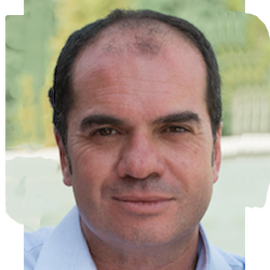
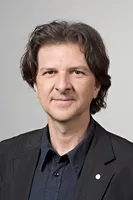
Professor Walter Krämer holds a position at the Technical University of Dortmund within the Faculty of Statistics, specifically at the Chair of Economic and Social Statistics in Dortmund, Germany. His academic career has been focused on statistical research with applications in economics and finance. His research interests span multiple domains within statistics, with particular emphasis on Financial Market Analysis , Time Series Analysis , and Econometrics . Professor Krämer has demonstrated expertise in analyzing structural breaks, long memory processes in financial markets, and nonlinear dynamic processes. His work bridges theoretical statistics with practical economic applications, particularly in risk allocation and market volatility modeling. Throughout his career, Professor Krämer has led and participated in numerous significant research projects funded by the German Research Foundation (DFG). These projects reflect his expertise across various statistical domains and their applications to economic phenomena. His collaborative work has spanned multiple research centers and graduate schools, indicating his standing within the academic statistical community.
Dr. Mohsin Malik is an Associate Professor of Project Management at Swinburne University of Technology (since 2023) in Melbourne, Australia. Previously, he held roles as Senior Lecturer (2018–2022) at Swinburne and Lecturer (2016–2018) at the University of Melbourne. He earned his PhD in Technology Management from the University of Western Australia (2012). His research focuses on organizational dynamics for innovative outcomes in digital contexts, sustainability in supply chains, and project management practices aligned with UN Sustainable Development Goals (SDG-9, SDG-12, SDG-3). Key areas include digital transformation, lean management, agile project management, and supply chain resilience. Dr. Malik’s work has been published in top-tier journals like the International Journal of Project Management, Information & Management, and IEEE Transactions on Engineering Management. He currently serves as Senior Associate Editor of the International Journal of Physical Distribution & Logistics Management and has secured grants totaling over AUD 1M, including a 2025–2028 project on digital transformation in Indian/Australian organizations funded by DFAT. His research explores topics such as socio-cognitive dynamics in digital transformation, lean socio-technical systems, and agency theory in international development projects. Recent projects include analyzing digital platform interactions for Australian artists and evaluating virtual healthcare barriers during the pandemic. He actively supervises doctoral and master’s students focusing on digital governance, social sustainability, and project monitoring frameworks. Dr. Malik is a globally recognized scholar, with over 23 years of academic and industry experience. He collaborates with organizations like the Victorian Music Development Office and the Australian Academy of Science, emphasizing real-world impact through research.
Fernando Sánchez-Figueroa is a Full Professor at the University of Extremadura's Department of Computer Systems Engineering and Telematics. He is a co-founder of Homeria Open Solutions, a spin-off engaged in R&D projects under EU frameworks. His research focuses on Software Engineering, Machine Learning, Data Visualization, and Ambient Intelligence. He has authored over 50 scientific articles and led numerous R&D contracts with public and private entities. Key roles include: Academic: Full Professor at University of Extremadura Entrepreneur: Co-founder of Homeria Open Solutions Research: Participation in EU-funded projects and development of AI-driven solutions for healthcare, smart cities, and education Research Interests: Machine Learning applications in healthcare, predictive analytics for education, and sustainable smart city technologies. His work bridges theoretical advancements with practical implementations, such as medical image segmentation using SAM models and cost-efficient UAV systems. Publications: Recent works include decision support systems for employability analysis, zero-shot learning in medical imaging, and recommender systems for education. He emphasizes data-driven approaches and model-driven engineering in software development. Impact: Developed tools like CompareML for preliminary data analysis and LiveSankey for advanced web visualization. His contributions span academia and industry, addressing challenges in healthcare, urban sustainability, and educational technology.
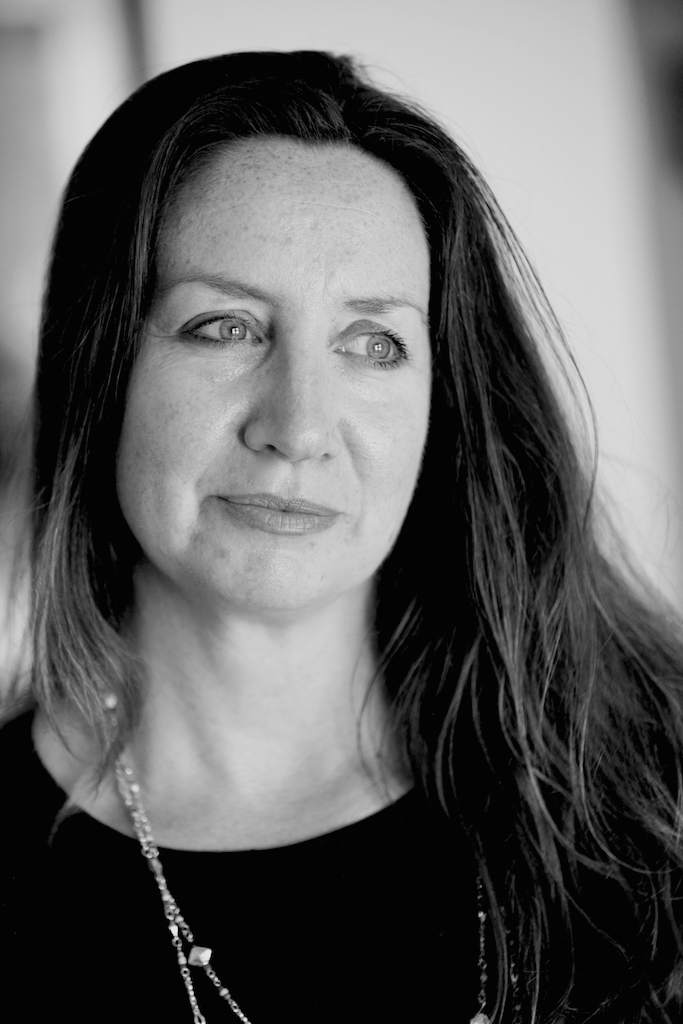
Anna Weinstein is an Associate Professor of Screenwriting in the Department of English at Kennesaw State University, where she coordinates the Graduate Certificate in Screen & Television Writing. She is a core faculty member in the Master of Arts in Professional Writing program and an affiliated faculty member in the Gender and Women's Studies program. Her educational background includes an M.F.A. in Creative Writing & Writing for the Performing Arts from the University of California, Riverside, and a B.A. in Speech Communication from the University of North Carolina, Chapel Hill. Anna's research focuses on screenwriting, women's representation in film and television, and industry studies. Her creative work includes developing a limited series on Georgian author Lillian E. Smith and adapting 'The Jack Tales' for film. She frequently explores contributions of women both in front of and behind the camera, advancing critical discourse on gender in media. Analysis of her recent publications reveals a consistent emphasis on female-driven narratives and global women directors. Her work predominantly features interviews with filmmakers and critical analyses of women's roles in cinema history, highlighting diverse voices and underscoring her commitment to documenting underrepresented perspectives in screenwriting and media studies. Anna Weinstein serves as Secretary for the Screenwriting Research Network (2022-2024) and Co-chair of the Film Area for the Popular Culture Association (2021-present). As Coordinator of the Graduate Certificate program, she mentors students in screenwriting and professional writing, fostering next-generation media creators through curriculum development and personalized guidance.
Alipaşa Ayas is a Professor and Dean of the Faculty of Education at Bilkent University, where he also serves as Chair of the Department of Educational Sciences. His research focuses on science education, teacher training, conceptual understanding, and inclusive education. He has led numerous national and international projects, including UNICEF- and EU-supported initiatives. Ph.D., University of Southampton M.A., University of New Brunswick MSc., Karadeniz Technical University BSc., Karadeniz Technical University His research interests span teacher education, science education (particularly chemistry), concept development, curriculum design, and assessment strategies. He employs both qualitative and quantitative methods to explore these areas. His publications emphasize inquiry-based learning, conceptual change strategies, and the effectiveness of interventions such as the 5Es model, constructivist activities, and analogies in enhancing science learning. These works often address misconceptions in chemistry and methods to improve scientific process skills. He has contributed to projects supported by the World Bank, EU, and UNICEF, including initiatives on lifelong learning, education development, and inclusive teacher training. His administrative roles include a 6-year deanship at Karadeniz Technical University and leadership of Bilkent University’s Graduate School of Education since 2017.
Professor Michael Bell is the Foundation Professor of Ports and Maritime Logistics at the University of Sydney Business School's Institute of Transport and Logistics Studies. He holds a BA from Cambridge University, MSc and PhD from Leeds University, and has held roles including Director of Imperial College London's PORTeC and academic positions at Newcastle University and Karlsruhe Technical University. His research focuses on ports, transport networks, sustainability, and intelligent transport systems. He has authored over 150 publications, including seminal works like Transportation Network Analysis . Current projects include circular economy diversification for ports and autonomous delivery systems. Awards include fellowship in multiple transport societies. Education: BA (Economics) Cambridge (1975), MSc (Transportation) Leeds (1976), PhD (Freight Distribution) Leeds (1981). Postdoctoral research at Karlsruhe Technical University (1982–1984). Research Interests: Ports logistics, transport network resilience, urban logistics, cybersecurity in supply chains, and sustainable transport policy. Publications span 40+ years, emphasizing empirical and theoretical advancements in maritime systems, network modelling, and policy analysis. Recent work explores autonomous systems integration and port diversification strategies. Grants include a 2023 iMOVE CRC project on land use trip surveys and a 2022 ARC Discovery Project on automated transport decisions. Media appearances address global trade disruptions (e.g., Suez Canal blockage), autonomous vehicles, and port sustainability. Led PORTeC (Imperial College) and co-founded the Institute of Transport and Logistics Studies at Sydney. Active in policy advisory roles for government agencies and industry bodies.
Professor Linda Newnes is a faculty member in the Department of Mechanical Engineering at the University of Bath, leading the Made Smarter Innovation: Centre for People-Led Digitalisation (£5M) and the TRansdisciplinary ENgineering Design (TREND) research group (£1.8M). Her work focuses on transdisciplinary engineering, whole life value analysis, and sustainable manufacturing. She directs The Foundry: Centre for Digital, Manufacturing & Design, emphasizing people-centric digitalization and cross-sector collaboration. Her research integrates natural/social sciences and industry stakeholders to address challenges in aerospace, defense, and energy sectors. Notable projects include models for whole life value (cradle-to-cradle) and tools for transdisciplinary working. She actively promotes Equality, Diversity & Inclusion (ED&I), leading the University’s Aurora programme and Athena SWAN submissions. Recent publications explore digital skill premiums, transdisciplinary frameworks, and AR deployment challenges. She advocates Industry 5.0 principles, emphasizing human-centric innovation and resilience in socio-technical systems. Current grants focus on net-zero transitions and cellular agriculture manufacturing. Her advising spans doctoral students in transdisciplinary engineering, Industry 5.0, and future manufacturing. She collaborates with industry partners like Airbus and Innovate UK to advance cost estimation, decision support tools, and lifecycle analysis.
Lynn Helding serves as Professor of Practice in Voice and Vocal Pedagogy at the University of Southern California's Thornton School of Music, where she also coordinates the Vocology & Voice Pedagogy program. She is a distinguished author, most notably of The Musician's Mind: Teaching, Learning and Performance in the Age of Brain Science , and was appointed Editor-in-Chief of the Journal of Singing in 2023. With decades of experience as both a performer and pedagogue, Helding bridges the gap between voice science and artistic practice, advocating for cognitive science as the "Third Pillar of Voice Science" alongside physiology and acoustics. Helding's educational background includes: Master's Degree in Vocal Pedagogy with Distinction from Westminster Choir College of Rider University (2005) Artist Diploma from Indiana University (1988), where she was the first singer ever accepted into this prestigious program Completion of the Summer Vocology Institute at the National Center for Voice and Speech Helding's research focuses on the application of cognitive science to voice pedagogy, with particular emphasis on motor learning theory and expertise studies from social psychology. She pioneered the concept of cognitive science as the "Third Pillar of Voice Science," arguing that understanding the brain's role is essential for effective voice teaching. Her work challenges traditional approaches by emphasizing the "how" of teaching over the "what," advocating for science-informed (rather than science-based) pedagogy that respects both scientific findings and artistic tradition. Helding's research has significant implications for addressing performance anxiety, optimizing practice methods, and developing more effective teaching strategies that account for how musicians actually learn. Her scholarly contributions demonstrate a consistent focus on bridging cognitive science with practical voice teaching. Rather than treating voice science as purely technical knowledge, Helding examines how this information can be effectively communicated to students, recognizing that the delivery method is as important as the content itself. This approach has led to innovative frameworks for evidence-based voice pedagogy that consider both physiological realities and cognitive processing limitations. Helding's significant recognition includes: Lifetime Achievement Award from the Contemporary Commercial Music (CCM) Vocal Pedagogy Institute at Shenandoah University (2020) Van L. Lawrence Fellowship, jointly awarded by the Voice Foundation and the National Association of Teachers of Singing Foundation (2005) Induction into the prestigious American Academy of Teachers of Singing (2022) Recognition as a "legendary figure in the field of voice pedagogy" As an educator, Helding maintains a thriving studio with private clients including members of the Los Angeles Opera and Los Angeles Master Chorale. Her USC Thornton voice students have earned fellowships to prestigious programs including the Aspen and Tanglewood Music Festivals. She has presented masterclasses described as "life-altering" at major voice conferences throughout the United States, Europe, and Australia. Helding previously served twenty-two years as Associate Professor of Voice and Director of Performance Studies at Dickinson College, and four years as voice faculty at Vanderbilt University's Blair School of Music. Helding is actively involved with the USC Voice Center at Keck Medicine of USC as a team member, where she applies her vocology expertise to help singers with functional vocal issues and those recovering from voice surgery. She is a co-founder of the NATS Science-Informed Voice Pedagogy Institute and frequently collaborates with voice scientists and medical professionals to advance the field of vocology.
Alexandra Kirsch is an Assistant Professor in the Media Informatics Department at the University of Tübingen's Faculty of Informatics. She held the Carl von Linde Junior Fellowship at the Technical University of Munich (TUM) Institute for Advanced Study (TUM-IAS) from 2010. Previously, she was a senior research scientist at TUM's Intelligent Autonomous Systems Group and led the independent Junior Research Group “Planning for Adaptive Robot Assistance” within the Excellence Cluster CoTeSys (Cognition for Technical Systems). Education: Diploma in Computer Science from TUM, 2003 Doctoral degree from TUM, completed between 2003-2007 Research Interests: Kirsch focuses on developing control mechanisms for autonomous robots using artificial intelligence, aiming to create systems that collaborate closely and transparently with humans. Her work emphasizes models of world dynamics, robot action effects, and human behavior. She created the Robot Learning Language (RoLL) to automate model acquisition and update processes during robot operations. Collaborations with psychologists and neuroscientists explore joint human-robot planning tasks and model development for seamless interaction. Scientific Awards: Member of the Bayerische Akademie der Wissenschaften Förderkolleg (2012) Award by Comet Computer GmbH for excellent graduation results (2003) Advising & Grants: Managed interdisciplinary research projects during her junior fellowship at TUM. Previously worked as a management consultant at Booz & Co., 2007-2008. Her grants include the Carl von Linde Fellowship and support for the Junior Research Group. Labs/Teams: Active in the Planning for Adaptive Robot Assistance group (CoTeSys) and collaborates with the Cognitive Technology focus group at TUM-IAS. Engages in cross-disciplinary teams involving neuroscience and psychology for human-robot interaction studies.
Mauro Pezzè is a Full Professor of Software Engineering at the Università della Svizzera italiana (USI) and Università di Milano Bicocca, leading the STAR research group since 2006. He holds a laurea from the University of Pisa and a PhD from Politecnico di Milano. His research focuses on software testing, analysis, self-adaptive systems, and cloud systems. He has held editorial roles, including Editor-in-Chief of ACM Transactions on Software Engineering and Methodologies (TOSEM), and served on numerous program committees. Education: Laurea (Pisa), PhD (Politecnico di Milano). Professional roles include Dean of the Faculty of Informatics at USI (2009-2013), visiting scientist at UC Irvine and Edinburgh, and technical lead for international projects. He co-authored a seminal book on software testing (Wiley, 2007), with over 670 citations. Research Interests: Software Testing, Self-Adaptive Systems, Cloud Computing, AI in SE, Sustainable Software. Projects include work on field-based testing, failure prediction in distributed systems, and neuro-symbolic approaches for test oracles. Grants and Advising: Led STAR Lab projects in self-healing systems, GUI testing, and semantic matching. Advised numerous PhD/postdoc students (e.g., Ciniselli, Di Grazia, Qiu). Collaborations with European tech firms on R&D initiatives. Labs/Teams: STAR Group at USI/Constructor Institute, Bicocca, and Politecnico di Milano. Current members include postdocs and PhD students working on AI-driven testing and cloud reliability.
Prof. Ueli K. Heiz is a Professor and Principal Investigator at the Technical University of Munich (TUM), leading the Cluster Catalysis and Advanced Spectroscopy group within the Department of Chemistry. His research focuses on the unique properties of atomic-scale clusters in the non-scalable size regime, exploring their applications in catalysis (nanocatalysis, asymmetric catalysis, photocatalysis) and energy conversion. He develops advanced experimental tools like ECSTM (Electrochemical Scanning Tunneling Microscopy) and UHV (Ultra-High Vacuum) systems for studying cluster dynamics and reactivity. Key research areas include clusters at solid-liquid interfaces, gas-phase cluster kinetics, and ambient pressure photocatalysis. His group investigates how quantum size effects and precise atomic structures influence catalytic performance. Associated with TUM’s Chair of Physical Chemistry , his work bridges fundamental chemistry with practical applications in sustainable energy technologies. The group collaborates with initiatives like the Munich Catalysis Alliance (MuniCat) and operates specialized facilities such as the Magnetron Sputtering Cluster Source and Spectroscopy labs. His research has led to advancements in understanding reaction mechanisms on size-selected clusters, including methane coupling, alcohol photocatalysis, and enantiospecific surface interactions. Funding sources include the Collaborative Research Centre (CRC) and other institutional grants. While no personal awards are explicitly listed, his contributions to catalysis and spectroscopy methodologies are highlighted through high-impact publications in Journal of the American Chemical Society and Angewandte Chemie .
Frankie Santos Laanan is Dean of the College of Education at the University of Utah, where he also holds Professorial appointments in the Departments of Education, Culture & Society and Educational Leadership & Policy. A first-generation college graduate and Pacific Islander scholar, he earned his B.A., M.A., and Ph.D. from UCLA in Political Science and Higher Education. Dr. Laanan has led institutions including the University of Guam, Iowa State University, and the University of Alabama, with a focus on expanding access for underrepresented students. Research Foci: Community college role in STEM pathways, transfer student adjustment, educational equity for first-generation/low-income/historically underrepresented students, postsecondary policy, and workforce development Funding: Over $8 million in grants from the Spencer Foundation, National Science Foundation, and USAID His scholarship has shaped understanding of transfer student capital, with foundational work on factors influencing retention and satisfaction among vertical/horizontal transfer students. Key findings highlight coursework quality, institutional support, and student-faculty interactions as critical for success. Scientific Awards: Barbara K. Townsend Early Career Scholar Award Founders' Service Award (ASHE Council on Ethnic Participation) Outstanding Faculty Award (NASPA Latino/a Knowledge Community) Summer Database Institute Fellow (National Center for Education Statistics) As a Principal Investigator, Dr. Laanan has studied PLTW curriculum impacts, CTE program accountability, and social capital intersections in STEM pathways. His translational research emphasizes student-centered leadership and policy reform.
Professor Simon Devitt is Research Director of the Centre for Quantum Software and Information (QSI) at the University of Technology Sydney's Faculty of Engineering and Information Technology, School of Computer Science. He also holds several prestigious international appointments including InstituteQ Visiting Chair of Excellence in Quantum Technologies at Aalto University, Finland, and visiting positions at RIKEN in Japan. As a leading figure in quantum computing research, he directs the Australian Quantum Software Network and co-founded quantum education startup Eigensystems Pty Ltd. His educational background includes: PhD in Physics from University of Melbourne (2004-2007) BSc (Hons) in Physics from University of Melbourne (2000-2003) Professor Devitt's research spans quantum software, quantum architecture, and quantum error correction, with a focus on making quantum computing practical at scale. His work addresses fundamental challenges in quantum computing architecture when scaled to millions or billions of qubits. He has pioneered approaches to quantum error correction, resource estimation, and quantum network design, particularly through his leadership of the Quantum Technology at Scale (QTS) research group. His research bridges theoretical foundations with practical implementation challenges, aiming to shape the evolution of quantum technology over the coming decades. His recent publications demonstrate a strong focus on practical quantum computing challenges, with particular emphasis on error correction techniques, resource estimation, and quantum architecture. A significant portion of his work addresses the surface code and its variants, exploring ways to optimize qubit usage and error rates. He has also made important contributions to quantum networking, particularly through the concept of "quantum sneakernet," and to quantum education and standardization efforts that will be critical for the emerging quantum industry. His notable awards and recognitions include: Fellow of the Australian Institute of Physics Fellow of the Royal Society of New South Wales Warren Prize from the Royal Society of NSW InstituteQ Visiting Chair of Excellence in Quantum Technology Professor Devitt actively mentors numerous PhD students, postdocs, and researchers through his Quantum Technology at Scale group. His research is supported by significant funding from diverse sources including Google Academic Research Awards, Sydney Quantum Academy, DARPA, and the Japanese Society for the Promotion of Science. He has led projects on quantum sneakernet networks, quantum algorithm benchmarking frameworks, and quantum software tools that address critical challenges in the field. He leads the Quantum Technology at Scale (QTS) research group at UTS, which focuses on the design and architectural challenges of quantum computing and communications technology at scale. The group includes researchers working on quantum computing architectures, quantum networking (Rottnest Quantum Sneakernet project), and quantum software (Quokka project). The team collaborates extensively with international partners including Aalto University in Finland, University of New South Wales, Keio University in Japan, and industry leaders like Rigetti Computing.
Professor Mark Levine is a leading figure in social psychology at Lancaster University , affiliated with the Department of Psychology and multiple interdisciplinary research centers including Security Lancaster (Behavioural Science) , Cyber Security Research Centre (Psychology) , Data Science Institute , and Social Processes . His research lies at the intersection of psychology and technology, focusing on social identity, group dynamics, and prosocial behavior in public and digital environments. His research interests include bystander intervention, violence prevention, urban resilience, cybersecurity, emergency response, public safety, and the role of technology in shaping human behavior. He employs diverse methodologies such as virtual reality, CCTV analysis, smartphone data collection, and computational text analysis. His work is highly applied, informing policy and practice in policing, emergency services, and community safety. The trends in his recent publications reflect a strong interdisciplinary focus, combining social psychology with computer science, criminology, and urban studies. His articles frequently analyze real-world behavioral data from public spaces and digital environments, emphasizing the protective role of group identity in emergencies and the feasibility of technological interventions for societal challenges. Scientific grants and projects he has led include: REASON: Resilient Autonomous Socio-cyber-physical agents (£3.3M, EPSRC) RBOC Network+: Urban resilience in 2050 (£2.25M, EPSRC) Challenging the Bystander Effect via Documentary Film (A$356K, ARC) STRETCH: Technology-enhanced support for older adults (£1.3M, EPSRC) “Being There”: Humans and Robots in Public Space (£2.4M, EPSRC) Advising and grants : He supervises 7 postgraduate research students and has secured over £15 million in research funding from EPSRC, ESRC, DSTL, NCSC, Home Office, and international bodies. He advises government departments, police forces, and city councils on public safety and prosocial behavior. His collaborative work extends to creative industries and third-sector organizations like AGE-UK Exeter. Research groups and collaborations : He is deeply embedded in interdisciplinary networks, contributing to projects involving computer scientists, roboticists, software engineers, and HCI researchers. His affiliations with Security Lancaster and the Data Science Institute reflect his central role in socio-technical research at Lancaster.
Enda Hayes serves as Professor of Air Quality & Carbon Management and Director of Research and Enterprise at the School of Architecture and Environment, University of the West of England (UWE Bristol). With over a decade of professional experience in environmental science, he specializes in atmospheric emissions management including odour, bioaerosols, traditional air pollutants, and greenhouse gases. His work spans technical modeling, policy development, and community engagement across multiple international projects. Dr. Hayes holds a PhD, MSc, and BSc (Hons), along with professional memberships MIEnvSc and MIAQM. His educational foundation has enabled extensive collaboration with governmental bodies including Defra, Devolved Administrations, South African government, Irish EPA, European Environment Agency, and European Commission. His research focuses on Air Quality Management, carbon management, emission inventories, dispersion modeling, bioaerosols, water-energy-food nexus, Water Security, and ammonia emissions. Recent work demonstrates interdisciplinary approaches combining environmental science with social dimensions of pollution management. He has particular expertise in urban air quality, agricultural emissions, and health impacts of traffic-related pollution. Analysis of Dr. Hayes' 136 publications reveals evolving research trajectories from technical emission modeling toward integrated socio-technical approaches. His recent work (2023-2025) shows strong emphasis on citizen science applications, health impacts (especially on children), advanced air quality forecasting techniques, and the psychological dimensions of climate decision-making. A consistent theme across his publications is bridging technical environmental solutions with social equity considerations. Dr. Hayes leads significant research initiatives including the Horizon 2020 ClariCity Project as Technical Director, the AmmoniaN2K Project with University College Dublin and Irish EPA, multiple NERC-funded bioaerosol studies, and European Commission support on Ambient Air Quality Directive review. His projects consistently integrate scientific rigor with practical policy applications and community engagement.