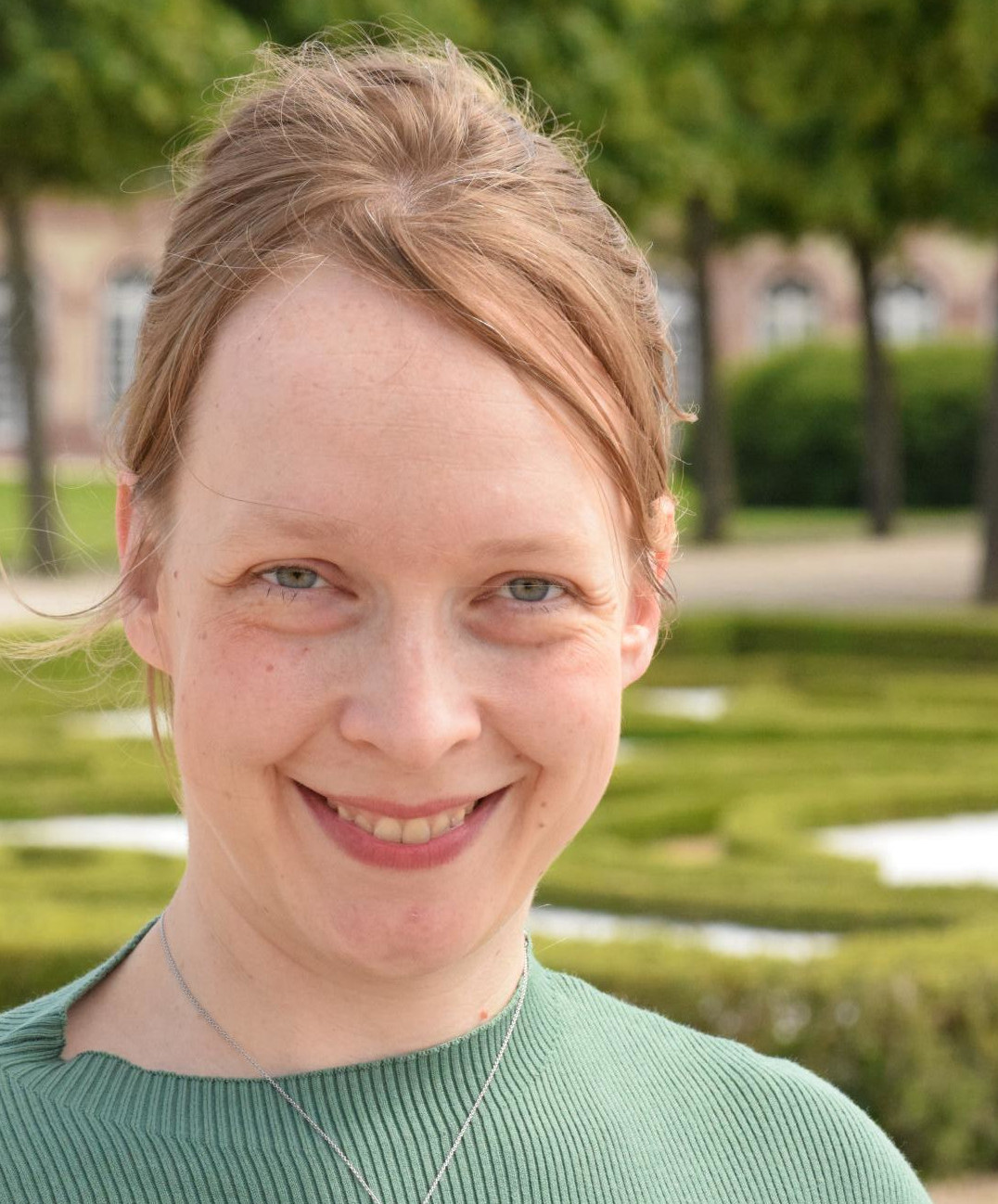
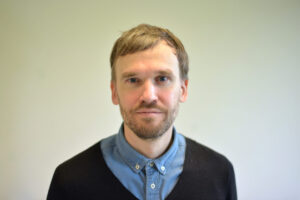
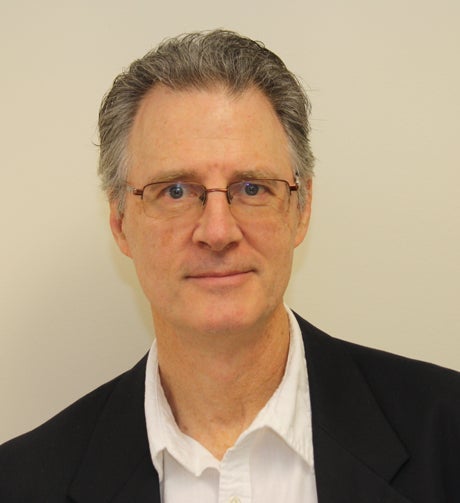
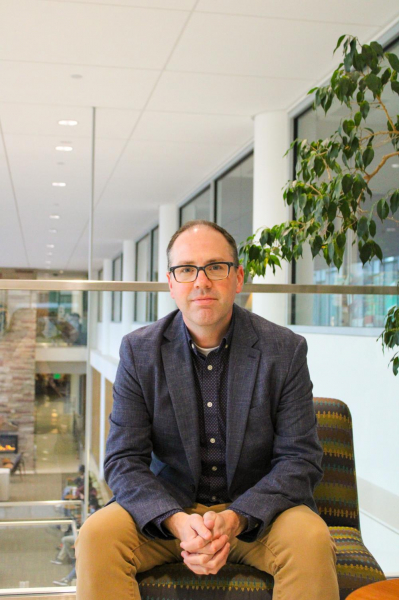
Priv.-Doz. Dr. Julia Landmann is an Acting Professor of English Linguistics at the Institute for Anglistik and Amerikanistik, University of Greifswald since 2025. She previously held positions at Heidelberg University (2021-2022), University of Basel (2022-2025), and research/lecturing roles at Heidelberg (2012-2021) and Mannheim/Stuttgart (2012-2014). Her academic journey includes a Habilitation (2022), Doctorate (2006-2011), and studies at Sorbonne Nouvelle (2002-2003), Aberystwyth (2001-2002), and Heidelberg (1999-2005). Research Focus: Cognitive Contact Linguistics, Language of Love/Hate, Migrant Discourse Analysis Publications: Monographs on socio-cognitive lexicon evolution, articles on loanwords from Yiddish/Turkish/Japanese, and cross-cultural discourse studies Projects: Integrates cognitive science with language contact research, examines emotion concept evolution (love/hate), and analyzes migrant identity construction through linguistic strategies. Her work combines Critical Discourse Analysis with Cognitive Science to study contact-induced linguistic changes.
David Blakesley is Professor of Rhetorics, Communication, and Information Design and Campbell Chair in Technical Communication at Clemson University's College of Arts and Humanities, Department of Interdisciplinary Studies. He currently serves as President of the Faculty Senate for 2023-2024. His academic career spans over three decades with significant contributions to rhetorical theory, digital publishing, and technical communication. Blakesley earned his PhD in Rhetoric, Linguistics, and Literature from the University of Southern California (1990), an MA in English from San Diego State University (1986), and a BA in English from the same institution (1983). His research spans multiple interconnected fields including rhetorical theory, history of rhetoric, digital and visual rhetorics, print and digital publishing, film theory and production, technical communication, and digital humanities. He has focused particularly on Kenneth Burke's rhetorical theory and its applications across various media. His scholarly work demonstrates a consistent trajectory from traditional rhetorical theory toward digital applications and publishing innovations. Over the past decade, his research has increasingly focused on the intersection of digital technologies with rhetorical practices, particularly examining how digital platforms transform scholarly communication and publishing. His 2022 TUGboat article on production versus distribution in publishing exemplifies his ongoing interest in how technological shifts impact academic and professional communication. Fellow, Rhetoric Society of America George Yoos Distinguished Service Award (RSA) Charles Moran Award for Distinguished Contributions to the Field of Computers and Composition Blakesley has secured significant funding including the $11 million Clemson-Adobe Partnership for Campus-Wide Creative Cloud implementation. He serves as Editor of KB Journal, Co-Editor of WAC Journal, and General Editor of The Writing Instructor. His editorial work has been instrumental in shaping scholarly communication in rhetoric and composition studies, particularly through his leadership in digital publishing initiatives.
Cornelius Puschmann is a Professor of Communication and Media Studies at the University of Bremen's ZeMKI, leading the Digital Communication and Information Diversity (DCID) Lab. He has held affiliations with institutions including Zeppelin University, the Alexander von Humboldt Institute for Internet and Society, and the Leibniz Institute for Media Research / Hans Bredow Institute. His research focuses on computational communication, digital media usage, hate speech, and algorithmic impacts on digital communication. Current projects: Informed by Influencers? (INDI), Political Polarization and Individualized Online Information Environments (POLTRACK) Member of Deutsche Gesellschaft für Publizistik- und Kommunikationswissenschaft (DGPuK), European Communication Research and Education Association (ECREA), and International Communication Association (ICA) His recent publications explore topics such as alternative news consumption, political polarization, and communicative AI. He has also contributed to open-source methodologies like the RPC-Lex dictionary for analyzing right-wing populist discourse. Notable affiliations include visiting scholar roles at the Oxford Internet Institute, Berkman Klein Center for Internet and Society, and University of Amsterdam's Department of Media Studies.
John Jones is an Associate Professor at The Ohio State University specializing in Digital Media Studies, with a focus on rhetoric, professional/technical communication, and digital literacies. His academic journey includes a PhD in English from the University of Texas – Austin and an MA from the University of Tennessee – Chattanooga. Previously, he served as an associate professor at West Virginia University and a visiting assistant professor at the University of Texas at Dallas. Research explores intersections of writing, computational processes, and digital culture Expertise spans digital media studies, visual rhetoric, and networked communication His work investigates the impact of wearable technologies, algorithmic systems, and network structures on knowledge creation and communication practices. Current projects examine computational ethics in digital writing and the role of digital networks in shaping rhetorical strategies. Analysis of John Jones’s publications reveals consistent engagement with: Digital media and computational rhetoric Networked communication frameworks Wearable technology implications Medical usability challenges Visual data representation Collective intelligence dynamics
Randy Harris is a Professor in the Department of English Language and Literature at the University of Waterloo, with a cross-appointment to the David Cheriton School of Computer Science. His career spans over three decades, focusing on the intersection of rhetoric , cognitive science , and computational linguistics . He holds a PhD in Communication and Rhetoric from Rensselaer Polytechnic Institute, with postdoctoral experience at the University of Alberta. Education : PhD (Rensselaer), MSc (Rensselaer, Alberta), MA (Dalhousie), BA (Queen's) Research Interests : Cognitive Rhetoric, Computational Rhetoric, Rhetorical Figures, Construction Grammar, Rhetoric of Science, and Neurocognitive Stylistics. His work explores how rhetorical figures like chiasmus and antimetabole reflect brain structure and cognitive processing. Recent projects involve building the Rhetoricon , a collocational database of rhetorical figures, and investigating their role in large language models . He has received numerous awards, including the University of Waterloo Arts Award for Excellence in Research (2023) and Fellow of the Royal Society of Canada (2022) . Harris has supervised graduate students in professional communication , linguistics , and science writing . His grants include NSERC Discovery Horizon (2024-2029) and multiple SSHRC grants for Computational Rhetoric and Rhetorical Figure Ontology . He actively organizes interdisciplinary workshops like Computing Figures and contributes to media discussions on language, AI, and rhetoric.
Tojana Račiūnaitė is a senior researcher and director of the Institute of Art Research at Vilnius Academy of Arts (VAA), where she has worked since 1996. Her research focuses on visual culture in the Grand Duchy of Lithuania (16–18th century), sacral art history , iconography , and anthropology of the image . She earned her PhD in art criticism from VAA in 1999 with a thesis on Baroque art and architecture of the Discalced Carmelites . Education: PhD in Art Criticism (VAA, 1999); MA in Art History and Theory (VAA, 1990) Academic Roles: Senior Researcher at VAA Institute of Art Research; Director (2008–present) Her work bridges iconological analysis and visual anthropology , examining the interplay between image and text in historical and modern contexts. She has curated exhibitions like Vaclovas Ratas. Beyond the Equator (2021) and co-authored guidebooks on Lithuanian Baroque art . Her recent research projects include Mimetic and Symbolic Representations of Jonas Karolis Chodkevičius (2021–present), funded by the Lithuanian Academy of Sciences. Her publications—spanning monographs like Atvaizdo gyvastis (2014) and articles in Acta Academiae Artium Vilnensis —explore themes such as miraculous Marian images , relic iconography , and visual pragmatics . She received the 2019 Lithuanian Academy of Sciences Award for her contributions to understanding religious art heritage in the Grand Duchy of Lithuania. Scientific Awards: 2019: Science Award from Lithuanian Academy of Sciences Memberships: Lithuanian Association of Art Historians (1995–present) International Association of Art Critics (AICA, 1996–present) Račiūnaitė has lectured at VAA since 1990 on topics including Lithuanian art history , 17–19th-century Western art , and visual-textual analysis . Her methodological approach integrates art history with anthropology , emphasizing the symbolic and mimetic functions of images across cultural contexts.
Aya Matsuda is a Professor of Applied Linguistics at Arizona State University's Department of English, where she directs undergraduate and graduate programs in linguistics and applied linguistics. She holds a Ph.D. in English from Purdue University, along with an M.A. in Linguistics and a B.A. in English from International Christian University in Tokyo. Her research focuses on World Englishes, English as an International Language (EIL), and the implications of globalization for language education. Matsuda has authored and edited influential books including Preparing Teachers to Teach English as an International Language (2017) and Principles and Practices of Teaching English as an International Language (2012). Her work emphasizes rethinking language pedagogy to reflect global English diversity, challenging traditional native-speaker norms. Professional service includes roles as Board Director of TESOL International Association (2014–2017), Treasurer-Secretary of the International Association for World Englishes (2015–2019), and editorial board memberships for journals like TESOL Quarterly and World Englishes . Awards include the NNEST of the Month (2008) and the Walter J. Johnson Award (2000). Her teaching spans courses on Disciplinary Discourses, Global English Contexts, and Second Language Acquisition. She has mentored numerous graduate students, focusing on topics like EIL curriculum design, language policy, and multilingualism.
Dacia Dressen-Hammouda is a Professor of Universities at Université Clermont Auvergne, affiliated with the ACTé Laboratory (Activity, Knowledge, Transmission, Education). She co-leads Theme 1 ( Situations of knowledge transmission and learning ) and has held significant educational responsibilities since 2007, including designing and managing the Multilingual Technical Documentation Engineering and Multilingual Information Design programs. Her research spans English for Specific Purposes (ESP) , multimodality , indexicality , and intercultural rhetoric , with a focus on digital communication and AI integration in education. Research Themes include: Digital and multimodal supports in specialized English Genre-based pedagogies for professional and academic writing Intercultural challenges in second-language politeness negotiation Recontextualization of expert knowledge in digital media Indexicality as a framework for disciplinary identity analysis Article Trends highlight her work on multimodal literacy through instructional videos, indexicality in professional writing , and digital science communication . She explores how digital tools reshape genre mastery and how intercultural exchanges influence academic writing practices. Scientific Contributions include collaborations with researchers like Ciara R. Wigham and Susan Birch-Becaas , with projects such as the DILAN Project (Digital Language and Communication Training for EU Scientists). She has supervised PhD candidates Hamza Miftah and Nedjah Zerrouki , focusing on AI-driven writing support and multimodal travel blogs. Lab Engagement : As co-responsible for Theme 1 at the ACTé Laboratory, she integrates activity theory and ethnographic approaches to study writing as a social and pedagogical activity.
Sandra Reimann is a Professor of German Philology at the University of Oulu's Faculty of Humanities, leading the German Language and Culture department. She holds a habilitation in linguistic studies of online self-help communication and has held visiting professorships at institutions like Karl Franzens University in Graz. Her career includes roles at the University of Regensburg since 2001 and radio journalism since 1992. Her research focuses on applied linguistics, media communication, business communication (including advertising), and health communication. She investigates technical language in medicine/psychology, emotional linguistics, digital corpus analysis, and interdisciplinary communication challenges. Key projects include leading the Regensburg Advertising Research Archive and exploring sustainability messaging in cross-cultural contexts. Reimann's recent work examines gender language in job advertisements, sustainability communication strategies, and online health information quality. Her publications span 40+ years of advertising analysis, from historical radio spots to modern digital campaigns. She contributes to both academic conferences and practitioner-oriented research through the Regensburger Verbund für Werbeforschung network. Her professional service includes roles as spokesperson for the Regensburg Advertising Research Network and oversees the advertising archives. Though no formal awards are listed, her extensive research collaborations across European universities highlight her disciplinary influence. She actively bridges academic and corporate sectors through applied linguistic studies in branding, health communication, and technical language mediation.
Gregory Lewkowicz is a Professor at the Université libre de Bruxelles (ULB) , Director of the Perelman Center's Smart Law Hub , and a Senior Research Fellow at the University of Nice Sophia Antipolis in Economic Law and Artificial Intelligence. He also teaches at Science Po Paris Law School and the University of Paris II Panthéon-Assas , and is a recurring professor at HEC-Paris for digital transformation programs. Expertise: Digital law and technology, global/transnational law, legal professions Research Focus: Interactions between law and digital technologies (SMART Law), algorithmic law, AI in legal analysis, and transformations of legal professions Leadership: Director of "Penser le droit" collection at Bruylant Publishing , in charge of the Brussels Bar Observatory , and member of AI4Belgium advisory board His recent articles explore trends in algorithmic governance , trustworthy AI , legal argumentation , and digital transformation of legal systems. He has contributed extensively to Brussels School scholarship , focusing on its sociological and philosophical foundations. Gregory Lewkowicz directs research programs on AI ethics , smart city regulations , and global corporate accountability . He is affiliated with the Institute for Artificial Intelligence for the Common Good (FARI) and the Equality Law Clinic (ELC) .
Thomas R. Dunn serves as Associate Professor of Communication Studies in Colorado State University's College of Liberal Arts, holding office A235 in the Behavioral Sciences Building. He directs the Queer Memory Project of Northern Colorado and the Humanities Baseline at the Joe Blake Center for the Engaged Humanities, while participating as a WICHE Leadership Fellow in the Mellon Foundation-supported Academy for Leaders in the Humanities. His educational credentials include a Ph.D. in Communication and Certificate in Women, Gender, and Sexuality Studies from the University of Pittsburgh (2011). Previously honored as Monfort Professor (2020-2023) and Presidential Leadership Fellow (2023-2024), he maintains active teaching responsibilities in rhetorical theory and queer studies. Dunn's research investigates the intersection of LGBT/queer culture, politics, and rhetoric through the lens of public memory and visual/material rhetorics. His scholarship examines how LGBTQ+ communities deploy historical narratives to drive social change, with particular focus on monuments, visual artifacts, and spatial representations. Key projects analyze the Memorial to the Murdered Jews of Europe, Oscar Wilde's legacy, Matthew Shepard's commemoration, and the visual rhetoric of hate crimes. His publication trajectory reveals consistent engagement with queer memory politics across eight significant articles (2010-2019), culminating in the forthcoming book The Pink Scar: How Nazi Persecution Shaped the Struggle for LGBTQ+ Rights (Penn State University Press, October 2025). This body of work demonstrates interdisciplinary reach spanning rhetoric, gender studies, visual culture, and political communication. Dunn's scholarly contributions have earned multiple prestigious awards: 2011 National Communication Association's Stephen E. Lucas Debut Publication Award 2012 Gerald R. Miller Outstanding Doctoral Dissertation Award 2014-2015 Excellence in Teaching Award from CSU's College of Liberal Arts 2016 B. Aubrey Fisher Outstanding Journal Article Award 2017 New Investigator Award from Critical/Cultural Studies Division of NCA 2018 Book of the Year Award from GLBTQ Communication Studies Division of NCA As an educator, he teaches undergraduate courses including History and Theory of Rhetoric and Communicating the Queer Past, while mentoring graduate students in rhetorical criticism and queer rhetorics. His administrative leadership extends to the Queer Memory Project, which preserves Northern Colorado's LGBTQ+ heritage through oral histories and community exhibits. Current initiatives include developing the Humanities Baseline curriculum and advancing his research on Nazi persecution's legacy for LGBTQ+ rights movements. The Queer Memory Project of Northern Colorado (QMPNoco) operates as a community-driven archive documenting regional LGBTQ+ history through digital collections, physical exhibits, and educational partnerships with local schools and cultural institutions.
Hariharan Subramonyam is an Assistant Professor (Research) at Stanford University's Graduate School of Education and Computer Science (by courtesy) . He serves as the Ram and Vijay Shriram Faculty Fellow at the Institute for Human-Centered AI (HAI) and is a core faculty member of Stanford HCI . His research bridges Human-Computer Interaction (HCI) and the Learning Sciences , focusing on augmenting human learning through AI via cognitively informed design practices, co-design with learners/educators, and transformative AI-enabled learning experiences. His work emphasizes ethical AI, responsible design, and human values in technology. He earned a PhD in Information from the University of Michigan under Eytan Adar. Current projects include Script&Shift (layered interfaces for LLM writing), AltCanvas (accessible image editing for BVI users), and CogGen (AI tutoring systems). His teaching includes EDUC 432: Designing Explorable Explanations and CS 448B: Data Visualization . Key Research Areas Cognitively Informed AI Systems Human-AI Collaborative Writing Accessible Generative AI Tools Ethical AI Frameworks Interactive Learning Environments Awards & Grants Best Paper Award (CHI 2025) Honorable Mention Award (CHI 2025) HAI Hoffman Yee Grant (2024) Cover Story in Interactions Magazine (2024) Collaborative Networks Co-organizing CHI 2025 Tools for Thought Workshop Contributor to UIST 2024 Dynamic Abstractions Workshop Advising PhD students across Stanford, Georgia Tech, and Duke Collaborations with institutions including University of Michigan, National University of Singapore, and Technical University Munich
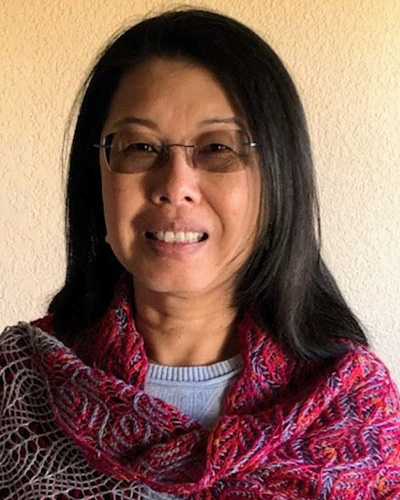
Sue Hum serves as Professor of English in the Department of English at the University of Texas at San Antonio (UTSA), College of Liberal and Fine Arts, where she has held significant administrative roles including Undergraduate Advisor of Record and Assistant Dean of Assessment for the Quality Enhancement Plan. Her research critically examines intersections of race, gender, and digital media through visual rhetoric and quantitative literacy frameworks. She investigates how racialized gazes operate in cultural artifacts like Disney's Mulan while developing pedagogical approaches for integrating numerical reasoning into professional writing instruction, bridging theoretical composition studies with practical classroom applications. Publications reveal consistent thematic evolution from foundational work in Asian American rhetoric (2006-2010) toward contemporary explorations of quantitative literacy in technical writing (2017), demonstrating sustained engagement with critical race theory's application to writing pedagogy and digital communication environments. Scientific Awards: President's Distinguished Award for Core Curriculum Teaching (2015) As Undergraduate Advisor of Record, she guided English majors through degree requirements while contributing to institutional assessment through the Quality Enhancement Plan. Her teaching portfolio spans undergraduate courses in composition and popular culture to graduate seminars on race/rhetoric and e-composition theory, reflecting deep commitment to curriculum development across educational levels.
Shannon Walters is Associate Professor of English in Temple University’s College of Liberal Arts and affiliated faculty in both the First-Year Writing Program and the Gender, Sexuality & Women’s Studies program. Since arriving at Temple in 2009 she has built an internationally recognized profile at the intersection of rhetoric-composition and disability studies. Education: PhD in English and Women’s Studies, Pennsylvania State University Research & Scholarly Focus: Walters’ scholarship fuses rhetoric and composition with disability, gender, and animal studies. Her 2014 monograph Rhetorical Touch: Disability, Identification, Haptics (University of South Carolina Press) theorizes tactile rhetorics and disabled embodiment. Ongoing projects explore neurodiverse writing pedagogies, multimodal accessibility, critical animal studies, and graphic narratives, producing articles in PMLA , JAC , DSQ , and other flagship journals. Recent Publication Trends: Across 2005-2022 Walters has published seventeen peer-reviewed pieces that collectively advance three intertwined trajectories: (1) crip/queer rhetorical theory and temporalities, (2) neurodiversity-informed composition and technical communication pedagogy, and (3) interspecies rhetorics that link disability and animal studies through comics and multimedia texts. Teaching & Mentoring: She teaches undergraduate writing (Analytical Reading & Writing, Social Issues in Literature, Women in Literature) and graduate seminars in rhetoric-composition, while regularly offering special-topics honors courses on disability and identity. No individual advisees are listed in available sources. Affiliations & Service: Walters serves as core faculty in the Gender, Sexuality & Women’s Studies program and participates actively in Temple’s interdisciplinary disability-studies community. Office: Mazur Hall 1051.
Dr. Mara Nicosia is a Postdoctoral Research Fellow at the University of Padua (Department of Historical and Geographic Sciences and the Ancient World) under the ERC Starting Grant FragArist. Previously, she held a British Academy Newton International Fellowship at Durham University (Department of Classics and Ancient History), focusing on Syriac rhetoric's intersection with Greco-Roman and Arabic traditions. Her research explores Syriac intellectual history, Semitic languages, and the transmission of Aristotelian thought. She earned her PhD from the University of Naples 'L'Orientale' with a thesis on Syriac rhetorical vocabulary between Greek and Arabic influences. Her work integrates philological analysis with historical linguistics, emphasizing language contact between Greek, Syriac, and Arabic. Notable contributions include the edited volume Syriac Lexis and Lexica (2024) and studies on Antony of Tagrit's rhetorical treatise. Nicosia has taught courses on ancient rhetoric and co-organized conferences like 'Syriac Studies in the UK' (2024). She holds grants exceeding £114k and has been awarded the Seal of Excellence (2025) and the Gorgias Book Grant (2019).