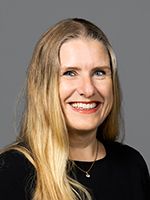
Yulia Rodina is a Professor of Linguistics and Language Acquisition at UiT The Arctic University of Norway, affiliated with the Department of Language and Culture. She leads the AcqVA-Nor research group and directs the Flere språk til flere initiative. As Deputy Chair of the HSL Faculty Research Ethics Committee, she oversees ethical standards in research. Her research focuses on multilingualism, second/third language acquisition, and language attrition using experimental psycholinguistic methods. Key themes include grammatical gender, morphosyntax, and cross-linguistic influence in languages like Russian, Norwegian, Bosnian, and Serbian. She investigates heritage language development in children across Norway, Germany, and the UK, and explores language variation and change in Norwegian dialects. Rodina teaches courses in Second Language Acquisition, Multilingualism, and Varieties of English. She supervises MA theses on topics such as gaming's role in vocabulary acquisition and syntactic development in bilingual children. Her work is supported by projects funded through the Arctic MSCA, RCN, and EU initiatives like AcqVA Aurora and MultiGender. She collaborates with international teams on studies like the MAP project (Heritage Russian in Spain) and CLIMAD (cross-linguistic influence in multilingualism). Her labs include AcqVA, PoLaR, and C-LaBL, focusing on acquisition, variation, and attrition processes.
Terje Lohndal is a Professor II at the Department of Language and Culture, affiliated with the Center for Language, Brain and Learning (C-LaBL) at UiT The Arctic University of Norway in Tromsø. His role involves research and teaching in linguistic disciplines. Research interests focus on theoretical linguistics and cognitive science, particularly syntax, language acquisition, and bilingualism. Specific areas may include syntactic theory, first and second language acquisition, and the neurocognitive foundations of language. No publications, awards, or grants are explicitly listed in the provided text. Advising activities and laboratory affiliations are also not detailed here.
Minjeong Son is an Associate Professor at the University of Tromsø - The Arctic University of Norway. Her research focuses on teacher education reform, intercultural communicative competence, and plurilingual pedagogy. She actively collaborates with schools through reinforced school-university partnerships, emphasizing practical integration of theoretical concepts. Key research interests include: Third-space partnerships in teacher education Development of intercultural competence in English classrooms Plurilingual approaches for pre-service teachers Educational systems analysis using activity theory Recent work examines contradictions in creating innovative teacher education models, with notable contributions to Nordic educational journals. She co-leads the Research in Teacher Education Practices (RiTE) group and participates in AcqVA-Nor initiatives. Publications explore topics ranging from motion verb syntax in Austronesian languages (2008) to contemporary Norwegian educational challenges (2025). Her work bridges linguistic theory with practical pedagogical implementation.
Maximino Jesus Ruiz Rufino is a Lecturer in the Department of Literature, Area Studies and European Languages at the University of Oslo, affiliated with the Faculty of Humanities. His academic focus includes Spanish Language, Grammar, and Didactics, with a specialization in Spanish as a Foreign Language (ELE). He teaches courses such as SPA1100 (Practical Spanish) and SPA2101 (Spanish Language: Syntax). His research emphasizes interactive language learning tools, polycentric Spanish norms, and digital pedagogical approaches, including collaborative Canvas projects and YouTube-based instructional strategies. He has contributed to the ELENOR corpus and published extensively on topics like translation in education, historical language documentation, and Scandinavian-Spanish linguistic exchanges. His work spans from 2003 to 2022, reflecting a commitment to both traditional and modern language pedagogy. Research interests include the application of technology in language education, multicultural language norms, and historical linguistics. His publications highlight innovative teaching methods and the intersection of digital media with language learning. Notable projects include an interactive Spanish grammar for Norwegians and analyses of 17th-century linguistic documents. No current grants or ongoing projects are listed, but his work contributes to academic-pedagogical initiatives such as Open Days and academic workshops.
Natalia Mitrofanova is an Associate Professor and Leader of the C-LaBL Language Domain at the Department of Language and Culture, UiT The Arctic University of Norway. Her research focuses on multilingual language acquisition and processing, particularly in child and adult populations. She employs experimental methods such as eye-tracking and artificial language learning to study phenomena like grammatical aspect, case, and cross-linguistic influence (CLI) in third language (L3) acquisition. Her work emphasizes structural similarity effects and the role of heritage languages in shaping L3 development. Current projects include investigations into bilingual processing mechanisms and the impact of visual stimuli on language comprehension. She teaches courses on syntax, language acquisition, and second language variation. Mitrofanova collaborates with international research groups, including AcqVA (Acquisition, Variation & Attrition), the Psycholinguistics of Language Representation (PoLaR) lab, and C-LaBL. Her research spans languages such as Russian, German, Norwegian, and Spanish, with a focus on heritage speaker populations in diverse sociolinguistic contexts. Key areas of contribution include: Experimental design in L3 studies Grammatical aspect processing across languages Heritage language maintenance and attrition Bilingual cognitive advantages and processing mechanisms Her recent work explores bidirectional CLI in multilingual children, leveraging ERP and eye-tracking techniques to uncover cognitive representations of grammatical features.
Ingebjørg Tonne is a Professor of Nordic languages/Norwegian as a second language at the Department of Linguistics and Nordic Studies (ILN) at the University of Oslo. She previously served as deputy head of MultiLing, center for multilingualism (a Center for Excellence in Research funded by the Norwegian Research Council) from January 1, 2022 to May 1, 2024. Earlier, from December 1, 2015 to June 30, 2017, she was head of teaching at ILN. Her academic career spans multiple institutions including the University of Oslo, Oslo Metropolitan University (where she taught from 2002-2014), and NTNU. Tonne holds a doctorate in linguistics from the University of Oslo (2001), with a contrastive dissertation on aspect in Norwegian-Spanish-English. Her educational background prepared her for extensive work in linguistics and language education. Professor Tonne's research focuses on the relationship between grammar teaching and writing development in school students, and the interplay between linguistic factors related to reading and writing skills. She is particularly interested in grammatical contrasts between different languages and how contrastive work can contribute to increased metalinguistic awareness in students. Her methodological approaches span corpus studies, ethnographically oriented studies, interview-based research, conceptual discussions about language concepts like "mother tongue," and qualitative studies of teachers' written assessments of student texts. She has made significant contributions to understanding how grammar instruction impacts literacy development among second language learners. Her publication record shows a consistent focus on second language acquisition, particularly Norwegian as a second language, with emphasis on grammar instruction, writing development, and literacy. Over the past decade, her work has increasingly examined teacher responses to student writing, the role of literature in language education, and the conceptual frameworks that shape our understanding of language learning. Her research often bridges theoretical linguistics with practical classroom applications, demonstrating how linguistic insights can improve language teaching methodologies. Professor Tonne has supervised students in the master's program in multicultural and international education at OsloMet, focusing on sociolinguistic topics related to human rights, language rights, and the multicultural school in Norway. She was part of the "Multiplicity Project" at OsloMet, which investigated how increased reading of literature could improve students' reading and writing skills compared to ordinary textbook use. Her teaching responsibilities at the University of Oslo include courses NOAS1100, NOAS2101, NOAS2102, NOAS4101, and NOAS4103, all related to Norwegian language education. She is an active member of MultiLing, the Center for Multilingualism in Society across the lifespan, which was designated as a Center of Excellence by the Norwegian Research Council. This center brings together researchers from multiple disciplines to study multilingualism from various perspectives, including linguistic, cognitive, social, and educational dimensions. Professor Tonne's work contributes significantly to the center's focus on how multilingualism develops and functions in different societal contexts.
Kristin Killie is a researcher and faculty member at the Department of Education, UiT The Arctic University of Norway. Her work focuses on historical linguistics, particularly the development of English grammatical structures (e.g., progressive constructions, adverbial suffixes), and second language acquisition, especially Norwegian learners' challenges with English grammar. She leads the Teaching and Learning English (TALE) project, exploring effective pedagogical strategies for English language instruction. Her research also addresses language variation, corpus-based studies, and teacher practices in Norwegian schools. Key research interests include grammaticalization theory, subject-verb agreement errors in L2 learners, and the impact of technology (spell checkers) on language learning. She collaborates with institutions like the Language Data and Language Change (LDLC) group at the University of Bergen and contributes to journals such as Journal of Linguistics and Language Teaching .
Dagmar Haumann is a Professor of English Linguistics at the Department of Foreign Languages at the University of Bergen. Her research focuses on historical linguistics, syntax, morphology, and language acquisition, with a particular emphasis on diachronic processes such as reanalysis, grammaticalization, and syntactic change in English. She has extensively studied adverbial structures, tough-constructions, and corpus-based methodologies. Haumann’s academic contributions include over 30 publications, including monographs, edited volumes, and peer-reviewed articles. Notable works include The Development of Speaker-Oriented Adverbs in English (2025) and Digitally-assisted Historical English Linguistics (2023). Her research often combines theoretical frameworks with empirical corpus data, addressing topics like argument structure changes, modal particles, and multilingualism. She has supervised numerous master’s theses and doctoral dissertations on topics ranging from Norwegian L2 learners’ challenges to historical syntactic phenomena. Her work frequently collaborates with scholars like Kristin Killie and Matthias Eitelmann, exploring reanalysis mechanisms and diachronic variation in English. Haumann’s teaching and supervision emphasize cognitive linguistic principles and practical applications of corpus linguistics in language education. She is an active participant in international conferences, contributing to discussions on language change methodologies and digital humanities approaches in linguistics.
Ingvild Nistov is a Professor at the Department of Linguistic, Literary and Aesthetic Studies, University of Bergen. Her research focuses on second language acquisition, sociolinguistics, and multilingualism, particularly examining Norwegian as a second language and multiethnolectal speech styles among adolescents in Oslo and Bergen. She has published extensively on topics like grammar pedagogy, language contact, and identity construction in multilingual settings. Academic Affiliation: University of Bergen Research Themes: Second Language Acquisition, Norwegian Dialects, Sociolinguistics, Discourse Analysis Methodology: Usage-based approaches, fieldwork in multilingual urban environments Her recent work explores the role of formulaic expressions in migrant integration, structural aspects of L2 Norwegian, and intergenerational language practices. She supervises researchers in linguistic studies and collaborates on projects related to language variation, pedagogical innovation, and urban vernaculars. Key Collaborators: Finn Aarsæther, Toril Opsahl, Marte Nordanger
Mari Nygård is a Professor of Norwegian Language Didactics and Head of Department at the Department of Teacher Education, Norwegian University of Science and Technology (NTNU). She holds both a master's degree and doctorate in Nordic languages from NTNU, establishing her expertise in linguistic and educational domains. Her research focuses on grammar and grammar didactics, language learning and linguistic awareness, Norwegian as a second language, writing development, and multilingual education. Nygård's work bridges theoretical linguistics with practical classroom applications, particularly in teacher education contexts where she examines how future teachers understand and implement grammatical concepts. Analysis of her recent publications reveals a strong emphasis on empirical studies of student writing, particularly among early writers and multilingual learners. Her research consistently connects grammatical theory with pedagogical practice, exploring how visualization techniques, structured programs, and research-based approaches can enhance grammar education. She frequently collaborates with colleagues like Heidi Brøseth and Randi Solheim on projects examining teacher knowledge and professional development. Nygård actively supervises master's students, as evidenced by her involvement in theses examining grammatical understanding among teachers and writing development in multilingual contexts. Her media presence through NRK's Språksnakk program demonstrates her commitment to public engagement with linguistic topics.
Nazareth Amlesom Kifle is an Associate Professor at the Department of Languages, Literature and Culture at the University College of Southeast Norway. Their primary research interests span linguistics and language didactics, focusing on syntax, morphology, lexical semantics, and second language acquisition. They hold a PhD from the University of Bergen (2012), an MA in English Language Teaching from Lancaster University (1998), and a BA in Language Studies from the University of Asmara (1996). Key research areas include syntactic functions and semantic roles (e.g., applicative constructions, causative/passive structures) and language didactics topics like learners' language and grammar pedagogy. Courses taught include English grammar, language variation, second language acquisition, and research methodology. Recent publications (2023–2005) explore teacher education in grammar, computational linguistics for language translation, and library information practices. They are affiliated with the 'Language in the individual and society' research group.
Ragnhild Eik is an Associate Professor of Nordic Linguistics at the Norwegian University of Science and Technology (NTNU), based in the Department of Language and Literature within the Faculty of Humanities. She is affiliated with the AcqVA research group and the GenVAC project, focusing on grammatical gender variation in Norwegian dialects. Her research explores syntax, morphology, dialectal variation, and language change, particularly in Norwegian and Sami languages. Eik teaches grammar, Norwegian as a second language, and scientific theory. Eik holds a PhD in Nordic Linguistics from NTNU (2019), supervised by Professors Tor Åfarli and Terje Lohndal, and an MA in Linguistics from NTNU (2014). Her doctoral work centered on Norwegian compound syntax. Her research interests include grammatical gender decline, dialectal variation, argument structure, and multilingualism. Recent work examines feminine gender loss in Norwegian dialects, documented in articles like "The decline of feminine gender: a cross-dialectal study" (2024) and "Ho trakka han på foten – ein eksoskeletal analyse av possessivt objekt" (2024). She also studies compound-internal language mixing in American Norwegian (2022) and verb semantics comparisons (2021). Eik actively disseminates research through media appearances (e.g., NRK radio) and public lectures. She collaborates with the GenVAC team on large-scale dialect data collection and participates in international conferences like Microvariation and Microchange in Scandinavian Languages (2024). Her work bridges theoretical linguistics with sociolinguistic and experimental methods, contributing to understanding language change dynamics.
Heidi Brøseth is an Associate Professor in Norwegian Didactics at the Department of Teacher Education, NTNU. She holds a PhD and has served in various academic leadership roles, including membership in the Nordic network GRADIMO and the GrammaKiKK research group. Her research focuses on grammar didactics, generative grammar applications in education, and teacher training in linguistics. Notable awards include the SINTEF Prize for Pedagogical Excellence (2012/13) and recognition as a Merittert Underviser (NTNU). Educational background includes a Postdoctoral fellowship (2007–2009) and PhD studies (2003–2007) at NTNU. She has led projects like PROSJEKTIL (innovative teacher education) and KOSEN (comparative language analysis). Her teaching focuses on inquiry-based methods and Socratic dialogue to enhance students' grammatical reasoning. Research interests span grammar teaching methodologies, teacher knowledge assessment, and the cognitive foundations of linguistic structures. She has authored/co-authored textbooks such as Språket som system: Norsk språkstruktur (2019) and contributed to international conferences on grammar didactics. Current work emphasizes bridging theoretical linguistics with practical classroom applications. Publications highlight her analysis of textbook grammar terminology, student teacher misconceptions, and generative grammar frameworks in Norwegian education. She actively collaborates with Nordic institutions and has supervised multiple master’s theses on topics like possessive phrases in Norwegian as a second language and temporal aspects in deaf sign languages.
Christine Meklenborg Nilsen is a Professor and Head of Department at ILOS (University of Oslo) , specializing in theoretical linguistics with a focus on Verb-Second (V2) structures in Old French and Germanic languages. Her work contrasts historical syntax across languages, including topics like topicalization and resumptive structures that challenge V2 constraints. Research Interests : Verb-Second (V2) syntactic constraints Historical evolution of Romance and Germanic languages Clitic clusters and word order changes Cartographic approach to syntax Projects : Led the Traces of History (2013–2017) project on V2 retention in Germanic vs. Romance languages. Currently leads ILOS Department, limiting active research/teaching. Collaborations : Co-edited influential works on V2 languages with Oxford University Press. Active in Grammar and Meaning and Language Change research groups.
Kristin Hagemann is an Associate Professor at the Department of Languages, Literature and Culture at Østfold University College. Her research focuses on Romance Philology, the transition from Latin to Romance languages, and the interplay between syntax and pragmatics in Old Spanish. She specializes in embedded clauses and the evolution of Romance languages, particularly Spanish and Italian. Before joining Østfold University College in 2016, she held a Postdoc position at the University of Oslo (UiO), researching the information structure of Old Spanish. She has also taught Modern Spanish grammar and the history of the Spanish language at UiO. Her doctoral thesis explored the Glosas Emilianenses, early examples of Spanish language written records. Hagemann is affiliated with research groups such as Lingvib and Språkdidaktikk, emphasizing language education and cross-linguistic studies. She teaches courses on Spanish grammar and language typology, including Spanish Grammar and Language Typology . Her publications span historical linguistics, syntax, and educational theory, including works on recomplementation in Old Spanish and cross-linguistic grammar teaching. She frequently engages with contemporary issues in language education, such as the role of multilingualism in schools and the impact of artificial intelligence on language studies.