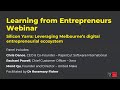
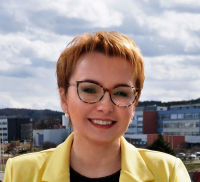
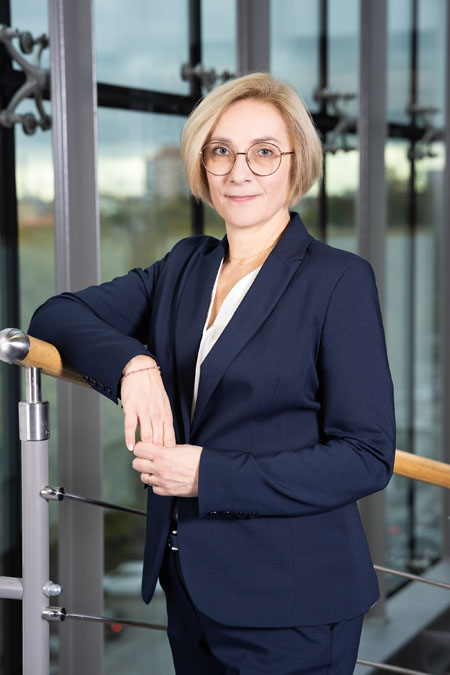
Julia Pargmann is a Lecturer and researcher in Vocational Education and Lifelong Learning at the University of Hamburg's Faculty of Education. Her research examines digitalization, AI integration, and sustainability in vocational education, particularly accounting instruction. She develops AI-based educational tools like the EDDA platform for lesson planning. Current doctoral research focuses on sustainability competencies in accounting education. She holds a Master of Education in Business Education from University of Oldenburg. Key Projects: EDDA AI lesson planning platform, R package for educational research Teaching: Didactics of business education, classroom management
Donna D. Elliott, MD, EdD, is a Professor of Clinical Pediatrics and Medical Education at the Keck School of Medicine of the University of Southern California (USC). She holds dual leadership roles as Vice Dean for Medical Education and Chair of the Department of Medical Education. Dr. Elliott oversees all aspects of medical student education, including pathway programs and graduate-level academic medicine and narrative medicine programs. She has been recognized with prestigious awards such as the Mellon Award for Excellence in Mentoring and the USC Master Teacher designation. Her research focuses on medical education innovation, curriculum design, and professionalism in training. Key areas include social media ethics, diversity in healthcare education, and quality improvement strategies in medical programs. Dr. Elliott has contributed to national organizations like the National Board of Medical Examiners and the AAMC Group on Student Affairs, currently serving as Chair of the National Resident Matching Program Board of Directors. Her publication record emphasizes curricular renewal, student learning environments, and the transition to clinical training. Over 20 years of work has advanced educational policies at both institutional and national levels, with a focus on fostering inclusive and effective medical training environments.
Linda J. Graham is a Professor at Queensland University of Technology (QUT) and Director of the Centre for Inclusive Education (C4IE). Her research focuses on education policy, disruptive student behavior, and inclusive pedagogies. PhD, Master of Education, and Bachelor of Arts from QUT and Macquarie University Chaired the 2020 Inquiry into Suspension, Exclusion and Expulsion Processes in South Australia Her work explores the intersection of inclusive education , student voice , and teacher-student relationships . She advocates for systemic reform to address overrepresentation of Indigenous and disabled students in exclusionary discipline. Recent publications highlight accessible assessment redesign , equity in education , and student perspectives on discipline . Notable awards include the Spencer Foundation Mentorship Excellence Award (2021) and Macquarie University's Early Career Researcher of the Year (2011). Scientific Awards: Spencer Foundation Mentorship Excellence Award (2021) Macquarie University Early Career Researcher of the Year (2011) Paul Bourke Award (2011) She supervises PhD and professional doctorate students in projects related to language disorders , student voice , and curriculum adjustments . Her leadership extends to the AARE Inclusive Education Special Interest Group and collaborations with institutions like Speech Pathology Australia and the QCAA.
Jimmy Jaldemark is a Professor at the Department of Education, Mid Sweden University, Sundsvall, Sweden. He serves as Research Leader of HEEL (Higher Education and E-Learning) and Head of Subject for the Discipline of Education. His roles include membership in the Faculty Board of Humanities and representation in the university-wide Education Council. He co-founded GRADE, a national graduate school in digital education, and leads the EARLI Centre for Excellence in AI in Learning and Instruction (AILI). His research focuses on AI, digitalization, lifelong learning, and networked learning. He co-edited *Networked Professional Learning* (2019) and guest-edited special issues in the *British Journal of Educational Technology*. He is an editor for that journal and serves on editorial boards for *Educational Research Review*, *Postdigital Science and Education*, and others. He supervises doctoral students and teaches in Behavioral Science and Education programs. Current projects include HEaD (Higher Education and Digitization) and BLAD (Need-based Learning through Adapted Participation). He collaborates internationally, notably in the AILI network exploring AI's educational impacts. His work spans educational development, organizational learning, and policy frameworks for lifelong learning in the digital era.
Professor Alma Harris is an Emeritus Professor in the School of Social Sciences at Swansea University, affiliated with the Faculty of Humanities and Social Sciences. She has held professorial roles at leading institutions including the University of Warwick, University College London, and the University of Malaya. Her research focuses on educational leadership, policy, and systemic reforms, with a strong emphasis on equity and excellence in education. Professor Harris has advised governments, including the Welsh Government (2009–2012), on systemic reforms and co-led initiatives such as the Professional Learning Communities (PLC) program. She is a Senior Research Fellow at the Education University of Hong Kong and former President of the International Congress for School Effectiveness and School Improvement (ICSEI). Her work has been recognized with awards like the ICSEI Lifetime Achievement Award (2016). Her research interests span educational leadership frameworks, policy implementation, and strategies for school improvement. Key publications include works on distributed leadership, system-wide reform, and teacher empowerment. Her articles explore topics like professional learning communities, middle leadership roles, and global educational challenges. Professor Harris has secured grants totaling over £2 million, including projects on Welsh schools’ improvement, teacher training incentives, and international education leadership reviews. She advises bodies like the Scottish Government’s International Council of Education Advisers and has led major studies in Malaysia and Indonesia on high-performing schools. Her academic contributions include authored books like Flip The System UK: A Teachers’ Manifesto and edited volumes on global educational leadership. She maintains active roles in professional networks and policy advocacy, emphasizing equitable educational systems.
Dr. Lokendra Pal is the EJ Woody Rice Professor and University Faculty Scholar in Sustainable Materials/Paper Science and Engineering at NC State University's Department of Forest Biomaterials. He leads research in bio-based materials, smart manufacturing, and energy innovation, with 23+ years of global industry experience. His lab focuses on decarbonizing forest/waste industries through electrification and AI-driven smart manufacturing. He directs NC State's Paper Pilot Plant-Smart Manufacturing Center and co-founded the Tissue Pack Innovation Lab (TPIL). Education: Ph.D. in Paper and Imaging Science (Western Michigan University). Awards include NC State Faculty Scholar (2021), TAPPI Fellow (2021), and University Outstanding Teacher Award (2022). Professional roles include leadership in TAPPI, ACS, and AIChE. Research Interests: Sustainable bioproducts, nanomaterials, barrier coatings, 3D printing, smart manufacturing systems, and AI/ML integration. Current projects address waste-to-energy conversion, lignocellulose dewatering, and crop protection via biodegradable matrices. Grants: Over $10M in funding from USDA, DOE, and industry consortia for projects like AI-enabled MSW analysis, hemp valorization, and smart manufacturing platforms. Key initiatives include USDA-funded biomass conversion and DOE-backed smart manufacturing innovation. Labs/Teams: Leads the Pal Research Group and collaborates with industry partners through APPTI, CESMII, and EPICX. Active in global projects like the 'Wrap & Plant' nematode control technology for African agriculture.
Fay E. Brown serves as an Associate Research Scientist at Yale University's Child Study Center and Director of Child and Adolescent Development for the School Development Program. Her work bridges child developmental psychology with practical educational applications, focusing on creating developmentally appropriate school environments that foster holistic child development. Dr. Brown earned her Bachelor of Arts in Psychology from the University of Connecticut (1984), followed by a Master of Education in Guidance and Counseling and a Ph.D. in Educational Psychology from Howard University (1996). Her professional journey spans teaching and counseling at elementary, high school, and college levels. Dr. Brown's research centers on the critical intersection of child development and education, with particular emphasis on how developmental understanding informs effective teaching practices. Her work explores the relationship between reading difficulties and behavioral issues in elementary students, demonstrating that targeted literacy interventions can simultaneously improve both academic performance and behavior. She has developed assessment instruments to measure educators' application of developmental principles and their impact on student outcomes. Her publication record reveals a consistent focus on literacy development, child psychology in educational settings, and equity issues in special education. Brown's research demonstrates how developmentally appropriate practices can transform educational outcomes, particularly for struggling students. Recognized by the National Association for Personal Workers (NAPW) for outstanding contribution to student development (1993) As Director of Child and Adolescent Development for the School Development Program, Dr. Brown consults with educational organizations including the United Church of Christ's educational task force. She is also a sought-after motivational speaker who presents at local, national, and international events on child development and educational practices. Her work continues to influence school improvement initiatives through evidence-based approaches to child development in educational settings.
Rosemary Fisher is a Senior Lecturer in Entrepreneurship and Innovation at Swinburne University of Technology's School of Business, Law and Entrepreneurship. She holds a PhD from Swinburne and multiple advanced degrees in business and arts disciplines. Her career spans academic leadership roles including Head of Commerce at Box Hill Institute and Course Director for the Master of Entrepreneurship at Swinburne. Fisher combines teaching with impactful research in entrepreneurship education, higher education pedagogy, and innovative teaching strategies like flipped learning. Education: PhD, Swinburne University of Technology MBA, University of Melbourne Master of Business (Professional Accounting), Victoria University Bachelor of Arts, Canberra College of Advanced Education Research Interests: Focuses on pedagogical innovations such as flipped learning's impact on student outcomes, entrepreneurial resilience, and strategies to enhance teacher status. Active in curriculum design for entrepreneurship programs and digital education solutions. Current projects explore AI's role in business education and EFL teaching methodologies. Awards: 2017 Faculty Teaching Excellence Award Academy of Management Distinguished Reviewer (2012, 2014) 2011 Outstanding PhD Thesis Award Grants & Projects: Lead researcher on initiatives addressing teacher retention, aged care feedback systems, and migrant business training. Recent grants include "$60K for AI in Entrepreneurial Education" and "$45K for EFL Flipped Learning Research". Professional Engagement: Editorial Board member for Active Learning in Higher Education and Journal of Effective Teaching . Serves on international committees for entrepreneurship education and pedagogical innovation. Active in policy development for social entrepreneurship and educational technology adoption.
Hannie A. Gijlers is an Associate Professor at the Digital Society Institute, affiliated with the Department of Instructional Technology in the Faculty of Behavioral, Management and Social Sciences at the University of Twente. Her work bridges technology and education, focusing on innovative learning environments and collaborative processes. Academic Rank: Associate Professor Institution: University of Twente Research Institute: Digital Society Institute Department: Instructional Technology Her research interests center on computer-supported collaborative learning (CSCL) , technology-enhanced STEM education , inquiry-based learning , and the role of emotions and feedback in learning. She investigates how digital tools and agent-facilitated environments support students and teachers in collaborative settings, often through cross-cultural comparisons. Her work integrates physiological and gaze-based data to understand implicit learner emotions, pushing the boundaries of learning analytics. The recent publications (2021–2024) reveal a strong focus on teacher guidance models , gamified STEM apps , clinical reasoning in medical education , and climate change literacy . These works span disciplines including educational psychology, computer science, and environmental education, indicating interdisciplinary collaboration. Keywords across these articles include collaborative learning, emotion detection, technology integration, and cross-cultural studies, reflecting a consistent research trajectory in digital pedagogy and learner support. While no specific awards are listed in the provided text, her sustained publication record in high-impact venues and leadership in collaborative research projects suggest recognition within the academic community. Hannie Gijlers actively supervises research, as evidenced by co-authored works with junior researchers and contributions to practitioner research models. Her involvement in datasets and conference presentations indicates ongoing grant-funded or institutionally supported research activities. She has contributed to both theoretical frameworks (e.g., four-phase mentorship model) and applied tools (e.g., Science Chaser app), demonstrating a balance between scholarship and practical innovation. She is part of a vibrant research network at the University of Twente, collaborating with scholars like T.H.S. Eysink, A.W. Lazonder, and N. Janssen. Her team explores agent-facilitated learning, gamification in STEM, and teacher development, often in international collaborations (e.g., Dutch-Finnish studies). These efforts are supported by digital infrastructure and interdisciplinary datasets, positioning her at the forefront of digital society research in education.
Andrea Kottmann is an Assistant Professor at the University of Twente, focusing on Knowledge, Transformation & Society. Her work lies at the intersection of higher education, digital transformation, and educational innovation. She actively contributes to research on policy, teacher innovation, and organizational change in academic institutions. Her research interests include: Higher Education and Institutional Change Digital Transformation in Academia Teachers' Innovation Behavior Centres of Excellence for Teaching and Learning Knowledge Transfer and Policy Impact Sociological Theories in Education Andrea's recent publications reflect a consistent focus on innovation, policy, and digitalization in higher education across Europe. Her work often involves comparative case studies and collaborations with institutions and researchers across countries. She has explored topics such as development projects in digital transformation, the role of teaching centers, and university engagement with the nonprofit sector. Selected scientific contributions include: Research on teacher innovation behavior (2024) Analysis of digital transformation initiatives (2025) Study on university–nonprofit collaborations (2023) Korean translation of a foundational sociology text (2024) She has advised research in the context of her PhD and collaborative projects, though formal advisees are not listed. Her work is supported by institutional research frameworks at the University of Twente and international collaborations. She is part of academic networks focused on educational innovation and policy development.
Raphaël Baroni is an Associate Professor of Teaching French as a Foreign Language at the School of French as a Foreign Language (EFLE), Faculty of Arts, University of Lausanne (UNIL). He has held this position since August 1, 2011, and has been actively involved in research and academic collaboration since 2005. He previously taught at the University of Michigan and conducted research at the Center for Research on Arts and Language (EHESS-CNRS) in Paris. His research centers on narratology, particularly narrative tension, plot dynamics, focalization, and transmedial storytelling, with a strong emphasis on the didactic applications of narrative theory in language learning. He aims to develop a general narrative theory while exploring its role as a reflective and pedagogical tool in French language acquisition. His work bridges literary theory, cognitive narratology, and language pedagogy. The recent scholarly output shows a consistent focus on narrative theory, especially in graphic narratives and transmedia contexts. His publications explore narrative pacing, segmentation, immersion, and the teaching of narrative concepts. There is a clear trend toward interdisciplinary research, connecting narratology with media studies, education, and cognitive science. Raphaël Baroni founded the French-speaking Narratology Network (RRN) and co-founded the Research Group on Language Biographies (GReBL) to strengthen interdisciplinary collaboration among Francophone scholars. These initiatives reflect his commitment to building academic communities around narrative studies. He has not received any scientific awards mentioned in the source material, and no information is available about advising students or securing research grants. His work is primarily theoretical and pedagogical, with a strong publication record in narratology and French language education.
Helen Vidgen is a Professor in Public Health at the School of Public Health, Faculty of Health, Queensland University of Technology (QUT). Her research focuses on food literacy, childhood obesity prevention, and nutrition education, with significant contributions to public health policy and program implementation. She has led projects evaluating school meal programs, childhood obesity management services like PEACH™, and food literacy interventions across diverse populations. Her work emphasizes socio-ecological barriers to nutrition education, policy development, and the translation of evidence-based practices into community settings. Dr. Vidgen has authored over 100 peer-reviewed articles and edited books, including Food Literacy: Key Concepts for Health and Education (2016), which establishes foundational frameworks for food literacy research. She collaborates with government agencies, non-profits, and healthcare professionals to address systemic challenges in obesity prevention and food system reforms. Recent contributions include analyzing the role of school-provided meals in obesity prevention, evaluating father’s roles in family food practices, and advancing measurement tools like the IFLQ-19 food literacy questionnaire. Her research bridges theory and practice, informing policy initiatives on nutrition education, food regulation, and equitable health outcomes.
Stephani L. Wrabel is a Senior Policy Researcher at the RAND Corporation and Professor of Policy Analysis at the RAND School of Public Policy. She conducts influential research on education policy, social and emotional learning, and defense-funded youth programs, with her work shaping both federal and state policies. Institution: RAND Corporation School: RAND School of Public Policy Position: Professor of Policy Analysis Email: Stephani_Wrabel@rand.org Education: Ph.D. in Urban Education Policy, University of Southern California M.Ed., University of Florida B.A., Boston University Her research focuses on improving educational outcomes for students and military-connected populations through rigorous evaluation and policy analysis. She specializes in standards-based accountability, educational equity, program evaluation, and social and emotional learning. Her work often centers on vulnerable youth, including those in the National Guard Youth ChalleNGe and JROTC programs, and she has led major federal evaluations, including for the U.S. Department of Education’s Center to Improve SEL and School Safety. Analysis of her recent publications shows a consistent focus on youth development, military-civilian integration, educational equity, and evidence-based policy. Her research spans program evaluation, technical assistance frameworks, and longitudinal impact studies, with a strong emphasis on practical, policy-relevant findings. She frequently publishes both comprehensive reports and executive summaries to reach diverse stakeholders. Scientific Awards: No awards listed in the provided text. Wrabel leads major research initiatives and serves as principal investigator on defense-funded education studies. Her work involves collaboration with federal agencies, education departments, and military organizations. She has developed practical tools for program evaluation, particularly for Marine and Family Division programs, supporting effective resource use and program improvement. Her leadership in large-scale evaluations demonstrates significant grant and project management experience. She is actively involved in research teams focused on education reform and military youth programs. Her work with the Center to Improve Social and Emotional Learning and School Safety involved a multi-year technical assistance network, indicating leadership in collaborative, interdisciplinary teams.
Prof. Małgorzata Lipowska is a distinguished psychologist and speech therapist at the University of Gdansk’s Faculty of Social Sciences, Department of Developmental Psychology and Psychopathology. Her academic career spans over two decades, focusing on clinical psychology, child and adolescent psychotherapy, and the intersection of neuropsychology with cross-cultural research. Habilitation in Psychology (2012), Ph.D. in Psychology (2000), Master’s in Psychology (1996) Current roles: Provincial Consultant for Clinical Psychology, Head of postgraduate programs in Social Sciences, Applied Behavior Analysis, and Early Support for children with developmental disorders Her research interests include: Child neuropsychology: Dyslexia, Dyscalculia, ADHD Developmental psychology: Language development, Special Educational Needs Body image: Cross-cultural perspectives, Stigmatization Environmental impacts: Air pollution on cognitive development, Nature exposure benefits Recent publications highlight her cross-national collaborations (Poland, China, Vietnam, Bosnia, Egypt) and interdisciplinary approach combining psychology, public health, and environmental science. Awards include the Silver Cross of Merit (2016) and multiple Rector’s Medals. She leads clinical training programs and chairs academic committees while maintaining active research and mentorship roles.
Prof. Ewa Szostak holds a professorial position at Wrocław University of Economics (UEW), serving as BIPS Program Coordinator. Her work focuses on EU policy analysis, regional development dynamics, innovation economics, and sustainable urban planning. Key research interests include Poland's EU integration trajectory, post-1989 educational reforms, energy transition strategies, and socio-economic challenges posed by aging populations. Her publications span topics such as territorial cohesion, smart specialization strategies, and the impact of migration on transportation networks. Notable works include analyses of Lower Silesia's regional infrastructure, smart city development challenges in Poland, and the decarbonization of inland navigation systems. Methodologically, her research combines policy evaluation with case studies examining institutional effectiveness and spatial planning. Laboratory/Team Affiliations: While specific lab names aren't listed, her role as a professor at UEW implies involvement in the university's economic policy research units. Her work frequently engages with EU-funded regional development projects and policy implementation frameworks.