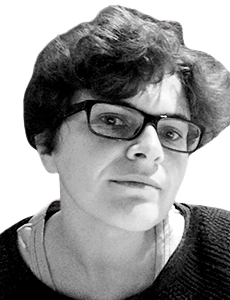
Lena Brogaard is an Associate Professor at Roskilde University's Department of Social Sciences and Business, specializing in public-private interaction. She leads the Roskilde School of Governance research group, serves as deputy head of the Center for Research in Public-Private Partnerships (COPS), and co-manages the department's PhD school. Her work focuses on how public-private collaborations influence quality, sustainability, and innovation in public services, with a particular emphasis on procurement and relational contracting. Education: M.Sc. and Ph.D. in Political Science from the University of Copenhagen; research residency at the University of Minnesota; exchange at Columbia University. Brogaard employs mixed methods, including surveys, administrative data, and interviews, while contributing to systematic literature reviews. Recent projects like CIGS (2025–2028) examine green skills in vocational education, and TROPICO (2017–2021) explored open governance models. Her publications address public procurement, contract management, and innovation partnerships. Key awards include the 2023 Ministry of Education and Research Teaching Prize and the 2022 Roskilde University Teaching Award. She actively engages in media commentary on public-private cooperation, presented at institutions like Cardiff University (2025), and co-authored datasets on performance information interpretation (2023). Brogaard also contributes to journals as an Associate Editor for Public Administration.
Claus Brabrand is a Professor of Software Engineering and Head of the Center for Computing Education Research at the IT University of Copenhagen. His research focuses on computing education, gender diversity in STEM, and software product line analysis. He has led projects like DIREC (Digital Research Centre Denmark) and ATTiKA (Adaptive Tools for Technical Knowledge Acquisition), funded by the Innovation Fund Denmark and Villum Foundation. PhD in Computer Science Over 45 publications in computing education and software engineering Active in curriculum development and educational policy Research interests include improving teaching quality through learning technologies, gender representation in IT materials, and cognitive competencies in programming education. His work bridges software engineering principles with pedagogical innovations, addressing issues like novice programmer performance and curriculum design.
Anniek Frederike Lubberding serves as a Tenure Track Assistant Professor and Postdoc at the Department of Biomedical Sciences , University of Copenhagen. Her research focuses on immuno-endocrinology , particularly diabetes-related cardiovascular complications, ion channel mechanisms, and circadian rhythm interactions with metabolic pathways. Keywords: Diabetes, Cardiovascular Research, Ion Channels, Inflammation, Metabolism, Circadian Rhythms Recent studies explore GLP-1 receptor agonists in cardiometabolic therapy, salivary biomarkers for type-2 diabetes, and cross-disciplinary links between cardiac ion channels (Kv7.1/Kv11.1) and pancreatic beta cell dysfunction. She has published 19 research outputs since 2022. Key Collaborations: Acta Physiologica, Diabetes, Obesity and Metabolism, Cardiovascular Research Contact: alubberding@sund.ku.dk | Phone: +4535328260
Alexey Solodovnikov is an Associate Professor and Curator at the Natural History Museum Denmark, University of Copenhagen. Since 2022, he has led the museum's Zoology research section. His academic work focuses on systematic entomology with special emphasis on rove beetles (Insecta: Coleoptera: Staphylinidae), the largest family of living organisms. Dr. Solodovnikov's educational background includes graduating from university in Krasnodar in 1993, followed by obtaining his PhD from St. Petersburg State University in 1997. He conducted post-doctoral work at the Field Museum of Natural History in Chicago under renowned experts Alfred Newton and Margaret Thayer. His primary research interests encompass systematic entomology, phylogenetics, taxonomy, and biodiversity patterns of rove beetles. As a systematic entomologist, he discovers new species, develops phylogeny-based classifications, and studies evolutionary, biogeographic and macroecological patterns of biodiversity. His work involves extensive study of institutional entomological collections and leading insect collecting expeditions globally. Dr. Solodovnikov has published 137 research outputs, including 129 journal articles. His recent publications demonstrate strong trends in phylogenomics, integrative taxonomy combining morphological and molecular data, citizen science applications in entomology, and studies of specialized ecological relationships like beetle-mammal mutualisms. His work appears in prestigious journals including Systematic Entomology, Systematic Biology, and Journal of Natural History. His scientific contributions are significant in advancing our understanding of insect biodiversity, particularly through methodological innovations that bridge traditional taxonomy with modern computational approaches. Dr. Solodovnikov is actively involved in academic instruction and mentorship. At UCPH, he teaches Entomology and Terrestrial Zoology courses, previously taught in the Basal Arctic Biology course, and currently instructs the Communicating Science module in the UCPH-SCIENCE "Fundamentals" PhD course. He trains the next generation of zoological taxonomists through Master's, PhD, and post-doctoral level mentorship, focusing on developing sustainable expertise to identify, study and protect insect species, many of which remain undiscovered. His research laboratory operates within the Natural History Museum Denmark, with international collaborations spanning multiple continents. The team combines traditional taxonomic approaches with cutting-edge techniques including phylogenomics, deep learning for morphological analysis, and citizen science initiatives to advance systematic entomology and biodiversity research.
Joanna Bergström is an Associate Professor in the Department of Computer Science within the Faculty of Science at the University of Copenhagen. Her research focuses on human-centered computing, specifically in human-computer interaction (HCI), virtual reality (VR), and body-based user interfaces. Based at Sigurdsgade 41 in Copenhagen, she maintains an active research profile with 41 publications and significant international collaborations. Her primary research interests include virtual reality systems , haptic feedback mechanisms , interaction techniques , and perceptual studies . She investigates experimental methods in HCI, human perception, motor skills, and statistical modeling. Current projects explore tendon vibration for movement illusions in VR, ultrasound-based chemical stimulants for skin haptics, and doorway effects on memory in virtual environments. Analysis of her 15 most recent publications (2023-2025) reveals strong emphasis on VR locomotion techniques , haptic perception , and cognitive aspects of virtual environments . Key trends include multimodal feedback systems (combining tactile and chemical stimulation), real-world application of VR for medical training, and rigorous experimental validation of interaction paradigms. Her work frequently appears in top venues like CHI and IEEE Transactions on Haptics. Bergström maintains active research networks across multiple countries, with significant external collaborations reflected in her publication record. Her work has been referenced by 12 news outlets and garnered attention on social media platforms including X (7 users) and Bluesky (3 users), while accumulating 23 Mendeley readers for her 2025 DIRA paper.
Laura Louise Sarauw is an Associate Professor at Roskilde University, Denmark, affiliated with the Learning, Education and Pedagogy (LEAP) Research Center for Problem-Oriented Project Learning. She holds a PhD and serves as an educational consultant within university administration, focusing on higher education policy and pedagogical innovation. Research Expertise: Her work spans educational research, pedagogy, didactics, educational planning, education policy, and the history of university pedagogy. She employs theoretical frameworks including poststructuralism, actor-network theory, and policy ethnography to analyze universities' societal roles. Key interests include: The well-being agenda's impact on university missions Academic citizenship in transitional contexts The psychological turn in higher education Time governance through ECTS credit systems Critical analysis of educational reforms Her publication trends reveal a consistent focus on how policy instruments reshape university practices, particularly examining performative aspects of student learning and institutional responses to well-being discourses. She frequently uses qualitative methods to uncover unintended consequences of reforms. Professional Engagement: Dr. Sarauw actively contributes through committee memberships at the Danish Institute of Education (DPU), guest lectures on university pedagogy, and media commentary on higher education reforms. Her 35 recorded activities include PhD supervision, conference organization, and expert analysis of leaked policy documents regarding new university degree structures.
Ingo Zettler is a Professor in the Department of Psychology at the University of Copenhagen, affiliated with the Faculty of Social Sciences. His research focuses on personality psychology, particularly the study of aversive traits (dark personality), prosocial behavior, and their societal implications. He also investigates behavioral science, open science practices, and sports psychology. His work integrates experimental, cross-cultural, and psychometric methodologies to explore how personality traits like dishonesty, moral reasoning, and social preferences manifest across contexts. Key themes include the Dark Factor of Personality (D), Honesty-Humility, and the interplay between personality and societal outcomes such as crime, cooperation, and political behavior. Recent research highlights include examining cultural and institutional influences on dark traits, developing assessment tools for political elites, and investigating pandemic-related behaviors during the COVID-19 crisis. His contributions span theoretical frameworks for personality measurement, meta-analyses of trait relationships, and applied studies in sports ethics and leadership. Zettler collaborates internationally, with publications addressing topics like vaccination readiness, pandemic fatigue, and the role of creativity in ethical justifications. His work emphasizes rigorous methodology and open science practices to advance psychological research reliability.
Emanuela Marchetti is an Associate Professor at the Department of Mathematics and Computer Science , University of Southern Denmark. Her work bridges STEAM education, computational thinking, and playful learning methodologies. Key research areas: Data Privacy in Education, Human-Robot Interaction, Transmedia Literacy Projects: Taxonomies (2025), SPADATAS Handbook (2025), LabSTEM (2020-2022) Research Interests focus on integrating creativity into STEM through art-science collaborations, as seen in the Taxonomies project. Her recent work explores GDPR education via game design, AI's role in co-creative learning, and social robotics for welfare contexts. Publication Trends show interdisciplinary exploration of data fragility, digital tools for education, and ethical technology design. Articles span computational thinking through card games, AI emotion-based assessment, and GDPR gamification. Contact: emanuela@sdu.dk | Phone: 65 50 10 36
Søren Rosendahl is a Professor in Ecology and Evolution at the Department of Biology, Faculty of Science, University of Copenhagen. He holds a PhD and has been recognized as a Knight (Ridder af Dannebrog) for his contributions to science. His academic career spans over three decades at the University of Copenhagen, where he served as Assistant Professor (1991), Associate Professor (1994), and Professor (2000) in the Department of Mycology, which later became part of the Department of Biology. From 2010-2019, he served as Deputy Head of the Department of Biology. Education: 1984: Master of Science (Cand.scient.) in biology, University of Copenhagen 1985: Practical and theoretical training as high school teacher in biology 1989: Ph.D. (Lic.scient) at Institut for Sporeplanter Professor Rosendahl specializes in molecular ecology, population genetics, and evolution of fungi, with particular emphasis on biotrophic symbionts and parasites. His research encompasses Fusarium, Penicillium, Oomycota (Peronosporamycota), arbuscular mycorrhizal fungi (AMF) in Glomales, and fungi associated with insects. He employs advanced genomic techniques including rad-sequencing, microsatellites, SNPs, and DNA sequencing to study fungal diversity and distribution patterns. His BioMark project applies population genomics to predict emerging epidemics of Phytophthora infestans (Potato late blight). He also investigates molecular diversity of AMF fungi in agricultural and natural environments using evolutionary and demographic models based on coalescence and MCMC Bayesian statistics. Analysis of Professor Rosendahl's recent publications reveals a strong interdisciplinary focus spanning fungal ecology, medical microbiology, and agricultural science. His work demonstrates consistent application of molecular genetic approaches to understanding fungal community dynamics across diverse ecosystems - from soil microbial communities to human gut microbiomes. The trend shows increasing integration of computational approaches including hierarchical joint species modeling and co-occurrence networks for microbial community data analysis. His research bridges fundamental fungal biology with practical applications in agriculture, medicine, and environmental science. Scientific Recognition: Knight (Ridder af Dannebrog) Throughout his career, Professor Rosendahl has held numerous leadership and advisory positions. He served as Head of the Department of Mycology (1998-2001), Coordinator for the Bachelor degree in Industrial Science (2002-2005), and Head of the Study Board for Biology (2005-2007). He has represented Danish higher education on the Biology/Biotechnology board in the Ministry of Education since 2010 and has consulted for international organizations including the EC Commission, Norwegian Ministry for Education, and European Baccalaureate Unit. His external collaborations include significant work with Novozymes Biologicals and Thomsen BioScience A/S. Professor Rosendahl maintains active research collaborations through his membership in the European culture collection (BEG - Bank of European Glomales) and has served as Danish representative in multiple COST actions. His research group appears to focus on fungal population genetics with applications spanning agricultural systems, natural ecosystems, and medical contexts.
Luis Filipe dos Santos is an Associate Professor in the Department of Architecture and Media Technology at Aalborg University’s Technical Faculty of IT and Design. His research and teaching focus on sustainable architecture, daylighting design, energy performance simulation, and human-building interaction, contributing to the global effort toward sustainable urban development and education. He holds a Ph.D. in Architecture / Building Science from the University of California at Berkeley, where his dissertation explored efficient modeling strategies for performance-based building design using daylight and energy simulations. His academic journey includes a prior role as Assistant Professor at Kent State University (2020–2021). His research interests span computational design , generative systems , shading technologies , thermal comfort , and urban energy modeling . He is actively involved in integrating simulation tools and machine learning into architectural pedagogy and practice. His recent publications reflect a strong trajectory in human-centric building design , dynamic shading systems , daylight simulation , and inclusive architectural education . These works often employ advanced computational methods and are published in high-impact journals and conferences such as Building and Environment, Solar Energy, and PLEA. He has received multiple honors, including: AAU Pedagogy Prize (2024) Kent State University CMU Industry Research Grant (2021) Best Doctoral Research in Building Science (UC Berkeley, 2018) Outstanding Graduate Student Instructor Award (UC Berkeley, 2018) PLEA 2018 Merit Award He has led and contributed to significant research projects such as How CMU gets its groove back and the International Energy Agency EBC Annex 95 on human-centric buildings. He mentors students, organizes academic events, and promotes innovative teaching methods, particularly through problem-based learning and digital simulation tools. His work is aligned with the UN Sustainable Development Goals, especially in education and sustainable cities, and he is a key contributor to the Lighting Design Lab and the Center for Sustainable and Digital Transformation at Aalborg University.
Jochen Theis is an Associate Professor in the Department of Business & Management at the University of Southern Denmark (SDU), where he contributes to the SDU Climate Cluster. His academic focus lies at the intersection of accounting, sustainability, and corporate governance. His research interests include sustainability reporting, corporate social responsibility (CSR), strategic management, stakeholder theory, and investor decision-making. He explores how companies integrate sustainability into their core strategies and how disclosures influence stakeholder perceptions, particularly in the context of EU regulations such as the Taxonomy Regulation and Green Deal. His work emphasizes transparency, accountability, and the practical implementation of sustainable business practices. The recent publications reflect a strong trend toward analyzing mandatory sustainability disclosures, the normative frameworks guiding reporting, and the behavioral responses of investors to corporate purpose statements. His research combines theoretical rigor with practical relevance, often employing experimental and empirical methods to assess the real-world impact of sustainability initiatives and regulations. Scientific Awards: JUMS Best Reviewer Award (2020) Best Paper Award, AAA Public Interest Section Mid-Year Meeting (2018) Dies Academicus Prize for Best Dissertation (2014) Jochen Theis is actively involved in teaching and supervision, offering courses in advanced accounting, corporate governance, and sustainability. He has coordinated and participated in several research projects, including the EU-funded PREP4BLUE initiative and projects on green bonds and auditor performance. His service to the academic community includes editorial work for the European Accounting Review and membership in the European Audit Research Network. He is a key member of research networks focused on sustainability and auditing, contributing to the development of academic discourse and policy-relevant research in sustainable finance and corporate reporting.
Elizabete Munzlinger is a Research Fellow (industrial PhD) at the IT University of Copenhagen specializing in Data Science, concurrently employed as an Industrial PhD candidate at GN Audio A/S (Jabra) since October 2023. Her work bridges academic research and industry applications in human-computer interaction and AI-driven interface design. Education: Master of Science in Computer Science and Electronic Engineering, Aeronautics Institute of Technology (ITA), completed May 2008. Thesis: "Multimodal and Multi-User Extensions of Graphical and Voice Interfaces based on Speech Technologies and Interactions Models." Bachelor in Computer Science, Universidade do Oeste de Santa Catarina (UNOESC), completed July 2005. Thesis: "The Use of Computers in the Domotic to Help Disabled People." Research Focus: Munzlinger pioneers cross-cultural interaction systems through multimodal interfaces, specializing in hand gesture recognition for virtual/hybrid meetings. Her work integrates machine learning with cultural anthropology to develop universally accessible communication tools, emphasizing accessibility for diverse user populations and voice interface optimization. Research Trends: Recent publications demonstrate a strategic shift toward globally applicable gesture vocabularies addressing cultural diversity in virtual collaboration. Her work synthesizes taxonomy classification, semantic similarity analysis, and foundation models to overcome cross-cultural communication barriers in distributed teams, with strong emphasis on practical Edge AI deployment. Scientific Recognition: Best Poster Extended Abstract Award (July 4, 2024) for gesture-based HCI research at international conference Grant Leadership: Principal Investigator for the Innovation Fund Denmark project "HAND: Identifying Universal Communal Hand Gestures for Virtual and Hybrid Meeting Interaction" (2023-2026; 36 months). This €1.2M initiative develops standardized gesture systems for global virtual collaboration, focusing on cultural adaptation and real-time implementation. Professional Engagement: Active contributor to CVPR 2024 tutorial on Edge AI deployment, demonstrating expertise in translating theoretical AI models into production-ready systems. International collaborations span Denmark, USA, and Brazil through the HAND project consortium.
Thor Grünbaum is a Professor at the Department of Communication and an Associate Professor at the Department of Psychology, both within the University of Copenhagen. He is Head of the Cognition, Intention, and Action Group (CoInAct) and Head of Study for the BSc in Cognitive Data Science program. His work bridges theoretical philosophy and empirical cognitive science. Research Interests: Philosophy of action/mind, philosophy of psychological science, and cognitive science. Specific areas include intention selection, agency, prospective memory, movement consciousness, and the methodology of well-being research. His recent publications focus on intention selection mechanisms, memory systems, and the philosophical implications of cognitive neuroscience. He has secured major grants from the Carlsberg Foundation and Danish Research Council. Teaching: Supervises in theoretical philosophy (philosophy of mind, epistemology, metaphysics) and cognitive science. Service: Executive secretary of the European Society for Philosophy and Psychology and associate editor for multiple journals.
Joanna Emilia Bergström serves as an Associate Professor in the Department of Computer Science at the University of Copenhagen, specializing within the Human-Centred Computing research section. Her academic work focuses on advancing human-computer interaction through innovative research in virtual reality and body-based user interfaces, where she applies rigorous experimental methods, investigates human perception and motor skills, and develops statistical models for interaction techniques. Dr. Bergström holds a D.Sc. (technology) degree, establishing her technical expertise in the field. Her educational background has prepared her for interdisciplinary research that bridges computer science with cognitive psychology and sensory science. Her primary research interests encompass human-computer interaction with particular emphasis on virtual reality systems and embodied interaction techniques. Bergström's work investigates how humans perceive and interact with digital environments, examining the intersection of cognitive psychology, motor control, and interface design. She employs experimental methodologies to study sensory illusions, haptic feedback systems, and the cognitive aspects of virtual environments. Her research often explores how virtual reality can create compelling illusions of presence and movement, with applications ranging from consumer VR to specialized training environments. This work has significant implications for designing more intuitive and effective virtual interfaces that align with human perceptual and motor capabilities. Analysis of her recent publication record (2024-2025) reveals a strong thematic focus on virtual reality interaction techniques, particularly examining presence phenomena, selection methods, haptic feedback mechanisms, and the cognitive aspects of virtual navigation. Her research demonstrates consistent interdisciplinary collaboration, as evidenced by co-authorship with researchers across different institutions and disciplines. The work spans theoretical contributions to HCI models and practical applications for consumer VR technologies, showing how academic research translates into real-world implementations. Bergström's publications appear in top-tier venues including CHI and IEEE Transactions on Haptics, indicating recognition within the international HCI community. Dr. Bergström actively collaborates with industry partners and academic institutions globally, as reflected in her international research projects and publications. Her work has gained significant attention beyond academia, with mentions in 12 news outlets and engagement across social media platforms including X (formerly Twitter), Facebook, and Bluesky. This broader impact demonstrates the relevance of her research to both technical communities and the general public. She is embedded within the Human-Centred Computing section at the University of Copenhagen's Department of Computer Science, contributing to both research and teaching activities. Her work connects with other research areas within the department including machine learning, image analysis, and software development, creating opportunities for cross-disciplinary innovation in human-centered technologies.
Nico Lang is an Assistant Professor at the University of Copenhagen's Department of Computer Science, associated with the Pioneer Centre for AI and Global Wetland Centre. He holds a PhD from ETH Zurich where he developed methods for global forest structure mapping. His research bridges computer vision, machine learning, and remote sensing to address environmental challenges like deforestation monitoring and climate change mitigation. Lang's research focuses on: Developing probabilistic deep learning models for global canopy height estimation Advancing open-set recognition under adversarial conditions Creating multi-modal representation learning frameworks for geospatial data Applying computer vision to biodiversity monitoring and conservation His work frequently appears in top venues like Nature, CVPR, and ECCV. His publications show strong emphasis on: environmental applications of AI, uncertainty-aware deep learning, and global-scale geospatial analysis. Recent work explores vision-language models and fine-grained open-set recognition. Awards & Honors: Culmann Prize for outstanding doctoral thesis (2023) Outstanding Reviewer for CVPR 2023 U.V. Helava Award for best paper in ISPRS Journal (2019) Associate PhD Fellow at Max Planck ETH Center (2018) Collaborations & Labs: Directs research at the intersection of computer vision and environmental science. Key affiliations include NASA GEDI mission, Swiss Federal Institute for Forest, Snow and Landscape Research, and the Pioneer Centre for AI. Organizes workshops like FGVC at CVPR and SSL4EO summer schools.