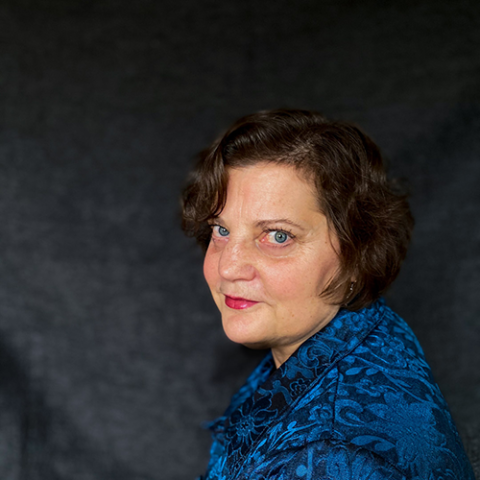
Emma Maclean is a Part-Time Lecturer and Module Coordinator in the Division of Occupational Therapy and Arts Therapies at Queen Margaret University. She holds qualifications including MA (Distinction), PG Dip, and BA (Joint Honours). Her roles include teaching on the MSc Music Therapy program, focusing on supervision for practice education placements and interdisciplinary studies. Education: MA (Distinction) in Music Therapy PG Dip in Music Therapy BA (Joint Honours) Research Interests: Partnership working, collaboration, evaluation, group work, and mental health across children, adults, and older populations. She employs research methods such as case studies and focus groups. Publications & Presentations: Her work includes a peer-reviewed article on partnership evaluation and a chapter in Arts Therapies in Schools . She co-presented a plenary session at the 2016 BAMT conference titled Music Therapy in a Changing Landscape . Affiliations: British Association for Music Therapy (BAMT) representative on Allied Health Professionals Federation Scotland (AHPFS) Registered with the Health and Care Professions Council Fellow of the Higher Education Academy Clinical Work: Works as a lead music therapist in the NHS, specializing in pediatric services, adult/older adult mental health (including dementia), and supervision. Engages in freelance violin performance with ceilidh bands, tango groups, and orchestras.
Maria Apostolaki is an Assistant Professor of Electrical and Computer Engineering at Princeton University. Her research focuses on designing secure, reliable, and high-performance networked systems, integrating expertise in networking, security, blockchain, and machine learning. She holds a Ph.D. from ETH Zurich (2021) and an M.Eng. from the National Technical University of Athens (2015). Education: Ph.D., ETH Zurich 2021 | M.Eng., NTUA 2015 Her work investigates challenges in network security, distributed systems, and adversarial resilience. Notable contributions include SABRE (protecting Bitcoin from routing attacks) and TANGO (collaborative route control). She has advised multiple graduate students in computer science and engineering. Key honors include the NSF CAREER Award and the IRTF/IETF Applied Networking Research Prize (2018). Her lab explores cutting-edge topics like contextual robustness in ML-driven network functions and formal methods for secure systems. Advising: 6 advisees in COS/ECE domains Grants: NSF CAREER Award, innovation grants for AI/robotics Her TANGO framework enables secure cross-domain routing, while recent work addresses vulnerabilities in Ethereum PoS and BGP routing protocols.
Professor Sławomir Kaczorowski, Ph.D., has been a faculty member at the Grażyna and Kiejstut Bacewicz Academy of Music in Łódź since 1981, where he teaches composition and served as Head of the Department of Composition from 2011 to 2021. He previously held significant leadership roles including Vice-Rector for Artistic and Teaching Affairs (1999-2005) and Vice-Dean of the Faculty of Composition, Music Theory, Music Education and Rhythmics (1996-1999). His educational background includes diplomas in music theory (1981) and composition under Professor Bronisław Kazimierz Przybylski (1981) from the State Higher School of Music in Łódź. Awarded the title of professor by the President of Poland in 2002, he remains an active academic leader currently serving as chairman of the Art Section of the Polish Accreditation Commission. Kaczorowski specializes in contemporary composition with emphasis on instrumental works, chamber music, and choral compositions. His research interests manifest in diverse output featuring piano, accordion, and mixed ensembles, with notable focus on tango-inspired forms and liturgical reinterpretations. He pioneered the MUSICA MODERNA sessions promoting new music through biannual concerts and lectures. Analysis of his 15 most recent compositions reveals consistent exploration of Polish contemporary classical traditions with strong emphasis on instrumental timbre, cross-genre fusion (particularly tango elements), and innovative approaches to sacred music forms. His works demonstrate technical mastery across diverse ensembles from solo piano to full orchestral settings. Silver Medal for Merit to Culture – Gloria Artis (2021) Numerous national composition competition awards Jury membership at international competitions including the T. Baird Young Composers' Competition (Warsaw 2018) and National Association of Composers USA competitions (2017-2018) Professor Kaczorowski has mentored award-winning composers including Grzegorz Duchnowski and Tomasz Szczepanik. His institutional leadership includes directing the Grażyna Bacewicz International Composition Competition (2012, 2015, 2019) and serving as president of the Łódź Branch of the Polish Composers' Union until 2022. He maintains active artistic engagement through premieres across Europe, China, and the United States. His creative work is organized through departmental initiatives including the Department of Composition's performance series and collaboration with the Artur Rubinstein Łódź Philharmonic. Current activities focus on expanding Polish contemporary music's international presence through competitions and cross-border artistic exchanges.
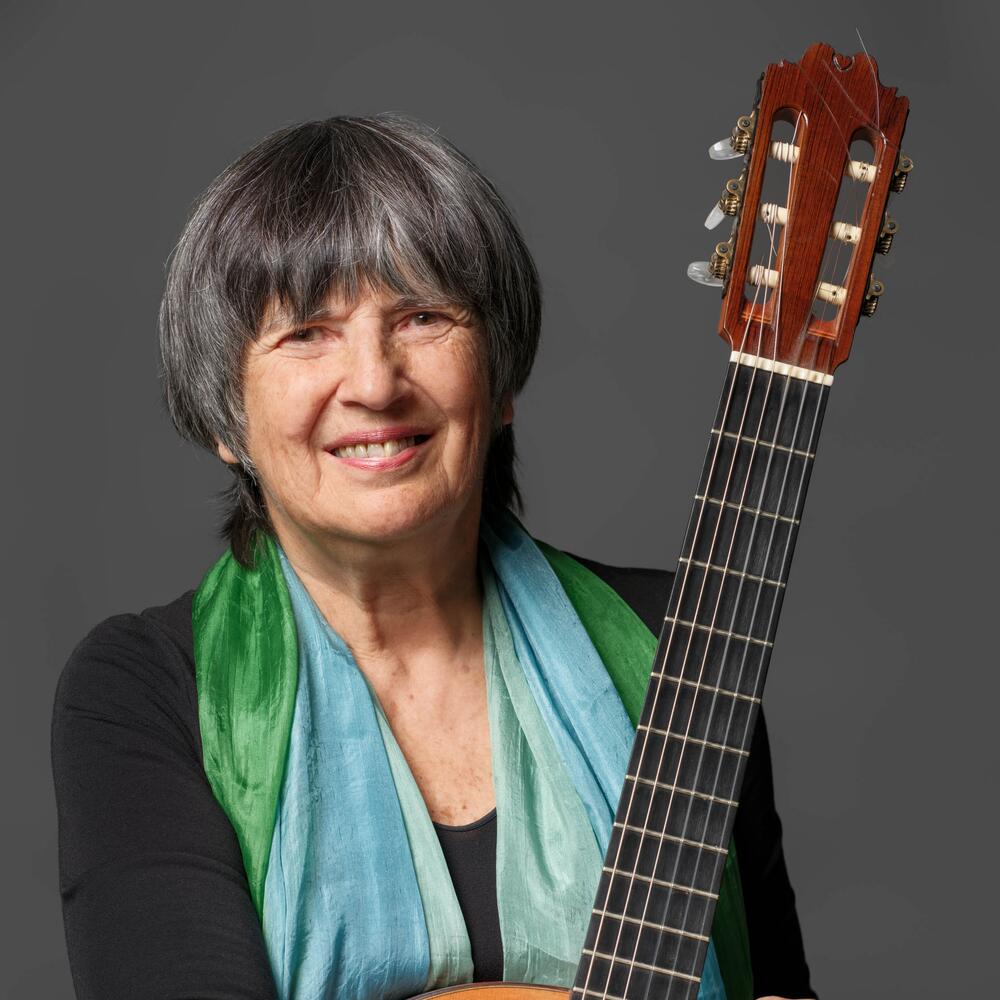
Maria Isabel Siewers De Pazur is a distinguished Professor of Guitar at Mozarteum University in Salzburg, Austria, where she has led the Guitar Department since 1989. She also maintains connections with the Department of Music Education in Innsbruck. Born in Argentina, she has established an international career as both a performer and educator, with her work deeply rooted in Latin American musical traditions while embracing contemporary classical repertoire. Her research and performance interests center on Classical Guitar Performance, Latin American Music, Chamber Music with Guitar, 20th Century Guitar Repertoire, Contemporary Classical Music, Argentine Music, and Guitar Education. Siewers has dedicated her career to expanding the guitar repertoire through commissions of new works and premieres of contemporary compositions, with a particular focus on Latin American composers. Her recordings demonstrate remarkable diversity across musical eras and styles, with special emphasis on 20th century masterpieces, Latin American repertoire, and chamber music collaborations. The trajectory of her work shows a consistent commitment to bridging traditional and contemporary forms, with increasing focus on cross-cultural musical dialogues and innovative arrangements that honor historical contexts while speaking to modern audiences. Critic's choice (Gramophone) Best record of the year (Acoustic Guitar) Latin Grammy Award 2018 in the category Classical Throughout her career, Siewers has maintained a strong commitment to education, founding the Musicampus Classical Guitar program that has nurtured over 170 guitarists from throughout Latin America. Her teaching philosophy emphasizes chamber music, community engagement through public performances, and fostering international musical exchange. She has also been involved in recording projects that serve both educational and artistic purposes, documenting important repertoire and commissioning new works that expand the guitar's expressive possibilities. Siewers maintains active collaborations with composers, orchestras, and fellow musicians worldwide, regularly performing with ensembles such as the Prague Virtuosi, Bohemian Chamber Orchestra, and various string quartets. Her work with the Musicampus program demonstrates her commitment to developing the next generation of guitarists while preserving and innovating within the classical guitar tradition.
Novi Quadrianto is a Professor of Machine Learning at the School of Engineering and Informatics, University of Sussex, where he joined as a Lecturer in February 2014. He is currently a Principal Investigator on three active EU grants: BayesianGDPR (ERC), TANGO (EU Horizon RIA), and Act.AI (ERC Proof of Concept). He also holds an Adjunct Professor position in Data Science at Monash University, Indonesia, and serves as Strategic Lab co-Leader of the BCAM Severo Ochoa Strategic Lab on Trustworthy Machine Learning in Bilbao, Spain. His educational background includes a PhD in Machine Learning from the Australian National University (2012) and a BEng in Electrical and Electronics Engineering from Nanyang Technological University, Singapore. During his PhD, he conducted research at multiple international institutions including HIIT-Finland, Yahoo! Research-US, University of Alberta-Canada, Fraunhofer IAIS-Germany, and IST Austria. From 2012-2014, he was a Newton International Fellow of the Royal Society at the University of Cambridge. Professor Quadrianto directs the Predictive Analytics Lab (PAL) since 2017, which focuses on "Responsible AI" research developing AI models that embed fairness, accountability, transparency, and trustworthiness. His research spans algorithmic fairness, federated learning, and computer vision, with applications in sustainable development, healthcare, and finance. His work has been funded by prestigious organizations including the European Research Council, EPSRC, and HM Treasury. His publications reveal a strong focus on addressing challenges in AI fairness, robustness, and privacy, particularly in dynamic environments and heterogeneous data settings. Recent work explores performative prediction, diversity-driven learning, and efficient vision transformer inference, demonstrating his leadership in cutting-edge machine learning research. European Research Council ERC Proof of Concept Grant (2023) Guarantor Researcher for BCAM Severo Ochoa Excellence Accreditation (2023) European Lab for Learning and Intelligent Systems (ELLIS) Scholar/Fellow (2020) European Research Council ERC Starting Grant (2019) Newton International Fellowship (2012) Microsoft Research Asia Fellowship (2009) Professor Quadrianto currently supervises six PhD students and five postdoctoral researchers. He has served as Action Editor for Transactions on Machine Learning Research since 2022 and as Associate Editor for IEEE Transactions on Pattern Analysis and Machine Intelligence since 2016. He has also been an Area Chair for major conferences including NeurIPS, ICML, and AAAI. His PAL laboratory hosts a team of 15 members focused on inter-disciplinary AI research with domain experts across various sectors. The PAL Lab operates three innovation strands: AI for Sustainable Development (supporting UN SDGs), AI for Healthcare (transforming health outcomes), and AI for Finance (personalized loan decision-making). The lab also leads initiatives in Diversity & Inclusion in AI and offers Pro-Bono Office Hours to organizations seeking guidance on machine learning aspects.
Glen McGillivray is an Associate Professor and Research Director in the Discipline of Theatre and Performance Studies at the University of Sydney. He holds a BA (Honours) from Flinders University (1988) and a PhD from the University of Sydney (2004). His research focuses on performance and emotion, eighteenth-century acting practices, and the role of archives in preserving theatrical history. McGillivray has held academic roles at Western Sydney University and NIDA, where he developed the graduate program in Practice-Based Research. He currently serves as President of the Australasian Association for Theatre, Drama, and Performance Studies (ADSA) and chairs the editorial boards of Australasian Drama Studies and About Performance . His recent research explores emotions in Argentine tango performance and the emotional dynamics of eighteenth-century theatre, challenging conventional views of empathy in actor-audience interactions. He has led major ARC-funded projects, including AusStage (2007–2012), and authored influential works like Actors, Audiences, and Emotions in the Eighteenth Century (2023). McGillivray has supervised over ten PhD and master’s students, focusing on topics like fringe theatre economics and Shakespearean performance techniques. His teaching includes courses on acting methodologies and Shakespearean rehearsal practices.
Chisu Teresa Ko is Associate Professor and Department Chair of Modern Languages at Ursinus College. She holds a Ph.D. from Columbia University and teaches Spanish language courses at all levels alongside Latin American Studies courses in English, including SPAN 201 (Conversation and Composition), SPAN 340 (Racial Discourses in Argentina), LAS 200 (Introduction to Latin American Studies), and interdisciplinary offerings like CIE 200 (Common Intellectual Experience). Her research specializes in 19th- and 20th-century Latin American literary and cultural studies, with emphases on: Race, ethnicity, and multicultural identity formation Historical and contemporary racial discourses in Argentina Asian diaspora communities in Latin America Afro-Argentine cultural production Criollo Popular Theater traditions Her scholarship—including the forthcoming book Argentina: Race in a Raceless Nation —consistently examines intersections of national identity, racial representation, and transnational connections, with recent work expanding into Afro-Argentine historical documentation and Korean-Argentine cinematic narratives. Awards and fellowships include: 2020 ACLS Fellowship (American Council of Learned Societies) 2021 UMBC Inclusion Imperative Visiting Faculty Fellowship
Jelena Tosic is a Professor/Senior Lecturer of Migration Studies at the University of St. Gallen's School of Humanities and Social Sciences (SHSS), leading the project 'Europe's Un/Deserving: Moralizations of Inequality in Comparative Perspective' (2021-2024, SNSF-funded). She holds a Habilitation from the University of Bern (2020), a PhD in Social and Cultural Anthropology (University of Vienna, 2005), and MAs in Anthropology and Psychology (University of Vienna). Her research focuses on (Im)Mobility, Forced Migration, Border Studies, Citizenship, and Deservingness, with regional expertise in Europe (Central, SEE) and the Mediterranean. Teaching includes courses like 'Citizenship - Theorizing Belonging' and 'Ethnographies of (Im)Mobility'. She co-leads the 'Digital Inclusion' (DIGITClue) and 'Translating Socio-Cultural Anthropology into Education' (TRANSCA) Erasmus+ projects. Awards include the APART Fellowship (2011-2017). She is actively involved in academic networks (EASA, IMISCOE) and serves on committees like the HSG Research Commission. Recent talks address themes like 'Deservingness and Inequality', 'Post-Conflict Societies', and 'Tango as Cultural Practice'.
Vanesa Miseres is an Associate Professor of Spanish in the Department of Romance Languages and Literatures at the University of Notre Dame's College of Arts and Letters. Her academic home is complemented by affiliations with the Gender Studies Program, and fellowships at both the Nanovic Institute for European Studies and the Kellogg Institute for International Studies. Currently serving as Associate Editor for the Latin American Research Review (the academic journal of LASA), Professor Miseres maintains an active scholarly profile that bridges literary criticism, gender studies, and historical analysis. Professor Miseres earned her Ph.D. and M.A. from Vanderbilt University and completed her undergraduate studies at Universidad Nacional de Rosario in Argentina. Her research focuses on nineteenth- and early twentieth-century Latin American literature with specializations in travel writing, war literature, women writers, gender studies, food studies, and the intersections of women and science. Her work demonstrates particular expertise in analyzing how women navigated cultural and intellectual spaces during periods of social transformation. Her scholarly output reveals a consistent thread examining how women's writings challenged conventional gender roles and national narratives. Through her analysis of travelogues, war narratives, botanical knowledge, and domestic practices, Miseres illuminates how women created intellectual networks and shaped cultural discourse despite societal constraints. Her recent publications increasingly explore the connections between material culture, visual representation, and women's intellectual production. Professor Miseres's work has been recognized with prestigious awards including the 2018 Alfredo Roggiano Prize for Latin American Literary Criticism and an Honorable Mention for the Victoria Urbano Critical Monograph Prize. She has also received significant research support through a Mendel Fellowship from the Lilly Library, a Global Gateway Faculty Research Award from Notre Dame, and a Humboldt Fellowship for Experienced Researchers. Currently, Professor Miseres collaborates with Anthropology Professor Vania Smith-Oka on a project empowering Latinx women who experienced violence during pregnancy and childbirth through art and literature. This initiative, supported by Humanities Without Walls and the University of Notre Dame, has been selected by the Franco Institute for its New Research Innovation Collaboratives and has received additional support from the Notre Dame Arts Initiative.
Morgan James Luker serves as Associate Professor of Music within the Music Department of Reed College's Division of the Arts, where he has been a core faculty member since 2010. An ethnomusicologist specializing in Latin American musical cultures, his work centers on the sociopolitical dimensions of contemporary tango in Buenos Aires, Argentina. His academic credentials include: B.A. in Music History from University of Wisconsin, Madison M.A. and Ph.D. in Ethnomusicology from Columbia University Luker's research investigates how tango functions as a cultural resource for urban development, social identity, and economic policy in modern Buenos Aires. His scholarship appears in leading journals including Latin American Music Review and Ethnomusicology Forum , with a book manuscript under contract with University of Chicago Press examining tango's role in cultural policy frameworks. He actively bridges academic and performance spheres through directing Tango For Musicians at Reed College , an intensive international summer program. His teaching portfolio spans Cultural Study of Music, Music and Politics, Latin American Popular Music, and Musical Ethnography, emphasizing critical engagement with music's societal functions. Luker contributes to Reed's academic community through departmental leadership and cross-disciplinary initiatives within the Division of the Arts.
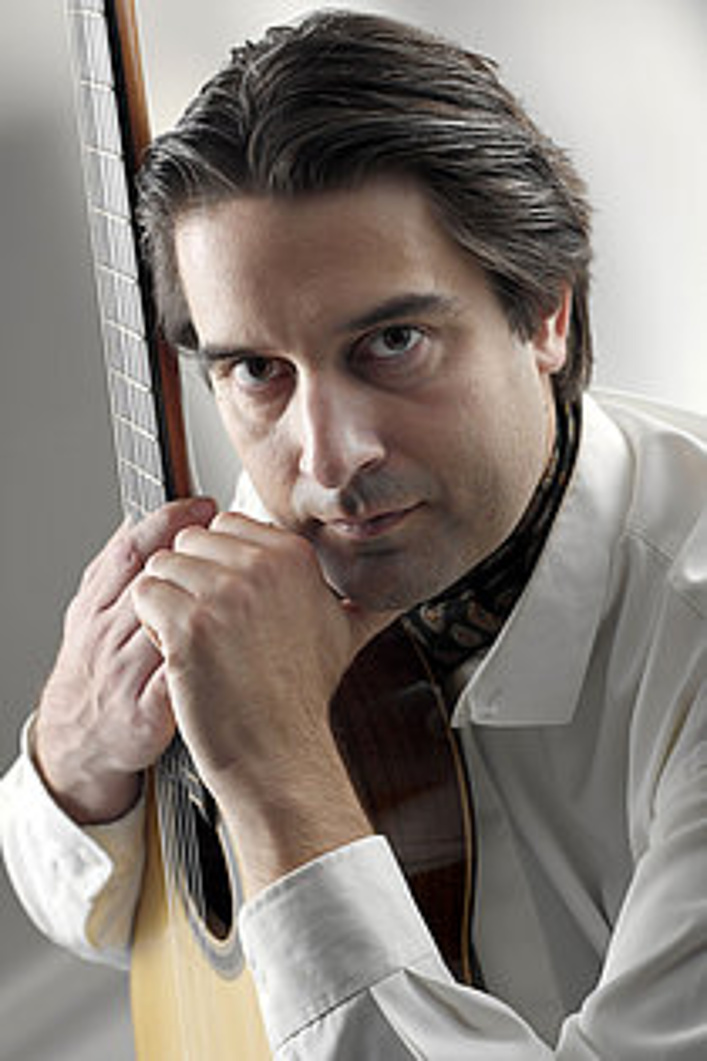
Professor Alexander-Sergei Ramirez is a distinguished classical guitarist serving in the Guitar Department at the Robert Schumann Hochschule Düsseldorf. Born into a family of artists in Lima, Peru, he has established an international career as both performer and educator since joining the faculty in 1997. His research and performance interests center on classical guitar performance with specializations in Latin American guitar repertoire, Spanish guitar music, and historical guitar works. Ramirez has made significant contributions to musicology through his rediscovery and performance of previously unknown works by Peruvian composer Pedro Ximénez de Abrill, bringing important historical compositions to modern audiences. His extensive discography reveals trends across multiple musical traditions, with recent recordings exploring multinational guitar repertoire spanning five continents as featured in his critically acclaimed 'Odyssey' album. Ramirez's work demonstrates exceptional technical mastery combined with deep musical understanding across diverse stylistic periods from Renaissance to contemporary compositions. First prize at the Alhambra International Guitar Competition CD of the month on MusicalWeb CD of the month by Ecos magazine Voted CD of the month by Ecos magazine for 'Odyssey' As an educator, Ramirez mentors the next generation of guitarists while maintaining an active international performing schedule. His recordings with major labels like Deutsche Grammophon and DENON have received enthusiastic reviews, with critics describing his work as 'the most fascinating 75 minutes I have ever heard' and 'Spanish school par excellence.' Ramirez also explores historical performance practices through his work with romantic guitar in a duo with fortepianist Sheila Arnold.
Laurie San Martin is a Professor of Music at the University of California, Davis, serving as department chair and undergraduate advisor for music majors with last names N-Z. She holds a PhD in Theory and Composition from Brandeis University and a B.A. in Music from UC Davis (1991). Her primary roles include teaching composition, music theory, and recital preparation, while maintaining active involvement in compositional research and performance activities. Research & Creative Work: San Martin specializes in contemporary concert music for chamber ensembles, orchestra, and chorus. Her compositions explore intersections of texture and line, often incorporating experimental techniques and cross-cultural influences. Notable works include Witches (2018), a chamber-choral piece with lyrics by Lucy Corin; Night Owls (2024), a Barlow Endowment-commissioned work for Ensemble Ari; and Elective Affinities (2013), blending Korean gayageum with string quartet. She frequently collaborates with ensembles like Earplay, Left Coast Chamber Ensemble, and Volti. Performed internationally in Europe, South America, and Asia Recipient of prestigious awards including the Guggenheim Fellowship (2016), Andrew Imbrie Award (2018), and Barlow Endowment commissions Teaching & Mentorship: As an advisor, she supports music majors while mentoring emerging composers through programs like the Pacific Chamber Orchestra's Dream American workshop. Her pedagogical focus includes fostering creativity and technical mastery in composition students. Recent Activities: In 2023, she served as guest faculty at the Cortona Sessions in Italy, where her works Octurnal , Miniatures , and Conveyer Belt Dreaming were performed. Ongoing projects include a 2025 residency at the São Paulo Contemporary Composers Festival and a new work for the Empyrean Ensemble. Awards & Recognition: Her accolades reflect her impact on contemporary music, including the League of Composers-ISCM Fellowship and ASCAP Morton Gould Young Composer Awards. She has held residencies at prestigious institutions like the MacDowell Colony and Yaddo.
John M. Bishop is an Adjunct Associate Professor at the University of California, Los Angeles (UCLA), where he has taught for the past decade while maintaining an active career in documentary filmmaking since 1975. His work bridges academic research and visual media production, focusing on cultural traditions and ethnographic studies across global contexts including the American South, New England, and the Himalayas. Bishop's research interests center on folklore and anthropology, with specialized expertise in ethnomusicology and media ecology. His projects frequently involve longitudinal fieldwork, such as the 25-year study of a Nepali temple village documented in "Himalayan Herders," and explorations of blues music traditions with Alan Lomax. He examines intersections between cultural heritage, media theory, and community practices through a filmmaker's ethnographic lens. His filmography demonstrates consistent thematic focus on preserving intangible cultural practices through visual documentation, evolving from early works like "Land Where the Blues Began" (1979) to contemporary short film collections. Bishop's approach integrates academic rigor with accessible storytelling, often resulting in multi-decade projects that capture vanishing traditions. No scientific awards were mentioned in the source material. While holding an academic position at UCLA, the text provides no details regarding student supervision, mentorship activities, or research grant acquisitions. Bishop founded and operates media-generation.com, a production and distribution company responsible for releasing his documentary films on DVD, including compilations of short works such as "Yoyo Man," "Hand Play," and "Tango in the Toilet" that explore street culture and performance traditions.
Prof. Julia Rebekka Adler is a renowned violist and Professor at the Institute for Artistic Training at Universität der Künste Berlin. She specializes in viola performance , historical performance practice , and contemporary music , with a particular focus on works by Jewish composers and Astor Piazzolla’s tango. Her career spans international performances, recordings, and collaborations with ensembles like the Berlin Solistenoctett and the Munich Philharmonic. Her research interests include: Historical performance practice in Baroque music, including viola d’amore. Contemporary music featuring premieres of works by modern composers. Chamber music and rediscovery of forgotten Jewish composers. She has received recognition as a Prizewinner of the Mendelssohn-Bartholdy Competition and has built a repertoire spanning classical concertos to avant-garde compositions. Notable musical partnerships include collaborations with pianists José Gallardo and Jascha Nemtsov, and she has contributed to acclaimed CDs covering diverse genres.
Marilyn Miller is a Professor of Spanish & Portuguese and Sizeler Professor of Jewish Studies at Tulane University's School of Liberal Arts. She has held academic roles since 2001, including department chair (2009–2012). Her research focuses on Caribbean literatures, Jewish Latin American studies, and postcolonial discourses. She has supervised six theses/dissertations in the past five years. Miller holds a Ph.D. in Comparative Literature (University of Oregon) and M.A. degrees in Comparative Literature (University of Oregon) and English Literature (University of Washington). Her research interests include the intersection of race, slavery, and trans-Atlantic cultural exchanges. Notable projects explore José Martí’s Jewish supporters, Holocaust consciousness in Latin America, and the legacy of WWII enemy alien internment in New Orleans. She has conducted fieldwork in Argentina, Cuba, Puerto Rico, and Spain. Miller’s publications span academic monographs, journal articles, and conference proceedings. Her recent work examines memory in Latin American literature, the cultural politics of Cuban identity, and the representation of slavery in colonial texts. She has received fellowships from the Fordham University Judaic Studies Program, the United States Holocaust Memorial Museum, and the Fulbright Program. Her professional service includes editorial roles for Comparative Literature , Revista de Estudios Hispánicos , and Latin American Music Review . She has organized major conferences such as Tropical Exposures: Photography, Film and Visual Culture in a Caribbean Frame (2016) and Virtual Caribbeans (2008). Miller’s teaching portfolio includes courses on Latin American cultural studies, Caribbean migrations, and film studies.