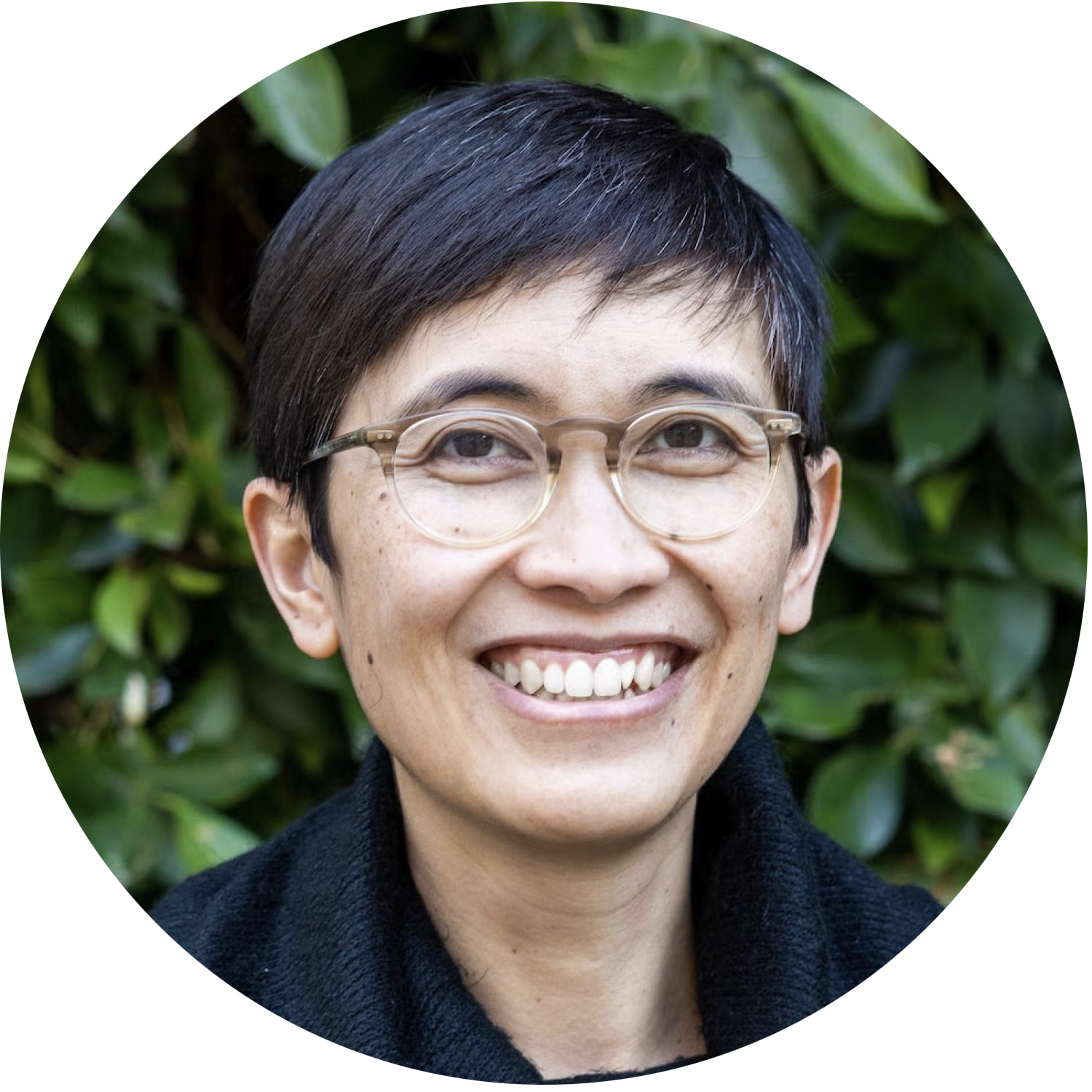
Ricarose Roqueمشاهده پروفایل
دانشیار
Ricarose Roque serves as an Associate Professor in the Information Science department at the University of Colorado Boulder with courtesy appointments in Computer Science and Learning Sciences and Human Development at the School of Education. She directs the Creative Communities research group and leads the Family Creative Learning project, focusing on equitable computational learning environments for marginalized youth. Her educational foundation includes: SB and MEng in Computer Science and Engineering from MIT SM and PhD in Media Arts and Sciences from MIT Roque's research centers on designing learning environments where young people—particularly those marginalized by race, ethnicity, immigration status, or socioeconomic status—become computational creators. Through community-engaged and ethnographic methods, she examines how social context shapes children's computing participation. Her work bridges constructionist learning theory with practical interventions like family workshops using Scratch, emphasizing identity development and equity in computing education. Analysis of her 15 most recent publications (2015-2024) reveals consistent focus on family and community-based computational learning, with strong emphasis on marginalized groups. Key trends include identity resource development in creative computing, culturally responsive construction kits, facilitator roles in out-of-school settings, and material/social contexts of learning. Her scholarship frequently leverages the Scratch ecosystem while addressing systemic barriers in computing access. Her notable recognition includes: Jan Hawkins Award for Early Career Contributions to Humanistic Research and Scholarship in Learning Technologies (2023) As director of the Creative Communities group, Roque mentors students through research projects and course instruction. Her teaching portfolio includes Community-Based Design, Designing for Creativity and Learning, and Computational Reasoning courses. While specific grant details aren't provided, her sustained Family Creative Learning project and computational tinkering initiatives indicate significant external funding for community-centered research. The Creative Communities research group operates through two primary initiatives: Family Creative Learning workshops that engage families from non-dominant groups in community centers using Scratch, and computational tinkering research exploring social, physical, and cross-disciplinary engagement models. This work occurs at the intersection of learning sciences, human-computer interaction, and social justice.