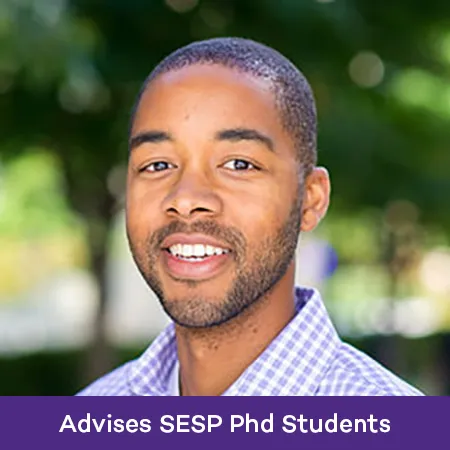
Marcelo Worsley is the Karr Family Associate Professor in Computer Science and Learning Sciences at Northwestern University's School of Education and Social Policy (SESP). His research focuses on promoting STEM education for underserved populations through hands-on, project-based learning. He holds a PhD and MS in Learning Sciences and Computer Science from Stanford University, along with dual bachelor's degrees in Chemical Engineering and Portuguese. His work emphasizes inclusive learning technologies, multimodal learning analytics, and fostering agency in students to address real-world challenges. Research Interests: Worsley’s research spans four core areas: (1) designing meaningful hands-on learning experiences; (2) extracting and analyzing multimodal data; (3) developing naturalistic interfaces for education; and (4) bridging engineering education with conceptual change. His Technological Innovations for Inclusive Learning and Teaching (tiilt) Lab aims to address inequities in education by co-designing tools with teachers and learners. Grants & Projects: Worsley has led initiatives such as Multimodal Learning Analytics (funded by NSF EAGER) and PE++ , integrating computer science with physical education. His projects often involve intergenerational making, refugee youth engagement, and culturally responsive computing. Publications: His work appears in journals like Journal of Learning Analytics and conferences such as ICLS and EDM. Recent themes include AI in education, embodied learning in games like Minecraft, and leveraging sports for computational thinking.
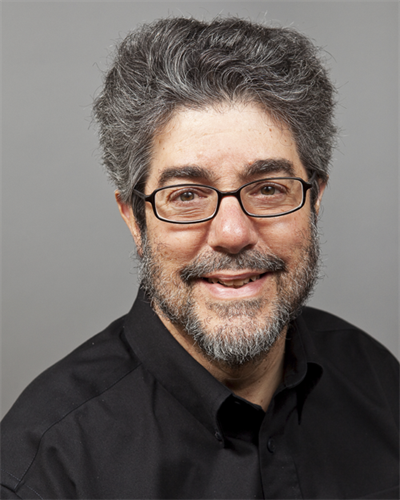
Robert Jacob is a Professor of Computer Science at Tufts University's School of Engineering, where he leads research in human-computer interaction with particular focus on implicit brain-computer interfaces. His work bridges computer science, cognitive science, and interface design to create adaptive systems that respond to users' cognitive states without explicit input. His educational background includes a Ph.D. from Johns Hopkins University. Professional milestones include: ACM CHI Academy membership (2007) ACM Fellow designation (2016) Leadership roles as ACM SIGCHI Vice President and conference chair for CHI, UIST, and TEI Professor Jacob's research centers on implicit interaction techniques, particularly using fNIRS brain sensing to create adaptive interfaces. His work has evolved from foundational studies in reality-based interaction and tangible programming to current neuroadaptive systems that measure cognitive workload in real-time. This research spans domains including music learning, museum education, and general user interface adaptation. His publications reveal consistent focus on brain-computer interfaces since 2012, with increasing sophistication in physiological measurement and machine learning techniques. Recent work integrates multiple physiological signals beyond brain data to create comprehensive user state models. Major recognitions include: CHI 2016 Best Paper Award for music learning research CHI 2014 and 2012 Best Paper Honorable Mentions Keynote addresses at major conferences including Neuroadaptive Technology Conference (2017) Extensive media coverage in New Scientist, IEEE Computer, and Boston Globe Professor Jacob has mentored 17 PhD students who now hold faculty positions at institutions including Worcester Polytechnic Institute, Northwestern University, and Carleton University. His HCI Lab, located in the Joyce Cummings Center, receives funding from NSF and other sources supporting neuroadaptive interface research. Current projects focus on broadening implicit interaction to include multiple physiological measurements while maintaining user privacy and system transparency.
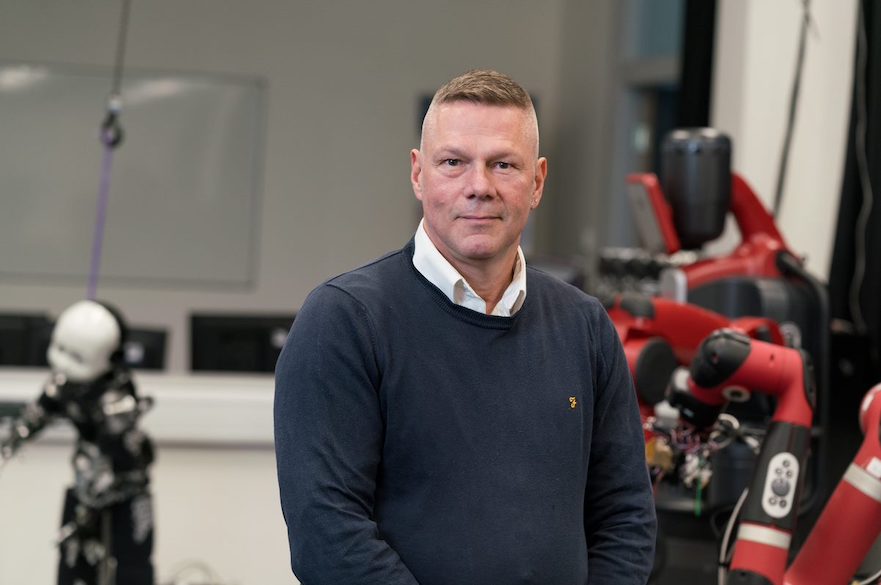
Ehud Sharlin is a Professor in the Department of Computer Science at the University of Calgary, Faculty of Science. His research focuses on Human-Computer Interaction (HCI) with specializations in human-robot interaction, tangible interfaces, virtual/augmented reality, and autonomous vehicle interactions. He holds a Ph.D. in Computing Science from the University of Alberta (2003), and M.Sc. and B.Sc. degrees in Electrical and Computer Engineering from Ben-Gurion University of the Negev (1997 and 1990). Teaches CPSC 481: Human-Computer Interaction I Recipient of the NSERC Discovery Accelerator Award (2019), ACM Creativity & Cognition Honourable Mention (2018), and multiple academic excellence awards Active in industry collaborations, particularly in medical simulation (e.g., VRSpineSim) and geosciences (e.g., PLANWELL) Research explores: Embodied interaction through robotics and wearables Autonomous vehicle-pedestrian communication systems Immersive tools for creative and professional domains Accessibility in human-technology interfaces Publications span over 100 peer-reviewed works, emphasizing design methodologies, user experience in XR systems, and ethical considerations in sociotechnical systems. His work bridges technical innovation with human-centered design principles.
Dr. Chuan Khoo is a Lecturer in the Department of Design at Monash University, specializing in interaction design, digital media, and physical computing. He holds a PhD from RMIT University and an MFA from the Rhode Island School of Design. His work explores the dual edges of technology through projects like Touchstone (interactive public art) and Lumogram , which interrogate the relationship between humans and digital systems. Khoo’s research focuses on 'slow data'—design perspectives that critically engage with digital augmentation. He has exhibited internationally and developed tools like the mote mini , an IoT microcontroller for design students. His academic roles include teaching at RMIT and heading the Interaction Design program at Nanyang Polytechnic, Singapore. Key projects include When Echoes Find Light (2019), an interactive public bench installation, and Slow Data in the Age of Digital Things , his PhD work critiquing tech velocity. He co-designed the Alfred Health Universal Design Principles project (2024) and received a 2024 DIA Award shortlist for Lumogram . Khoo maintains Technologies for Interactivity , an open-source resource for physical computing, and collaborates globally on projects blending art, tech, and critical design.
Bernhard Jenny is an Associate Professor at Monash University's Faculty of Information Technology, specializing in immersive visualization and geospatial data. He holds a PhD in Cartography from ETH Zurich and has held previous roles at Oregon State University and RMIT University. His research focuses on virtual reality (VR), augmented reality (AR), and cartographic innovations for geospatial data representation. Education: Doctor of Sciences in Cartography, ETH Zurich (2010) Postgraduate Certificate in Computer Science, ETH Zurich (2005) Master of Science in Surveying, EPFL (2000) Research Interests: Combines cartography, computer graphics, and human-computer interaction to explore VR/AR applications for geospatial data. Current work includes immersive analytics, terrain visualization, adaptive map projections, and storytelling with geospatial data. Recent Articles: Focus on ambient occlusion for terrain shading, grammars for immersive visualization transitions, and AR/VR interfaces for spatial data. Awards: Henry Johns Award (2007, 2011, 2012) ETH Medal (2010) Best Paper Honorable Mentions (ACM CHI, DIS) Grants & Projects: Leads initiatives like the 'Immersive Analytics' extension and 'National Geographic Relief Shading' project. Collaborates on neural networks for cartographic relief shading and sustainable development goals (SDGs). Labs & Teams: Heads the Embodied Visualisation Lab at Monash, focusing on immersive analytics and geovisualization tools.
David Brown is a Professor in Interactive Systems for Social Inclusion at Nottingham Trent University's School of Science & Technology, Department of Computer Science. He serves as Director of the Computing and Informatics Research Centre (CIRC) and Research Group Leader for the Interactive Systems Research Group (ISRG). Director, Computing and Informatics Research Centre Research Group Leader, Interactive Systems Research Group Governor, Oak Field School for students with severe learning disabilities Conference Chair, International Conference on Disability, Virtual Reality and Associated Technology (ICDVRAT21) Associate Editor, Frontiers: Virtual Reality in Medicine Professor Brown's research focuses on developing inclusive technologies for people with disabilities. His work spans accessibility for students with learning, physical and sensory impairments; virtual reality applications for rehabilitation; multimodal affect recognition systems; social robotics for education; accessible visual programming toolkits; and serious games for developing physical and cognitive skills. His research is characterized by strong interdisciplinary collaboration and practical application in educational and healthcare settings. His recent publications demonstrate a consistent focus on applying emerging technologies like virtual reality, machine learning, and social robotics to address real-world challenges in accessibility and inclusion. The research shows a clear trajectory toward increasingly sophisticated multimodal systems that can detect user states and adapt accordingly, with applications ranging from autism support to mental health interventions. Extensive EU-funded research projects including Horizon 2020, Erasmus+, and EPSRC grants Notable projects: DIVERSIA, MaTHiSiS, Pathway, AI-TOP, EDUROB, No One Left Behind, Real Life, RISE Professor Brown has supervised numerous PhD students and collaborates extensively with international partners across Europe and Asia. His work bridges computer science, psychology, education, and healthcare to create technologies that promote social inclusion and improve quality of life for people with disabilities.
Orit Shaer is a Professor and co-Chair of Computer Science at Wellesley College , where she founded and directs the Human-Computer Interaction (HCI) Lab . Her work bridges tangible interaction, human-AI collaboration, and mixed-reality interfaces, focusing on transforming work and learning environments through embodied technologies. Education : B.A. from Academic College of Tel-Aviv, M.S. and Ph.D. in Computer Science from Tufts University Research interests center on novel human-computer interaction paradigms : Human-AI collaboration frameworks Tangible and embodied interface design Mixed-reality applications for productivity Genomics collaboration tools STEAM education technologies Recent publications highlight human-AI co-creation (CHI 2024), temporal dynamics in automated work (CHIWork 2024), and pandemic-era remote interaction studies (IEEE Pervasive Computing 2021). Awarded: NSF CAREER Award Agilent Technologies Research Award Google App Engine Education Award Pinanski Prize for Excellent Teaching Best Paper Honorable Mention (ACM CHI 2014) Honorable Mention (CHIWork 2022) She co-founded the international CHIWork Symposium and chairs the ACM TEI conference. Her NSF IRES grant (2022) supports US-German collaboration on human-automation interaction.
Dr. Irene Ye Yuan is an Assistant Professor in the Department of Computing and Software at McMaster University's Faculty of Engineering, with a joint appointment as Associate Member of the McMaster School of Biomedical Engineering. Her research focuses on Human-Computer Interaction (HCI) and Social Computing , specifically designing technology for collaborative social experiences like intergenerational communication and remote play. Education Ph.D. in Computer Science, University of Minnesota M.S. in Human-Computer Interaction and Design, University of Washington Research Focus Dr. Yuan's work integrates ethnographic, design, and mixed methods to develop frameworks for multimodal interactions that foster meaningful social connections. Key domains include: Technology for intergenerational relationships Remote collaboration tools Embodied interaction systems Educational technology (VR/AR pedagogy) Publication Trends Her recent publications (2019-2024) in top-tier venues like CHI and CSCW emphasize socially connected experiences , with recurring themes of remote collaboration, intergenerational communication, and tangible interfaces. Methodologies blend qualitative analysis with system prototyping. Awards Three CHI Honorable Mentions IMWUT Distinguished Paper Award IDC Best Paper Award Academic Activities Dr. Yuan leads the ESI Lab at McMaster, focusing on Engaging Social Interactions. She teaches CAS 731: Social and Collaborative Computing and actively recruits graduate students for projects involving qualitative methods, system building, and empowerment of vulnerable groups (older adults/children).
Verena Fuchsberger-Staufer is an Associate Professor at the University of Salzburg's Department of Artificial Intelligence and Human Interfaces. Her work focuses on Human-Computer Interaction (HCI), exploring interdisciplinary design, collaborative technologies, and digital craftsmanship. She has led multiple research projects, including FEM*mad (2021-2025) and retangent (2019-2022), examining maker culture and remote tangible engagements.
Stavros Demetriadis is a Full Professor at the School of Informatics, Aristotle University of Thessaloniki, Greece. His research focuses on Learning Technologies, including Conversational Agents in Education, Learning Analytics, Computer-Supported Collaborative Learning (CSCL), Computational Thinking, and Massive Open Online Courses (MOOCs). He has led EU-funded projects like colMOOC and developed educational tools such as 'pytolearn' for Python instruction and 'Cubes Coding' (winner of Open Education Challenge 2014 and NUMA Competition 2014). He has supervised 5 completed PhD theses, 4 ongoing PhDs, and over 60 Master’s theses. Academic Appointments: Full Professor (2020–present), Associate Professor (2015–2020), Assistant Professor (2012–2015), Lecturer (2002–2008), Informatics Teacher (1989–2002) Education: PhD in Multimedia Technology in Education (2000), MSc in Electronic Physics (1986), BSc in Physics (1983) His work bridges AI and education, with over 161 publications and an h-index of 27. Recent research explores ChatGPT integration, ethics in Learning Analytics, and AI-driven assessment tools. He has delivered invited talks at institutions like the University of Valladolid (2024) and coordinates the 'Teachers' Fast-paced Distance Training on Tele-education' project. Awards include three international best paper awards and recognition for his 'Cubes Coding' project. Key Research Contributions: Developed frameworks for Conversational Agents in CSCL Innovated Computational Thinking pedagogy through robotics Explored ethics and culture in Learning Analytics adoption Created Python-based MOOCs for non-programmers He has taught courses like Human-Computer Interaction and Learning Analytics, and led short programs on Conversational AI. His collaborations span institutions in Spain, Denmark, and Greece. ORCID: 0000-0002-1561-6372; Google Scholar, Semantic Scholar, and Scopus profiles list his extensive output.
Dr. Bai Ziqian is an Assistant Professor in the School of Automation and Intelligent Manufacturing at Southern University of Science and Technology (SUSTech) in Shenzhen, China. Recognized as a Pujiang Scholar and Shenzhen Pengcheng Peacock Talent, she has established herself as a leading researcher at the intersection of wearable technology, textile engineering, and human-computer interaction. Her work bridges technical innovation with practical design applications, focusing on user-centered solutions that enhance human experience through technology integration. Dr. Bai's educational background includes: PhD in Smart Wearable Product Design (2011-2015), Hong Kong Polytechnic University MA in Fashion and Textile Design (2005-2006), Hong Kong Polytechnic University BA in Fashion Design and Engineering (2001-2005), South China Agricultural University Her research spans wearable technology, tangible interactive interfaces, IoTs, ergonomics, functional garments, wearables for healthcare, material innovation, smart home applications, and user-centered design. Dr. Bai has pioneered work in smart wearable fabrics and sensing mechanisms based on flexible materials, with a particular focus on human-computer interaction theory and practice. She has established a research team that has mastered key technologies in smart fabrics, interactive textiles, physiological signal monitoring, and human-computer interaction systems. Her approach consistently emphasizes user-centered design principles, ensuring that technological innovations serve practical human needs while maintaining aesthetic appeal. Dr. Bai's publication record demonstrates a clear evolution from foundational work in photonic textiles toward increasingly sophisticated wearable healthcare and human-computer interaction systems. Her recent publications focus on advanced sensor technologies, energy harvesting for wearables, and sophisticated data analysis for human motion and physiological monitoring. The interdisciplinary nature of her work is evident in publications spanning materials science, biomedical engineering, textile technology, and design methodology, with papers appearing in high-impact journals including Advanced Functional Materials (IF: 19.5), ACS Sensors (IF: 8.9), and Computers in Industry (IF: 10). Dr. Bai has received numerous prestigious awards that highlight both the technical and artistic dimensions of her work: 2024 German Red Dot Design Award for Best Design 2013 Neo-Neon, permanent collection at China Silk Museum (State grade 1 museum) 2019 Finalist, ThermoBlanket, TechStyle for Social Good International Competition 2017 1st Prize Teaching Award, Donghua University 2017 China National Textile and Apparel Council Teaching Award Multiple Service Learning Awards from Hong Kong Polytechnic University She has successfully secured research funding from prestigious sources including the National Natural Science Foundation of China and Guangdong Province's General Project. Her projects include a collaborative effort with the Guangdong Provincial Department of Education and Li Ning Company on a 'flexible wearable lower limb functional electrical stimulation system.' Dr. Bai has extensive teaching experience across multiple institutions and has guided student teams to success in national competitions. She currently leads the Human-Computer Interaction Design Laboratory (HCID) at SUSTech, which focuses on advanced design, engineering, and technology research at the intersection of disciplines, training the next generation of interdisciplinary designers and engineers.
Dr. Carlos Aguiar serves as Assistant Professor in the Industrial Design Program at the University of Illinois Urbana-Champaign's School of Art and Design, with affiliate status in Informatics at the School of Information Sciences. He directs the Design, Technology, and Society Lab, where he investigates human-artifact interactions through critical design frameworks and cyber-physical systems development. His academic foundation includes a Ph.D. in Design & Human Behavior from Cornell University (2021) with minors in Science and Technology Studies and Information Science, an M.S. in Design Computing from the University of Washington (2017), and a Bachelor's in Architecture & Urbanism from Brazil's Universidade Estácio de Sá (2012). Aguiar's research integrates Science and Technology Studies, Design Philosophy, and Critical Theory to develop technologies that foster social change while examining material culture's societal implications. His dual-focus methodology simultaneously creates tangible artifacts that enhance human-agent-material relations and analyzes how emerging technologies shape societal structures through empirical investigation and critical reflection. This approach prioritizes inclusivity in future-making processes and examines emergent behaviors in technological appropriation. His publication trajectory (2016-2024) reveals consistent advancement in human-computer interaction, particularly in assistive technologies for rehabilitation and autism support, social interaction design in public spaces, and architectural robotics for community building. Key thematic developments include the evolution from single-user wearable devices (Erglove, GripAid) to community-scale cyber-physical systems (communIT, transFORM), with recent work expanding into eco-consciousness and restorative environments through socially interactive robotics. No scientific awards were documented in the provided source materials As lab director, Aguiar cultivates interdisciplinary collaboration between design, informatics, and engineering disciplines. His grant activities focus on developing cyber-physical artifacts that transform underused public spaces into community engagement hubs while addressing societal challenges through human-centered technological innovation. The Design, Technology, and Society Lab functions as an experimental platform where theoretical frameworks from STS and critical design directly inform the creation of responsive environments, objects, and spaces that actively shape social interactions and cultural practices.
Mark Hancock is a Professor and Chair of the Department of Management Science and Engineering at the University of Waterloo's Faculty of Engineering. He directs the Touchlab research group and holds cross-appointments in Systems Design Engineering and the David R. Cheriton School of Computer Science. His research focuses on designing interactive technologies that leverage human movement and perception to create novel interaction paradigms. Education: 2010: PhD in Computer Science, University of Calgary 2004: MSc in Computer Science, University of British Columbia 2002: BSc in Mathematics & Computer Science, Simon Fraser University Research Interests: Hancock's work centers on human-computer interaction, particularly technologies enabling richer physical interaction through hands, fingers, and body movements. His lab explores tabletop displays, large-screen interfaces, VR/AR systems, multi-touch interaction, 3D interfaces, and collaborative systems. Recent work examines VR applications for productivity, stress reduction through gaming, and gender-inclusive maker spaces. Publication Trends: Recent articles show strong emphasis on virtual reality applications (productivity tools, health considerations), tangible interfaces (card-based systems, physical props), and social computing (collaborative systems, community studies). Methodologies include phenomenological analysis, systematic reviews, and comparative evaluations of interaction techniques. Awards: NSERC Discovery Accelerator Supplement (2016) ACM CHI Golden Mouse Award (2016) ISS 2018 10-Year Impact Award Two ACM CHI Honorable Mentions (2019) Top Ontario Researcher recognition (2016) Teaching: Recent courses include Introduction to Computer Programming (MSCI 121), Algorithms and Data Structures (MSCI 240), Analytics and User Experience (MSCI 543), and Human-Computer Interaction (MSCI 630). Research Infrastructure: Directs the Touchlab, which develops novel interaction technologies. The lab's work bridges physical and digital interaction spaces, with applications in gaming, productivity tools, and collaborative systems.
Campbell Drake is a Senior Lecturer in Interior Architecture at the University of Technology Sydney's School of Architecture within the Faculty of Design, Architecture and Building. Registered as an architect in New South Wales and Victoria with over 15 years of professional experience, he specializes in sustainable eco-tourism development in environmentally sensitive locations. His work bridges academic research and practical application through partnerships with government and non-government agencies focused on Indigenous infrastructure and housing. Education: PhD from RMIT University (2012-2018) Masters of Research Architecture from Goldsmiths College, University of London (2009-2010) Bachelor of Architecture from RMIT University (1999-2005) Dr. Drake's research centers on the interaction between urban infrastructure and social formation within remote communities, particularly investigating socio-architectural relations in Indigenous contexts. His work explores how infrastructure can enhance wellbeing, cultural practices, and environmental sustainability. He specializes in participatory design methods that empower communities through culturally responsive approaches that integrate Indigenous knowledge systems. His research spans sustainable tourism development in Indonesia, Indigenous housing policy in Australia, cultural burning practices, and the spatial politics of tourism infrastructure, demonstrating a commitment to decolonizing design practices and creating architecture that serves community needs. His recent publications reveal a clear trajectory toward evaluating specific programs (like the Roads to Home Program and Wreck Bay housing strategy) while simultaneously developing theoretical frameworks for culturally responsive architecture. There's a consistent focus on Indigenous infrastructure, housing, and participatory design methodologies, with increasing attention to the intersection of traditional knowledge systems with contemporary design practices in remote Australian communities. His work bridges practical implementation with critical theoretical analysis of power dynamics in architectural practice. Scientific Awards: 2018 UTS Teaching and Learning Awards: Indigenous Professional Capabilities High Commendation Interior Design/Interior Architecture Educators Association Teaching Award (2018 Third place finalist) 2018 AILA Research, Policy & Communication Landscape Architecture Award International Interior Design Association 2014 Global Excellence Awards Dr. Drake supervises Masters and PhD students with a focus on Indigenous architecture and sustainable design. His funded research includes culturally responsive design principles for Aboriginal housing, evaluations of the Wreck Bay Village housing program, Roads to Home evaluations for Gulargambone & Bowraville Reserves, and solar lighting projects for Namoi and Gingie Reserves. His grants come from diverse sources including the NSW Aboriginal Land Council, National Indigenous Australians Agency, and Department of Planning Industry and Environment, reflecting the practical impact of his work. As a founding member of UTS TIISHA (The Indigenous Infrastructure and Sustainable Housing Alliance), Dr. Drake leads collaborative research projects focused on 'health enabling infrastructure' to address structural factors of Indigenous disadvantage. TIISHA works with multiple Aboriginal Land Councils and government agencies to evaluate and implement housing and infrastructure programs that respect cultural values and community needs, demonstrating his commitment to creating tangible benefits for Indigenous communities through architectural practice.
Dr. George Fitzmaurice is a Research Fellow at Autodesk, leading the Human Computer Interaction and Visualization Research group. With over 120 publications and 95 patents, his work spans 25 years of innovation in interactive systems, focusing on technology-assisted learning , 3D visualization , and novel input techniques . His notable contributions include the Maya 1.0 UI and SketchBook Pro design, as well as pioneering Graspable UIs and Spatially-Aware Displays . Education : MIT (B.Sc. Math/CS), Brown (M.Sc. CS), Toronto (Ph.D. CS) His research explores immersive visualization and generative AI applications in design workflows, with recent work focusing on VR/AR tools like TimeTunnel for motion editing and WhatIF for AI-assisted narrative design. Current projects examine the intersection of large language models , 3D design systems , and collaborative environments . Key article themes include: Generative AI integration (3DALL-E, WorldSmith) Immersive motion analysis (AvatAR, VideoPoseVR) Creative workflow optimization (MoodCubes, Immersive Sampling) Privacy-aware VR systems (Vice VRsa) Scientific Recognition: 2019 - Inducted into ACM CHI Academy 2024 - Awarded ACM Fellow for computing contributions He has developed foundational interaction techniques like ViewCube™ and SteeringWheels™ , and his work continues to shape modern 3D UI paradigms and spatial computing approaches through projects like DreamSketch and Tesseract.