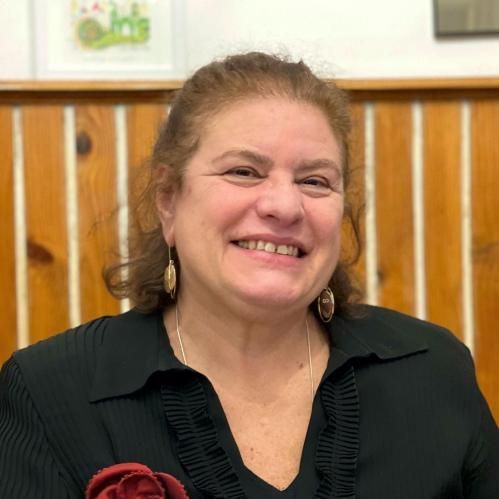
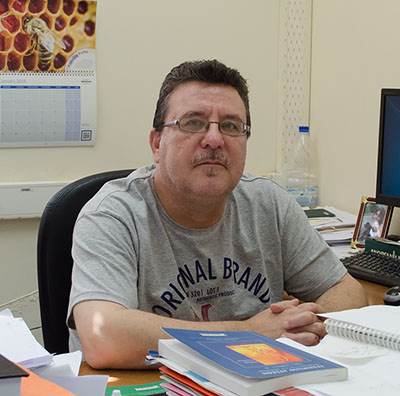
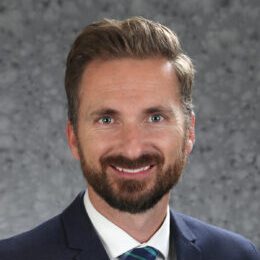
Dr. Eride Quarta is a fixed-term Researcher at the University of Parma 's Department of Food and Drug Sciences. She specializes in pharmaceutical formulation, nanoparticle engineering, and inhalation therapy delivery systems. Teaching Appointments Formulation and Development of Health Products (2025/2026) Introduction to Scientific Communication (2022/2023) Techniques for Nanoparticle Production (2024/2025) Galenic Preparations Laboratory (2020-2025) Her research focuses on innovative drug delivery methods for respiratory diseases, particularly Cystic Fibrosis, and cross-organ therapeutic targeting. Recent publications highlight her work on: Dry powder formulations using hyaluronic acid complexes Micro-CT analysis of tablet coatings Probiotic delivery to respiratory microbiota Cardio-respiratory nano-in-micro peptide systems Contact: eride.quarta@unipr.it
Bodhisattwa Chaudhuri is a faculty member in the Department of Pharmaceutical Sciences at the University of Connecticut's School of Pharmacy. His research bridges computational modeling and pharmaceutical manufacturing, focusing on multiscale approaches to materials science, drug delivery, and process optimization. Education: B.E. in Chemical Engineering (Jadavpur University), M.S. in Chemical Engineering (Indian Institute of Science), Ph.D. in Mechanical Engineering (New Jersey Institute of Technology), Postdoctoral Training in Chemical and Biochemical Engineering (Rutgers University) His work integrates Molecular Dynamics (MD) and Discrete Element Method (DEM) simulations with Computational Fluid Dynamics (CFD) to address challenges in pharmaceutical systems. Key areas include: Aggregation behavior of viral vectors like AAV8 AI/ML applications for biopharmaceutical process prediction 3D printing of tablets and freeze-thaw stability of biologics Tribotechnical challenges in powder systems The 15 most recent publications highlight his focus on computational modeling (MD, CFD, DEM) for pharmaceutical processes, machine learning applications in stability prediction, and multiscale studies of drug delivery systems like lipid nanoparticles and polymeric micelles. His work spans both fundamental research and industrial translation. Contact: bodhi.chaudhuri@uconn.edu | Personal Website
Professor Cyrille Boyer serves as the codirector of Australian Centre for NanoMedicine and Deputy Head of School (Research) at the School of Chemical Engineering, University of New South Wales. With over 350 research articles, 5 book chapters, and 7 international patents published in high-impact journals including Science, Nature Nanotechnology, and Journal of the American Chemical Society, his work has garnered more than 25,000 citations with an H-index of 92. He has been listed as a Highly Cited Researcher in Chemistry since 2018. Professor Boyer's research spans multiple areas of polymer science and nanotechnology, with primary focus on photopolymerization and photoredox catalysis, light responsive materials, and advanced applications of Reversible-Deactivation Radical Polymerization. His work in synthesizing 'SMART' nanomaterials and developing advanced functional polymeric materials for drug delivery and imaging has positioned him at the forefront of polymer chemistry innovation. Recent publications demonstrate his continued leadership in areas including antimicrobial polymers, 3D printing technologies, and nanomedicine applications. His publication record shows consistent excellence across multiple subfields of polymer science, particularly in photo-controlled polymerization techniques, nanomaterials synthesis, and biomedical applications. The breadth of journals publishing his work—from fundamental chemistry journals like Journal of the American Chemical Society to applied materials science journals like Advanced Materials—demonstrates the interdisciplinary nature and impact of his research. 2022-2024: Elected as a Member of the Australian Research Council – College of Experts 2020: Elected as a fellow of European Academy of Science 2018: Royal Chemistry Society - Polymer Chemistry Lectureship Award 2016: ACS Macromolecules/Biomacromolecules Young Investigator Award 2015: Prime Minister's Prize for Science (Malcolm McIntosh Prize) 2012: Scopus Young Researcher of the Year Award 2012: Australian Research Council – Future Fellowship Professor Boyer's leadership extends beyond his research output, as evidenced by his role as Deputy Head of School (Research) and codirector of the Australian Centre for NanoMedicine. His extensive publication record including numerous highly cited papers demonstrates significant influence in the field of polymer chemistry. His work bridges fundamental polymer science with practical applications in nanomedicine, materials engineering, and biomedical technologies.
Maria del Carmen Remuñan Lopez serves as a Professor at the University of Santiago de Compostela within the Faculty of Pharmacy and Department of Pharmacology, Pharmacy and Pharmaceutical Technology. She maintains dual affiliations with the Materials Institute (iMATUS) and leads the NANOBIOFAR research group dedicated to nanotechnological applications in pharmaceutical design. Education Doctorate from University of Santiago de Compostela (1991) with thesis: "Development of Nifedipine Sustained Release Tablets with Gelucire R technological and biopharmaceutical study" under Dr. Jose Luis Villa Jato. Her research pioneers nanotechnology-integrated drug delivery systems , specializing in advanced pharmaceutical formulations that enhance therapeutic efficacy through controlled-release mechanisms. This work bridges materials science and clinical pharmacology to address bioavailability challenges in complex drug molecules, with particular emphasis on nanoparticle-based carriers for targeted delivery. Scientific Affiliations NANOBIOFAR Research Group: Focuses on nanotechnologies for drug delivery system design Materials Institute (iMATUS): Interdisciplinary collaboration on biomaterials development No scientific awards, student advisement records, or grant funding details were specified in the source documentation. Current research trajectories indicate continued innovation in nanoscale pharmaceutical engineering for improved patient outcomes.
Spyros Apostolos is an Associate Professor at the Department of Chemistry, University of Crete. His research focuses on the application of NMR spectroscopy in analytical chemistry, with emphasis on food analysis, cultural heritage materials, metabolomics, and natural products. He holds a Ph.D. in Chemistry from the University of Crete (1994) and has previously worked as a postdoctoral researcher at McGill University (1994-1995) and the University of Ulm (1996-1997). Doctorate: University of Crete (1994) Academic Career: Assistant Professor (2007), Associate Professor (2017) Research Keywords: NMR Spectroscopy, Food Authentication, Cultural Heritage Analysis Research Interests span the use of nuclear magnetic resonance techniques for solving analytical problems in food science, archaeometry, and metabolomics. His work includes developing NMR-based methods for assessing olive oil quality, wine authentication, and studying natural products for pharmaceutical applications. Selected Publications (2025-2020) highlight his expertise in NMR applications for food metabolomics, 3D-printed drug delivery systems, and natural product-based pest control. These works demonstrate interdisciplinary approaches combining chemistry, agriculture, and biotechnology. Laboratory Affiliation : Conducts research at the University of Crete's Department of Chemistry, with office in room C207 and laboratory in room A223. His lab employs advanced NMR techniques for molecular analysis across diverse fields.
Professor Amirali Popat is affiliated with the University of Queensland under the School of Pharmacy and Pharmaceutical Sciences . His research spans Advanced Drug Delivery , Nanomedicine , and Biomaterials , focusing on targeted therapies for brain and prostate cancers, mucosal diseases, and 3D printed pharmaceuticals. Education : Master of Pharmaceutical Science (Gujarat University), Bachelor of Pharmacy (Gujarat University) His work includes surface-modified nanomaterials (e.g., silica, liposomes) for overcoming biological barriers and programmable nanoparticles for oral delivery. Recent articles highlight gene therapy for meningioma, 3D printed tablets for personalized prednisone doses, and CBD-targeted therapies in colorectal cancer. Scientific Awards : NHMRC Career Development Fellowship (2018-2021), ARC Industrial Transformation Training Centres Funding (2023-2028), Brain Foundation Research Grant (2024-2025) He supervises PhD candidates in projects involving nanomedicine for glioblastoma , MgO antimicrobial delivery , and 3D printed dosage forms . Collaborations include teams at UQ's Centre for Extracellular Vesicle Nanomedicine and partnerships with industry and international universities.
Dr. François Puel is a researcher at the Laboratory of Process Engineering and Materials (LGPM) at CentraleSupélec, focusing on industrial processes, crystallization mechanisms, and material characterization. Affiliation: CentraleSupélec (LGPM) Research Highlights: Pharmaceutical crystallization, nuclear product handling, biomass torrefaction, emulsion processes His work addresses fundamental and applied challenges in chemical and process engineering, including nucleation kinetics, flowability of powders, and coupling population balance models to CFD simulations. Recent research trends include solution crystallization, Raman spectroscopy for phase transitions, and optimization of industrial-scale processes for nuclear and energy applications. Collaborations span pharmaceutical formulation, lignocellulosic biomass processing, and nuclear product testing.
Dijana Jelic serves as Full Professor and Head of the Department of Physical Chemistry at the Faculty of Natural Sciences and Mathematics, University of Banja Luka. With a Doctor of Physical Chemistry from the University of Belgrade (2012), she has held academic positions since 2001, progressing from Assistant to Full Professor while leading her department since 2014. Her work bridges pharmaceutical sciences and materials chemistry through international collaborations with Serbia, the USA, and Japan. Her educational background includes: Doctor of Physical Chemistry (2012), University of Belgrade Master of Physical Chemistry (2007), University of Belgrade Graduated in Physical Chemistry (2000), University of Belgrade Jelic's research centers on drug stability mechanisms, polymer-based delivery systems, and nanomaterial applications for enhancing solubility and bioavailability of poorly soluble drugs. She employs advanced thermal analysis (TG-DTG-DTA), spectroscopy (ATR-FTIR, MALDI-MS), and kinetic modeling to investigate degradation pathways in pharmaceutical formulations. Her recent focus includes vitamin D3 stabilization, metal-organic composites, and environmentally responsive drug carriers. Analysis of her 15 most recent publications reveals dominant themes in pharmaceutical materials science, with 73% addressing drug stability mechanisms and 60% utilizing thermal analysis techniques. Her work shows increasing international collaboration, particularly in nanocomposite development for bioactive molecule delivery and environmental remediation applications. Her scientific recognition includes: Matsumae Foundation Fellow (2023) for research at Japan's National Institute for Materials Science Fulbright Visiting Scholar award (2018/2019) for postdoctoral work at the University of Alabama Jelic coordinates major national projects including cholecalciferol encapsulation and pyrophyllite nanocomposites, while participating in COST EU initiatives CM18202 and CM1402. She mentors students through hands-on research in heavy metal analysis, nanoparticle synthesis, and drug formulation projects, emphasizing translational applications from laboratory to clinical practice. As Department Head, she leads collaborative research with Belgrade's Faculty of Physical Chemistry, Pharmacy, and Chemistry, focusing on interdisciplinary approaches to pharmaceutical challenges. Her team maintains active partnerships with institutions in Tsukuba, Birmingham, and Novi Sad for developing advanced drug delivery systems and analytical methodologies.
Jill Dolata, PhD, CCC-SLP, is the Dean of the College of Graduate Studies at Pacific University Oregon. She joined the faculty in Fall 2018 through a joint appointment with Oregon Health & Science University (OHSU), where she holds an Associate Professor position in Pediatrics. Her work bridges Communication Sciences and Disorders with computational linguistics and clinical research. Dr. Dolata’s research focuses on social communication in early language development , particularly for children with neurodevelopmental disorders. Key areas include autism assessment , automated voice-based language evaluation , and equity in digital screening tools . She leads the AVALA Lab , which develops innovative methods for quantifying language outcomes. Her recent publications emphasize mobile health (mHealth) applications for autism screening, NLP-driven language analysis , and systematic evaluation of diagnostic tools . While no specific awards are mentioned, her collaborative projects with institutions like OHSU and University of Michigan highlight her interdisciplinary impact. Dr. Dolata’s lab, AVALA (Automated Voice-based Assessment of Language) , focuses on creating scalable solutions for language assessment. Her work addresses critical gaps in early identification of autism and aims to improve access to diagnostic resources for marginalized families.
Dr. Marinella Visser is a Lecturer at the Faculty of Science and Engineering, University of Groningen, specializing in Pharmaceutical Sciences. Her research focuses on drug delivery systems, solid dispersion technology, and inulin derivatives for improving drug absorption and stability. Research Interests: Pharmaceutical Sciences Pharmacology Drug Delivery Systems Bioavailability Enhancement Pulmonary and Gastrointestinal Delivery Vaccine Adjuvant Development Publication Trends: Her work spans solid dispersion tablets (2008-2011), inhalable formulations (2013), and gastro-retentive systems (2014), with keywords in surfactant technology, bacterial quorum sensing, and vaccine delivery. Key subfields include carrier-drug interactions, dissolution kinetics, and carbohydrate-based excipients.
Raj Suryanarayanan serves as Professor, William & Mildred Peters Endowed Chair, and Department Head of the Department of Pharmaceutics at the University of Minnesota. His research program focuses on the material science of pharmaceutical solids, with particular emphasis on physical characterization of polymorphic forms, crystallinity, and water interactions in drug products. Education: PhD in Pharmaceutics, University of British Columbia MPharm in Pharmaceutics, Indian Institute of Technology, Varanasi BPharm in Pharmaceutics, Indian Institute of Technology, Varanasi Research Focus: Dr. Suryanarayanan's laboratory investigates phase transitions during pharmaceutical processing using advanced techniques including X-ray powder diffractometry, thermoanalytical methods, spectroscopy, and microscopy. Key research areas include in-situ monitoring of freeze-drying cycles for protein pharmaceuticals, quantification of rapid reaction phases (40 msec resolution), microdiffractometry for tablet surface mapping, and development of novel excipients for freeze-dried formulations. His work bridges fundamental material science with practical formulation challenges to ensure reproducible solid dosage form performance. Publication Trends: Recent publications (2023-2025) reveal a dominant focus on monoclonal antibody stability in freeze-dried systems, excipient functionality (particularly mannitol and sucrose), and advanced characterization of frozen solutions. The research demonstrates sophisticated integration of solid-state NMR, X-ray diffraction, and thermal analysis to resolve phase transitions and molecular mobility issues. A clear trajectory emerges toward solving industry-relevant problems in biologics formulation, with increasing emphasis on predictive stability models and continuous manufacturing implications. Scientific Recognition: Honored with a dedicated issue of the Journal of Pharmaceutical Sciences (January 2023) Research Leadership: As Department Head and Endowed Chair, Dr. Suryanarayanan directs the Sury Research Group which has secured significant funding including GOALI/Collaborative Research awards. His laboratory maintains specialized instrumentation for real-time monitoring of pharmaceutical processing, particularly custom-built systems for freeze-drying cycle optimization. The group maintains strong industry collaborations focused on solving critical formulation challenges in protein therapeutics and amorphous solid dispersions. Facilities: The Sury Lab operates advanced characterization equipment including synchrotron X-ray diffractometers, solid-state NMR, and custom microdiffractometry systems specifically engineered for mapping tablet heterogeneity and monitoring rapid phase transitions during processing.
Italo Calori is a Research Fellow in the Department of Obstetrics & Gynecology at The University of Texas Medical Branch (UTMB), specializing in advanced drug delivery systems and photodynamic therapy for oncological applications. His work integrates nanotechnology and biomaterials to develop targeted cancer therapies. His primary research areas include Photodynamic Therapy, Drug Delivery, Nanomedicine, Cancer Research, Biomaterials, and Tissue Engineering. Calori pioneers micelle-based carriers and phthalocyanine aluminum photosensitizers for malignant neoplasm treatment while exploring 3D printing for pharmaceutical device innovation. Recent publications (2024-2025) reveal a pronounced focus on next-generation drug delivery platforms: 3D printed medical devices, norepinephrine hydrogels for angiogenesis, and kidney-on-a-chip toxicity models. These works demonstrate cross-disciplinary synergy between pharmaceutical technology, biophotonics, and tissue engineering. Calori maintains active collaborations with A.C. Tedesco and A.P.P. Guimarães across biophotonics and nanomedicine projects, particularly in glioblastoma-targeted therapies using upconversion nanoparticles. His research network spans multiple institutions, enhancing translational impact in cancer nanomedicine.
Jan Henrik Finke is a Lecturer and Head of the Division for Pharma and Bio Particle Technology at the Institute for Particle Technology (iPAT) within the Faculty of Mechanical Engineering at Braunschweig University of Technology. He also serves as a Senior Scientist at the Fraunhoig Institute for Surface Engineering and Thin Films since 2020, and previously held a part-time Substitute Professorship in Pharmaceutical Technology at Friedrich-Schiller-University Jena during the 2021/22 academic year. Dr. Finke completed his doctorate in 2014 with research focused on 'Manufacturing colloidal drug delivery systems in customized microsystems: Characterization of process efficiency and interactions.' He studied Pharmacy at the University of Münster from 2002-2006 and has since built an extensive career in pharmaceutical technology and particle engineering. His research interests span pharmaceutical technology, particle engineering, drug delivery systems, microsystems engineering, and 3D printing of pharmaceuticals. Dr. Finke's work focuses on developing innovative approaches for drug formulation, particularly for poorly water-soluble compounds, and advancing manufacturing processes for pharmaceutical products including probiotic formulations and personalized medicine. Analysis of his recent publications (2023-2025) reveals a strong focus on pharmaceutical manufacturing challenges, particularly tablet production with living microorganisms, advanced drug delivery systems, and the application of computational modeling to pharmaceutical processes. His work bridges fundamental particle technology with practical pharmaceutical applications, with increasing emphasis on personalized medicine approaches through 3D printing technologies. Dr. Finke has made significant contributions to understanding the survival of microorganisms during pharmaceutical processing, the development of novel drug delivery systems, and the optimization of manufacturing processes for complex pharmaceutical formulations. His research has practical implications for improving drug bioavailability and developing personalized medication approaches. As Head of the Pharma and Bio Particle Technology division, Dr. Finke leads research efforts focused on particle-based pharmaceutical technologies, including nanoparticle formulations, solid lipid nanoparticles, and advanced manufacturing techniques for drug delivery systems. His work connects engineering principles with pharmaceutical sciences to address challenges in modern drug development and manufacturing.
Casey Sayre, PharmD, PhD, is an Associate Professor of Pharmaceutical Sciences and Assistant Dean for Research at Roseman University, serving as Program Director for the MS in Pharmaceutical Sciences Program. His professional affiliations include the American Association of Pharmaceutical Scientists (AAPS), American Association of Colleges of Pharmacy (AACP), and American Society of Health-System Pharmacists (ASHP). His expertise spans pharmacokinetics, analytical method development, and pharmaceutical compounding with clinical experience across hospital, community, and long-term care pharmacy settings. Dr. Sayre's educational background includes: BS in Biology from Brigham Young University PharmD from Idaho State University PhD in Pharmaceutical Sciences from the University of Manitoba Fellowship in Clinical Pharmacology from the University of Utah His research focuses on optimizing and individualizing pharmacotherapy through pharmacokinetics, analytical method development, pharmaceutical compounding, natural product drug delivery, and clinical trials. Current work emphasizes stability testing of compounded medications and pharmacokinetic characterization of chiral compounds for improved therapeutic outcomes. Analysis of his 2016-2020 publications reveals consistent themes in pharmaceutical compounding stability (particularly progesterone formulations and nasal sprays), analytical method validation using HPLC/MS techniques, and pharmacokinetic studies of natural products like liquiritigenin. His research demonstrates strong translational applications in drug delivery optimization and personalized medicine approaches. No scientific awards were mentioned in the source material. Regarding advising and grants, the text provides no specific information about student mentorship or funded research projects. Similarly, no laboratory facilities, research teams, or future work directions were documented in the available content.
Lokman Hossain serves as a Multi-Discipline Adjunct Research Fellow and Casual Teaching staff member at The University of Western Australia, specifically within the School of Allied Health, UWA Medical School, and affiliated with the Institute for Paediatric Perioperative Excellence and the Centre for Optimisation of Medicines. His research spans pharmaceutical sciences with a particular focus on natural products, especially honey-based medicinal formulations. Dr. Hossain's research interests prominently feature the pharmaceutical applications of natural products, with extensive work on honey-based medicinal formulations. His expertise encompasses analytical chemistry techniques, particularly High Performance Thin Layer Chromatography (HPTLC), for characterizing bioactive compounds in natural products. He investigates the physicochemical properties, antioxidant activities, and antimicrobial effects of various honeys and develops innovative pharmaceutical formulations including topical applications and pediatric-friendly dosage forms. His work bridges traditional medicine knowledge with modern pharmaceutical science to create evidence-based natural product applications. Analysis of Dr. Hossain's publication record reveals a strong focus on honey research, with particular emphasis on Western Australian honeys and their therapeutic potential. His work demonstrates progression from basic phytochemical analysis to sophisticated formulation development, with increasing attention to pediatric applications in recent years. The research shows interdisciplinary collaboration across pharmaceutical sciences, analytical chemistry, and clinical medicine, with significant contributions to standardizing natural product analysis and developing practical medicinal formulations. Dr. Hossain has established productive research collaborations with colleagues including Lim, L.Y., Hammer, K., Hettiarachchi, D., and Locher, C., resulting in numerous peer-reviewed publications with substantial citation impact. His work on honey-based medicinal formulations has received notable attention in the scientific community, as evidenced by the 48 citations for his 2021 critical review article. The research has practical implications for wound care, antimicrobial therapy, and pediatric medication development.