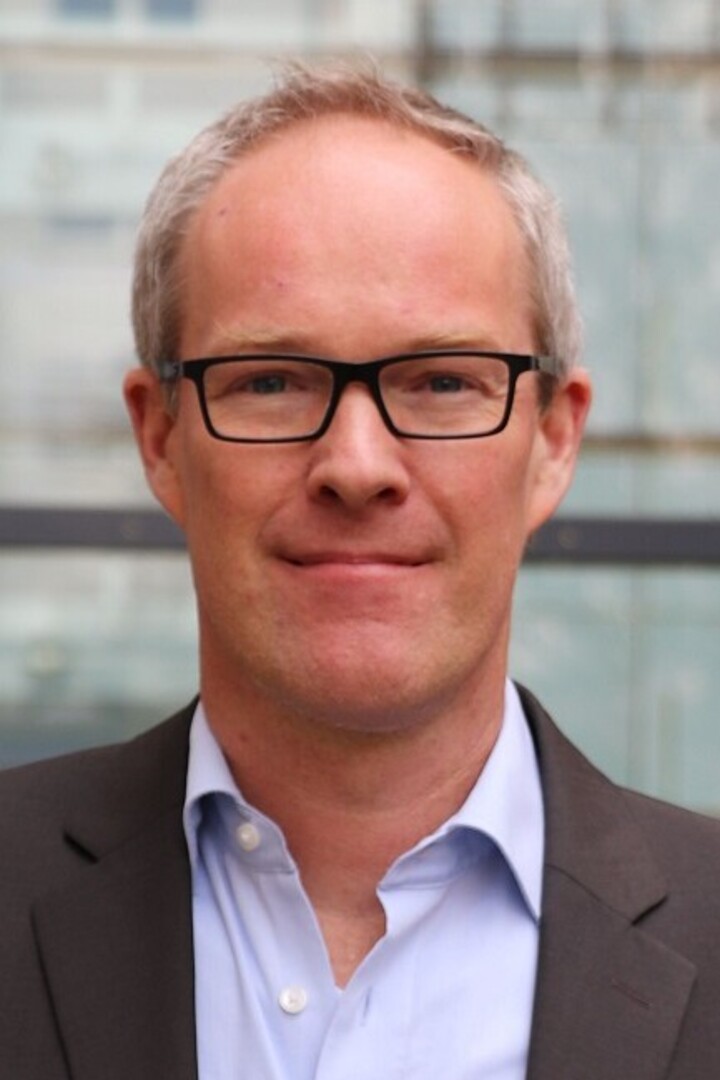
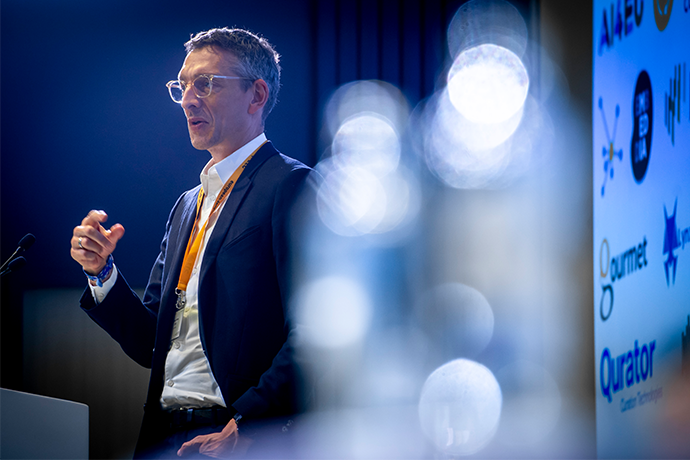
Professor Christian Bizer is a leading figure in web-based systems and data integration at the University of Mannheim , where he chairs Information Systems V: Web-based Systems . His research focuses on integrating data from multiple sources using large language models and LLM-based agents, with applications in product data extraction and DBpedia knowledge graph construction. He co-founded the DBpedia project and initiated the WebDataCommons initiative. Current research areas: Entity matching, schema matching, table annotation, information extraction, data discovery Key projects: WebMall benchmark, WInte.r integration framework, Schema.org analysis His work applies to e-commerce data integration and knowledge graph construction, with empirical studies on schema.org adoption. He supervises PhD students including Alexander Brinkmann and Ralph Peeters. Scientific Awards: Best Paper at iiWAS 2024 SWSA Ten-Year Award at ISWC 2019 Yahoo FREP Award 2015 Semantic Web Challenge winners Teaching includes courses on web data integration, web mining, large language models, and data mining for master's programs. He leads the DWS PhD colloquium and team projects on LLM agents for data integration.
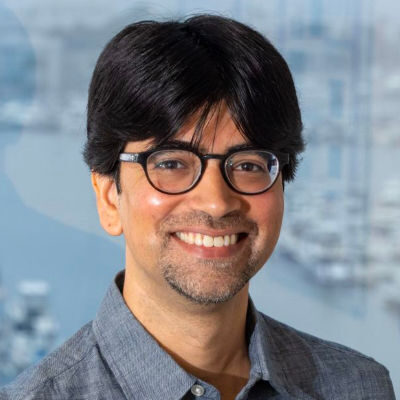
Madelon Hulsebos is a Researcher at CWI in Amsterdam, where she leads the Table Representation Learning (TRL) Lab and contributes to the Database Architectures group. She is also a faculty member of the European Laboratory for Learning and Intelligent Systems (ELLIS) Amsterdam unit. Her career bridges academia and industry, including a postdoctoral fellowship at UC Berkeley and prior industry experience in automating data analysis pipelines with ML. Education : PhD in Computer Science (University of Amsterdam, 2023), with research at Sigma Computing and MIT; Postdoctoral Fellow (UC Berkeley, 2024). Her research focuses on establishing tabular data as a key AI modality through Table Representation Learning , generative models for relational data, and robust systems for data analysis. Key interests include: Relational Table Embeddings LLMs for QA/text2SQL and data wrangling Retrieval over Data Lakes and Databases Agentic Systems for Data Science Democratizing insights from structured data Recent work highlights trends in benchmarking table retrieval (TARGET), semantic column detection (AdaTyper, Sherlock), and large-scale tabular data curation (GitTables, SchemaPile). These projects address challenges in metadata utilization, data lake search, and end-to-end systems for structured data. She has secured significant funding, including the NWO AiNed Fellowship Grant ($1M) for her 5-year DataLibra project. Madelon organizes workshops at NeurIPS , SIGMOD , and ACL , and reviews for top venues like VLDB and NeurIPS. Scientific Awards : NWO AiNed Fellowship Grant ($1M) She actively mentors students and collaborates on European AI initiatives, including monthly TRL seminars and workshops. Her lab's tools (GitTables, TARGET) are widely adopted for training foundation models on tabular data.
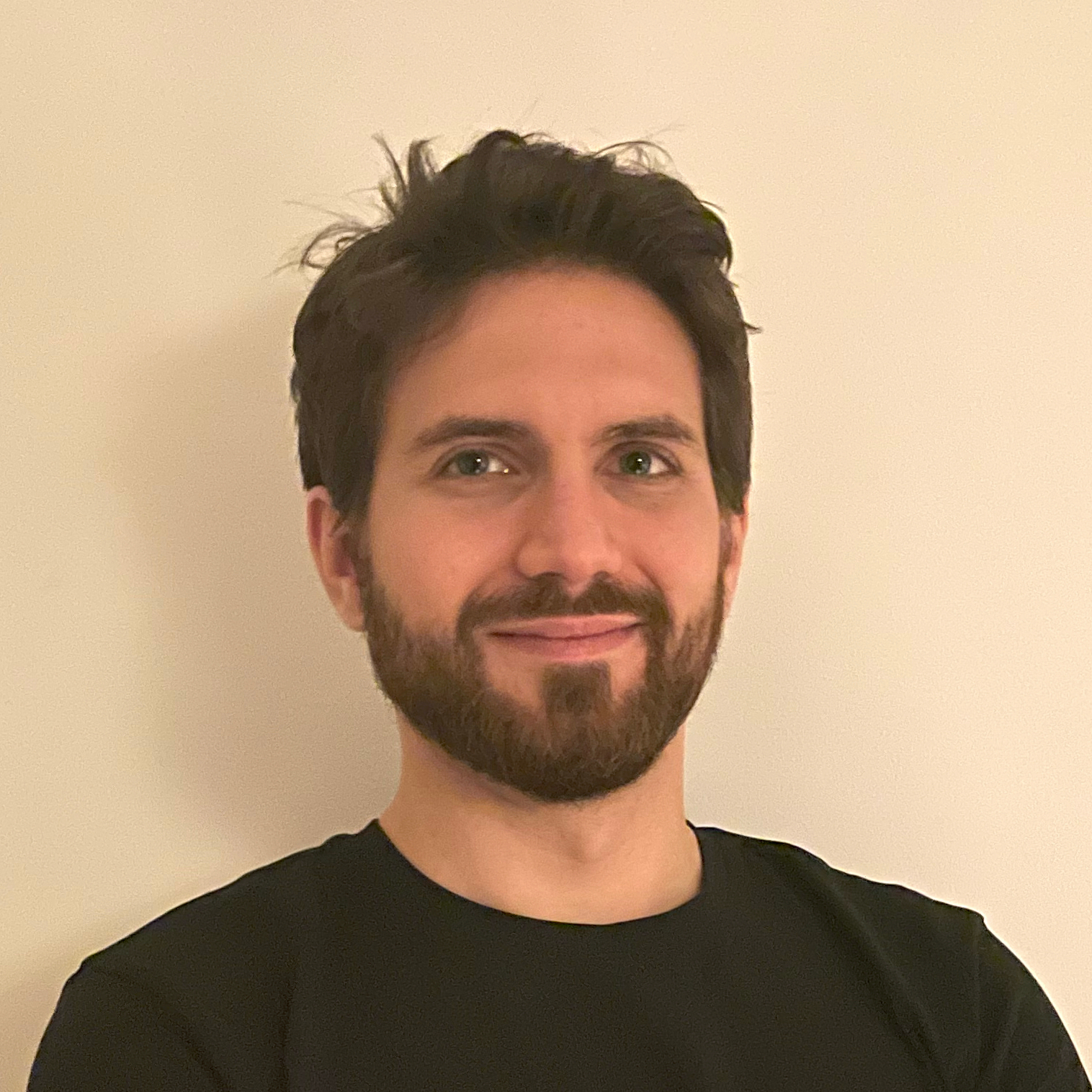
Jishen Zhao is an Assistant Professor in the Department of Computer Science and Engineering at the University of California, San Diego (Jacobs School of Engineering). His research focuses on computer architecture, non-volatile memory systems, and deep learning acceleration. Dr. Zhao has published extensively in top venues including ISCA, MICRO, ASPLOS, and IEEE Transactions. He collaborates with researchers at UCSD and beyond to advance systems for emerging applications in AI and autonomous vehicles. Dr. Zhao's primary research areas include persistent memory systems, hardware/software co-design for deep learning, and safety-critical computing. He develops techniques for crash consistency, memory disaggregation, and efficient neural network deployment. His work on autonomous vehicles addresses scenario generation and perception-aware system design. Recent projects explore LLM applications for software engineering and hardware verification. Analysis of Dr. Zhao's 2024-2025 publications reveals a strong shift toward AI-integrated systems research. He applies large language models to tasks like RTL verification and software issue localization while continuing to innovate in memory systems for serverless computing. There is growing emphasis on safety-critical systems for autonomous vehicles and energy-efficient neural network training using novel hardware architectures. Information about Dr. Zhao's scientific awards, advising activities, grants, and laboratory facilities was not available in the provided documentation.
Boris Murmann is Professor at Stanford University, specializing in integrated circuit design, mixed-signal computing, and energy-efficient AI hardware. His research advances neural interface technologies, analog design automation, and tinyML systems. Recent work develops ultra-low-power neural recording ICs for brain-computer interfaces, RRAM-based memory systems, and open-source semiconductor design frameworks. Publications demonstrate innovations in compressive sensing for neural data, hardware-algorithm co-design, and reinforcement learning for analog circuit synthesis. Significant contributions include Medusa (TinyML processor), EMBER (RRAM macro), and methodologies for coarsely-quantized computer vision and analog design automation.
Dr. Jay Pujara is a Research Associate Professor of Computer Science at the University of Southern California (USC) and Director of the Center on Knowledge Graphs. He is also a Principal Scientist at the Information Sciences Institute (ISI) and leads research teams in data science and AI. Ph.D., University of Maryland, College Park (2016) M.S. and B.S. in Computer Science, Carnegie Mellon University Research Interests include artificial intelligence, probabilistic models, knowledge graph construction, statistical relational learning, NLP, and streaming inference. His work focuses on scalable algorithms for big data and uncertainty modeling in dynamic environments. Recent Publications highlight advancements in knowledge graphs, LLM reasoning, and table understanding. Notable topics include non-verbal abstract reasoning , faithful conversational datasets , and KGQA re-ranking . Scientific Awards : SWSA Ten-Year Award (2023), Outstanding Paper (IUI 2019), Top Reviewer (NeurIPS 2018), Best Paper (SRL Workshop 2016) Advising & Grants : Mentored 12+ graduate students, including Ph.D. advisees on topics like causal modeling and neuro-symbolic tasks. Secured NSF funding for table understanding in paleoclimate studies.
Professor Alsayed Algergawy is the substitute for the Chair of Data and Knowledge Engineering at the University of Passau since April 2023. His work bridges semantic web technologies and machine learning to enable heterogeneous data integration across domains. Current focus areas: schema/ontology alignment, entity resolution, knowledge graph construction Active in DFG Collaborative Research Center AquaDiva (data lifecycle management) Domain applications: biodiversity, agriculture, energy His team develops hybrid strategies combining rule-based systems with ML techniques to extract value from both structured and unstructured data sources.
Birgitta König-Ries is a Professor at the Department of Computer Science, University of Jena, Germany. She is a leading researcher in semantic technologies, ontology engineering, and knowledge graph management for biodiversity and life sciences. Her work focuses on reproducibility, provenance tracking, and data integration using semantic approaches. Research Interests: Semantic Web, Ontology Engineering, Knowledge Graphs, Biodiversity Informatics, Reproducibility of Scientific Experiments Key Collaborations: Sheeba Samuel, Nora Abdelmageed, Samira Babalou, Alsayed Algergawy, Felicitas Löffler, Vamsi Krishna Kommineni Her recent publications emphasize automated knowledge graph construction, domain-specific language models (e.g., BiodivBERT), benchmarking semantic table interpretation (KG2Tables, BiodivTab), and tools for provenance management (MLProvLab, MLProvCodeGen). She contributes to FAIR data principles and interdisciplinary research, particularly in biodiversity and public administration transparency. Her work bridges theoretical advances with practical implementations, including open-access benchmarks (tFood, tBiodiv, tBiomed) and collaborative platforms like BiodivPortal and fusion-jena. Notable Tools & Benchmarks: BiodivBERT, KG2Tables, BiodivTab, MLProvLab, tBiodiv, tBiomed
Craig Knoblock serves as Keston Executive Director of the Information Sciences Institute (ISI) at the University of Southern California (USC), Vice Dean of the USC Viterbi School of Engineering, and Research Professor of Computer Science and Spatial Sciences. He also directs the Data Science Program and the Center on Knowledge Graphs at USC. His educational background includes a Ph.D. and M.S. in Computer Science from Carnegie Mellon University (1991, 1988) and a B.S. with honors in Computer Science from Syracuse University (1984). Knoblock's research focuses on data semantics , specializing in source modeling, schema and ontology alignment, entity and record linkage, data cleaning, Web data extraction, and knowledge graph construction. His work bridges computer science, geospatial analysis, and artificial intelligence to solve complex data integration challenges. Recent projects emphasize historical map digitization, geospatial knowledge graphs, and smart city applications. His 300+ publications demonstrate consistent contributions to knowledge graphs and geospatial data integration, with a growing emphasis on historical map analysis and urban applications. The research trajectory shows increasing interdisciplinary collaboration across computer vision, geoinformatics, and domain-specific applications. IEEE Fellow (2020) ACM Fellow (2017) AAAI Fellow (2004) Robert S. Engelmore Memorial Lecture Award (2014) Donald E. Walker Distinguished Service Award (IJCAI, 2018) Use-Inspired Research Award (USC Viterbi, 2018) As Executive Director of ISI, Knoblock oversees one of USC's premier research centers with significant federal funding. His leadership extends to directing the Center on Knowledge Graphs and the Data Science Program. While specific grant details aren't provided, his extensive publication record and leadership roles indicate substantial research funding across data integration, knowledge representation, and geospatial applications. His work bridges theoretical computer science with practical applications in historical preservation, urban planning, and resource management through collaborative projects with government agencies and industry partners. Knoblock leads the Center on Knowledge Graphs at USC, focusing on developing techniques for building and utilizing knowledge graphs across diverse domains. His team combines expertise in artificial intelligence, geospatial analysis, and data integration to tackle challenges in historical map digitization, urban applications, and resource discovery. The research group maintains strong connections with both academic and government partners through the Information Sciences Institute's extensive network.
Pierre Monnin is a Junior Fellow in AI at Université Côte d'Azur , conducting research within the Wimmics team at the I3S Laboratory . He also teaches within the EFELIA Côte d'Azur program. His work spans multiple institutions through funded projects like SHACKLE (EU Horizon), ECLADATTA and AT2TA (ANR), with collaborations at Télécom Paris , Università di Bari , and INESC-ID in Lisbon. Previous roles include temporary lecturer at TELECOM Nancy (2023-2024) and researcher at Orange (2020-2023). Research Interests focus on the knowledge graph lifecycle (construction, matching, refinement, mining, discovery) from neurosymbolic AI and analogical reasoning perspectives. He explores Domain knowledge injection into ML models Symbolic-semantics for graph embeddings Zero-shot bootstrapping techniques Context-aware semantic annotation Link prediction with constraint enrichment Life sciences applications Recent scientific awards include: Best Paper Award at ESWC 2024 (Student & Resource Papers) Best Thesis Award from French Association EGC (2022) 1st Prize (Accuracy Track) at Semantic Web Challenge (2021) His teaching portfolio covers AI fundamentals for foreign languages, marketing, and adult education programs, with specialized courses in Semantic Web technologies NoSQL databases XML tools Compiler implementation He supervises multiple PhD students and interns on topics involving neurosymbolic refinement , knowledge reconciliation , and analogical reasoning . Key software contributions include: KGPrune - Web application for thematic Wikidata subgraph extraction PyGraft - Synthetic knowledge graph generation tool DAGOBAH UI - Semantic table interpretation interface He also maintains datasets like PGxLOD and YAGO4-LP for pharmacogenomics and link prediction.
Felix Naumann is a Professor at the Hasso Plattner Institute in Potsdam, Germany, specializing in data management and database systems. His research focuses on data quality, data profiling, entity resolution, functional dependencies, and database optimization. He has authored over 300 publications in top-tier conferences and journals, including VLDB, SIGMOD, and ICDE. His work bridges theoretical foundations with practical systems, such as TASHEEH for data cleaning and PRISMA for privacy-preserving schema matching. He serves as an editor for the ACM Journal of Data and Information Quality and has led initiatives on hybrid conference formats and inclusive computing. Key contributions include: Data Quality: Pioneered studies on data quality's impact on machine learning and developed tools like AutoTSAD for anomaly detection. Data Dependency Discovery: Advanced functional and inclusion dependency mining algorithms, including Hitting Set Enumeration methods. Schema Matching & Integration: Created systems like BrewER and Frost for entity resolution and schema alignment. Educational Impact: Led massive open courses in data engineering with over 10,000 participants. His work emphasizes practical applications in cultural heritage data (ReCLAIM), Wikipedia table analysis, and cross-platform data systems (RHEEMix). He collaborates extensively with industry and academia, addressing challenges in dynamic datasets and data governance.
Univ.-Prof. Dr.-Ing. habil. Volker Rodehorst is a full professor of computer vision at Bauhaus-Universität Weimar, holding positions in both the Faculty of Media and Faculty of Civil Engineering. His research focuses on photogrammetric computer vision, image analysis, 3D reconstruction, and structural health monitoring with applications in civil infrastructure inspection and urban modeling. He leads projects like ev.AI.luate and InfraCloud, leveraging AI and UAS technologies for infrastructure assessment. Education: PhD (2003): Technical University of Berlin, Faculty of Civil Engineering & Applied Geosciences Habilitation (2013): TU Berlin, Faculty of Electrical Engineering & Computer Science Computer Science Diploma (1994): TU Berlin Research Interests: UAS-based structural inspection using multi-view stereo and deep learning Crack detection and segmentation in concrete structures Automated building age estimation for energy modeling Flight path planning optimization for complex structures Integration of computer vision into BIM workflows Publications: Recent work emphasizes robust algorithms for crack detection (Omnicrack30k benchmark), UAS flight path optimization, and semantic segmentation challenges in bridge inspections. Key contributions include MVCrackViT and CISOL datasets advancing structural analysis methodologies. Awards: Best Academic Performance Prize (1994) - TU Berlin ISPRS Presidential Citation (2008) for WG III/2 leadership Grants & Labs: Leads Bauhaus' 3D-RealityCapture-ScanLab and coordinates EU projects like AISTEC-PRO. Active in developing modular solutions like smoodPLAN for infrastructure inspection. Teaching: Offers courses in photogrammetric computer vision, geodesy, and parallel systems. Supervises PhD students in structural health monitoring and computer vision.
Georg Rehm is an Honorary Professor for Computational Linguistics and Language Technology at Humboldt University Berlin and a Principal Researcher at the German Research Center for Artificial Intelligence (DFKI) in Berlin, where he serves as Deputy Director of the DFKI Lab Berlin. He is also the Head of the German-Austrian Chapter of the World Wide Web Consortium (W3C) based at DFKI Berlin. Rehm has over 300 scientific publications and extensive experience in leading major research projects in computational linguistics and language technology. His research focuses on Natural Language Processing, Computational Linguistics, and Artificial Intelligence, with specific interests in multilingual language technologies, semantic web, digital humanities, and language data spaces. He has led numerous significant projects including European Language Grid, OpenGPT-X, and NFDI4DataScience. Rehm is particularly active in initiatives promoting digital language equality in Europe by 2030. Rehm's recent work demonstrates a strong focus on large language models, scholarly document processing, scientific knowledge representation, and climate-related fact-checking systems. His publications span across multiple high-impact venues including ACL, ESWC, and LREC, with a notable emphasis on practical applications of language technology in real-world scenarios. DFKI Research Fellow (2018) As an active member of the academic community, Rehm regularly serves as an expert for the European Parliament, reviews EU projects, and organizes numerous scientific conferences and workshops. His leadership extends to multiple European initiatives aimed at advancing language technology infrastructure and promoting digital language equality across Europe.
Elena Simperl is a Professor at King's College London, UK, with former affiliations at the University of Southampton and Karlsruhe Institute of Technology. Her work focuses on knowledge graphs, semantic web technologies, and AI-driven data management. She leads research in collaborative knowledge engineering, dataset search, and AI ethics, contributing to projects like the TheyBuyForYou platform for public procurement transparency. Her research interests span knowledge representation, crowdsourcing, and human-AI collaboration. Notable contributions include advancing methods for knowledge graph construction, improving data quality via crowdsourced and automated approaches, and exploring the societal impact of AI systems. She has co-edited major conferences such as ISWC and ESWC, and her work bridges technical innovation with practical applications in public policy and information systems. Key projects include developing frameworks for dataset usability, AI-ready data infrastructure, and systems for fact-checking visual content. Her collaborations span academia and industry, addressing challenges in data governance, misinformation detection, and ethical AI deployment.
Jayant Madhavan is a researcher at Google specializing in database systems, web data extraction, and information integration. His work primarily focuses on extracting structured data from the web, schema matching, and developing techniques for managing and visualizing large datasets, particularly through projects like Google Fusion Tables and WebTables. Madhavan's research interests center around the challenges of working with web data. His work explores methods for extracting structured information from unstructured web content, particularly focusing on tables and lists. He has made significant contributions to the field of schema matching, developing techniques that enable integration of data from diverse sources. His research also extends to geospatial data processing and visualization, where he has developed algorithms for efficiently handling large geographical datasets for map visualization. His publication record shows a consistent focus on practical applications of database research to web-scale problems. The evolution of his work demonstrates a progression from foundational research on schema matching and data integration to applied work on Google products like Fusion Tables, which enable non-experts to work with structured data. His most recent work examines the ecosystem of structured data on the web and how to effectively extract and utilize this information. Madhavan has collaborated extensively with Alon Y. Halevy (43 co-authored papers) and other researchers at Google, forming a core group that has advanced the state of the art in web data management. His work bridges theoretical database research with practical applications, making significant contributions to both academic literature and real-world data management systems.
Sebastián Ferrada is an Assistant Professor at the Data & Artificial Intelligence Initiative of Universidad de Chile. He also serves as Young Researcher at the Institute for Foundational Research on Data (IMFD) and Collaborating Researcher at the National Center for Artificial Intelligence Research (CENIA). His research focuses on Knowledge Graphs, with special emphasis on extraction, management, and applications for querying, browsing, and AI systems. His academic background includes: PhD in Computer Science (2021), Universidad de Chile MSc in Computer Science (2017), Universidad de Chile BEng in Computer Science (2017), Universidad de Chile Sebastián's research explores several key areas: Multimedia Databases with applications to Wikimedia Commons images Graph Databases and Knowledge Graphs construction Federated Data Management across heterogeneous RDF sources SPARQL query extensions for similarity-based operations Graph data management and compression techniques His recent publications demonstrate strong trends in knowledge graph construction, similarity-based querying, and efficient graph data management. These works combine theoretical advancements with practical implementations in real-world systems like IMGpedia and MillenniumDB. Scientific achievements include: Best Paper Award at CoopIS 2023 Best Demonstration Award runner-up at SIGMOD/PODS 2024 Best Student Paper (Resources Track) and Best Poster at ISWC 2017 First prize in CLEI 2017 for his Master's thesis Sebastián currently leads the Fondecyt project on graph data management and contributes to the U-Inicia project on AI processes in graph databases. He serves on the editorial board of Transactions on Graph Data and Knowledge.