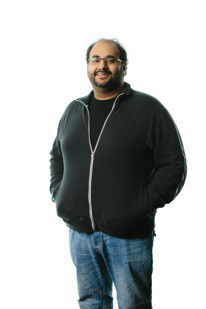
Hadi Esmaeilzadeh is an Associate Professor at the University of California, San Diego in the Department of Computer Science and Engineering . He previously served as an Assistant Professor at Georgia Tech (2013-2017) and holds the Halicioğlu Chair in Computer Architecture . As founder/director of the Alternative Computing Technologies (ACT) Laboratory and associate director of UCSD's Center for Machine Integrated Computing and Security (MICS) , his research drives cross-stack solutions for next-generation computer systems. Early tenure recipient at UCSD Coined the term "dark silicon" in computer architecture Developed Tabla/DnnWeaver open-source frameworks Research Interests span: Approximate Computing Neural Acceleration FPGA/ASIC Hardware Design Machine Learning Systems Dark Silicon Challenges Security/Privacy in Accelerated Systems Scientific Recognition : 4 CACM Research Highlights 4 IEEE Micro Top Picks Distinguished Paper Award (HPCA 2016) Inducted to ISCA Hall of Fame (2018) Teaching : Developed courses on accelerator design (CSE 240D) and alternative computing (CS 8803 ACT) Advocates for hands-on FPGA-based learning in Processor Design with FPGAs courses
Hadi Esmaeilzadeh is an Associate Professor at the University of California, San Diego in the Department of Computer Science and Engineering . He leads the Alternative Computing Technologies (ACT) Laboratory and serves as Associate Director of the Center for Machine Integrated Computing and Security (MICS) . Previously, he was an Assistant Professor at Georgia Institute of Technology. Ph.D., Computer Science and Engineering, University of Washington (2013) Research focuses on computer architecture , machine learning acceleration , and approximate computing His work has produced 15+ publications spanning IEEE Micro Top Picks , CACM Research Highlights , and ISCA . Key projects include: Tabla : Cross-stack ML acceleration framework DnnWeaver : Open-source DNN acceleration platform Major honors include: IEEE TCCA Young Computer Architect Award ISCA Hall of Fame Qualcomm Innovation Fellowship Georgia Tech PURA Award Teaching roles: CSE 141: Introduction to Computer Architecture CSE 240D: Accelerator Design for Deep Learning CSE 240A: Principles of Computer Architecture
University of California, Los AngelesUnited States
Abhiman Kaushal serves as an Adjunct Assistant Professor in the Department of Ethnomusicology at the University of California, Los Angeles (UCLA). He has been on the faculty at UCLA since 1998, where he teaches tabla to students across the campus. As Co-Director of the Music of India Ensemble, Kaushal plays a significant role in UCLA's ethnomusicology program, bringing his extensive performance experience into the academic setting. Professor Kaushal specializes in Indian classical music, particularly as a master tabla artist representing the Farukkabad, Lucknow, and Ajrara gharanas (schools) of tabla. His research interests encompass the theoretical and practical dimensions of Hindustani classical music, rhythmic structures in Indian music, cross-cultural musical collaborations, and the role of percussion in traditional and contemporary musical contexts. His work bridges performance practice with academic study, focusing on how traditional Indian musical forms interact with global musical traditions. Kaushal's lineage as a musician informs his scholarly approach, having been initiated by his father R.B. Kaushal and trained by renowned masters including Ustad Sheikh Dawood and Pandit B. Nandkumar. Analysis of Kaushal's creative outputs reveals a consistent trajectory of blending traditional Indian musical forms with contemporary global expressions. His work spans traditional classical performances, cross-cultural collaborations, documentary soundtracks, and innovative theatrical productions. The recordings demonstrate increasing experimentation with fusion elements while maintaining deep respect for traditional tabla techniques. His Grammy-winning work with White Sun represents the culmination of decades of artistic development, merging yogic traditions with contemporary musical sensibilities. Kaushal has received significant recognition for his musical contributions, most notably a Grammy Award for his work on White Sun II in the New Age Music category. His recording Delbar/Saffron , created with Ustad Shujaat Khan and Katayoun Goudarzi, was short-listed for a Grammy nomination. These accolades highlight his standing as a respected figure in both traditional Indian music and contemporary cross-genre collaborations. As an educator, Kaushal has mentored numerous students in the art of tabla playing at UCLA. His teaching approach combines rigorous technical training with deep cultural understanding, passing on traditions he learned from his father R.B. Kaushal and renowned teachers including Ustad Sheikh Dawood and Pandit B. Nandkumar of Hyderabad. His performances with legendary artists such as Ravi Shankar, Zakir Hussain, and Hari Prasad Chaurasia provide rich experiential knowledge that informs his pedagogy. Kaushal's international performance career, spanning venues across five continents, has established him as a globally recognized tabla artist who bridges academic scholarship with professional artistry.
Bhupinder Singh Chaggar is the Deputy Head of the School of Music Production and Events at Leeds Conservatoire. He has been affiliated with the institution since 1997, where he studied Music Technology and has taught Tabla. His expertise spans Indian Classical Music, Tabla performance, and modern music production. Educations: BSc Hons, PGCE. His research interests focus on traditional Benares Gharana Tabla techniques, fusion music collaborations, and innovative music technology applications. He has worked extensively in live sound engineering, film scoring, and app development, including projects with The Halle orchestra and Tollywood/Bollywood composers. Notable collaborations include partnerships with Craig Golding (studio/live production) and Girishh G (film scores). Bhupinder has also conducted workshops and masterclasses across the UK, emphasizing skill transfer in music production and performance. Labs/Teams: Active in collaborative projects with industry professionals, focusing on bridging classical and contemporary music through technology.
Navin Chettri is a Lecturer of Music at the Lionel Hampton School of Music, University of Idaho, where he also serves as Manager of the Lionel Hampton Jazz Festival and ACMS, and Artistic Director of the World Music Celebration. He holds both a Master of Music and Bachelor of Music in Percussion Performance & Composition from the same institution. His research and creative interests center on jazz, world music, percussion performance, and cross-cultural fusion . As a performer and composer, he blends Western jazz with global traditions from Nepal, India, Brazil, West Africa, and the Americas, creating innovative musical forms such as 'Tabla Forro' and 'The Himalayan Duo.' The trends in his creative output reflect a deep engagement with cultural hybridity, improvisation, and global jazz networks , emphasizing collaboration across continents and traditions. His work often explores the intersection of traditional rhythms and contemporary jazz sensibilities. His accolades include: Best Pop/Rock Composition, Hits FM Music Awards (2014) Best Pop/Rock Album of the Year, Hits FM Music Awards (2014) Chettri has mentored students through ensemble instruction and studio courses at the University of Idaho and has taught jazz percussion at Washington State University. He has led major grant-funded initiatives through festival management and international artistic projects, though specific grants are not detailed. He leads the Cadenza Collective and has founded key festivals including Jazzmandu and Drum Jatra in Nepal. He is actively involved in global music labs and ensembles, including: Cadenza Collective (Nepali Afro-Funk) Goonj (Nepali folk-jazz fusion) NepaMali (Swiss-Nepali collaboration) Tabla Forro (Brazilian-Indian fusion) The Himalayan Duo (jazz-sitar ensemble)
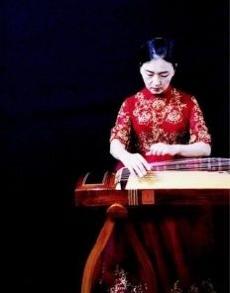
Wei Chi Vicky Su is a Lecturer at the University of Calgary and founder/president of the Alberta Chinese Zither Association. She holds a Master of Education in Educational Leadership and a degree in Chinese GuZheng Music from National Taiwan University of Arts. Her career spans music education, performance, and cultural promotion. Key affiliations include: University of Calgary (Lecturer) Chinese School of Calgary (Principal) Broadcasting Corporation of China (Principal GuZheng Performer, pre-1997) Research and professional activities include: Global promotion of Chinese GuZheng music through performances in Germany, Hungary, Australia, Singapore, Canada, and the USA Collaborative performances blending GuZheng with Sitar and Tabla (2019 Moon Festival) Adjudication of national high school music auditions in Taiwan Interdisciplinary work integrating music, cultural studies, and education Personal pursuits involve studying religion, philosophy, Chinese literature, meditation, and Cha Dao (The Way of Tea).
Dr Alice Barron serves as Lecturer in Music at Hertford & Somerville Colleges and Organising Tutor in Music at Somerville College, University of Oxford. A violinist-composer based in London, she maintains an active international career across contemporary and intercultural music performance and composition. Her educational background includes a Master's degree with distinction from the Royal Academy of Music, London (2012) and a Doctorate from the University of Oxford (2020) investigating cultural exchange in artistic practice. Supported by the Finzi Trust (2020) and SEMPRE (2017), her research examines creative collaboration between UK and South Indian musical traditions. Barron's work occupies the intersections of classical, folk and experimental musics, using improvisation as a primary compositional methodology. She draws inspiration from cross-cultural dialogues spanning Syria, Palestine, Ghana, India, Norway and London's artistic communities, with particular focus on Karnatic violin traditions through extensive study with the Mysore Brothers. Her practice integrates storytelling, dance (Kathak), and interdisciplinary experimentation while exploring ancient melodies and folk narratives. Her notable recognition includes the Kennedy-Kolodziejski Award (2019). Project funding has been secured through PRS Foundation's Open Fund for album production and SEMPRE/Finzi Trust grants for South Indian musical research. Barron leads the iyatraQuartet—whose album Break the Dawn received BBC Radio 3 and Jazz FM airplay—and collaborates across diverse artistic contexts including Himali Singh Soin's Third Pole exhibition, WOMAD festivals, Shakespeare's Globe productions, and ongoing work with sitar/tabla ensembles and storyteller Vayu Naidu.
Prof. Dr. Dragana Bogavac is a Full Professor at Singidunum University and Faculty of Teachers in Belgrade, with additional appointment as Visiting Professor at Pedagoški fakultet 'Sv. Kliment Ohridski' in Skopje. She holds a PhD in Pedagogy from the University of Pristina and has dedicated her career to educational research and quality assurance. Full Professor at Singidunum University Full Professor at Faculty of Teachers, Belgrade Visiting Professor at Pedagoški fakultet 'Sv. Kliment Ohridski', Skopje Reviewer for higher education accreditation (Republic of Serbia and Republic of Srpska) Member of Balkan Association for Pedagogy and Education (BASOPED) Her educational background includes undergraduate, master's, and doctoral studies in Pedagogy from the Philosophy Faculty of the University of Pristina (1984-2007). She has been instrumental in developing educational standards and participating in significant national and international projects focused on educational quality and teacher training. Prof. Bogavac's research spans multiple dimensions of education, with particular emphasis on preschool and primary education quality, teacher competencies, and educational policy. Her work demonstrates a consistent focus on practical applications of educational theory to improve classroom practices and institutional frameworks. She has made significant contributions to understanding the relationship between educational quality and various factors including teacher characteristics, parental involvement, and extracurricular activities. Analysis of her recent publications reveals a clear trajectory toward comprehensive educational quality frameworks, with increasing attention to comparative studies across Balkan countries and the integration of digital technologies in education. Her research shows strong interdisciplinary connections between pedagogy, psychology, and social sciences, reflecting a holistic approach to educational challenges. Zlatna tabla award at International Fair of Equipment and Means for Modern Teaching (2006) Stojan Novaković award (2008) Prof. Bogavac has been deeply involved in educational projects and committees shaping Serbian educational policy. She participated in the project 'Concepts and strategies for ensuring the quality of basic education and upbringing' (2011-2021) and served on multiple working groups developing educational standards and preschool programs. She has been a reviewer for higher education institutions and programs in Serbia and Republic of Srpska, and has contributed to UNESCO programs focusing on special needs education. Her professional activities include being a member of the University Council in Belgrade since 2003 (two mandates) and active participation in international educational initiatives. She is actively engaged with multiple educational teams and centers, including L'imagination center for developing children's creative abilities and the Balkan Association for Pedagogy and Education (BASOPED), where she contributes to regional educational development and knowledge sharing.
Paul Frehner is an Associate Professor at the Don Wright Faculty of Music , Western University . As a contemporary composer and Director of CEARP (Western's electroacoustic music production studio), he bridges traditional composition with cutting-edge electronic music technologies. His research interests focus on: Existential and environmental themes in concert music Hybrid electroacoustic and acoustic composition Avant-garde orchestration and chamber ensemble writing Interdisciplinary collaborations with filmmakers and visual artists Contemporary opera/oratorio development Innovative approaches to live electronics integration Recent compositions demonstrate his expertise in diverse formats including vocal works, string orchestra pieces, and multimedia collaborations, with premieres across North America and Europe. His work has been featured by major ensembles like: New Juilliard Ensemble Esprit Orchestra Soundstreams Canada Stuttgart Chamber Choir Toronto Symphony Orchestra Montreal Symphony Orchestra Scientific awards include: K.M. Hunter Artist Award (2012) Claude Vivier National Award (2007) Multiple international competition prizes Genesis Prizes for Opera finalist OAC nomination for Johanna Metcalf Prize As Director of CEARP , he leads Western University's state-of-the-art electroacoustic music production initiatives, fostering innovation in: Fixed-media composition Live electronic performance Sound design for multimedia Contemporary music technology education
Daniel Piccolo is an Associate Professor of Percussion and Director of Percussion Activities at Bowling Green State University’s College of Musical Arts. He specializes in chamber music, solo performance, jazz drumming, and global music traditions, including Indian tabla and West African rhythms. His academic roles include teaching, ensemble direction, and editorial work for the Percussive Notes journal. He holds a DMA and BM in Percussion Performance from the University of Michigan, with jazz improvisation studies. Affiliations: Percussive Arts Society (PAS), Ohio Chapter President; Cooperman Frame Drums, Zildjian Cymbals, and Pearl/Adams endorsements. Research interests span percussion performance practices, cross-cultural musical traditions, and new music commissioning. Notable achievements include the world premiere of Evan Ziporyn’s Impulse Control (2019) and the edited publication Swing Variations on 'The Downfall of Paris' (2024). He has received grants from the Presser Foundation and University of Michigan International Institute. Grants & Awards: Grammy Signature School recognition (via Pioneer High School); PAS International Convention clinician (multiple terms). Performance highlights include collaborations with Third Coast Percussion, John Scofield, and the Toledo Symphony Orchestra. He leads educational initiatives, including Percussion Activities at BGSU and prior roles at University of Tennessee at Martin and New England Music Camp.
Sameer Dayanand Meshram is a Researcher at KU Leuven's Manufacturing Processes and Systems (MaPS) unit in Leuven, Belgium, specializing in additive manufacturing with particular expertise in laser powder bed fusion and lattice structure characterization. His research focuses on understanding the mechanical behavior of complex 3D-printed metallic structures. His primary research interests include: Additive Manufacturing - Metal 3D printing technologies and process optimization Laser Powder Bed Fusion - Parameter development and material behavior analysis Lattice Structure Characterization - Mechanical properties of cellular structures Materials Science - Titanium alloys for high-performance applications Mechanical Engineering - Structural integrity and fatigue behavior His recent publication examines the fatigue behavior of Ti-6Al-4V diamond lattices, providing critical torsional and axial tension/compression data that advances understanding of how these complex structures perform under stress. This work has significant implications for lightweight design applications in aerospace, automotive, and medical device industries where weight reduction while maintaining structural integrity is essential. Dr. Meshram brings diverse international experience from nine cities across Europe, South Asia, and North America, having previously served as a Project Scientist at IIT Delhi, Mechanical Design Engineer at Tesla, Volkswagen, and other major companies, and as a Teaching Assistant at the University of Washington - Seattle. His interdisciplinary background combines industrial engineering practice with academic research. Outside his primary research focus, he maintains interests in Asian art and culture (particularly India/Pakistan), Economics, and Political Science. He is an amateur investor, Tabla player, and currently mentors early to mid-stage technology startups, believing that 'an interdisciplinary knowledge base is the key to solving highly complex problems.'
Peter Kvetko, Ph.D., is a Professor in the Music and Dance Department at Salem State University since 2007, with prior appointments at Tufts, Wellesley, Brandeis, Northeastern, and the University of Texas at Austin. Holding degrees in English (B.A.) and Ethnomusicology (M.Mus., Ph.D.), he teaches courses ranging from world music to rock history while directing the World Music Ensemble. His research focuses on North Indian popular music cultures, particularly Mumbai's music industry dynamics. He actively performs Javanese gamelan with Gamelan Laras Tentrem and traditional Shona music with Samanyanga Mbira Group, integrating performance practice with academic inquiry. Peter Kvetko's publications explore topics like musical mimesis, globalization of Indian music, and film soundtrack intertextuality. His work bridges academic analysis with practical engagement through teaching sitar, tabla, and mbira, reflecting a commitment to both scholarly and embodied understanding of global music traditions.
Shawn Mativetsky is a Course Instructor (Percussion) and Course Lecturer in the Department of Music at McGill University's Schulich School of Music. He is a leading exponent of the tabla and pioneer in bridging Indian classical music with Western traditions. Based in Montreal, he teaches percussion and promotes tabla through workshops, lectures, and performances globally. His research focuses on cross-cultural music collaboration, electronic music integration with traditional instruments, and music education. Notable projects include the album Rivers (2017), rooted in Benares tabla tradition, and Temporal Waves (2024), exploring tabla with electronic effects. He has commissioned over 50 new works for tabla and developed a standardized notation system with composer Payton MacDonald. Mativetsky has performed worldwide at festivals like the Pharos Contemporary Music Festival (Cyprus) and Sound Symposium (Canada). He collaborates with ensembles such as the Attar Project and trio Mativetsky, Amiri & Pagé. His work spans theater (Geordie Theatre’s Brahm and the Angel), dance accompaniment (kathak and Odissi), and interdisciplinary projects blending technology with traditional music. As an educator, he hosts annual summer tabla workshops at McGill and lectures globally at institutions including Yale, University of Nottingham, and Université de Montréal. His book Rudimentaal (2017) features snare drum compositions inspired by North Indian tabla techniques.
John Myers is a Professor in the Division of the Arts at Bard College at Simon's Rock, specializing in jazz composition, ethnomusicology, interactive arts, and world music. His work bridges Western classical traditions with global influences, notably in cross-cultural projects like The West Lake Cycle (2012 Alice Parker Award winner) and animations for orchestral works. Myers composes and performs extensively, with recordings such as Look In and collaborations with ensembles like Crescendo and Winds in the Wilderness. His research includes Chinese lute music ( Way of the Pipa ) and technology-mediated music education ( Tabla CD-ROM). Current projects focus on community-engaged performances integrating jazz, gospel, and Baroque elements, emphasizing audience participation and improvisation. He mentors students in bimusicality but lists no formal advisees.
Alex Marthaler is an Artist Lecturer in Music Theory at Carnegie Mellon University's School of Music and Director of the Music Pre-College Program. He holds a BA from West Chester University and an MA in Music Composition from Carnegie Mellon University (2016). His work blends global musical traditions with spatial and structural inspirations, incorporating elements from Indian classical music (via tabla studies) and Eastern European folk traditions. Teaching roles include group music classes for children at CMU Prep-School emphasizing composition, improvisation, and storytelling, as well as piano accompaniment for dance at CMU School of Drama and Point Park University. Collaborations include a 2017 dance piece with choreographer Rubén Graciani and incidental music for Sarah Ruhl's play Eurydice . Key compositions highlight spatial concepts (e.g., Concrete Cathedals exploring urban architecture) and rhythmic fusion. His pedagogical approach integrates interdisciplinary creativity, reflecting his dual focus on performance and education.