Mike Kosek (Dr. rer. nat.) is a Research Fellow at the Chair of Connected Mobility (Department of Informatics) at the Technical University of Munich (TUM). His research focuses on transport protocols, congestion control, internet architecture, and internet measurements. Research Interests: Transport protocol design and analysis Congestion control mechanisms Internet architecture and measurement Network performance optimization DNS protocol behavior and privacy Applications in satellite and aerial communication Recent Research Trends: His publications emphasize QUIC protocol analysis, DNS over QUIC investigations, cross-layer protocol interactions, and satellite communication adaptations. Key methodologies include real-world measurements, protocol design extensions, and dataset creation for reproducibility. Contact: E-mail: kosek@in.tum.de Phone: +49 89 289-18665 Office: 01.05.038, Boltzmannstr. 3, 85748 Garching
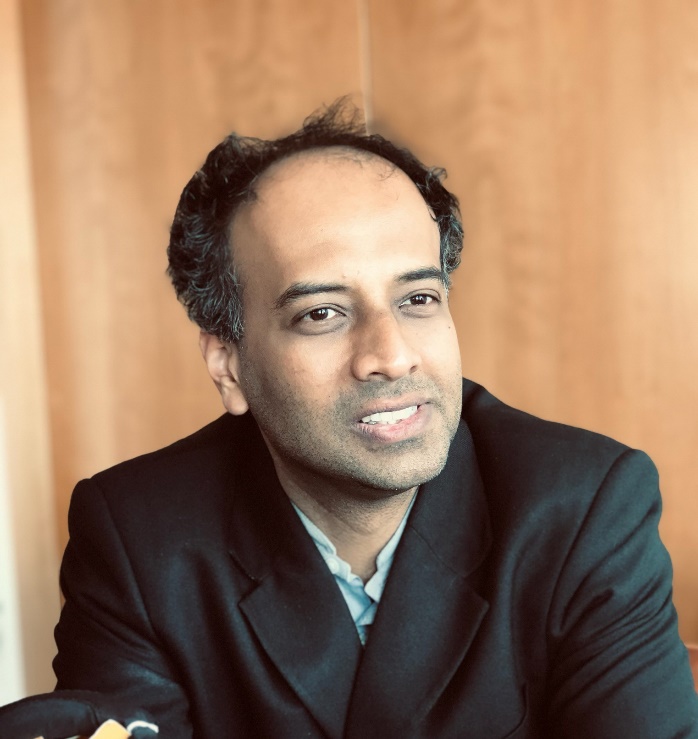
Krishna Jagannathan is a full-time Professor in the Department of Electrical Engineering at the Indian Institute of Technology Madras (IIT Madras), India. He specializes in stochastic modeling, communication networks, information theory, and queuing theory. He obtained his B.Tech from IIT Madras in 2004, followed by S.M. and Ph.D. degrees from MIT in 2006 and 2010, respectively. After post-doctoral positions at Caltech and MIT, he joined IIT Madras in 2011. Education: B.Tech in Electrical Engineering, IIT Madras (2004) S.M. in Electrical Engineering and Computer Science, MIT (2006) Ph.D. in Electrical Engineering and Computer Science, MIT (2010) Research Interests: His research focuses on stochastic modeling and analysis of communication networks , information theory , and queuing theory . He has made significant contributions to understanding network performance, resource allocation, and risk-aware decision-making in complex systems. He leads the Networks and Stochastic Systems lab at IIT Madras, mentoring a large cohort of Ph.D. and M.S. students working on cutting-edge problems in networking, optimization, and stochastic systems. Scientific Awards: Best Paper Award at WiOpt 2013, Tsukuba, Japan Young Faculty Recognition Award for Excellence in Teaching and Research, IIT Madras (2014) Teaching & Mentorship: He has taught a wide range of courses including Probability Foundations , Stochastic Modeling and Queuing Theory , Convex Optimization , and Signals & Systems , consistently receiving high teaching evaluations. He has supervised over 15 Ph.D. and M.S. students to completion and continues to guide several active researchers.
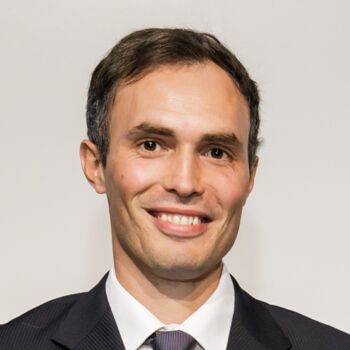
Oliver Gasser is a researcher at the Max Planck Institute for Informatics (MPI-INF) and the Technical University of Munich (TUM), where he has co-lectured courses such as Advanced Computer Networking and Master Course Computer Networks. His research focuses on Internet measurement, security, and privacy, with a strong emphasis on IPv6, DNS, BGP, and web tracking technologies. His research interests include Internet measurement, IPv6 deployment, BGP security, DNS infrastructure, web tracking, privacy technologies, and network resilience. He has made significant contributions to understanding IPv6 hitlists, router fingerprinting, hypergiant content delivery networks, and consent banner manipulation on the web. His work combines large-scale active measurements with data analysis to uncover systemic issues in Internet infrastructure and privacy practices. The recent publications highlight a consistent focus on measurement-driven research across networking, security, and privacy. Trends include analyzing IPv6 adoption patterns, detecting covert tracking mechanisms in web cookies, evaluating security of Internet protocols like DNS and BGP, and improving measurement methodologies for large-scale network studies. His work often involves developing open tools and datasets that advance reproducibility in networking research. PAM 2023 Best Paper Award TMA 2023 Best Paper Award TMA 2023 Fast Track Award PAM 2018 Best Paper Award IRTF Applied Networking Research Prize 2018 IMC 2017 Community Contribution Award TMA 2017 Best Dataset Award CoNEXT 2023 Community Contribution Award Oliver Gasser has advised or co-advised over 40 master’s and bachelor’s theses at MPI-INF and TUM, demonstrating strong mentorship in academic research. He has led several measurement projects that have received external funding, including development of the IPv6 Hitlist Service and tools for analyzing web tracking. His community service includes extensive participation in program committees for major networking conferences such as IMC, CoNEXT, PAM, and TMA. He leads and contributes to several open research initiatives including the IPv6 Hitlist Service, SNMPv3 Measurement Service, MPTCP Measurement Service, DNS Observatory, and the BannerClick tool for automated cookie banner interaction. These platforms provide valuable resources for the global networking research community and support reproducible science.
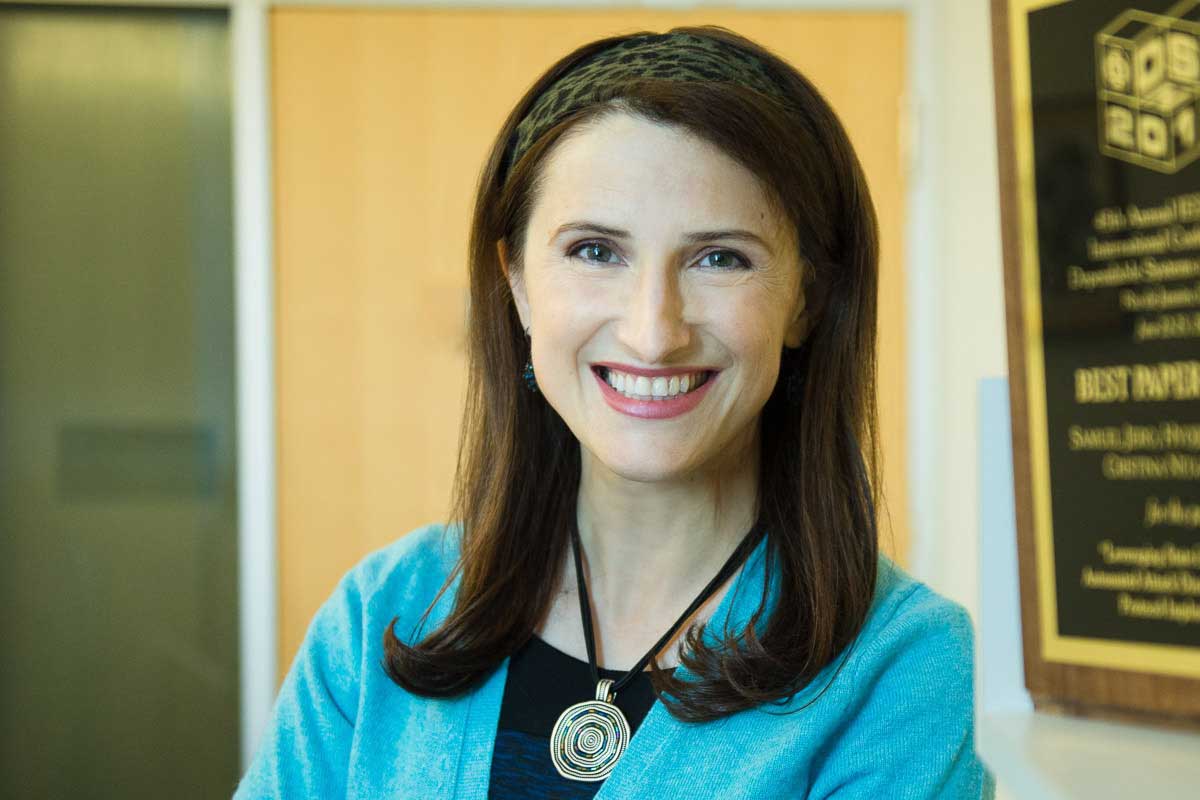
Cristina Nita-Rotaru is a tenured Professor of Computer Science at Northeastern University's Khoury College of Computer Sciences , where she leads the Network and Distributed Systems Security Laboratory (NDS2) and is a founding member of the Cybersecurity and Privacy Institute . Previously, she was a faculty member at Purdue University from 2003 to 2015. Education: Ph.D. in Computer Science from Johns Hopkins University M.S. in Computer Science from Politehnica University of Bucharest , Romania Research Focus: Her research lies at the intersection of cybersecurity , distributed systems , and computer networks . She designs and builds resilient distributed systems and network protocols that maintain security, availability, and performance despite faults, misconfigurations, and attacks. Her work integrates formal methods , adversarial testing , blockchain security , and trustworthy AI . Funding & Impact: Her research has been supported by NSF , DARPA , ONR , Google , Ethereum Foundation , and others. She has received numerous awards, including the NSF CAREER Award (2006) and multiple best paper awards at top venues like NDSS , ACM CCS , and IEEE S&P . Scientific Awards: NSF CAREER Award (2006) NETYS 2023 Best Paper Award ACM SACMAT 2022 Best Paper & Test-of-Time Awards IEEE SafeThings 2019 Best Paper Award NDSS 2018 Best Paper Award ISSRE 2017 Best Paper Award DSN 2015 Best Paper Award IETF/IRTF Applied Networking Research Prize (2016, 2018, 2025) Purdue College of Science Research Award (2013) Purdue Excellence in Research Award (2012) Purdue College of Science Leadership Award (2012) Purdue College of Science Undergraduate Advising Award (2008) Purdue Teaching for Tomorrow Award (2007) Advising & Students: She has advised over 30 PhD and MS students at Northeastern and Purdue. Notable former students include Reza Curtmola (NJIT Professor) , Endadul Hoque (Syracuse University Assistant Professor) , and Max von Hippel (Bencify founding partner) . Labs & Teams: She directs the NDS2 Lab , focusing on network and distributed systems security, with projects spanning blockchain protocols , SDN security , IoT and connected cars , and formal verification of protocols .
Anthony D. Joseph is a Chancellor's Professor in the Department of Computer Science at the University of California, Berkeley, within the College of Engineering. He is a faculty member in the Computer Science Division and part of the RISE Lab and AMP Lab at UC Berkeley. His research spans multiple domains in computer science with a focus on security, distributed systems, and networking. Education: 1998, Ph.D., Computer Science, MIT 1988, S.M./S.B., Electrical Engineering and Computer Science/Computer Science and Engineering, MIT Professor Joseph's primary research interests include Computer and Network Security, Distributed Systems, Mobile Computing, Wireless Networking, Software Engineering, Operating Systems, Genomics, Secure Machine Learning, and Datacenters. His work has significant implications for both theoretical computer science and practical applications in industry. He leads multiple research projects including Mesos, SecML (Secure Machine Learning), D-Trigger, DETER, and Tapestry/Brochure. His research has been instrumental in advancing the fields of distributed systems and security, particularly in the context of machine learning applications. His publications reflect a strong focus on the intersection of security and distributed systems, with recent work emphasizing secure machine learning techniques and resource management in data centers. Professor Joseph's research has evolved from foundational work in networking and distributed systems to addressing contemporary challenges in cloud computing and AI security. Scientific Awards: Diane S. McEntyre Award for Excellence in Teaching Computer Science (2007) NSF Faculty Early Career Development Award (CAREER) (2000) Okawa Research Grant (1999) Professor Joseph has advised numerous graduate and undergraduate students, many of whom have gone on to make significant contributions in academia and industry. His research has been supported by various grants, including the NSF CAREER award. He has been actively involved in teaching core computer science courses including CS162: Operating Systems and Systems Programming and CS262: Advanced Topics in Computer Systems. He leads several research groups including the AMP Lab (which focuses on data analytics) and has been instrumental in projects like Mesos (for resource sharing in data centers) and SecML (focusing on the security of machine learning systems). His labs work on cutting-edge problems at the intersection of systems, networking, and security, with applications ranging from cloud computing to critical infrastructure protection.
Dmitri Perkins is a Professor at the Department of Computer Science and Electrical Engineering within the College of Engineering and Information Technology at the University of Maryland, Baltimore County (UMBC). He has held leadership roles including Senior Program Director at the National Science Foundation (2021-2024) and Lead Program Director for the NSF's Industry-University Cooperative Research Centers (2015-2019). His research spans wireless and mobile networking paradigms, including cognitive radio, sensor networks, and large-scale heterogeneous systems. Ph.D., Computer Engineering, Michigan State University (2002) M.S., Computer Engineering, Michigan State University (1997) B.S., Computer Science, Tuskegee University (1995) His research focuses on adaptive protocol design , spectrum management , and network security . Key areas include dynamic spectrum access , cross-layer optimization , and formal performance evaluation in wireless systems. Publications highlight innovations in cognitive radio networks , IoT protocols , and secure wireless communication . Recent publications emphasize machine learning for spectrum efficiency , edge computing in heterogeneous networks , and security frameworks for wireless systems. The 15 most recent works (2002-2018) demonstrate expertise in protocol design , network scalability , and spectrum optimization . NSF CAREER Award (2005) NSF Director's Award for Superior Accomplishment (2024) ONR Research Fellow, U.S. Naval Research Lab (2013-2014) He leads a research lab at UMBC offering RA positions in spectrum research , IoT/CPS systems , and wireless cybersecurity . Prior to UMBC, he served as Hardy Edmiston Endowed Professor at the University of Louisiana at Lafayette and held roles at the U.S. Naval Research Laboratory.
Jedidiah Crandall is an Associate Professor at Arizona State University's School of Computing and Augmented Intelligence, with an affiliation to the Biodesign Center for Biocomputing, Security and Society. His research focuses on Internet censorship, network security, and privacy-preserving technologies. Crandall collaborates with journalists and activists to expose surveillance mechanisms, particularly in politically sensitive regions like Russia and China. His work includes analyzing VPN vulnerabilities , decentralized censorship systems , and cross-border data flows . He teaches advanced courses in computer network security and advises graduate students on thesis/dissertation research. Research trends in his publications emphasize measuring state-level information control , attack vectors in modern networks , and secure communication technologies . Notable work includes TSPU: Russia's censorship infrastructure and Hidden Links: Analyzing Secret Families of VPN Apps . Crandall's teaching spans courses like Advanced Computer Network Security and Applied Cryptography , reflecting his commitment to preparing the next generation of security professionals. His Censored Planet project tracks global Internet censorship patterns through large-scale measurements.
Beichuan Zhang serves as Associate Department Head and Professor in the Department of Computer Science at the University of Arizona, maintaining office GS 723 with contact details 520-621-4817 and bzhang@cs.arizona.edu. His academic leadership spans network architecture research and departmental administration within the university's computing ecosystem. Zhang holds a Ph.D. from the University of California at Los Angeles (2003), establishing his foundation in advanced networking systems. His doctoral work catalyzed a career focused on internet infrastructure evolution. Research centers on computer networks with specific expertise in Internet routing architecture, protocols, topology, and multicast systems. Zhang is a principal investigator in Named Data Networking (NDN), driving innovations in stateful forwarding planes, in-network caching (e.g., Nb-cache, BLEnD), and congestion control mechanisms. His work bridges theoretical networking models with practical implementations for wireless, satellite, and live-streaming environments. Analysis of 2021-2025 publications reveals strategic expansion into Low Earth Orbit satellite networks, where Zhang pioneers NDN adaptations for handover resilience and outage detection. Concurrently, his group optimizes video streaming protocols and wireless performance through interest bundling techniques. This dual trajectory demonstrates systematic progression from terrestrial networking to space-ground integrated architectures.
Srinivas Narayana is an Assistant Professor in the Department of Computer Science at Rutgers University, specializing in programmable networking, formal verification, and systems research. He holds a PhD from Princeton University and a B.Tech from IIT Madras, with postdoctoral work at MIT. His research focuses on building safe, high-performance networks through optimizing compilers, verified programming, and distributed system monitoring. He has received NSF grants, the CGO 2022 Distinguished Paper Award, and the 2017 SIGCOMM Best Paper Award. Education: PhD and MA in Computer Science, Princeton University (2016) B.Tech in Computer Science, IIT Madras (2010) Postdoctoral Research, MIT (2018) Research Interests: His work bridges networking and systems with a focus on compilers, formal methods, and programmable hardware. Notable projects include K2 compiler for eBPF, the eBPF verifier soundness work, and congestion control mechanisms like CCP. He explores parallel packet processing, privacy-preserving analytics, and load balancing strategies. Grants & Awards: NSF Awards #2422076, #1910796, #2019302 eBPF Foundation Grant Facebook Networking Research Award Network Programming Initiative (NPI) Funding Lab & Teams: Leads the NetSys group at Rutgers, collaborating with teams on projects like the eBPF verifier, verified packet processing, and network monitoring tools like Marple. His lab emphasizes open-source contributions and industry collaboration.
Akshay Narayan is a Senior Lecturer (Educator Track) at the School of Computing, National University of Singapore (NUS), where he teaches senior undergraduate and graduate-level courses in AI Planning and Decision Making, as well as introductory and intermediate-level Software Engineering courses. Education: Ph.D. in Computer Science from National University of Singapore (completed in 2020) M.Tech. in Information Technology from International Institute of Information Technology Bangalore, India B.E. in Computer Science & Engineering from Visveswaraya Technological University, India Research Interests: Dr. Narayan's research spans multiple domains within computer science with a primary focus on artificial intelligence and its applications. His current research centers on transfer learning in reinforcement learning, multi-agent decision making, and AI planning. He has also made significant contributions to cloud computing research, particularly in areas such as smart metering, chargeback systems, power-aware cloud metering, and workload analysis for virtual machine sizing. His work bridges theoretical foundations with practical applications, addressing real-world challenges in computing systems. He has recently expanded his research to include technology in education, exploring how AI can be integrated into teaching and learning processes. Publication Trends: Dr. Narayan's publication record demonstrates a clear evolution from foundational work in cloud computing to more recent explorations in reinforcement learning and AI education. His early work focused on practical applications in cloud systems, including smart metering and QoS monitoring. More recently, his research has shifted toward AI planning, decision making, and the educational applications of AI. This progression shows his ability to adapt to emerging fields while maintaining a strong foundation in systems research. Awards and Recognition: Teaching and Mentoring: Dr. Narayan teaches a variety of courses at NUS including CS2113 Software Engineering & Object-Oriented Programming, CS3219 Software Engineering Principles and Patterns, CS3268 Responsible AI: From Algorithms to Impact, and IT5100F Industry Readiness: Data Analytics and AI in Practice. He has also taught CS4246/CS5446 AI Planning and Decision Making. His teaching approach integrates his research expertise with practical applications, providing students with both theoretical foundations and hands-on experience. He has taught these courses across multiple academic years from AY-2013/14 through AY-2020/21. Research Groups and Collaborations: Dr. Narayan has collaborated with researchers across multiple institutions, including work with Prof. Tze Yun Leong at NUS (his PhD advisor), Shrisha Rao, Zhuoru Li, and others. His research has often involved interdisciplinary collaborations that bridge theoretical computer science with practical system implementations.
Professor Amr Rizk is the Director of the Networks and Communication Systems (NCS) Lab at the University of Duisburg-Essen, where he has been serving as Professor since April 2021. Previously, he was Assistant Professor at Ulm University (2019-2021) and completed his habilitation at TU Darmstadt in 2019. His academic journey includes research positions at prestigious institutions including University of Massachusetts Amherst, University of Warwick, and TU Darmstadt where he was an Athene Young Investigator. Professor Rizk's research spans multiple aspects of networking and communication systems with a particular focus on network performance analysis, stochastic modeling, and practical implementations. His work bridges theoretical foundations with real-world applications, especially in content delivery, video streaming, and network protocols. He has made significant contributions to network calculus, quality of experience optimization, and novel approaches to congestion control and caching mechanisms. His publication record demonstrates consistent high-impact contributions across top networking conferences and journals. Recent work shows a growing emphasis on programmable data planes, AI/ML applications in networking, and advanced techniques for network measurement and performance prediction. His research group at Duisburg-Essen maintains strong connections with both academic and industrial partners in the networking ecosystem. Best Paper Award at ACM MMSys Conference (2023) Distinguished TPC Member for IEEE INFOCOM (2020, 2022) Best Paper Award at ACM/USENIX Middleware Conference (2017) Athene Young Investigator Award, TU Darmstadt (2017) Professor Rizk serves as Associate Editor for Elsevier Computer Communications and has extensive experience with research funding bodies as a reviewer. His leadership extends to conference organization, including roles as PC Co-Chair for IEEE MIPR (2023) and Steering Committee member for Workshop on Network Calculus (2022). He maintains active participation in numerous top networking conferences as Technical Program Committee member, reflecting his standing within the international networking research community.
David Shipworth is Professor of Energy and the Built Environment at University College London (UCL), affiliated with both the UCL Energy Institute and the Bartlett School Env, Energy & Resources. He chairs the International Energy Agency’s User-Centred Energy Systems (Users TCP) programme and represents the UK government in this role. Current appointment: 1 Oct 2017 – 1 Jan 2100 at UCL Previous academic roles: Reader (2009–2017) and Lecturer (1999–2008) at UCL and University of Reading Research focuses on: Energy demand flexibility and local energy market models Consumer behavior in distributed energy systems (DERs) Peer-to-peer energy trading and transactive energy systems Design and evaluation of field trials for DER acceptability Thermal comfort and health implications of heating behavior Scientific contributions include: Editorial Board Member, Nature: Scientific Data EPSRC Peer Review College member Key participant in IEA initiatives and UK government advisory groups Teaching involves postgraduate supervision and teaching on UCL’s Smart Energy and the Built Environment MSc programme, with a focus on: User roles in energy transitions Collective-good outcomes in energy systems Business value propositions for smart energy solutions Professional activities span advisory roles for UK and European energy projects, conference speaking engagements, and consultancy work for organizations like UK Power Networks, Energy Systems Catapult, and the International Energy Agency.
Saverio Mascolo is a Full Professor at the Polytechnic University of Bari , Department of Electrical and Information Engineering. He leads the Control of Computing and Communication Systems Lab (C3Lab) and contributes to IEEE/ACM Transactions on Networking as an Associate Editor. His research focuses on Future Internet, network congestion control, and real-time communication systems. Laurea in Electronic Engineering, Politecnico di Bari (1991) PhD in Electronic and Automatic Control, Politecnico di Bari (1995) Visiting researcher roles at UCLA (1995, 1999), INRIA (2004), and FTW (2004) Research spans network congestion control , adaptive video streaming , and real-time communication . His lab develops protocols like TCP Westwood+ and contributes to WebRTC standards. Current projects include low-delay protocols for immersive video streaming and autonomous systems control. Recent publications emphasize adaptive threshold mechanisms in congestion control, millimeter-wave radar datasets , and immersive teleoperation systems . Projects integrate nonlinear control , time-delay analysis , and cloud-based multimedia delivery . Scientific recognition includes: Elevated to IEEE Fellow (2018) for congestion control contributions Google Faculty Award (2014) for WebRTC research Cisco Research Award (2013) for video streaming control Best paper awards at MMSYS (2025, 2024, 2016) Grants fund research in cloud-based video platforms (MISE, 2017-2020), WebRTC optimization (MIUR, 2012-2015), and network control algorithms. His lab collaborates with institutions like Uppsala University (since 2001) and industry partners.
Eric Wustrow is an Associate Professor in the Department of Electrical, Computer, and Energy Engineering (ECEE) at the University of Colorado Boulder. His research focuses on computer security, network security, anticensorship, and protocol security. He has advised multiple PhD students including Abdulrahman Alaraj, Jackson Sippe, and Gaukas Wang. Research Interests: Network security and protocol analysis Anticensorship techniques and measurement Internet measurement and infrastructure analysis Cryptography and secure system design Notable Contributions: Developed ZMap, a fast internet-wide scanning tool Pioneered anticensorship research through projects like Telex and TapDance Conducted impactful studies on TLS vulnerabilities and cryptographic key management Awards: Best Paper at USENIX Security 2012 IRTF Applied Networking Research Prize (2024) Third Prize in 2021 Internet Defense Prize Labs/Teams: Active contributor to Refraction Networking projects and cybersecurity tool development initiatives.
Anja Feldmann is Director at the Max Planck Institute for Informatics in Saarbrücken and Professor of Internet Network Architectures at Technische Universität Berlin (since 2006). Previously she held a full professorship at Technische Universität München (2002–2006) and conducted research at AT&T Labs Research , Saarland University , and Carnegie Mellon University , where she earned her Ph.D. in 1995. Education Ph.D. in Computer Science, Carnegie Mellon University, 1995 M.Sc. in Computer Science, Carnegie Mellon University, 1991 Diplom in Computer Science, Universität Paderborn, 1990 Research Interests Anja Feldmann’s research centers on measurement-driven understanding of the Internet. She tackles challenges such as software-defined networking , cloud-network interactions , performance debugging , and traffic characterization . A growing focus is the privacy and security of networked systems, evidenced by recent studies on online tracking, DNS security, and disinformation ecosystems. Her group designs scalable measurement platforms that combine passive and active monitoring , programmable data planes , and machine-learning analytics to dissect phenomena ranging from terabit-scale traffic to covert tracking on illegal streaming sites. Recent Publication Themes The 2021-2025 publications reveal a methodological evolution toward large-scale, longitudinal measurement . Topics include: Impact of global events (COVID-19, CrowdStrike outage) on Internet traffic Cross-country tracking ecosystems and privacy leaks DNS root and routing plane stability and security ML-driven real-time monitoring at terabit speeds Disinformation campaigns on encrypted messaging platforms Scientific Awards Gottfried Wilhelm Leibniz Prize (2011) – Germany’s highest research honor Berliner Wissenschaftspreis (2011) Elected Member of the German National Academy of Sciences Leopoldina (2009) Advising & Grants While individual student names are not listed, Prof. Feldmann leads a vibrant team at MPI-INF’s Internet Architecture department. She has supervised numerous doctoral candidates and post-doctoral researchers whose work is reflected in the co-authored papers. Funding sources include the German Research Foundation (DFG) via the Leibniz Prize and EU Horizon projects, although explicit grant numbers are not provided in the source material. Labs & Teams She heads the Internet Architecture department at MPI-INF, located at the Saarland Informatics Campus . The department operates state-of-the-art measurement infrastructure—including programmable switches, honeynets, and global vantage points—to support empirical network science.