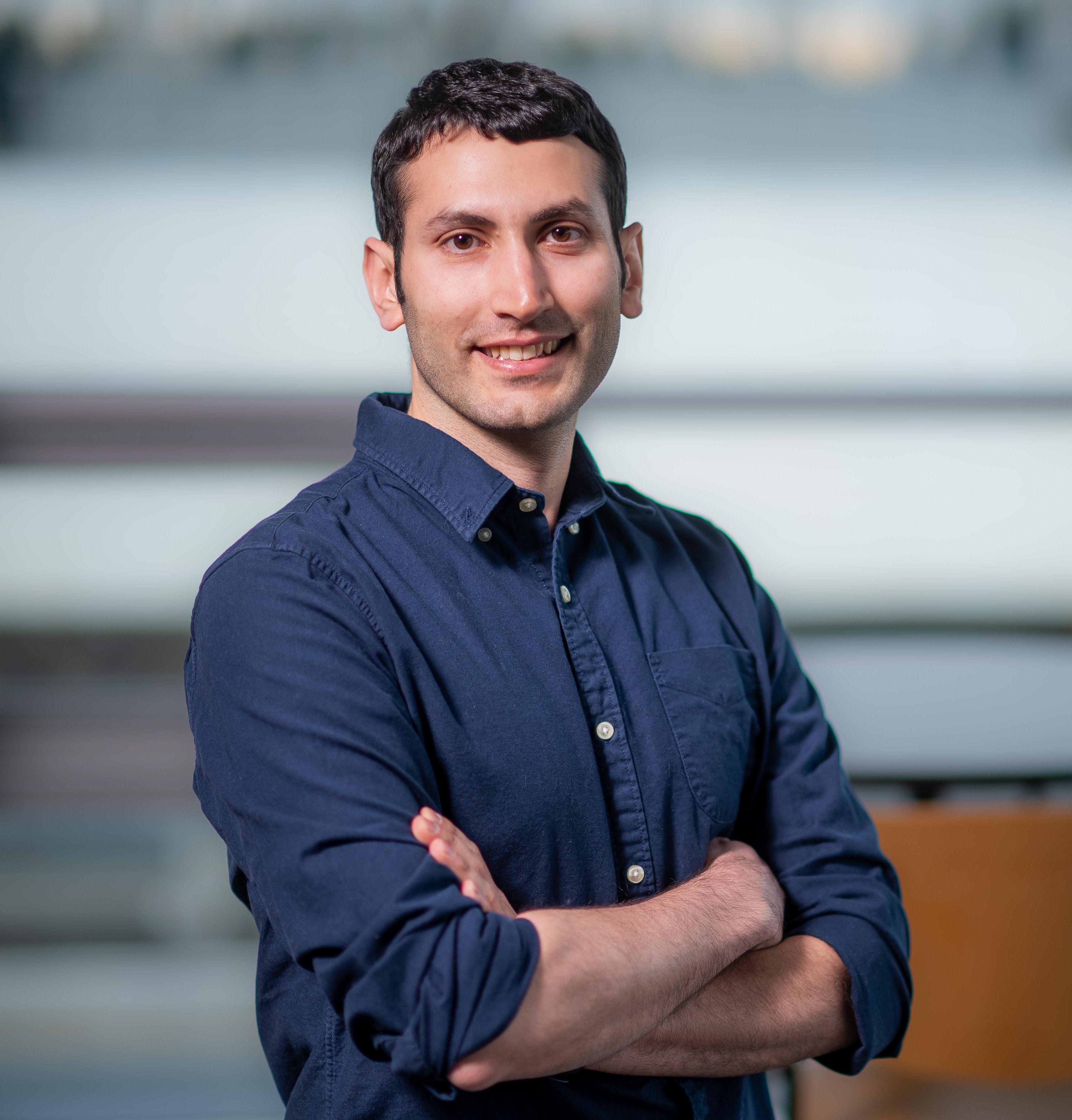
Maurice S. Fabien is an Assistant Professor in the Department of Mathematics at the University of Wisconsin-Madison and a SIAM-MGB Early Career Fellow. In 2025, he will join MIT's Schwarzman College of Computing as an MLK Assistant Professor while on leave from UW-Madison. His research focuses on computational mathematics with specialization in partial differential equations, high-performance computing, and numerical methods including discontinuous Galerkin formulations and multigrid solvers. Research interests span: Development of structure-preserving discretizations for hyperbolic systems GPU-accelerated computational algorithms Hybridizable discontinuous Galerkin (HDG) frameworks Multiscale modeling in porous media and biomechanics Numerical analysis of nonlinear PDEs Publications demonstrate strong focus on: High-order methods for conservation laws Efficient solvers for elliptic/parabolic systems Applications in fluid dynamics and materials science GPU-based performance optimization Error analysis of energy-stable schemes Awards & Honors: SIAM-MGB Early Career Fellowship (2025) Research Team: Austin Anyanwu (Undergraduate) - Finite precision arithmetic Alexis Liu (Alumni) - GPU-accelerated elliptic solvers Patrick Li (Undergraduate) - GPU-based mesh refinement Neer Mehta (Alumni) - Adaptive mesh refinement algorithms Significant involvement since 2007 in STEM diversity initiatives focused on recruitment/retention of underrepresented groups in academia.
Claus Brabrand is a Professor of Software Engineering and Head of the Center for Computing Education Research at the IT University of Copenhagen. His research focuses on computing education, gender diversity in STEM, and software product line analysis. He has led projects like DIREC (Digital Research Centre Denmark) and ATTiKA (Adaptive Tools for Technical Knowledge Acquisition), funded by the Innovation Fund Denmark and Villum Foundation. PhD in Computer Science Over 45 publications in computing education and software engineering Active in curriculum development and educational policy Research interests include improving teaching quality through learning technologies, gender representation in IT materials, and cognitive competencies in programming education. His work bridges software engineering principles with pedagogical innovations, addressing issues like novice programmer performance and curriculum design.
Aggelos Bletsas Aggelos Bletsas is a Professor at the School of Electrical and Computer Engineering (ECE) at the Technical University of Crete (TUC). He holds a PhD from MIT and has expertise in wireless communication, backscatter radio, and IoT. His research focuses on ultra-low-cost sensor networks and ambiently-powered systems. Education PhD in Media Arts and Sciences, MIT (2005) MSc in Media Arts and Sciences, MIT (2001) 5-year Diploma in Electrical & Computer Engineering, Aristotle University of Thessaloniki (1998) Research Interests Bletsas' work spans scalable wireless networks, backscatter radio, RFID systems, and energy harvesting. He pioneers batteryless IoT devices and environmental sensing technologies. His lab develops hardware and algorithms for low-cost, long-range communication. Awards & Recognition IEEE Fellow (2023) 2012-2013 TUC Research Excellence Award Multiple Best Paper Awards (ISWCS, RFID-TA, SENSORS) IEEE ComSoc and RFID Council Distinguished Lecturer (2022-2025) Labs & Projects Bletsas leads the Telecommunications Laboratory at TUC, focusing on batteryless sensors, scatter radio, and robotic inventory systems. Key projects include 'Internet of Plants' and ambiently-powered inference networks.
Maria Alley is a Senior Lecturer in Foreign Languages at the University of Pennsylvania’s School of Arts and Sciences. She holds a Ph.D. in Slavic Linguistics (with Second Language Acquisition concentration) from Ohio State University, along with M.A. and B.A. degrees in Slavic Linguistics and Foreign Language Pedagogy. Teaches Russian language/culture courses and graduate seminars in teaching methodology Supervises Russian language instructors and TAs Research focuses on language pedagogy, curriculum development, technology integration, and inclusive teaching strategies. She is an AAPPL-certified Russian language tester and recipient of the 2023 Dean’s Award for Teaching Excellence. Publications include a Russian language textbook and peer-reviewed articles on language technology and diversity in education. Active in academic service, she contributes to departmental governance and curriculum design initiatives.
Jennifer Fiegel serves as Professor and Chair of the Department of Chemical and Biomedical Engineering at the University of Missouri, leveraging over two decades of interdisciplinary expertise in aerosol science and educational innovation to advance therapeutic delivery systems and engineering pedagogy. Her academic foundation includes a BS from the University of Massachusetts at Amherst and a PhD from Johns Hopkins University. Dr. Fiegel's research program operates at the convergence of biomedical engineering and education science . Her drug delivery work pioneers inhalable/sprayable therapeutics targeting respiratory and skin infections through nanoparticle engineering and biofilm eradication strategies, while her education research develops metacognitive frameworks for ethical decision-making and faculty development. Key innovations include thermoreversible hydrogels for wound treatment and scaffolded 52-week initiatives transforming engineering culture. Recent publications reveal accelerating integration between her dual research domains, with nanoparticle delivery systems increasingly addressing complex biological barriers (mucus, biofilms) while educational frameworks evolve toward longitudinal cultural transformation in engineering education through choose-your-own-path simulations and TA empowerment programs. Dr. Fiegel directs collaborative research teams spanning engineering and health sciences, mentoring students through hands-on projects in aerosol characterization and educational intervention design. Her leadership includes developing comprehensive faculty development journeys focused on inclusive climate initiatives and evidence-based teaching practices. Her laboratories maintain dual focus: the Aerosol Drug Delivery Lab developing advanced formulations for pulmonary and topical applications, and the Engineering Education Innovation Lab creating metacognitive training modules and ethical decision-making simulations for engineering curricula.
Hedayat Zarkoob is a Researcher in the Department of Computer Science at the University of British Columbia (UBC), where he completed his PhD under Prof. Kevin Leyton-Brown. His work focuses on AI applications in education, particularly in peer grading systems, active learning, and large-scale classroom engagement. He is actively involved in teaching within UBC's Master of Data Science (MDS) program and the Computer Science department, leading courses on privacy, algorithms, communication, and societal impacts of technology. Education: PhD in Computer Science, UBC (supervised by Kevin Leyton-Brown) MSc in Computer Science, Simon Fraser University (supervised by Andrei Bulatov) Research Interests: Zarkoob's research bridges AI and education, with emphasis on scalable assessment tools (e.g., Mechanical TA 2), classroom engagement platforms (Agora), and AI-driven conference review systems. His work combines algorithm design, educational technology, and human-AI collaboration. Recent Projects: Agora, an open-source tool for student participation in large courses; Mechanical TA 2, a peer-grading system with algorithmic support; and AAAI 2021 workflow innovations. Teaching Roles: Upcoming courses include DSCI 541, 553, 542, 512, and CPSC 430. He has co-taught CPSC 430 (Computers and Society) since 2023.
Cristina Rodríguez is an Assistant Professor of Biomedical Engineering at Yale University, affiliated with the School of Engineering & Applied Science. Her research develops optical imaging technologies to study biological systems, focusing on deep tissue imaging and neurobiological applications. She holds a Ph.D. from The University of New Mexico and a B.S. from Universidad Simón Bolívar, Venezuela. Dr. Rodríguez leads the Rodríguez Lab, which innovates in multiphoton microscopy, adaptive optics, and imaging probes for neuroscience and therapeutic delivery. The lab emphasizes fostering diversity in science. Research Interests : Her work integrates physics, nonlinear optics, and engineering to advance imaging techniques for in vivo studies. Key areas include tactile processing in spinal cords, pathological changes in neural coding, and developing tools for deep tissue vasculature imaging. The lab’s adaptive optics module for multiphoton imaging and multicolor deep tissue imaging are groundbreaking contributions to the field. Awards : - Burroughs Wellcome Fund Career Awards (2020-2025) - Beckman Young Investigator Award (2024) - ISFS Fellow (2021) - AAPT Outstanding TA Award (2008) Lab & Collaborations : The Rodríguez Lab actively hires at all levels and focuses on collaborative, inclusive science. Recent news includes a Beckman Award win and outreach efforts like the HER Path webinar series. The lab’s research spans from astrophysical black hole systems (earlier work) to cutting-edge biomedical imaging.
Babak Ayazifar is a Teaching Professor at UC Berkeley's EECS department since 2005. He holds a BS from Caltech (1989) and SM/PhD from MIT (2003). His work focuses on signal processing, education innovation, and curriculum development. He has won prestigious teaching awards including the Goodwin Medal (1999) and IEEE’s Mac Van Valkenburg Award (2012). His research bridges graph signal processing and pedagogical methodologies, with notable contributions to scalable educational tools like Jupyter notebooks. Education: BS Electrical Engineering, California Institute of Technology (1989) SM/PhD Electrical Engineering and Computer Science, MIT (2003) Key Roles: Visiting Senior Lecturer at MIT (2013–2014) Faculty co-advisor for Tau Beta Pi since 2009 Co-inventor of U.S. Patent 5,387,940 (video compression) Teaching Contributions: Developed EECS 16A curriculum Pioneer of interactive lab tools for signal processing education Advocate for TA mentoring and teaching excellence His research integrates signal processing fundamentals with educational innovation, emphasizing practical applications and student engagement. Recent work includes leveraging graph theory for signal analysis and Fourier pedagogy reform.
Dr. Jeff Cline is an Associate Professor of Counseling in the School of Counseling at Colorado Christian University's College of Adult and Graduate Studies. He serves as a full-time online faculty member in the Master of Arts in Clinical Mental Health Counseling program, contributing to counselor education, clinical supervision, and scholarship. Education: Ph.D., Counselor Education and Supervision, Regent University M.A., Counseling, Harding School of Theology M.A., History, Arkansas State University BSE, Social Science, Arkansas State University Dr. Cline's research and professional interests focus on holistic wellness , spiritual integration in counseling , motivational theory , and relational reconciliation . His work emphasizes strengths-based, integrative approaches to mental health, particularly in rural and faith-based contexts. He advocates for sustainable practices to prevent burnout and promote resilience among counselors. His scholarly presentations span topics including private practice development, wellness programming, digital storytelling in education, and spiritual competence. These reflect a consistent trend toward enhancing counselor preparedness, personal well-being, and ethical integration of faith and practice. Professional Certifications and Awards: Licensed Professional Counselor-Supervisor/Tech-Assisted (LPC-S/TA), Arkansas National Certified Counselor (NCC), National Board for Certified Counselors Approved Clinical Supervisor (ACS), Center for Credentialing and Education Board Certified-Telemental Health Provider (BC-TMH), Center for Credentialing and Education Board Certified Coach (BCC), Center for Credentialing and Education Prepare/Enrich Certified Facilitator Dr. Cline has served as clinical director at a nonprofit Christian counseling center in northeast Arkansas for over a decade and is the founder of the Northeast Arkansas Mental Health Professionals Wellness Association, a monthly peer support group. He actively engages in professional development, community education, and program development, though no formal grants or student advisees are mentioned in the available text.
Emma Riese serves as a Lecturer in Theoretical Computer Science at KTH Royal Institute of Technology, with her office located at Lindstedtsvägen 5, Floor 5. Her academic work focuses on computer science education, particularly in programming instruction and assessment methodologies across various courses. Dr. Riese's research interests center on computer science education, with particular emphasis on assessment practices in introductory programming courses, training and development of teaching assistants, and the impact of educational technologies. Her work examines perspectives from multiple stakeholders including students, teaching assistants, and course coordinators, with a special focus on non-computer science majors taking programming courses. She has conducted significant research on the challenges faced by teaching assistants in European computer science education and the impact of the COVID-19 pandemic on remote computer science instruction. Analysis of her publication record reveals a consistent focus on improving computer science education through evidence-based approaches. Her work shows particular attention to assessment strategies, teaching assistant development, and adapting computer science education for diverse student populations including non-majors. The research demonstrates strong methodological diversity with qualitative studies examining lived experiences alongside more structured investigations of educational practices. Emma Riese actively contributes to KTH's educational mission through her teaching roles across multiple courses including Programming I, Programming Technology, and Applied Computer Science. She serves as course coordinator for Programming Technology and has developed training for teaching assistants in computer science education.
Lisa Lee is a Research Scientist at Google DeepMind, focusing on creating AI agents that emulate biological learning and adaptability. She previously taught at Princeton University and received TA awards for Deep Reinforcement Learning and Probabilistic Graphical Models. Education: PhD in Machine Learning from Carnegie Mellon University (advised by Ruslan Salakhutdinov and Eric Xing); A.B. in Mathematics from Princeton University (advised by Sanjeev Arora). Her research centers on AI embodiment, intrinsic motivation, and hierarchical planning. She explores how evolutionary-inspired inductive biases and memory mechanisms can enable agents to generalize across physical and conceptual domains, as demonstrated in her work on robotic agility benchmarks and multimodal transformers. Notable scientific contributions include the Barkour quadruped robot benchmark, Gemini multimodal models, and theoretical work on causal language models. She co-organized key AI workshops at NeurIPS and ICML, and her awards include Princeton's TA of the Year for technical courses. Leadership: ICML Workflow Chair (2019), NeurIPS workshop co-organizer (2019, 2021), peer reviewer for top AI conferences.
Isabelle Drewelow is an Associate Professor of French and Applied Linguistics at the University of Alabama, Department of Modern Languages & Classics. Her research focuses on intercultural competence, affective dimensions of foreign language learning, and pedagogical strategies for fostering cognitive flexibility. PhD, University of Wisconsin-Madison (2009) Maîtrise & Licence in Applied Foreign Languages, Université Michel de Montaigne-Bordeaux III Research Interests: Intercultural Competence Foreign Language Pedagogy Instructed Second Language Acquisition Affective Dimensions of Learning Experiential & Transformational Learning Her recent publications emphasize decentering pedagogies, technology-mediated learning, and blending translation with service learning to cultivate resilience and solidarity dispositions. She received the 2017 Alabama World Language Association’s Educator of Excellence Award. Scientific Awards: 2017 Alabama World Language Association’s Educator of Excellence Award She teaches advanced French language and culture courses, graduate qualitative research methods, and special topics in Second Language Acquisition (SLA). Her work integrates critical pedagogy, digital tools, and social responsibility frameworks.
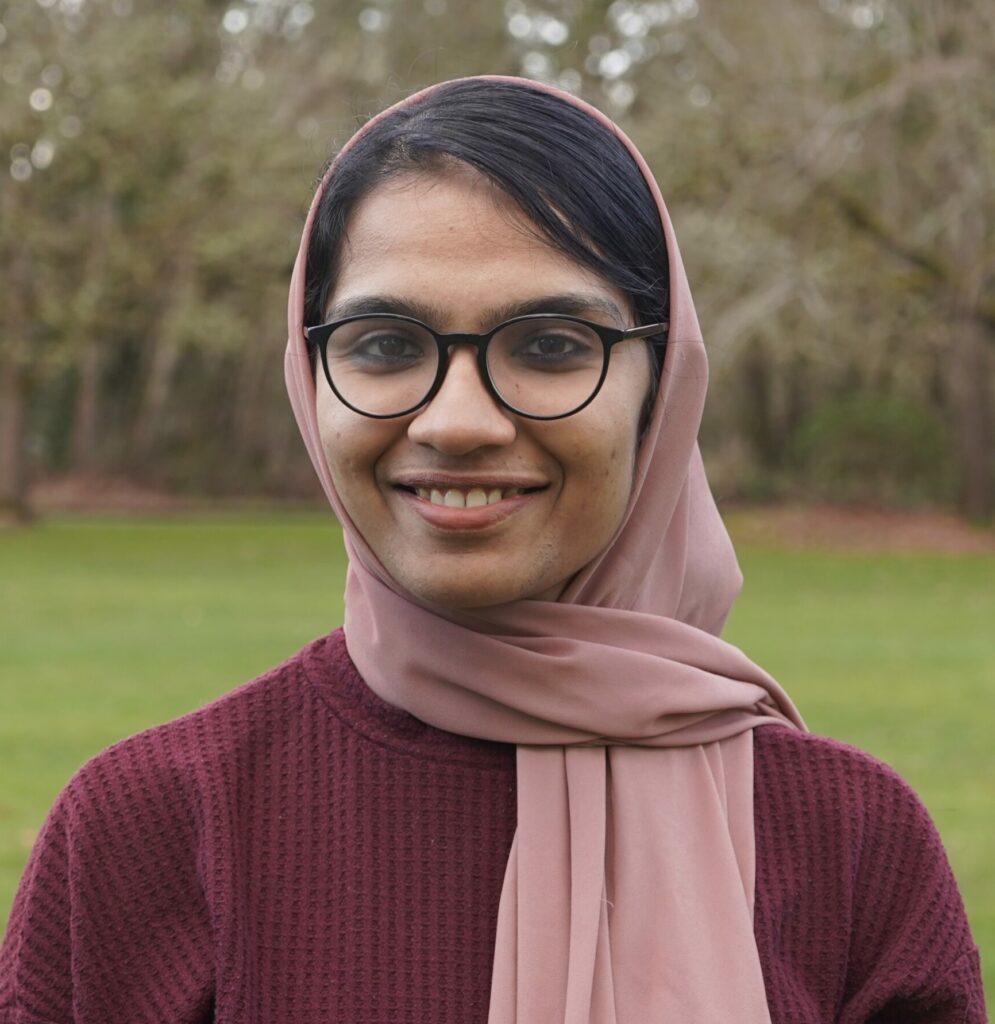
Shahana Ibrahim is a tenure-track Assistant Professor at the University of Central Florida under the AI Initiative, holding a joint appointment in the Department of Electrical and Computer Engineering and Computer Science. Her research develops provable methods for robust machine learning systems with applications in critical real-world scenarios. Education: Ph.D. in Electrical and Computer Engineering, Oregon State University (advised by Dr. Xiao Fu) Prior industry experience: System Validation Engineer at Texas Instruments (2012-2017) and NVIDIA GPU intern (2018) Her research spans machine learning, signal processing, and optimization with core expertise in weakly supervised learning, tensor decomposition, and stochastic algorithms. She focuses on enhancing AI reliability through theoretical guarantees for noisy data environments, particularly addressing label noise, incomplete annotations, and structured factorization challenges. Her work bridges signal processing theory with modern AI to solve practical problems in data quality and system robustness. Recent publications (2023-2025) reveal strong thematic consistency in handling imperfect supervision. Key trends include crowdsourced label modeling, instance-dependent noise characterization, and tensor/matrix completion techniques. Her approach uniquely integrates signal processing perspectives with deep learning, emphasizing identifiability conditions and geometric regularization to extract reliable patterns from corrupted data. Scientific Awards: Outstanding PhD Dissertation Award from EECS, Oregon State University (2024) Dr. Ibrahim actively mentors graduate researchers including Faizul and Grey, who co-authored her ICIP 2025 and IEEE CAMSAP 2023 publications. She secured the AI-BTO DARPA grant (December 2024) for physics-informed machine learning research on intrinsically disordered proteins. Current funding supports multiple RA/TA positions for PhD students in her lab. She serves on program committees for AISTATS, AAAI AI for Social Impact, and WiML at NeurIPS. Her research group develops end-to-end learning frameworks for noisy data environments, with active projects funded by DARPA focusing on biomedical applications and robust AI validation. The lab maintains strong industry connections through NVIDIA and Texas Instruments collaborations.
Sneha D. Goenka is an Assistant Professor at Princeton University in the Department of Electrical and Computer Engineering, with associated faculty status in the Computer Science department. She earned her Ph.D. from Stanford University (2024) and dual B.Tech./M.Tech. degrees from IIT Bombay (2017). Her research bridges computer systems architecture and computational genomics to develop accelerated genomic pipelines. Education : Ph.D. (Electrical Engineering, Stanford 2024), Dual Degree (IIT Bombay 2017) Her work focuses on optimizing genomic data processing through hardware-software co-design, achieving speedups in clinical and evolutionary genomics. She led the development of the world's fastest genome diagnosis technique using nanopore sequencing and cloud computing. Recent publications highlight her expertise in GPU/FPGA acceleration (SegAlign, Darwin-WGA) and ultra-rapid variant detection pipelines. Her research has been published in top venues like Nature Biotechnology , New England Journal of Medicine , and SC/HPCA conferences . Scientific Awards : Stanford Centennial TA Award (2024) ACM Heidelberg Laureate Forum Young Researcher (2024) Forbes 30 Under 30 (Science) (2023) NVIDIA Graduate Fellow (2022) Cadence Women in Technology Scholar (2021) She advises students in her lab and has collaborated with institutions like Stanford Medicine, NVIDIA Research, and D.E. Shaw Research. She also contributed to the Pratham satellite project at IIT Bombay.
Wei-Chieh Su is a full Professor in the Department of International Business at National Chengchi University (NCCU), College of Commerce, Taiwan. Since 2013 he has progressed from Assistant Professor to Associate Professor and, since August 2021, to full Professor. In parallel, since September 2023 he serves as Associate Executive Director of the Sinyi School at NCCU. Education Ph.D. in Business Administration, The University of Texas at Dallas, USA (2013) M.B.A., Department of Business Management, National Cheng Kung University, Taiwan (2006) B.B.A., Department of International Trade, National Chengchi University, Taiwan (2004) Research Interests Su’s scholarship lies at the intersection of corporate social responsibility (CSR) , business ethics , and international strategic management . His work examines how non-market strategies—such as CSR signaling, sustainability reporting, and corporate philanthropy—shape firm value, stakeholder perceptions, and governance outcomes across developed and emerging economies. A particular focus is placed on East-Asian contexts, where institutional transitions and family ownership create unique strategic contingencies. Methodologically, he integrates multi-level governance perspectives, drawing on agency theory, upper-echelons theory, and stakeholder theory to explore antecedents and consequences of CSR decoupling, gender diversity in top management, tax-haven utilization, and cross-border growth strategies of multinational enterprises. Publication Trends Across more than thirty SSCI/TSSCI publications since 2008, Su’s recent articles (2020-2025) exhibit a clear trajectory toward environmental, social, and governance (ESG) themes, investigating how board governance moderates the carbon-emissions–forecast-error nexus and how comparative governance structures influence corporate misconduct in Japan. Earlier work (2013-2019) concentrated on strategic CSR, family-firm risk-taking, and the signaling value of CSR in emerging markets. His handbook chapter (2024) consolidates insights on the antecedents and governance implications of corporate philanthropy. Scientific Awards & Honors National Chengchi University Chair Professor (2025, 2023, 2022) NSTC Research Award (2024, 2023, 2022, 2021, 2020, 2019, 2018, 2017) 10-Year Senior Excellent Teacher Award, NCCU (2023) National Chengchi University Excellent Research Award (2016-2022) Wu Ta-You Memorial Award, Ministry of Science and Technology (2015) Mr. Lü Feng-Chang Memorial Award, Chinese Management Science Society (2019) Grants & Collaborative Projects Since 2014 Su has been Principal Investigator (PI) or co-PI on over twenty large-scale grants funded by Taiwan’s National Science and Technology Council (NSTC), cumulatively exceeding NT$25 million. Ongoing flagship projects include: Evolution, Future Trends, and Value of ESG (2022-2025, 3-phase) Non-market Issues and Strategic Alliances (2023-2026, 3-phase) Taiwan ESG Index Measurement and Forecasting (2021-2024, 2-phase) He also participates in the FinTech Innovation Operations Research Center and Open Securities projects, exploring blockchain-enabled securities innovation. Laboratories & Teams At NCCU, Su leads a dynamic research group focusing on CSR, sustainability, and international business strategy. While formal laboratory names are not specified, his team integrates doctoral and master-level researchers in data analytics, survey design, and qualitative case studies, producing policy-relevant outputs for Taiwanese regulators and industry associations.