Dr. Angela M. Crawley is a Senior Scientist at the Ottawa Hospital Research Institute (Chronic Disease Program) and an Associate Professor in the Department of Biochemistry, Microbiology and Immunology at the University of Ottawa . She also holds an Adjunct Professor appointment at Carleton University (Department of Biology). Her research focuses on: CD8 T-cell dysfunction in chronic viral infections Immune restoration in cirrhosis Macrophage-Kupffer cell interactions Translational immunology approaches Dr. Crawley's research combines human immunology and animal models to explore chronic hepatitis C virus infection and non-alcoholic fatty liver disease. Her work has been funded by major grants from the Canadian Institutes of Health Research and Natural Sciences and Engineering Research Council . The laboratory maintains a clinical biobank and collaborates with both basic science and clinical research teams. Key publication trends indicate expertise in: Viral immunopathogenesis T-cell signaling mechanisms Immune subset differentiation Cytokine receptor dynamics Antiviral therapy limitations Translational disease modeling
Aaron P. Rapoport serves as the Gary Jobson Professor of Medical Oncology and Professor in the Department of Medicine at the University of Maryland School of Medicine. He holds dual leadership roles as Associate Chief of the Hematology/Oncology Division and Director of the Blood and Marrow Transplant Program at the UM Marlene and Stewart Greenebaum Comprehensive Cancer Center. His educational background includes a B.S. from Massachusetts Institute of Technology (1982) and M.D. from Harvard Medical School (1986), followed by postgraduate fellowships at University of Rochester/Strong Memorial Hospital (1989, 1993). Dr. Rapoport's research pioneers adoptive T-cell therapies for hematologic malignancies, with groundbreaking work in: Costimulated autologous T-cell infusions post-transplant MAGE-A3/Poly-ICLC vaccine combinations for myeloma High-affinity TCR gene-modified T cells Immune reconstitution strategies after stem cell transplantation His publication record (2005-2015) reveals an evolutionary trajectory from foundational immune recovery studies to advanced engineered cellular therapies, consistently targeting multiple myeloma through integrated vaccine and T-cell approaches. As Principal Investigator, he has secured major funding including: NHLBI R01-CA166961 (2012-2015) for gene-modified T-cell therapy Multiple Myeloma Research Foundation Senior Award (2013-2015) NHLBI R21 (2009-2010) for hTERT-based immunotherapy He directs the Blood and Marrow Transplant Program's translational research team, which has conducted over 6 clinical trials involving 150+ patients to develop novel cellular immunotherapies for hematopoietic cancers.
Laia Gorchs is a Postdoctoral Researcher at the Department of Laboratory Medicine , Karolinska Institutet . She is a member of the Tissue Immunology – Research Group Helen Kaipe , focusing on tumor immunology and maternal-fetal immune interactions. Gorchs earned her PhD in 2022 from the same department. Research Interests Tumor immunology in pancreatic and lung cancers Role of cancer-associated fibroblasts (CAFs) in immune suppression Mucosal-associated invariant T (MAIT) cell biology Placental immunity and chemokine-driven immune cell dynamics HLA editing in stem cell-derived tissues Immunomodulation via vitamin D analogs Publications Trends Investigates T cell exhaustion markers (CD39, CD103) in pancreatic cancer prognosis Studies CAF-mediated suppression in solid tumors Explores MAIT cell recruitment and function in placental/decidual tissues Develops HLA-deficient stem cell therapies for immune evasion Examines radiation effects on fibroblast immunosuppressive properties Labs & Teams Research Group Helen Kaipe, Karolinska Institutet Collaborations with Kaipe Lab on placental and tumor immunology Part of Tissue Immunology division
Anoop Tholamplackil Ambikan serves as a Postdoctoral Researcher at Karolinska Institutet's Department of Laboratory Medicine, conducting cutting-edge research within The Systems Virology Lab under Dr. Ujjwal Neogi's supervision. His work bridges computational biology and infectious disease pathogenesis, with emphasis on host-viral interaction mechanisms. His academic foundation includes: Ph.D. in Medical Science from Karolinska Institutet (2018-2023), specializing in systems biology for infectious disease research MSc in Bioinformatics from Amrita School of Biotechnology, India (2010-2012) Dr. Ambikan's research centers on systems biology methodologies, particularly network analysis and multi-omics integration, to decode host-pathogen dynamics. He develops molecular association networks to identify coordinated response communities and specializes in contextualizing metabolic/signaling networks within specific cellular environments. His technical expertise spans TMT-labelled proteomics, quantitative metabolomics, and metagenomics, applied primarily to HIV, SARS-CoV-2, and emerging viral infections. Analysis of his publication record reveals consistent focus on immunometabolic host responses across viral pathogens, with recurring themes of metabolic reprogramming in disease pathogenesis and network-based biomarker discovery. His work frequently employs hamster models for SARS-CoV-2 and leverages multi-omics to dissect elite HIV control mechanisms. As an integral member of The Systems Virology Lab, he contributes to Karolinska Institutet's leadership in viral pathogenesis research, maintaining active collaborations across immunology, virology, and systems medicine disciplines. No information regarding academic advising, grant funding, or scientific awards is provided in available sources.
Paul Brett is a Professor in the Department of Microbiology and Immunology at the University of Nevada, Reno School of Medicine. With over 25 years of experience researching Burkholderia pseudomallei , the causative agent of melioidosis, Dr. Brett leads a laboratory focused on understanding molecular mechanisms of bacterial pathogenesis and developing effective vaccines against this significant infectious disease. Dr. Brett received his B.Sc. in Biochemistry from the University of Victoria and his Ph.D. in Bacterial Pathogenesis from the University of Calgary. His academic credentials have supported a distinguished career investigating bacterial virulence mechanisms, particularly focusing on how B. pseudomallei evades host immune defenses through specialized surface structures. Dr. Brett's research program centers on elucidating how lipopolysaccharides and capsular polysaccharides expressed by B. pseudomallei contribute to immune evasion. His laboratory has developed significant expertise in carbohydrate purification/characterization, glycoconjugate synthesis, and comprehensive analysis of humoral/cellular immune responses. The ultimate goal of his research is to identify correlates of antigen-induced immunity against B. pseudomallei to develop safe, affordable, and effective melioidosis vaccines that could address this serious public health threat. Analysis of Dr. Brett's publication history reveals a consistent research trajectory with publications spanning from the early 2000s through 2025. His work demonstrates increasing sophistication in vaccine development approaches, with recent publications focusing on glycoconjugate vaccines, structural analysis of bacterial components, and innovative diagnostic methods for melioidosis. His research bridges molecular microbiology and translational immunology, with direct applications to vaccine design and development. Dr. Brett has participated in significant collaborative efforts, including the Melioidosis Diagnostic Workshop in 2013 and the Steering Group on Melioidosis Vaccine Development. These collaborations highlight his standing as a recognized expert in the field and his commitment to advancing international efforts to combat melioidosis. Though specific details about current students and grants are not provided in the available materials, Dr. Brett's active publication record through 2025 and his laboratory's described capabilities suggest he maintains a vibrant research program with ongoing funding and mentorship of graduate students and postdoctoral researchers. His work has direct relevance to both public health initiatives in melioidosis-endemic regions and biodefense preparedness efforts given B. pseudomallei 's classification as a Tier 1 select agent.
Miriam K. Laufer, MD is an Adjunct Professor in the Department of Pediatrics at the University of Maryland School of Medicine, with secondary appointments in Medicine, Epidemiology and Public Health, and Faculty of the graduate program in Microbiology and Immunology. She directs the Malaria Research Program at the Center for Vaccine Development and Global Health, serves as Director of the Office of Student Research for the School of Medicine, and is Associate Director of the Institute for Global Health at the University of Maryland. Dr. Laufer received her medical degree from the University of Pennsylvania and completed her pediatric residency at Babies and Children's Hospital of New York (now New York Children's Hospital) of Columbia University. She completed fellowships in pediatric infectious diseases at Johns Hopkins University and in malaria research at the Center for Vaccine Development at the University of Maryland. She earned her MPH from the Bloomberg School of Public Health at Johns Hopkins University. As a pediatric infectious disease specialist, Dr. Laufer has dedicated nearly two decades to malaria research in Malawi. Her primary research focuses on the impact of infections including malaria and HIV during pregnancy on infant immunity and early childhood development, the interaction between HIV and malaria, and identifying reservoirs of malaria transmission. Her laboratory applies molecular epidemiology tools to address critical issues related to malaria pathogenesis, disease burden, and drug resistance. She uses clinical and laboratory research to develop and evaluate interventions to decrease the malaria burden in sub-Saharan Africa. Dr. Laufer's recent publications demonstrate a strong emphasis on malaria prevention strategies, particularly for vulnerable populations. Her work explores school-based interventions, comparative effectiveness of antimalarial drugs during pregnancy, molecular mechanisms of malaria transmission, and HIV-malaria co-infections. Her research has significantly contributed to understanding the role of school-age children as malaria reservoirs and has informed malaria prevention policies across sub-Saharan Africa. Joseph Augustine LePrince Award (American Society of Tropical Medicine and Hygiene) J. Tyson Tildon Award for Pediatric Research Alpha Omega Alpha Teaching Commendation (Host Defenses and Infectious Diseases) Global Health Faculty Award (Center for Global Health Initiatives) American Society of Tropical Medicine and Hygiene LePrince Medal As Principal Investigator for clinical trials, epidemiological studies, and a Fogarty training grant, Dr. Laufer leads collaborative research across the US, Europe, and Africa. She is deeply committed to training the next generation of scientists through the Malaria Research Program, which focuses on building research capacity in both the US and malaria-endemic countries. She also serves as Director of the Office of Student Research, promoting hands-on research training for all medical students. Dr. Laufer directs the Malaria Research Program at the Center for Vaccine Development and Global Health, which develops innovative scientific tools to eliminate malaria. She serves on the World Health Organization's Malaria Vaccine Advisory Committee and Global Malaria Programme Guidelines Development Committee, and is active in the American Society of Tropical Medicine and Hygiene and Pediatric Infectious Diseases Society.
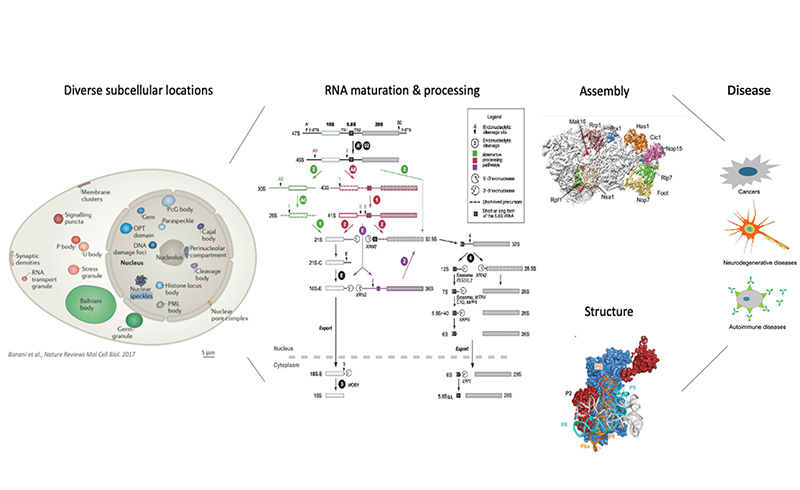
Marlene Oeffinger is an Associate Professor at the Faculty of Medicine, University of Montreal and holds a cross-appointment at the Division of Experimental Medicine, McGill University . She serves as Research Director of the Ribonucleoprotein Biochemistry Research Unit at the Montreal Clinical Research Institute (IRCM). Her research focuses on RNA maturation pathways, ribosome biogenesis, and their links to neurodegenerative diseases like Alzheimer's and ALS through RNA-protein complex dynamics. Education : Master's in Cell Biology (University of Vienna), PhD in Molecular Biology (University of Edinburgh). Training : Postdoctoral work in David Tollervey's lab (Edinburgh) and Mike Rout's lab (Rockefeller University). Her work combines proteomics , biochemical assays , and computational approaches to map RNA maturation networks and their connections to DNA damage repair. Recent articles highlight discoveries in archaeal ribosome evolution, mRNA export mechanisms, and RNA structure probing in yeast. She has received prestigious awards including the CIHR New Investigator Award , FRQ-S Junior Scholar Fellowships , and Revson Foundation Biomedical Fellowship . Marlene's lab trains students and researchers in RNA biology, with current members like Master's student Mauricio Hernandez Magana. Her affiliations span multiple platforms at the IRCM, including bioinformatics , proteomics , and molecular biology . She leads grants from CIHR , FRQNT , and Brain Canada , advancing understanding of RNA's role in disease etiology.
Dr. Hyun Jin Kwun is an Assistant Professor at the Pennsylvania State University within the Penn State Cancer Institute , focusing on the Mechanisms of Carcinogenesis . Her research investigates molecular pathways in viral oncogenesis , particularly involving the Merkel Cell Polyomavirus (MCV) in skin cancer development. Key areas: Merkel Cell Carcinoma , Polyomavirus , Ubiquitin Networks Recent publications highlight her work on MCV's large T antigen regulation via phosphorylation, cellular senescence in viral genome persistence, and therapeutic strategies targeting MCV-positive tumors. Her studies also explore how immunosuppressive drugs like sirolimus affect viral replication. Scientific recognition includes: Dean's Award for Excellence in Teaching (2021) Junior Faculty Research Scholar Award (2018)
Chad Brenner, Ph.D. serves as Associate Professor of Otolaryngology-Head and Neck Surgery and Pharmacology at the University of Michigan Medical School, where he also directs the CMB Program. His research focuses on genomic biomarker discovery and therapeutic resistance mechanisms in head and neck cancers, utilizing next-generation sequencing and high-throughput functional screening approaches. Dr. Brenner's primary research interests span Cancer Biology, Genomics, Precision Medicine, and Molecular Biology, with specific emphasis on HPV-related cancers, liquid biopsy development, and therapeutic resistance. His laboratory employs genomics-driven clinical trials and patient-derived xenograft models to advance targeted therapies and understand resistance mechanisms in head and neck squamous cell carcinoma. Analysis of his 15 most recent publications (2023-2025) reveals dominant themes in HPV-positive oropharyngeal cancer research, circulating tumor DNA (ctDNA) applications, tumor microenvironment characterization, and health disparities. Key methodologies include next-generation sequencing, liquid biopsy validation, and integration of imaging biomarkers with molecular data for treatment response prediction. Scientific Awards No scientific awards were documented in the provided source material. Advising and grant activities are not explicitly detailed in available information, though his CMB Program Director role suggests mentorship responsibilities. The source indicates student involvement through the CMB program but provides no specific advisee names or grant funding details. Laboratory operations focus on genomic analysis of head and neck cancers, with specialized expertise in HPV ctDNA assay development, tumor hypoxia studies, and functional screening for therapeutic target identification. The lab maintains strong clinical translation focus through ongoing participation in phase II immuno-chemoradiation trials and biomarker validation studies.
Dr. George D. Demetri is a Professor of Medicine at Harvard Medical School, Director of the Sarcoma Center at Dana-Farber Cancer Institute, and Director of the Ludwig Center at Dana-Farber/Harvard Cancer Center. He serves as Executive Director for Clinical and Translational Research at the Ludwig Institute for Cancer Research and holds the Quick Family Chair in Medical Oncology. His clinical focus centers on bone sarcomas, gastrointestinal stromal tumors (GIST), and soft tissue sarcomas. Dr. Demetri's research interests span molecular targeted agents and signal transduction inhibitors for sarcoma treatment. His groundbreaking work established the foundation for using tyrosine kinase inhibitors as effective therapies for GIST, leading to FDA approval of imatinib mesylate (Gleevec). His research team pioneered differentiation therapy for liposarcomas targeting PPAR-gamma and developed novel agents like ET-743 derived from marine organisms. His work demonstrates how understanding sarcoma biology can translate into targeted treatments that significantly improve patient outcomes. Analysis of Dr. Demetri's recent publications reveals a strong focus on immunotherapy approaches for sarcomas, particularly T-cell therapies targeting NY-ESO-1, and continued innovation in molecularly targeted treatments. His research spans rare sarcoma subtypes, biomarker identification, and real-world evidence generation for oncology drug development. The publications consistently emphasize precision medicine approaches tailored to specific molecular alterations in sarcomas. Focused Giving Program Award, Johnson and Johnson Foundation (1993) Emil J. Freireich Award in Clinical Cancer Research (2002) Claire W. and Richard P. Morse Research Award (2005) Dr. Demetri leads a multidisciplinary research team that includes dedicated representatives from surgical oncology, radiation oncology, pathology, and other clinical arenas working closely with laboratory investigators. His work has secured significant funding for sarcoma research, particularly through the Ludwig Institute for Cancer Research. His leadership has established Dana-Farber as a global center for sarcoma treatment and research, with numerous clinical trials evaluating novel therapeutic approaches for these rare cancers. As Director of the Sarcoma Center at Dana-Farber, Dr. Demetri oversees a comprehensive program that brings together experts across multiple disciplines to develop innovative treatments for sarcoma patients. His laboratory research focuses on translating basic biological discoveries into novel therapeutic approaches, with particular emphasis on signal transduction pathways in sarcomas. The center maintains strong collaborations with other major cancer centers globally to advance sarcoma research and treatment.
Stephen E. Sallan, MD , is a Professor of Pediatrics at Harvard Medical School and a Physician at Dana-Farber Cancer Institute and Children's Hospital . His career spans over five decades in pediatric hematology/oncology , with a focus on acute lymphoblastic leukemia (ALL) and pediatric brain tumors . Education : MD, Wayne State University School of Medicine (1967) Residencies : Boston Floating Hospital (1968), Children's Hospital of Philadelphia (1969), Hospital for Sick Children, London (1970) Fellowship : Pediatric Oncology, Children's Hospital/DFCI (1972) Leadership Roles : Chief of Staff (1995), Chairman of Medical Staff Executive Committee (1995), Chief of Staff Emeritus (2012) Dr. Sallan's research integrates genetic heterogeneity , disease recurrence , and drug resistance in ALL, with efforts to develop targeted therapies like tumor vaccines and antiangiogenesis agents. His work addresses long-term treatment toxicities (cardiac, skeletal, neurocognitive), particularly in survivors of childhood cancers. His 15 most recent publications (2024–2018) demonstrate ongoing engagement with pharmacogenomics, thrombosis risk models, dietary interventions, and molecular markers in brain tumors. Key subfields include TRK-C in medulloblastoma , asparaginase complications , and DFCI ALL Consortium Protocols . Scientific Awards : Distinguished Alumni Award, Wayne State University School of Medicine (1997) James Carreras Prize for International Pediatrician of the Year (1987) As a leader in pediatric leukemia research , Dr. Sallan has shaped treatment protocols that minimize late effects while improving survival. He collaborates with multidisciplinary teams in neuro-oncology and pharmacogenomics, maintaining active roles in clinical trials and laboratory investigations.
Giuseppe Faraco is an Assistant Professor of Neuroscience at the Brain and Mind Research Institute, Weill Cornell Medical College. His research focuses on neurovascular dysfunction, cognitive impairment, and the interplay between hypertension, immune responses, and brain health. Education: Ph.D. and M.D. from University of Florence Faculty of Medicine and Surgery. Research interests center on neurovascular biology, dietary impacts on brain function, and immune-mediated cognitive decline. His work explores hypertension, tau phosphorylation, gut-brain axis, and blood-brain barrier dynamics in neurodegenerative diseases. Recent publications highlight mechanisms linking hypertension, inflammation, and cognitive dysfunction, with a focus on endothelial-immune crosstalk and dietary factors. Grants include funding from Cure Alzheimer’s Fund and National Institute of Neurological Disorders & Stroke to study hypertension, neurovascular dysregulation, and gut immunity.
Gijs van Nierop is an Assistant Professor at Erasmus MC, specializing in Virology. His research focuses on viral immunology, vaccine development, and data sharing in public health. Primary affiliation: Erasmus MC, Virology Department. Research interests include virology, immunology, and vaccine development, with a strong focus on SARS-CoV-2, enterovirus D68, and arboviruses. His work explores immune responses, hybrid immunity, antigenic evolution, and data-sharing frameworks for open science. Recent publications highlight his contributions to understanding immune responses in kidney disease patients, enterovirus D68 pathogenesis, and innovative approaches to arbovirus vaccine design. Trends in his research emphasize viral immunology, translational studies, and open-data initiatives. Gijs collaborates extensively across disciplines, with network connections to epidemiology, molecular biology, and clinical immunology. No explicit awards, grants, or student advisement details are mentioned in the provided text.
Shelby O'Connor is a Professor in the Department of Pathology and Laboratory Medicine at the University of Wisconsin-Madison, where she established her laboratory in September 2011. She actively participates in teaching, research, and service within the institution. Her research program focuses on five major interconnected areas: Understanding antiviral CD8 T cell roles in post-treatment control of HIV/SIV Air surveillance systems for respiratory pathogens Disruption of host immunity to M. tuberculosis during pre-existing SIV infection Dynamics of viral and bacterial pathogens using molecularly barcoded strains Pathogen fee-for-service sequencing operations This work bridges immunology, virology, and bacteriology with advanced molecular techniques, emphasizing host-pathogen interactions in infectious disease contexts. The laboratory employs barcoding and sequencing methodologies to track pathogen evolution and immune responses across diverse research streams. Professor O'Connor mentors laboratory members and maintains an active alumni network, though specific student names and grant details aren't provided in the source material. Her team operates as a cohesive research unit within the department, contributing to pathogen surveillance and therapeutic development initiatives.
Dr. Li Yang is an Associate Professor in the Department of Plant Pathology at the University of Georgia's College of Agricultural & Environmental Sciences. Their research focuses on molecular mechanisms of plant immunity, plant growth-defense crosstalk, and plant disease management tools. Education : PhD in Genetics (University of Pennsylvania, 2011), MPhil in Plant Biology (Shanghai Jiao Tong University, 2005), BA in Biotechnology (Shanghai Jiao Tong University, 2002) Research interests span plant immunity regulation, stress-induced developmental changes, and microbial interactions. Key projects include salicylic acid signaling in regeneration suppression, calcite-dissolving bacteria for soil calcium mobilization, and age-dependent resistance mechanisms. Current work explores proteomic aspects of pattern-triggered immunity and spatial regulation of defense responses. The Yang Lab recently published 7 articles in 2024-2025 covering topics from evaporative cooling signals to wound healing and proteomic landscapes of immunity. Their 2023 publications focused on developmental-immunity tradeoffs, while 2022 work included novel cultivation systems for peanut pod studies. Scientific Awards Graduate School Summer Research Grant (awarded to Carter) 2nd place in Cleantech Symposium poster competition (Alan Peper) 2nd/3rd places at Plant Center Spring Symposium (Joseph Balem, Mariah Lee Arnold) Dr. Yang supervises an active research group with notable advisees including Alan Peper (published on bacterial communities), Sorrel Tran (root regeneration research), Lanxi Hu (age-related resistance), and postdoc Feng Kong (plant development-defense interplay).