
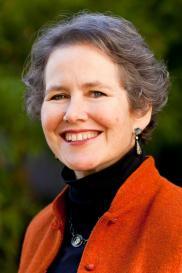
Mariane C. Ferme is a Professor in the Department of Anthropology at the University of California, Berkeley. Her research focuses on sociocultural dynamics in West Africa, particularly Sierra Leone, with expertise in political anthropology, legal studies, and material culture. She holds a PhD in Anthropology from the University of Chicago and has taught at prestigious institutions including the University of Cambridge and École des Hautes Études en Sciences Sociales. Education : PhD in Anthropology (University of Chicago), MA in Political Science (University of Milano), BA in Anthropology (Wellesley College). Ferme’s research spans the political imagination in conflict zones, agrarian transformations, and the interplay between humanitarian law and local justice systems. Her work has been supported by major grants from the National Science Foundation and the France-Berkeley Fund. She has published extensively on Sierra Leone’s post-war societies and the socio-cultural dimensions of the Ebola outbreak. Scientific awards include funding from the National Science Foundation, Hellman Family Faculty Fund, France-Berkeley Fund, Harvard Academy for International and Area Studies, and the Carter Woodson Institute for African and African-American Studies.
جستوجوی استاد و پژوهشگر
استاد راهنما، استاد دانشگاه یا پژوهشگر مناسب برای مسیر پژوهشیتان را پیدا کنید و با او ارتباط بگیرید.
نمایش ۷۰۶-۷۲۰ از ۵۴٬۵۱۱ استاد راهنما
اطلاعات این پروفایلها از صفحات عمومی دانشگاهها جمعآوری شده و ممکن است بهروز نباشد.
Sahar Pirooz Azadمشاهده پروفایل
استادیار
Sahar Pirooz Azad is an Assistant Professor in the Department of Electrical and Computer Engineering at the University of Waterloo. She holds a PEng designation and specializes in power systems engineering, particularly in HVDC systems and grid stability. Previously, she served as an Assistant Professor at the University of Alberta (2015–2017) and conducted postdoctoral research at the University of Toronto’s CAPE Centre and KU Leuven in Belgium. Her research focuses on enhancing power grid stability through advanced control schemes for HVDC grids, converter modeling, and fault protection mechanisms. Dr. Azad’s work addresses challenges in multi-terminal HVDC systems, offshore wind grid integration, and multi-vendor system compatibility. She has taught courses like Power System Protection and Relaying (ECE 765) and Electromechanical Energy Conversion (ECE 260), reflecting her expertise in both theoretical and applied electrical engineering. Her recent publications emphasize innovative protection schemes for HVDC grids, fault detection algorithms using signal processing (e.g., Hilbert-Huang Transform), and robust controller designs for multi-vendor VSC systems. These contributions aim to improve grid reliability, fault resilience, and renewable energy integration efficiency. Dr. Azad is actively recruiting graduate students and holds Sole-Supervisory Privilege Status (SSPS) at Waterloo. Her research has been supported by European Commission-funded projects like MEDOW and leverages interdisciplinary approaches to tackle modern grid challenges.
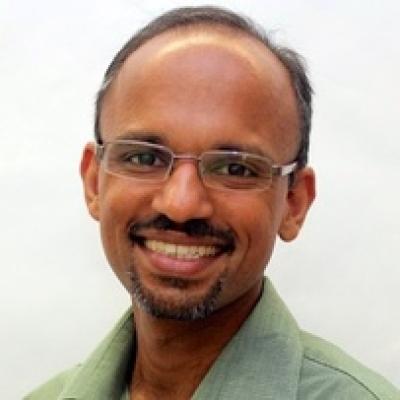
Deepak Ganesan is a Professor at the Manning College of Information and Computer Sciences (CICS) at the University of Massachusetts Amherst. His research focuses on low-power sensing and communication, networked systems, and machine learning applied to pervasive health monitoring and societal challenges. PhD, Computer Science, University of California, Los Angeles (2004) MS, Computer Science, University of California, Los Angeles (2000) BTech, Computer Science, Indian Institute of Technology, Madras (1998) Ganesan's work bridges wireless sensor networks, smart textiles, and healthcare applications. He designs ultra-low-power wearable devices for tracking health signals like drug use, smoking, and cognitive performance, often integrating machine learning for robust detection. His research emphasizes societal impact, particularly in aging and Alzheimer's care through the Massachusetts AI and Technology Center for Connected Care (MassAITC) and the Center for Personalized Health Monitoring (CPHM). Recent publications highlight innovations in edge-cloud collaboration, fabric-based sensors, and longitudinal health analytics. His NIH-funded MD2K Center for Excellence and affiliations with the Center for Data Science and Computational Social Science Institute further underscore his interdisciplinary approach. ACM Fellow NSF CAREER Award (2006) IBM Faculty Award (2008) UMass Junior Faculty Fellow (2008) UMass Lilly Teaching Fellow (2009) Best Paper at CHI 2013 Best Paper Runner-up at Mobicom 2014 Honorable Mentions at Ubicomp 2013 Ganesan leads the SENSORS: Wireless Sensor Networks Group and contributes to global initiatives like the Internet of Battlefield Things. His work spans academic research, industry partnerships, and policy development in AgeTech and digital health.
- Cryptography
- Cybersecurity
- Distributed Systems
- +۳ مورد دیگر
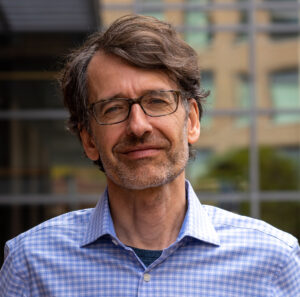
Stanislaw Jarecki is an Associate Professor of Computer Science at the Donald Bren School of Information and Computer Sciences (ICS) at the University of California, Irvine (UCI). He joined UCI in 2003 after earning his Ph.D. in Computer Science from MIT in 2001 under Prof. Shafi Goldwasser. His research focuses on applied and distributed cryptography, with significant contributions to threshold cryptography, secure computation, and password-authenticated key exchange (PAKE) protocols such as OPAQUE, which secures 2 billion WhatsApp users. He also worked at Intertrust’s StarLab and Stanford’s applied cryptography group under Prof. Dan Boneh. Education: Ph.D., Massachusetts Institute of Technology, 2001. Research Interests: Distributed cryptography, secure multi-party computation, privacy-preserving protocols, threshold security, blockchain applications, and efficient cryptographic primitives. His work emphasizes practical solutions for real-world systems, including protocols resilient to server compromises and scalable encryption methods. Awards: 2023 IACR Fellow for contributions to distributed cryptography and efficient secure computation. Advising and Grants: Jarecki’s research has been supported by grants including NSF SaTC programs. He advises students on cryptographic protocol design and security mechanisms. His work on OPAQUE and CHIC protocols exemplifies his focus on bridging theoretical cryptography with practical implementation. Labs/Teams: Leads a research group focused on applied cryptography and security within ICS at UCI, collaborating on projects like secure computation, privacy-preserving data processing, and cryptographic protocol development.
Jens Behley is a Lecturer (Privatdozent) and postdoctoral researcher at the Department of Photogrammetry, University of Bonn. He completed his habilitation in 2023 with a thesis on LiDAR-based spatio-temporal scene understanding for autonomous vehicles and earned his PhD in 2014 under Prof. Armin Cremers. His research focuses on LiDAR perception, agricultural robotics, and 3D scene understanding. Behley is an Associate Editor at IEEE Robotics and Automation Letters (RA-L) and has authored influential datasets like SemanticKITTI and BonnBeetClouds3D. Education: PhD in Computer Science, University of Bonn, 2014 Habilitation in Photogrammetry, University of Bonn, 2023 Research Interests: LiDAR-based perception in urban and agricultural environments, machine learning for robotics, semantic mapping, SLAM algorithms, and 3D reconstruction. His work bridges computer vision and robotics, with applications in autonomous vehicles and precision agriculture. Awards: Best Agri-Robotics Paper Award (IROS 2024) Outstanding Reviewer Awards (ECCV, CVPR, ICRA) Faculty Award for Geodesy (2021) Advisees & Grants: Behley collaborates extensively with the PRBonn lab and researchers like Cyrill Stachniss, focusing on projects funded by EU Horizon and industry partners. His team develops open-source tools for LiDAR processing (e.g., KISS-ICP, VDBFusion). Labs/Teams: Part of the Photogrammetry and Robotics Institute (IGG) at the University of Bonn, contributing to the PRBonn research group.
Steven Luمشاهده پروفایل
دانشیار
Associate Professor Steven Lu is a faculty member at the University of Sydney Business School, serving as Deputy Head of Discipline (Education). He holds a PhD in Marketing from the University of Toronto, an MA in Economics from York University, and a BA from Nankai University. His research focuses on quantitative modeling, machine learning, and big data analytics applied to digital economy challenges such as digital retailing, search advertising, and blockchain. He co-directs the Consumer Insights Research Group and is affiliated with the Sydney Institute of Agriculture. Dr. Lu has published in top journals including Marketing Science , Production and Operations Management , and Journal of Retailing . His awards include the CNS Vithala Rao Award, ANZMAC Best Paper Awards (2022-2024), and the 2021 Vice Chancellor's Teaching Award. He teaches courses on machine learning in marketing, marketing research, and new product development. He leads research grants such as 'The Era of Mobile Payment' (2021) and 'Digital Transformation of Food Sensory Quality' (2017). His advising focuses on topics like neural recommender systems, e-coupon effectiveness, and heterogeneous treatment effects analysis.

Ian W. Archerمشاهده پروفایل
دانشیار
- Early Modern London
- Uses of History in Early Modern Britain
- English Social and Cultural History (1500-1700)
- +۳ مورد دیگر
Dr Ian W. Archer is an Associate Professor in History at the University of Oxford and a Fellow of Keble College. His research focuses on early modern London’s social, political, and cultural history, with a particular emphasis on urban transformation, uses of history, and governance. He co-edited The Oxford Handbook of Holinshed’s Chronicles and is currently working on a book exploring London’s evolution from 1550 to 1700. Dr Archer has held roles as Academic Editor of the Bibliography of British and Irish History and Literary Director of the Royal Historical Society. His research interests include social welfare, crime, taxation, and London’s cultural identity. He teaches courses on early modern British history at Oxford and supervises postgraduate students in related fields. Recent projects involve interdisciplinary collaborations, such as digitizing Holinshed’s Chronicles and analyzing royal entries and lord mayor’s shows.
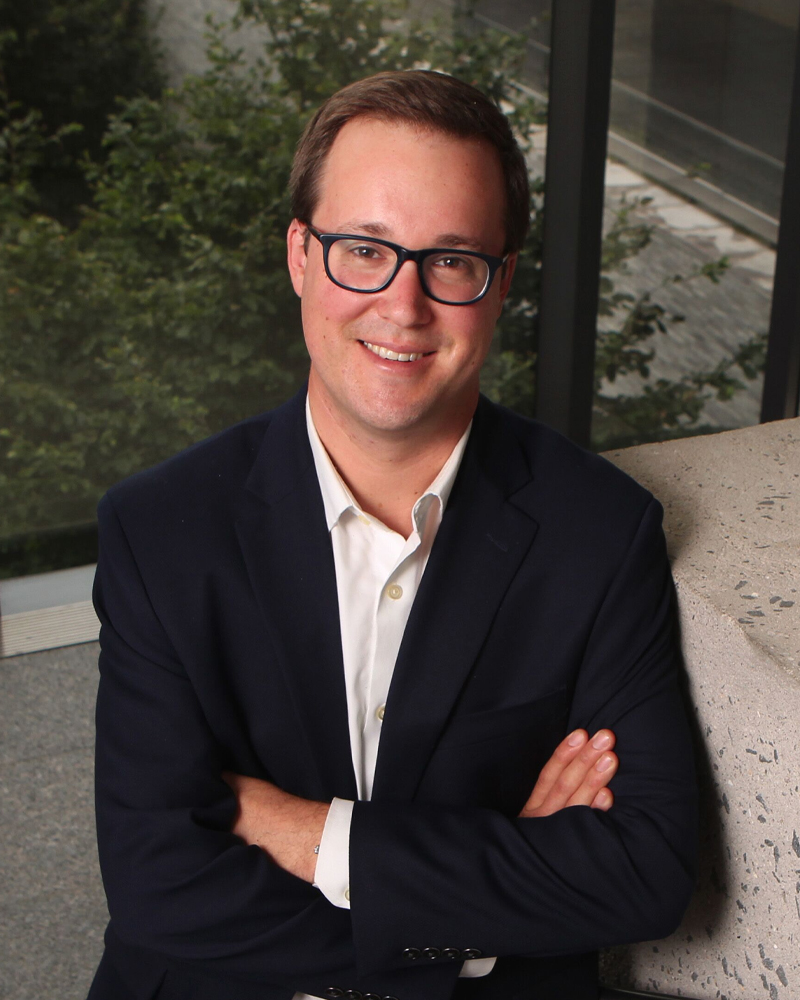
Jesse D. Jenkins is an Associate Professor of Mechanical and Aerospace Engineering and the Andlinger Center for Energy and the Environment at Princeton University. His joint appointment bridges the School of Engineering and Applied Science and the Andlinger Center, focusing on macro-scale energy systems engineering. He holds a Ph.D. in Engineering Systems from MIT (2018) and completed a postdoctoral fellowship at Harvard Kennedy School. Research Interests: Energy systems modeling, deep decarbonization pathways, low-carbon technologies, and energy policy. He leads the Princeton ZERO Lab, which develops optimization-based models to evaluate clean energy transitions and inform policy. Key Awards: Howard B. Wentz Jr. Junior Faculty Award, Princeton Engineering Teaching Excellence Award, TIME100 Next (2024), and recognition in ENR's 2022 Top 25 Newsmakers for leadership in climate policy analysis. Professional Contributions: Serves on advisory boards for Eavor Technologies, Rondo Energy, and Dig Energy. Co-hosts the podcast Shift Key on energy transition strategies. Labs/Teams: Directs the ZERO Lab and co-leads the REPEAT Project, analyzing U.S. decarbonization pathways and federal policy impacts.
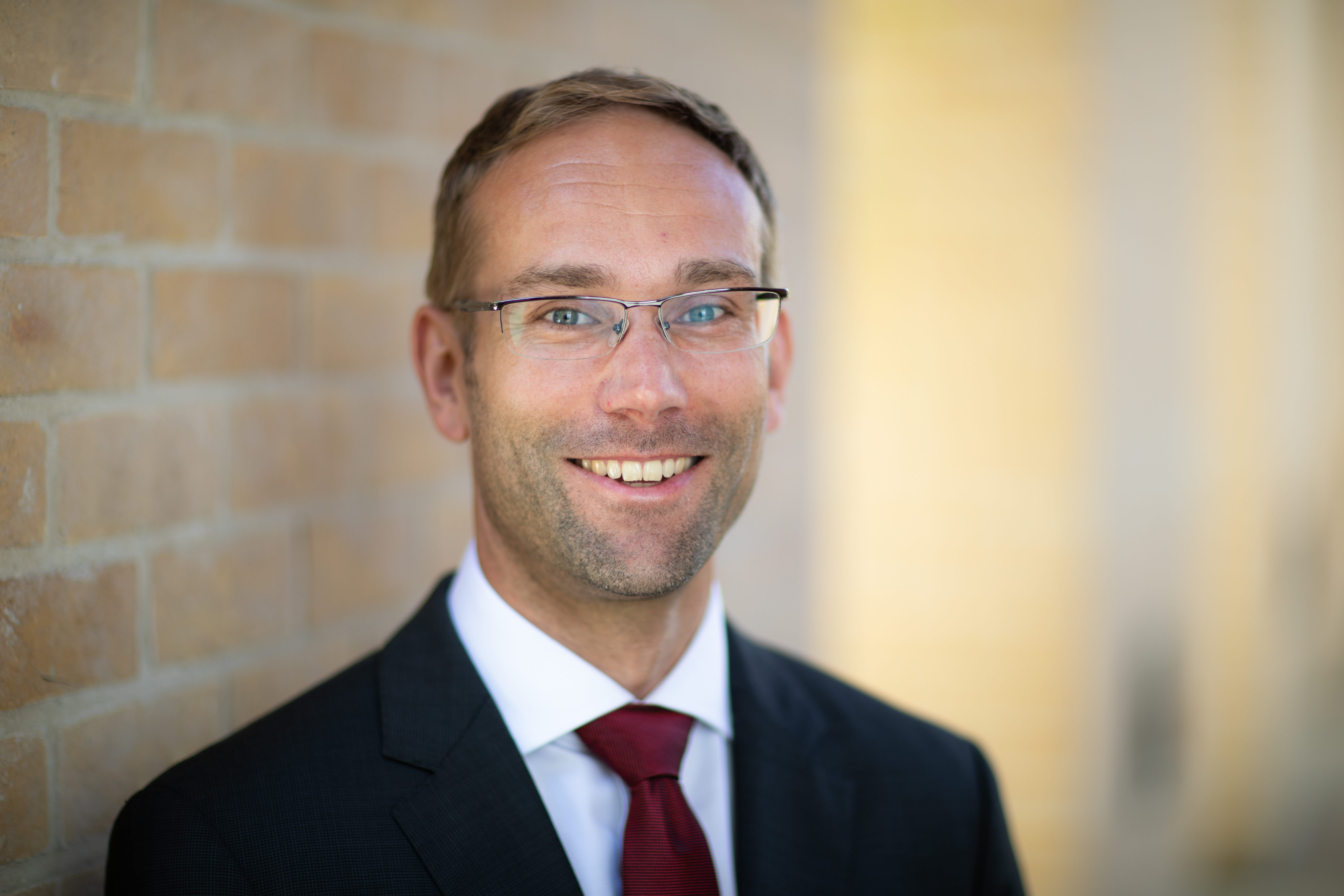
Profile Roles and Affiliations: Michael Smets is a Professor of Management at the Saïd Business School, University of Oxford. He is also a Research Fellow at Green Templeton College and a member of the Centre for Professional Service Firms. His academic contributions span institutional theory, practice theory, and strategic management. Education: Bachelor’s equivalent in Business and Economics, Cologne University, Germany MSc in Management Research, Saïd Business School DPhil in Management, Saïd Business School Postdoctoral Researcher at Saïd Business School and University of Alberta’s School of Management Research Interests: Michael’s work examines professional service firms (PSFs) through three core lenses: Global Operations: Internationalisation challenges in law, consulting, and reinsurance firms, with a focus on institutional complexity and regulatory systems. Innovation & Career Systems: How evolving career structures in PSFs can simultaneously drive innovation and address work-life balance demands. Recent studies highlight ambidextrous career paths and their strategic leverage. Methodological Innovation: Pioneering video- and team-ethnography to capture micro-level organisational practices. His ‘fly on the wall’ study at Lloyd’s of London is a landmark in this domain. Academic & Industry Impact: His research has been translated into industry-relevant outputs, including reports for the reinsurance sector and handbooks for legal firms. The 2013 ESRC Award for Outstanding Impact in Business recognises this translational work. Academically, he has received the 2012 Academy of Management Journal Best Article Award and multiple best paper awards. Teaching & Executive Education: Michael teaches strategic management, innovation, and business development in executive programmes for Commerzbank, Deloitte, and other global firms. He is Programme Director for the Oxford Leading Professional Service Firms Programme, emphasizing interactive, case-study driven pedagogy. His teaching philosophy prioritises critical thinking over rigid models, as he states: ‘It is critical to understand under which circumstances which models work, and which ones don’t.’ Labs & Collaborations: Affiliated with the Centre for Professional Service Firms and the Oxford Initiative on Rethinking Performance. He collaborates with institutions like Cass Business School and Aston Business School on ethnographic studies. His work also intersects with the Insurance Institute of London and the International Bar Association for practitioner-focused outputs.

Johanna Sumiala is a Professor of Media and Communication Studies at the University of Helsinki’s Faculty of Social Sciences. She holds a Docent title in Communication and leads research initiatives such as the Helsinki Inequality Initiative (INEQ) and the Helsinki Research Hub on Religion, Media and Social Change. Her expertise spans media anthropology, media and religion, visual culture, and media history. She has supervised doctoral candidates in Social Sciences and Theology, and her work bridges academic research with public engagement through media appearances and policy consultations. Education: Master of Arts (History of Ideas and Learning), University of Oulu, 1996 Licentiate in Philosophy, University of Jyväskylä, 2000 Doctor of Philosophy (Journalism), University of Jyväskylä, 2001 Docent of Communication, University of Helsinki, 2010 Research Interests: Her work examines digital death rituals, media’s role in religious populism, and the intersection of technology and existential security. Projects include Digital Death: Transforming History, Rituals and Afterlife and Mediatized Religious Populism . Grants & Collaborations: Funded by the Academy of Finland and EU CHANSE consortium, her research explores topics like hybrid media events, digital witnessing, and transnational Islam governance. She collaborates internationally with institutions like the London School of Economics and University of Bath. Labs/Teams: Leads the Helsinki Research Hub on Religion, Media and Social Change, focusing on digital religion’s methodological challenges and societal impacts.

Vera Liaoمشاهده پروفایل
دانشیار
Vera Liao is a Principal Researcher at Microsoft Research, where she is part of the FATE (Fairness, Accountability, Transparency, and Ethics of AI) group. She will join the University of Michigan Computer Science and Engineering department as an Associate Professor in fall 2025. Her work focuses on human-AI interaction, explainable AI, and responsible computing. Liao has made significant contributions to IBM products such as AI Explainability 360 and Uncertainty Quantification 360 during her time at IBM T.J. Watson Research Center. Dr. Liao received her education from the University of Illinois at Urbana-Champaign and Tsinghua University. Her academic journey has positioned her at the intersection of human-computer interaction and artificial intelligence, with a strong emphasis on creating AI systems that are transparent, accountable, and user-centered. Vera Liao's research primarily centers around human-centered AI explainability and transparency. She investigates how to design AI systems that effectively communicate their capabilities, limitations, and decision-making processes to users. Her work examines the intersection of AI transparency with trust, control, and user experience. Liao has pioneered approaches to bridging the socio-technical gap in AI evaluation and has developed frameworks for contextualized evaluation of explainable AI systems. Her research spans multiple domains including conversational interfaces, data storytelling, and creative work with generative AI. Liao's publications reveal a clear trend toward addressing the challenges of large language models and their impact on human-AI interaction. Her recent work focuses on understanding how uncertainty communication affects user trust, how to design for appropriate reliance on AI systems, and how to create authentic co-creation experiences with generative models. She has been examining the risks in AI-infused information ecosystems and developing methods for human-centered evaluation of language technologies. Her scientific contributions have been recognized with multiple honors: Best Paper Award, Honorable Mention at CHI 2025 (two papers) Best Paper Award at CHI 2024 Best Paper Award, Honorable Mention at FAccT 2023 Best Paper Award, Honorable Mention at HCOMP 2022 Best Paper Award, Honorable Mention at CHI 2021 Best Paper Award, Honorable Mention at CHI 2014 Outstanding Paper Award at IUI 2019 Dr. Liao is an active mentor, having guided numerous research interns from top universities including Cornell, Princeton, CMU, Stanford, and MIT. She serves in editorial roles as Co-Editor-in-Chief of the Springer Human-Computer Interaction Book Series and as an Editor for ACM CSCW. Liao has secured research funding through her work at Microsoft Research and previously at IBM, focusing on projects related to AI explainability, transparency, and responsible AI development. As part of Microsoft Research's FATE group, Liao collaborates with a multidisciplinary team of researchers focused on the ethical implications of AI technologies. Her work bridges the gap between technical AI development and human-centered design principles, ensuring that AI systems are developed with user needs and societal impacts in mind.
- Nonlinear Optics
- Quantum Electronics
- Laser Physics
- +۷ مورد دیگر
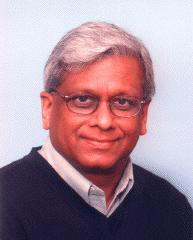
Govind P. Agrawal is a Professor of Optics and Physics at the University of Rochester. He holds concurrent positions as a Fellow of the IEEE and the Optical Society of America (OSA). His research focuses on theoretical optics, nonlinear optics, laser physics, and semiconductor lasers, with notable contributions to fiber optics and optical communications. Education: Agrawal earned his MS (1971) and PhD (1974) from the Indian Institute of Technology, New Delhi. He has held prior positions at École Polytechnique (Paris), City University of New York, and AT&T Bell Laboratories before joining the University of Rochester in 1989. Research Interests: Agrawal's work explores quantum electronics, soliton dynamics, Raman scattering, and temporal reflection phenomena. He has authored seminal books such as Nonlinear Fiber Optics and Semiconductor Lasers , and published over 300 journal articles. His recent studies emphasize spatiotemporal dispersion, multimode fiber optics, and integrated photonics systems. Editorial Roles: He served as Topical Editor for Journal of the Optical Society of America B (1993–1998) and currently contributes to editorial boards for optics journals and book series. Awards: Honored as a Fellow of the IEEE and OSA for his transformative contributions to optics and photonics. Key Contributions: Pioneered theories on graded-index fiber amplifiers, temporal reflection in nonlinear media, and soliton-based technologies. His research bridges fundamental optics with practical applications in telecommunications and photonics systems.
Andy Ball is a Distinguished Professor in the School of Science at RMIT University, specializing in environmental microbiology and biotechnology. He leads the ARC Training Centre for the Transformation of Australia’s Biosolids Resource and has held key roles at institutions including the University of Essex and Flinders University. His research focuses on bioremediation, organic waste treatment, and environmental pollution solutions, with over 300 peer-reviewed publications and significant industry collaboration. Andy's academic career spans 30 years, with roles such as Director of the Centre for Environment and Society at Essex and Director of Flinders Bioremediation. He has attracted >$22M in research grants, particularly in applied environmental microbiology. His awards include the Royal Society of Victoria Medal (2021) and RMIT Research Excellence Award (2018). Research interests emphasize sustainable remediation of contaminated environments, leveraging microbial ecology and biotechnology. His teaching spans environmental science and biotechnology programs at RMIT. Andy advises on projects addressing bioremediation, bioenergy, and pathogen survival, with active collaborations with industries like Shell and Melbourne Water.
Professor Libby Porter is a leading academic and researcher in urban planning and human geography at RMIT University, Australia. As Director of the Centre for Urban Research (CUR) and Professor in the School of Global, Urban and Social Studies (GUSS), her work focuses on critical urban governance, decolonising planning practices, Indigenous rights, and urban displacement. She holds a prestigious position as a Fellow of the Higher Education Academy and has contributed extensively to international policy debates through her role as Assistant Editor for Planning Theory and Practice . Her research examines settler-colonial dynamics in urban development, public housing policy, and the intersection of planning with Indigenous sovereignty. Notable publications include Unlearning the Colonial Cultures of Planning (2010) and Planning in Indigenous Australia (2018). Libby has held academic roles in the UK and Australia and previously worked in urban planning policy for Victorian Government departments. She supervises students in Honours, Masters, and PhD programs, focusing on topics like Indigenous housing, urban displacement, and environmental policy. Her work has been featured in The Conversation , BBC News, and academic journals. Libby also leads the Critical Urban Governance Research Program and oversees the Bachelor of Urban and Regional Planning at RMIT. Awards: Fellow of the Higher Education Academy Key Roles: Director, Centre for Urban Research; Co-founder, Planners Network UK; Member, Expert Advisory Panel for Melbourne 2030 Research Themes: Property rights, urban sustainability, decolonisation, Indigenous planning, gentrification

Ruxandra Paul is a faculty member in the Department of Political Science at Amherst College, where they teach courses ranging from introductory to advanced levels including POSC 470: International Migrations and Politics and POSC 436: European Democracy. Their academic work bridges political science, migration studies, and European Union politics, with a particular focus on how mobility transforms national politics and international relations. Education: PhD (Government), Harvard University A.M. (Government), Harvard University B.A., summa cum laude, PBK (Political Science - International Relations; French), Williams College Paul's research examines how migrations transform national politics and international relations, with particular attention to European citizenship enabling free movement across borders. Their work explores political developments in a world where people's experiential space transcends national territories, especially focusing on Central and Eastern Europe. Current research projects include "Citizens of the Market: Free Movement and Political Change in Central and Eastern Europe" (under contract at Oxford University Press) and studies on pandemic politics, cyberpolitics, and aging/ageism. Paul's publications demonstrate consistent scholarly output in migration politics, with a concentration on European contexts. Their work spans theoretical contributions on transnational citizenship and practical analyses of migration crises, showing an evolving focus from foundational migration studies toward contemporary challenges including pandemic politics and digital governance. Scientific Awards and Affiliations: Minda de Gunzburg Center for European Studies, Harvard University - Visiting Scholar and Local Affiliate Harvard Academy for International and Area Studies Chateaubriand Fellowship of the French Government Weatherhead Center for International Affairs research grant Krupp Foundation research grant Certificate of Excellence in Teaching, Derek Bok Center for Teaching and Learning Paul has received multiple competitive research grants and teaching awards, demonstrating excellence in both research and pedagogy. Their teaching portfolio includes innovative courses like POSC 109: Pandemic Politics: Democracy versus Disease and POSC 239: Acceptable Prejudice: Age, Aging, Ageism, reflecting their commitment to connecting academic research with contemporary issues. Outside of formal academic work, Paul teaches fitness classes (Barre and Barre Cardio) at the Amherst Gym and maintains diverse interests including music, dance, art, and long-distance running.
فقط ۷۵۰ نتیجه اول نمایش داده میشود. برای رسیدن به نتایج دقیقتر، جستوجو را با فیلترها محدودتر کنید.