- Geobotany
- Plant-Soil Relations
- Phytoremediation
- +۷ مورد دیگر
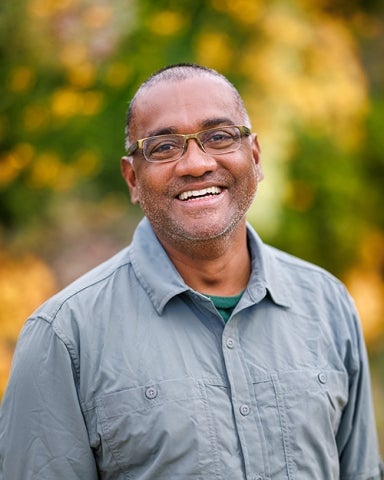
Nishanta "Nishi" Rajakaruna is a Professor in the Biological Sciences Department at California Polytechnic State University (Cal Poly). His expertise spans geobotany, plant-soil relations, phytoremediation, rare plant ecology, conservation biology, restoration ecology, and ethnobotany. Dr. Rajakaruna directs the Geoecology Lab at Cal Poly, where he and his team study plants and lichens growing on extreme substrates including serpentinite, limestone, mine tailings, and guano-enriched soils. Dr. Rajakaruna's educational background includes a B.A. in Human Ecology (with emphasis on Botany) from the College of the Atlantic, M.Sc. and Ph.D. in Botany from the University of British Columbia, and postdoctoral training in Plant Ecology at Stanford University. His professional appointments include Coordinator of National and International Fellowships and Scholarships (2024-present) and Fulbright Alumni Ambassador (2024-2026). His research focuses on how edaphic conditions influence plant and lichen diversity from species to community levels, with primary emphasis on serpentinite and other heavy metal-enriched rock outcrops. Current projects examine the effects of atmospheric nitrogen deposition and nutrient-enriched fire retardants on rock outcrop plants, as well as restoration ecology of degraded rock habitats. His fieldwork spans California, Maine, South Africa, Russia and Sri Lanka. Dr. Rajakaruna has received numerous honors including the Distinguished Teaching Award (2021-2022), Distinguished Scholarship Award (2021-2022), and Outstanding Faculty Advisor Award (2019-2020). He has been awarded multiple Fulbright Scholarships for research in South Africa, Madagascar, Sri Lanka, and India, and currently serves as a Fulbright Specialist in South Africa (2024). As an educator, Dr. Rajakaruna teaches courses including Biogeography (BIO 415), Geoecology (BIO 448), Trends in Biology (BIO 591), General Botany (BOT 121), Plants, People and Civilization (BOT 311), and Plant Taxonomy (BOT 313). His advising interests align with his research specialties, including geobotany, plant evolutionary ecology, plant conservation, phytoremediation, and ethnobotany.