Andrew Thornhillمشاهده پروفایل
مدرس ارشد
- Plant Systematics
- Phylogenetics
- Biogeography
- +۷ مورد دیگر
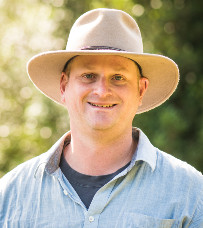
Dr. Andrew Thornhill is a Senior Lecturer in Plant Systematics and Director of the N.C.W. Beadle Herbarium at the University of New England, where he works within the School of Environmental and Rural Science in the Faculty of Science, Agriculture, Business and Law. With expertise spanning phylogenetics, systematics, and biogeography, Thornhill has established himself as a leading researcher in Australian plant evolution. His educational background includes a BSc (Environmental) from Monash University, an MSc from Monash University studying pitcher plants, and a PhD from the Australian National University focusing on the plant family Myrtaceae. Thornhill's career has taken him through several major herbaria including the Australian National Herbarium at CSIRO, the Australian Tropical Herbarium at James Cook University, the University and Jepson Herbaria at UC Berkeley, and the State Herbarium of South Australia. Thornhill's research focuses on spatial phylogenetics—a field combining large-scale molecular phylogenetics, geospatial information, and randomization tests to identify areas of unique diversity and endemism. His work primarily centers on native Australian plants, particularly eucalypts and Acacia, with additional interests in palynology, paleobotany, and bryology. He has developed significant species-level phylogenies for key Australian plant groups and has explored global applications through studies of California and Chilean floras. Analysis of his recent publications reveals a consistent focus on spatial phylogenetics applied to diverse geographical contexts. His work bridges theoretical evolutionary biology with practical conservation applications, particularly in identifying biodiversity hotspots and understanding climate change impacts on plant distributions. The recurring themes across his publications include the integration of molecular data with spatial patterns, the application of phylogenetic diversity metrics to conservation prioritization, and systematic studies of Myrtaceae. As Director of the N.C.W. Beadle Herbarium, Thornhill oversees a collection of over 115,000 specimens with particular strengths in northern New South Wales and southeastern Queensland flora. The herbarium serves as both a research resource and teaching facility, supporting undergraduate and graduate education in plant systematics. Thornhill coordinates several key botany courses including Plant Diversity, Field Botany, and Mushrooms and Mosses, while also teaching Evolution and Biogeography and Biological Systematics. Thornhill's extensive publication record—over 100 papers with significant citation impact—demonstrates his contributions to understanding plant evolutionary patterns across Australia and globally. His work connects fundamental botanical research with conservation applications, particularly through the development and application of spatial phylogenetic methods to identify areas of high evolutionary significance for conservation prioritization.