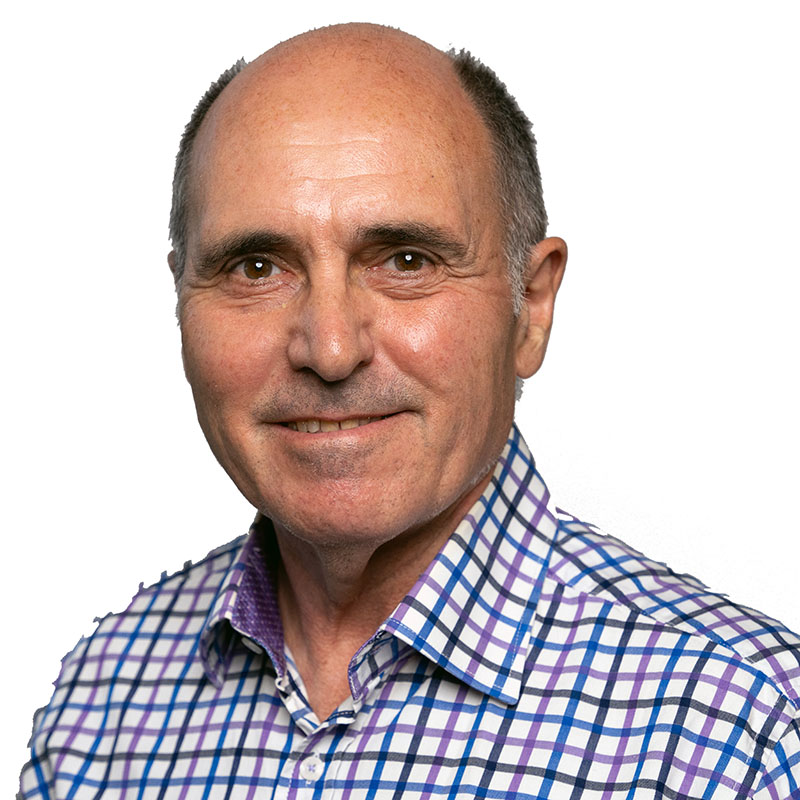
Steven Kosier is a Research Professor of Electrical and Computer Engineering at Vanderbilt University's School of Engineering . His research focuses on microelectronics reliability, particularly radiation effects on power devices and advanced CMOS technologies. He explores semiconductor applications for space and military systems, emphasizing interdisciplinary solutions. Education: Ph.D., Electrical Engineering, University of Arizona M.S., Electrical Engineering, University of Arizona B.S., Electrical Engineering, University of Minnesota Research Interests: Radiation Effects on Semiconductors SiC Power MOSFET Reliability High-Voltage Device Design Space and Military Electronics Multi-disciplinary Engineering Solutions Publications Trends: His recent work emphasizes radiation-hardened power devices, trench-based semiconductor architectures, and hybrid sensor systems. Key themes include SiC MOSFET degradation under heavy-ion irradiation, TID effects in nanoscale MOSFETs, and high-voltage trench device optimization. Awards: No specific scientific awards were listed in the provided text. Grants and Labs: No grants or lab affiliations were explicitly mentioned. His research appears to focus on device physics and semiconductor reliability without noted collaborative lab structures.
Paul Franzon is the Cirrus Logic Distinguished Professor and Associate Department Head for Graduate Affairs at the Department of Electrical and Computer Engineering, North Carolina State University. He holds a PhD and Bachelor's in Electrical Engineering and a Bachelor's in Physics/Mathematics from the University of Adelaide, Australia. His research focuses on quantum information science, machine learning-driven hardware design, 3D integration, and high-speed systems. Education: PhD in Electrical Engineering, University of Adelaide (1988) Bachelor's in Electrical Engineering, University of Adelaide (1984) Bachelor's in Physics and Mathematics, University of Adelaide (1982) Research Interests: Quantum computing and algorithm optimization AI-driven design automation for 3D integrated circuits High-speed communication systems Hardware security and FPGA acceleration Awards & Honors: IEEE Fellow (2006) Alcoa Foundation Distinguished Engineering Research Award (2005) NC State Alumni Distinguished Undergraduate Professor Award (2003) NSW Australia Expatriate Scientist Award (2003) Advising & Grants: Advised PhD student Priyank Kashyap (2023 graduate) Recipient of NSF Young Investigators Award (1993) Labs & Collaborations: Center for Advanced Electronics Through Machine Learning (CAEML) IEEE EPS Society (Associate Editor)
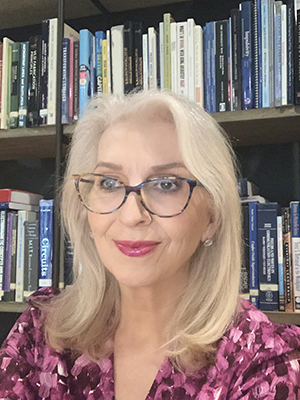
Linda Katehi is a Professor of Electrical & Computer Engineering and Materials Science & Engineering at Texas A&M University, holding the O'Donnell Foundation Chair II. She is a Member of the National Academy of Engineering and American Academy of Arts and Sciences. Her research focuses on advanced electromagnetic systems, MEMS devices, and embedded intelligent sensors. Katehi earned her Ph.D. in Electrical Engineering from UCLA (1984), with prior degrees from UCLA and the National Technical University of Athens. Education: Ph.D., Electrical Engineering, UCLA (1984) M.S., Electrical Engineering, UCLA (1981) B.S., Electrical and Mechanical Engineering, National Technical University of Athens (1977) Research Interests: Katehi pioneers innovations in microwave circuits, MEMS-based reconfigurable systems, terahertz technology, and neuromorphic sensors. Her work emphasizes integrating artificial intelligence into hardware for adaptive sensing platforms. Recent projects include flexible electronics, time-domain system analysis, and sustainability in urban infrastructure. Awards & Recognition: Ramo Simon Founder’s Award (2015) Charter Fellow, National Academy of Inventors (2013) Leading Women in STEM Award (2012) Rudy E. Henning Mentoring Award (IEEE, 2011) Lab & Teams: Directs the Intelligent Electromagnetic Sensors Lab (IEMSL), advancing embodied intelligence in electronics. Her team develops AI-embedded sensors and reconfigurable systems for applications in healthcare, communications, and environmental monitoring. Collaborates across disciplines to address global sustainability and equity challenges.
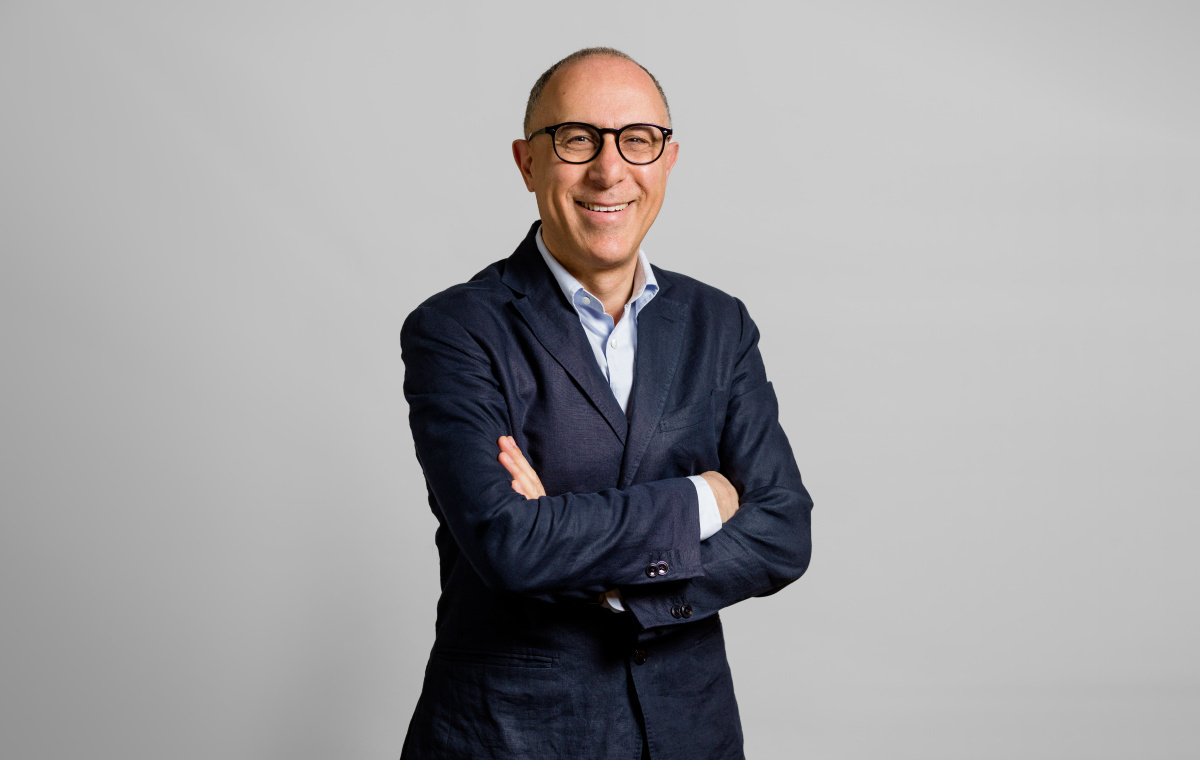
Vahé Nerguizian is a full Professor in the Department of Electrical Engineering at École de technologie supérieure (ÉTS) in Montreal, Canada, where he has established himself as a leading researcher in microelectronics, MEMS, and biomedical applications. Affiliated with the LACIME (Communications and Microelectronic Integration Laboratory), his work bridges engineering disciplines with healthcare innovations, particularly in cancer research and point-of-care diagnostics. His educational background includes a B.Ing. from Polytechnique Montréal, an M.Eng. from McGill University, and a Ph.D. from Concordia University. This strong foundation in electrical engineering has enabled his interdisciplinary research across multiple domains. Nerguizian's research focuses on the intersection of microfluidics, MEMS, and biomedical applications, with particular emphasis on cancer cell detection, liposome production for drug delivery, and microelectronic integration for healthcare solutions. His laboratory develops microfluidic devices for synthesizing nanoparticles and liposomes, with applications in cancer therapeutics and diagnostics. The work combines microwave engineering, bio-MEMS, and microelectronics to create innovative diagnostic tools and therapeutic delivery systems. His recent publications (2021-2025) demonstrate a clear trajectory toward increasingly sophisticated biomedical applications of microfluidic and MEMS technologies, with growing emphasis on cancer research, extracellular vesicle analysis, and therapeutic delivery systems. The research has evolved from fundamental MEMS and microwave engineering toward highly translational biomedical applications. 2015: Excellence in Teaching Award from the Board of Directors Nerguizian has supervised over 25 graduate students across doctoral and master's programs, with current projects focusing on microfluidic systems for nanoparticle synthesis and sensor systems for biomolecule detection. His research has received significant funding through collaborations with medical researchers, particularly with Julia Burnier's team at McGill University. The LACIME laboratory, where he conducts his research, provides state-of-the-art facilities for micro- and nanofabrication, integrated circuit design, and photonic microsystems. As part of the LACIME research group, Nerguizian contributes to a dynamic environment focused on both fundamental and applied research with strong industry connections. The laboratory's work spans from materials science to communication protocols, with particular strength in developing innovative solutions for healthcare applications.
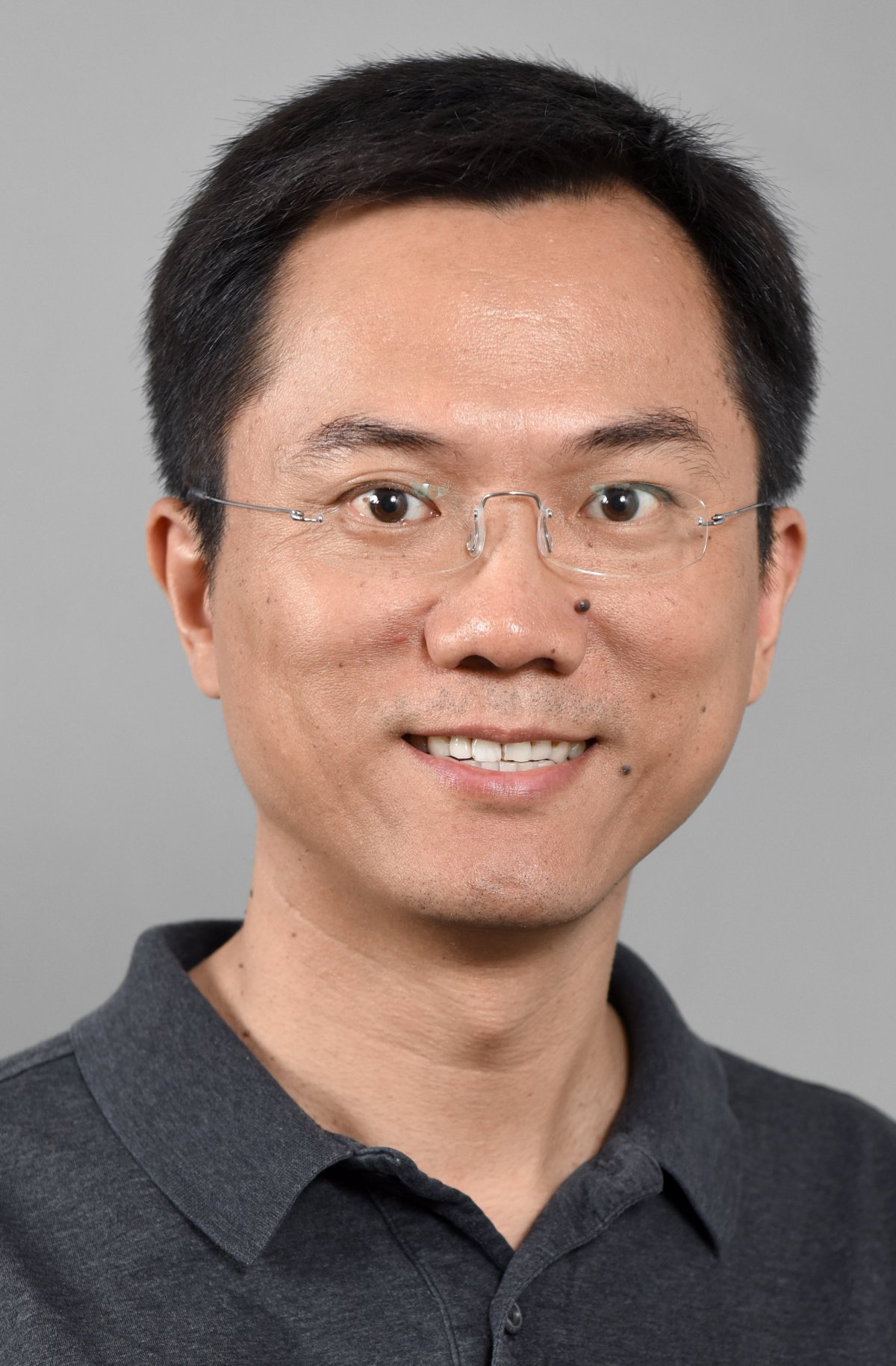
Srikanth Rangarajan is an Assistant Professor at Binghamton University's School of Systems Science and Industrial Engineering. He holds a PhD and MS from the Indian Institute of Technology Madras (2017) and a BE from Anna University Chennai (2011). His research focuses on energy storage systems, thermal management of electronics, battery optimization, and digital twinning. He previously served as an Associate Research Professor in Mechanical Engineering at Binghamton under Bahgat Sammakia. Rangarajan authored the book Phase Change Material Heat Sinks: A multi-objective Perspective and holds a patent for a rotatable heat sink design. His teaching includes optimization techniques, thermal modeling, and neural networks. Recent work explores virus spread modeling via genetic algorithms, with a preprint under review in Journal of Healthcare Informatics . He has received multiple awards including an Institute Post-Doctoral Fellowship and Research Assistantships from the Indian government. His research bridges thermal engineering with advanced manufacturing and sustainability, addressing challenges in high-power electronics and data center cooling. Education: BE in Mechanical Engineering, Anna University (2011) MS in Thermal Engineering, IIT Madras (2017) PhD in Heat Transfer, IIT Madras (2017) Research Interests: Digital twin systems for battery optimization Thermal energy storage design Advanced electronics packaging Data center cooling innovations Phase change material composites His recent articles highlight cooling solutions for high-density electronics, battery recycling challenges, and predictive models for epidemiological patterns using computational methods. Ongoing work includes embedded cooling technologies for heterogeneous integrated circuits and sustainable thermal management strategies. Awards: Patent: Rotatable Heat Sink (Government of India) Institute Post-Doctoral Fellowship (IIT Madras, 2017) Research Associate, Divecha Centre (IISc, 2017) Half-Time Research Assistantship (MHRD, 2012-2013) Advising & Grants: While no formal advisees are listed, his prior roles indicate involvement in mentorship. His research has been supported by institutional grants including those from the Indian Ministry of Human Resource Development. Labs/Teams: Active in Binghamton's Systems Science and Industrial Engineering lab, collaborating on thermal management and additive manufacturing projects.
Professor Yiu-Wing Mai is a University Chair and Professor of Mechanical Engineering at The University of Sydney, affiliated with the School of Aerospace, Mechanical and Mechatronic Engineering. He is a globally recognized authority in fracture mechanics and advanced materials science, with contributions spanning four decades. His research focuses on nanocomposites, electromagnetic materials, and fracture mechanics models for composites and ceramics. Mai has pioneered methods for strengthening and toughening materials, including the crack-wake bridging model and essential work of fracture framework. His academic distinctions include Fellowships from the Royal Society, Australian Academy of Science, and Chinese Academy of Engineering. He has received prestigious awards such as the AA Griffith Medal (2016), AGM Michell Medal (2016), and ICCM21 Scala Award (2017). Mai’s work has practical applications in industries like green manufacturing and battery technology. Research interests include polymer nanocomposites, multifunctional materials (e.g., fire-retardant composites), and energy storage systems. His recent studies emphasize nanotechnology-driven advancements in Li-ion batteries and thermal management materials. Mai has authored over 500 publications and holds honorary professorships at institutions worldwide.
David Huitink is an Associate Professor and Twenty-First Century Professor in the Department of Mechanical Engineering at the University of Arkansas College of Engineering. His research spans the intersection of materials and thermal sciences, with a focus on leveraging fundamental thermophysical material behaviors for engineered applications. He directs the EMPIRE Laboratory (Engineered Multi-Physical Interactions & Reliability Evaluation), which focuses on reliability engineering for next-generation electronic packaging solutions. Dr. Huitink received his educational foundation at Texas A&M University, earning a Bachelor of Science (2006), Master of Science (2007), and Doctor of Philosophy (2011), all in Mechanical Engineering. As an NSF Graduate Research Fellow during his doctoral studies, he specialized in complex nano-scale interactions at material interfaces under chemical and mechanical influence. His research interests encompass materials science, thermal sciences, and reliability engineering, with particular focus on thermophysical material behaviors, energy sciences, and thermally active functional materials. The Huitink lab works closely with Electrical Engineering collaborators to develop next-generation high-density power electronics for electrified transportation and power conversion systems. Recent efforts include additive manufacturing for hot-spot thermal management, transient temperature abatement, and interconnect fabrication technology development for enhanced electronic packaging lifetimes through thermal cycling events. Analyzing his recent publication record reveals a clear trend toward advanced thermal management solutions for power electronics, with increasing focus on phase change materials, nanowire-enhanced interconnects, and reliability modeling under combined stress conditions. His work bridges fundamental materials science with practical engineering applications in high-power systems, particularly for electric vehicle technologies and aerospace applications. NSF Graduate Research Fellow (2007-2011) Texas A&M Graduate Diversity Fellow (2008-2011) Texas A&M Graduate Merit Fellow (2006-2007) National Merit Scholar (2002-2006) BSA Eagle Scout (2001) Dr. Huitink brings significant industry experience to his academic role, having spent over five years at Intel Corporation as Quality & Reliability Engineering Program Manager for Intel's Custom Foundry Division. There he pioneered advanced reliability prediction methods for silicon-based flip chip microelectronic packages and developed testing protocols and FEA methods for Design for Reliability guidance. He currently serves as Associate Editor of Microelectronics Reliability Journal and has patent applications filed in Low Z-height Electronic System design and thermal optimization of space-limited electronic systems. The EMPIRE Laboratory maintains strong connections with Arkansas's multi-disciplinary power electronics program, which includes 14 faculty members across 4 departments, approximately 100 graduate students, and nearly $10 million in annual research expenditures. The lab collaborates with several centers of excellence including GRAPES, POETS, and SEEDS, utilizing state-of-the-art facilities such as NANO, HiDEC, and NCREPT.
Yu [Kevin] Cao is the Louis John Schnell Professor in the Department of Electrical and Computer Engineering at the University of Minnesota. His research focuses on microelectronics co-design for energy-efficient computing, spanning integrated circuit design, semiconductor physics, and machine learning methodologies. He leads the Microelectronics Co-design Research Group and actively collaborates with institutions like Georgia Institute of Technology, Sandia National Laboratories, and Notre Dame. His research interests include AI hardware acceleration , in-memory computing , cryogenic CMOS design , and 3D integration of heterogeneous chiplets . Current initiatives explore reconfigurable on-package systems for AI, spiking neural networks on neuromorphic hardware, and low-temperature logic technologies. Recent publications and projects highlight advancements in AI accelerators , RRAM-based compute-in-memory , graph convolutional networks , and 3D integration . His group develops tools like MN-SIM 2.0 for memristor modeling and investigates novel materials for neuromorphic systems. Grants include collaborative NSF funding for chiplet-based AI systems, CoCoSys center funding from SRC, and DOE/Sandia projects on neuromorphic hardware. Future work emphasizes scalable co-design frameworks for intelligent systems and heterogeneous integration challenges.
Luciano Scaltrito is a Full Professor in the Department of Applied Science and Technology (DISAT) at the Polytechnic University of Turin, where he also serves as a member of the Interdepartmental Center PEIC - Power Electronics Innovation Center and Scientific Advisor for the Partnership Agreement with SPEA. His research focuses on micro and nanotechnologies, power electronics, and MEMS devices. His primary research interests include 3D modeling, capacitive sensors, polymeric 3D printing, solid state physics, and surface micromachining. Professor Scaltrito's work spans the study of packaging technologies for power electronics and MEMS devices, mechanical/electrical/thermal/optical interfaces for electronic devices, lithographic processes for silicon and silicon carbide power devices, and production processes for sensors and actuators. His research aligns with several Sustainable Development Goals including Good Health and Well-being, Quality Education, Clean Water and Sanitation, Decent Work and Economic Growth, Industry Innovation and Infrastructure, and Partnerships for the Goals. His recent publications demonstrate a strong focus on 3D printing applications for electronics and MEMS, power electronics packaging, environmental monitoring sensors, and advanced materials for energy applications. The research spans multiple disciplines including materials science, electronics engineering, environmental engineering, and nanotechnology. President of Italian Association of Science and Technology (2017-2020) Vice President of Italian Association of Science and Technology (2016) Steering Committee member of Italian Association of Science and Technology (2015, 2021) Program committee member for MNE2021 conference Professor Scaltrito actively supervises numerous PhD students across multiple programs including Electrical, Electronic and Communications Engineering, and Sustainable Materials, Processes and Systems for Energy Transition. He leads multiple research projects including SMIP (2024-2027), SIRCEC (2023-2025), and ECOSMARTROAD 2.0 (2021-2023), with funding from regional, national, and EU sources as well as commercial contracts with industry partners. He directs the CHILAB Laboratory in Chivasso, which focuses on materials and microsystems research, and maintains strong industry partnerships through numerous commercial research agreements with companies including SPEA S.p.A. and Dana-TM4 Italia S.r.l.
Mikael Östling is a Professor at KTH Royal Institute of Technology, holding a position in the Division of Electronics and Embedded Systems within the School of Information and Communication Technology. He earned his MSc (1980) and PhD (1983) in engineering physics from Uppsala University. Since 1984, he has been a faculty member at KTH, serving as Deputy President (2017–2022), Dean of the School of ICT (2004–2012), and Head of the Department of Microelectronics and Information Technology (2000–2004). He has held visiting roles at Stanford University and the University of Florida. His research focuses on silicon/silicon germanium devices, wide bandgap semiconductors (e.g., silicon carbide), and high-power/high-frequency applications. He has authored over 600 papers, 10+ book chapters, and a textbook. Key achievements include co-founding TranSiC (2005), securing the ERC Advanced Investigator Grant (2009), and serving as Editor-in-Chief of IEEE Journal of Electron Devices Society (2016–2019). He is an IEEE and ECS Fellow. Östling has supervised 50 PhD theses and contributed to innovations like high-temperature silicon carbide circuits and graphene-based sensors. His work spans academic leadership, industry collaboration, and global research advisory roles in EU frameworks and the European Research Council.
Ricardo Izquierdo is a Professor in the Department of Electrical Engineering at École de technologie supérieure (ÉTS), where he holds a prominent position as Director of the LACIME (Communications and Microelectronic Integration Laboratory). He earned his B.Ing., M.Sc.A., and Ph.D. in Physics Engineering from Polytechnique Montréal. His research spans multiple interdisciplinary fields, with a focus on printed electronics, nanomaterials, and sustainable energy systems. Department: Department of Electrical Engineering Research Laboratories: LACIME (Director), ÉDÉ Sustainable Energy Laboratory Office: A-2475 Email: ricardo.izquierdo@etsmtl.ca Professor Izquierdo's research interests center on micro- and nanosystems (MEMS/NEMS), nanotechnology, printed electronics, biosensors, organic solar cells, and embedded systems for sports equipment. His work bridges fundamental materials science with practical applications in healthcare, environmental monitoring, and sustainable energy. He has developed innovative approaches to printed flexible sensors, photonic curing techniques for solar cells, and graphene-based materials for gas sensing applications. An analysis of his 15 most recent publications reveals a strong focus on printed flexible electronics for sensing applications, advanced photonic curing techniques for perovskite solar cells, and novel materials for energy applications. His work demonstrates a consistent trend toward developing practical, manufacturable solutions that address real-world challenges in healthcare monitoring, environmental sensing, and renewable energy conversion. Professor Izquierdo has received significant recognition through his extensive publication record, with numerous articles in high-impact journals including ACS Omega, Nanomaterials, and IEEE Sensors Journal. His research has practical applications in smart packaging, wearable health monitoring, and sustainable energy systems. He actively supervises a large cohort of graduate students across multiple project types including doctoral theses, master's theses, applied projects, and industry interventions. His students work on cutting-edge topics such as printed temperature and pH sensors, perovskite solar cells, microfluidic biosensors, and graphene-based gas sensors. His research has attracted funding for projects related to printed electronics, sustainable energy systems, and biomedical applications. As Director of LACIME, Professor Izquierdo leads a research group focused on six key areas: functional materials, micro- and nanofabrication processes, integrated circuit design, hybrid components fabrication, photonic and electronic microsystems, and signal processing and communication. The laboratory serves as a hub for innovation in printed electronics and microsystem technologies.
Yves Blaquière is a Professor in the Department of Electrical Engineering at École de Technologie Supérieure. He is affiliated with the Communications and Microelectronic Integration Laboratory (LaCIME), focusing on microelectronics, integrated circuit design, and power integrity in advanced electronic systems. His research spans VLSI/ASIC design, FPGA-based reconfigurable computing, MEMS for avionics, and radiation effects on electronics. Aeronautics and Aerospace Intelligent and Autonomous Systems Microelectronics and VLSI Power Integrity Modeling MEMS Switch Design Radiation-Resilient Circuits His recent publications highlight innovations in GHz-range power integrity for SiP, FPGA-based SHEPWM inverters, and MEMS switches for avionic power systems. Collaborations with researchers like Frédéric Nabki and Nicolas Constantin reflect his focus on industrial applications and technology transfer. Professor Blaquière co-supervises PhD candidates including Hachem Bensalem, Gabriel Nobert, and Abdurrashid Hassan Shuaibu, covering topics such as heterogeneous optimization, power converter modeling, and MEMS switch development. His work contributes to wafer-scale prototyping platforms like WaferBoard and advanced tools for radiation testing in FPGAs. LaCIME, under his involvement, emphasizes equity, diversity, and inclusion, offering students opportunities to engage in cutting-edge projects from materials to communication protocols. The lab's expertise includes micro/nanofabrication, photonic microsystems, and signal processing.
Professor Anthony O'Neill at Newcastle University is a leading researcher in semiconductor device physics, optogenetic neuroprosthetics, and strained silicon engineering. His work spans silicon carbide MOSFETs, graphene fabrication, and implantable neural interfaces, with a focus on improving device performance through material science innovations. Semiconductor Device Physics Optogenetic Neuroprosthetics Strained Silicon Technology Micromachining Processes Advanced Material Characterization His 15 most recent publications (2018-2024) demonstrate expertise in: 4H-SiC MOSFET optimization Nitridation techniques Implantable neuroprosthetic systems Molecular dynamics simulations for silicon processing High-κ dielectrics in microelectronics Flexible electrode arrays
Bahgat G. Sammakia is a Distinguished Professor of Mechanical Engineering and Vice President for Research at Binghamton University (SUNY). He leads multiple research centers including S3IP (a NY State Center of Excellence), the Energy-Smart Electronic Systems (ES2) NSF IUCRC, and CHIRP (Center for Heterogeneous Integration Research in Packaging). His roles also include former interim President of SUNY Polytechnic Institute and former IBM senior technical staff member. Education: B.S. from the University of Alexandria, M.S. and Ph.D. from SUNY Buffalo. Post-doctoral fellowship at the University of Pennsylvania (1982–1983). Research focuses on heat transfer , electronics packaging , data center thermal management , and heterogeneous integration . He pioneered cooling solutions for high-density electronics and data centers, emphasizing energy efficiency and thermal reliability. Award highlights include the 2020 Heat Transfer Memorial Art Award (ASME), Fellowships in the National Academy of Inventors (2016), IEEE (2013), and ASME (1997). He holds 21 U.S. patents and over 250 peer-reviewed publications. Leadership in S3IP and CHIRP drives innovation in microelectronics and advanced packaging. His work bridges academic research with industry applications, addressing global challenges in semiconductor cooling and energy-smart systems.
Paul R. Chiarot is a Professor and Chair of the Department of Mechanical Engineering at Binghamton University, State University of New York (SUNY). He holds a BASc, MASc, and PhD in Mechanical Engineering from the University of Toronto. His research focuses on microfluidics, multiphase flows, and electrospray deposition, with applications in advanced manufacturing, biotechnology, and biomedical engineering. Research Interests: Chiarot leads the Microfluidics and Multiphase Flow Laboratory, exploring electrospray printing for electronics packaging, synthetic vesicle fabrication for membrane biology studies, and fluid mechanics of the brain. His work addresses challenges in energy, healthcare, and nanotechnology. Key areas include: Electrospray-based additive manufacturing Microfluidic platform development for asymmetric vesicles Interstitial fluid transport in brain tissues Thermal management solutions for electronics Awards and Grants: He has received the NSF CAREER Award (2016) and the SUNY Chancellor's Award for Excellence in Scholarship (2022). His research is supported by the NSF, NIH, ACS, SRC, and industry collaborators. Lab and Collaborations: The lab's interdisciplinary approach integrates fluid dynamics, materials science, and biotechnology. Recent projects include developing high-throughput vesicle production and modeling cerebral fluid dynamics. Chiarot also contributes to thermal optimization of microchannel heat sinks for data centers and high-performance computing.