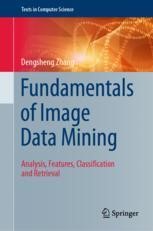
Dr. Dengsheng Zhang is a Senior Lecturer at Federation University Australia (formerly Monash University) and a Guest Professor at Xi'an University of Posts & Telecommunications, China. He holds a PhD in Computing (2002) and a GCHE (2006). His expertise spans over 25 years in artificial intelligence, big data, image processing, and music classification. He has published over 100 refereed papers (10,000+ citations) and authored the award-winning book Fundamentals of Image Data Mining (Springer, 2019). His research focuses on image classification, object detection, deep learning, and feature extraction. Dr. Zhang leads the Computational Science and Mathematics Group, contributing to projects like SIRBOT (Semantic Image Retrieval) and VFR (Visiting Friends and Relatives Travel Research). He serves as an Associate Editor for World Scientific's Transactions on Signal Processing. His teaching spans calculus, web design, computer networks, and project management. He has supervised 8 completed PhD students and actively engages in grants, including two ARC Discovery projects. His lab explores innovations in image retrieval, music classification, and machine learning applications.
John Newnham is a Professor at The University of Western Australia (UWA) Medical School, leading the Division of Obstetrics and Gynaecology at King Edward Memorial Hospital. He is also an Adjunct Professor at Peking University. His research focuses on fetal health, preterm birth prevention, and lifelong health outcomes from prenatal conditions. He pioneered the Raine Study, a landmark pregnancy-focused cohort study tracking 2,900 participants since 1989. He co-founded the Australian Preterm Birth Prevention Alliance, the first national program to reduce preterm births nationally. He has published nearly 400 articles, secured over $25M in grants, and received awards including Senior Australian of the Year (2020). Education: MB BS MD from UWA (1976) Postgraduate training in obstetrics across Australia, Africa, UK, and US Research Interests: John’s work explores fetal origins of adult disease, antenatal interventions to prevent preterm birth, and optimizing clinical practices. His Raine Study has revolutionized understanding of lifelong health impacts of fetal environment. Recent efforts include microbiome-based preterm birth prediction and omega-3 nutrition strategies. Grants & Awards: Senior Australian of the Year (2020) Order of Australia (AM) (2013) Gold Medal, Royal College of Obstetricians and Gynaecologists (1981) Advising & Grants: Principal Investigator on 41 grants totaling over $25M Funded by NIH (27 years) and NHMRC (30 years) Labs & Teams: He leads interdisciplinary teams at UWA and collaborates nationally/internationally on preterm birth prevention, fetal medicine, and translational research. Key initiatives include the Artificial Placenta project and microbiome-based diagnostics.
Dr. Haruo Usuda is a Research Fellow at the University of Western Australia (UWA) Medical School, specializing in Obstetrics and Gynaecology. His work focuses on fetal development, antenatal steroids, and preterm birth interventions using ovine models. He has contributed to studies on inflammation modulation, artificial placenta technology, and genetic factors influencing steroid therapy responses. Research Interests: Perinatal medicine and fetal lung maturation Intrauterine inflammation and its effects on fetal health Pharmacology of antenatal steroids and their efficacy Development of artificial placenta systems for preterm viability Genetic polymorphisms influencing steroid therapy outcomes Key Projects: National Institutes of Health-funded study on preterm lung and brain responses to mechanical ventilation and corticosteroids NHMRC-funded research on EVE Therapy (Artificial Placenta) for preterm infants Preclinical evaluation of IL-1R inhibitors for fetal injury prevention Publications highlight interdisciplinary approaches, combining pharmacology, genetics, and medical technology to address critical issues in perinatal care.
Arisbel B Gondin is a Research Fellow at the Drug Discovery Biology department within the Monash Institute of Pharmaceutical Sciences at Monash University in Melbourne, Victoria. They specialize in GPCR structural biology and pharmacology, with a focus on using sdAbs and nanobodies for their research. Dr. Gondin's research interests span multiple areas of molecular pharmacology and receptor biology: GPCR structural biology and pharmacology Opioid receptor signaling and drug development Nanobody-based therapeutic approaches Gastrointestinal motility disorders Pain relief mechanisms and opioid pharmacology Analysis of Dr. Gondin's recent publications reveals a strong focus on G protein-coupled receptors (GPCRs), particularly opioid receptors. Their work spans structural biology, pharmacology, and translational research with implications for pain management and gastrointestinal disorders. A notable trend is the investigation of allosteric modulation of opioid receptors, which could lead to analgesics with fewer side effects. Dr. Gondin has received no publicly listed scientific awards mentioned in the available information. As a postdoctoral researcher, Dr. Gondin is likely involved in mentoring junior researchers and collaborating on grant-funded projects, though specific details about students and grants are not available in the provided information. Dr. Gondin is part of the Drug Discovery Biology team at Monash Institute of Pharmaceutical Sciences, which focuses on understanding disease mechanisms at the molecular level to develop new therapeutic approaches.
Dr. Larissa Bartlett is a Research Fellow in Mental Health at the Menzies Institute for Medical Research, University of Tasmania. She holds dual roles as The Mind Games Research Fellow and ISLAND Postdoctoral Research Fellow at the Wicking Dementia Research and Education Centre. Her work focuses on behavioral interventions to improve health outcomes, particularly in dementia prevention and workplace mental health. Education: PhD in Mental Health Interventions (University of Tasmania, 2016–2020) Bachelor of Medicine and Surgery (Hons) (University of Tasmania, 2015–2015) Bachelor of Arts (Sociology/Social Policy) (University of Sydney, 1992–1998) Her research spans preventative healthcare , organisational behavior , and behavioral epidemiology . Notable projects include the ISLAND Study, which targets dementia risk reduction through education and behavior change, and development of non-invasive screening tools like the TAS Test for early Alzheimer’s detection. Her publications highlight trends in modifiable dementia risk factors , online health interventions , and motor-cognitive biomarkers . She has contributed to over 48 peer-reviewed articles, with recent work emphasizing digital tools for early disease detection and community health frameworks. Grants & Funding: National Emergency Management Agency: Health-focused disaster preparedness resources Royal Hobart Hospital Research Foundation: Alzheimer’s screening technology WorkSafe Tasmania: Workplace mental health benchmarking As a supervisor, she advises doctoral students on population-level dementia prevention . She also maintains affiliations with Monash University and Victoria University through collaborative research initiatives.
Lala Senevirathna serves as an Associate Professor in the School of Computing, Mathematics and Engineering at Charles Sturt University, Bathurst, Australia, where he applies 15+ years of field engineering, research, and teaching expertise to solve critical water and environmental challenges. His work bridges engineering principles with public health outcomes through practical applications in water resource management. His academic foundation includes: Undergraduate studies at the University of Peradeniya, Sri Lanka Postgraduate education at the Asian Institute of Technology, Thailand PhD in advanced wastewater treatment from Kyoto University, Japan Research focuses on tracer-level water pollutants, adsorption processes, disinfection technologies, and environmental health monitoring, with particular emphasis on climate resilience in water infrastructure. Current investigations examine extreme weather impacts on purification systems, fish passage engineering, and fluoride contamination pathways. His methodology integrates field data with computational modeling to develop actionable solutions for regional water security. Recent publications (2023-2025) reveal a strategic shift toward interdisciplinary climate adaptation research, combining hydrological engineering with machine learning for predictive modeling of algal blooms and rainfall impacts. Key themes include bushfire-affected water quality, sustainable rainwater harvesting, and international collaborations on Mekong River fisheries. No scientific awards were documented in available sources. As an educator, Senevirathna develops innovative engineering curricula focused on practical water resource training, though specific grant details remain unreported. His teaching philosophy emphasizes real-world problem-solving to prepare students for environmental challenges. He contributes to the Gulbali Institute's mission through the Charles Sturt Engineering team, supporting research in sustainable aquatic systems and biosecurity. Current projects address Mekong River fisheries, climate-proof viticulture, and soil salinity management in South/Southeast Asia.
Dr. Tenielle Porter is a Strategic Research Fellow and Lecturer at Edith Cowan University (ECU), affiliated with the School of Medical and Health Sciences. She serves as Deputy Lead of the Collaborative Genomics and Translation Group and Deputy Neurological conditions Program Lead at ECU's Centre for Precision Health. Holding a PhD from ECU (2018), her research focuses on the interplay between genetics, lifestyle, and Alzheimer’s disease biomarkers, aiming to identify predictive patterns of cognitive decline and brain changes. Her work emphasizes the influence of lifestyle factors on genetic and epigenetic markers linked to neurodegenerative diseases. Her professional memberships include the Australian Society for Medical Research (ASMR) and Alzheimer’s Association International Society to Advance Alzheimer's Research and Treatment (ISTAART). She has received notable awards such as the 2019 BioinfoSummer MATHS Award and the ECR Collaboration Scheme grant. Her teaching includes courses like SCH2235 Applied Microbiology and MMS2102 Medical Microbiology. Dr. Porter’s research spans genetic and epigenetic analyses, biomarker development, and cross-trait genetic studies linking Alzheimer’s disease with other conditions. She has contributed to high-impact journals, including Nature Communications , Alzheimer’s and Dementia , and Biological Psychiatry . Her projects include validating Alzheimer’s risk genes using imaging endpoints and exploring genetic-lifestyle interactions in neurodegeneration. Grant activities include the Lilly Research Award Program (2024–2026) and Department of Health WA grants. She supervises research students in areas like genetic-physical activity relationships and Alzheimer’s genomic signatures. Her labs focus on precision health, translational genomics, and multi-omics approaches to neurodegenerative diseases.
Leanne Mullan is a Senior Lecturer in Nursing at the School of Nursing, Midwifery and Paramedicine, part of the Faculty of Health Sciences. Her research focuses on healthcare technology adoption, diabetes care, primary healthcare delivery, and Indigenous health equity. She has published extensively on topics including electronic medical record usage, diabetes footcare barriers, and rural healthcare challenges. Research interests include improving healthcare delivery through technology, optimizing diabetes management practices, and addressing systemic barriers in primary care. Her work frequently explores solutions for vulnerable populations such as Aboriginal and Torres Strait Islander patients and remote/rural communities. Recent publications highlight trends in health technology evaluation, digital health interventions, and clinical practice improvements. Mullan’s work contributes to evidence-based strategies for overcoming barriers in patient care delivery, particularly in under-resourced settings. Her research has been published in journals such as Australian Health Review , Journal of Clinical Nursing , and International Journal of Environmental Research and Public Health .
Bhaskar Purohit is a Lecturer affiliated with the Peter Faber Business School within the Faculty of Law and Business. His research focuses on public health systems, healthcare human resource management, and policy analysis in India. He has extensively studied doctor and nurse motivation, workforce mobility, and appraisal systems in India's public healthcare sector. His work explores challenges such as posting/transfer policies, recruitment practices, and organizational climate in India's healthcare institutions. Notable studies include analyses of role stress among auxiliary nurse midwives and management practices in district public health bureaucracies. His research often highlights systemic inefficiencies and proposes solutions for improving healthcare workforce retention and performance. Purohit's articles frequently address India-specific contexts, emphasizing the interplay between policy implementation and frontline healthcare experiences. Though no scientific awards are mentioned, his contributions to understanding public health workforce dynamics are significant. No advising/grant information is available, but his work contributes to health systems strengthening efforts across India. His research outputs have garnered 800+ views and 345+ downloads since October 2020, reflecting their relevance to healthcare policy discussions.
Dr Raquel Salmeron is a Lecturer (Pathways) at UniSQ College, University of Southern Queensland, and an Adjunct Researcher at the Centre for Astrophysics. She holds a BAeroEng from IUPFAN, an MBA from IESA, and a PhD in Astrophysics from the University of Sydney. Her research spans astrophysical modelling of protostellar disks, magnetically-driven turbulence, and academic numeracy frameworks. She teaches mathematics and physics courses, focusing on enhancing student success in STEM fields. Her expertise includes Young stellar objects Magnetic activity of stars Protoplanetary disks Academic numeracy frameworks and contributes to inclusive education initiatives. She developed the Academic Numeracies Framework to improve student confidence in using mathematics at university level. Her articles explore both astrophysical processes (e.g., disk winds, star formation mechanisms) and educational strategies (e.g., numeracy integration in curricula). Recent work emphasizes applying generative AI to enhance numeracy education and addressing mathematics anxiety through structured frameworks. Professional memberships include the Association for Academic Language and Learning (AALL), National Association of Enabling Educators of Australia (NAEEA), and the Adults Learning Mathematics (ALM) International Research Forum. She has led projects in aviation analytics, assessing air traffic management performance, and currently focuses on STEM pedagogy and numeracy support in tertiary education.
Jim Shiau is an Associate Professor in Geotechnical Engineering at the University of Southern Queensland's School of Engineering. His research focuses on numerical modeling of geotechnical systems, stability analysis of tunnels and underground structures, and soil-structure interaction. He holds an MEng from the University of New South Wales (UNSW) and a PhD from the University of Newcastle. Affiliations: Centre for Future Materials, Institute for Advanced Engineering and Space Sciences His research interests span geotechnical engineering, rock mechanics, tunneling, and computational methods. Recent work includes studies on tunnel face stability, passive earth pressures, and data-driven modeling for buried structures. He has supervised over 10 research students at the Masters and Doctoral levels, focusing on topics like soil stability above water mains and elasto-viscoplastic models for Holocene Alluvium. His publications emphasize numerical techniques (e.g., finite element limit analysis, machine learning) and stability factors for geotechnical designs. Collaborations include projects in Vietnam involving ground improvement and pile behavior analysis.
Stuart Biddle is a Research Professor in the Centre for Health Research at the University of Southern Queensland, Australia. Previously, he held professorial roles at Loughborough University (1998–2014) where he also served as Head of the School of Sport & Exercise Sciences (2001–2007), followed by positions at Victoria University (2014–2017) and a Visiting Professorship at the University of Jyvaskyla, Finland (2022–2024). He is an internationally recognized expert in physical activity behavior change, sedentary behavior, mental health, and health psychology. Dr. Biddle holds honorary doctorates from the Norwegian School of Sport Sciences and the University of Thessaly, Greece. He has contributed to global public health guidelines for Australia, Canada, the UK, WHO, and Singapore. His educational background includes a BEd(Hons) from Loughborough University (UK), an MSc from Penn State University, and a PhD from Keele University (UK). Current Research Focus: Sedentary behavior interventions, mental health outcomes of physical activity, and behavior change strategies across diverse populations Key Contributions: Authored the Psychology of Physical Activity textbook (4th ed., 2021), developed the Exercise Participation Explained in Relation to Time (EXPERT) model, and pioneered the Snacktivity™ intervention His research outputs emphasize practical interventions like SMART Work & Life for office workers and ENJOY Seniors Exercise Park for older adults, demonstrating strong translational focus. Over 15,000 unique outputs have been viewed in his career, with 38,000+ downloads, reflecting significant academic impact. Scientific Awards : 2021: Honorary Doctorate from Norwegian School of Sport Sciences 2021: Honorary Doctorate from University of Thessaly, Greece In professional activities, Biddle collaborates with organizations like the American College of Sports Medicine and chairs the HMP-READER guidelines committee. He has led over 10 major research grants and supervises multiple projects without explicitly listed advisees. His work integrates multidisciplinary approaches across behavioral science, public health, and exercise psychology to address population-level health challenges. He actively participates in the ENJOY Project , focusing on senior exercise parks, and the SMART Work & Life initiative , a cluster RCT targeting sedentary office workers. Current projects include exploring screen time impacts on adolescents and evaluating cost-effectiveness of exercise interventions.
Ehsan Shareghi Nojehdeh is an Assistant Professor in the Department of Data Science and Artificial Intelligence at Monash University and an affiliated lecturer at the University of Cambridge. He leads a research team focused on predictive models for language (text and speech), with a background in postdoctoral work at Cambridge and prior roles at UCL. His research interests include probing and augmenting Large Language Models (LLMs), reasoning in legal contexts, safety of multimodal models, speech/text translation, and self-supervised learning. Education: PhD in Computer Science (Scalable Non-Markovian Sequential Modelling) from Monash University (2017). Professional roles include Deputy Course Director for the Master of AI program at Monash, service on academic committees (ECA Committee, 2022–2023), and senior reviewing roles at major conferences (ACL2025, EMNLP2023). He teaches units like FIT5217 Natural Language Processing and FIT5212 Data Analysis for Semi-structured Data. Key projects include a Paul Ramsay Foundation-funded study on media narratives around disadvantage in Australia (2022–2023). His work addresses UN SDGs through advancing education and AI ethics. Research collaborations span global institutions, with a focus on knowledge-intensive tasks like biomedical domain applications, graph-to-text generation, and generative model disentanglement. Publications emphasize safety, multimodal capabilities, and logical reasoning with LLMs, with recent work appearing in ACL, EMNLP, and NAACL venues. His team investigates LLM shortcomings, including alignment with human judgment, speech-specific vulnerabilities, and tool-based reasoning strategies.
Professor Nerilie Abram is a climate scientist at The Australian National University (ANU), affiliated with the Research School of Earth Sciences. She holds roles as Deputy Director of the Australian Centre for Excellence in Antarctic Science and the Centre of Excellence for the Weather of the 21st Century. Her research focuses on reconstructing past climates using coral reefs, ice cores, and climate models to understand anthropogenic climate change impacts. Education and affiliations: While specific educational details are not provided, her academic standing and roles indicate advanced training in Earth Sciences. She is part of the ANU’s Institute for Climate, Energy & Disaster Solutions and collaborates with global institutions. Research interests: Abram’s work bridges paleoclimatology and modern climate science, emphasizing human relevance through outreach. Key areas include tropical coral studies, Antarctic ice cores, and climate model integration to analyze droughts, bushfires, and extreme weather events. Publications trends: Recent work highlights extreme climate events (e.g., Australian droughts), Antarctic ice dynamics, and human health impacts of humid heat. Her studies often combine interdisciplinary methods like isotopic analysis and machine learning. Awards: 2024 Fellow of the Australian Academy of Science Advising and grants: Supervises research students and leads projects funded by ANU initiatives and international collaborations. Notable grants include the Climate Systems Hub activities and Antarctic research programs. Labs/teams: Active in ANU’s Climate and Ocean Geoscience group, contributing to IPCC reports and leading Antarctic climate studies.
Syed Mahbub is a Lecturer in the Department of Computer Science & Information Technology at La Trobe University. His academic journey includes a B.Sc. in Computer Science and Engineering from Bangladesh University of Engineering and Technology (2008-2013), followed by an M.Sc. in Information Technology (2015-2016) and a PhD in Information Systems (2017-2022), both from La Trobe University. He transitioned from a software engineering role in Bangladesh to academia in 2019, serving as an Associate Lecturer before his current Lecturer position since 2023. Research interests focus on applying machine learning and NLP to detect improper online behaviors such as cyberbullying, astroturfing, and fraud. His work spans psycho-linguistic features for rumor detection, contextual analysis for recruitment fraud, and multi-layer frameworks for user behavior monitoring. Teaching responsibilities include Natural Language Processing, Programming Fundamentals, and Database Systems at both undergraduate and postgraduate levels. Publications highlight trends in cybersecurity and social media analysis, with notable contributions to domains like crisis informatics, economic fraud prevention, and behavioral biometrics. He has co-authored papers in IEEE Access, Security and Communication Networks, and conference proceedings such as WISE 2018.